
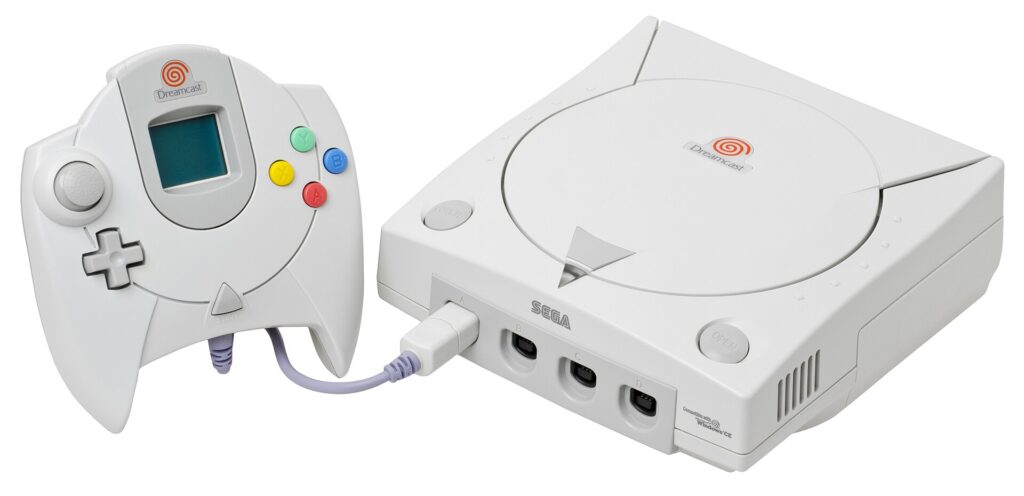
Every Dreamcast owner knows the ritual. To get Sega’s last console online in 2026, you either hunt down a Broadband Adapter that costs more than the console did, or you build a DreamPi — a Raspberry Pi pretending to be a dial-up modem, charming in the way all elaborate workarounds are charming, right up until you’re troubleshooting it on a Friday night. Angelo Pontes just demonstrated a third way, and it comes in through the front door: the controller port. His DreamColor Plus pad — already a wireless, colour-screen, dual-analog rebuild of the original Dreamcast controller — can now put the console itself online over Wi-Fi. No modem. No Broadband Adapter. No DreamPi. Nothing in the expansion slot at all.
At a glance: DreamColor Plus by Angelo Pontes — a replacement PCB that turns an original Dreamcast controller into a wireless pad with a colour VMU screen and an optional second analog stick. Its Maple-Fi firmware now routes the console’s internet connection through the controller’s wireless dongle, presenting a Wi-Fi setup interface called DreamNetDreamPlus. Demonstrated on real hardware October 30, 2026, playing Phantasy Star Online online. Catarse crowdfunding pricing: US$114 (one analog stick) / US$124 (two analog sticks) / US$171 (two sticks plus 3D-printed shell); a dedicated dongle is included with every version.
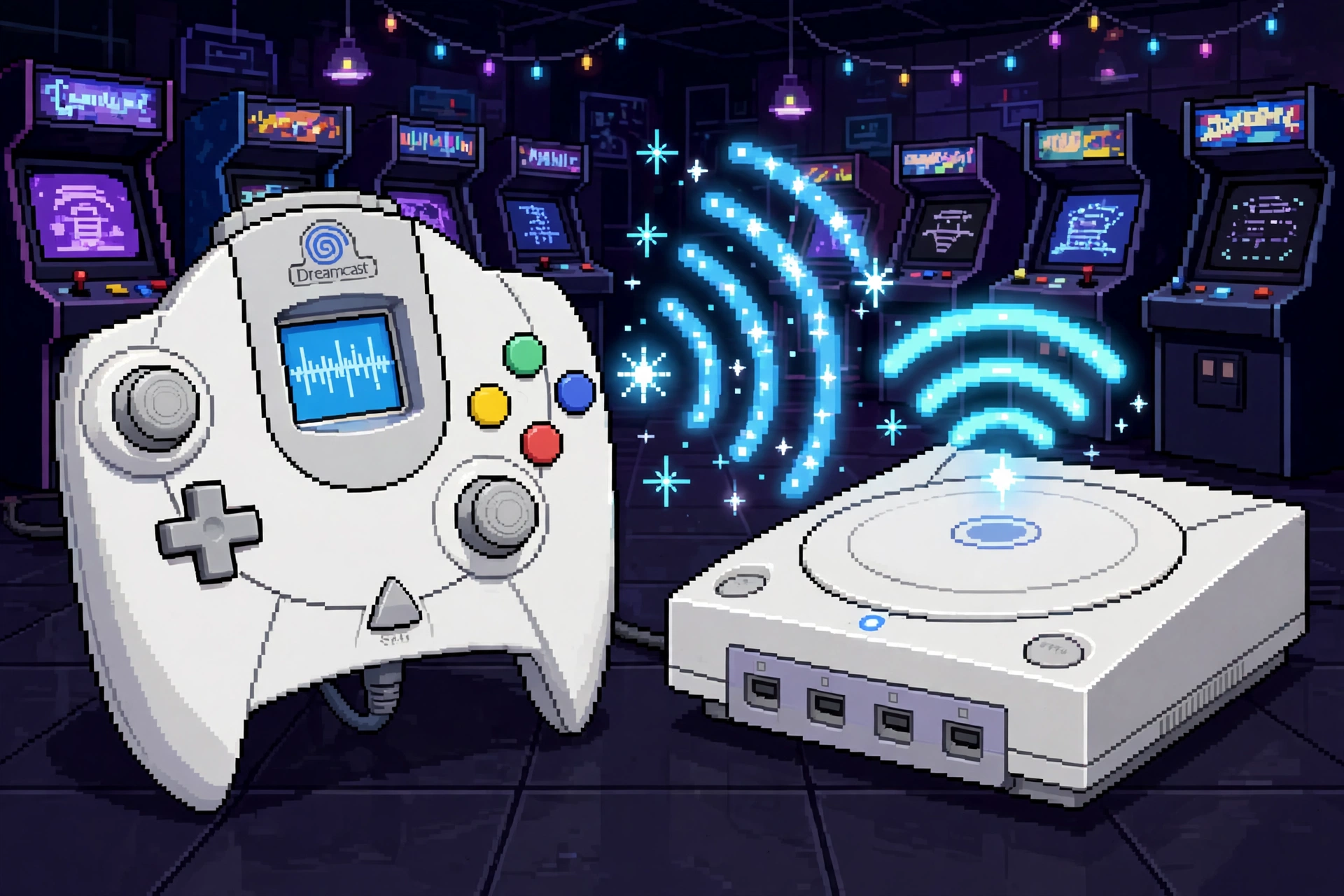
What the Dreamcast controller is actually doing here
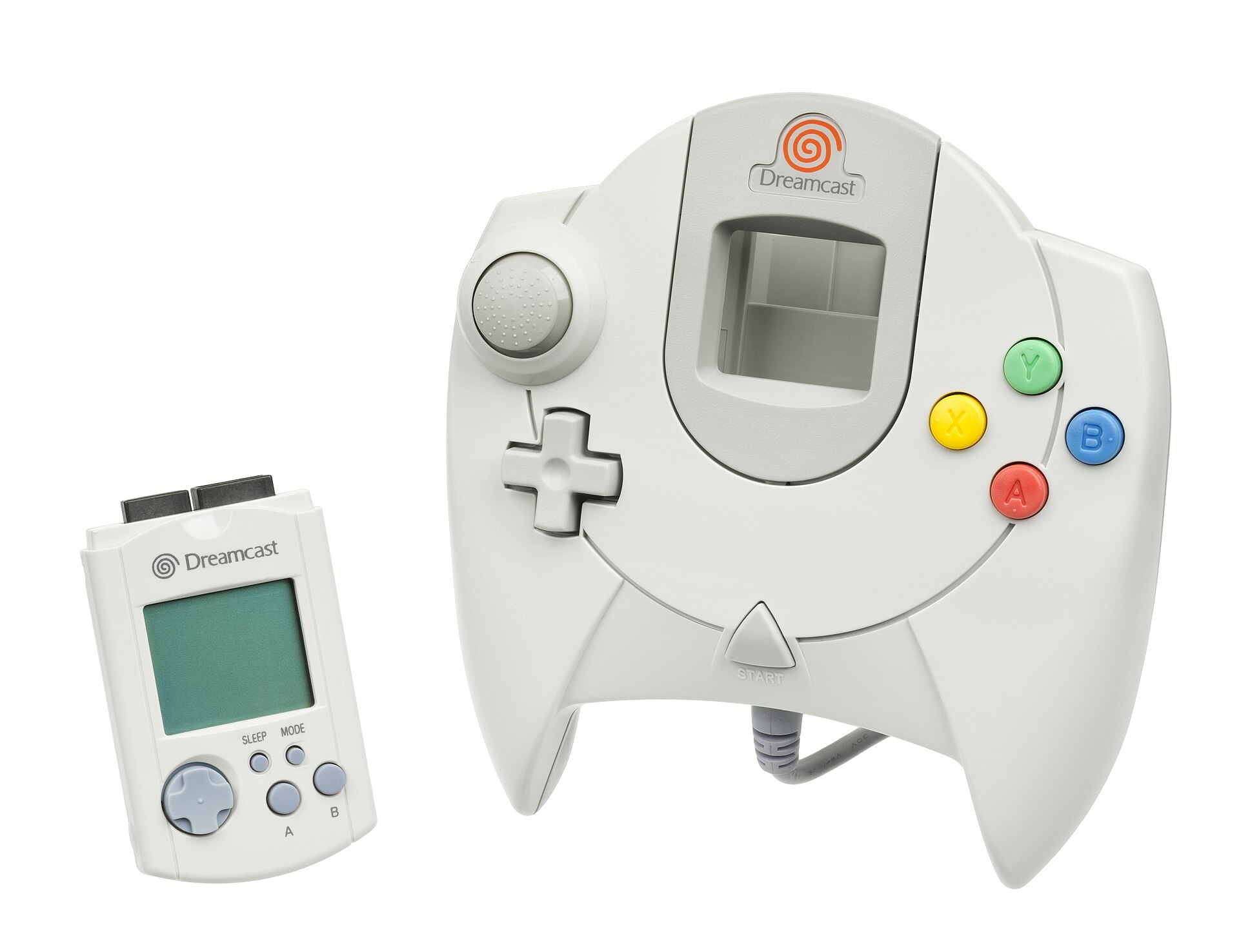
Start with the pad itself, because the online trick only makes sense once you understand how much hardware Pontes already stuffed into it. The DreamColor Plus is not a new controller — it’s a new circuit board that lives inside an original one. You open a stock Dreamcast controller, swap its PCB for Pontes’ board, and close it back up. What comes out the other side keeps the original shell, buttons and feel, and gains wireless play, a full-colour screen where the monochrome VMU window used to peer out, built-in rumble, a microphone, and — on the two-stick versions — a second analog stick, the thing Sega never gave this machine.
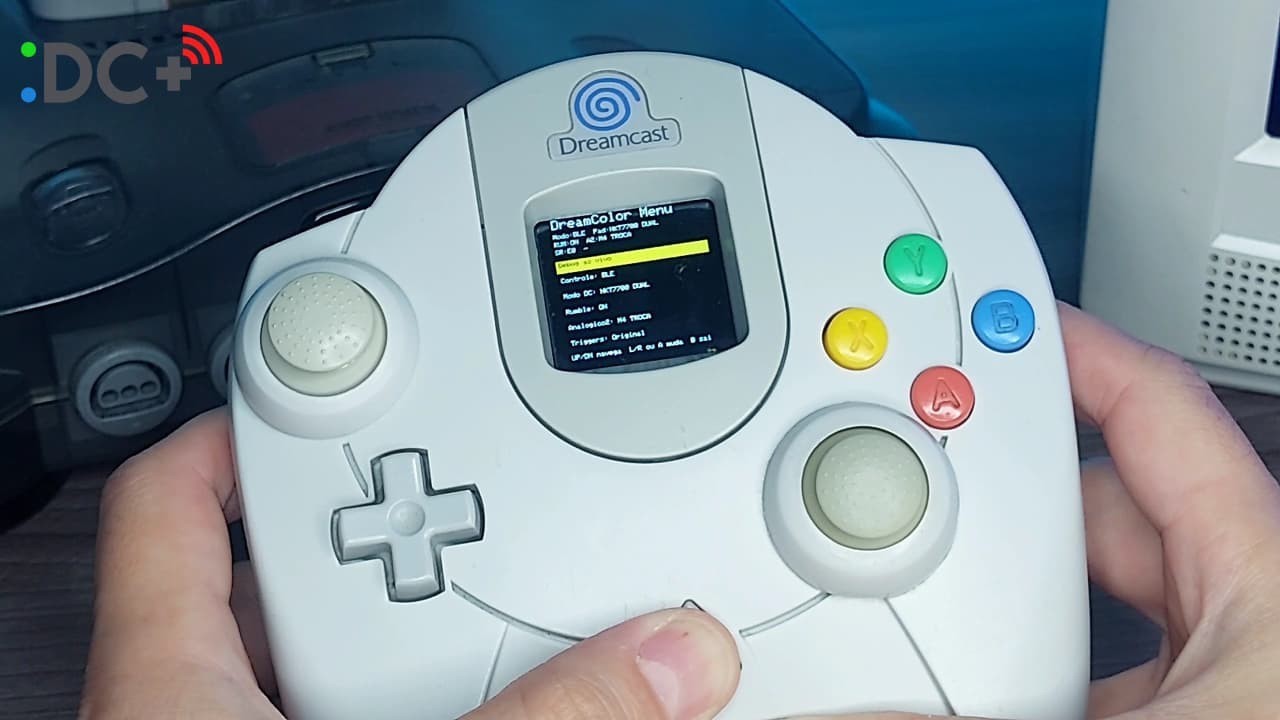
That second stick isn’t a hack in the pejorative sense, either. The Dreamcast’s Maple bus — the protocol the console uses to talk to everything plugged into its controller ports — was designed with headroom Sega never spent. The Dreamcast Junkyard’s coverage of the project notes that games like Quake III Arena and Unreal Tournament were actually programmed to accept dual-stick input natively, and reportedly take to the DreamColor Plus setup without complaint. The board swap itself needs no soldering, which matters: this is a screwdriver job, not a bench job.
Maple-Fi is the new party trick built on top of all that. The pad talks wirelessly to a dedicated dongle — included with every version, and it’s the dongle end of the link that has learned the new skill. Updated with the Maple-Fi firmware, the receiver presents a Wi-Fi setup interface, DreamNetDreamPlus, joins your home network, and then feeds the console an internet connection backwards through the controller port. Read that again, because it’s the whole story: the Dreamcast thinks it’s talking to a controller peripheral, and the peripheral is quietly being a network adapter.
The demo: Phantasy Star Online, back where it belongs
Claims are cheap on the hardware desk. Demos on real iron are not, and Pontes brought one. On October 30 he showed the setup running on an actual Dreamcast: Phantasy Star Online — the game that defined console online play a quarter-century ago — joining an online session and playing alongside a Flycast emulator session, with the console’s expansion bay sitting empty. That’s the detail to hold onto. Every previous route to a connected Dreamcast lives in that bay or hangs off it. This one leaves it vacant, and the proof wasn’t a slide deck: it was PSO, live, cross-playing with an emulator, documented in Pontes’ reels and a YouTube demo that Time Extension picked up in its November 6 coverage.
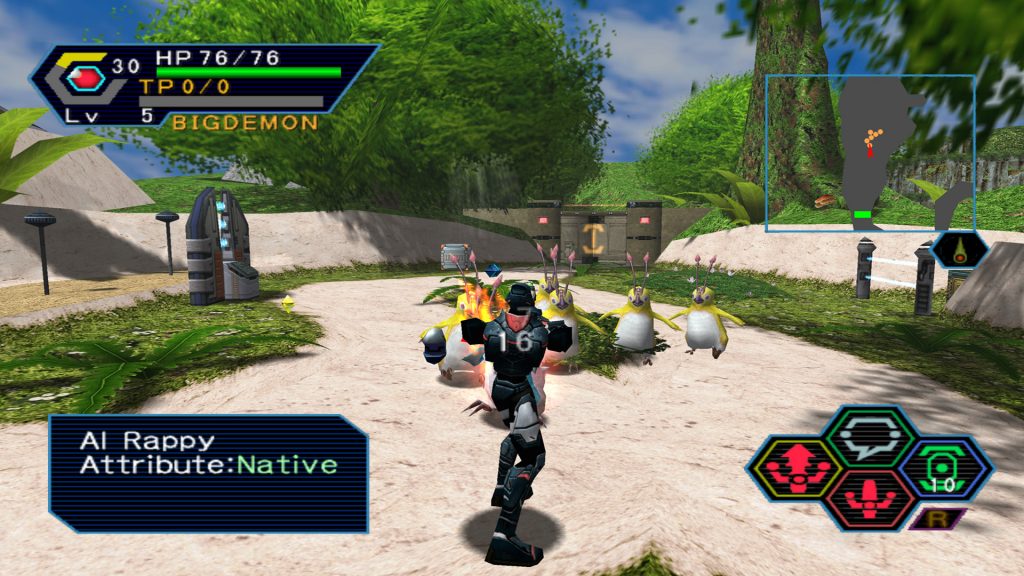
Why PSO is the perfect test is worth a sentence for anyone who came late. The Dreamcast was the first console with a modem in the box, and PSO was its flagship proof — a proper online RPG in the living room in 2000, years before that sentence made sense anywhere else. Sega’s servers are long gone, but the fan community has kept the game alive on private servers ever since, which is exactly the world Maple-Fi plugs into. Getting PSO online through a controller port isn’t a parlour trick; it’s the hardest, most meaningful connection this console knows how to make.
Now the honest part: three caveats, no fine print
This is where I earn my pay, because the headline version of this story — “controller puts Dreamcast online, no mods!” — is true in the way a movie trailer is true. Here is the full version.
One: the games need patching. The Dreamcast’s online games were written to talk to a modem or a Broadband Adapter, not to a controller, so software has to be taught the new route. The PSO demo applies a patch of under 1MB to the PSO disc image. That’s a small patch, but it means we’re in patched-image and ODE territory — optical-drive emulators and burned or loaded images — not a stock retail disc dropping straight online. Your shelf copy of PSO stays on the shelf. Plan accordingly, and expect per-game patches, not a universal key: Time Extension’s report says plainly that games will need to be modified to work with this system.
Two: “no hardware modifications” has a scope, and the scope is the console. Your Dreamcast stays factory-sealed, untouched, warranty-sticker-intact (well, the sticker’s 25 years old, but you take the point). The controller, however, is absolutely modified — that’s the product. The DreamColor Plus is a board swap inside an original pad. If your one good controller is a museum piece to you, you’ll want a donor pad for this, and at these prices that’s a real line item, not a footnote.
Three: you cannot buy this off a shelf today. This is a crowdfunding project mid-flight, not a retail launch. The project’s own official wiki, updated October 13, still lists the first 200-unit batch as in production and the main firmware as being validated — and there’s no Maple-Fi documentation up there yet at all. So the accurate framing is: demonstrated on real hardware, rolling out toward backers, documentation and wider availability still to come. Anyone telling you it’s simply “out now for everyone” is ahead of the project’s own paperwork. Time Extension’s line that the update is “already available” applies to people who already have the hardware in hand — a much smaller room than the internet.
What it costs, and whether that’s fair
The Catarse campaign priced the DreamColor Plus at US$114 for the single-stick version, US$124 for dual analog, and US$171 for dual analog plus the 3D-printed shell the second stick needs to sit in — with the dedicated wireless dongle included across the board. Hardware-desk verdict on the money: the $10 step from one stick to two is the easiest upgrade decision in retro gaming this year; the dual-stick is the version that changes games. The $171 tier asks real money for a printed shell, and I’d want to hold one before blessing it — printed shells live or die on their finish. But frame the whole range against the alternative: a Broadband Adapter alone routinely sells for more than the top tier here, does one job, and does it with a cable. This buys a wireless pad, a colour screen, a second stick and a network route. Overpriced gear gets called overpriced on this desk; this isn’t that.
The Dreamcast’s whole identity was being online before online was ready — “It’s thinking…” while the world caught up. Twenty-five years later, the community is still finishing Sega’s sentences, and this might be the neatest one yet: the connection was hiding in the controller port the whole time. Just go in with your eyes open — patched games, a donor pad, and a backer’s patience — and Maple-Fi is the most interesting thing to happen to a Dreamcast controller since somebody in 1999 first slotted a VMU into one and watched it beep.