
Developer: Square · Publisher: Square (now Square Enix) · Original release: November 11, 1995 (Super Famicom, Japan) · Genre: Role-playing game
Some Vault pieces start with a cartridge. This one starts with a goodbye — and with gratitude.
On November 6, the SaGa community learned that Neil Broadley, Square Enix’s localisation director for the SaGa series, had died at 45, after a multi-year battle with stage 4 colon cancer. The news arrived in his own words: a farewell statement he had prepared himself, posted by a colleague, in which he described working on the series through surgeries, chemotherapy and radiation — and said plainly that he would not be around to see the release of his next project, but that he was confident we would enjoy it. He is survived by his partner of 25 years.
If you have played a SaGa game in English in the last decade, you have read Neil Broadley’s work. He joined Square Enix in 2012, and his name runs through the English releases of Romancing SaGa 2, Romancing SaGa 3, SaGa Frontier Remastered, SaGa Emerald Beyond, Romancing SaGa 2: Revenge of the Seven and SaGa Frontier 2 Remastered. That list is, more or less, the entire modern Western life of this series. SaGa was the strange, stubborn corner of Square’s catalogue that the West was never supposed to get — and Broadley was one of the people who carried it across the language barrier anyway, game after game, while fighting an illness most of us knew nothing about.
So tonight, rather than just filing this under anniversaries, I want to do what he spent his career making possible: sit down with one of these games, in English, and remember why it matters. The game is Romancing SaGa 3 — and it matters a great deal.
The game the West never got
Romancing SaGa 3 arrived on the Super Famicom on November 11, 1995, and it never left Japan. Not on the SNES, not in that entire generation. If you lived in North America or Europe in 1995, your Square Christmas was Chrono Trigger and Secret of Evermore, and you were happy enough — but across the Pacific, series creator Akitoshi Kawazu was shipping the sixth SaGa game and the last of the Super Famicom trilogy, and it was doing things with the RPG form that almost nobody else was attempting.
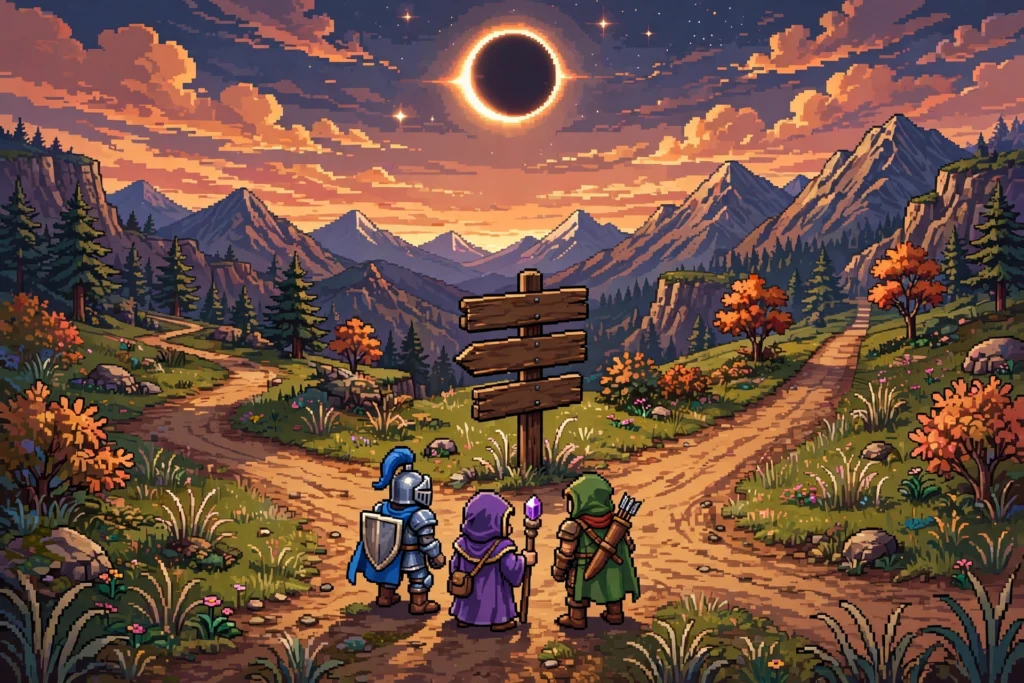
The setup sounds like classic dark fantasy. Once every 300 years, an eclipse called the Rise of Morastrum blots out the sun, and every child born in that year dies — except one. That survivor, the Child of Destiny, grows up touched by enormous power. Six hundred years ago, a Child of Destiny became the Archfiend, a tyrant. Three hundred years ago, another became the Matriarch, the hero who destroyed him. Now the eclipse has come again, and the world is holding its breath to learn which kind of child it has been given this time.
Where most RPGs would hand you that story on rails, Kawazu hands you a map, a rumour and a choice of eight people to be. That choice — and what the game does with it — is why we are still talking about this cartridge thirty-one years later.
Romancing SaGa 3 and the freeform idea
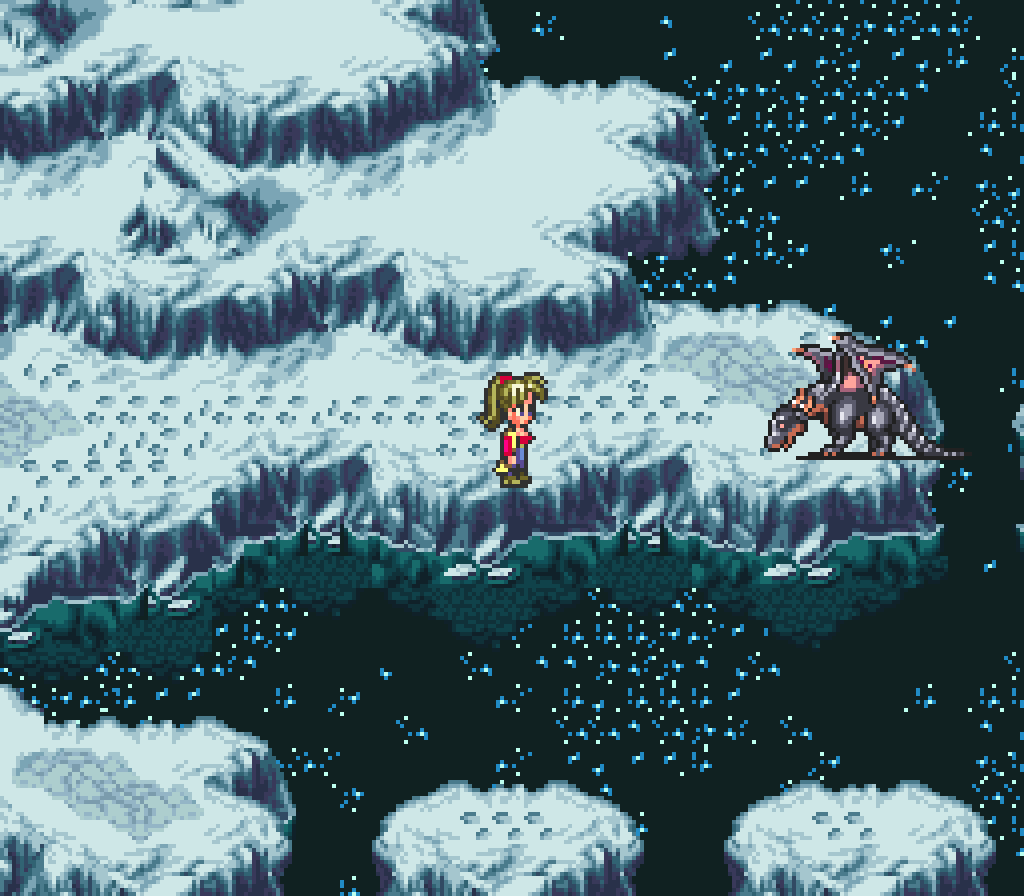
Here is the thing you have to understand about Romancing SaGa 3: after its opening chapters, it largely lets go of your hand, and it never really takes it again.
You pick one of eight protagonists — Julian the young swordsman, the sisters Ellen and Sarah, Thomas the merchant’s son, the Marquis Mikhail and his sister Monika, her bodyguard Katarina, and Khalid the wandering mercenary. Each has their own opening, their own corner of the world, their own reasons for travelling. Then the game opens up into what Square called the Freeform Scenario system: a web of quests scattered across the world that you can tackle in almost any order, discovered not through exclamation marks but through conversation — a rumour in a pub, a name dropped in a village, a stranger met on the road.
I cannot overstate how disorienting, and then how liberating, that felt in the era of the guided tour. Most of us who eventually played it came to it late, import cartridge or fan translation in hand, trained by a decade of RPGs that told us exactly where the story lived. Romancing SaGa 3’s answer is that the story lives wherever you go looking for it. How you handle a quest can open another or close one off entirely. Characters wander in and out of your party — including, gloriously, a snowman and a lobster — and the other seven protagonists are out there in the world living their own versions of the same crisis, ready to be recruited if your paths cross.
Was it flawless? No. The game explains almost none of this, and plenty of players bounced straight off its silence. But the freedom was real, and it was architectural, not decorative. Two players’ Romancing SaGa 3 campaigns genuinely diverge — different orders, different parties, different discoveries. In 1995, that was close to heresy. Today it reads like a prophecy of everything the genre would spend the next thirty years chasing.
The Glimmer: learning by doing
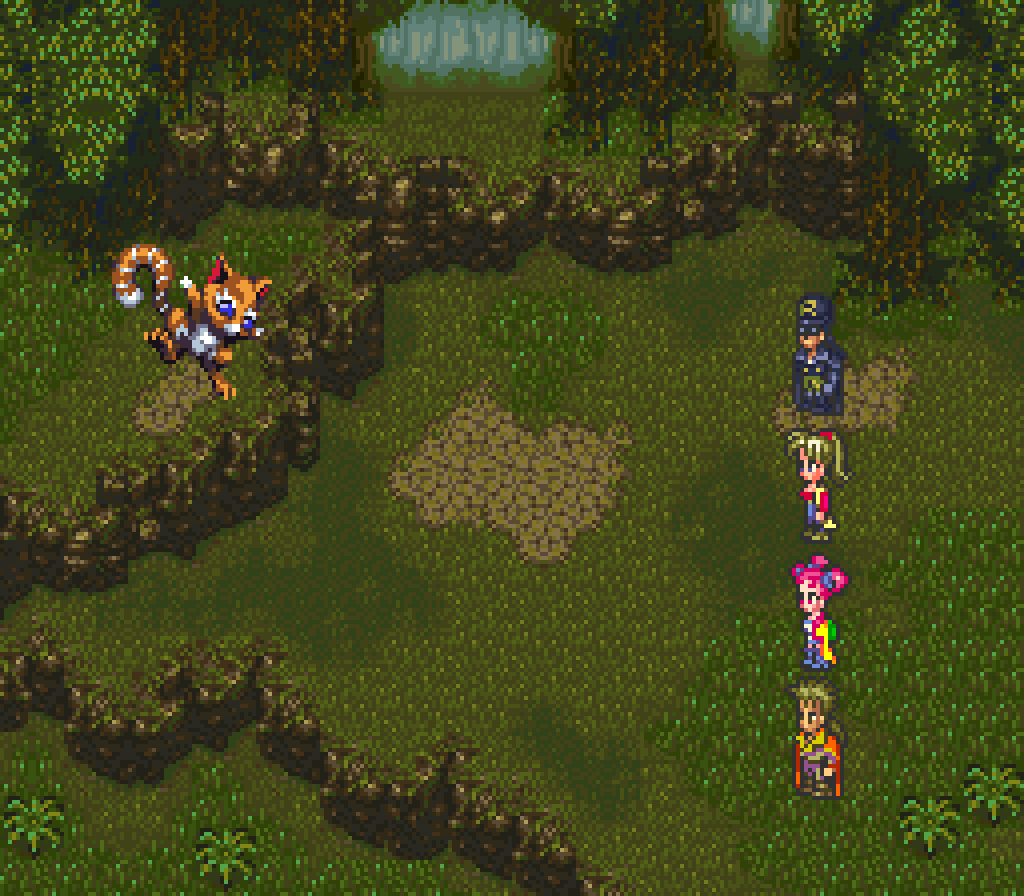
If the freeform structure is the game’s philosophy, the Glimmer is its heartbeat — the most beloved system Kawazu ever built, and the one that still makes SaGa players light up when you mention it.
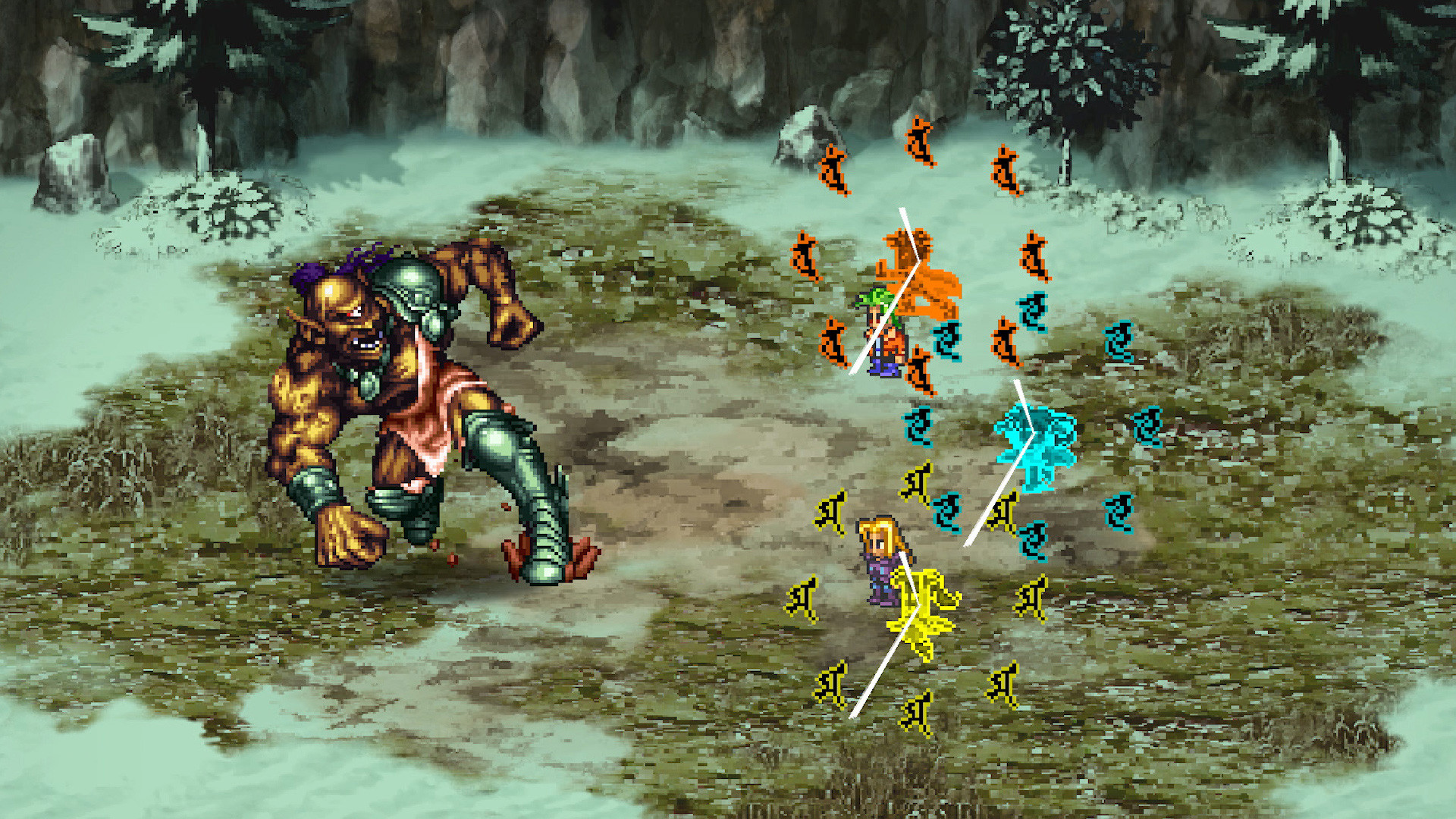
There are no experience points in Romancing SaGa 3. Characters grow the way people grow: by doing. Swing a sword enough and your strength and sword skill climb. Cast spells and your magic deepens. And sometimes — mid-battle, usually at the worst possible moment, against an enemy who has no business losing — a lightbulb flashes over a character’s head. That is the Glimmer: the character has just invented a new technique, on the spot, out of necessity, and immediately uses it. A desperate swing becomes a named, devastating art that stays with them forever.
It is the single most joyful mechanic of the 16-bit RPG era, and I will defend that hill. Every fight carries a tiny lottery of revelation. You are never just grinding; you are prospecting. Layered over it are the formations — the shapes your party stands in, each granting its own bonuses and unlocking combination techniques — and the SaGa series’ signature stakes: alongside hit points, every character has Life Points, and when those run out, death is not a nap at the inn. It is permanent. The game is generous with wonder and quietly ruthless with consequences, and that combination gives its freedom real weight.
Eight lives, one wide-open world
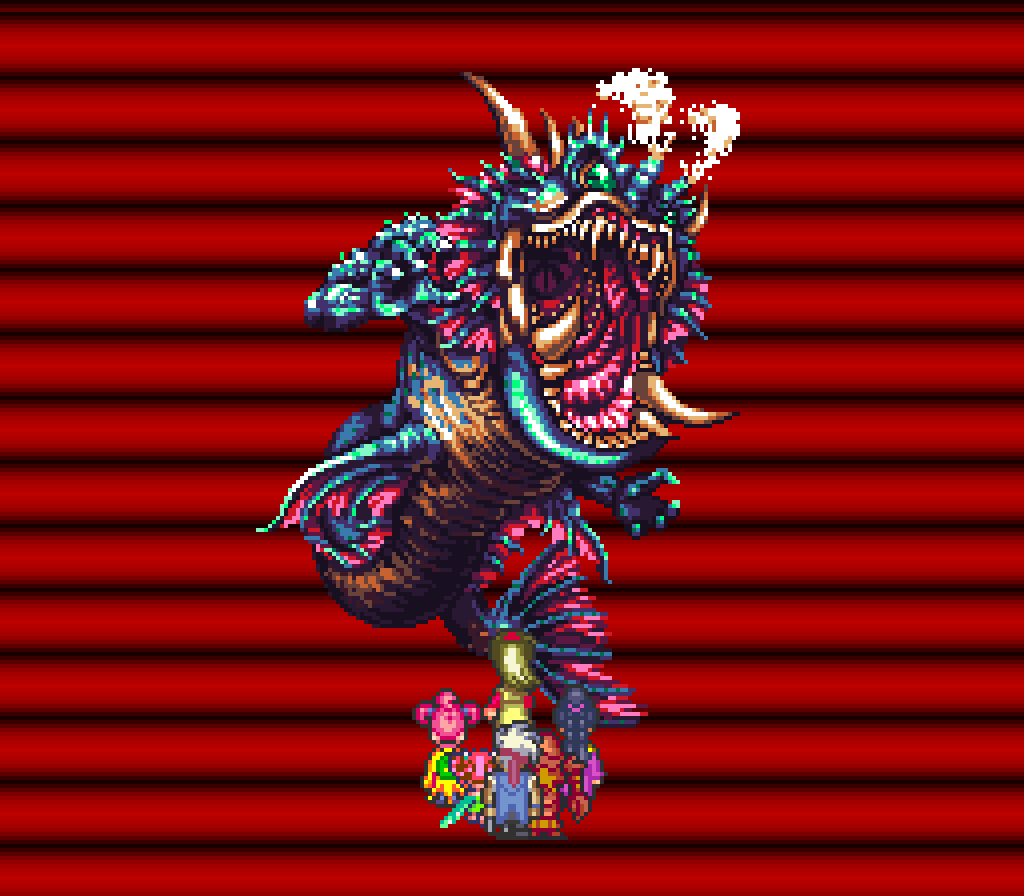
The eight-protagonist structure does more than multiply replay value — it lets the game change genre around you. Play as Mikhail and Romancing SaGa 3 periodically becomes a war game, with you commanding armies in mass battles that can genuinely be lost. Play as Thomas and it becomes a trading game, building a merchant business through deals across the map. These are not minigames bolted on for a screenshot; they are Kawazu listening to his own team’s ideas — he has said the character-specific systems came from suggestions gathered across the studio — and folding them into the fabric of one shared world.
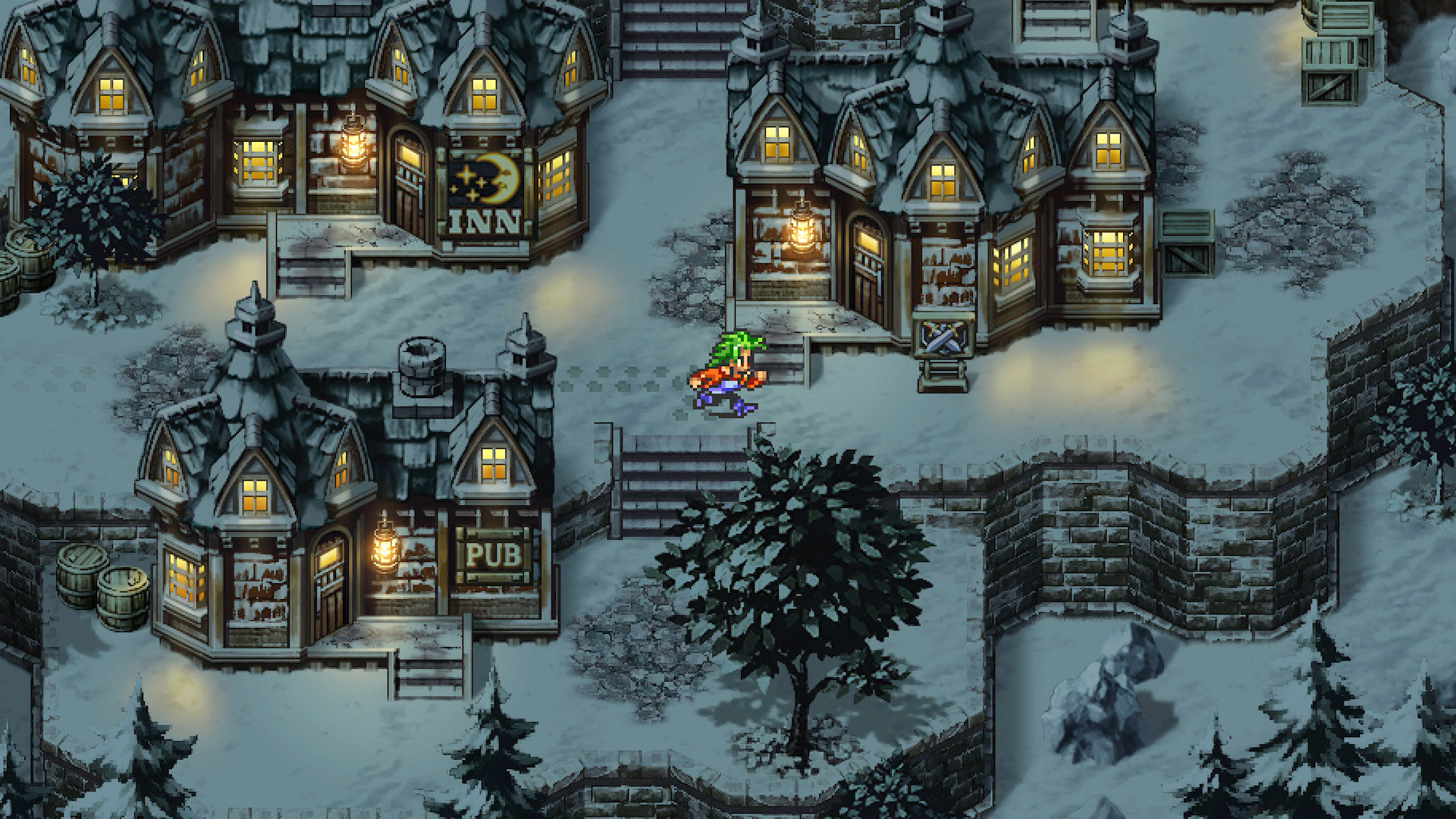
And what a world to look at. By late 1995 Square’s Super Famicom craft was at its absolute peak, and this game stands shoulder to shoulder with the era’s best: rich, painterly towns, huge expressive enemy sprites, and character art by Tomomi Kobayashi, whose ornate, jewel-toned illustrations gave SaGa a visual identity unlike anything else on the shelf. Underneath it all is Kenji Ito’s score — by turns mournful and thunderous — which Ito has described finishing at a cost to his own health on a punishing schedule. The opening theme alone, all dread and defiance under that eclipsed sun, tells you exactly what kind of story you are in.
The long road west
For twenty-four years, the West’s relationship with this game was one of longing and workarounds: imported cartridges, printed guides, fan translations passed around like samizdat. The devotees knew. The wider world simply never got the chance.
That changed on November 11, 2019 — twenty-four years to the day after the Super Famicom launch — when the remaster finally brought Romancing SaGa 3 west on modern platforms, in English, with its graphics faithfully enhanced, a new dungeon and a New Game Plus mode added. It was part of a genuine SaGa revival at Square Enix, the run of releases that carried the series from cult rumour to a living, publishing concern in the West. Neil Broadley’s localisation work ran through the heart of that revival — Romancing SaGa 2 and 3, the SaGa Frontier remasters, Emerald Beyond, Revenge of the Seven. A generation of players got to discover what the fuss had been about, in their own language, because people like him did unglamorous, exacting work extraordinarily well.
The story lives wherever you go looking for it. In 1995 that was close to heresy. Today it reads like prophecy.
One more journey
Which brings us to the project Broadley would not live to see released — and the reason this game is in the news on the very week we lost him.
Romancing SaGa 3: Destinies United is a full HD remake of the 1995 original — Square Enix’s own framing, and it is worth honouring precisely: not a remaster, a remake — from the team behind Trials of Mana and Romancing SaGa 2: Revenge of the Seven. It keeps the Freeform Scenario heart of the game, rebuilds it in full 3D, adds complete voice acting in Japanese and English, and features Kenji Ito’s classic score alongside newly arranged versions created under his supervision. It launches on February 16, 2027, for Nintendo Switch, Nintendo Switch 2, PlayStation 5, Xbox Series X|S and PC. Broadley’s English work is in it. So is his supervision of the music he loved, and the localisation team he personally brought in a successor to lead.
There is something fitting — painful, but fitting — about his final project being this particular game. Romancing SaGa 3 is a story about an eclipse, and about what one surviving child does with the power and the time they are given. It is about people scattered across a wide world whose separate journeys turn out, in the end, to be one journey. Neil Broadley spent his last years, in his own words, finding purpose in bringing that world to the rest of us. In February, thousands of players will walk into it for the first time, in English, and most of them will never know his name. The rest of us can say it for them.
Thank you, Neil. Rest easy — we’ll take the freeform road from here, and we’ll think of you at the crossroads.