At a glance: Ogre Battle Gaiden: Zenobia no Ouji · Neo Geo Pocket Color · Quest / SNK, 2000 · Strategy RPG · Score: 8.5/10
Honesty first, because this game demands it: Ogre Battle Gaiden was never released in English. Quest’s pocket chapter of the Ogre Battle saga — full title Densetsu no Ogre Battle Gaiden: Zenobia no Ouji, ‘The Prince of Zenobia’ — launched in Japan in 2000 and stayed there, a casualty of SNK’s collapse and the series’ niche Western standing. This review is written from the Japanese cartridge, with the help of the fan community’s guides and the fan translation work that has since opened the game to English readers. It deserves the effort. This is one of the best strategy games on any handheld of its era.
The story is a prequel woven into the saga’s cloth: Prince Tristan, heir of Zenobia, fights to free his kingdom in the years around the events Western players know from Ogre Battle: The March of the Black Queen. The series’ systems arrive intact, which on this hardware is close to miraculous. You build an army of units, each a squad of up to five characters; you deploy them onto real-time strategy maps where they march, liberate towns, and clash with enemy units in automated tactical battles whose outcome your formations, classes and equipment decide.

The whole war, pocketed
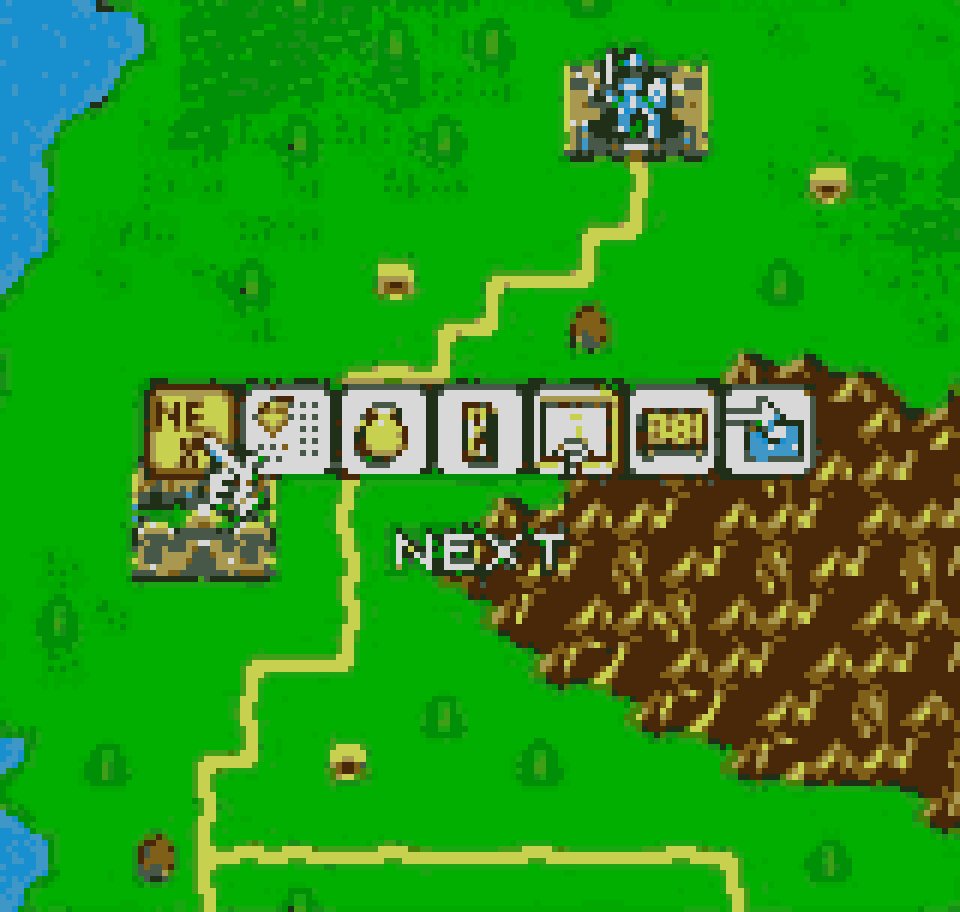
Everything that makes Ogre Battle Ogre Battle is here. The Alignment and Charisma systems judge how you fight and whom you free, bending the story and its endings. Tarot cards, drawn at liberation and playable in battle, swing fights with the series’ signature caprice. Day and night cycle across the campaign, changing what your units can do. Class promotion trees branch across dozens of character types, from fighters and amazons to the undead and the draconic. The interface — the eternal challenge for strategy on small screens — is the game’s quiet triumph: maps read clearly, unit management is brisk, and the NGPC’s stick moves a cursor with genuine precision.
The campaign is substantial, too: a full multi-stage war with branching results, not a demo-sized skirmish set. Between the reputation system, the hidden characters, and the series’ traditional multiple endings, Gaiden offers the kind of depth its home-console siblings were praised for, at a scale its hardware had no business hosting.
The whole war — real-time maps, reputation, tarot, branching classes — on a 160-by-152 screen. A scale its hardware had no business hosting.
The barrier, honestly faced
The language barrier is real and must not be waved away. Ogre Battle is a text-heavy series — unit management, town dialogue, story scenes — and playing Gaiden in Japanese without support is a genuine obstacle, not a flavour note. The fan translation has transformed its accessibility in recent years, and strategy veterans can navigate much of the game by icon and pattern, but an official English edition remains the series’ unfinished business. As a review subject it scores on the strength of the game itself; as a purchase recommendation for importers, it comes with that asterisk in bold.

Other costs are smaller: automated unit battles will always frustrate players who want per-swing control, the pacing is stately by modern standards, and the cartridge — a late Japanese release — commands serious money. What it never does is feel compromised. Quest treated the pocket machine with the same respect Matsuno’s series always demanded of its players.

The fan bridge
The community around this game deserves its own paragraph. For two decades, Gaiden was sustained by exactly the kind of devotion the NGPC inspires generally: translators who documented its systems, guide-writers who mapped its routes and endings, and eventually the fan translation projects that rendered its text into English and turned a beautiful object into a playable epic for the audience it always deserved. That labour is part of the game’s story now — the unofficial Western release, arriving twenty years late, carried by the players themselves.
Set beside its siblings, Gaiden completes a remarkable picture: between March of the Black Queen, Tactics Ogre and this pocket prequel, the Ogre Battle saga of the nineties is one of strategy gaming’s great bodies of work, and the NGPC chapter is not the runt but a full member — smaller maps, same moral weight. If the series’ modern revivals ever reach back into the catalogue, this is the deep cut that most deserves an official crossing. Until then, the fan bridge holds, and the war is worth the walk across it.
The interface triumph bears repeating in practical terms, because it is what makes the game playable rather than merely impressive. Army management — the historical swamp of handheld strategy — runs on clear menus, sortable lists and a map cursor with genuine pace; a full turn of orders across a dozen units takes minutes, not the quarter-hours the format can decay into. Quest understood that on a handheld, strategy depth is worthless without administrative speed, and they engineered the speed first. Modern handheld strategy games, built on touchscreens with a hundred times the power, do not all clear the bar this cartridge set.
And the sound: a full Ogre Battle score in miniature, marches and laments re-voiced for the pocket’s chip with the melodies — the series’ secret weapon since 1993 — entirely intact. Through the little speaker it is tinny; through headphones it is genuinely moving. War, judged by tarot and reputation, scored like a requiem: that is the Ogre Battle signature, and Gaiden signs in full.
A practical coda for the tempted importer: the Japanese cartridge is the affordable door — the hardware is region-free, the game’s icons and systems are documented exhaustively in English by its community, and the fan translation route exists for those who play via modern means. However you cross, cross prepared: save often, mind your reputation, liberate everything, and never trust a tarot card you wouldn’t trust a general. Zenobia is waiting, and it has waited long enough.
Strategy gaming on handhelds has since produced giants, and they all stand, knowingly or not, in this cartridge’s shadow — proof, shipped in 2000, that a pocket machine could hold an entire war and judge you for how you fought it. The prince’s campaign deserves its crown.
And if the fan translation is your door, walk through it with gratitude and patience in equal measure: the text it opens is dense with the series’ moral machinery — liberation dialogues that judge your army, townsfolk who remember your reputation, endings that grade your soul as carefully as your strategy. This is not a game that was simplified for a small screen. It is a game that trusted a small screen with everything, and the trust — across twenty-five years and one unofficial crossing — has been repaid in full.
Verdict
Ogre Battle Gaiden is the NGPC’s great lost epic: a complete, deep, characterful strategy RPG that happens to live behind a language barrier and a collector’s price tag. If you can cross either — ideally both — you will find a game that shames most handheld strategy of its generation. The pocket war deserved a Western campaign. It still does.