
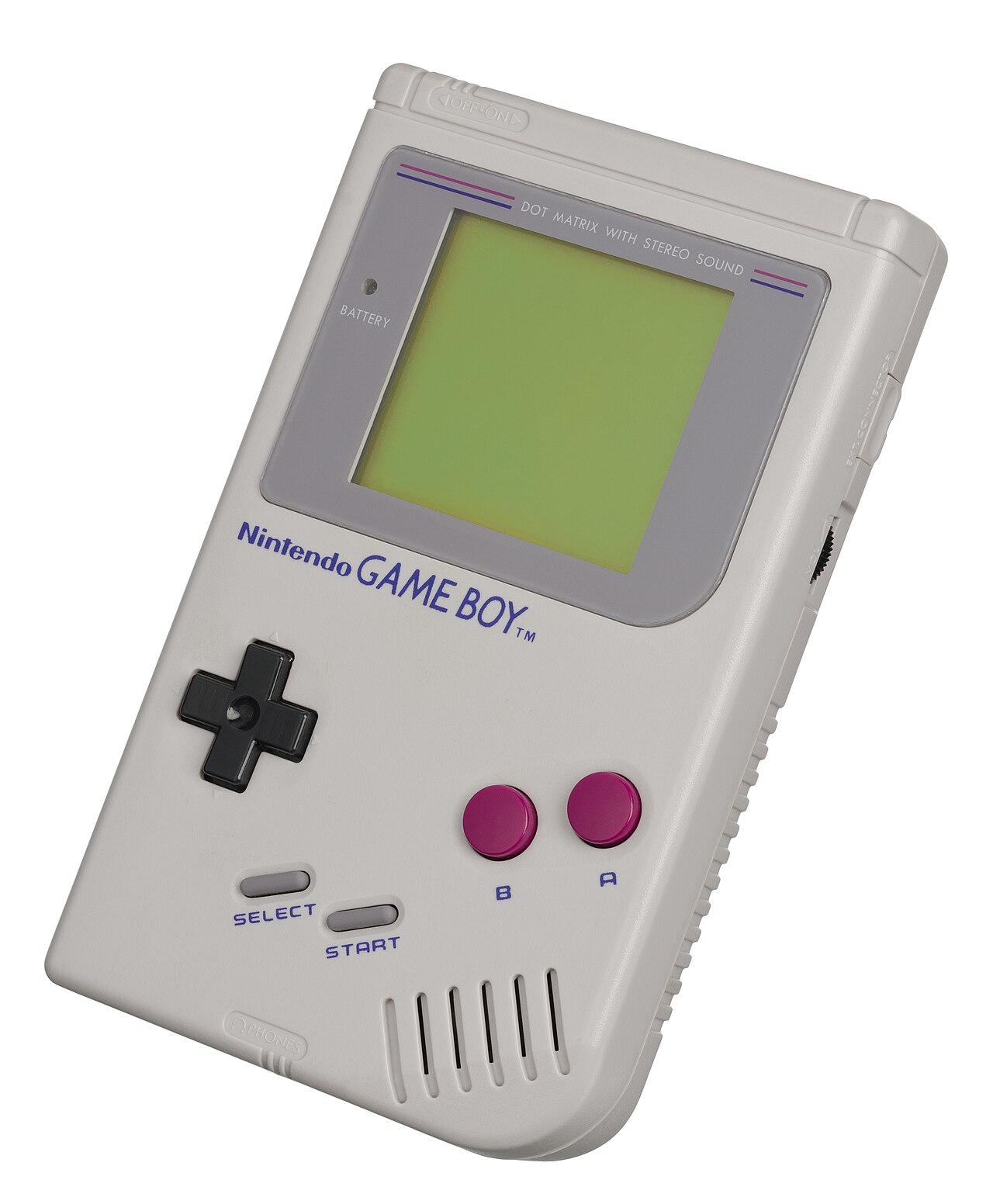
Every legend about the Game Boy starts with the screen, because the screen is what everybody apologised for. Four shades of green-grey on a 2.6-inch panel, smeared by motion, invisible in anything brighter than a lamp. Sega’s engineers looked at that screen in 1989 and laughed — their Game Gear had colour, a backlight, a future. Atari’s Lynx had more power still. Both of them are museum pieces now, and the Game Boy is the machine that defined handheld gaming for a generation, sold in the hundreds of millions, and never really went away. The apology was the point. The worst screen in the business sat on top of the smartest set of decisions Nintendo ever made, and this is the story of how a grey brick with a puzzle game ate the world.
Withered Technology, Lateral Thinking
The Game Boy was designed by Gunpei Yokoi, and you cannot understand the machine without understanding the man. Yokoi ran Nintendo’s Research & Development 1 team, and his philosophy had a name he repeated until it became doctrine: lateral thinking with withered technology. Take mature, cheap, thoroughly understood components — technology so old its costs have collapsed and its quirks are known — and combine them in ways nobody has tried. R&D1 had already proved the idea once. The Game & Watch line, Yokoi’s single-game LCD handhelds, sold over 43 million units in the early 1980s on exactly this principle, and along the way his team invented the cross-shaped D-pad that still sits on every controller worth using.
By the late 1980s the conditions were perfect for a second act. Nintendo’s Famicom team, led by Masayuki Uemura, was building the Super Famicom around cutting-edge custom silicon. Yokoi’s team went the other way. A handheld, he argued, was not a small home console. It was something you carried onto a train, dropped on concrete, and played in ten-minute gaps — which meant it needed to be cheap, rugged, and above all sippable on batteries. Colour LCDs in 1989 were none of those things. They were expensive, fragile, and thirsty. So the Game Boy would be monochrome, and proud of the reasons why.
There was internal resistance. A monochrome machine in 1989 looked like a retreat, and some inside Nintendo worried the company would seem behind the times. Yokoi held his ground with the confidence of a man whose “withered” D-pad had already conquered the industry. The argument that settled it was battery life — the number that would quietly decide the handheld war. The Game Boy ran for roughly 30 hours on four AA batteries. Sega’s colour rival would manage about a tenth of that. One of those numbers fits a child’s pocket money. The other fits a wall socket.
The Launch: A Brick and a Puzzle
The Game Boy launched in Japan on 21 April 1989, and in North America at the end of July that year, priced at $89.95. Inside the grey shell sat a Sharp LR35902 processor — a close relative of the Zilog Z80 — running at just over 4 MHz, with 8 KB of video RAM, a speaker the size of a fingernail clipping, and that infamous screen: 160 by 144 pixels in four shades of greenish grey. By the spec-sheet standards of 1989 it was conservative to the point of comedy. It was also nearly indestructible, light enough to forget in a coat pocket, and priced below every rival that would ever challenge it.
The launch line-up was solid — Super Mario Land, Alleyway, Baseball, Tennis — but the machine’s destiny arrived as a pack-in. Nintendo of America’s executives had fallen for a Soviet puzzle game called Tetris, and in one of the great rights scrambles in industry history, Henk Rogers of Bullet-Proof Software travelled to Moscow, navigated the Soviet bureaucracy at ELORG, and secured the handheld rights that let Nintendo bundle Tetris with every Game Boy in the West. It was a decision of genius disguised as arithmetic. Super Mario Land sold to the children who already wanted the machine. Tetris sold the machine to their parents, their grandparents, and commuters who had never touched a video game. The Game Boy was not launched as a toy. It was launched as an appliance everybody in the house had a reason to pick up.
The rivals arrived on cue, each one technically superior and strategically doomed. Atari’s Lynx launched the same year with colour and scaling hardware. Sega’s Game Gear followed in 1990 with a backlit colour screen and the Master System’s library behind it. Both were bigger, hungrier, and more expensive to feed. The Lynx wanted six batteries for a few hours; the Game Gear was little better. Parents did the maths at the toy-shop till, children did it at the playground, and the market did it everywhere else. The Game Boy’s first year set the pattern for the next fourteen: the weakest machine won, and won, and kept winning.
Reading the Green Screen
To play a Game Boy in its prime was to develop skills that have nothing to do with games. You learned to angle the screen toward windows. You learned the worm light — that coiled aftermarket lamp that plugged into the link port and lit the screen like a book light — and the magnifier, and the exact tilt of a car headrest at night. Developers learned their own version of the craft. With four shades and 160 pixels across, every sprite was a negotiation. The best Game Boy art has a chunky, high-contrast confidence because it had to survive being seen through a green fog at arm’s length on a moving bus.
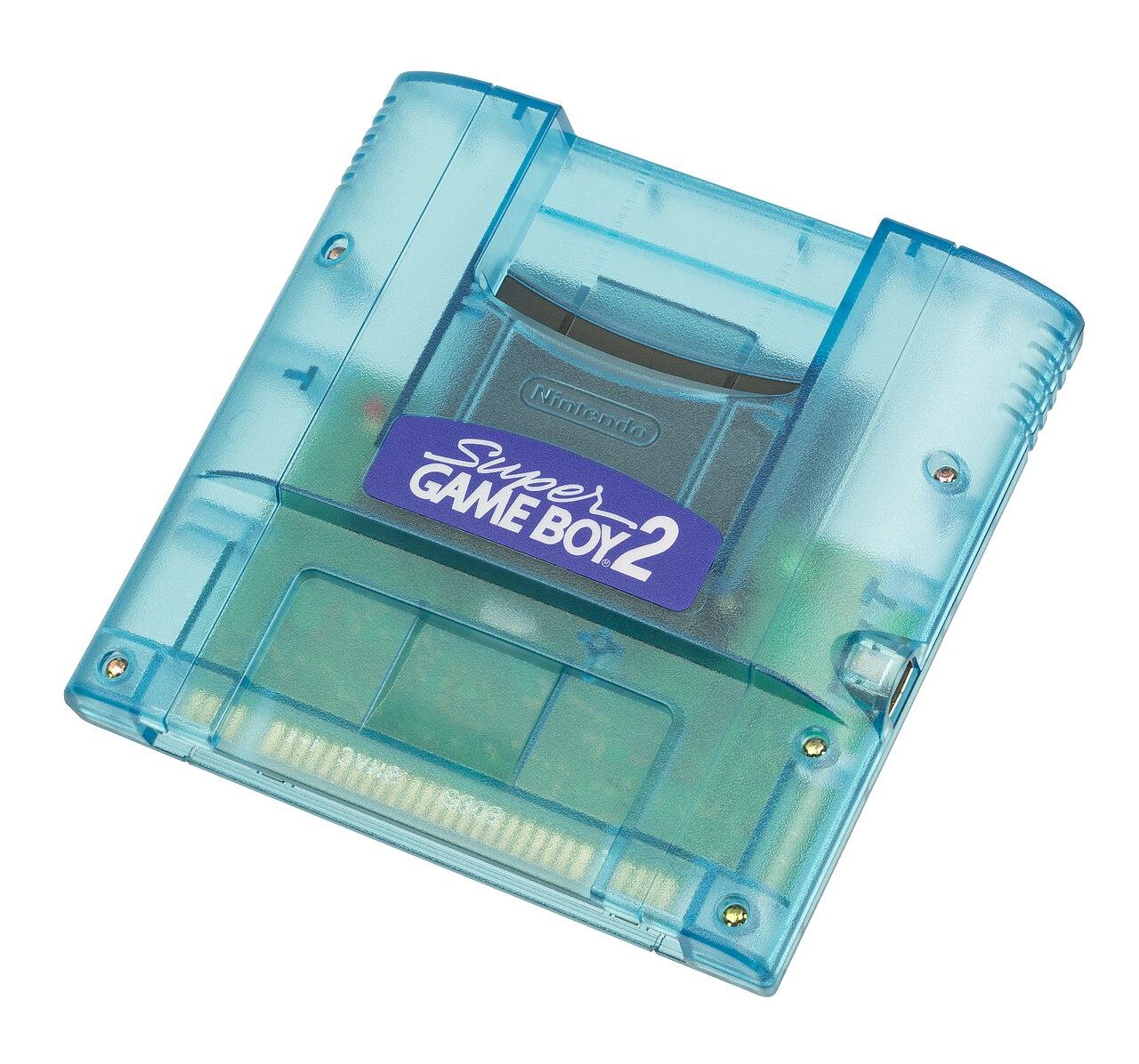
The hardware had two more tricks that mattered enormously. The first was the link cable. Two Game Boys, one cable, and games could talk — head-to-head Tetris battles were the early proof, but the cable’s real destiny was still seven years away. The second trick was simply surviving. Game Boys were dropped down stairs, left in gardens, run over, and — in the story that became legend — a unit belonging to an American medic was caught in a barracks bombing during the Gulf War, its shell melted and charred, and it still played Tetris. Nintendo kept that machine running on display for years. You did not have to be careful with a Game Boy, which meant children actually carried it everywhere, which meant it became the first games machine that lived in the world rather than next to the television.
Mario, Kirby and a Boy Named Link
A platform is its games, and the Game Boy’s early library had a problem disguised as an opportunity: everything had to be rebuilt for the little screen by hand. Nintendo’s answer was to hand its biggest names to the machine and let the constraints invent new flavours of them. Super Mario Land (1989) was Mario shrunk and made strange — a Sarasaland oddity with shoot-’em-up levels and a princess who wasn’t Peach. Its sequel, Super Mario Land 2: 6 Golden Coins (1992), was the real landmark: a full-fat Mario adventure with a world map and sprawling levels, and a villain invented for the occasion — Wario, Mario’s greedy double, who proved so durable he stole the series outright in Wario Land (1994).
The handheld became a place where new Nintendo legends could be born rather than merely ported. Kirby’s Dream Land (1992) was designed by a young Masahiro Sakurai at HAL as a game a beginner could finish — a white puffball (pink came later, and another continent’s box art argued about it) who inhaled enemies instead of stomping them. Metroid II: Return of Samus (1991) took Nintendo’s loneliest series onto the little screen in black and green and turned the hunt for 39 Metroids into a slow descent into dread. And then there was Donkey Kong (1994) — marketed as a port of the arcade game, it opened with the familiar four stages and then unfolded into one of the finest puzzle-platformers ever made, a hundred levels deep.
The masterpiece arrived in 1993. The Legend of Zelda: Link’s Awakening began as an after-hours experiment — staff at Nintendo porting A Link to the Past to the handheld for fun — and became something far stranger and more personal: a Zelda set not in Hyrule but on Koholint, a dream island populated by characters who seem half-aware they might not exist. It is funny, melancholy, and quietly devastating, and it did it all inside a cartridge with room to spare for a photography sub-plot. Link’s Awakening is the answer to anyone who thinks the Game Boy was a compromise. It wasn’t a smaller Zelda. For many players, it is the Zelda — the one against which the others are measured.
The Second Life: Smaller, Lighter, Coloured at Last
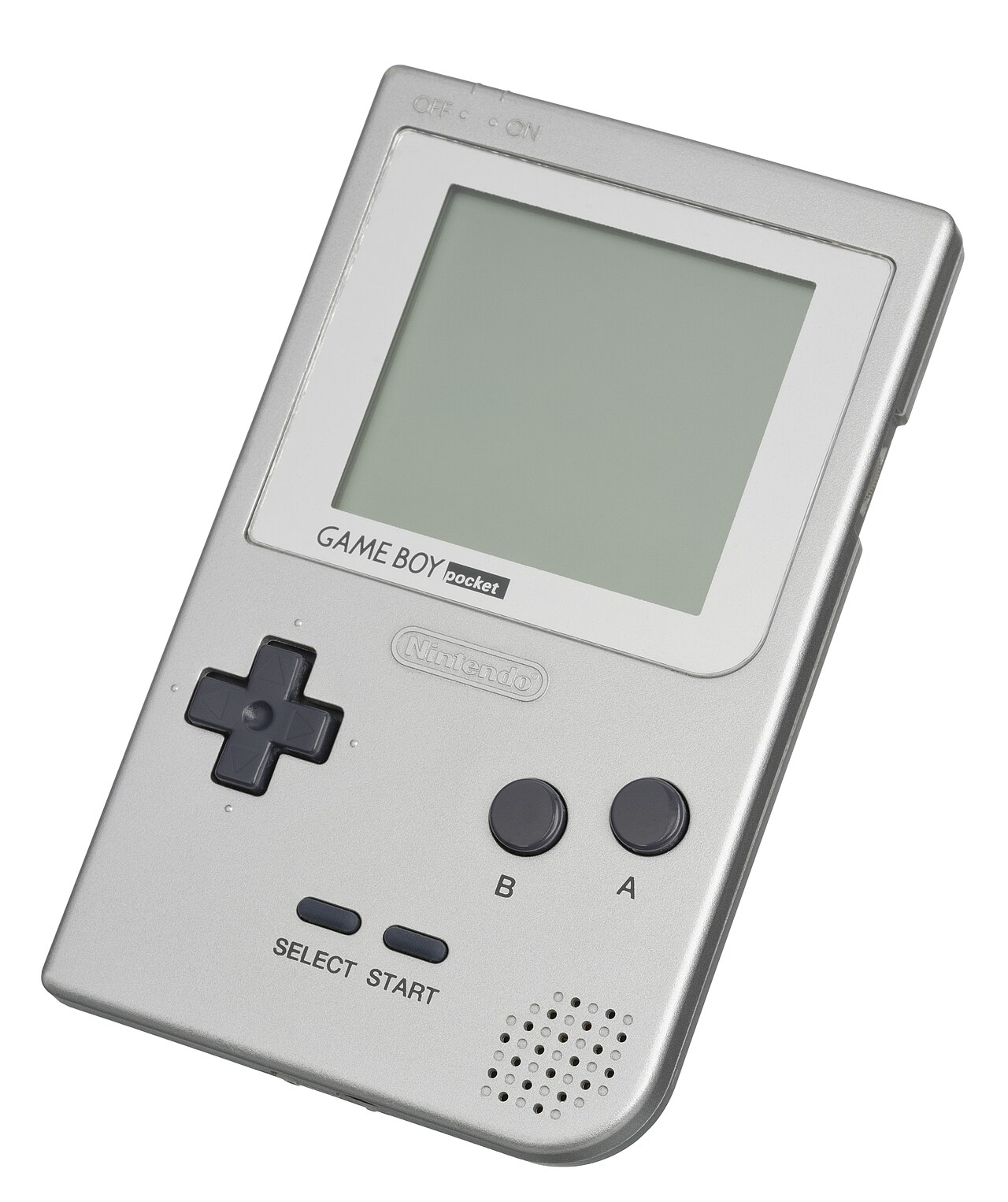
Most consoles get replaced. The Game Boy got revised, repeatedly, in a rolling programme of small mercies. The Game Boy Pocket (1996) slimmed the brick by a third, swapped the green-grey screen for a crisper black-and-white one, and sipped just two AAA batteries — an admission that by 1996 the original’s bulk was the joke even Nintendo was in on. Japan alone received the Game Boy Light (1998), a Pocket with a backlit screen, which remains the connoisseur’s original-model machine and a standing rebuke: the technology to light the screen had fit Nintendo’s price all along, once batteries were ready.
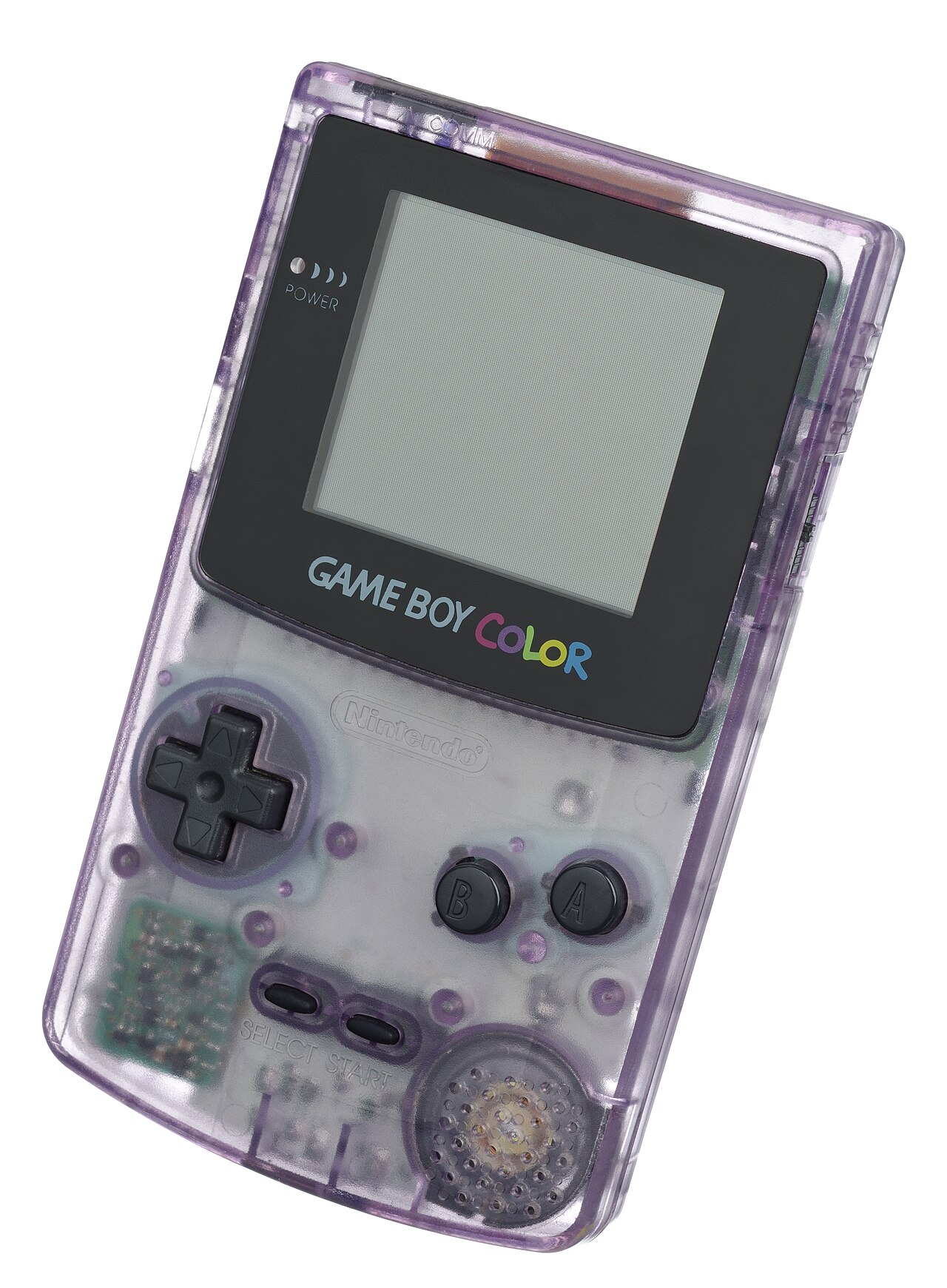
Then, on 21 October 1998 — nine and a half years after the original — Nintendo finally shipped the Game Boy Color. The name undersold the strategy. The Color was a genuine upgrade: a processor twice as fast, four times the memory, and a screen that could show 56 colours at once from a palette of 32,768. But its masterstroke was what it did with the past. Every original Game Boy cartridge worked in it, and the machine applied automatic colour palettes to the old monochrome games — Link’s Awakening in russets, Tetris with a blue frame. Nintendo had sold tens of millions of players a library, and instead of orphaning it, the new hardware honoured it. Backward compatibility sounds like a spec-sheet footnote. In 1998 it was a promise: what you bought stays yours. The industry has been relearning that lesson ever since.
Pokémon: The Bug That Ate the World
By the mid-1990s the Game Boy was a success entering its graceful decline — and then a small Tokyo studio spent six difficult years turning one man’s childhood hobby into the biggest entertainment property on Earth. Satoshi Tajiri had collected insects as a boy in the fields outside Machida, and he founded Game Freak to make games that captured that feeling: finding something rare in the grass and showing it to a friend. Pocket Monsters Red and Green launched in Japan on 27 February 1996, a pair of role-playing games about catching 151 creatures, training them, and trading them — by link cable — with a second copy of the game.
Every part of the design fed the machine’s strengths. The monochrome graphics that were a liability elsewhere were irrelevant in a game of collection and imagination. The link cable, a novelty for seven years, became the entire point: your Red version could never catch them all alone. Pokémon spread through Japanese schools the way secrets do, and when it reached the West in 1998 as Red and Blue, it detonated. The anime, the cards, the films — all of it orbited a Game Boy cartridge. Nintendo’s ageing handheld, which rivals had declared obsolete in 1990, spent 1999 and 2000 as the hottest toy in the world, and Pokémon Gold and Silver (1999) — built for the Color, playable on the original — added 100 more creatures, a real-time clock, and a second region to explore after the credits. The Game Boy did not just survive its second decade. Pokémon made it essential all over again.
Playground Economics
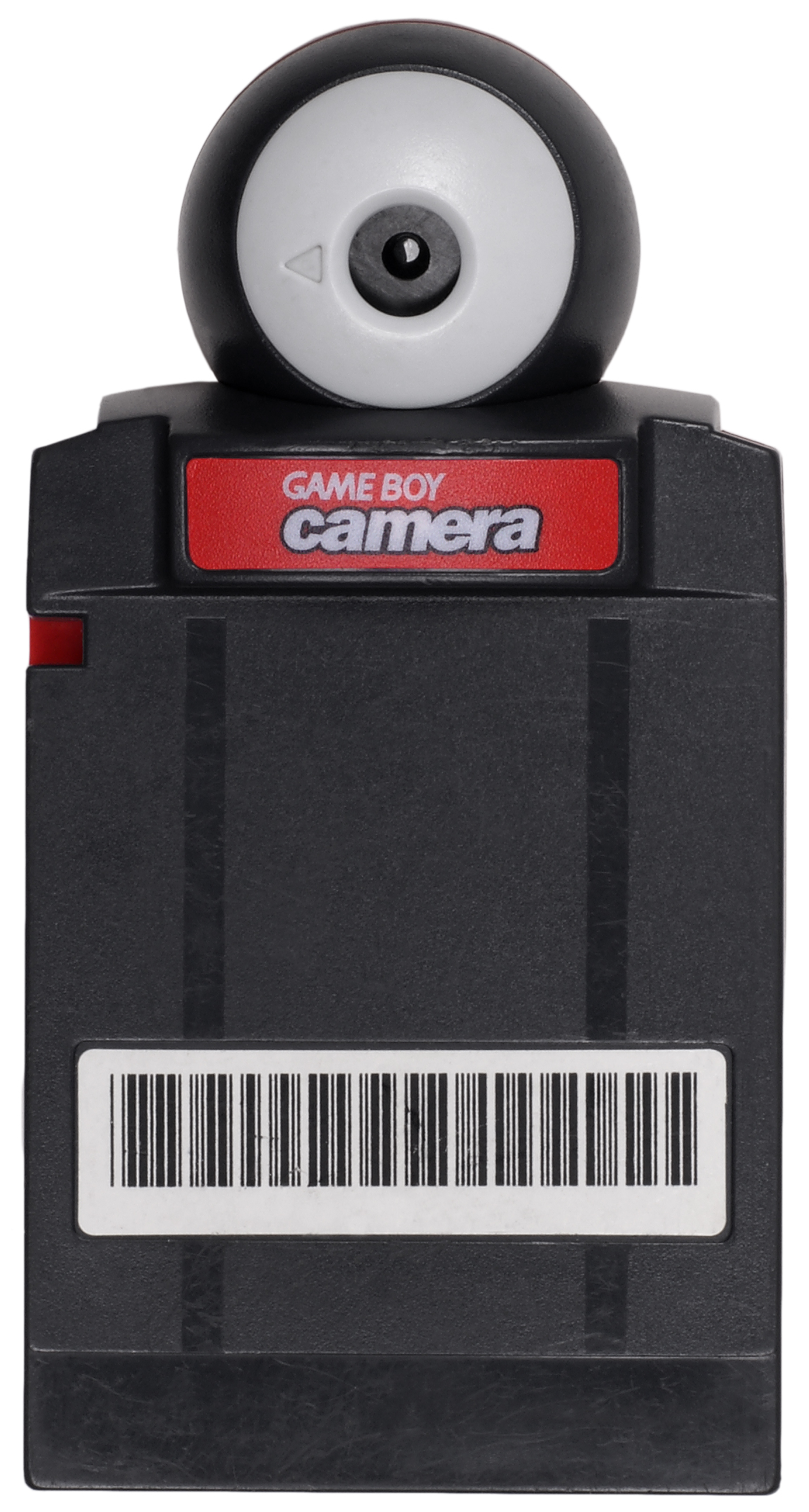
To understand the Game Boy’s reign you have to remember it was social hardware in an era before social anything. The playground ran on it: trades negotiated like treaty law, link-cable battles with house rules, the kid whose older brother had a Japanese cartridge of something nobody could read. Schools banned it, which functioned as advertising. The accessories alone map the culture — light-and-magnifier sandwiches that turned the machine into a small tank, battery packs, carrying cases worn like satchels. Nintendo, characteristically, made the two strangest peripherals itself: the Game Boy Camera (1998), a swivelling 128-by-112-pixel eye that took grainy photographs and let you stamp, draw on, and print them, and the Game Boy Printer, a thermal printer that turned those smudges into stickers. The Camera held a Guinness record as the world’s smallest digital camera, was beloved by actual photographers for its lo-fi aesthetic, and is still used by them today. It was a toy that accidentally invented a look.
The culture also explains the library’s shape. A Game Boy game had to justify itself in ten-minute sessions, survive a two-week holiday on one set of batteries, and cost less than a home-console game. The result was a library of over a thousand titles built on clarity: puzzlers, platformers, bite-sized RPGs, and conversions that succeeded exactly in proportion to how honestly they respected the hardware. The shovelware existed — it always does — but the average Game Boy game had to be legible in every sense: readable on the screen, readable in its design, priced to a child’s savings.
The Long Goodbye
Count the original Game Boy and the Color together — as Nintendo does, since the Color is the same platform grown up — and the line sold 118.69 million units. The original model’s production ran until 2003, fourteen years after launch, a lifespan home consoles never see. When the end came it was not defeat but succession: the Game Boy Advance (2001) took the name, the library’s compatibility, and the audience, and carried the line forward on a separate shelf of this site. The brick’s own story closes with one of the longest commercial lives in the industry — and then, characteristically, refuses to close at all.
Because the Game Boy never actually left. Its aesthetic became the default visual language of “retro.” Its chiptune voice — one pulse-wave channel at a time, in the hands of composers like Hip Tanaka — became a genre. Developers still release brand-new Game Boy cartridges in the 2020s, built with modern tools like GB Studio, and the homebrew scene treats the 1989 hardware as a living platform — we’ve covered everything from a homebrew cartridge that turns the Game Boy into a wireless controller for other machines to the lost Akira game that four prototypes couldn’t finish. The Analogue Pocket exists because adults with money wanted the library honoured properly — and as our review found, it honours it beautifully. Even the Game Boy Color’s twilight library keeps surprising people: the long road of Infinity, an RPG that took two decades to arrive, is a Game Boy story that finished in the 2020s.
The Canon: Twelve Cartridges That Explain the Game Boy
Tetris (1989) — the pack-in that sold a console to people who didn’t play games, and still the perfect handheld game. Super Mario Land 2: 6 Golden Coins (1992) — the moment the library matched the home consoles for ambition, and Wario’s debut. Kirby’s Dream Land (1992) — Sakurai’s gentle masterpiece of accessibility. Metroid II: Return of Samus (1991) — dread in four shades of green. The Legend of Zelda: Link’s Awakening (1993) — the platform’s masterpiece, full stop. Donkey Kong (1994) — the port that wasn’t, a hundred levels of invention. Wario Land: Super Mario Land 3 (1994) — Mario’s rival shoulder-barging his way to a better game. Pokémon Red and Blue (1996/1998) — the phenomenon that gave the machine a second life. Pokémon Gold and Silver (1999) — the sequel that doubled the world and added the clock. Game Boy Camera (1998) — not a game; a creative tool twenty years ahead of its feed. Mole Mania (1996) — Miyamoto’s overlooked puzzler, and the connoisseur’s cartridge. Trip World (1992) — Sunsoft’s beautiful, rare swansong, proof the little screen could do lush. Start anywhere on that list and you understand the machine.
The Game Boy won with the worst screen, the weakest processor, and the longest battery life in the business — because Yokoi understood that a handheld is not judged by what it can do in a showroom, but by whether it is still in your pocket, still charged, still loved, a year later. It was in everybody’s pocket. It usually still had charge. And three and a half decades on, in living rooms, in homebrew carts, in the glow of modern FPGA handhelds, it is still being loved — four shades of green, and every one of them earned.