
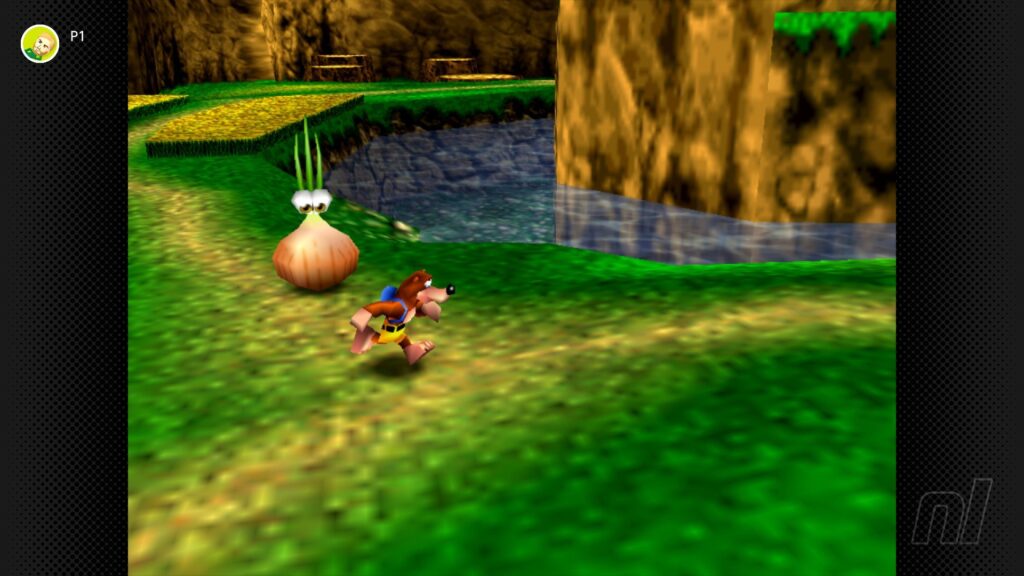
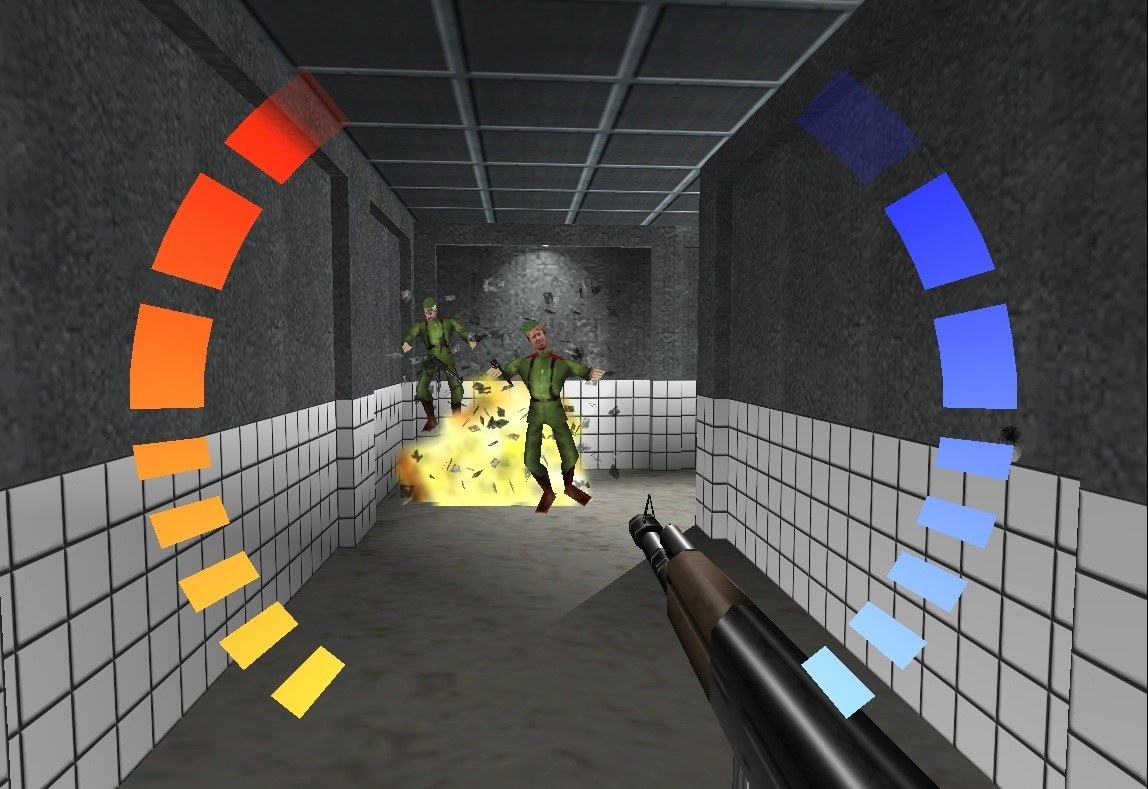
Studio culture leaves fingerprints on games, and sometimes the fingerprint is a machine gun. Ask anyone who played Banjo-Tooie on release in 2000 why a cheerful collectathon sequel suddenly stops, plants the player’s view behind Banjo’s eyes, and lets them fire eggs down a corridor like a first-person shooter, and for twenty-five years the honest answer was a shrug. Now, thanks to former Rare coder Chris Sutherland talking to Retro Gamer magazine about the making of the game, we have the real explanation — and it involves four or five developers, a lunch break, and roughly two years of obsession with their own studio’s shooter.
Sutherland’s recollection is disarmingly simple. A small group on the Banjo team played GoldenEye 007 together at lunchtime, day after day, for what he estimates was probably a couple of years. When a team marinates in a game that thoroughly, he explained, it stops being entertainment and starts being vocabulary. The first-person sections of Banjo-Tooie — Banjo gripping Kazooie by the neck and wielding her as a rapid-fire egg cannon, a sight gag the developers themselves compared to an anthropomorphic machine gun — are that vocabulary spoken fluently.
The split that made the shooter possible
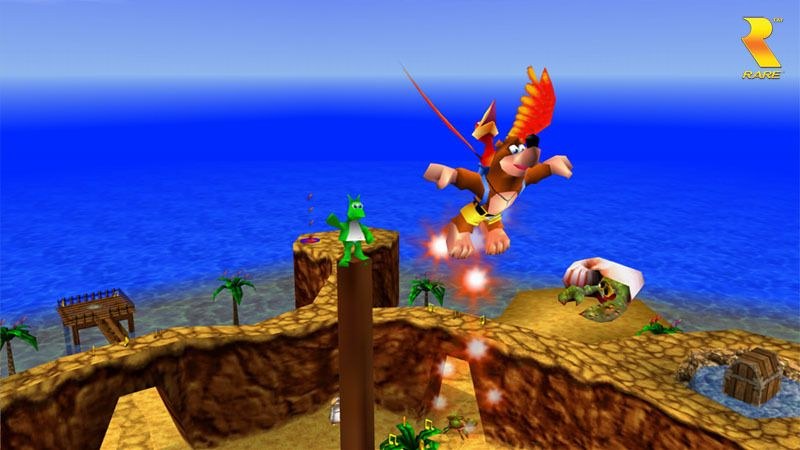
The other half of the story is structural. Director Gregg Mayles had long wanted the sequel to separate Banjo and Kazooie, letting the bear and bird operate independently before reuniting — the next logical step, as Sutherland put it, for a duo whose combined moveset defined the first game. But separation created a design problem with unusual honesty: apart, each character is simply worse. Banjo loses his aerial options; Kazooie loses her muscle. A reduced moveset is a hole, and holes need filling with something new rather than something borrowed back.
First-person egg-firing filled it beautifully. Missions were designed around the mode, turning particular challenges into compact shooting galleries that broke up the platforming rhythm without breaking the game’s tone. The mechanic also handed solo Banjo a way to fight at range, which the sequel’s larger, more interconnected worlds genuinely required. What looks like a joke — and it is a very good joke — is actually load-bearing design, which is usually the case with Rare’s best gags.
Multiplayer caught the bug too
The lunchtime influence did not stop at the campaign. Banjo-Tooie‘s multiplayer offerings lean into competitive shooting in a way its predecessor never attempted, with first-person deathmatch-style mini-games that translate surprisingly well to a cast of cartoon animals. Anyone who had lived through Rare’s internal GoldenEye culture — four players, one screen, no mercy, house rules negotiated like peace treaties — would recognise the DNA instantly. The studio that added multiplayer to GoldenEye almost as an afterthought had, by 2000, a workforce for whom split-screen shooting was practically a second language.
It is worth pausing on how unusual that cross-pollination was. Studios are usually siloed by project and deadline; the platform team ships a platformer, the shooter team ships a shooter, and never the twain shall meet outside the Christmas party. Rare’s Twycross barn in the late nineties was famously different — small teams, shared space, shared hardware, and a hit shooter sitting in the office that anybody could load up at lunch. Perfect Dark would soon take the shooter lineage forward explicitly, Conker’s Bad Fur Day would fold multiplayer shooting into its own chaotic package, and even Banjo-Tooie, the cuddliest title on the slate, came away with trigger fingers.
Why the detail delights, twenty-five years on
Part of the pleasure is archaeological. Players noticed the resemblance in 2000, of course — the first-person view, the reticle, the strafing rhythm all felt familiar — but ‘this reminds me of GoldenEye’ is a very different claim from ‘the developers played GoldenEye every lunchtime for two years and it soaked into the design’. Sutherland’s account converts a fan suspicion into documented history, complete with a headcount. Four or five people. Every lunchtime. A couple of years. Multiply that out and you are looking at hundreds of hours of deathmatches functioning as unofficial research and development for a platform game about a bear.
There is a lesson in it for how games actually get made, which is rarely the clean genre-by-genre procession that marketing suggests. Mechanics migrate through people, not documents. A team that spends its breaks mastering Facility and Archives will, when handed a design problem at two in the afternoon, reach for solutions their hands already know. Banjo-Tooie is a bigger, denser, more experimental sequel than its predecessor in almost every respect — interconnected worlds, transformations, a train, an unapologetic difficulty curve — and its shooter detours belong on that list of experiments, not apart from it.
Sutherland has long since moved on to Playtonic, where the Yooka-Laylee games carry the Banjo lineage into the present, and Mayles’s decades at Rare have only recently drawn to a close. The anecdote they have left behind is a perfect miniature of the studio’s golden age: competitive, playful, slightly chaotic, and utterly uninterested in genre boundaries. Next time Kazooie comes up like a rifle and the eggs start flying, spare a thought for those lunch breaks. Banjo-Tooie didn’t borrow from GoldenEye — it was, in a very real sense, trained by it.
Replaying Tooie with new eyes
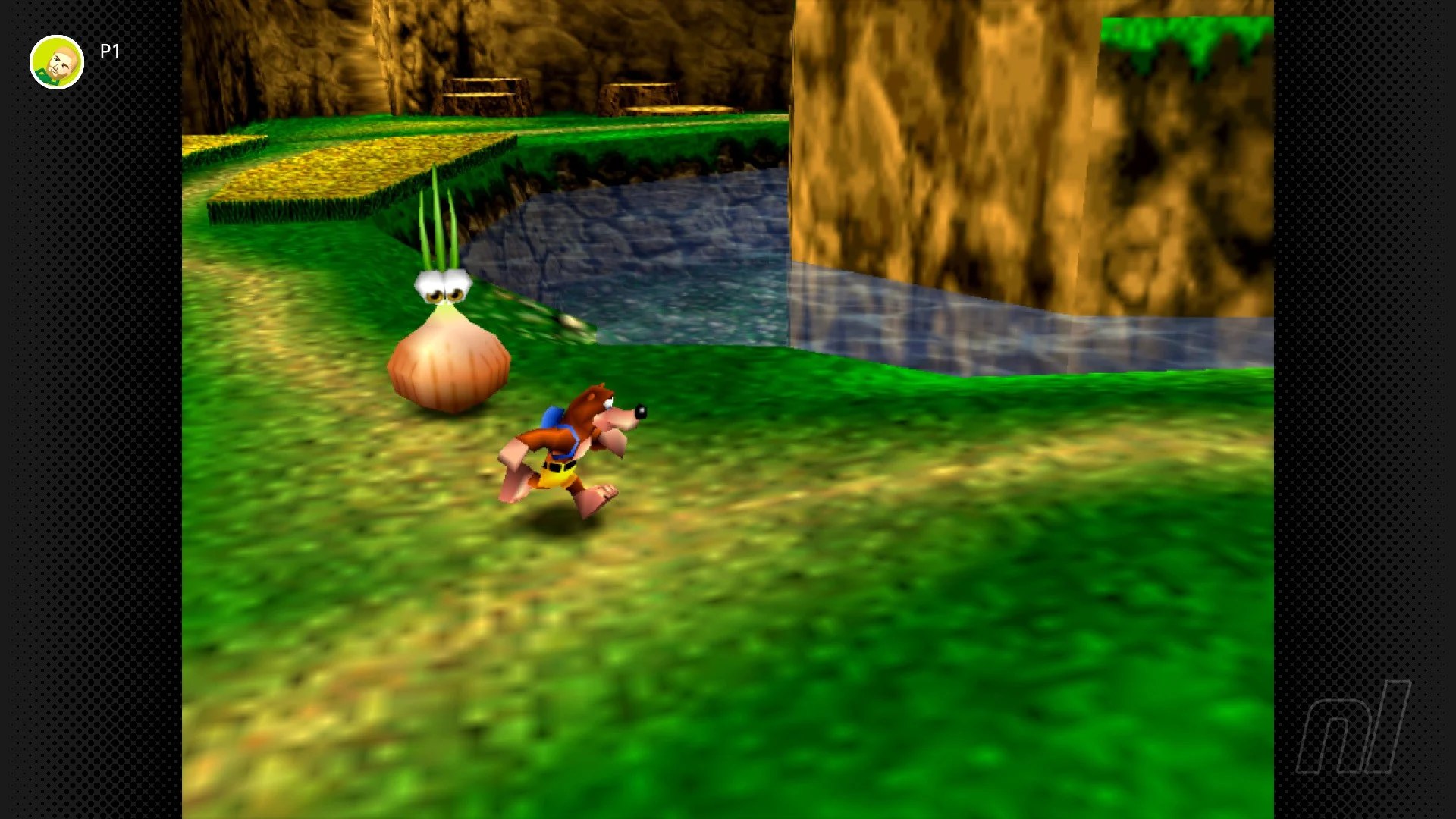
Armed with Sutherland’s story, a modern replay of Banjo-Tooie — readily available through Nintendo’s Switch Online library and the Xbox ecosystem that Rare now calls home — becomes a small act of industrial archaeology. The first-person sequences stop reading as novelty interludes. You notice the confidence of them: the way the camera settles, the generosity of the egg ammunition, the level geometry that quietly rearranges itself into corridors and sightlines whenever the mode is available. Missions built around the mechanic, which once felt like charming filler between Jiggies, reveal themselves as the main event they always secretly were — a platformer team showing off the other genre it had mastered in its spare time.
It also reframes the sequel’s reputation. Banjo-Tooie has spent twenty-five years in a slightly unfair argument with its predecessor: bigger, yes, but also denser, backtrack-heavy, occasionally exhausting in a way the tighter first game never was. The GoldenEye influence suggests that sprawl was not mission creep but appetite — a team so saturated in the best competitive shooter on the console that variety itself became the design goal. Of course the sequel has first-person sections. Of course it has multiplayer shootouts. Of course it has a train, and transformations, and worlds that fold into one another. A team playing deathmatches every lunch for two years was never going to ship a cautious sequel.
There is a coda worth adding. The same Retro Gamer conversation that produced this revelation exists because the Nintendo 64 catalogue is now old enough to be history and young enough that its makers are here to narrate it. Every year adds oral history that would once have vanished into pub anecdotes — daily meetings in one studio, lunchtime deathmatches in another — and every revelation like this one makes the games themselves richer to return to. Banjo holding Kazooie like a rifle was always funny. Knowing it is also a monument to five colleagues, two years of lunch hours and the best shooter their studio ever made? That makes it heritage.