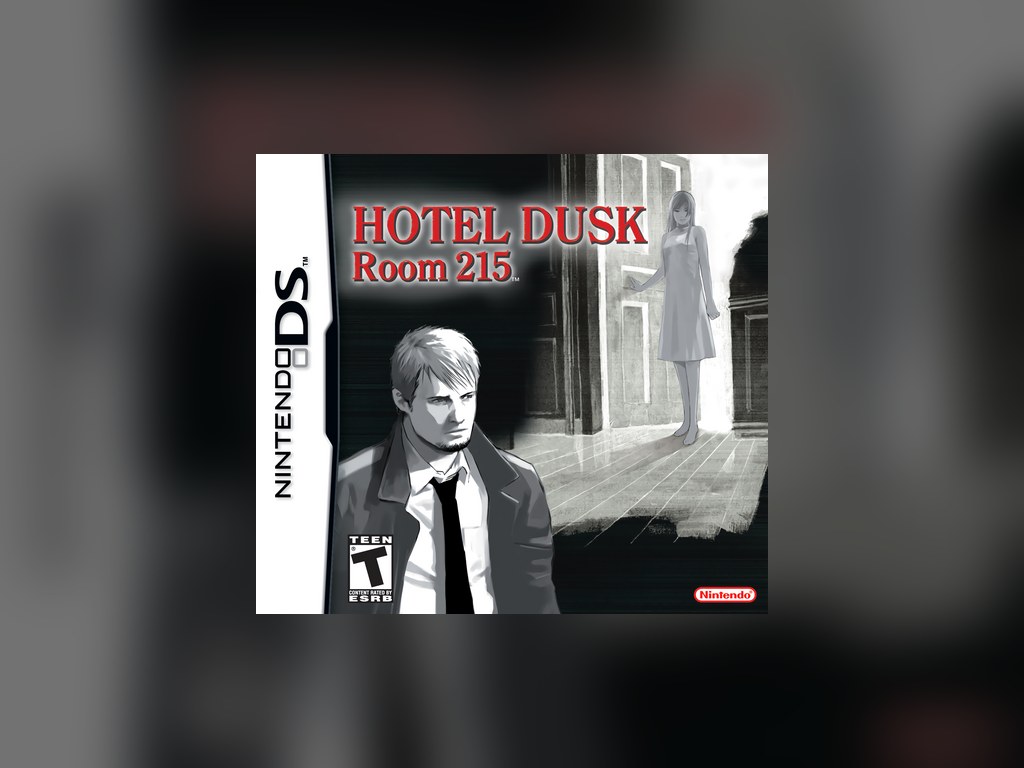
At a glance: Hotel Dusk: Room 215 · Nintendo DS · Nintendo, 2007 · Adventure / visual novel · Score: 8.5/10
Hotel Dusk: Room 215, developed by Cing and released in 2007, is built around a single beautiful decision: you hold the Nintendo DS sideways, like a book. From that gesture everything follows. This is a noir novel you play — one night, December 28th 1979, in a shabby Los Angeles hotel, as Kyle Hyde, an ex-NYPD detective turned travelling salesman, checks into a room said to grant wishes and finds every guest in the building carrying a secret that connects, thread by thread, to the partner who betrayed him three years ago. It is the most atmospheric game on the DS, and one of its best-written.
The hotel itself is the co-star: the Dusk, run by a jovial ex-thief, staffed by a maid with a past and a bellhop who knows too much, its corridors rendered in grainy monochrome on one screen while a first-person view fills the other as you walk them with the stylus. The guests are a noir anthology — an old man who won’t speak, a girl who cannot, a writer, a jewel thief, a father and daughter running from something — and Hyde’s job, chapter by chapter, is to get each of them talking. The plot’s patience is its signature: revelations arrive at the speed of trust, not of plot coupons.
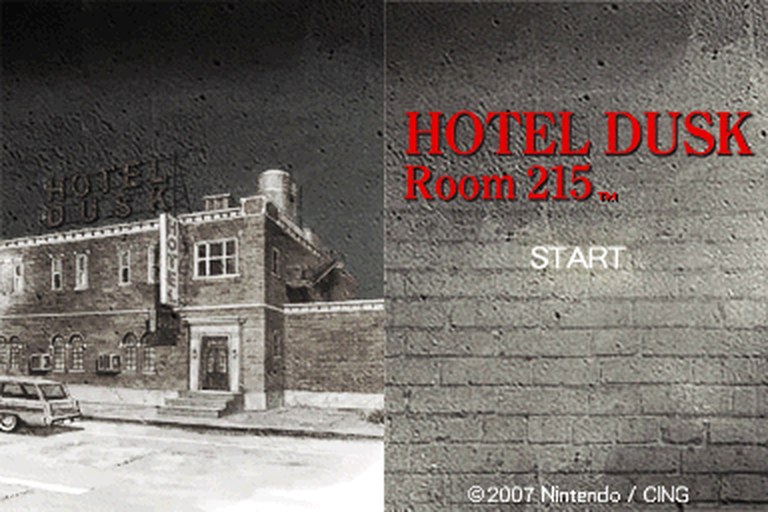
Interrogation as gameplay
Hotel Dusk plays as a classic point-and-click adventure rebuilt for two screens and a book’s grip. You explore in first person on the touch screen, examine the world in close-up, and interrogate guests through branching conversations where the real mechanic is attention: Hyde can press a statement, show an item from his briefcase, or let a lie pass — and the game tracks your manners. Push too hard, confront too early or accuse without evidence and guests shut down; in several chapters, the wrong approach ends the game with Hyde thrown out into the night. It gives dialogue a fail state, and therefore a pulse.
The puzzles honour the hardware with unusual wit. You will close the DS itself to stamp a pattern between its screens, blow into the microphone, solve jigsaws and rub fingerprints visible — and take notes, literally, in Hyde’s notebook on the second screen, a mechanic the game leans on for its memory-testing chapter recaps. Not every puzzle is fair — pixel-hunting in grainy rooms and one infamous bout of backtracking try the patience — but the best of them feel like tricks a novel could never play on you, which is precisely the point.
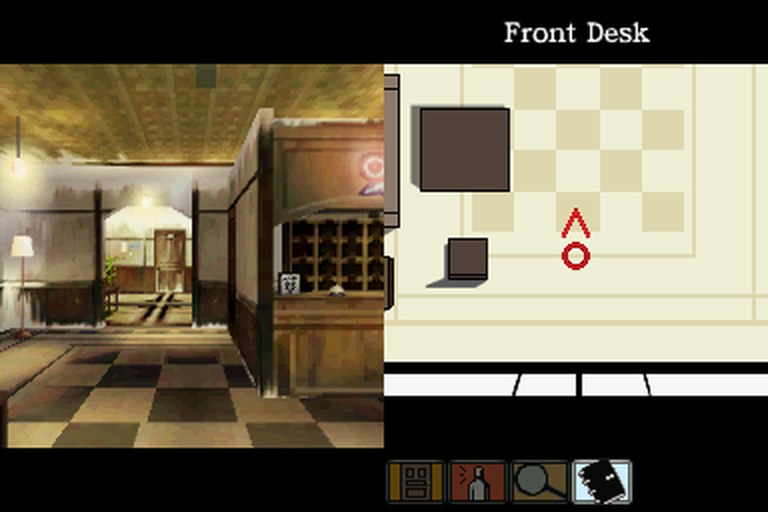
Rotoscoped noir
The presentation is the game’s immortality. Characters are rotoscoped in sketchy black-and-white, pencil lines boiling with life, set against washed watercolour environments and a smoky jazz score that sounds like a bar at 2 a.m. The aesthetic — part graphic novel, part storyboard — lets the modest hardware punch absurdly above its weight, and it has aged better than almost anything on the system. Voice acting is absent by design; the text, sharp and hard-boiled without pastiching itself to death, does all the talking, and the localisation is superb.
Hold the DS like a paperback and Hotel Dusk becomes one: a noir you turn with a stylus, in a hotel where every guest is a chapter.
Pacing is the honest caveat. This is a slow game — deliberately, structurally slow — with long conversations, methodical exploration and chapters that can feel like errands. Players who need incident every ninety seconds should check into a different hotel. But slowness here is atmosphere, and the payoff — a final night of convergences in Room 215 itself — earns every quiet corridor you walked to reach it.
One night, fully furnished
The Hotel Dusk rewards the thorough guest. Its rooms hide optional scenes, small kindnesses and backstory that the critical path never demands — a conversation on the roof, a bartender’s confidence, the full truth about the hotel’s own past — and the chapter-end quizzes, in which Hyde (which is to say, you) must reconstruct what has actually been learned, convert the visual novel’s usual passivity into accountability. The game trusts its writing enough to examine you on it. Cing’s other works — Another Code, and the sequel Last Window, which Europe received and America did not — share the DNA, but Hotel Dusk is the complete statement: the fullest cast, the tightest single-setting structure, the most confident use of the book format.
Its commercial fate was the familiar Cing story — acclaim, modest sales, a beloved studio gone within the decade — but its influence lingers in every narrative game that holds a console like a book or splits its attention across two views of one room. And as a physical experience it remains unmatched: there is still nothing in games quite like lying in the dark with the DS sideways, jazz on the speakers, walking Kyle Hyde down a corridor you have come to know like a real place. Some games you complete. Hotel Dusk you check out of, reluctantly, at dawn.
Practical counsel for new guests: play it in the evening, in few long sittings rather than many short ones, with the sound up and a notebook’s patience. Hotel Dusk is paced like the novel it resembles, and it rewards immersion over efficiency — rush it and the corridors feel empty; settle into its night and they fill with some of the finest character writing in the medium. The Dusk’s register is always open. Room 215 is waiting, and the bellhop has been keeping your key.
Playing it today
Copies have appreciated as Cing’s reputation became legend, but the game remains attainable, and only its own quality gates the experience — no servers, no downloads, just the book-grip and the night. Its sequel, Last Window, never reached North America officially, which makes a European copy (DS games being region-free) the completionist’s route to Kyle Hyde’s second case. Start with this one. Every great detective deserves a first night, and Room 215 — wish-granting, secret-keeping, jazz-haunted Room 215 — is as fine a first night as the medium has ever checked anyone into.
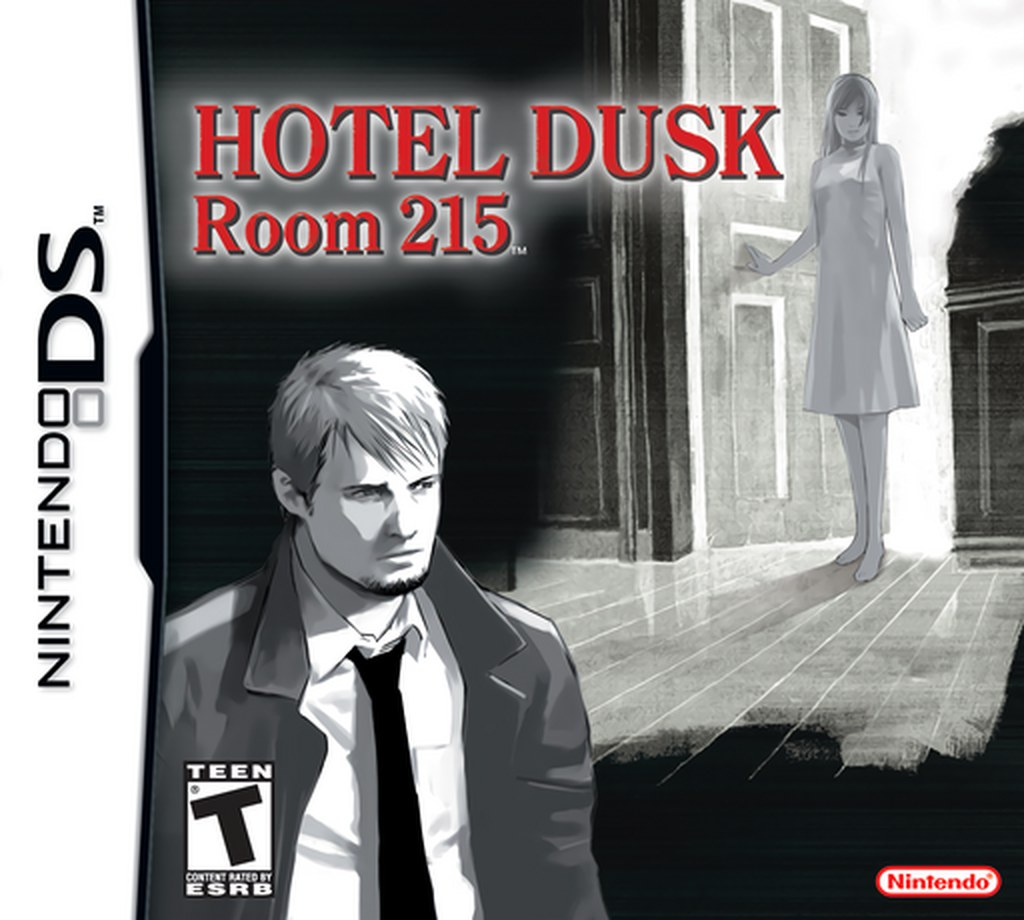
One last detail for the shelf: Hotel Dusk’s physical presentation was part of its art — the manual styled as a case file, the cover’s painted noir — and a complete boxed copy has become one of the more evocative objects in DS collecting, a paperback that happens to contain its own illustrations, music and weather. Games rarely commit to an aesthetic across every surface they touch. This one commits across all of them, including the plastic. Check in, by all means. But keep the key. Everyone does.
Verdict
Hotel Dusk is a masterpiece of mood: the DS’s definitive narrative adventure, a noir that uses every quirk of the hardware — the book grip, the two screens, the closing lid — in service of its story. Cing made nothing else quite like it, and neither did anyone else. Check in for one night. You will be thinking about the guests for years.