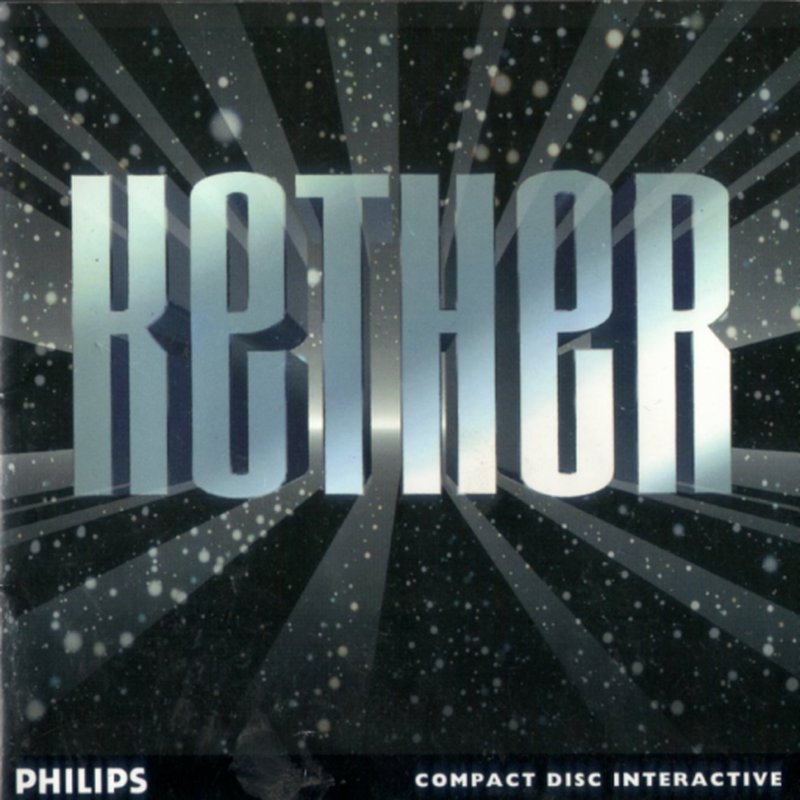
At a glance: Kether · Philips CD-i · Infogrames / Philips, 1993 · Space adventure · Score: 7.0/10
Kether is the CD-i’s most revealing early review story: the magazines that covered the format seriously loved it, and everyone else has been arguing about it ever since. Infogrames’ space opera — developed through its International World Productions arm, with artistic direction by Guy Selva, who set out to build a game around the CD-i’s audio and visual strengths — launched in Europe in October 1993 and North America in January 1994 to scores that included 95% from CD-i Magazine and Joystick and 92% from Power Unlimited, alongside a 6/10 from Edge and a savaging from some American critics that has echoed down the decades. Play it today and both camps make sense. Kether is a beautiful, atmospheric, genuinely ambitious adventure assembled from three gameplay styles, of which exactly one is excellent, one is charming, and one is a chore.
The quest is pure space opera with a mystical spine: the power of Kether, a cosmic force bound to an ancient order, must be recovered temple by temple. Five temples on five worlds hold five runes, and each temple demands the same ritual in three movements. First, the flight: a first-person voyage through an asteroid belt or a swooping run between the towers of a future city, dodging hazards in real time. Then the door: a memory puzzle of mysterious symbols to earn entry. Then the temple itself: a first-person labyrinth, map in hand, hunting the special rooms and blasting the monsters that wander the dark. Complete all five and the galaxy’s mysteries open. It is an honest, sizeable structure for 1993, and its repetition is ritual rather than laziness — mostly.
The flight is the game you remember
The flying sequences are Kether’s glory and the reason for those 90-percent scores. Rendered as smooth, pre-computed voyages and played at speed, they were among the most beautiful things on any home system in 1993 — weaving through a city skyline at dawn, threading an asteroid field with the score swelling, the whole thing presented as dissolves and streams of imagery that the CD-i’s video hardware was born to show. They are not deep: steer, dodge, survive. But as spectacle married to simple, responsive play, they delivered the CD-i promise — a game that looked like the future — more completely than anything else in the format’s first year. Contemporary reviewers were not wrong to be dazzled. The dazzle dates better than most, because the art direction underneath it — Selva’s painterly, melancholy deep-space romanticism — was real.

The temples are where the argument starts. First-person maze exploration was a venerable form even in 1993, but Kether’s version is crude beside its contemporaries: movement is grid-bound and stiff, the view turns in quarter-steps with controls critics at the time already called over-sensitive — tap to turn and you spin past your target — and the monsters, wandering sprites in dark corridors, make combat a matter of facing and luck. The overhead map helps, and the atmosphere inside the temples is genuinely eerie, carried by strong sound design and voice work. But set beside the flight sections, the mazes feel like a game from an earlier, cheaper production that the beautiful one has to share a disc with. The memory puzzles at the temple doors, meanwhile, are exactly what they are: Simon with hieroglyphs, a toll gate between the good parts.
Atmosphere as a system
What holds the three Unequal parts together is mood, and Kether’s mood is its real achievement. The synthesised score, the crisp effects, the voice acting — which even hostile reviews tended to exempt from their complaints — and the painterly stills between stages create a sense of isolation and wonder that the phrase “multimedia experience” was invented for, before it became an insult. Kether is one of the few CD-i games that feels authored rather than assembled: a French studio’s idea of mystical science fiction, closer in spirit to a bande dessinée album than to an arcade game, sold into a format that desperately needed authored things.
Kether is three games sharing one atmosphere: a superb flight spectacle, a serviceable ritual puzzle, and a maze that Doom’s release year was unkind to. The atmosphere wins — most of the time, and by enough to matter.
Context matters for the score. In late 1993 the CD-i’s shelves held far more edutainment, board-game conversions and video brochures than authored adventures, and Kether stood out as proof that Philips’ format could host a game with a vision. Power Unlimited’s verdict — that more games of this calibre might have made the CD-i a serious system — was fair comment. The flaws are equally real, and a player arriving from the flight sections’ brilliance will feel the maze sections as a debt the game keeps asking them to pay. Both reviews are of the same disc.

The French connection
Kether cannot be understood outside the French industry that made it. Infogrames in the early nineties was the most ambitious publisher in Europe, and its CD-i commitment — ten titles, including the International Tennis Open reviewed elsewhere in this series — was a strategic bet that Philips’ format would be Europe’s multimedia standard. Kether, developed through its International World Productions arm with a bande dessinée visual sensibility and a mysticism that Anglo-American studios would not have attempted, is that bet’s most characteristic product: literary, painterly, solemn about its own cosmology, and willing to be strange in ways the market rarely rewarded. The game’s reputation has grown as the format has been re-examined, precisely because its strangeness reads now as authorship.
That growth is deserved, with the review’s caveats attached. Kether is not a lost masterpiece; its maze sections saw to that in 1993 and see to it still. It is something rarer on this platform: a lost point of view. The CD-i library is full of competent conversions and licensed filler. Very little of it could only have been made by the people who made it, in the place they made it, at the moment they made it. Kether could only have been made by Infogrames, in France, in 1993 — and a library, like a literature, is ultimately valued for exactly those works.
Play it in the right order and the game improves, so the advice belongs in the record: savour the flights, treat the doors as ritual, and bring a notebook to the temples — the mazes reward mapping the way their early-nineties ancestors did, and the overhead plan plus a pencil turns the weakest third of the game into a fair, old-fashioned dungeon exercise. Played as its first audience played it, with the patience the format assumed, Kether’s balance sheet tilts further toward the dazzled camp than the sceptics’. Not all the way. Enough.
Verdict
Kether earns 7.0/10: top marks for ambition, art direction and the finest flying sequences of the format’s early years; real deductions for maze design and controls that were dated on arrival. It is, alongside Burn:Cycle, the CD-i adventure that history should keep — flawed, beautiful, and like nothing else on the shelf. If the platform had a house style worth defending, Kether is where you’d start the defence.