At a glance: Lady Bug · ColecoVision · Coleco/Universal, 1982 · Maze chase · Score: 8.5/10
Every console of the early eighties needed a maze game, and the ColecoVision, lacking the most famous one, got the most interesting one instead. Lady Bug, Universal’s 1981 arcade charmer, takes the Pac-Man formula — eat everything in the maze, avoid the hunters, grab the bonuses — and adds two ideas that transform it: revolving doors you can spin to reshape the maze and cut off pursuit, and a letter-and-heart bonus system that turns every maze into a spelling lesson with stakes. Coleco’s conversion was a launch-window release, and it is one of the system’s defining cartridges: colourful, clever and criminally underrated in the decades since.
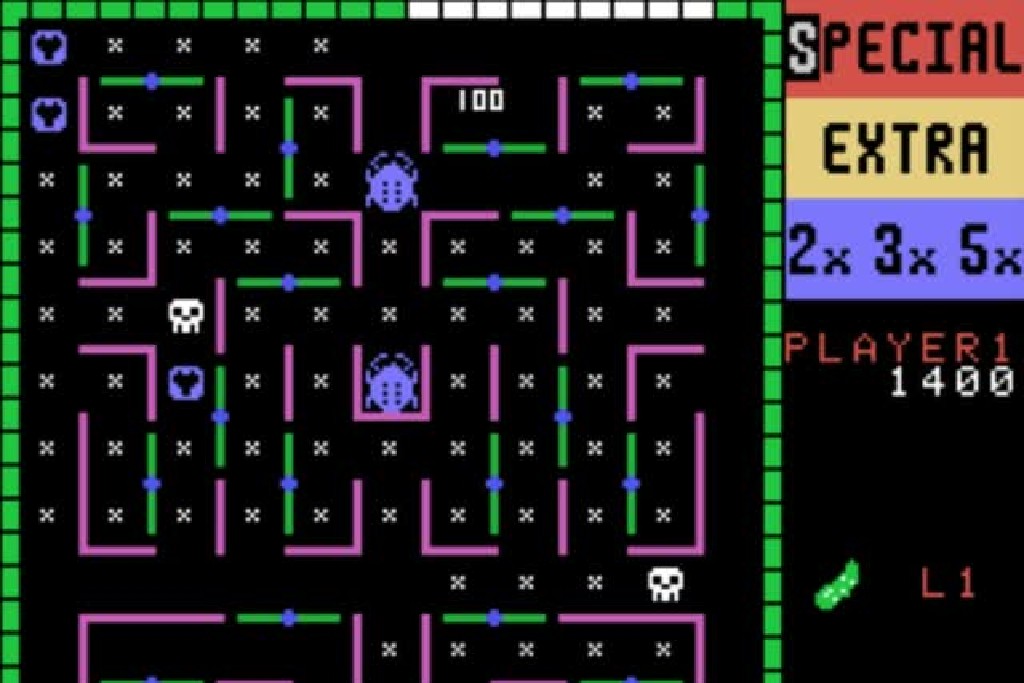
You are the ladybird, working a garden maze of flowers. The maze is patrolled by predatory insects released one by one from the central box, speeding up as the mazes progress. Clear every flower and you move on; touch a predator and you lose a life. Skulls scattered through the maze are poison to both sides — lethal to you, but a predator that blunders into one dies too, which makes them tactical weapons for the brave.
The doors change everything
The revolving doors are the masterstroke. Set into the maze walls as green pivoting panels, they spin as you pass through them, opening one corridor and closing another. A predator on your tail can be shut out with a well-timed pass; a sealed route can be opened to reach the last flowers; the whole geometry of a chase can be reversed in one move. Skilled Lady Bug play is door play — herding predators, spinning escape routes into existence, and occasionally spinning a door into a pursuer’s face with enormous satisfaction. The ColecoVision version reproduces the doors faithfully, and the console’s stick handles the maze well, with the usual period caveat that quick direction reversals reward a deliberate hand.
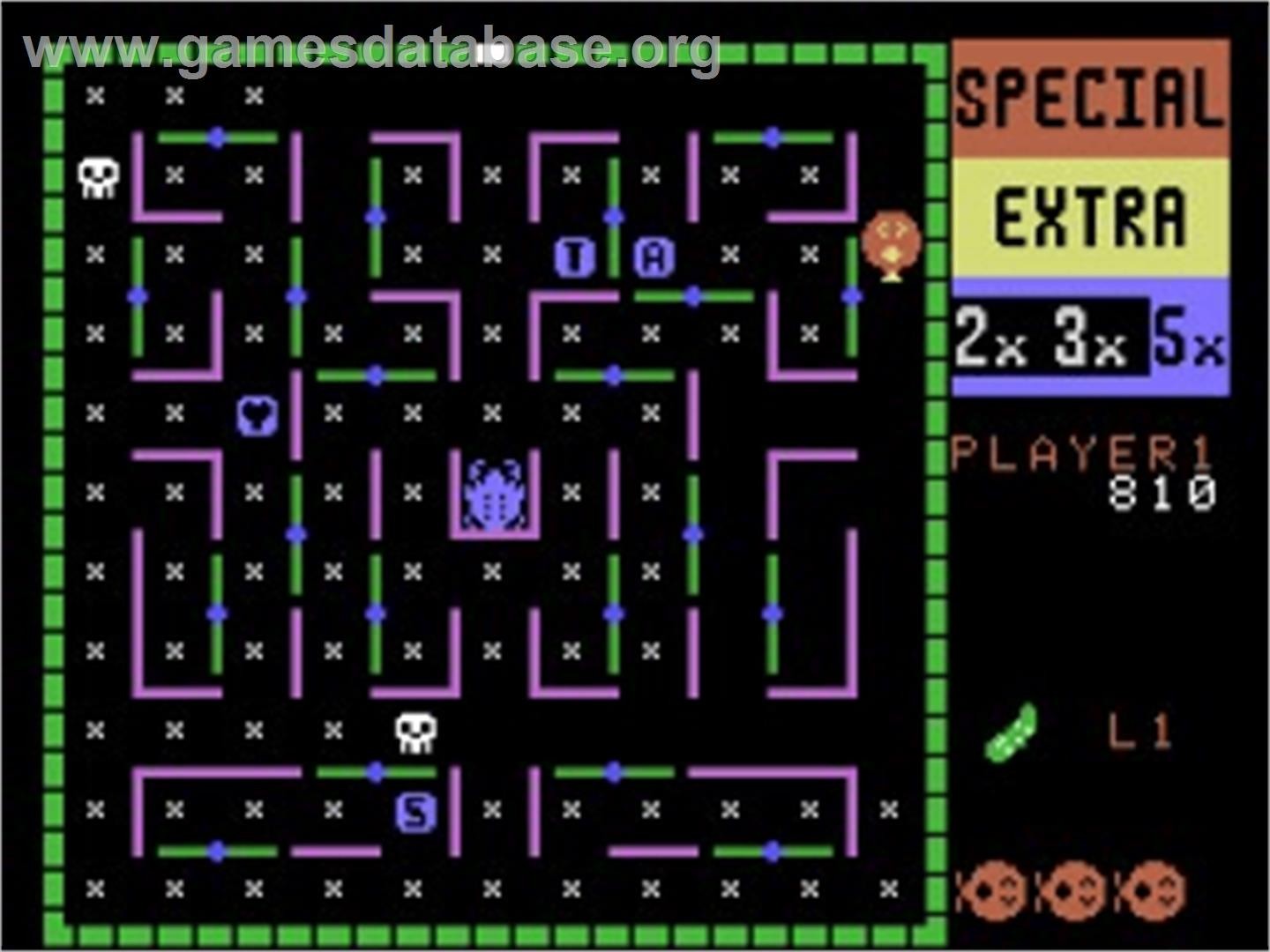
Layered on top is the bonus system, the most generous of the maze era. Letters appear briefly at the maze’s edge: collect them in the right colours and you build towards spelling SPECIAL — which awards an extra credit-style bonus round of free vegetable gathering — and EXTRA, which awards an extra life. Hearts multiply the value of the vegetables that periodically appear in the centre. It gives every maze three simultaneous games: survival, clearance, and collection, and it means a great Lady Bug score is built from judgement as much as reflexes. Do you detour for the red letter while two predators converge? The game asks constantly, and the answer is what separates good scores from great ones.
A garden with real charm
Presentation is where the ColecoVision version sings. The arcade’s garden palette — vivid flowers, crisp maze lines, vegetables rendered like a greengrocer’s daydream — survives the trip home almost intact, and the predators are distinct, characterful sprites rather than recoloured clones. The ticking countdown as insects wait to enter the maze, the escalating tempo as each maze’s timer summons faster hunters, the little jingles for letters and hearts: it all builds a game with a personality gentler than Pac-Man’s but no less compulsive. The vegetable timer matters, too — linger too long on one maze and the last predator emerges at full speed, a built-in hurry-up that keeps scores honest.
The maze wars, settled at home
History handed the fame elsewhere, but on the ColecoVision the comparison was available to anyone who played both this and the various maze offerings on rival machines: Lady Bug is simply the deeper game. The doors alone would justify it; the letters, hearts, skulls and vegetable economy make it the connoisseur’s maze chase of the generation. It also has that quality the best ColecoVision cartridges share — it was a less-obvious arcade property that found a larger audience at home, which was exactly Coleco’s licensing strategy: buy the games the arcade crowd loved but the living room had never met.

Playing the letters like a professional
The difference between a decent Lady Bug score and a great one is almost entirely the letter economy. Letters appear fleetingly and in fixed colour states as they cycle — only a letter collected in its matching colour counts towards the word — so the expert game is played several moves ahead: hold position near a spawn point while the letter ripens to the colour you need, even with predators closing, because a completed EXTRA or a shot at the SPECIAL bonus round is worth more than any single maze’s flowers. The hearts interact deliciously with this: a heart banked before the centre vegetable appears multiplies the reward for the detour you were already taking, and the bravest players route their whole maze around setting that up. Meanwhile the skulls deserve more respect than they get: positioned as they are, they are the maze’s artillery — a predator lured across one is a threat deleted for free, and on the highest-speed mazes, skull-routing is the only strategy that scales.
The Universal connection
Lady Bug also tells the ColecoVision’s smartest business story. While rivals fought over the handful of headline licences, Coleco built relationships with the arcade’s strong second tier — Universal above all — and converted their games with unusual care. Universal’s catalogue (this, Mr. Do!, Cosmic Avenger) gave the console a library with a house style all its own: bright, inventive variations on familiar genres, each with one mechanical idea the famous games lacked. Lady Bug is the purest of them, and its afterlife reflects that: it turns up on connoisseur lists for the system again and again, recommended in the tones people usually reserve for games they cannot believe you have not played. Believe them.
For collectors and first-time gardeners
Lady Bug cartridges are common, friendly things — this was a popular game, and it survives in quantity — but treat yourself to a copy with its manual, because the letter-and-heart economy that makes the game great is only half-explained on screen, and the documentation turns a charming maze game into the strategic instrument it really is. Beginners should spend their first sessions ignoring the letters entirely and learning the doors, which are the survival skill; the spelling game layers in naturally once the maze stops feeling hostile. A final recommendation on format: this is one of the finest two-player alternating games on the system, because a Lady Bug run is a story — the detour for the red letter, the door spun in a predator’s face, the skull that saved everything — and stories want an audience. Plant yourself accordingly.
There is also the matter of the two-player game, which deserves a stronger recommendation than a footnote: alternating play turns Lady Bug’s letter economy into a spectator drama, because the watching player can see the SPECIAL word building across turns and will absolutely shout advice during the red-letter detours. Few cartridges on any early-eighties system generate that specific, companionable tension — half co-operation, half rivalry, all garden.
The verdict
Lady Bug is the ColecoVision’s maze masterpiece: a faithful conversion of a genuinely innovative arcade game, layered with more systems than any of its rivals and presented in full garden colour. If you own the console and have never spun a door into a predator’s face, you have a treat waiting.
Score: 8.5/10 — The cleverest maze chase of its generation, in full bloom.