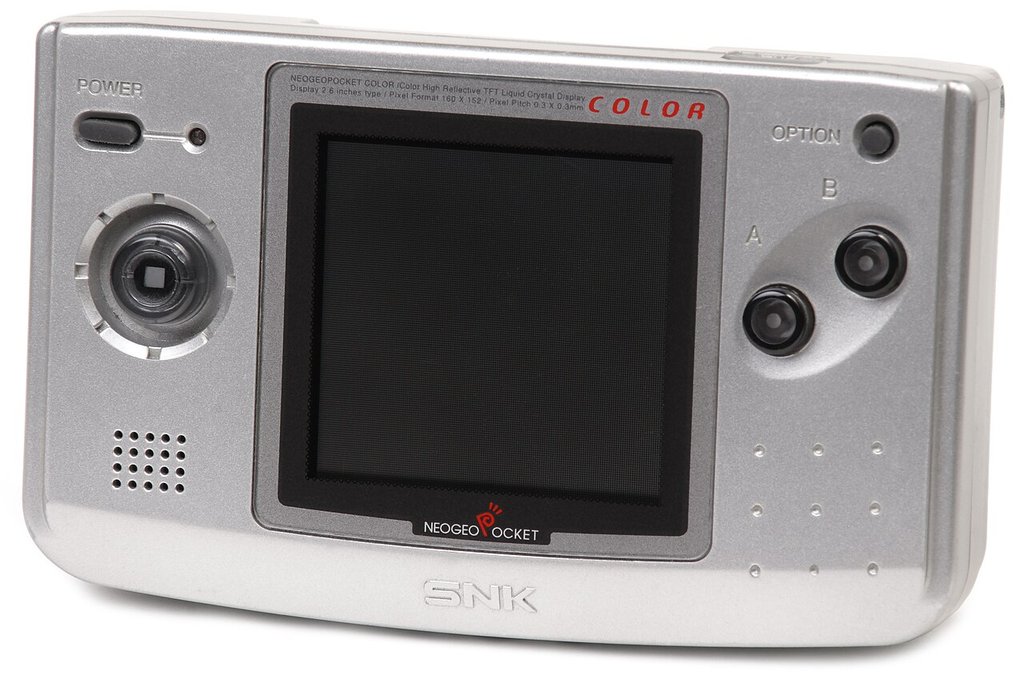
Boot a Neo Geo Pocket Color with no cartridge inserted and you meet the machine’s second personality: a little built-in world of clocks, calendars and — most famously — a horoscope that will tell your fortune for the day. It is the perfect emblem of a handheld that treated connection and character as the same project. The NGP’s link features were not bullet points; they were a philosophy, years ahead of the industry, that a pocket machine should talk — to other pockets, to home consoles, and apparently to the stars.
Start with the basics done right. The system’s link cable connected two machines for the purposes the library actually used: versus fighting across the whole Pocket Fighting Series, card trading, head-to-head racing and golf. SNK’s catalogue was social by design — fighters and puzzlers are two-player games that happen to work solo — and the link port on every unit meant the multiplayer was never an adapter-locked afterthought. Games from Match of the Millennium to Neo Turf Masters assumed you might know another owner, and rewarded you if you did.
The Dreamcast cable: a handshake between rivals
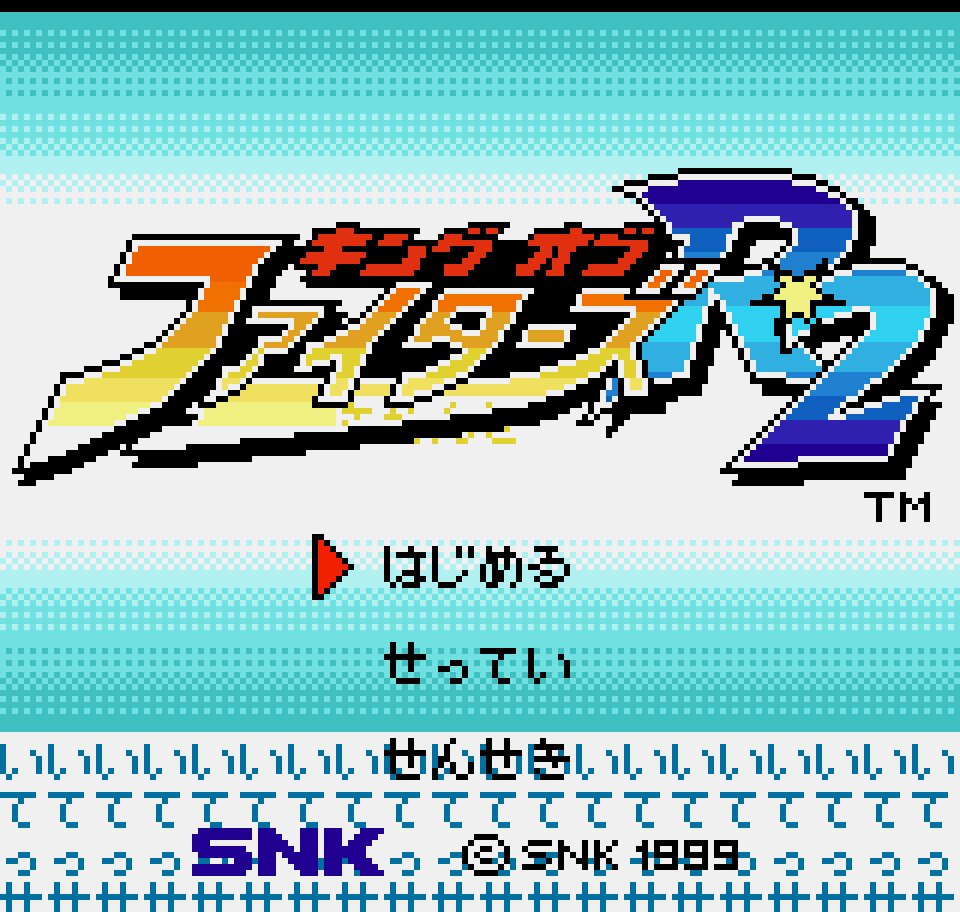
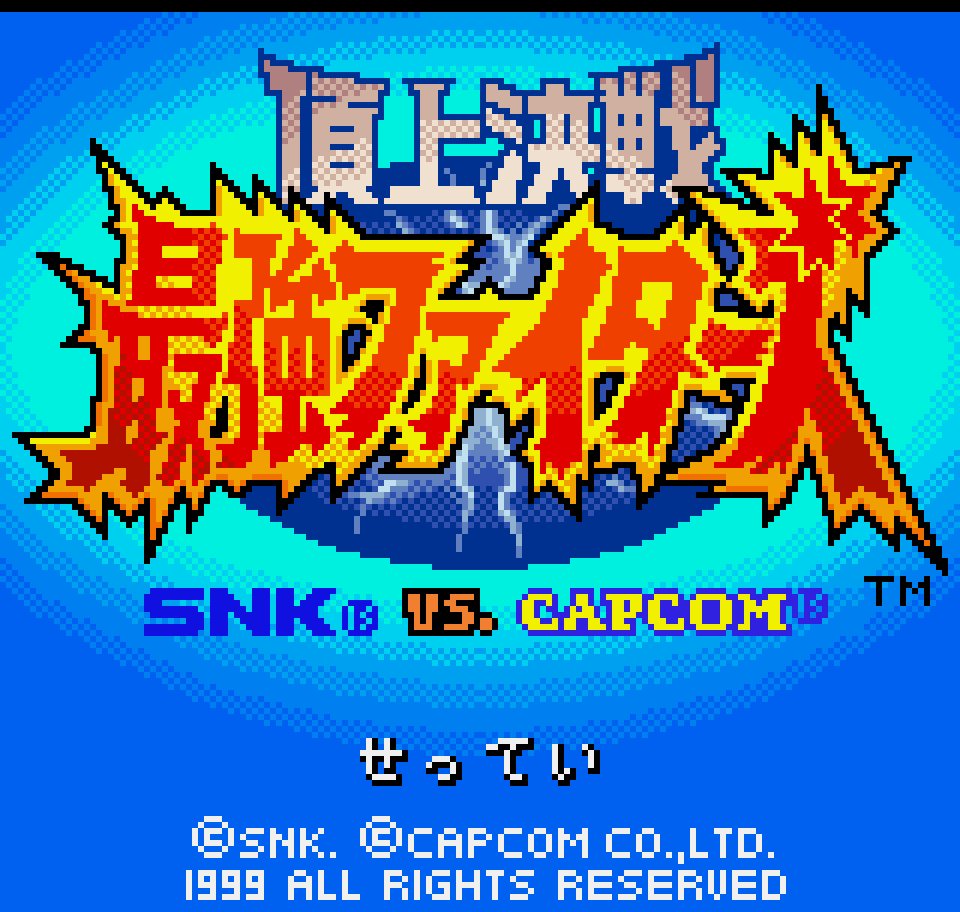
The headline act was the Neo Geo Pocket–Dreamcast link cable, fruit of SNK’s partnership with Sega — a $29.99 wire that plugged SNK’s handheld into Sega’s home console and let data flow between pocket and TV games. King of Fighters R-2 exchanged points and unlockable skills with the Dreamcast’s King of Fighters: Dream Match 1999 and ’99 Evolution. Match of the Millennium traded with Capcom vs. SNK. Card Fighters’ Clash joined the same circuit. In 1999 and 2000, this cross-company, cross-format connectivity had no precedent: Nintendo’s celebrated GameCube–Game Boy Advance link was still years away, and it never crossed a corporate border.
The cable’s rarity today — it commands serious money — disguises how forward-looking the thinking was. SNK and Sega imagined the handheld not as a lesser console but as a companion: a second screen, a training ground, a wallet of unlocks you carried in your pocket. Every modern ecosystem that syncs your progress between phone and TV is walking a path this cable cut.
In 1999, SNK and Sega let a pocket machine trade data with a rival’s home console. Nintendo’s famous connectivity push was still years away — and never crossed a corporate border.
Wireless dreams
SNK went further. At the Tokyo Game Show in 1999 it demonstrated a wireless communication adapter for the system — a plug-in unit that would let nearby players battle and trade without the cable — and the unit subsequently reached Japan in limited form, with certain cartridges even moulded to accommodate it. Mass release never came; the company’s collapse overtook the roadmap, and the wireless Pocket future joined the unreleased MP3 player accessory in the museum of announced intentions. But pause on the date: a wireless multiplayer adapter for a handheld, shown in 1999, half a decade before the Nintendo DS made wireless play the genre’s baseline. SNK’s engineers were not behind the times. They were early to a future that arrived without them.
Clocks, calendars and your fortune
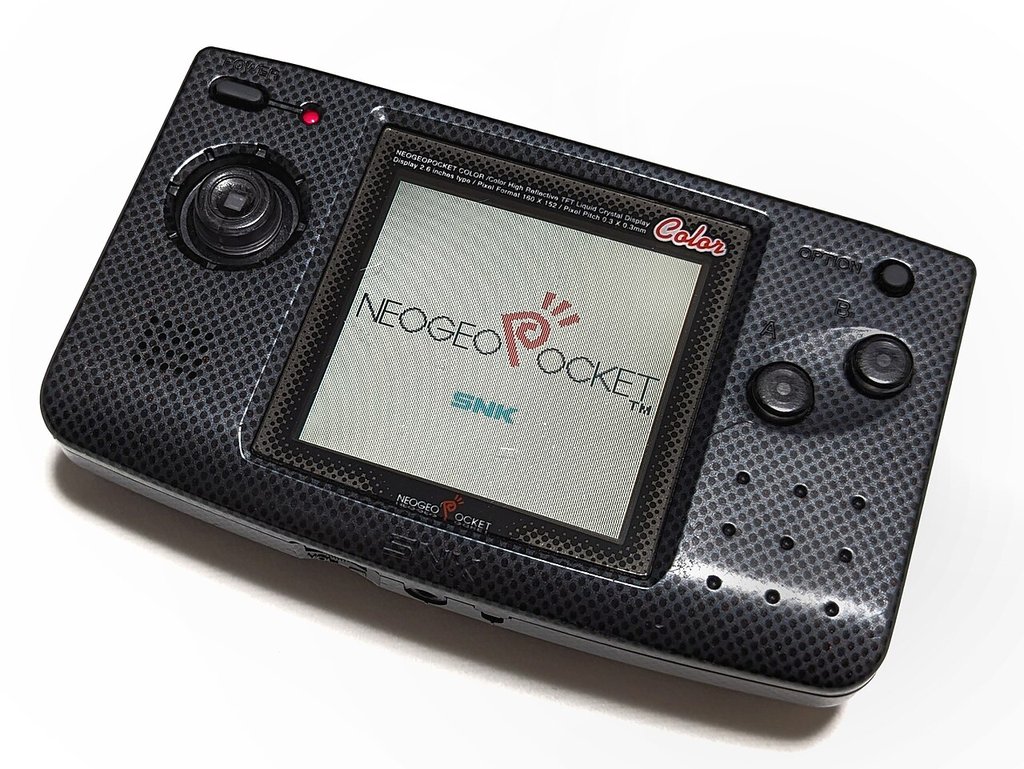
And then there is the firmware. The built-in system software — bilingual, cheerful, oddly complete — offers a world clock, a calendar, an alarm, and the celebrated horoscope, which reads your stored birthdate and the date and renders a daily fortune. It is easy to laugh at, and everyone does, fondly. But notice what it represents: a 1999 games handheld with a persistent clock, a user profile, and software that did something for you on the days you never inserted a game. That is the logic of every modern device’s ambient usefulness, in miniature, on two AA batteries.
The cart as companion
Buried in the link story is a subtler idea that deserves rescue: the NGPC treated the cartridge itself as a persistent companion object. Your Making-mode fighter in KOF R-2, your card collections, your Olympic records in Match of the Millennium — all of it lived on the cart, travelled with it, and meant something when the cart visited a Dreamcast or a friend’s machine. Modern accounts and cloud saves do this invisibly; the NGPC did it physically, with the small ceremony of cables and slots, and the ceremony was part of the pleasure. Anyone who carried a memory card to a friend’s house in the same era will recognise the feeling instantly.
Even the failures instruct. The wireless adapter’s limited life, the MP3 player’s cancellation, the link features in games whose partners never shipped — the NGPC’s connectivity roadmap was longer than its lifespan, and the industry spent the next decade building, piece by piece, the ecosystem SNK had sketched: companion apps, cross-platform unlocks, wireless everything, ambient clock-face usefulness. Sketches don’t ship. But when the future arrived, it looked remarkably like the one drawn in 1999 by a handheld that told fortunes.
The horoscope, since everyone asks, is real and it is thorough: enter your birthday in the system settings, open the fortune function, and the machine consults the date and renders judgement on your day — a tiny daily ritual that owners genuinely performed, in the years before phones ate the world’s idle moments. It sits alongside the alarm clock (the NGPC as bedside companion), the calendar and the world clock (the NGPC as traveller’s tool) — a suite of small ambitions that reads today like a rough sketch of the smartphone’s job description, drawn by a games company a decade early.
Perhaps that is the linking story’s real moral. The cables get the glory — and deserve it — but the philosophy underneath them was broader: a handheld should be connected to your life, not just to other machines. To your TV, to your friends, to your calendar, to your stars. SNK shipped that philosophy in 1999, in a $69.95 toy, and the rest of the industry has been shipping it ever since.
The cables themselves have become collectible — the Dreamcast link especially, trading now for sums that would have bought the handheld it served. There is something fitting in that: the wire that connected two rival companies’ dreams turned out to be the rarest artefact of the dream itself. If you find one, you are not buying an accessory. You are buying the handshake.
Try, finally, to name another 1999 handheld with this breadth of connective ambition: a two-player cable used by most of its library, a cross-company console link with shipped games on both ends, a wireless adapter demonstrated to the press, and firmware that treated the machine as a daily companion. There isn’t one. The NGPC’s connectivity was not a feature list. It was the clearest window into how its makers imagined the future of play — social, portable, and wired into everything.
The link era ended with the company, but its ideas didn’t. When you trade a Pokémon over the internet, sync a save to the cloud, or check a console’s clock to trigger an in-game event, you are using the NGP’s imagination at scale. The little machine with the horoscope saw where all of this was going. It just didn’t get to stay for it.