
Ask anyone to describe the Neo Geo and they will describe its fighters — and they will be right, as far as they go. But a library of several hundred games hides more than its famous canon, and some of the most joyful hours the system offers live far from the King of Fighters bracket. These are ten Neo Geo games beyond the fighting canon: launch titles that time forgot, action-adventures, shooters, puzzlers and racers that reward anyone willing to dig past the essentials shelf. Every one of them is a complete delight in its own right — and together they make the case that the Neo Geo was never just a fighting machine.
A note on how this list was built. We set three rules. First, no fighters — the canon has that covered, and you will find our reviews of Samurai Shodown II, The King of Fighters ’98 and Garou elsewhere in this wave. Second, no games already sitting on this site’s essentials lists; a hidden gem you have already been told to play is not hidden. Third, every game had to earn its place on play, not reputation — each of these ten has been revisited for this list, and each survived the only test that matters, which is wanting one more credit when the game over screen arrived. The result spans the system’s whole life, from the 1990 launch window to a brawler released in 2001, when the Neo Geo was eleven years old and still, quietly, producing work this good. If your picture of this library begins and ends with men shouting special-move names at each other, prepare to have it pleasantly rearranged.
1. Magician Lord
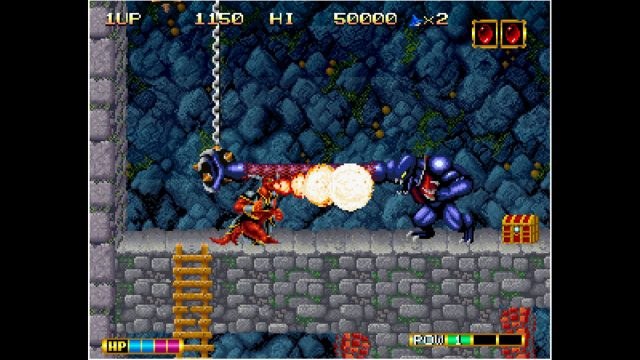
ADK’s 1990 launch title is the Neo Geo’s great lost platformer. You are Elta, the last magician, fighting across a dark fantasy world to recover stolen spell books from the demon Gal Agiese — and the hook is transformation. Collect the right orbs and Elta becomes a dragon, a samurai, a ninja or a hulking vat-grown warrior, each with its own attacks and movement. The difficulty is legendarily stern and the continue screen — Gal Agiese taunting you personally — is an all-time great. Moody, gorgeous and hard as coffin nails, Magician Lord is the system’s essential deep cut for platformer fans.
It also rewards study like few launch titles do. Levels are labyrinths of doors and detours, transformation orbs tempt you off the safe path, and the generous continue system — which drops you near where you fell rather than at a distant checkpoint — turns its cruelty into a fair negotiation. Persevere, and the final stretch delivers one of the great early-nineties boss gauntlets.
2. Crossed Swords

Also from ADK, Crossed Swords (1991) is a first-person-by-way-of-the-shoulder sword game years ahead of its time. Your knight is a translucent silhouette at the bottom of the screen — the better to see the skeletons, knights and horrors advancing on you — and combat is a rhythm of guarding high and low, parrying, and striking in the openings. Between battles you buy better weapons and armour with your winnings, giving it a light RPG spine. Nothing else on the system plays like it, and its two-player mode turns the campaign into a proper co-op quest. It is the closest the Neo Geo gets to a dungeon crawl, and it is superb.
Its historical footnote is worth knowing, too: Crossed Swords is effectively an early rehearsal for the perspective and parry rhythms that later action games would make famous, built here with 1991 technology and a great deal of nerve. Play it on a big screen, where its advancing enemies fill your vision the way they were meant to.
3. Blue’s Journey

Every library needs a game that simply makes you happy, and on the Neo Geo that game is Blue’s Journey (1990), known in some territories as Raguy. ADK’s eco-platformer sends young Blue across the planet Raguy to stop the polluting Daruma Empire, armed with a leaf he can shake enemies with, bombs, and the ability to shrink himself to reach hidden passages. It is gentle where Magician Lord is cruel, bright where the rest of the early library is moody, and full of secrets, shops and branching routes. A co-op second player can join, too. The Neo Geo’s sunshine game.
Do not mistake its kindness for shallowness. Blue’s Journey hides warp routes, optional shops where your collected flowers buy real power, and multiple endings that depend on how thoroughly you have cleaned up the planet. It is the rare early platformer that respects both the speedrunner and the Sunday-afternoon wanderer.
4. Top Hunter: Roddy & Cathy

SNK’s 1994 platformer is the great what-if of Neo Geo action design. Bounty hunters Roddy and Cathy chase space pirates across four themed planets, and the gimmick is plane-switching: stages run on two parallel layers, foreground and background, and you hop between them to dodge, explore and attack — an idea that feels startlingly modern. Add extendable robo-arms for grabbing enemies, rideable mecha suits, and humour in every sprite, and you have a game that plays like a rehearsal for Metal Slug’s character at platformer pace. Criminally overlooked because it shared a console with giants.
Two players can take Roddy and Cathy together, and should: the plane system turns co-op into a constant, good-natured argument about who is covering which layer, and the bosses — huge, silly, multi-part affairs — are plainly designed for a pair of hunters. One of the system’s most reliable co-op cartridges, full stop.
5. Sengoku 3
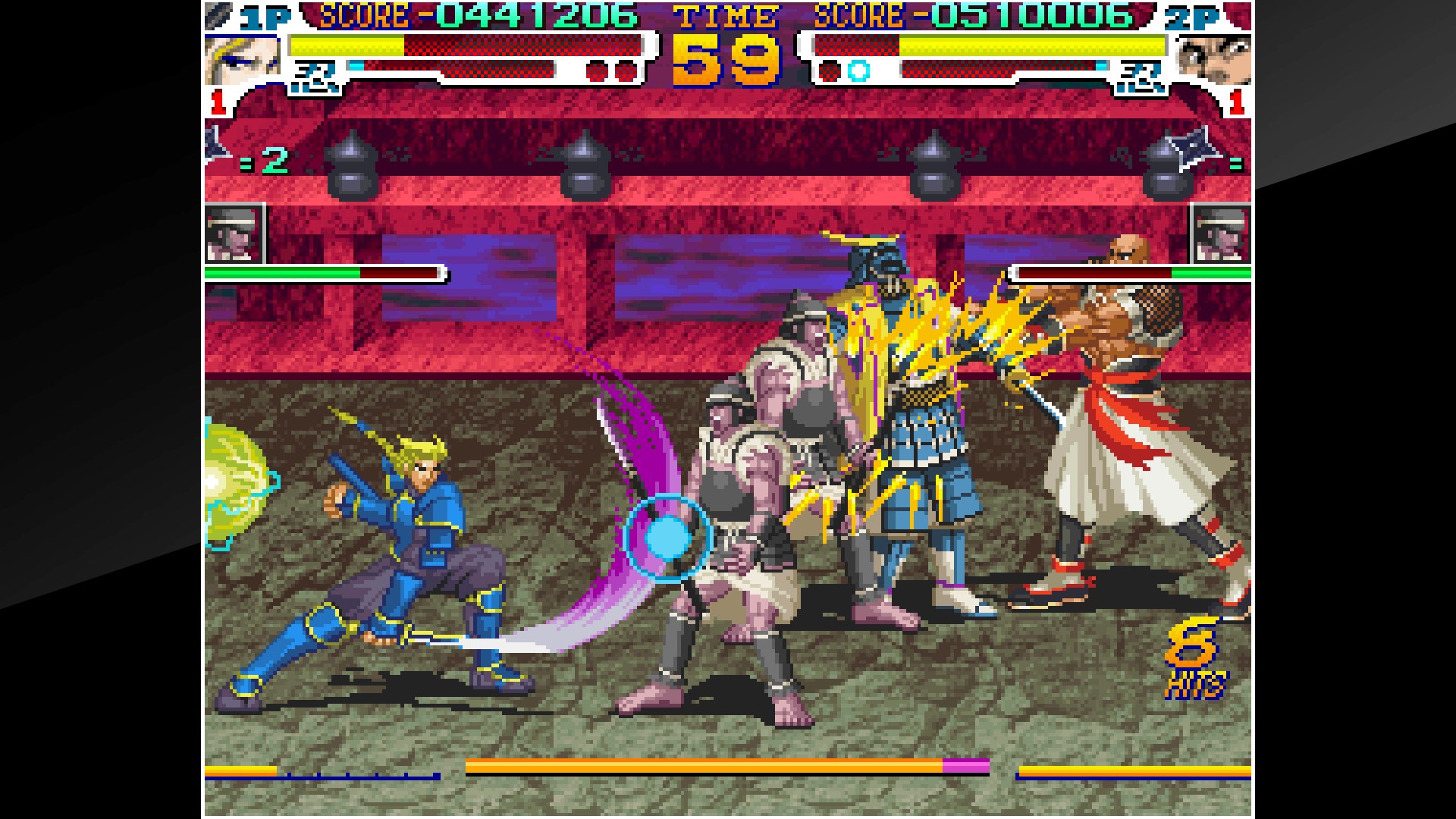
The Neo Geo is oddly short on belt-scrolling brawlers, which makes Sengoku 3 (2001) essential. Noise Factory took SNK’s time-hopping Sengoku series and rebuilt it as a fast, combo-hungry brawler with four starting characters, unlockable bosses, weapons, special techniques and a juggle system that rewards aggression. Set in the modern day with mythological invaders pouring in, it looks wonderful — big sprites, smooth animation, stages from city streets to feudal battlefields — and plays better than almost any brawler of its era. If you think the genre peaked in 1993, Sengoku 3 is the correction.
It also runs beautifully, which matters in a genre where slowdown can smother the fun: even with the screen full of enemies and effects, Sengoku 3 keeps its pace, and its difficulty curve is generous early and serious late in the approved arcade manner. The best brawler on the system, and it wins the title without a serious challenger.
6. Twinkle Star Sprites

ADK’s 1996 jewel is a competitive shoot-’em-up — a versus puzzler wearing a shooter’s clothes. Two players (or one against the computer) occupy split-screen fields, blasting enemy waves; the chains you build send attacks flooding into your opponent’s side, and boss attacks arrive as punishment for sloppy play. It is cute, colourful and utterly ruthless underneath, a game of indirect warfare where your best move is making the other screen uninhabitable. Twinkle Star Sprites has built a devoted competitive following in recent years, and one match is enough to understand why.
Its single-player mode deserves a mention as well, unfolding as a gentle storybook quest whose dialogue gives its roster of witches, fairies and oddballs more personality than a versus shooter has any right to. Charming on the surface, tournament-serious underneath — the most Neo Geo combination there is.
7. Money Puzzle Exchanger
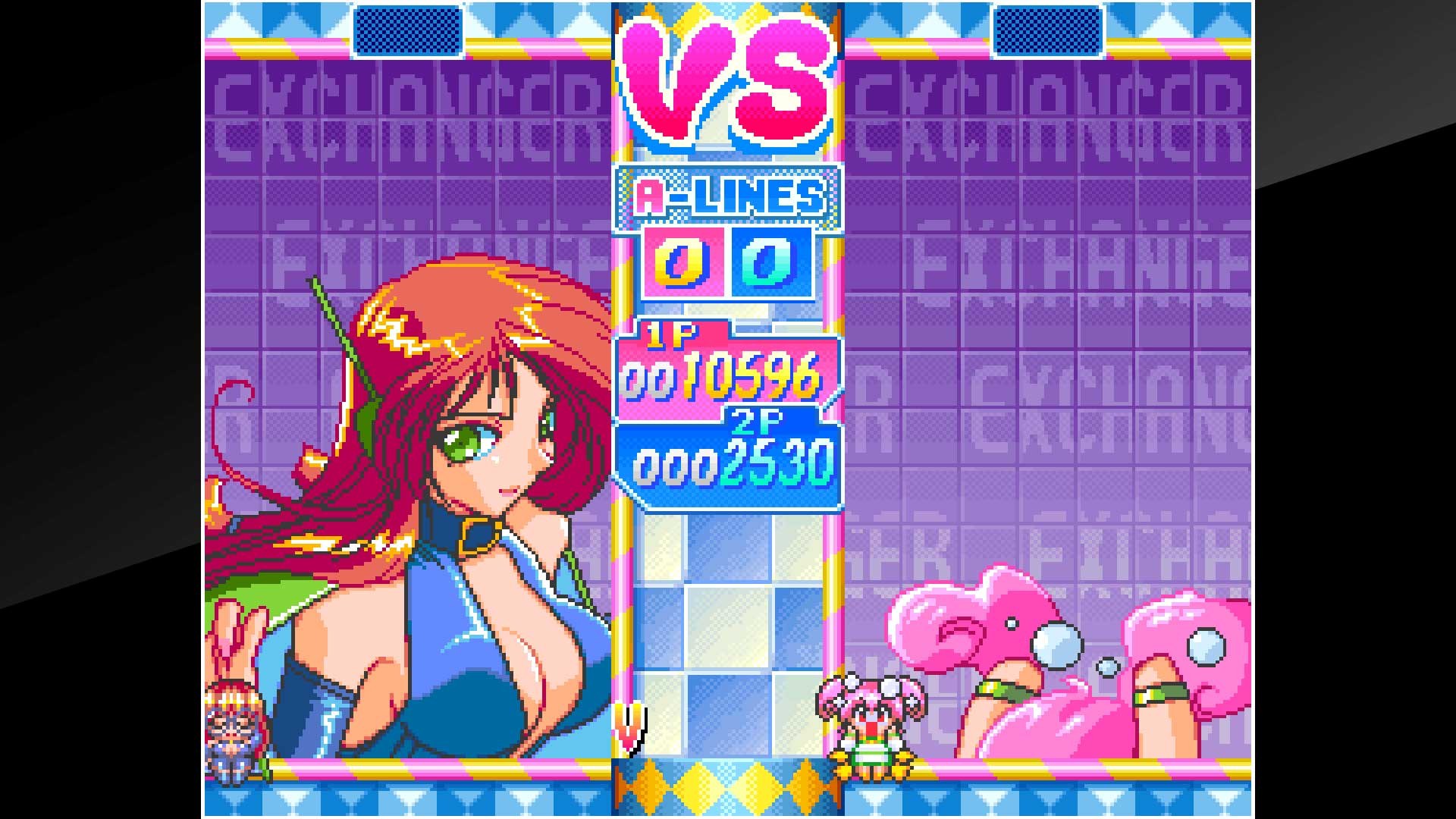
Face’s 1997 puzzler takes the Magical Drop formula — grab items from the field, return them to make matching sets vanish — and gives it a money-changing skin that is secretly brilliant. Coins come in denominations; match five 1-coins and they become a 5, match 5s into a 10, and so on up the ladder, so the board is constantly transforming rather than merely clearing. Against the clock or a rival, it becomes a game of mental arithmetic at panic speed. Add a cast of cheerfully mercenary anime girls and you have the Neo Geo’s best puzzle game not named Magical Drop — and some of us prefer this one.
Practical tip for first sessions: learn to think in conversions, not matches. The winning player is not the one clearing coins fastest, but the one planning two denominations ahead, setting up a board where a single placement cascades through three conversions at once. It clicks suddenly, and then it owns your evening.
8. Neo Drift Out: New Technology

Visco’s 1996 rally game is the Neo Geo’s finest racer, and it is not particularly close. Neo Drift Out presents licensed-style rally cars — evocations of the era’s championship machines — from a smooth isometric view, across mud, snow, tarmac and desert stages where the handbrake turn is a way of life. The handling is the miracle: weighty, slidey and readable, with a co-driver’s arrows warning you into every corner. It is a short, pure arcade racer with no fat on it anywhere, and its time-attack purity keeps it on collectors’ most-played lists decades later.
The presentation helps the purity rather than decorating it: engine notes, tyre squeal and a co-driver reduced to perfectly timed arrows keep your attention exactly where a rally game needs it — on the next corner. If you own one racing game for this system, this is the one, and the argument ends there.
9. Viewpoint
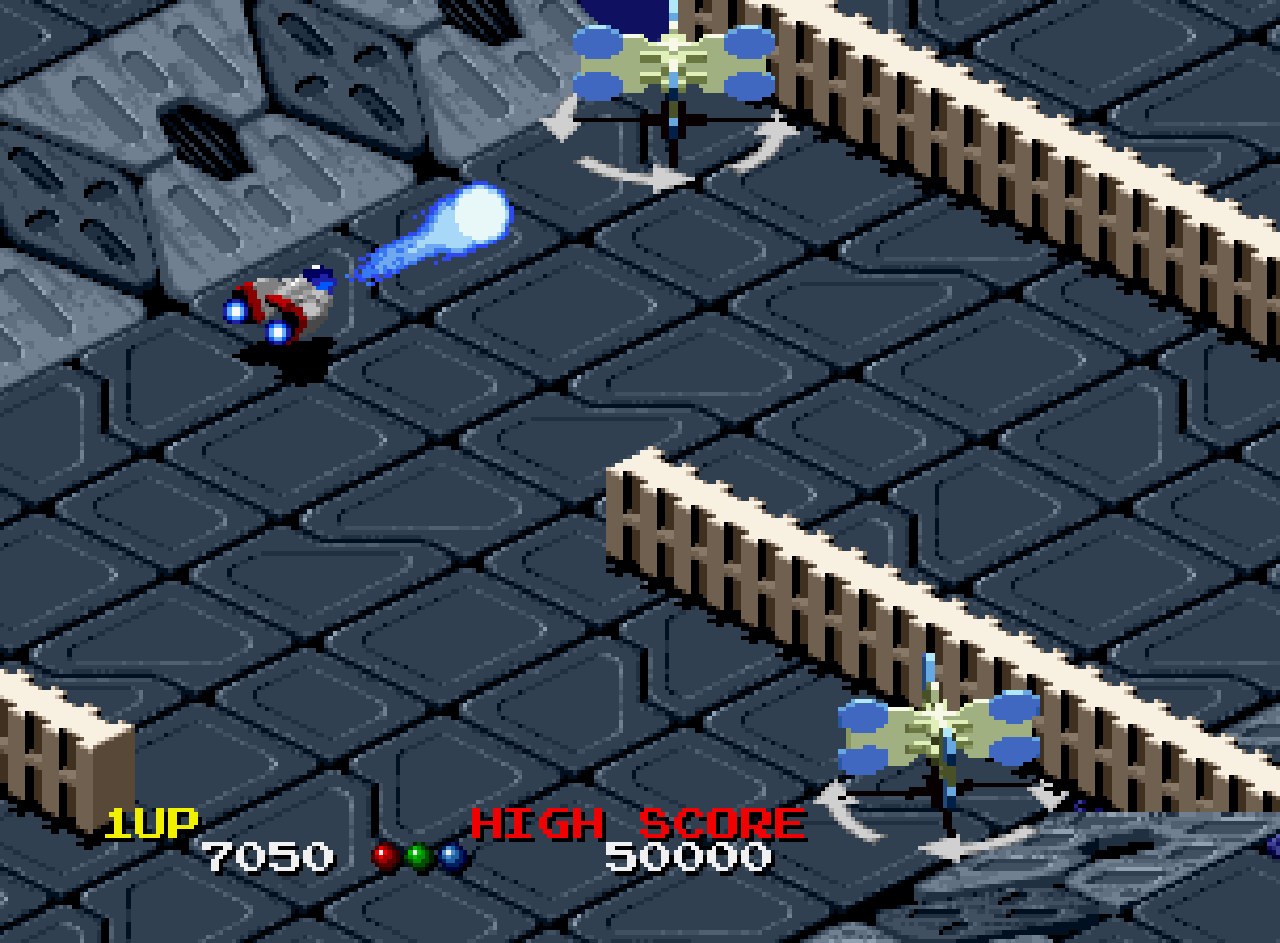
Sammy’s 1992 shooter chose the angle nobody else dared: isometric, diagonal scrolling, in the manner of Zaxxon — and then rendered it with shaded, almost pre-rendered-looking graphics that still impress. Viewpoint is a stern test, with terrain that punishes the unwary and enemies arriving along the diagonal, but its presentation is pure class, including a funk-infused soundtrack that sounds like it escaped from a much cooler decade. It won its argument with history: the isometric shooter everyone remembers is this one, and playing it explains the reputation instantly.
Collectors should know it is also one of the system’s great headphone games. That soundtrack, pushed through the Neo Geo’s capable audio hardware, turns a stern shooter into something close to a club set with explosions — a combination nobody else in 1992 was even attempting.
10. Pulstar
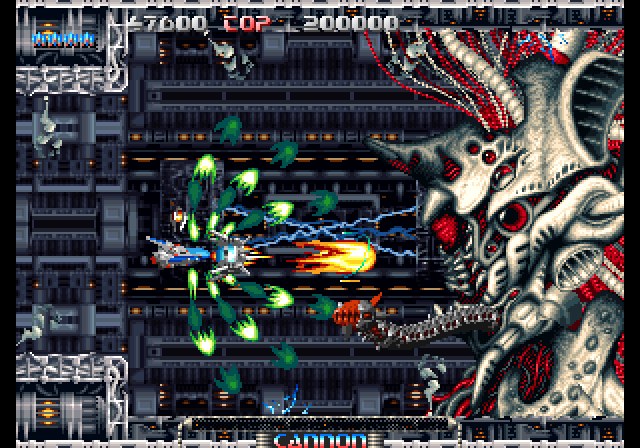
Aicom’s 1995 Pulstar is the Neo Geo’s answer to R-Type, and it does not blink. A lone ship, a chargeable power system built around a detachable options pod, and eight stages of methodical, memorisation-hungry shooting, rendered with lavish computer-assisted graphics that were the system’s showpiece in their day. Pulstar is slower and more deliberate than the system’s twitch shooters — every screen is a puzzle of positioning and charge timing — and beating it remains a genuine rite of passage. Its successor Blazing Star gets more applause; Pulstar, for our money, is the deeper cut and the sterner, richer game.
Approach it with the right expectations: this is a checkpoint shooter that grades your preparation, and its early stages must be learned, not survived. Players raised on forgiving modern shooters may bounce off once. Give it the second evening it asks for, and its reputation as one of the genre’s great methodical tests makes complete sense.
One last encouragement before the list closes: most of these games are easy to play legitimately today, through ACA Neo Geo releases, compilations and arcade archives, for the price of a sandwich — a sentence that would have seemed like sorcery to the players who once rented these cartridges by the week. The barrier to exploring this library has never been lower, and the library has never deserved it more.
That is the joy of digging into this library: for every titan on the essentials list, there is a Magician Lord in the shadows, a Crossed Swords waiting for a second player, a rally game with perfect handbrake turns. The fighters made the Neo Geo famous. The hidden gems are why it stays interesting.