
At a glance: Pokémon Diamond · Nintendo DS · Nintendo, 2006 · Role-playing game · Score: 8.5/10
When Pokémon Diamond and Pearl reached the Nintendo DS — launching in Japan in 2006 and the West in 2007 — the series faced the same question as Mario: could its 2D formula survive the leap to new hardware without losing itself? Game Freak’s answer was characteristically evolutionary. Diamond is unmistakably Pokémon — eight gyms, an evil team, a legendary on the box — but rebuilt on a grander scale, in the mountainous Sinnoh region, with the DS’s second screen and Wi-Fi connection woven into its deepest systems. It became one of the best-selling RPGs on the platform.
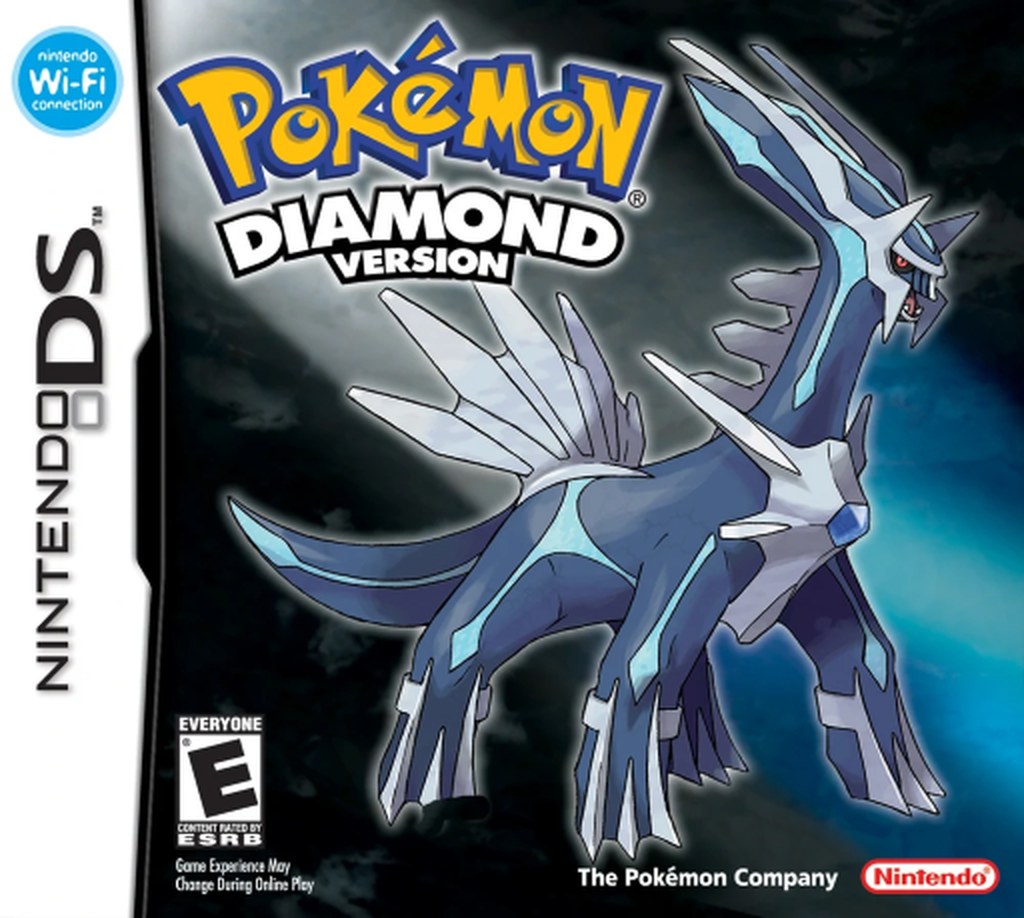
Sinnoh is the series’ most geographically interesting region to that point: a land dominated by the great Mount Coronet, split into east and west, threaded with snow routes in the north and marshland in the south. The adventure built on it is long — genuinely long, with a main quest that can stretch past forty hours — and structured around Team Galactic, a cult-like organisation whose bowl-cut grunts pursue a plan grander and darker than Team Rocket ever attempted, aimed at the legendary Dialga, the steel-dragon master of time on Diamond’s box, and ultimately at remaking the universe itself.
The physical–special split changes everything
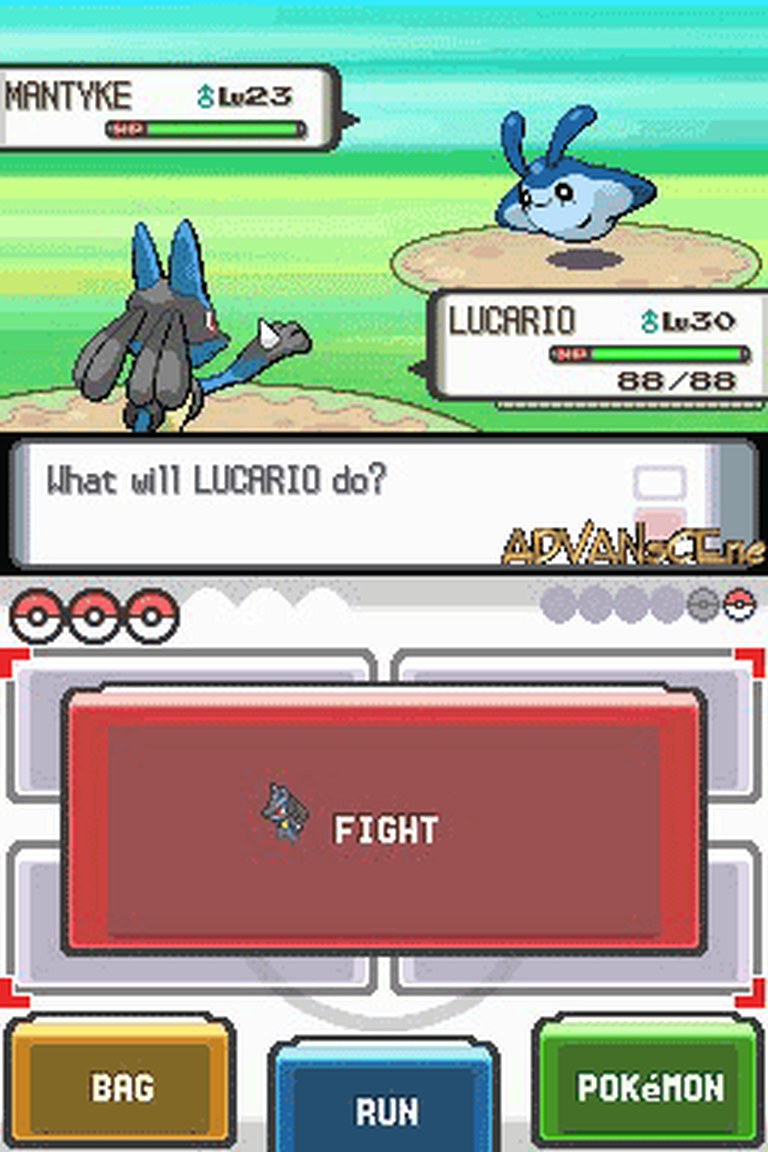
Beneath the familiar surface, Diamond and Pearl made the most important mechanical change in the series’ history: the physical–special split. Previously, whether a move used the Attack or Special Attack stat was decided by its type; from Diamond onward, each move is individually classed. Overnight, dozens of Pokémon that had been unusable — attackers whose STAB moves drew on their weak stat — became viable, and competitive battling was rebuilt from the ground up. Add 107 new Pokémon, including evolutions that rescued old favourites like Roselia, Electabuzz and Magmar, and the battling ecosystem here is the deepest the handheld series had offered.
The DS hardware serves the adventure well. The bottom screen hosts the Pokétch, a wrist-device with a rotating cast of apps — step counter, type chart, day-care checker, a genuinely useful dowsing machine — that puts utility one glance away without cluttering battle screens. Battles themselves look better than ever, with layered 2.5D environments, though they come with the game’s great flaw: they are slow. Animations, health bars and weather effects all proceed at a stately, sometimes maddening pace, and surfing in Sinnoh is a test of faith. Platinum would fix much of this; Diamond asks for patience and repays it.
The first global Pokémon
Wi-Fi transformed the series’ social contract. The Global Trade Station let players offer and request Pokémon with strangers worldwide — the first step toward the connected series Pokémon now is — while the Union Room’s local wireless and the underground multiplayer games gave Sinnoh a second life below its surface. The Underground itself, a vast diggable network of secret bases, fossil excavation and trap-laying with friends, could swallow evenings whole. Post-game content is generous too: a battle area island, swarms, the Poké Radar for chaining shinies, and transfer compatibility with the GBA games via the DS’s second slot.
The physical–special split rebuilt Pokémon battling forever, and the GTS made Sinnoh the first truly global region.
Presentation divides opinion. The chibi overworld sprites atop lightly 3D environments are charming and clear, the day-night cycle returns in full, and Sinnoh’s score — piano-led, melancholic in the snow, exuberant in Jubilife City — is among the series’ finest. What cannot be charmed away is the engine’s pace and the occasional frame dip in busy scenes. This is a game built for the long evening rather than the quick session, and judged on those terms it flourishes.
Sinnoh after the credits
Diamond’s post-game deserves emphasis because it set the template the series still uses. Defeating the Elite Four opens the Battle Zone island — a volcanic sub-region with its own towns, the Battle Tower’s streak-based challenge, and daily rematches — while the main map sprouts legendary encounters: the lake trio’s roaming member to chase, Heatran in Stark Mountain’s depths, Regigigas sleeping in a temple whose door demands the three GBA Regis, and event legends that became famous through distribution. The Poké Radar turns shiny hunting from pure lottery into a skill of chained encounters, and the GBA dual-slot system — inserting a Ruby, Sapphire, Emerald, FireRed or LeafGreen cartridge to make exclusive species appear and to migrate a boxed team permanently into Sinnoh — made Diamond a hub for a collector’s entire handheld era. Few cartridges have ever rewarded ownership of other cartridges so richly.
The multiplayer underground, too, was more than a diversion: building a secret base, decorating it with won goods, running trap mazes for visiting friends and trading spheres in the excavation economy gave Sinnoh a social basement that local wireless made genuinely lively. Fossil digging — a touch-screen excavation mini-game of hammers and crumbling rock — remains beloved enough that fans demand its return in every remake discussion since.
Assessment of the whole, then: Diamond is a game of systems and scale whose engine creaks audibly under them. Frame it as the series’ great expansion — the generation that globalised trading, rebuilt battling’s mathematics and gave Pokémon its biggest world to date — and its slowness reads as the growing pain of a series stepping up a weight class. Time, and the reverence in which Sinnoh is held by the generation that grew up in it, has settled the argument in Diamond’s favour.
One more consideration for the returning player: Diamond’s slower pace reads differently in 2026 than it did in 2007. In an era of instant everything, Sinnoh’s deliberate tempo — the long routes, the unhurried battles, the snow that slows your steps near Snowpoint — has acquired the quality of a place rather than a defect list, and the generation that grew up measuring their summers in its day-night cycle defends it fiercely. Judged as a world to inhabit rather than a system to optimise, Diamond may be the most atmospheric of the DS Pokémon games. The cartridge asks for your patience and pays interest on it.
Playing it today
The modern buyer faces a genuine choice, and this review should name it: the Switch remakes and the enhanced Platinum version both exist, and Platinum in particular is the connoisseur’s Sinnoh — faster, fuller, better balanced. Diamond’s claim is different: it is the original artefact, the 2006 step-change preserved exactly as it landed, with its dual-slot GBA interactions that no later edition replicated and its place as the first online generation intact. Collectors and historians want Diamond. Players who want only the best Sinnoh want Platinum. The wisest shelves, as usual, hold both — and argue about them happily for years.
Verdict
Pokémon Diamond is a landmark entry wearing a slightly heavy coat. Its region, its battling revolution, its online firsts and its sheer acreage of content make it essential DS RPG history; its sluggish battle speed is the toll exacted at the gate. Players who prize depth over pace will find one of the richest adventures on the system. Those choosing today between Diamond and its enhanced sibling should know Platinum exists — but Diamond is where Sinnoh, and modern Pokémon, began.