
At a glance: List · PSP Hidden Gems · Ten games the charts forgot
Every great library has a second shelf. The PSP’s first shelf is famous — Kratos, Snake, the Monster Hunters, the Persona calendar — and it deserves its fame. But the PSP sold over eighty million machines across a decade, in regions with wildly different tastes, and its full catalogue runs to well over a thousand games. In that long tail live the oddities, the imports, the experiments and the plain unlucky: games too strange to market, too Japanese to localise quickly, or too quiet to survive a launch window crowded with giants.
These ten are our picks of that second shelf. The rules we set ourselves: no game reviewed elsewhere in this PSP build-up series, no token obscurities that are obscure for good reason, and every entry playable today without a translator’s licence or a collector’s mortgage — though a couple will ask you to hunt. Each gets its picture, its pitch, and its honest caveat. The charts forgot them. Your memory stick should not.
A note on method, because hidden-gem lists are a genre with sins: every game below was a commercial release in the West on PSP — no imports requiring translation patches, no prototypes, nothing you need a museum to play. Prices vary and we quote none; what we promise is that each of these was findable, finishable and worth the finding. The shelf is deeper than ten, of course. Consider these the ten where the ladder down is best lit.
1. Gurumin: A Monstrous Adventure
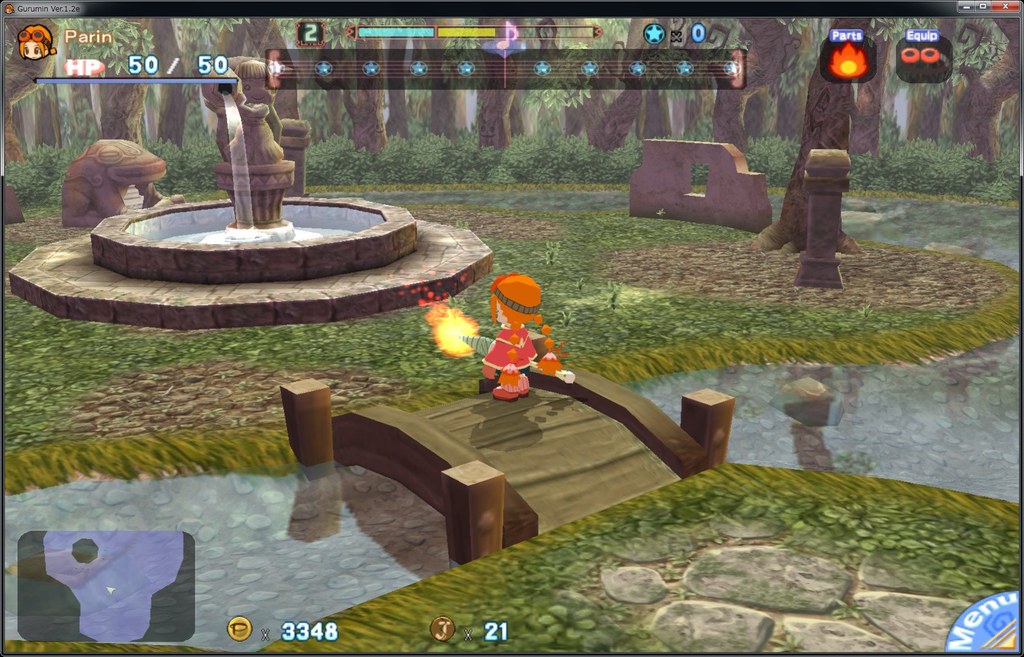
Falcom — the studio behind Ys and Trails — made exactly one game like this: a storybook action RPG where a girl named Parin, armed with a legendary drill, defends a town of monsters from a gang of phantom thugs. The drill is the delight: it charges, it lunges, it breaks armour and walls, and building combos around its rhythm turns every fight into a small dance. Around the combat sits a town of monsters so likeable that the game’s stakes — their homes, their friendships — land like a Pixar short with hit points. Gurumin was published in the West by Mastiff, reviewed warmly, bought by almost nobody, and later ported widely, which is your gain: whichever version you find, play the one with the drill. It remains Falcom’s most charming one-off and the PSP’s sweetest secret.
Why it vanished: a small publisher, a mascot nobody recognised and a launch window full of racers and shooters. Why it endures: Falcom’s craft is Falcom’s craft, and charm this engineered does not expire. Seek the PSP original for the portability; the later PC and 3DS ports carry the same drill and the same heart.
2. Z.H.P. Unlosing Ranger vs Darkdeath Evilman
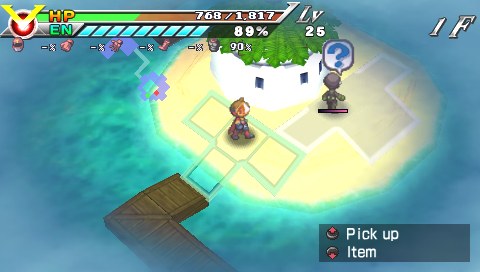
Nippon Ichi’s roguelike begins with the hero dying in a traffic accident on his way to the final boss — so you, an ordinary bystander in his costume, must train through procedurally generated dungeons to become him, while a live television audience watches your stats. Every death makes you stronger in total level even as each run resets you, a roguelike loop wrapped in a tokusatsu parody of genuine wit: the Unlosing Ranger cannot lose, the game insists, because the show must go on. Body-part equipment, base building between runs and Disgaea-grade systems depth make this the PSP’s deepest comedy — and one of its least-played. It is, characteristically, also one of its best.
Why it vanished: Nippon Ichi’s Western audience was loyal but small, and a roguelike about a dead hero was a hard pitch in 2010. Why it endures: its total-level system respects your time like few roguelikes of its era, and its satire of heroism has only sharpened. The PSP original remains the only Western edition — hunt accordingly.
3. Cladun: This Is an RPG!

The title is the first joke — Cladun is short for Classic Dungeon — and the game is a love letter written in pixels you can edit. This action RPG lets you draw your own characters sprite by sprite, build dungeons, and run them in fast, funny bursts: a Magic Circle system arranges your party as a formation of stat-boosting vessels around one active character, so your bench literally carries your hero. Between runs, the game’s narrator cheerfully dismantles every RPG convention the systems just used. It is slight in length and enormous in charm, with a chiptune soundtrack by a who’s-who of the genre’s composers. For tinkerers, it is the PSP’s most personal game.
Why it vanished: it was download-only in the West at a moment when the PSP’s audience still shopped in stores. Why it endures: no other game lets you draw your hero, compose your dungeon party as a living formation and be heckled by the narrator for both. Its sequels went elsewhere; the original’s purity is PSP-only in spirit.
4. Brave Story: New Traveler

If Gurumin is Falcom’s charm offensive, Brave Story is Game Republic’s traditionalist masterpiece: a turn-based JRPG of such polish that its obscurity is a genuine mystery. A boy enters the world of Vision to save his friend, and the game executes the classic formula — world map, towns, random battles, a party that grows by friendship — at a level of craft most flagship titles would envy: gorgeous cel-shaded graphics, a brisk battle system with combo attacks built on party bonds, and a bird-catching mini-game with real depth. It sold modestly, was never re-released, and stands as the PSP’s best ‘they don’t make them like this’ JRPG. They didn’t make many like this even then.
Why it vanished: Xseed published it well but quietly, into a market that had stopped expecting new traditional JRPGs on a Western handheld. Why it endures: it is a masterclass in the fundamentals — pacing, party writing, battle feel — executed without irony. If the genre’s golden age is your home, this is a house you somehow never visited.
5. Hammerin’ Hero

Irem’s side-scrolling brawler gives you a carpenter, a giant mallet and a neighbourhood to save from an evil construction conglomerate — a premise whose politics are exactly as subtle as its hero’s tool. Gen can change jobs mid-stage — carpenter, sushi chef, baseball player, DJ — each with its own moveset and dialogue, and the game’s dialogue is the real weapon: fully voiced, genuinely funny exchanges that change with your costume. The action is a few hours of cheerful, moderate challenge; the script and the squash-and-stretch animation are the reasons to play. A PSP game with this much comic personality should not be a footnote. Consider it footnoted no longer.
Why it vanished: Irem was fading, Atlus’s print run was small, and brawlers were out of fashion. Why it endures: the job-change dialogue system means a second playthrough is funnier than the first, a trick almost no brawler attempts. Short, sweet and voiced to the rafters — the PSP’s best comedy brawler by acclaim of everyone who found it.
6. Exit

Taito’s stylish puzzler casts you as Mr. ESC, an escapologist for hire, rescuing civilians from collapsing, flooding and burning buildings across one hundred stages of clockwork level design. The art is pure graphic design — flat colours, bold signage, a hero in a suit — and the puzzles are pure clockwork too: every survivor has rules (the injured must be carried, the children cannot climb, the adults can push), every building a route that uses them all, and every stage grades your elegance. Exit reviewed well, spawned a sequel and two Xbox cousins, and still somehow needs recommending, which tells you everything about how crowded the PSP’s good years were.
Why it vanished: puzzle games without explosions lived quiet lives in 2006, however many awards their art direction collected. Why it endures: its one hundred stages are a design course in themselves, and Mr. ESC’s rescues still feel like nobody else’s game. The sequels and ports spread the word; the original’s stark style remains the purest.
7. Yggdra Union
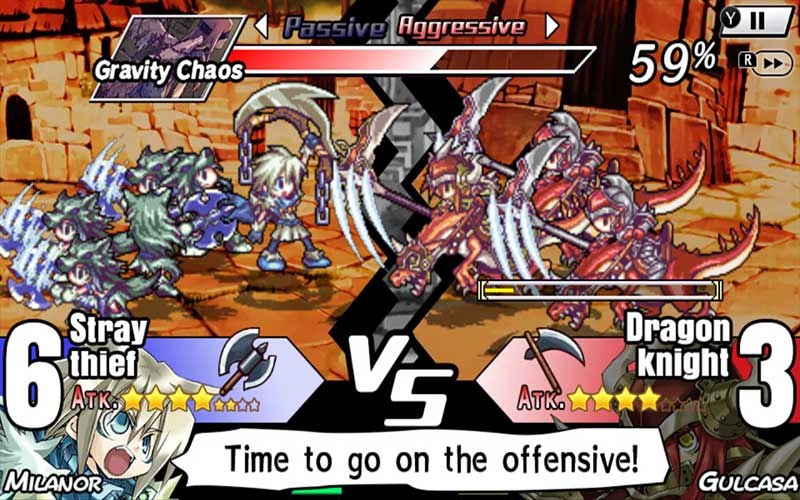
Sting’s card-driven strategy RPG began on Game Boy Advance, but the PSP version is the definitive one — redrawn art, full voice, new content — and it is one of the most beautiful and most demanding games on the system. Your army moves as one Union; battles are real-time clashes governed by the card you chose at the turn’s start, carrying its movement, its weapon and its skill. The learning curve is a cliff with excellent scenery: morale is your health, terrain is your armour, and Princess Yggdra’s war against the Bronquian empire escalates into one of the genre’s bleakest stories. Master it and few tactics games will ever satisfy you again. That is a recommendation and a warning in one.
Why it vanished: Sting’s games are famously demanding, and Atlus’s PSP print run assumed you already knew that. Why it endures: its union system and morale economy still have no true imitator, and its story’s darkness is earned rather than applied. The PSP edition’s redrawn art and voice make it the version history kept. Approach with respect; leave converted.
8. Hexyz Force

Atlus published this one themselves in the West, and it remains the PSP’s most underrated traditional RPG: two interlocking campaigns — a cleric’s tale of light, a knight’s tale of dark — that share a world, a cast and a final act, doubling the game’s length for players who take both roads. The Force system replaces random battles with visible enemies and a crafting economy built from their remains; the Ragnafacts, divine weapons that grow with use, anchor a fast, clean battle system. Hexyz Force does nothing revolutionary and everything well, with a sincerity that the genre’s louder titles often misplaced. Two campaigns, one small legend.
Why it vanished: it arrived in 2010, as Western PSP RPG support was thinning, with a name that told shoppers nothing. Why it endures: the dual-campaign structure delivers a complete second game for finishing the first, and its Force Point crafting keeps the grind purposeful. Atlus’s own sleeper — the definition of this list’s purpose.
9. Kenka Bancho: Badass Rumble

Japan’s delinquent genre, perfected and finally localised: you are a bancho — a school gang boss — on a class trip to a Kyoto-like city, with seven days to defeat the visiting bosses of all 47 prefectures and become Japan’s number one badass. Combat is a brawler built on staredowns: the Menchi Beam, a laser-glare contest that opens every fight, is one of the great comic mechanics of its era, and winning a prefecture teaches you its local fighting style. Between brawls it is a affectionate travelogue of school-trip Japan, food stalls and all. Atlus localised it as a labour of love. Return the favour.
Why it vanished: the bancho genre had never been localised, and Atlus’s edition was a calculated risk that sales did not reward. Why it endures: beneath the comedy is a genuinely good brawler with a whole country’s worth of fighting styles to collect, and the Menchi Beam remains undefeated as an opener. Japan kept the series; this is the West’s one ticket in.
10. Wild Arms XF

The Wild Arms series’ only tactics entry is also its most inventive: a strategy RPG where the battlefield’s hexes carry elemental leylines, classes can be re-mixed between missions, and the story — a kingdom’s coup, a sister’s revenge — is told with the series’ signature Western twang transplanted to a war of knights. XF’s signature system lets characters carry skills across classes, so your army’s builds become arguments about synergy that the game’s best maps test ruthlessly. It reviewed as ‘for tactics fans only’, which on the PSP is a crowded church — and even in that church, XF preaches a distinctive sermon. The charts forgot it. Tactics fans should not.
Why it vanished: the Wild Arms name promised a traditional JRPG and delivered a hardcore tactics game, confusing both audiences at once. Why it endures: its class-mixing and leyline maps reward the systems-minded like few handheld tactics games, and Media.Vision’s craft is evident in every hex. In the PSP’s tactics golden age, XF is the deep cut the connoisseurs cite.
That is the second shelf: ten games, no two alike, united only by being better than their sales. The PSP’s depth was its destiny — a decade-long life, three regions of developers, and a format cheap enough to take chances on. If even two of these are new to you, the excavation worked. The rest of the catalogue is still down there, in the long tail, waiting for the next dig.