
At a glance: Feature · PSP homebrew and emulation · 2005–today · The second life of a handheld
Every PSP contains two machines. The first is the one Sony sold: a sleek multimedia handheld that played UMD games, films and music, and fought the Nintendo DS for a decade. The second is the one its owners built: an open, endlessly modified pocket computer that ran emulators for a dozen classic systems, homebrew games, book readers, paint programs and tools its manufacturer never imagined — and which, long after the UMD era ended, remains the reason a PSP in 2026 is still more useful than many devices built to replace it. This is the story of the second machine, and of the arms race that created it.
It began within weeks. The PSP launched in Japan in December 2004 with firmware that, to the astonishment of the hobbyist programmers who examined it, would run unsigned code from a Memory Stick with minimal persuasion. By the spring of 2005, the first homebrew appeared — simple demos, then, famously, emulators: a Game Boy emulator within months, then NES, then the flood. Sony responded with firmware updates; the scene responded with exploits. The pattern of the next six years was set: every official firmware a wall, every wall a door within weeks, in a contest between a corporation protecting a business model and a global hobbyist community protecting its new favourite toy.
Dark_AleX and the custom firmware era
The scene’s turning point arrived with custom firmware — modified system software, most famously the work of a Spanish hacker known as Dark_AleX, whose Open Edition and later M33 firmwares let a PSP run homebrew and official games side by side, updated in step with Sony’s own releases. The cat-and-mouse became almost companionable in its rhythm: Sony would ship a firmware with a must-have game requiring it; the scene would answer within days. Names from the era — the Pandora Battery, a modified battery that forced service mode and could unbrick almost any PSP; the TIFF and HEN exploits that freed later models — are folk history now, passed down in forum threads like ballads.
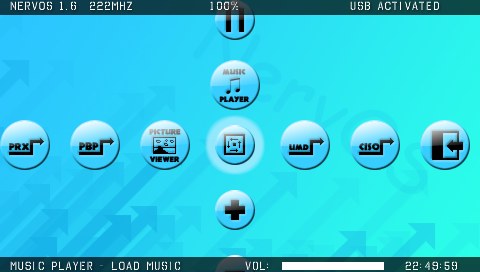
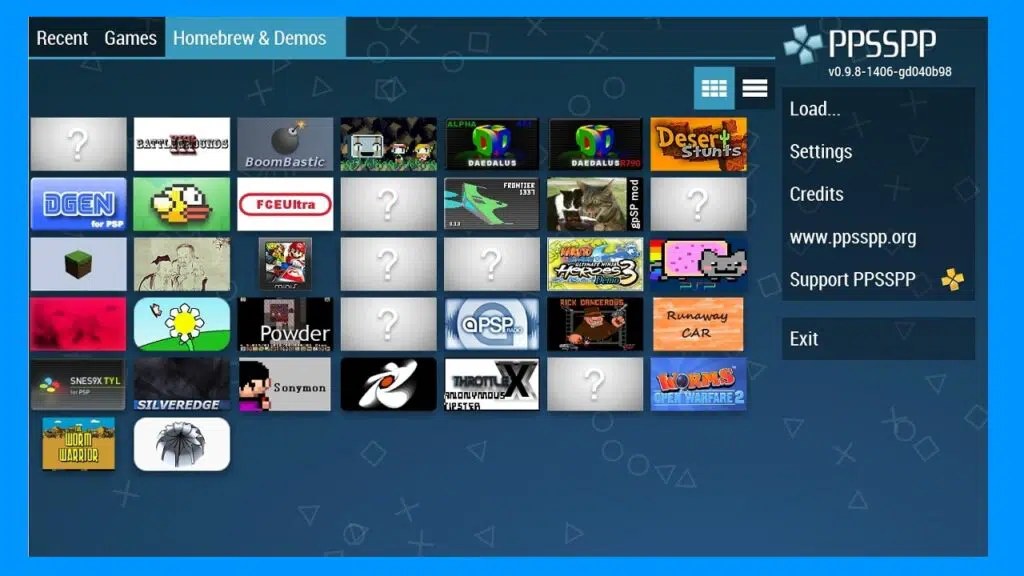
What the scene built justifies the folklore. Emulators matured until the PSP could carry the NES, SNES, Mega Drive, Game Boy generations, arcade boards and — its signature party trick, given the shared DNA — the original PlayStation, via Sony’s own official emulator, which homebrew tools could feed with a player’s own converted discs. Around the emulators grew an ecosystem: homebrew games and ports (a beloved Doom port among the first), media players that outclassed the official one, screenshot and cheat plugins, overclocking, custom themes, and eventually full replacement shells of software like the XMB mods. The PSP became the hobbyist’s handheld — the machine you bought twice, once from Sony and once from the internet.
The piracy shadow, honestly faced
No honest history can skip the shadow: the same openness that enabled emulators enabled piracy, at scale, in the years when PSP software sales sagged in the West while hardware flew off shelves. Developers cited it when cancelling Western localisations; Sony cited it in every firmware’s defence. The scene’s own ethicists argued — then and now — for the distinction between the tools and their misuse, and for the preservation and homebrew culture the tools sustained. The argument was never settled, because it cannot be: the PSP’s second machine was both a triumph of user freedom and a wound in its own games industry, inflicted with the same exploit. Both facts belong in its biography.
The legal and corporate weather changed around the scene rather than because of it: Sony eventually fought its homebrew war to a draw, the PSP’s commercial era ended, and what remained was the installed base — tens of millions of open, capable, pocket-sized computers with superb screens and controls, in drawers on every continent. That is why the PSP, uniquely among its generation, never really died. Retro handhelds are now an industry; the commercial machines that fill it — the Chinese emulation portables, the boutique Linux handhelds — are the PSP scene’s children, sold in boxes. The original remains, for many, the best of them: official buttons, a great screen, and thirty years of games in a coat pocket.
The machine that outlived its format
There is a pleasing symmetry in the ending. The UMD — the locked, proprietary bet — is the part of the PSP that history discontinued. The open, unplanned, legally ambiguous second machine is the part that made it immortal. Sony built a PlayStation you could carry. Its owners, with exploits and emulators and a battery that could raise the dead, built the first modern retro handheld on top of it — a decade before the market caught up. If you power up a PSP today and it offers you a choice of thirty years of games, you are looking at their work. It still feels like the future. This time, the future agreed.
Preservation: the scene’s best argument
Time has strengthened the homebrew case in one specific way: preservation. The PSP’s commercial infrastructure is gone — its store closed, its download servers retired — yet the library survives intact and playable largely because the scene spent two decades building the tools to run it elsewhere. Games whose publishers have vanished, translations of titles never localised (fan translators completed the scene’s work, bringing Japan-only PSP RPGs west years after the market gave up), and prototypes rescued from obscurity all ride on the infrastructure homebrew built. The archive of the PSP era exists because its fans refused, politely and then impolitely, to let a corporation be its only librarian.
The ethics, as the scene argued them
The scene’s own codes deserve recording, because they were real: the major firmware and emulator authors condemned piracy in their release notes, built no piracy into their tools’ purposes, and framed their work in the language of ownership — the right to run your own code on your own machine, a principle courts and regulators have spent twenty years circling. Players did not have to accept the argument to benefit from it. But the PSP’s history is unintelligible without it, and the modern right-to-repair and preservation movements are, in part, this community grown up and wearing suits.

Carrying the second machine today
For the modern PSP owner, the practical upshot is simple and rather wonderful: the machine in the drawer is not a relic. With its protections long fallen and its scene’s work archived across the internet, a PSP today is a mature, documented, endlessly capable retro computer — arguably the best-supported classic handheld in existence, precisely because its second life was built by volunteers who documented everything. Sony made eighty million of them. The scene made them permanent.
Emulation as the killer app
It is worth pausing on why emulation, specifically, became the scene’s engine: the PSP’s screen ratio, its proper D-pad and buttons, and its horsepower sat in a sweet spot — mighty for the 8- and 16-bit generations, credible for the PlayStation it was named for — that no phone of the era, with its touchscreen compromises, could match. The scene did not merely unlock a handheld. It identified, years before the market did, that the perfect retro machine had already been manufactured and sold by the tens of millions. It just needed freeing.
A final thought for the sceptical: none of this required Sony’s permission, and little of it required Sony’s opposition to be quite so total — the company’s later, gentler relationships with fan communities suggest the lesson was eventually learned on both sides. The PSP’s two machines are one object now, inseparable in memory: the sleek black slab that played the future’s games, and the open one humming underneath, playing the past’s. Together they made the most future-proof handheld of their generation. The disc is silent. The second machine is still running.