
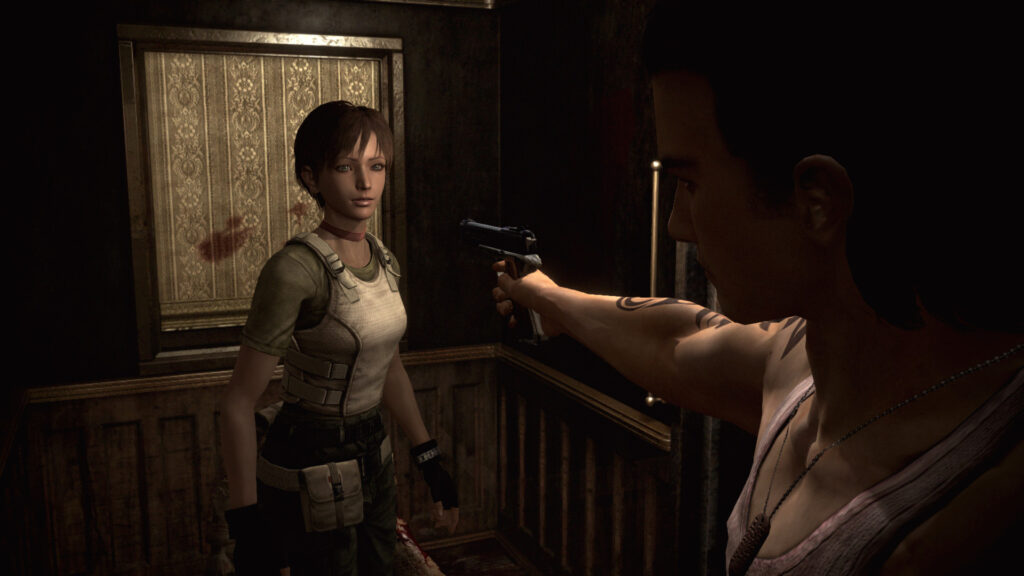
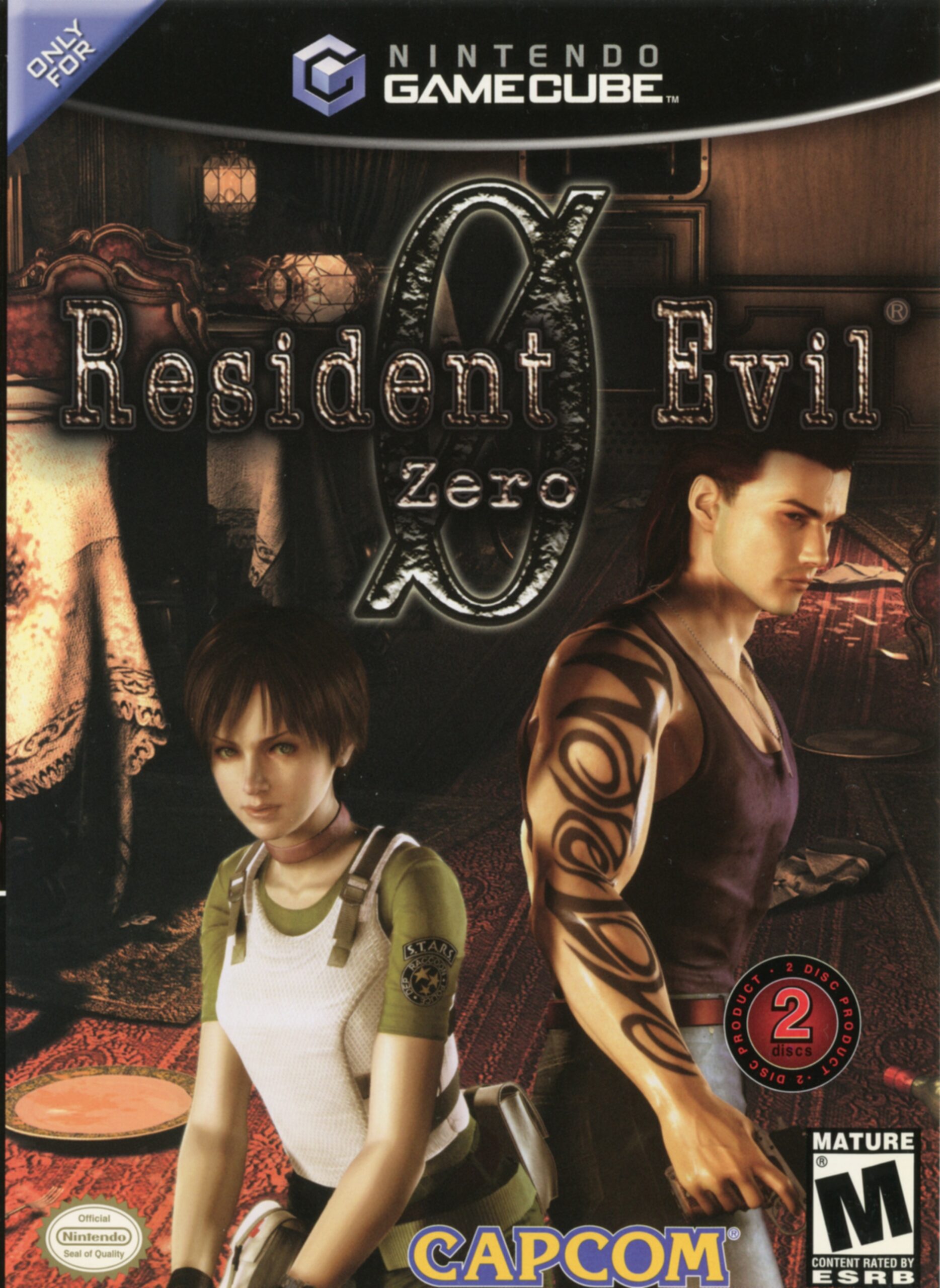
At a glance — Game: Resident Evil Zero · Developer: Capcom Production Studio 3 · Publisher: Capcom · Original release: November 12, 2002 (North America) · Original platforms: GameCube · Genre: Survival horror · Director: Koji Oda
Every Resident Evil fan knows where the story starts: a mansion, a storm, a team of cops walking into the worst night of their lives. But the series’ most quietly fascinating chapter happens the night before all of that — on a train, in the rain, with a rookie medic and a condemned man handcuffed to nothing but each other. Twenty-four years ago today, on November 12, 2002, Capcom released Resident Evil Zero for the GameCube, and closed the book on the classic era of survival horror without quite meaning to.
Zero was the last of its kind in every way that matters. Last Resident Evil built on fixed camera angles and pre-rendered backdrops. Last one with tank controls worn proudly, ink ribbons and all. And the last one the old formula would ever get entirely to itself, because Resident Evil 4 was already looming, and after 2005 nothing in this series — or this genre — would ever stand still again. Zero is what the old ways looked like at their most polished, their most confident, and, occasionally, their most stubborn.
Resident Evil Zero Began Life on a Nintendo 64 Cartridge
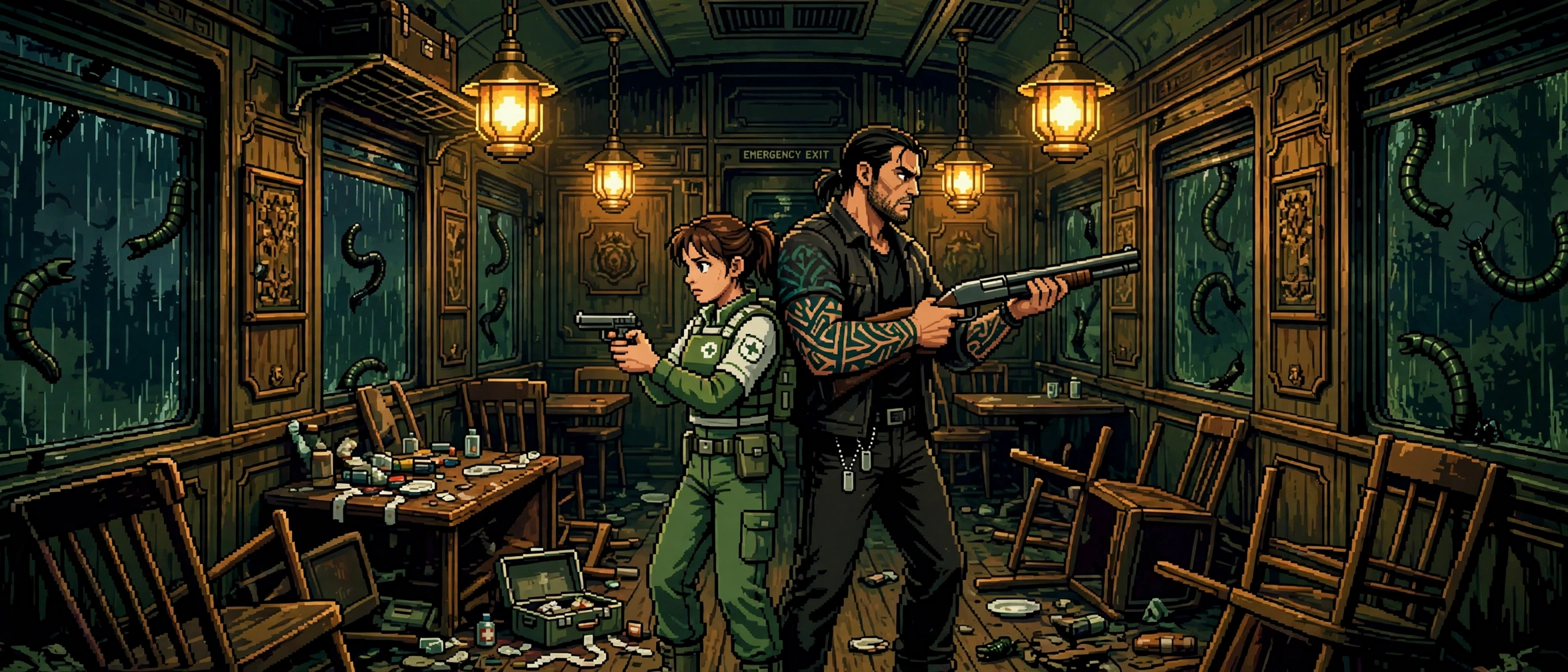
Here is the part of the story that still amazes me: this gleaming GameCube showcase started life, in mid-1998, as a Nintendo 64 game. The prequel idea had been floating around Capcom since the 64DD was announced in 1995, and when that peripheral flopped, Zero was reborn as a plain cartridge title. That single fact shaped everything about the game it became.
A Nintendo 64 cartridge held 64MB — a tenth of a CD-ROM. Where Code: Veronica was luxuriating in the Dreamcast’s disc space, the Zero team had to think small and think clever. Their answer was the “partner zapping” system: two heroes on screen together, switching in real time, possible precisely because a cartridge has no load times to hide behind a door animation. The cartridge’s limits made the team bolder everywhere else, too. Inspired by Capcom’s own Sweet Home (1989), they deleted the series’ beloved item boxes entirely and made Zero deliberately harder than its predecessors.
Capcom announced the game in January 2000 at just 20 percent complete, showed a playable demo at the Tokyo Game Show, and aimed for July of that year. Then reality intervened: the finished design simply would not fit on one cartridge. Production moved to the newly announced GameCube — confirmed in September 2000 — and of the Nintendo 64 original, only the concept and the story survived. Everything else was rebuilt from scratch: bigger environments, more CGI, the voice acting recorded all over again.
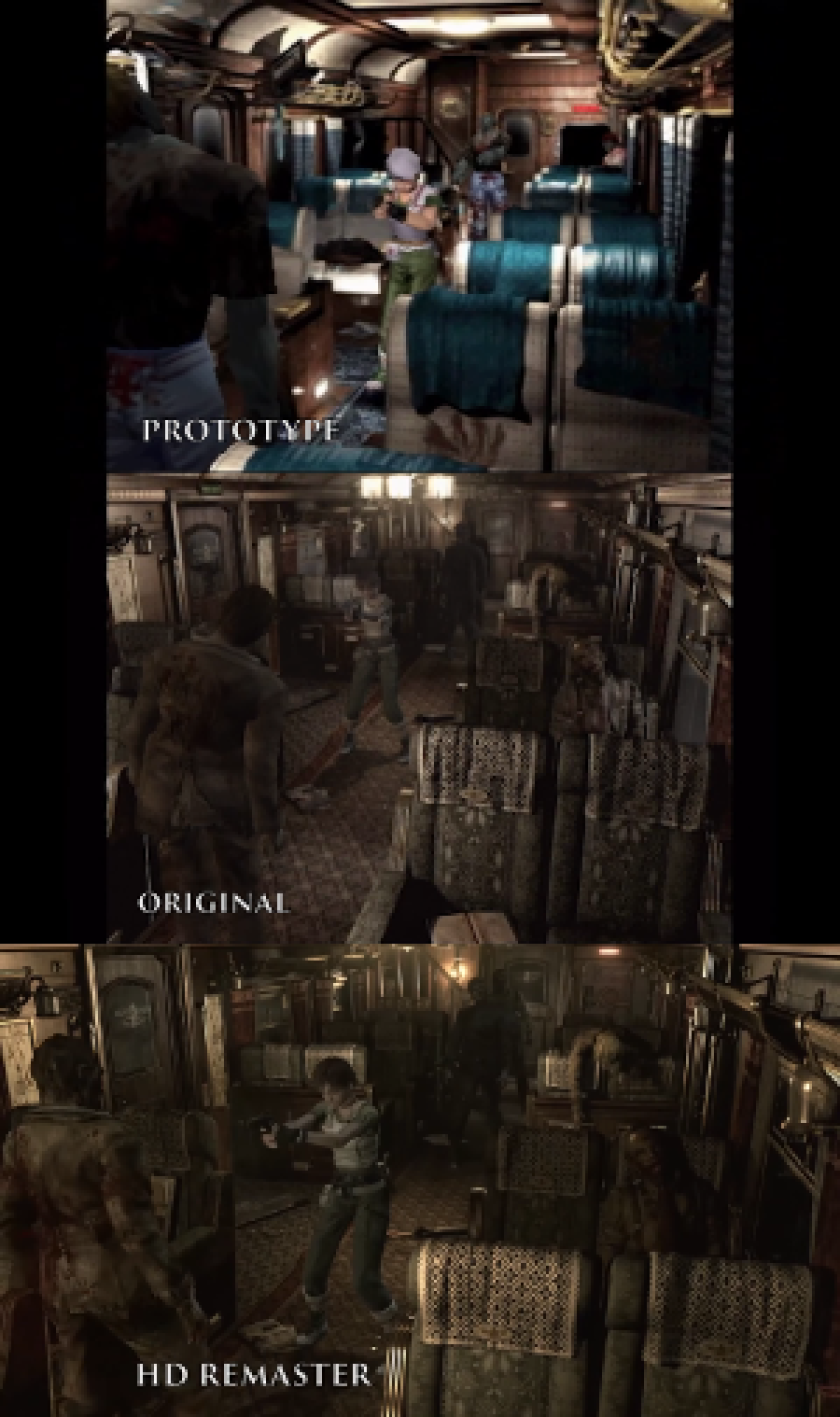
The rebuild left fingerprints all over the final game, some of them delightful. The modelling team worked from realistic airsoft guns — so realistic that halfway through development somebody noticed the in-game weapons still carried replica markings and gas refill inlets. The leeches’ horrible squelching sounds were made from recordings of cooking hamburgers. And the prototype had ideas the remake dropped: local co-operative play, and a branching story in which either Rebecca or Billy could die — scrapped when the team realised Rebecca’s death would break the timeline she still had to walk into, one night later, at a certain mansion.
For years the Nintendo 64 version was a ghost, surviving only in grainy Tokyo Game Show footage and magazine scans. Capcom finally showed it off properly in 2015 while promoting the remaster. It remains unreleased — the most famous Resident Evil you cannot play.
All Aboard the Ecliptic Express
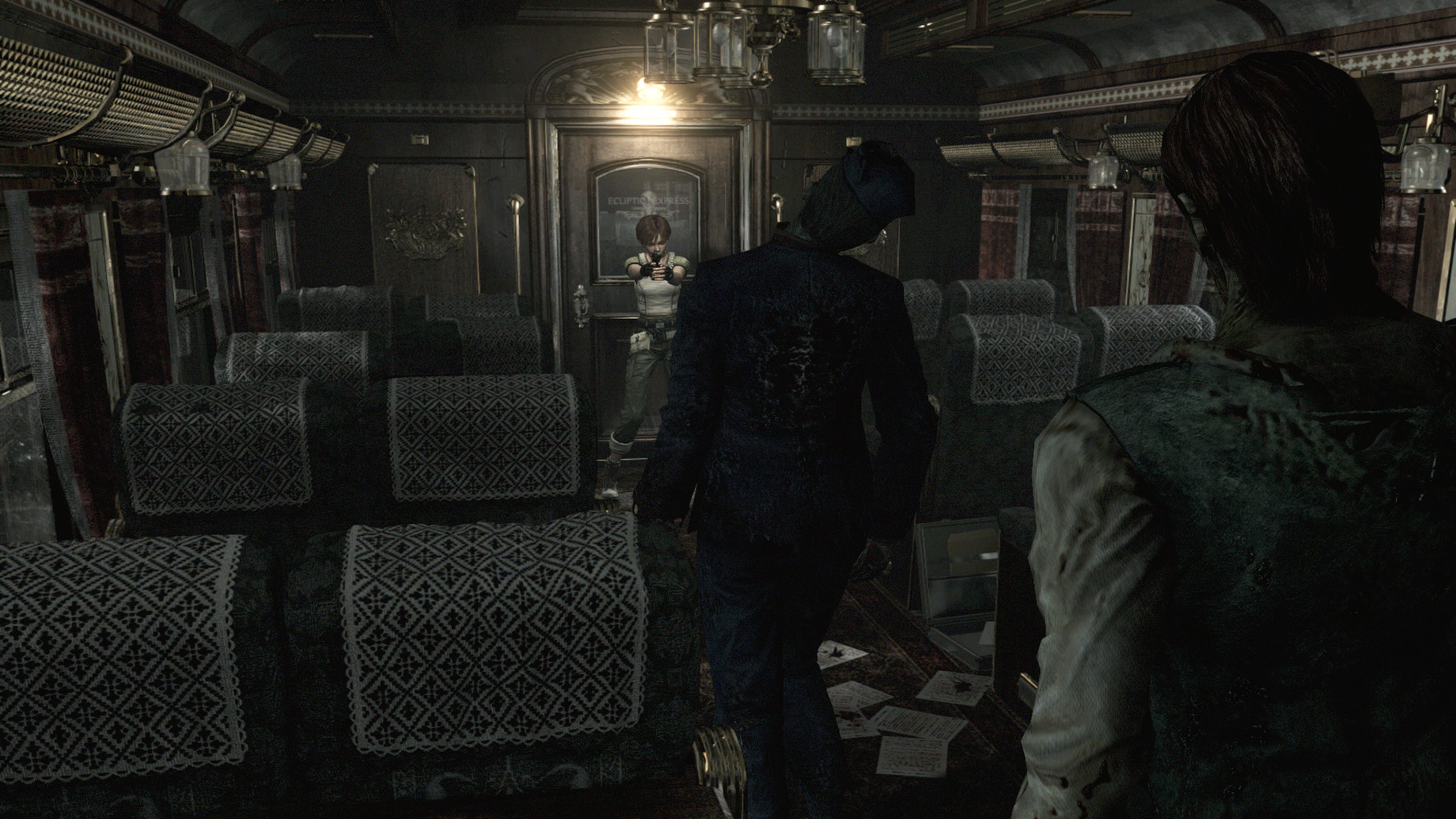
Zero’s opening hour is the best first hour of any classic Resident Evil, and I’ll defend that at the bar. On July 23, 1998, Umbrella’s luxury train, the Ecliptic Express, is swarmed by leeches in the Arklay Mountains. Two hours later, S.T.A.R.S. Bravo Team flies in to investigate a string of cannibalistic murders — and their helicopter promptly dies over the forest. Rookie medic Rebecca Chambers, eighteen years old and on her first mission, picks her way to the motionless train and finds its passengers transformed.
Waiting aboard is Billy Coen, a former Marine reconnaissance officer being transported to his own execution for the murder of 23 people — a charge the game lets you doubt from the moment he opens his mouth. Their first meeting is a gun pointed at Rebecca’s chest. Their second is a partnership, because the alternative is dying separately. It’s the series’ oddest couple and its most human one: the youngest S.T.A.R.S. officer and the man the system threw away, each holding the other’s spare ammunition.
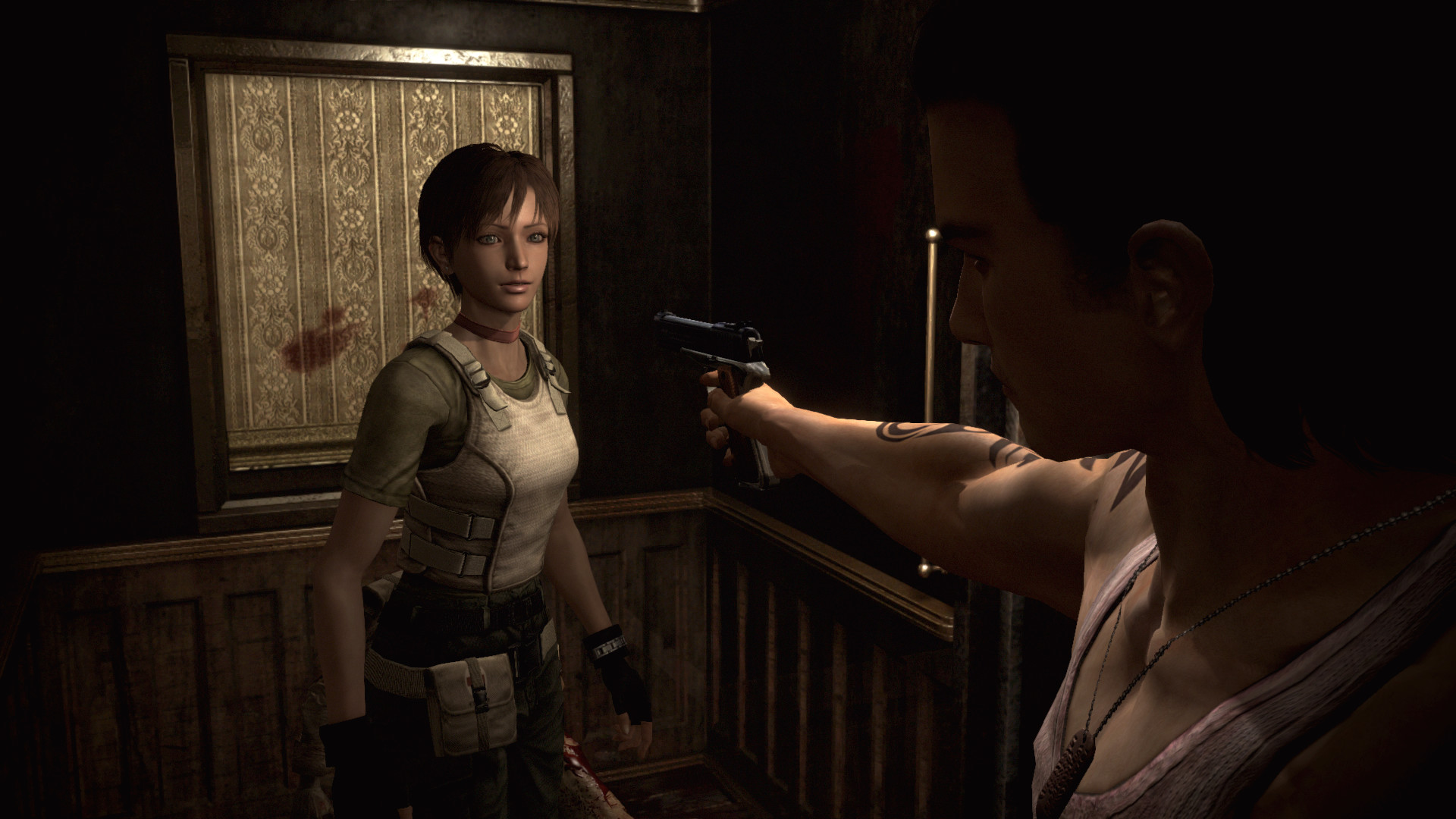
From the train — restarted, runaway, and braked at the last moment — the pair spill into an abandoned Umbrella training facility, and Zero unfolds into a history lesson about the whole series: Dr. James Marcus, Umbrella co-founder, who fused the Progenitor virus with leech DNA and birthed the T-virus; Marcus murdered on Oswell Spencer’s orders in 1988; and the Queen Leech that crawled into his corpse and spent ten years believing it was him, plotting its revenge. When Rebecca finally walks out at dawn, Billy’s freedom is her gift — her report will list him as dead — and the Spencer Mansion is waiting over the hill. Zero ends exactly where your muscle memory begins.
Two Survivors, One Controller
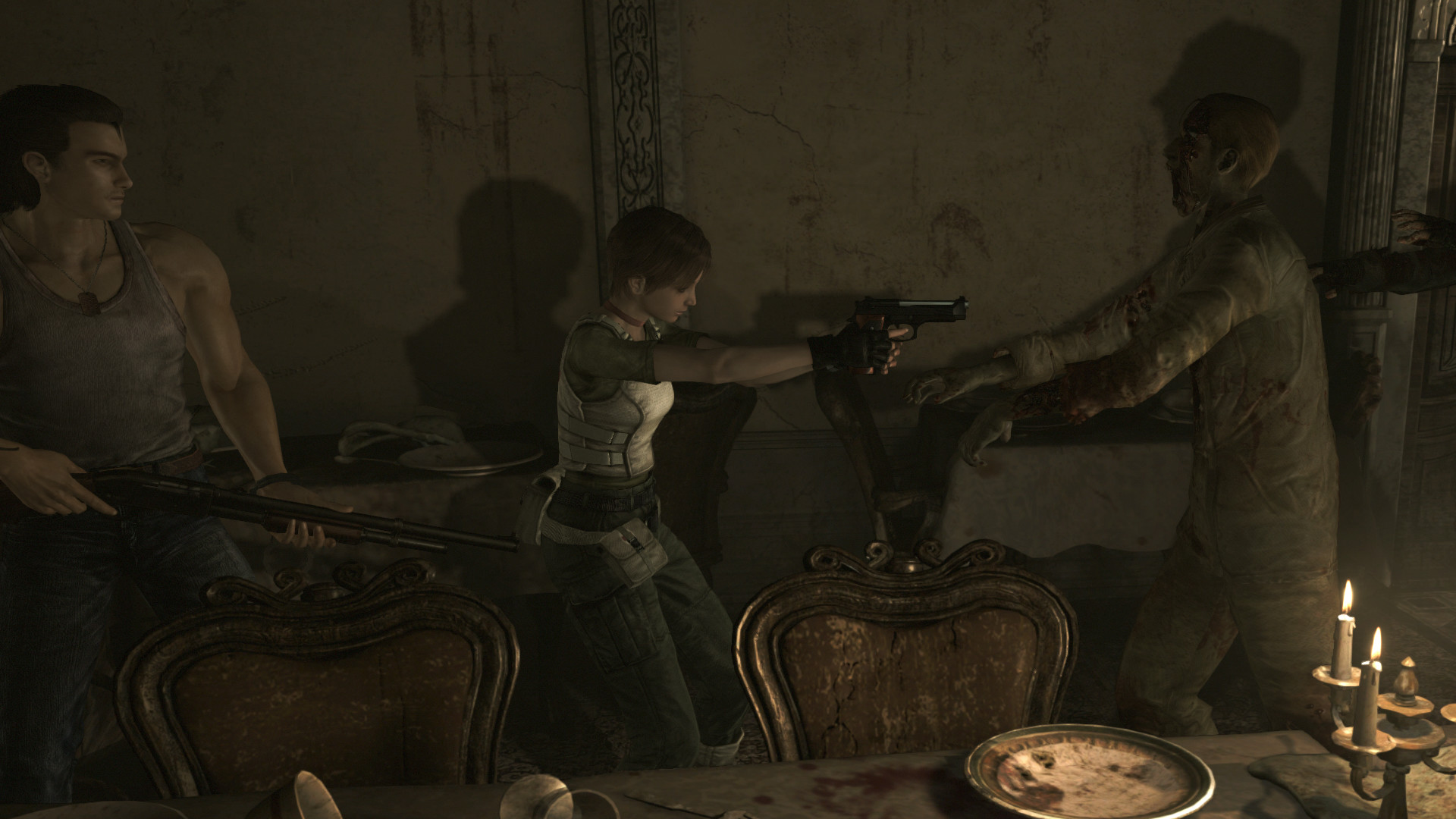
The partner system is the game’s whole personality. You play both heroes, swapping with a button press — “zapping” — while the other is run by the AI, following, shooting, or left behind wherever you parked them. Split them to work two rooms at once; reunite them for the fights. Rebecca carries the mixing set, combining herbs and chemicals as no other hero can, but she’s frail. Billy can’t mix a green herb to save his life — literally — but he shoves heavy furniture, works a lighter, and can take a beating. Nearly every puzzle in the game is really a question about which of them should be standing where.
And then there are the missing item boxes. In Zero, your inventory is your inventory: when it’s full, you drop things on the floor where you stand, the map remembers them, and every room has a limit on how much clutter it will hold. Veterans know the ritual this creates — the save room carpeted with shotgun shells and ink ribbons, a dragon’s hoard of supplies you sprint back to between bosses. It was designed as a hardcore flourish, back to the Sweet Home roots, and it remains the most argued-over decision in the game.
What the Critics Made of It in 2002
Zero landed well. It holds an 83 on Metacritic, and the praise was loudest for exactly what you’d expect: the look and sound of the thing. Reviewers called the graphics “wonderfully spooky” and “moody,” marvelling at how the character models blended into those pre-rendered rooms — flickering lamps, dripping water, animated backgrounds everywhere. IGN’s Matt Casamassina, who scored it 8.2, noted that “Capcom uses silence at times, too, to scare, which is brilliant.” GameSpot gave it 8.0, EGM’s crew went 8, 8 and 9, Eurogamer an 8, Game Informer a 9.3, and Famitsu a near-golden 38 out of 40. GameSpot also nominated it in five of its annual GameCube categories, from Best Story to Best Graphics.
The arguments were about the new ideas. The item-dropping split the room — Casamassina called it “perfect,” GameSpot’s Giancarlo Varanini reckoned you’d just end up dumping everything by the typewriter anyway, and GameRevolution warned it traded box-trips for backtracking. The partner AI drew the same split verdicts: a fresh layer of strategy to some, babysitting to GameSpy. And everyone, absolutely everyone, took a swing at the tank controls, which by 2002 felt like a period piece next to Devil May Cry and Eternal Darkness. Commercially, Zero sold 1.25 million copies on the GameCube — a solid number, if a step behind the remake that had wowed everyone eight months earlier.
The 2016 Remaster and the Long Afterlife
Zero’s afterlife began quietly, with a near-identical Wii port in the Resident Evil Archives line in 2008. Its resurrection came in 2015, after the HD remaster of the first Resident Evil proved there was money and love left in the old formula. Capcom announced Resident Evil Zero HD Remaster on May 26, 2015, with producer Tsukasa Takenaka — who reasoned, correctly, that plenty of fans still preferred the pre-Resident Evil 4 style — and, crucially, original director Koji Oda back on the team to protect the vision.
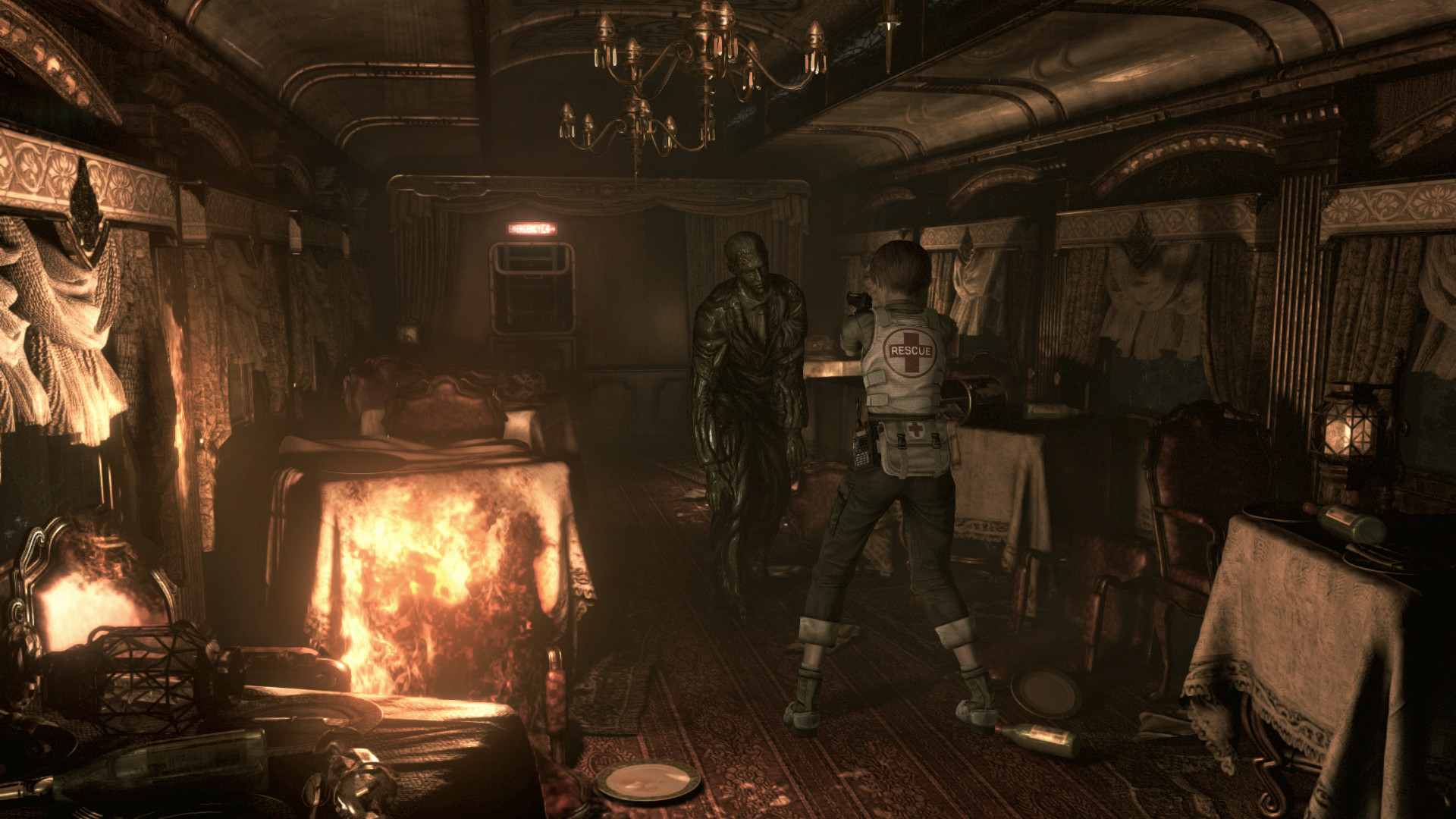
The remaster had a secret weapon: Capcom’s archives. The 2002 models and textures had been authored at far higher quality than the GameCube could show, then downscaled — so the team re-touched the originals, re-captured the backgrounds, and turned the old video fire effects into real 3D. Around that they wrapped the modern comforts: 16:9 or original 4:3, 5.1 surround, an optional non-tank control scheme, an easy mode, and the gloriously silly Wesker Mode, which swaps Billy for a super-powered Albert Wesker. It launched on January 19, 2016, with the Origins Collection retail bundle three days later, reached the Switch in May 2019, and has since sold 2.8 million units on its own — pushing Zero past four million copies across all its lives.
That second act settled Zero’s reputation. In 2002 it was the polished end of something; today it reads as a bridge — the game where the classic formula stretched itself furthest, inventing cooperative-flavoured play and free-form inventory juggling inside the old fixed-camera frame. Play it in 2026 and it still feels like what it was: two discs, two heroes, one long night before the mansion. The last train out of the old Raccoon City is still running.
— Sal
For more launches from this date, see This Day in Gaming History: November 12.