
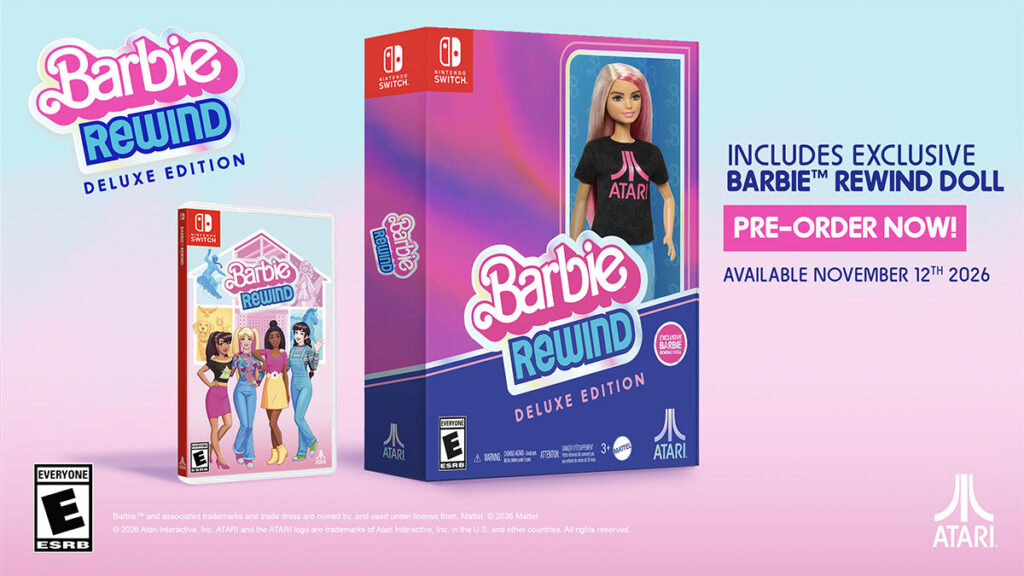
At a glance — Game: Barbie Rewind · Launch: November 12, 2026 · Platforms: PlayStation 5, PlayStation 4, Xbox Series X|S, Xbox One, Nintendo Switch, Nintendo Switch 2, PC · Price: $29.99 digital; $59.99 Switch Deluxe physical edition
Every retro collection has a headliner, and it is usually the game everybody already owns. Barbie Rewind, the 16-game Barbie compilation from Digital Eclipse and Atari, launches tomorrow — Thursday, November 12 — with a headliner nobody owns, because nobody could: Barbie: Vacation Adventure, a finished 16-bit game made for both the Sega Genesis and the Super NES, was never released on either system. Tomorrow, more than thirty years after it was completed, it goes on sale for the first time.
The rest of the package is a full tour of Barbie’s video game years: 16 games originally released between 1991 and 2007, spanning the NES, Game Boy, Genesis, SNES, PlayStation, Game Boy Color and Game Boy Advance, all enhanced for modern platforms and wrapped inside a brand-new DreamHouse decorating game. Digital Eclipse is the studio behind it — the same preservation-minded team Atari trusts with its own back catalogue — and Atari is publishing. The digital edition is $29.99 across PS5, PS4, Xbox Series X|S, Xbox One, Switch, Switch 2 and PC. That is the news. The interesting part is everything underneath it.
Barbie Rewind’s Headliner Is a Game You Could Not Buy
Start with the anomaly, because it is a genuinely rare one. Plenty of unreleased games have surfaced over the years as leaked prototypes, half-finished builds and ROM archaeology. Vacation Adventure is a different species: a completed, reviewed-in-its-era game — period coverage exists from the magazines of the time — that simply never shipped. Hi Tech Entertainment, the publisher behind most of Barbie’s 1990s games, had it ready for both of the era’s big 16-bit machines, Genesis and SNES, and then the release just… didn’t happen. The cartridges were never manufactured, the boxes never printed, the shelf space never filled.
For three decades the game’s afterlife was the usual one for lost software: magazine scans, secondhand accounts, and the low-level hum of “did that actually exist?” Tomorrow that ends in the most ordinary way possible, which is exactly what makes it remarkable — you will be able to buy it, in a store, on seven modern platforms, as a finished commercial product. Preservation projects dream about endings like this. Usually the lost game stays lost, or circulates in grey areas forever. This one gets a launch day, a price tag and patch notes.
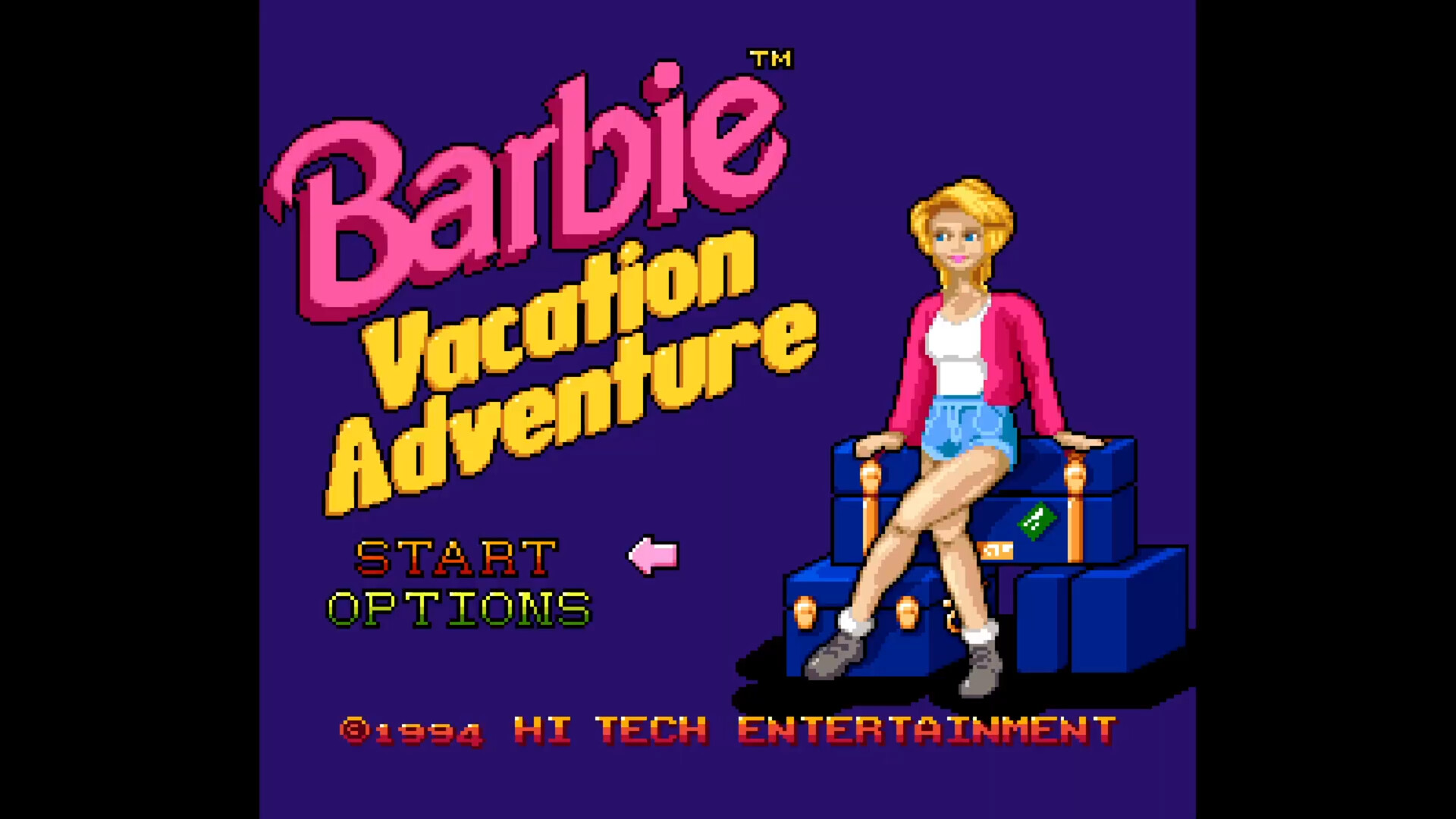
It also changes what this collection is. Without Vacation Adventure, Barbie Rewind is a nostalgia bundle — a good one, but a familiar shape. With it, the package becomes a small act of publishing history: the first commercial release of a 16-bit game in 2026, arriving on Switch 2 and PlayStation 5 at the same time as it finally arrives anywhere at all. If you collect first releases, tomorrow’s strangest one is wearing a pink jacket and sitting on a pile of suitcases.
Sixteen Games, Seven Systems, Sixteen Years
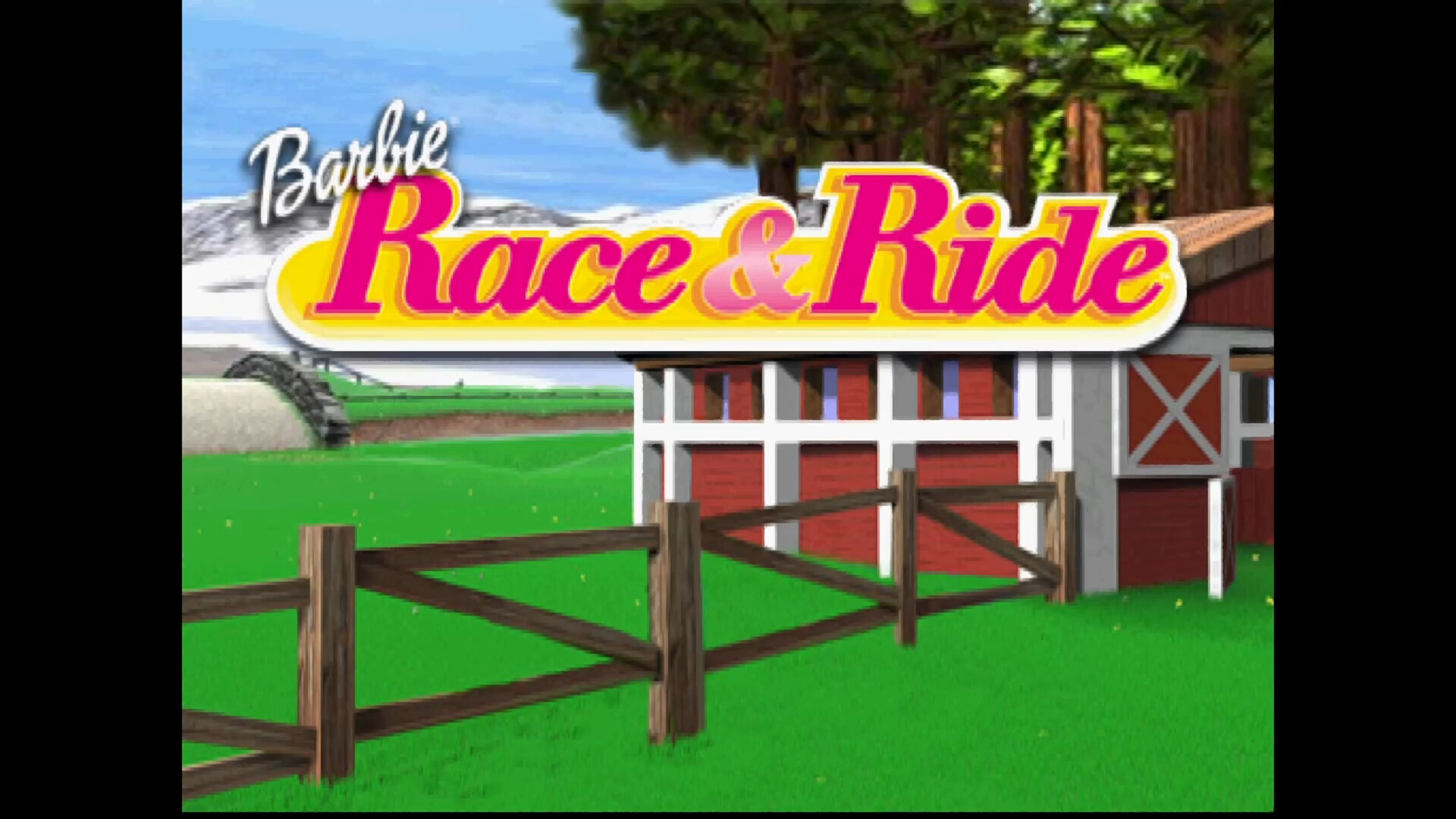
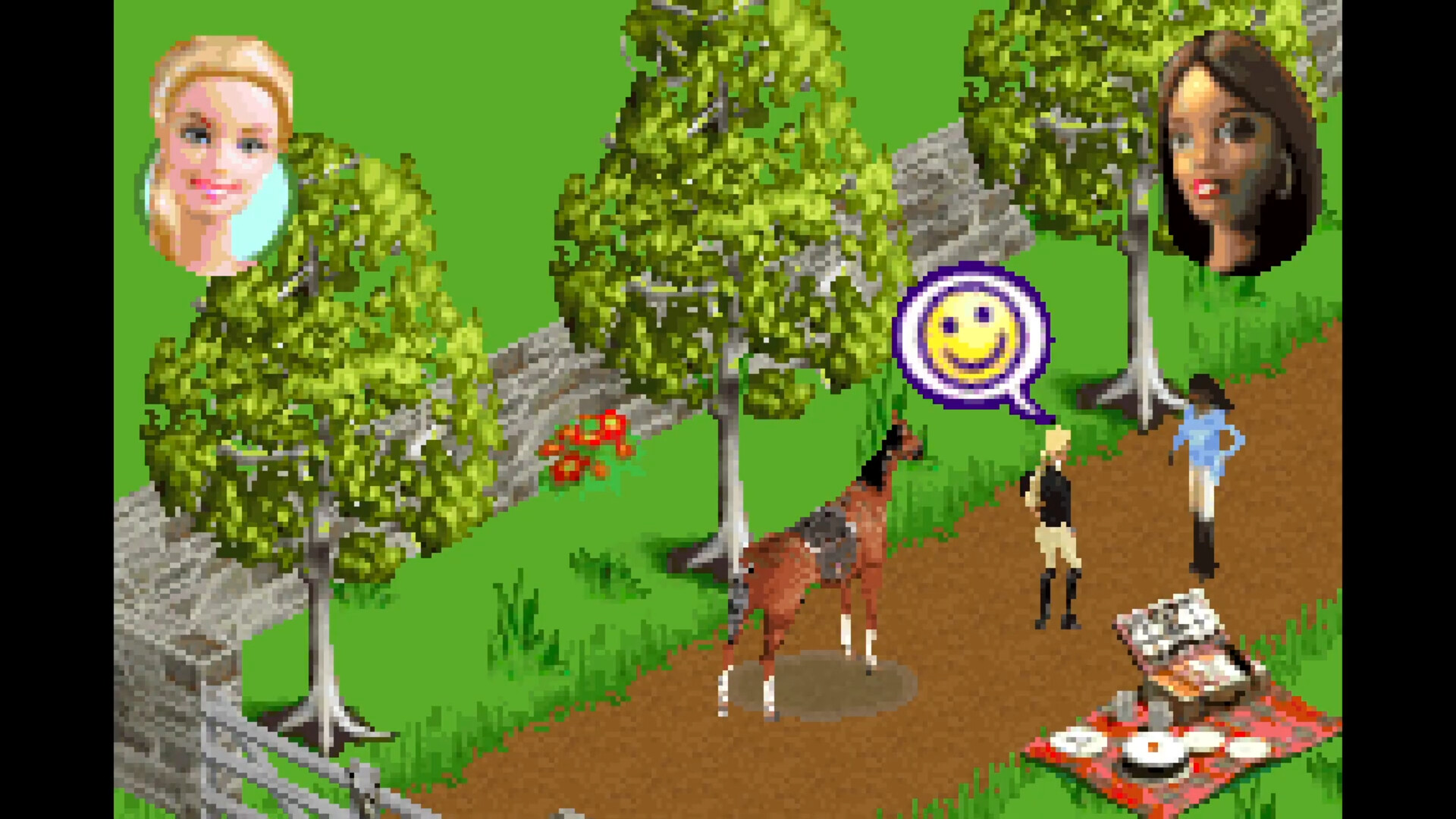
The full list Atari has published runs the whole arc of Barbie as a video game character, and it is a more varied shelf than the pink branding suggests. The 8-bit years open it: Barbie (1991, NES) and Barbie Game Girl (1992, Game Boy). The 16-bit era follows with Barbie Super Model (1993, Genesis and SNES) and the unreleased Vacation Adventure. Then the PlayStation years take over — Race & Ride and Super Sports (both 1999), Detective Barbie: The Mystery Cruise (2000) and Gotta Have Games (2003) — while the handheld line runs through Game Boy Color (Ocean Discovery, Fashion Pack Games, Pet Rescue) and into a long Game Boy Advance tail: Secret Agent Barbie: Royal Jewels Mission, Groovy Games, Horse Adventures: Blue Ribbon Race, The Barbie Diaries: High School Mystery, Barbie in the 12 Dancing Princesses and, closing the set in 2007, Barbie as the Island Princess.
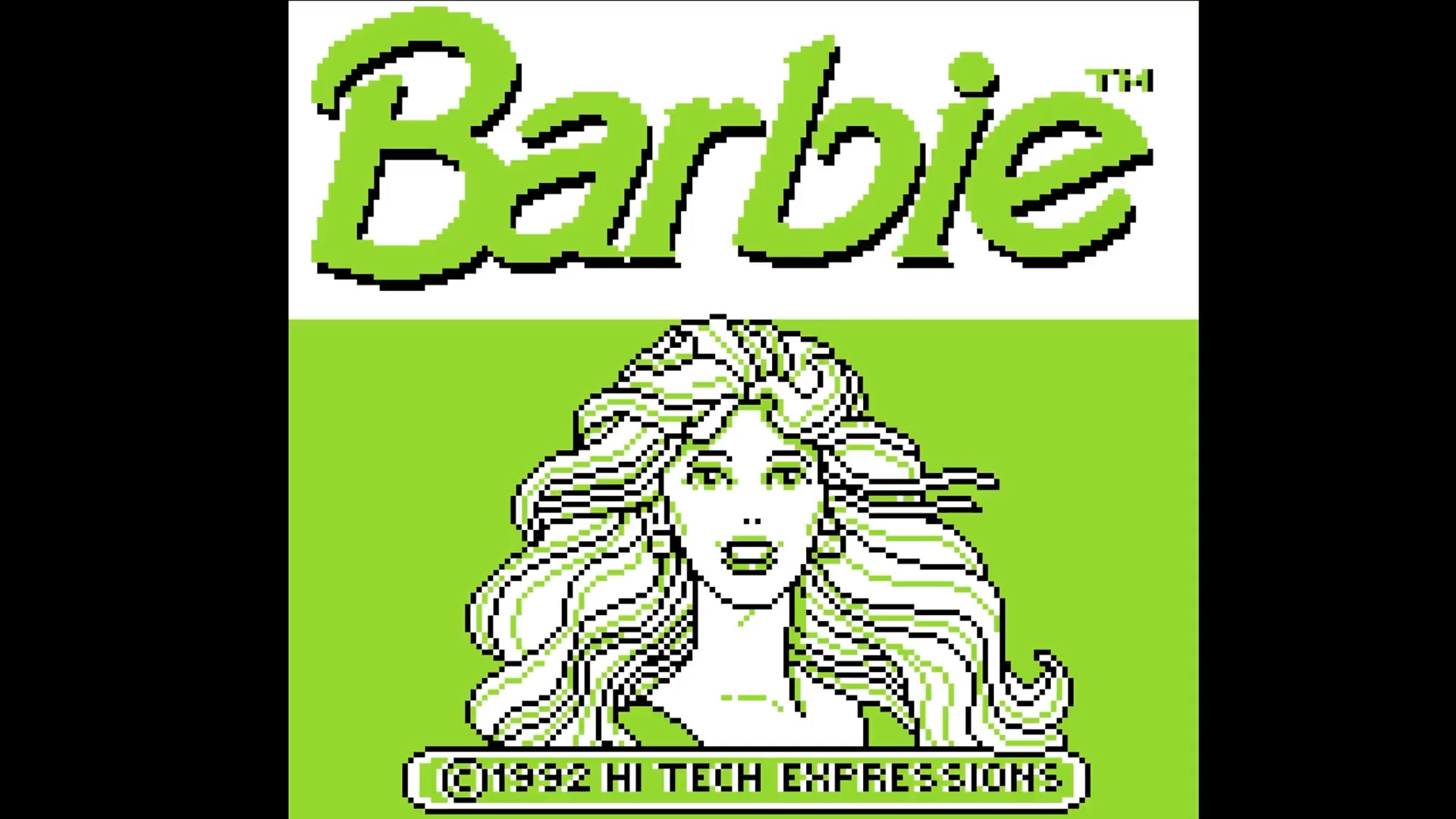
Read as a timeline, it is quietly one of the more complete records of how licensed games changed across four hardware generations — because Barbie was there for all of it, on whatever machine was in the house. The genres wander the way a real back catalogue should: platformers, sports, racing, detective adventures, pet rescue, horse riding. These were not prestige releases and nobody is pretending otherwise, but they sold to an audience the industry otherwise barely acknowledged in 1991, and a lot of players’ first-ever game was one of these. Collections like this are how that history stops being a rumour.
The DreamHouse Is the Wrapper, and It Has 250 Pieces of Furniture
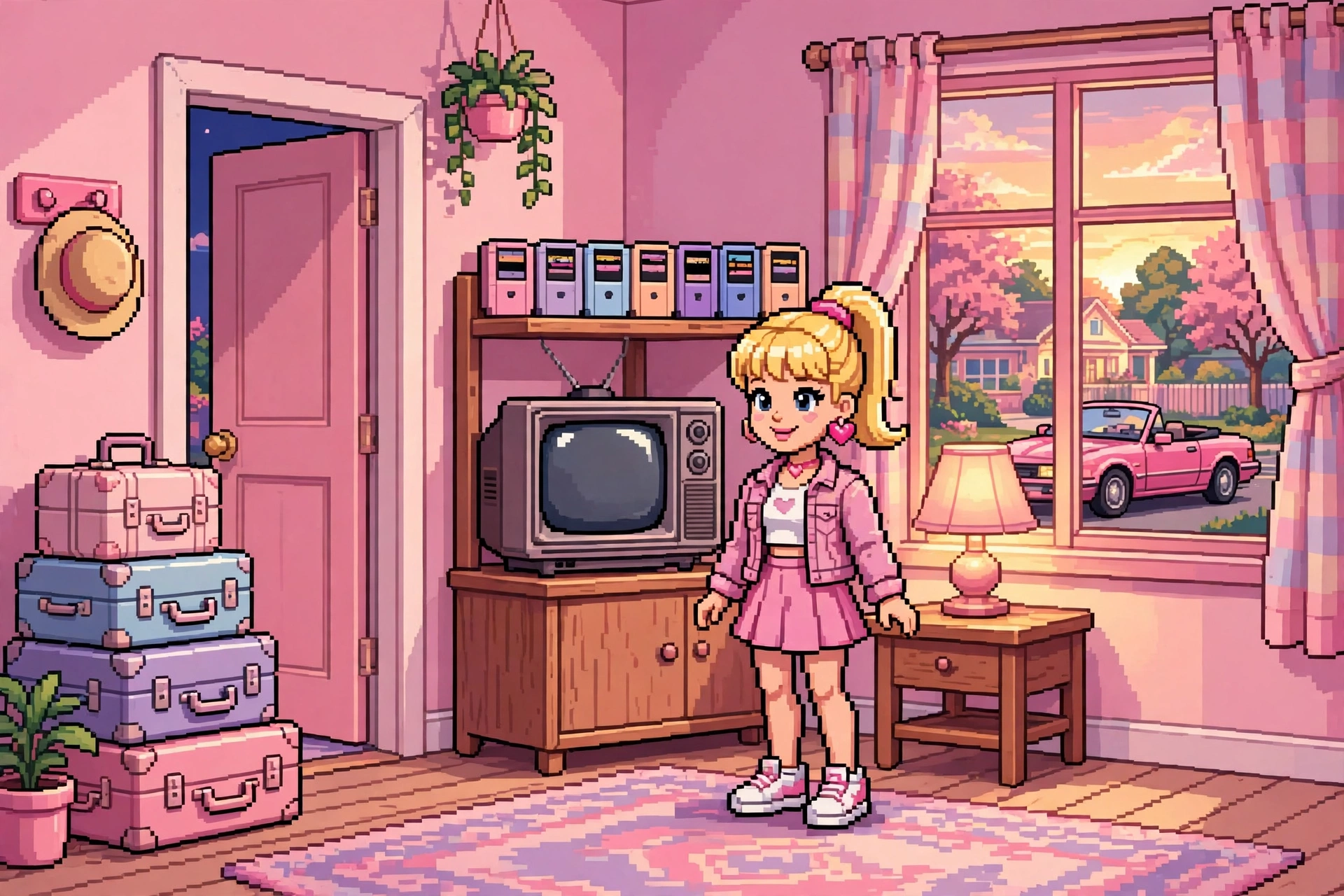
Digital Eclipse could have shipped a menu. Instead, the collection is framed by a new game of its own: you are Barbie’s guest, handed the keys to the DreamHouse and asked to redecorate it. The decorating game offers three retro DreamHouse designs for the exterior, walls and floors — mixable room by room — and more than 250 unlockable pieces of furniture, décor and accessories drawn from real Barbie playsets across the decades, from a classic pink vanity to a ’90s inflatable chair. Barbie herself phones in quests; Ken, Teresa and Christie drop by with design jobs of their own; and playing through the 16 games completes quests and unlocks more items for the house. A digital Lookbook of Barbie history rounds it out.
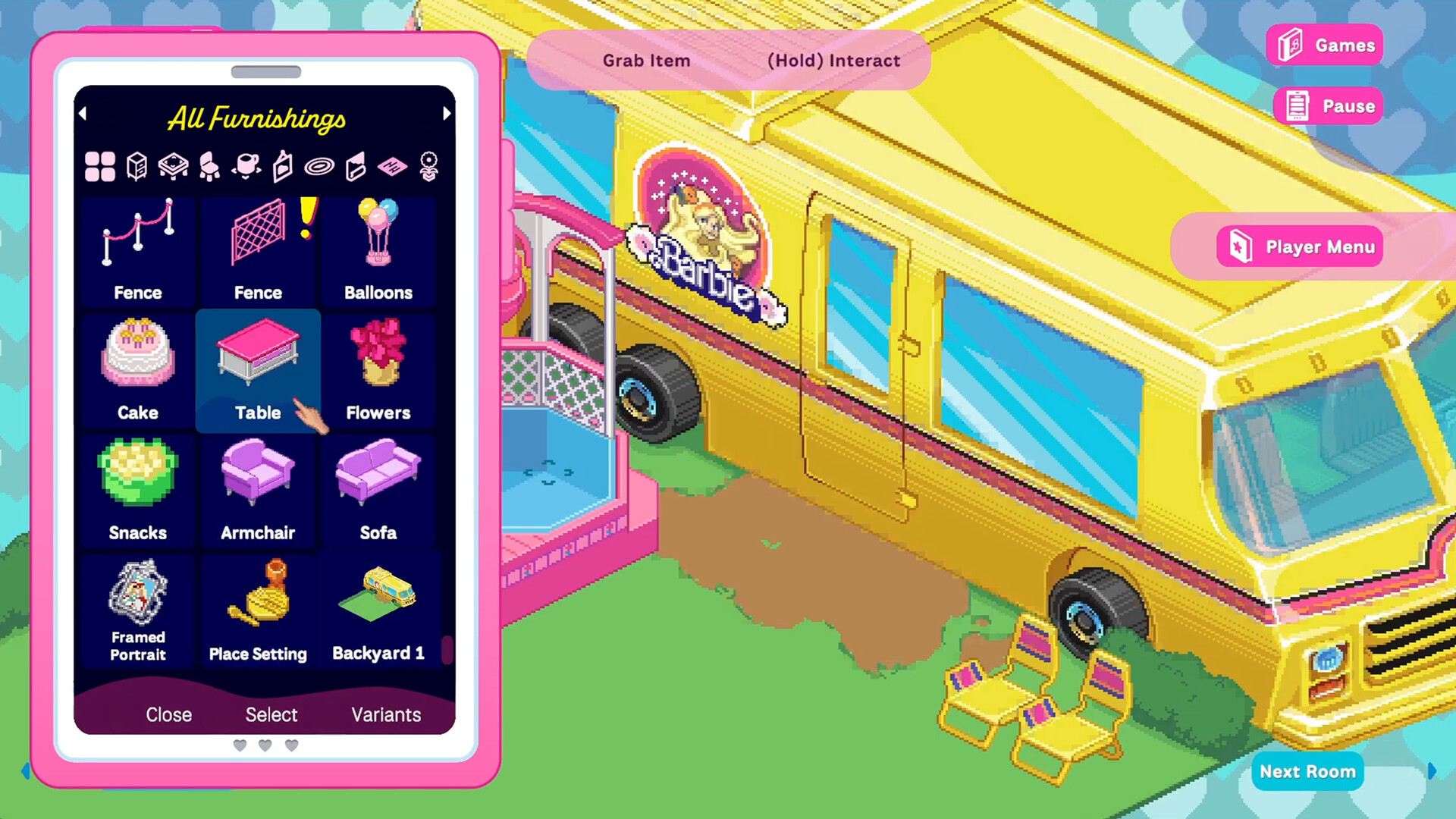
It is a smart piece of packaging, and a very Digital Eclipse one: the frame gives the old games a reason to be played in order rather than sampled, and it gives the package something no emulator menu can copy. Whether the decorating loop holds up over a full house is a question for the weekend. The structure, at least, respects both halves of its audience — the players who grew up with these games, and the much larger crowd who grew up with the doll and are meeting the games for the first time.
Prices, Editions, and a Doll in an Atari Shirt
The buying guide is refreshingly short. Digital is $29.99 everywhere: PS5, PS4, Xbox Series X|S, Xbox One, Nintendo Switch, Nintendo Switch 2 and PC via Steam. Standard physical editions exist for Switch and PlayStation 5. The collector play is the Switch Deluxe physical edition at $59.99: a premium, individually numbered box — the run is limited to 20,000 units — containing the standard physical game, a poster, and an exclusive Barbie Rewind doll wearing an Atari t-shirt, with long blonde hair, pink streaks, jeans and sneakers. A doll bundled with a retro game collection sounds like a gag until you remember which two companies are involved; it may be the most honest piece of cross-promotion the industry produces this year.
Barbie Rewind launches tomorrow, November 12. Most of it is a homecoming. One sixteenth of it — give or take a suitcase — is a debut, thirty years late and somehow right on time.
— June
For more launches from this date, see This Day in Gaming History: November 12.