
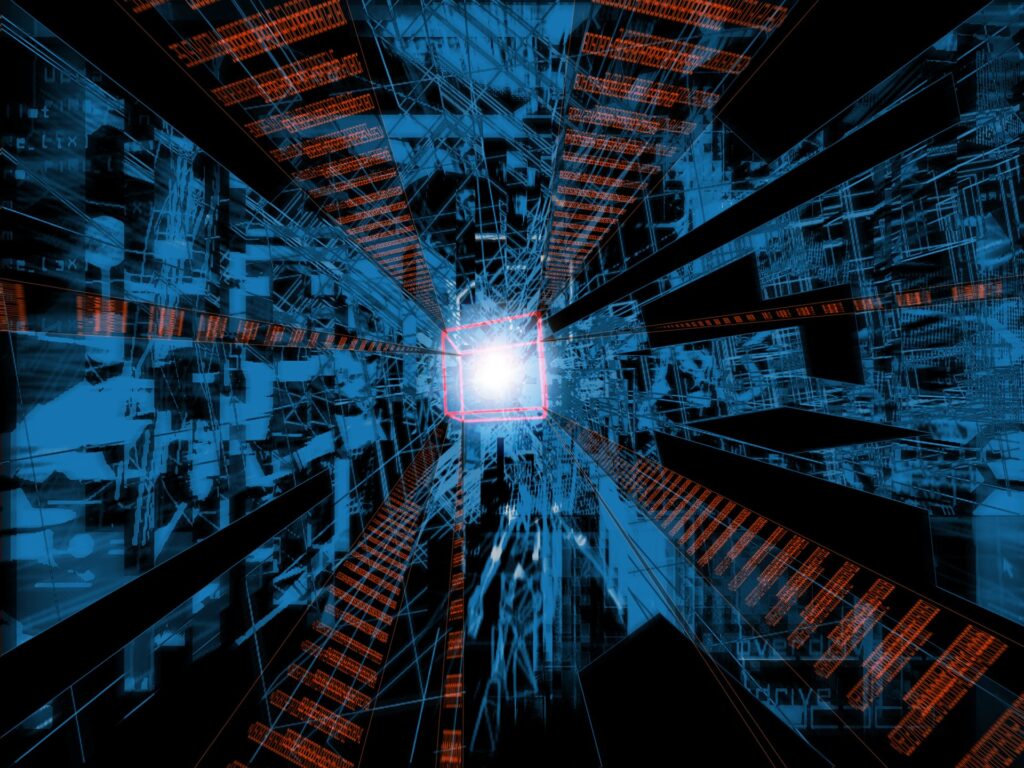
At a glance — Game: Rez · Developer: United Game Artists · Publisher: Sega · Original release: November 22, 2001 (Japan) · Original platforms: Dreamcast, PlayStation 2 · Genre: Music rail shooter · Producer: Tetsuya Mizuguchi
Most shooters hand you a gun and a corridor. Rez handed you a corridor and asked you to play it like an instrument. Twenty-five years ago today — November 22, 2001 — Sega released it in Japan on two machines at once: the Dreamcast, a console already living on borrowed time, and the PlayStation 2. Same day. Same strange, glowing game. It did not sell in any serious numbers, and it also never really left. Ask anyone who played it in a dark room with the volume up and watch their face. Something in there stayed switched on.
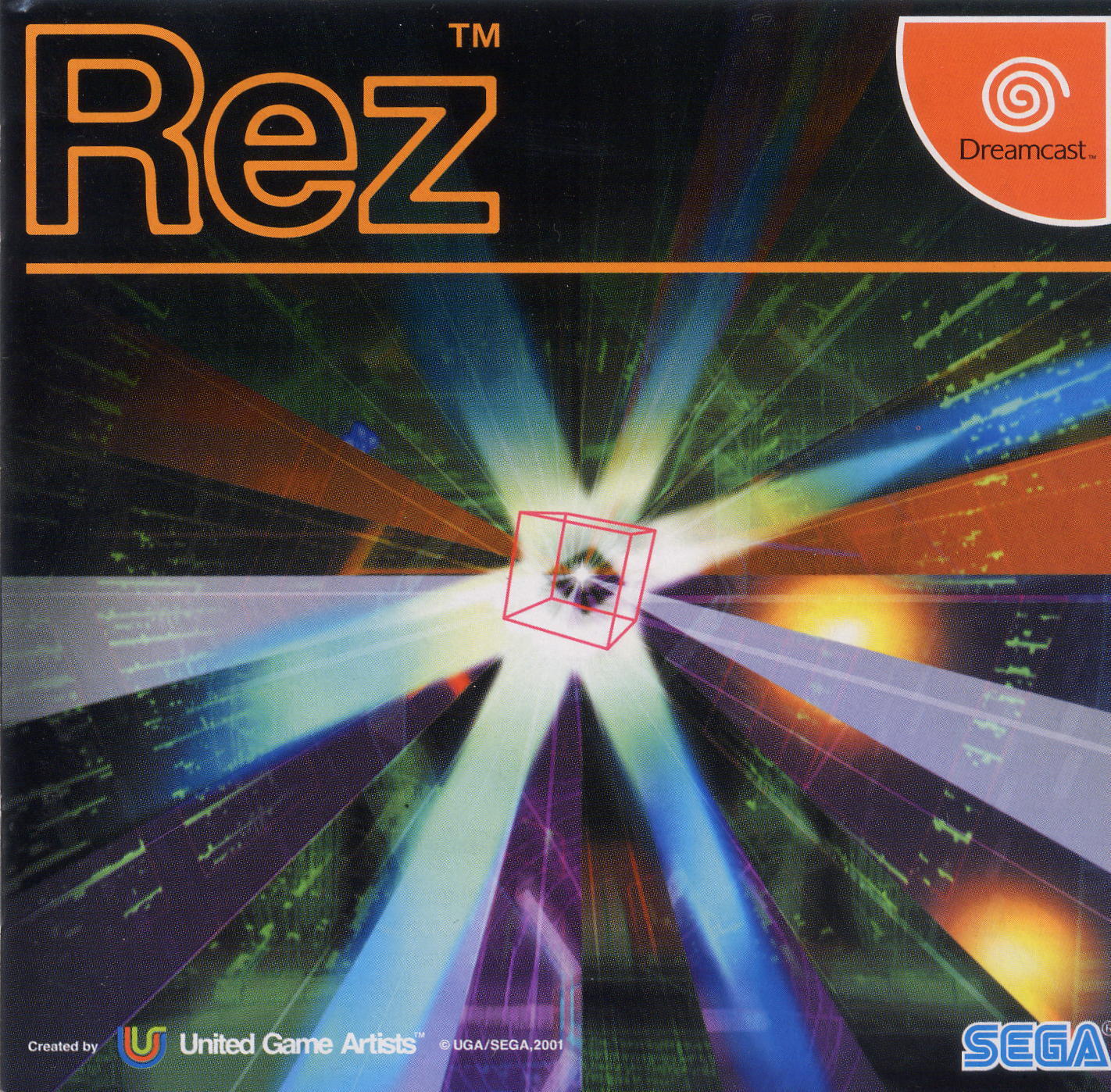
Can a rail shooter be a song? Rez thought so
The bones are familiar. Rez is a rail shooter in the Panzer Dragoon mould — and that is no accident, because United Game Artists included former members of Team Andromeda, the Sega team behind Panzer Dragoon. You fly forward on a fixed path. Enemies drift into view. You hold a button, sweep your lock-on across as many as eight targets, and let go to fire. So far, so 1995.
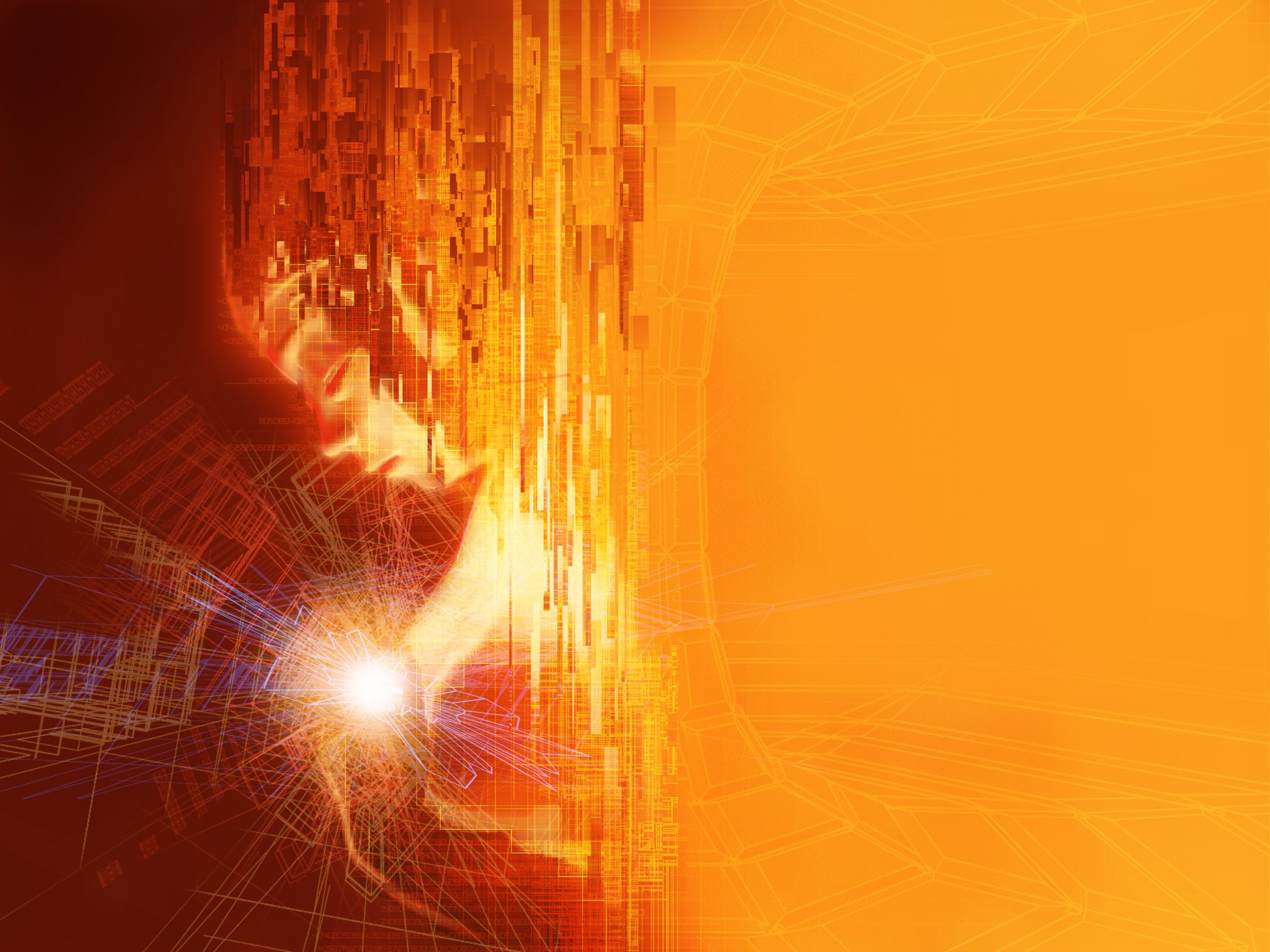
Then the sound starts behaving differently. Every lock-on lands on the beat. Every shot you release turns into a hi-hat, a clap, a little synth chirp, folded into the track already playing. Miss nothing and the music builds in layers as you move through each stage, the visuals pulsing harder with it. Play badly? The track thins out. You are not playing along to the music, exactly — you are one of the parts. And the controller vibrates in time, so the beat arrives through your hands as well as your ears. Sound, picture, touch, all saying the same thing at the same moment. That was the whole idea.
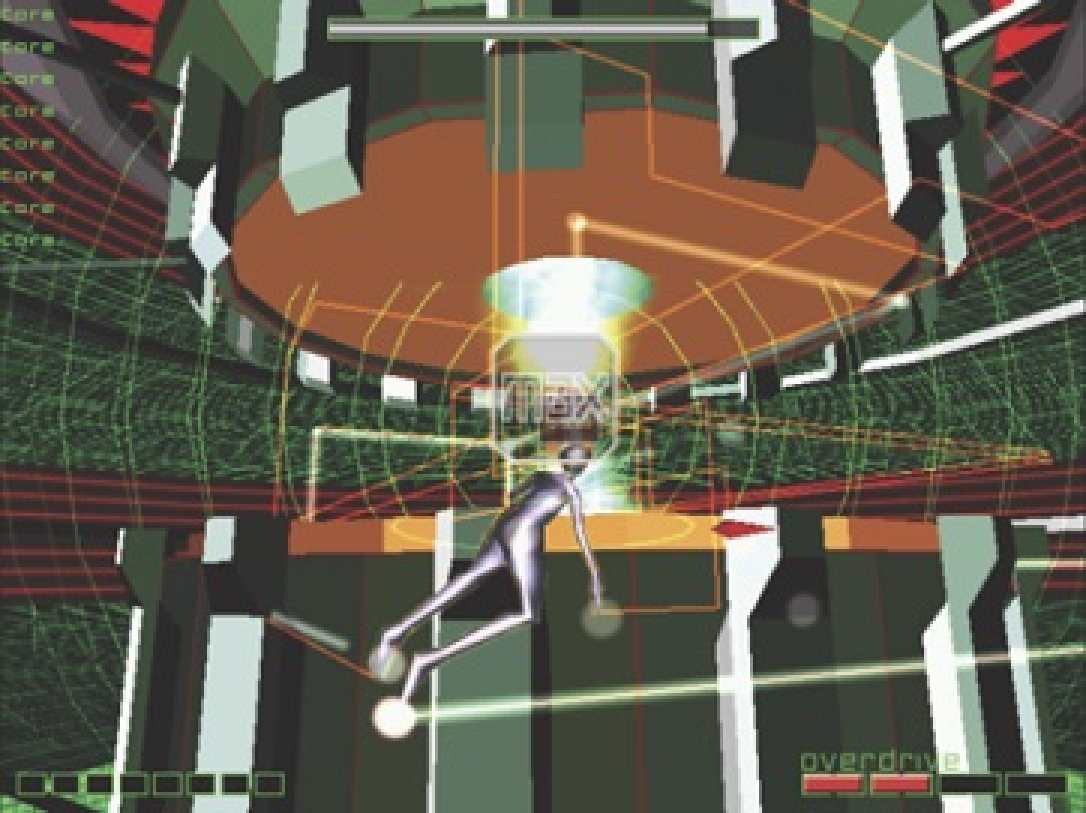
The story wrapped around it is thin on purpose. You are a hacker diving into a malfunctioning network run by an AI called Eden, who has shut herself down under the pressure of everything she knows. Viruses and firewalls block the way. There is no dialogue. Nobody explains anything. You just fly toward the centre, area by area, while the machine dreams in wireframe around you.
A painting, a parade, and the letter K
Producer Tetsuya Mizuguchi had been carrying the idea for years. Its roots go back to 1994 and 1995. Then came a research trip to Europe later in the decade, and a day at the Street Parade in Zurich — an enormous open-air electronic music event, hundreds of thousands of people all moving to the same beat. He watched that crowd and thought about synesthesia. The scrambling of the senses. Sound with colour in it, colour with sound.
That thinking led him to Wassily Kandinsky, the Russian painter who heard music in colour and spent his career trying to paint sound. Rez began life under the codename K-Project. The K is Kandinsky’s. The name stuck around inside the fiction, too — the network you invade is the K-Project system. Look at the game’s wireframe landscapes, all geometry and pure colour against black, and the debt is not subtle. This is a Kandinsky you fly through, drawn by a Dreamcast.
United Game Artists had just finished Space Channel 5, another game built on rhythm, and started production on Rez in 1999. The music was supervised by Keiichi Sugiyama, working with a spread of Japanese and European electronic artists, and the tracks did not just sit under the levels — they shaped them. Stages were built so the visuals, the enemy patterns and the beat could all breathe together.
The Trance Vibrator, because hands were not enough
If the controller’s rumble was a hint, the Trance Vibrator was the full sentence. For the PlayStation 2 release, Sega sold a small USB peripheral that pulsed in time with the music — stronger, deeper and more deliberate than a pad’s built-in buzz. You could hold it, sit on it, put it in a pocket. Wherever it went, the beat followed, and the synesthesia pitch stopped being a metaphor. The game was quite literally trying to be felt.
It is the kind of accessory that would never survive a modern marketing meeting. In 2001, on a game already this far out on its own branch, it barely even registered as the strangest thing in the room. Rez shipped with its weirdness worn openly, and the small audience that found it understood immediately.
Sold poorly, remembered loudly
The honest part: Rez was not a hit. Sales were low. On the Dreamcast it arrived as the console was winding down in Japan, which did not help. Critics got it straight away, though — reviews praised the music, the look, the feel of it. The main complaint was that there simply was not much of it. Five areas and you are done. It picked up industry award nominations, and in the years since it has settled into the spot it probably always belonged in: the one people name when they list the best Dreamcast games ever made.
Which raises the question this piece opened with, from the other side. A rail shooter is about as rigid a form as games have — fixed path, fixed camera, no freedom at all. Rez took that rigidity and treated it like a tempo. Because you cannot steer, the designers could score your whole journey the way you would score a track. The limits were the instrument.
Rez Infinite and the second life
Everything after this point is later history, and it is a good one. In 2008 the game returned as Rez HD on Xbox 360. Then, in 2016, came Rez Infinite for PlayStation 4 — developed by Enhance Games, Resonair and Monstars — with full virtual reality support and a brand-new zone, Area X, built in Unreal Engine 4, where the avatar finally leaves the rail and floats free. Critics singled Area X out as the closest thing to a true sequel the game has ever had. Infinite has since travelled to Windows, Android, Oculus Quest and PlayStation 5, which means the little Dreamcast experiment of 2001 is, at 25, playable on more machines than ever.
Mizuguchi went on to chase the same idea further at Q Entertainment with Child of Eden, a spiritual successor. Rez remains the pure version, though. Five areas. One beat. Nothing in it that does not need to be there. Plenty of games from 2001 look their age now. This one looks like it is still waiting for the rest of the medium to catch up — and on the evidence of Area X, in some ways it still is.
— June
For more launches from this date, see This Day in Gaming History: November 22. More from this system: our Dreamcast hub.