
At a glance — Game: Lot Lot Lot Lot · Launch: November 23, 2026 · Platforms: PC (Steam); physical package edition · Price: 1,000 yen (download); 3,300 yen (physical package) · Players: 1
A puzzle game that started life as a magazine listing in 1984 is back on Monday, and it is bringing two earlier versions of itself along for the ride. Mindware releases Lot Lot Lot Lot on November 23, 2026, for PC via Steam at 1,000 yen, with a physical package edition at 3,300 yen. Three versions in one release, new music from a genuine arcade legend, and a board that rotates 90 degrees when you need the situation to change. That is the news, anyway. The rest is why a 42-year-old magazine puzzler earns a release at all.
Three versions of Lot Lot Lot Lot in one box
Start with what is in the box, because here the contents really are the story. This release packs in three distinct versions. First, the original Lot Lot Lot, first published in Tokuma Shoten’s Program Pochette magazine in 1984 — a type-in era program, printed on paper, that readers keyed into their own machines. It did not stay in the magazine. The game later reached arcades and the Famicom, which is how a magazine submission became a name older Japanese players actually remember.
Second is Lot Lot Lot 3671, the arranged version of the original. Mindware’s Video Game Classics releases have form here: take the source game seriously, then build an arranged take beside it rather than replacing it. The 3671 version sits in that middle seat — recognisably the same puzzle, reworked scoring and pacing, a bridge between 1984 and now.
Third, and newest, is Lot Lot Lot Lot itself. Yes, the naming is a staircase — each generation adds a Lot.
A magazine game, with the creator’s permission
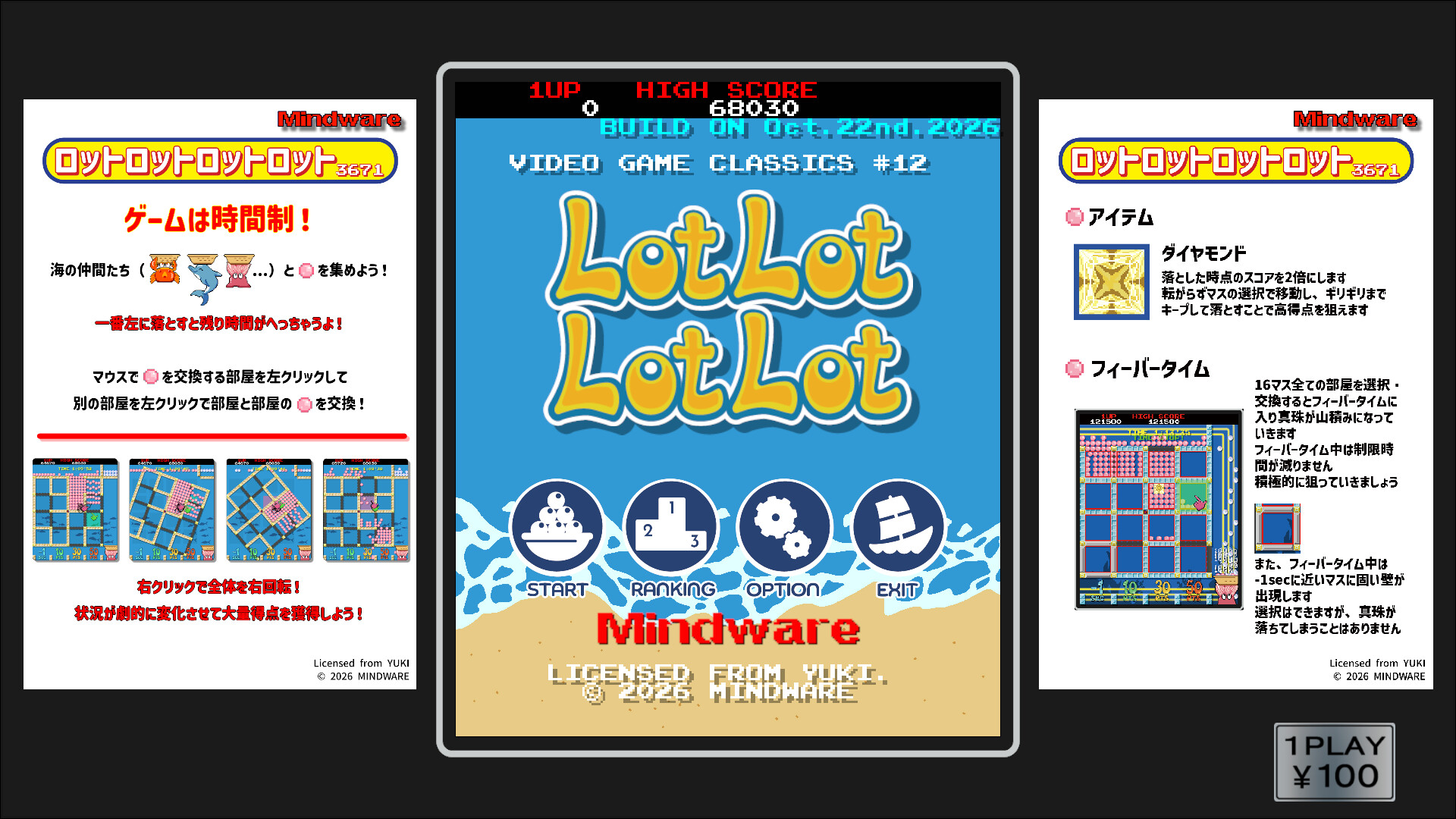
The detail that lifts this above a routine reissue is the permission. The original was submitted to Program Pochette by its creator, YUKI, under a pen name. Tracking down a magazine contributor from 1984 is not a formality. According to Game*Spark’s reporting, Mindware CEO Mikito Ichikawa contacted YUKI directly and obtained official permission to include the original version. The Steam page carries the line “Licensed from YUKI,” and the title screen repeats it. Small print, done properly.
That matters because magazine type-ins sit in an awkward corner of preservation: published, played, then boxed away until the listings effectively vanished. A licensed, purchasable return — original included, creator credited — is how this is supposed to work. No wink, no grey area.
The release also carries anniversary weight. Game*Spark frames it as part of the 30th anniversary of Mindware’s Video Game Classics series, the line that returns obscure Japanese computer and arcade games to sale, originals included. Steam’s description celebrates the same anniversary, and the title screen numbers this entry #12. A series old enough to have its own anniversary, reviving a game typed in from a magazine. Layers.
What the new version actually changes
The all-new game is a time-limited, high-score puzzle. That clock changes the temperament. The original idea — swapping the contents of rooms on a grid, steering balls toward the scoring gutters at the bottom — was methodical. Add a timer and it stops being methodical in a hurry.
Two additions push the scoring. Complete exchanges in all rooms and Fever Mode triggers, the moment the board tips from careful to greedy. Find a diamond and your current score doubles, instantly. Not a multiplier on the next drop. Your score, doubled, now. That is the kind of rule that makes a player take one stupid risk too many, which is exactly what a good score-attack rule should do.
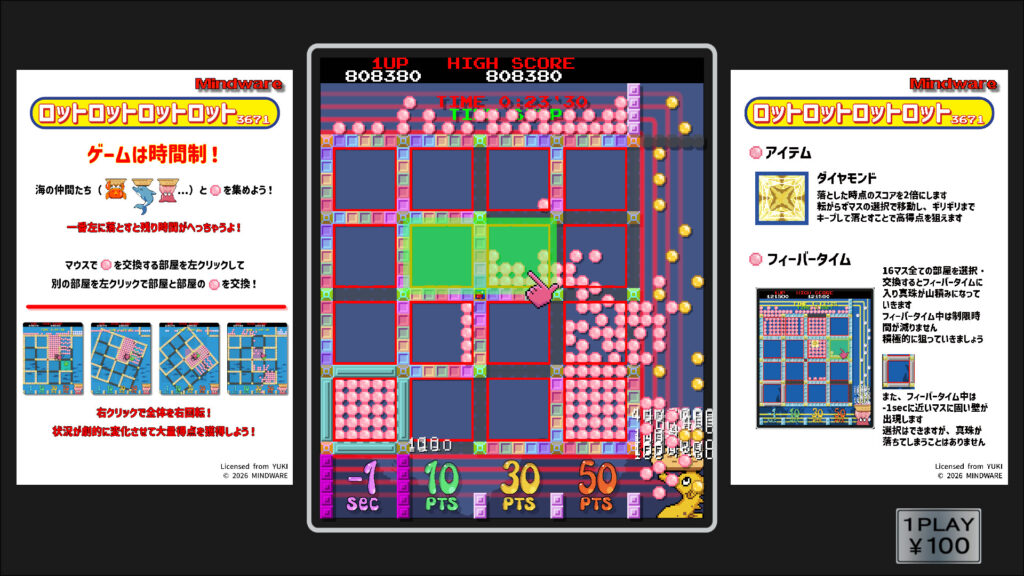
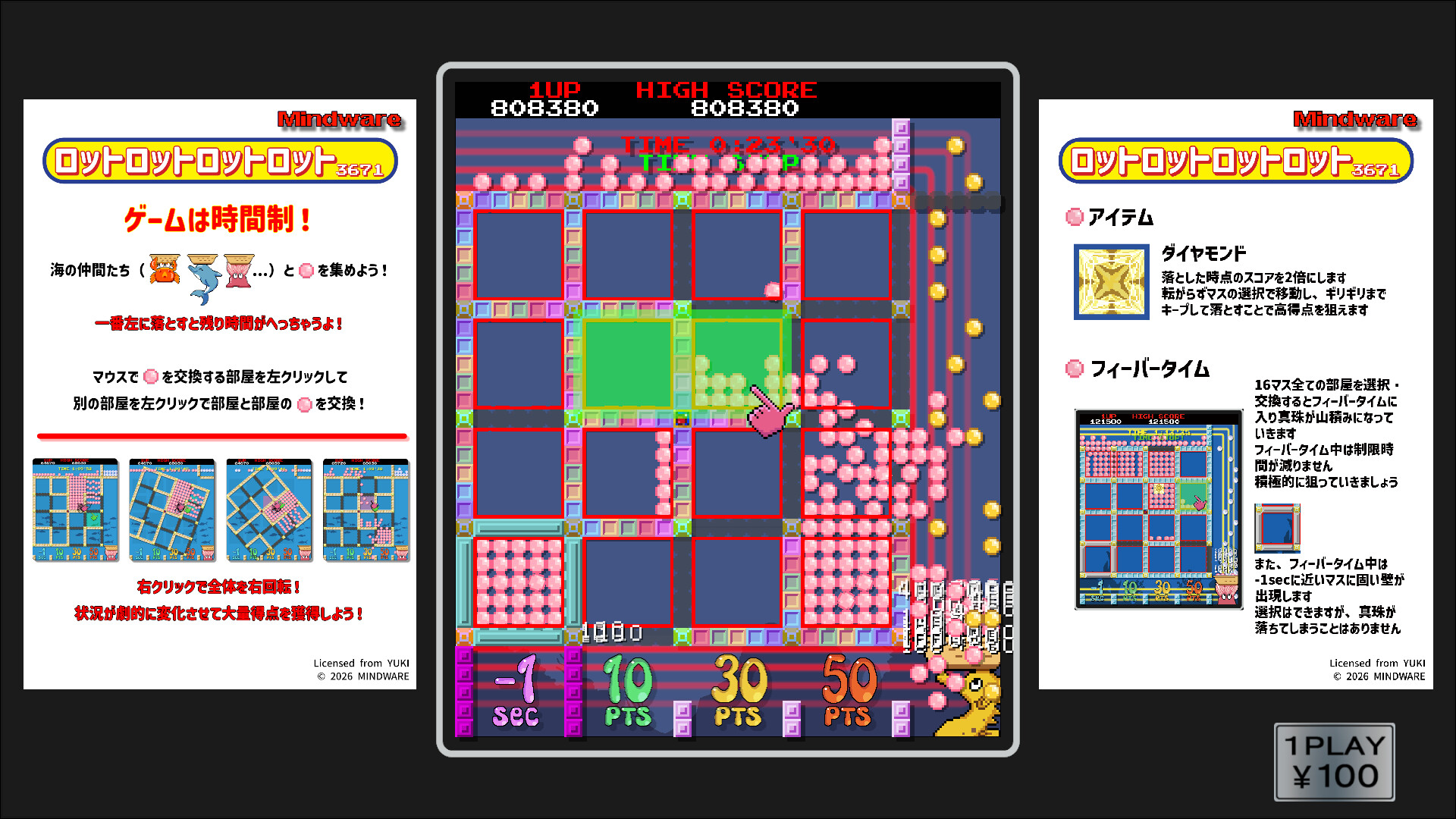
Then there is the headline trick. The whole board rotates 90 degrees. When the layout has gone against you — balls pooled in the wrong rooms, the good gutters out of reach — you turn the field and the problem becomes a different problem. Sometimes a better one. The Steam screenshots show the grid mid-play, pink balls massing in the rooms, the scoring channels along the bottom reading −1 sec, 10, 30 and 50 points. One bad drop costs you time. The expensive mistakes are priced in seconds, not just points.
New music from Yuriko Keino
The sound credit alone will sell this to a certain reader, and that reader is right. The new music is by Yuriko Keino, whose name belongs on Xevious, Dig Dug and Dragon Buster. Those are not deep cuts. Those are foundation stones of arcade music, from the composer who helped define what Namco games sounded like.
Keino scoring a 2026 sequel to a 1984 magazine puzzler is the sort of booking that only happens when a publisher genuinely cares about the material. Mindware clearly does. The credit is front and centre in both the Steam description and Game*Spark’s coverage, and, as we will get to, it runs through the physical extras too.

The original gets comfort options — all of them optional
Reissues live or die on how they treat the original, and the honest answer here is: carefully, and with switches. The included original version gains three comfort options. A dash function moves the marker quickly. A focus function makes the room the marker is currently pointing at easier to see. And a top-wall priority function opens the top wall first when the number of balls on the field falls below a certain threshold.
Every one of them can be turned on or off. That last clause is the whole policy. Players who want the 1984 game as it was get it untouched. Players who found the original slow — and contemporary reviews of the Famicom version were, let us say, not shy about the pace — get help that is theirs to refuse. No lecture either way. More reissues should write that sentence.
The physical edition, the bonus and the soundtrack
Japan gets a proper physical package, and it is a package, not a box with a download code and an apology. For 3,300 yen it contains postcards and a booklet, plus a Steam key for the game itself. It will be sold at BEEP, KVC Lab and Sweep Record — three retailers that know exactly who this is for.
There is a deadline attached. Pre-order the physical edition by November 23 and the bonus is a signed mini-shikishi by Yuriko Keino — a small autograph board, personalised, from the composer. That is a pre-order extra with actual thought in it. It also means the bonus window closes on launch day itself, so anyone outside Japan weighing import costs should do the maths this weekend, not next week.
The music gets its own release as well. A 2-CD soundtrack follows in December 2026 at 3,500 yen plus tax. Disc one carries the Lot Lot Lot Lot soundtrack; disc two covers the original and the arranged Lot Lot Lot 3671. If the Keino credit is what brought you here, December is your month.
One honest caveat about the date
A note on sourcing, because it is owed. Steam’s own store page for the game currently shows its release-date field blank — “Coming soon,” no date filled in. The November 23 date, the prices and the physical details rest on Game*Spark’s November 21 reporting of Mindware’s announcement, backed by the publisher’s own store copy describing the game in full. That is solid reporting, but it is not the same as a date stamped on the store page, and we would rather say so than pretend otherwise. If Steam’s field updates over the weekend, so much the better.
What is not in doubt is the shape of the thing. A 1984 Program Pochette submission, back with its creator’s permission. Its arranged 3671 version beside it. A new sequel that rotates the board, doubles your score on a diamond and loses its mind in Fever Mode. New Yuriko Keino music across all of it, for 1,000 yen. Plenty of reissues ask for more money and offer less respect. This one lands Monday.
— June