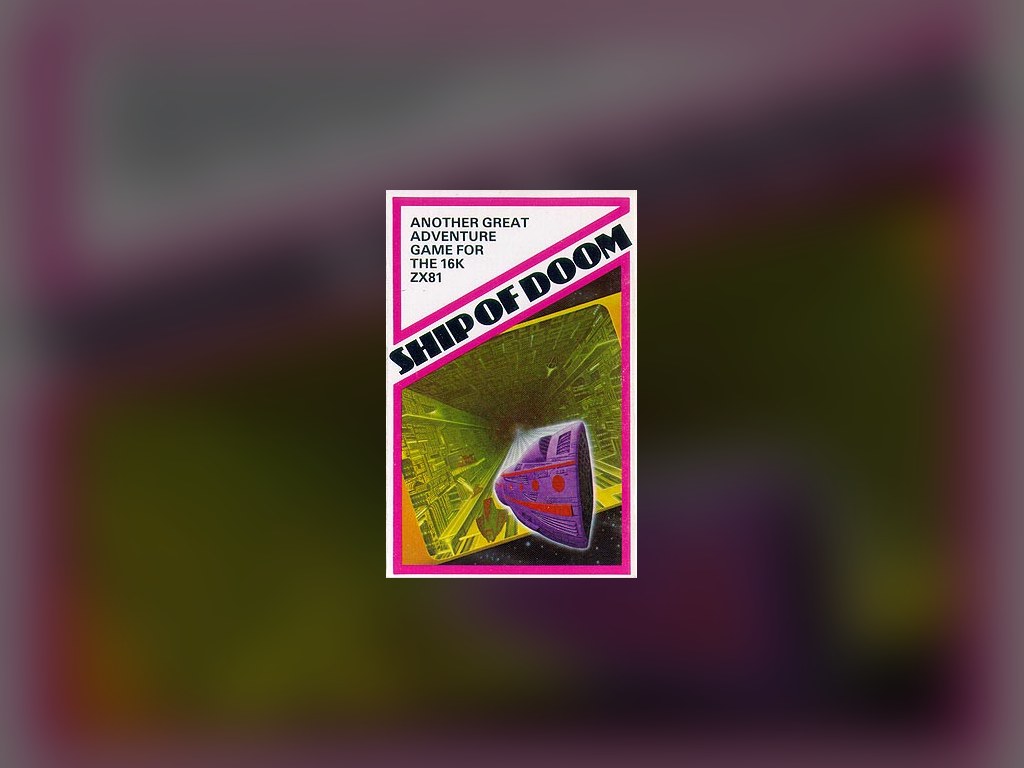
At a glance: Adventure C: Ship of Doom · ZX81 · Artic Computing, 1982 · Text adventure · Score: 7.0/10
The third Artic adventure returns to space with a premise of genuine pulp menace. On a reconnaissance flight, your ship is caught by a graviton beam and dragged aboard an alien cruiser. Your android, Fred, delivers the briefing every adventurer dreads: the cruiser is on a humanoid enslavement mission, touring planets to sample brains and replace them with microchips. You are, in short, cargo that has not yet been processed. Adventure C: Ship of Doom, written by Charles Cecil for Artic Computing and published for the ZX81 in 1982, is the series discovering science-fiction horror — the alien ship as haunted house, the player as specimen, and escape as the only plot that matters.
It is worth pausing on the name problem, because it has confused catalogues for forty years. The game also circulates as Adventure C: Alien Spaceship — the Libretro set lists the ZX81 program under that title — and both names describe the same cassette: Artic’s third letter, the one with the cruiser and the graviton beam. Ship of Doom is the name the series’ own listings lead with, and the better title, pulp dread over pulp description. Either way, this is the adventure where Artic’s sequence stops retreading its first game’s “stranded pilot” shape and finds a darker register: Planet of Death stranded you by accident. Ship of Doom collects you on purpose.
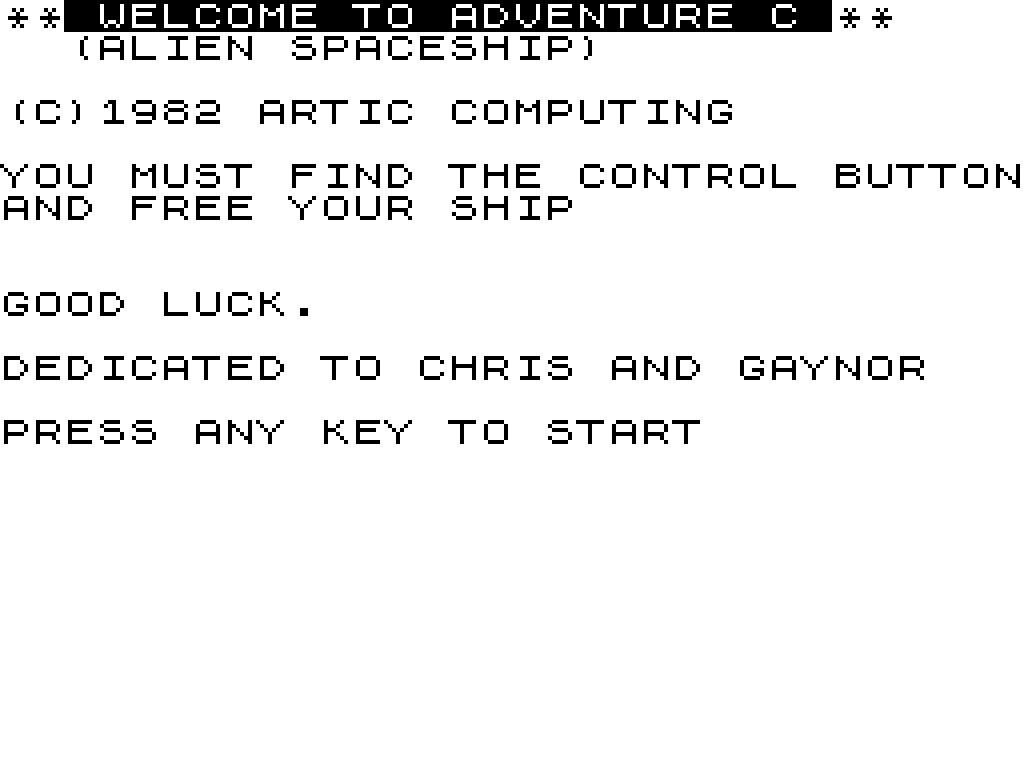
Fred, the beam, and the brain harvest
The framing does real work. A pet android as informant gives the game a character — the series’ first — and the enslavement mission gives the ship a purpose beyond being a maze with airlocks: this is a working vessel with a horrible job, and exploring it means moving through the machinery of an atrocity while trying not to become part of the inventory. For a two-word-parser text adventure in capital letters, that is ambitious atmosphere, and it places Ship of Doom in an interesting lineage: the “escape the alien ship” scenario that later games would render with graphics and budgets begins, in British home computing, in text, on the cheapest machine available.
Mechanically, the Artic formula holds: verb-noun commands, terse descriptions, no graphics, puzzles built from objects used in the right places, and a map that must be learned by dying in it productively. The series’ known flaws, identified by later retrospectives of its siblings — the limited vocabulary, the occasionally illogical puzzle — apply here too, and the episodic structure of the sequence means C inherits both the charm and the ceiling of A and B. What has grown is confidence. Cecil’s writing across B, C and D traces a designer learning the form in public: bigger premises, stranger set-pieces, a feel for the cold open. A graviton beam in the first paragraph is a cold open any era would accept.
Planet of Death stranded you. Ship of Doom collects you — on purpose, for your brain. The Artic adventures grew teeth between A and C.
Part three of the alphabet
Like its siblings, Ship of Doom was ported from the ZX81 to the Spectrum on that machine’s release and later to the Commodore 64 and Amstrad CPC, where the “Ship of Doom” name anchored the listings. The ports spread the game; the original remains the interesting artefact, because the ZX81’s starkness suits it. An alien cruiser described in terse capitals on a silent black-and-white screen is all negative space — the ship is whatever your imagination fears most, and no 16K graphics routine could have drawn it better. This is the recurring gift of the Artic adventures to modern players: their poverty of presentation is a style now, and the style is dread.
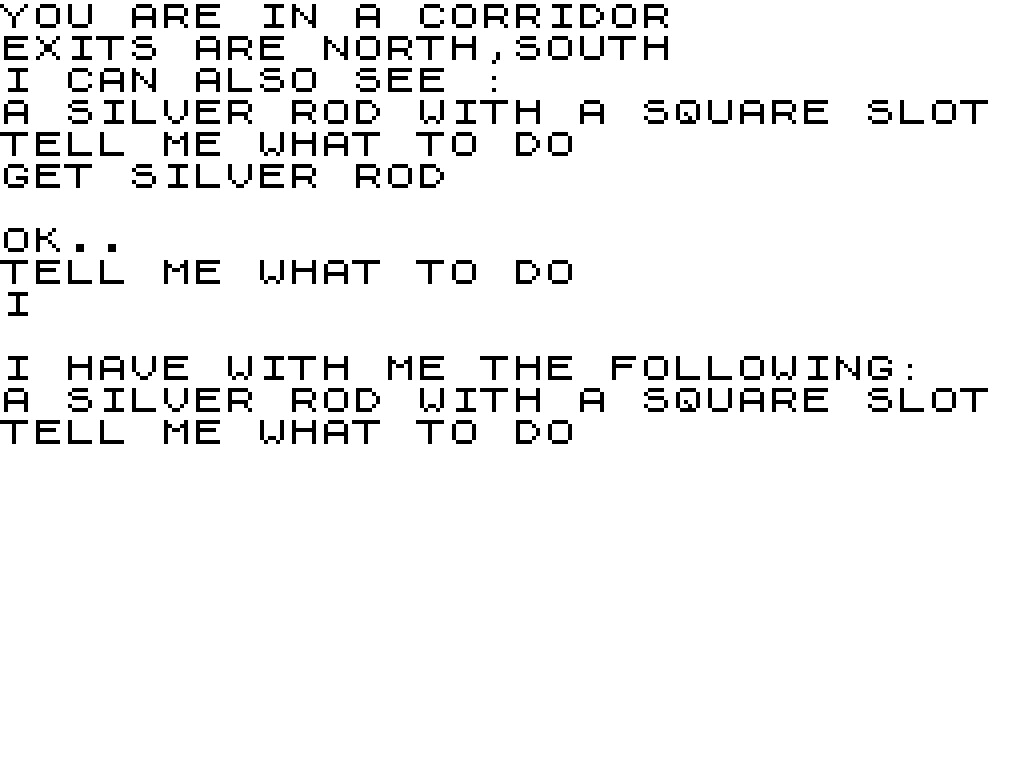
Played in sequence — A, B, C, D across four evenings — the series becomes something more than four short games: a documentary of British adventure gaming inventing itself, one letter at a time, by a tiny Yorkshire company whose alumni would shape the genre for decades. Ship of Doom is the sequence’s genre-fiction peak, its most lurid premise and its most confident opening, wrapped around the same honest, limited, entirely functional engine.
A game with two names and three afterlives
The catalogue confusion around Adventure C is itself a piece of history worth keeping. The ZX81 program circulates in the archives under both Ship of Doom and Alien Spaceship; the Commodore 64 edition of 1984 is listed as Adventure C — The Ship of Doom; the arcade-history database files the ZX81 cassette simply as Adventure C, 1982, Artic Computing. A series sold by letter rather than title invited exactly this drift — the letter was the brand, the subtitle a rumour — and the drift tells you how the tapes were actually bought: by series loyalty, from adverts that listed A, B, C, D like a menu, by players who trusted the alphabet to continue. It did continue, on the larger machines: the sequence eventually ran from A toward H, but the later letters belong to the Spectrum era, and the ZX81 quartet retains the completeness of a first edition.
There is also Fred to consider. A named android companion — an informant with a personality implied by a single domestic word, “pet” — is a small revolution inside a series that had previously offered the player no company at all. Planet of Death’s pilot is alone. Inca Curse’s looter is alone. Ship of Doom gives you Fred, and with Fred the adventure gains what the genre would spend the decade exploiting: a voice inside the fiction that can explain the world, warn the player, and make the cruiser’s horror legible as plot rather than as scenery. The brain-harvest briefing is Fred’s scene. Writers of adventures have been putting Freds in their games ever since, under other names, in bigger memories.
Playing it in 2026
Adventure C is preserved under both of its names, and in sequence — the third evening of the A-to-D run this package recommends — its pleasures are comparative: the same engine, a colder premise, a companion where there was none. Played cold, it is a short, atmospheric escape with the series’ standard homework: map as you go, save your progress where the medium allows, and expect the parser to want its instructions in pairs of words. The cruiser’s menace survives the decades better than its puzzles do, which is the correct ratio for pulp. Fred would want it that way: the briefing was always the best scene, and the briefing is the part no amount of time can spoil.
Verdict
Adventure C: Ship of Doom is the Artic sequence at its most pulp: a graviton beam, a brain-harvesting cruiser, a helpful android named Fred, and you, unprocessed, looking for the exit. The parser creaks, the descriptions economise, and the premise carries it — then and now. Third letter, darkest game.
Score: 7.0/10 — Artic’s alphabet turns to space horror: escape the cruiser before the cruiser processes you.