
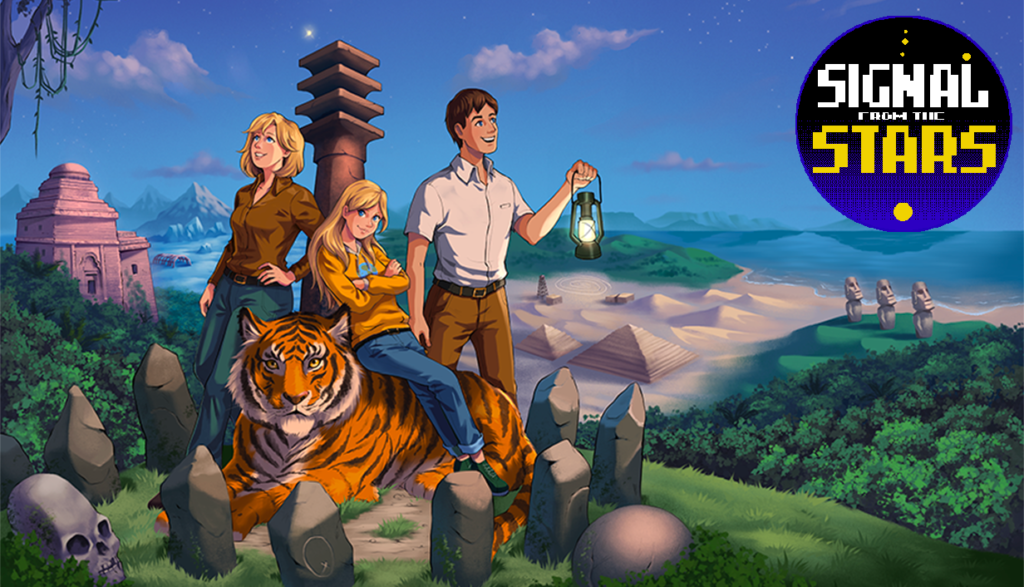
At a glance — Game: Signal From The Stars · Developer: Signal From The Stars · Publisher: Signal From The Stars · Original release: October 30, 2026 (Steam Early Access) · Original platforms: Windows, Mac, Linux · Genre: Point-and-click adventure · Price: $9.99 (Early Access)
Ten minutes into Signal From The Stars, I reached the verdict this whole review hangs on: “This guy was a huge fan of Maniac Mansion — it’s almost like a sequel as far as interface, look and story.” That was said with admiration, and two evenings spent playtesting the Early Access build only firmed it up. This is a point-and-click adventure built the 1987 way — nine verbs, three playable characters, one house full of secrets — by a Dutch solo developer named Martin, who then pointed the formula at something Maniac Mansion never attempted: real, unsolved mysteries, in real places you can actually visit, tied together by a map that should not exist.
Signal From The Stars arrived in Steam Early Access on October 30, 2026, and what is on sale today is deliberately an opening chapter: five scenes, one family, and the first steps of a journey meant to circle the globe. This is our review of that opening chapter — played through in full, every scene of it — and of whether the road ahead is worth your ten dollars.
Signal From The Stars Plays Like a Maniac Mansion Sequel
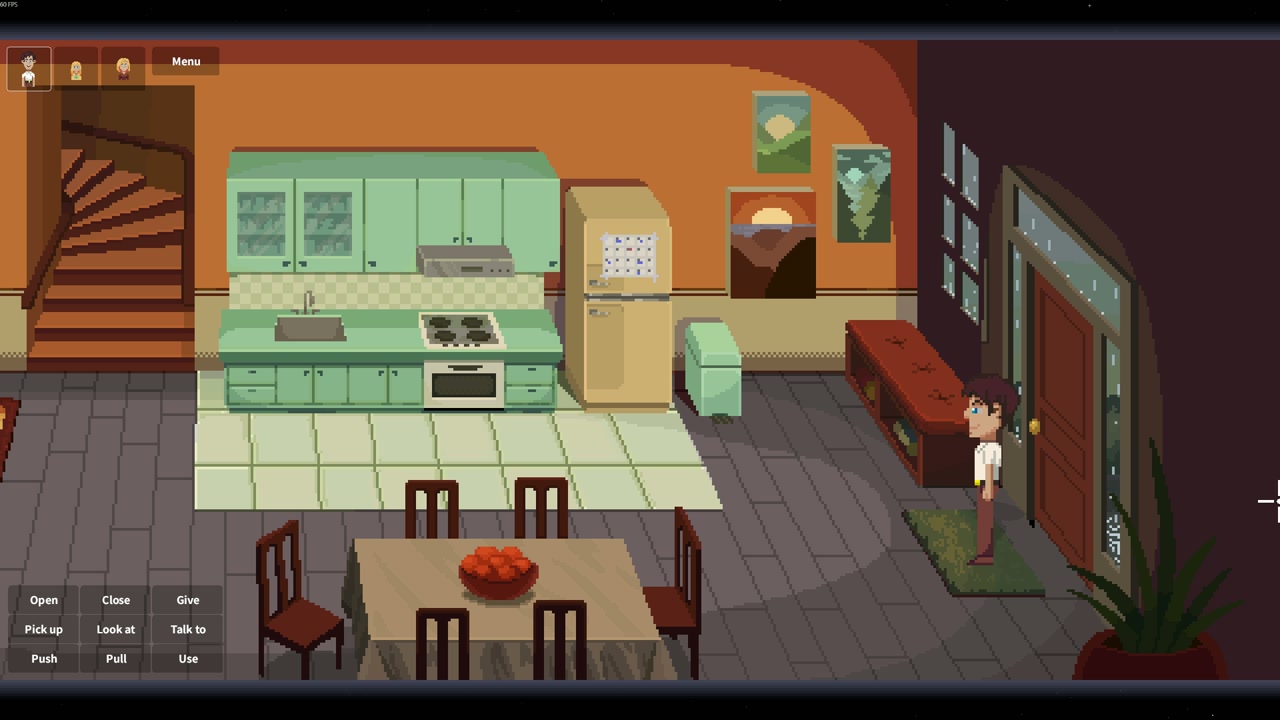
The interface makes no apologies for its age. At the foot of every screen sits the classic nine-verb grid — Open, Close, Give, Pick up, Look at, Talk to, Push, Pull, Use — and you build sentences with it exactly the way you did in 1987: “Give piggy bank to…”, “Use pizza on…”. Three character portraits sit at the top of the screen; click one and control passes to that member of the family, each carrying a separate inventory. When the character you need is somewhere else in the house, the game sends them on their way beneath a little starfield labelled, simply, “Traveling” — a transition so charming it earns its keep every single time it plays.
None of this is a borrowed kit. Martin wrote his own engine for the game, in Lua on the LÖVE framework, and played the entire adventure through in placeholder art before a single final scene was drawn. The production rule is stated on the store page in capital letters: every asset — art, audio, graphics — made without generative AI, every pixel placed by hand. The hands you see in the credits belong to a small circle of named collaborators: sketches and promo art by Mayo Lopez, pixel art by Lucas Mendieta, additional art from Mario D and Dharu Ghazi, music by Matias Sosa.
One Family, Three Cursors
You play all three members of the family — Martin, Diana and Nikki — and the switching is not cosmetic. Diana is fearless; Martin flatly will not climb anything high; some puzzles only one of them can solve. The game even respects their property: reach for something of Nikki’s while playing as Martin and he refuses himself — “That belongs to Nikki, I’m not going to take that.” Each character reads the same room differently, too. The newspaper, the fridge, the leftovers all earn fresh lines depending on whose eyes you are borrowing, which turns a five-scene opening into a house worth walking through three times — and makes the family’s pockets a shared toolbox, with the piggy bank, the glue and the leftover pizza distributed among whoever happens to be carrying them.
Before the story starts, the game asks two disarming questions. “How do you want to play?” — Guided adventure, where hints light up in dialogs and impossible actions are greyed out, or Classic adventure: “no hints, no help.” Then: “Background music?” — on for atmosphere, or off, for “only the sounds of the world, for realism.” It is the game’s whole philosophy in miniature: the old-school experience, with the friction made optional rather than removed. We played Guided, and the greyed-out verbs alone quietly kill the genre’s oldest annoyance — the twenty-minute try-everything-on-everything spiral.
And when the script wants to keep you out of a room, it does it in character. Try the parents’ bedroom door and Martin deadpans: “No one needs to see the parents’ bedroom.” Every boundary in this game is a joke, a personality beat, or a promise — a small thing that says a great deal about the care in the writing.
Real Mysteries, Real Places
Martin introduces himself to the player directly, in a voiced monologue before the adventure begins: “My name is Martin, the most adventurous explorer you’ve ever met.” Then comes the promise the whole game is built on: “This adventure is built around real, unsolved mysteries, places protected by UNESCO that you can actually visit.” The developer has put himself inside his own game — he even thanks Diana and Nikki by name in the intro — because the family on screen is his own.
The lineage he is chasing is Lucasfilm’s own. Martin has said that Zak McKracken and the Alien Mindbenders is the game that changed how he sees the world: an adventure that wove real-world mysteries into its story and sent its players off to research what they had seen. Signal From The Stars sets itself the same rules. Everything in it had to be tangible — archaeological finds and ruins that science still cannot explain, gathered from more than 35 years of reading and research written before the internet. No UFOs, no ghosts, no aliens. Down to the coordinates.
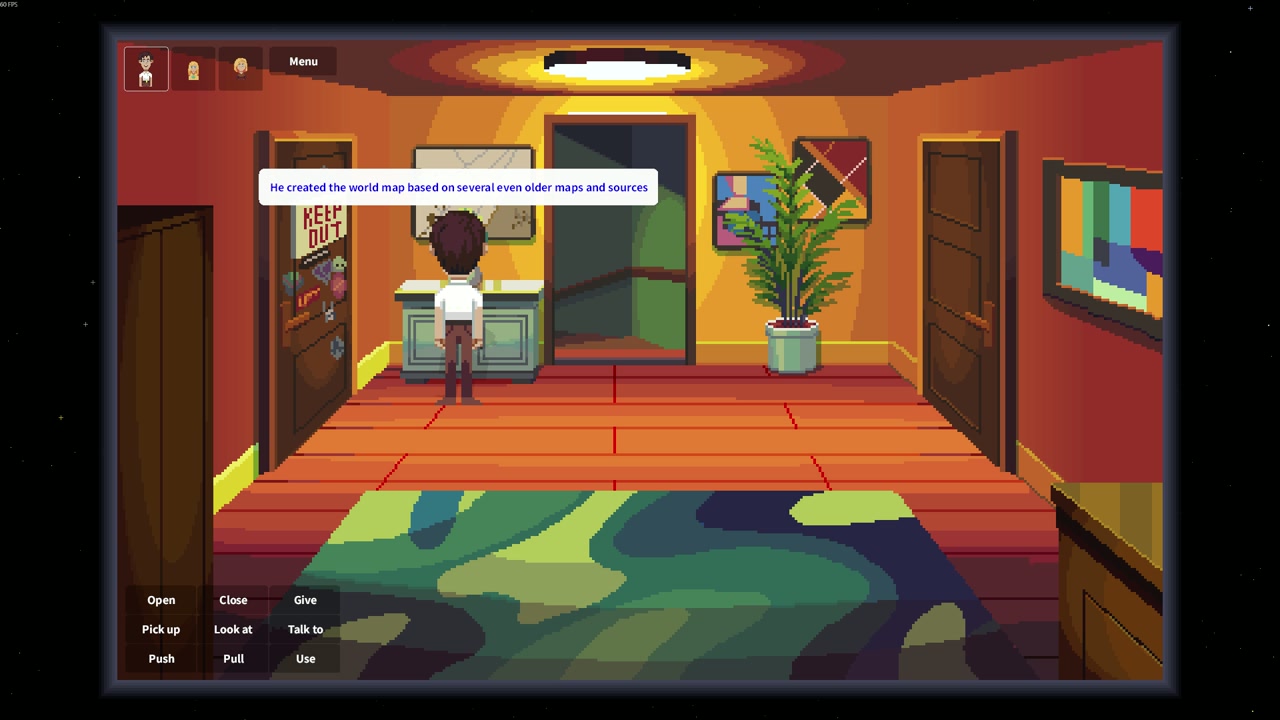
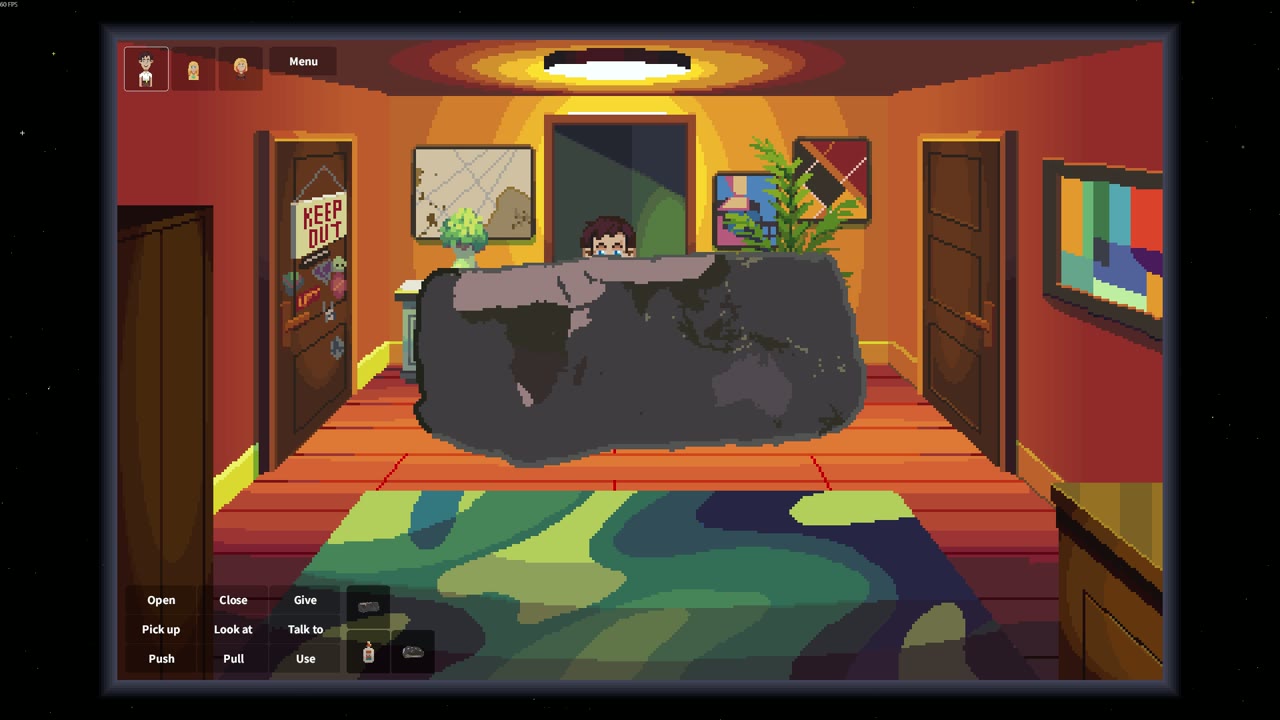
The spine shows itself early. On the upstairs landing hangs the Piri Reis map, the Ottoman chart of 1513 that seems to show coastlines it should not know. Examine it and the game walks you through the anomaly in Martin’s own words: “It possibly shows Antarctica without being covered by ice.” “He created the world map based on several even older maps and sources.” It is a remarkable thing for a game to do in 2026: stop, in a family hallway, and teach you something genuinely strange about the real world.
A Puzzle Chain That Teaches as It Goes
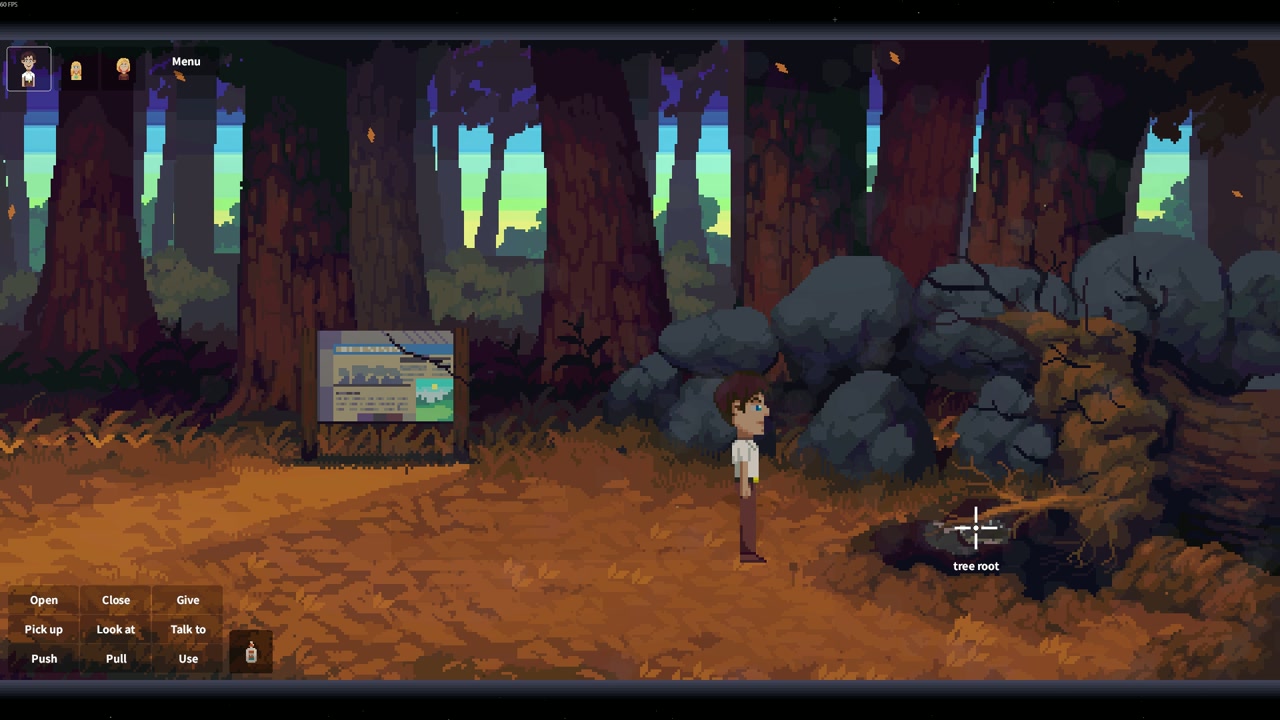
The opening quest chain is a small masterclass in readable adventure design. A storm is lashing the house and Martin won’t step out into the rain unprepared — so the humble doormat becomes the answer, and the game knows it’s funny: “Super funny and maybe even useful too.” Out at the hunebed — one of the great Dutch dolmens, its information sign dating it to 3000 BC and noting, marvellously, that “No skeletons have ever been found inside them” — a fallen tree’s root is pinning down something worth having. The wobbling information sign, pulled down, gives up its pole; the pole levers the root aside; and under the root sits the chapter’s prize: a broken object, made of a strange material, that “looks like a world map with a large portion missing” — the Piri Reis thread, made solid enough to carry. Every step is observed before it is solved, and in Guided mode the narration happily names the next step aloud. There is no moon logic here; it is a chain you can follow with your eyes, which is precisely how the classics taught us to think.
Fully Voiced — Ahead of Its Own Roadmap
Here is the surprise the store page doesn’t tell you. Martin’s own Early Access notes list voice acting among the work still to come — but the build we played is voice-acted throughout. Every line is spoken as well as bubbled: the intro monologue, the puzzle narration, the examination jokes, even the refusals. Diana’s greetings as Martin walks into the kitchen — “Seeing you makes my day.” The scare out in the forest when the lightning cracks down — “Aaaaah, help! Wow, that was intense! I almost got hit!” All of it is performed, and all of it carries the game’s dry, warm humour in a way text alone never could. The press kit credits voice actors Solly Casino and Cathy Casino. For a solo developer funding a game out of his own pocket, a fully voiced opening chapter is no small thing: it is the difference between a promising sketch and a world that already feels inhabited.
The Chapter Ends in India
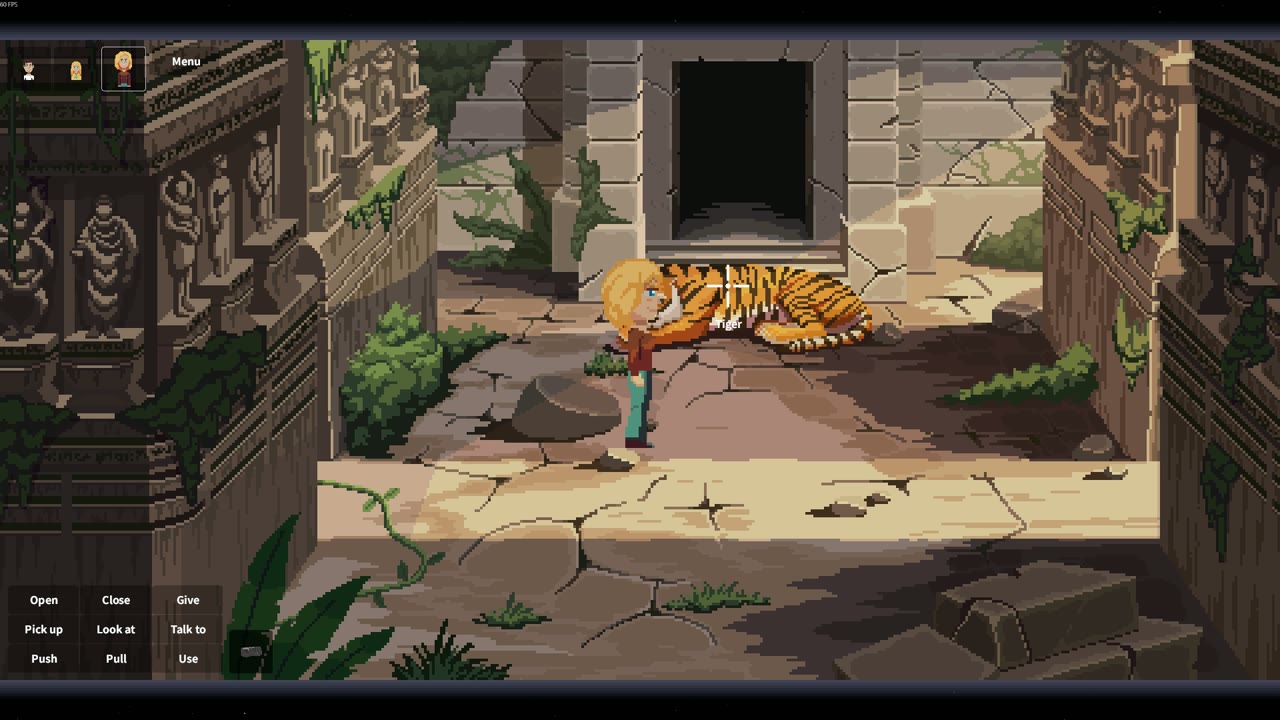
The five scenes of the opening chapter divide between the family home in the Netherlands — outside, the living room, the hallway and the bedroom — and a first, thrilling step abroad. Without spoiling the mechanism: what is recovered under the tree root is a way to travel, and the chapter’s closing movement sends Diana — alone — to a stone circle at Junapani, in Maharashtra, India. The game gives you the site’s real coordinates on a title card as she arrives, because of course it does. Junapani’s stone circles are real, and so is the welcoming committee of one: Tiger, the family’s tiger, is asleep across the entrance to the old temple, and persuading her to move is a problem the adventure happily leaves simmering. It is a proper chapter ending — a new continent, a raised stake, and a way home that is promised rather than given, with the rest of the journey still to come.
And what a journey is on the itinerary. The finished game is planned at some 22 scenes: Peru, Egypt, Mexico, Easter Island, Costa Rica, Antarctica, Bosnia and more of India are all ahead. Crucially, the thinking is already done — the story, the engine and the sketches for every scene are complete, and Martin keeps a public progress page tracking what is finished, scene by scene. What remains is production: the final pixel art, music and voice acting for the scenes still to come. His own estimate for the Early Access road is “a year or more,” pointing at 2027–2028, and the $9.99 price — roughly half the planned full-release price — will rise when the game is finished. The practical features, meanwhile, are thoroughly modern: full controller support, Steam Cloud saves, saving at any time, a mouse-only option, a touch option, and sixteen languages listed, English with full audio among them.
Verdict: an Opening Chapter Worth Backing
Judged on what is actually on the table, Signal From The Stars is a small, strange and thoroughly sincere piece of work. Its opening chapter is genuinely small — five scenes, four of them in and around one house — and nobody should buy it expecting the finished globetrotting epic this side of 2027. But what those five scenes establish is rare: a Maniac Mansion-grade interface that plays as well as it looks, a family you genuinely enjoy steering around a house, puzzles that teach themselves, mysteries drawn from the real world and taught with real enthusiasm, and a full voice track the developer’s own roadmap hadn’t promised yet. Martin has funded all of it himself, publishes his progress, and would rather tell you all of that than hide it. You are not just buying a game here; you are quite openly helping to finance the rest of it — and at $9.99, half the intended final price, that feels less like a risk than like getting in early on something made with unusual love. The Piri Reis map is waiting. So are the dolmens.
We are rooting for Martin and this game — and it comes highly recommended. If the classics live in your heart the way they clearly live in his, play this opening chapter now and grow with it as the journey unfolds.
Review score: 8.0 / 10 — a hand-built, fully voiced opening chapter that plays like a lost Lucasfilm sibling and teaches real mysteries while it charms. The score is for the Early Access opening chapter as it stands; we will revisit the game as the journey grows.
Review key provided by the developer.
— Player One
For more launches from this date, see This Day in Gaming History: October 30.