
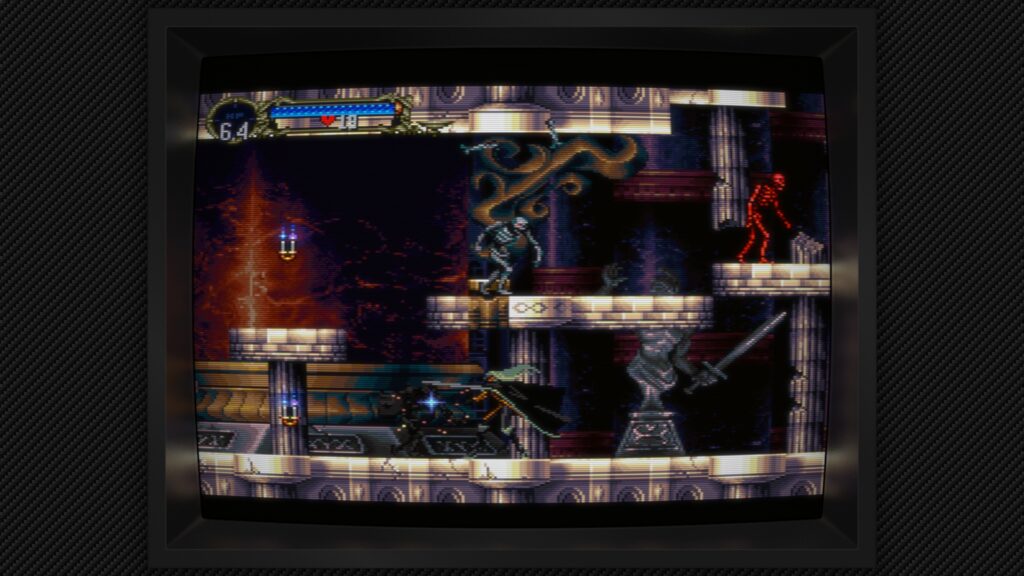
At a glance — Game: Castlevania: Symphony of the Night · Developer: Konami Computer Entertainment Tokyo · Publisher: Konami · Original release: March 20, 1997 (Japan) · Original platforms: PlayStation, Sega Saturn (Saturn port, 1998) · Genre: Action role-playing, Metroidvania · Music: Michiru Yamane
There is a moment, a few hours into Symphony of the Night, when the game stops pretending to be the Castlevania you grew up with. You are not marching right, stage by stage, whip in hand, toward a boss door. You are standing in a marble hall you have already crossed twice, staring at a ceiling you cannot reach yet, holding a mental note — come back when I can fly — while a librarian somewhere behind you is happy to sell you a map. In 1997 that felt like heresy. Nearly thirty years on, it feels like the night the whole series changed its mind about what a castle was for.
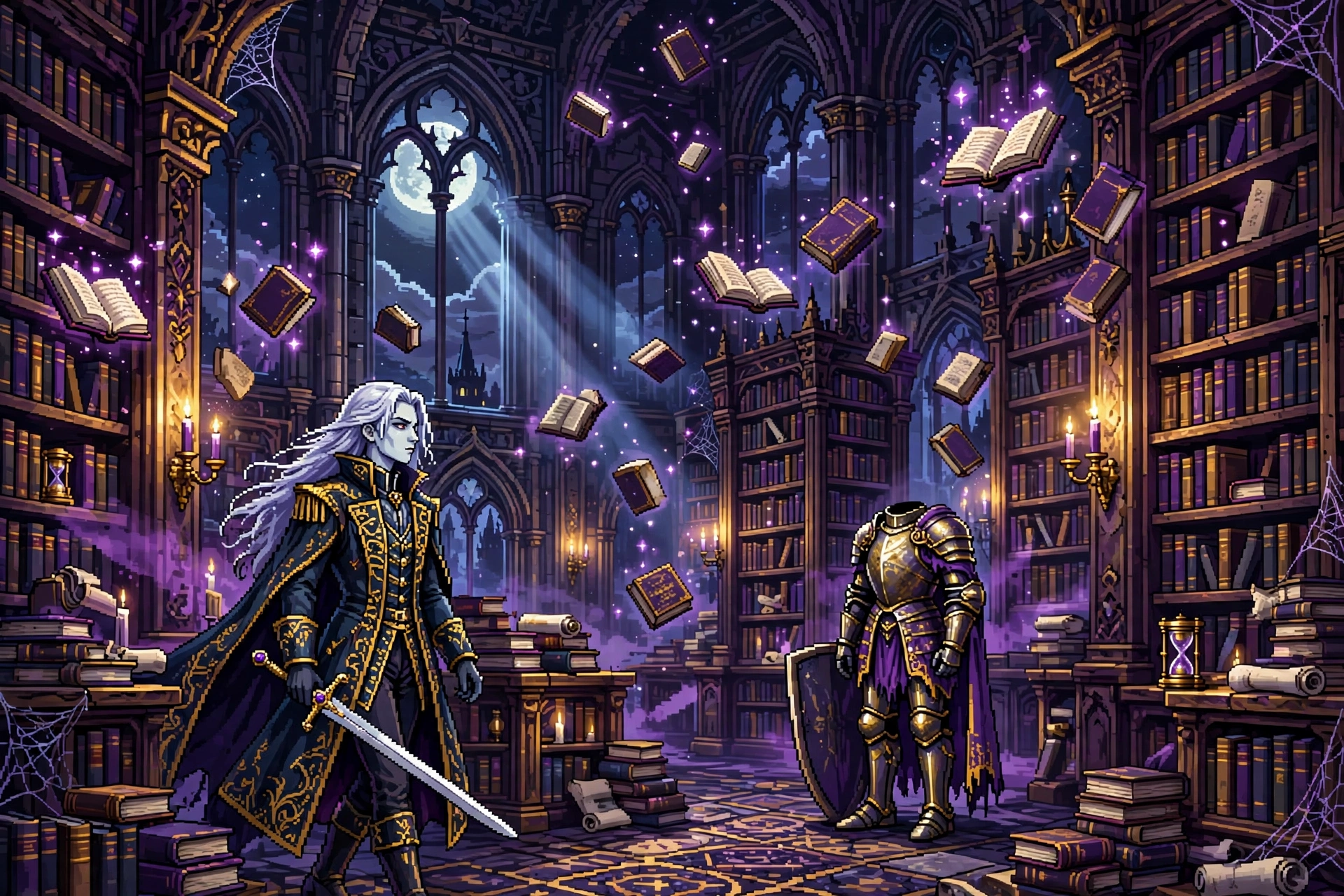
Castlevania: Symphony of the Night was supposed to be a side story
That is the part I never get over. This was not Konami betting the franchise on a revolution. The game began under director and producer Toru Hagihara, who had directed Rondo of Blood, with Koji Igarashi — then one of the team’s newer members — as assistant director, writer and programmer. Partway through production Hagihara was promoted to head of the division and Igarashi finished the game. By Igarashi’s own account, because Symphony was treated as something of a side story for the series, the team was free to break a lot of Castlevania conventions — and they broke nearly all of them.
The motivation, Igarashi has said, was embarrassingly practical: he kept seeing linear Castlevania games stacked in the bargain bins of Japanese game stores. A stage-by-stage action game is finished in a weekend and traded in by Monday. So the team built the opposite — a game designed, in his words, to be enjoyed for a long time. They looked at the exploration and backtracking of The Legend of Zelda, at the exploration experiments the series itself had tried in Castlevania II: Simon’s Quest, and, because this was a side-scroller, at Super Metroid. The result was a direct sequel to Rondo of Blood that plays like none of its ancestors: Richter Belmont has vanished, Dracula’s castle has reappeared a year later, and the hero who walks through the gate is not a Belmont at all. It is Alucard — Dracula’s own son, waking from a self-imposed slumber three centuries after he helped Trevor Belmont kill his father.
A castle, not a course
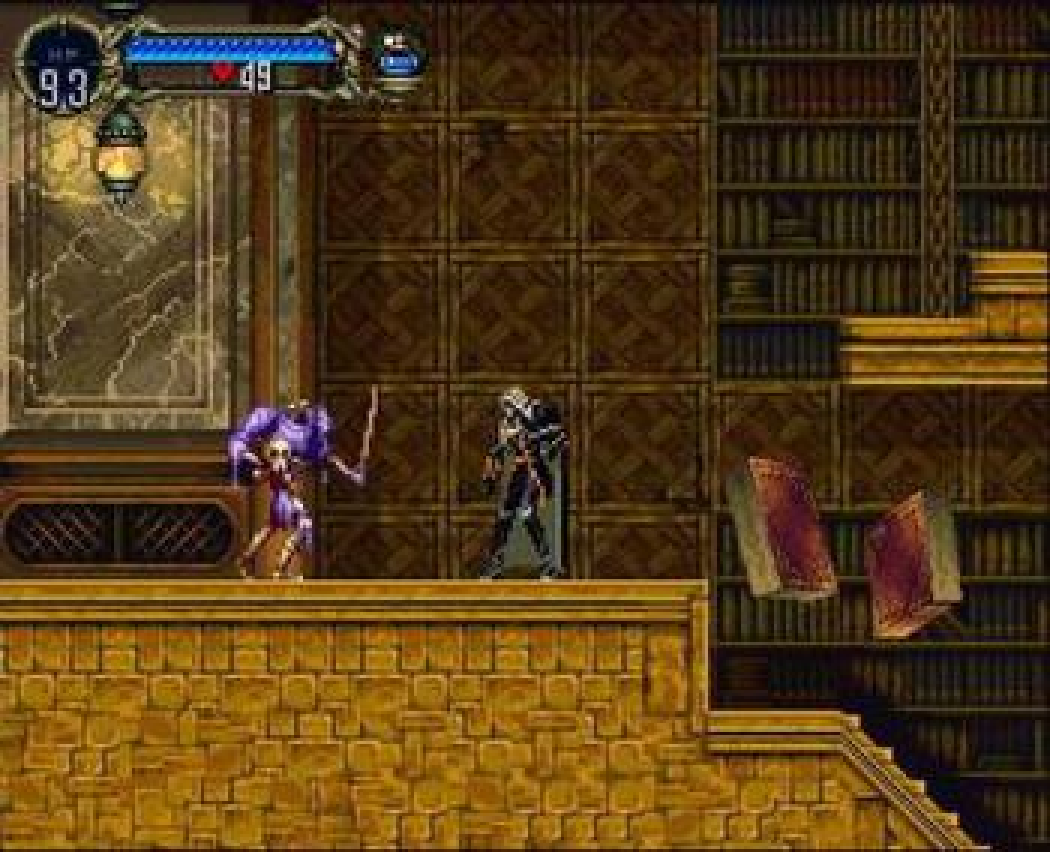
Every Castlevania before this one was a journey in one direction. Symphony gives you a place. The castle is one enormous, interconnected building — entrance hall, alchemy laboratory, marble gallery, long library, clock tower, catacombs — and most of it is locked away behind abilities you do not have yet. The bat form, the wolf, the mist, the double jump: each one is a key cut to fit a hundred doors you have already walked past. The map fills in room by blue room, and filling it becomes the game. Anyone who has ever left a Castlevania cartridge in the machine overnight just to wander one more corridor knows the feeling this invented.
It helps that the place is beautiful in a way the PlayStation was not supposed to do anymore. This was 1997, the year 3D became the industry’s religion, and Konami shipped a hand-drawn 2D game on a machine with no dedicated hardware for scrolling backgrounds — the team displayed the scenery using the same sprite methods as the characters. Ayami Kojima, making her video game debut as character designer, gave Alucard and his supporting cast a pale, bishonen elegance that still defines the series’ look, and Michiru Yamane’s score swings from classical to gothic rock to jazz without ever losing the thread. On paper it was a step backwards. On the screen it was, and remains, the best-looking argument that 2D was nowhere near finished.
The RPG hiding inside the action game
The other heresy is under the hood. Alucard gains experience and levels up. He has hit points and magic points, strength, constitution, intelligence and luck. He carries an inventory stuffed with swords, shields, armor, capes and food — yes, you can heal yourself with a frankfurter dropped by a skeleton, and yes, we all did it. He learns spells entered with fighting-game motions, summons familiars that fight beside him, and shapeshifts his way through doors his human form cannot pass.
Igarashi has been candid about why: he thought the older games were too hard for average players, and a leveling system lets persistence substitute for perfection. Grind a corridor, gain a level, and the boss that flattened you becomes manageable. It is a kindness disguised as complexity, and it changed what a Castlevania hero could be — not a whip with a surname attached, but a character you build. The Saturn version, released in Japan in 1998, even added two new areas and made Maria Renard playable; that the “complete” version spent decades as a Japan-only curiosity is one of the era’s quieter injustices.
The night the castle turned upside down
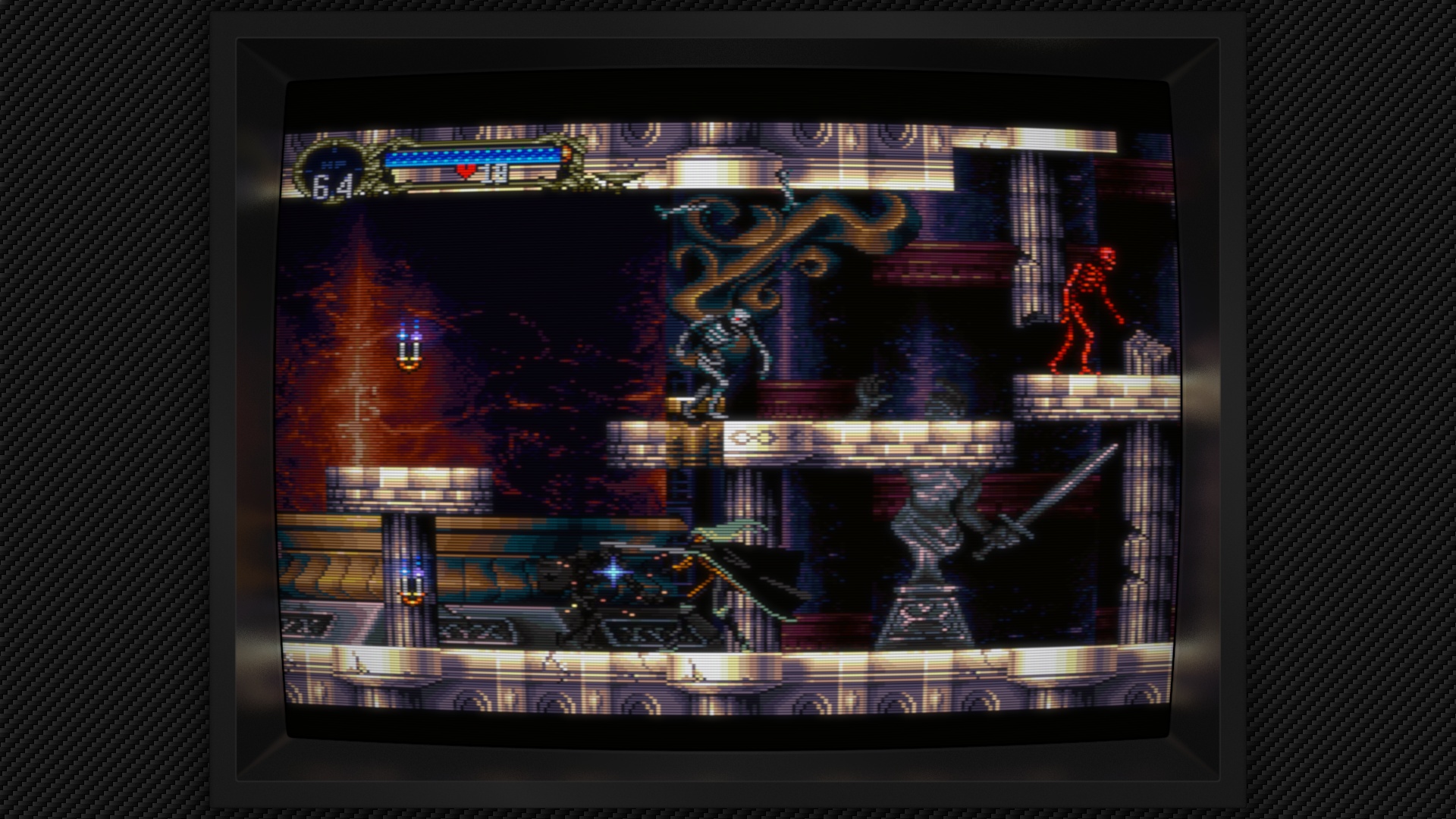
Then there is the trick. Play Symphony carelessly and it ends early, with a bad ending and a castle only half explored. Play it carefully — find the hidden items, earn the Holy Glasses from Maria, and wear them when you confront Richter in the keep — and you see the truth: Richter is a puppet, the dark priest Shaft is pulling the strings, and above the castle hangs a second one. The Inverted Castle is the entire map flipped upside down, restocked with nastier enemies, new bosses and Dracula’s scattered remains to hunt down, five pieces of him guarded by five bosses. The game you thought you had finished was the first half.
As a kid who rented games by the weekend, I can tell you exactly what that reveal did to a room. It doubled the adventure with geometry the team already had, and it rewarded the one thing the whole design had been training you to do: pay attention. Secrets in Symphony are not decoration. They are the difference between half a game and a whole one.
A 2D game on a 3D machine, and the sleeper hit that followed
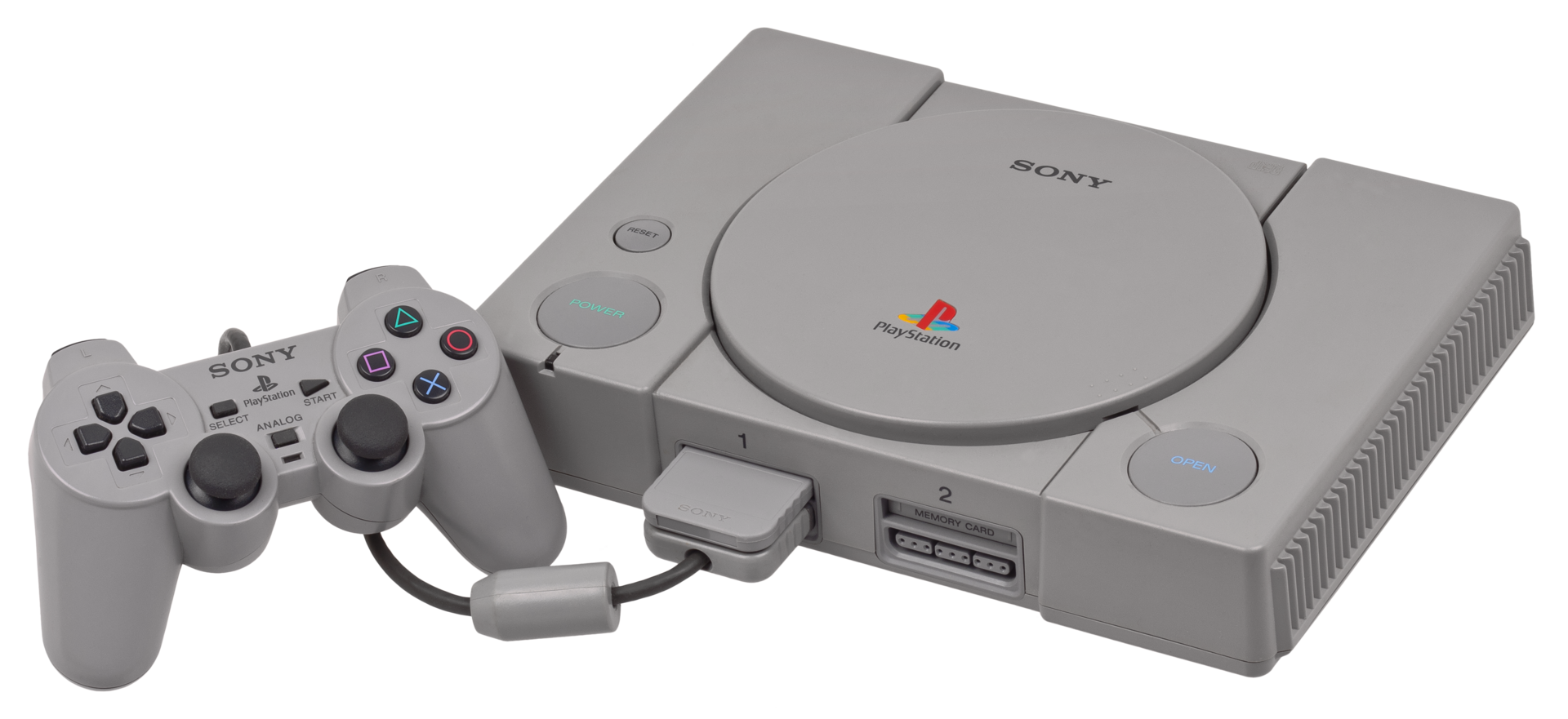
None of it sold at first. Symphony of the Night was released in Japan on March 20, 1997, reached North America that October with little advertising and a modest budget behind it, and was initially not a major financial success. A 2D side-scroller was a hard pitch in the year of the polygon. But the game would not go away. Word of mouth did what marketing hadn’t, sales kept accumulating — over 700,000 copies in the United States and Japan — and the bargain-bin fate Igarashi had designed against never came. The side story became the sleeper hit, then the cult classic, then the citation: critics routinely place it among the greatest games ever made, usually with a footnote apologizing for the voice acting, which, for the record, some of us would not change a single line of. What is a man? A miserable little pile of secrets — and a generation of players can recite it on cue.
Its longest shadow is the genre it half-named. Pair Super Metroid’s map-gated exploration with Symphony’s castle, levels and loot, and you get the “Metroidvania” — a word neither game shipped with, coined later to describe the template both had set. Every indie developer who has ever locked a double jump behind a boss fight is working in a building these two games built together.
Why this castle, this week
We are returning to Symphony tonight for a specific reason: somebody has spent twelve years putting the other half of that genre formula inside this castle. Samus Aran — Super Metroid’s Samus, with her beams, her Morph Ball and her Shinespark — is now feature-complete inside Dracula’s castle in a fan mod built on original PlayStation hardware. That is our Fresh Cartridge piece alongside this one: Samus in Dracula’s Castle: Twelve Years, One PlayStation, Zero Shortcuts. Read the two together and you can watch a genre shake hands with itself across twenty-nine years.
Symphony of the Night endures because it trusted the player with a place instead of a path. It asked you to remember, to return, to look up at a ceiling and promise yourself you’d be back when you could fly. We all came back. Most of us never really left.
— Sal
For more launches from this date, see This Day in Gaming History: March 20.