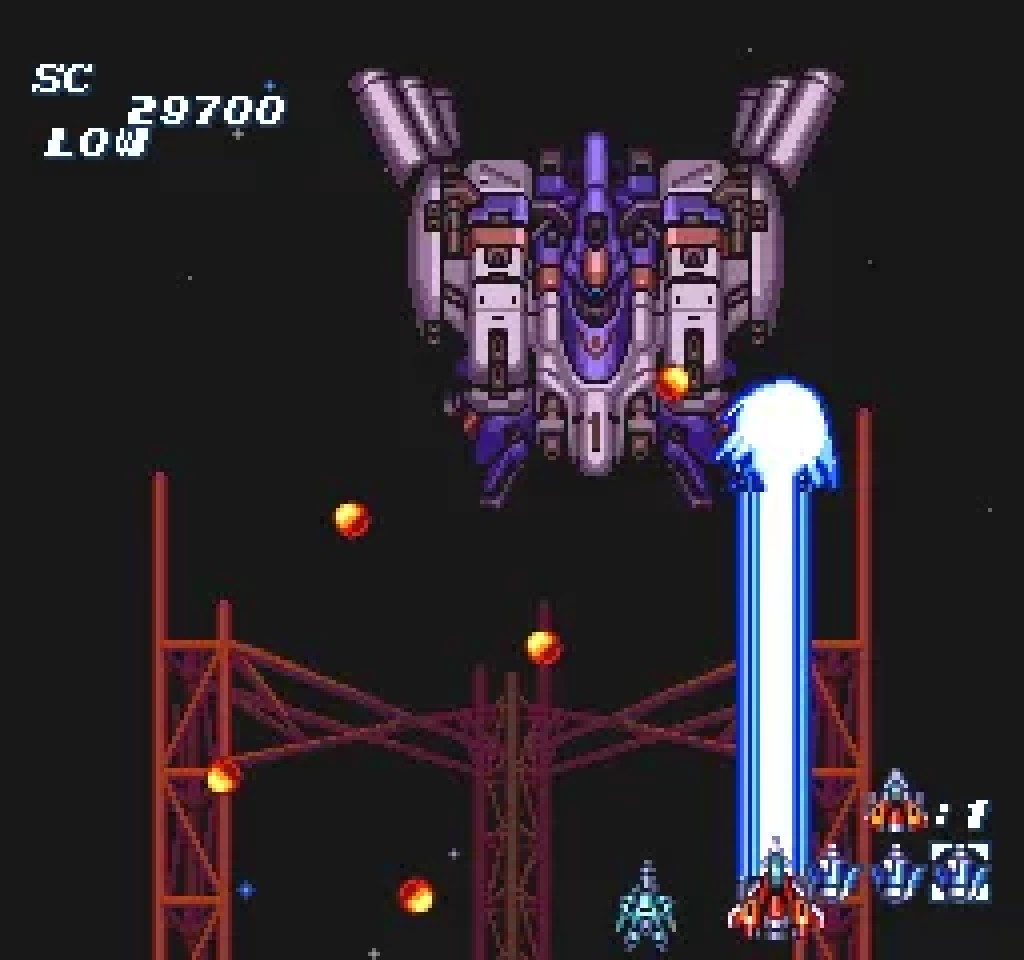
At a glance: Soldier Blade · TurboGrafx-16 HuCard · Hudson Soft, 1992 · Vertical scrolling shooter · Score: 9.0/10
By 1992 the TurboGrafx-16’s shooter library was crowded with excellence, and Hudson Soft’s own Soldier series was its spine: Super Star Soldier had answered Blazing Lazers, Final Soldier had refined the formula for Japan, and the annual Hudson Caravan competitions had turned high-score play into a national sport. Soldier Blade, released in Japan in July 1992 and in North America that September, was the series’ HuCard finale — and it plays like a team that knew it. Faster, leaner and more confident than its predecessors, it is the Soldier game that holds up best today.
The fiction is functional — an alien invasion, an advanced starfighter, several planets’ worth of skies to clear — but the structure underneath is pure Caravan DNA. Seven operations of escalating intensity, each stuffed with destructible scenery, bonus carriers and score secrets, plus dedicated two-minute and five-minute Caravan modes that distil the game to its essence: route planning, aggression and greed, against the clock.
Gunpods and the art of the sacrificial weapon
Soldier Blade‘s signature is its gunpod system. Your fighter carries up to three pods, and collected power-ups cycle through weapon types — a piercing blue shot, a spreading green wave, crackling lightning — that can be mounted and combined so the ship’s total firepower is a build, not a ladder. The masterstroke is what happens when you take a hit or press the second button in anger: a pod can be sacrificed as a devastating smart bomb, clearing the screen at the cost of your hard-won arsenal. Every death spiral becomes a decision. Burn a pod and live at half strength, or gamble on the weave?
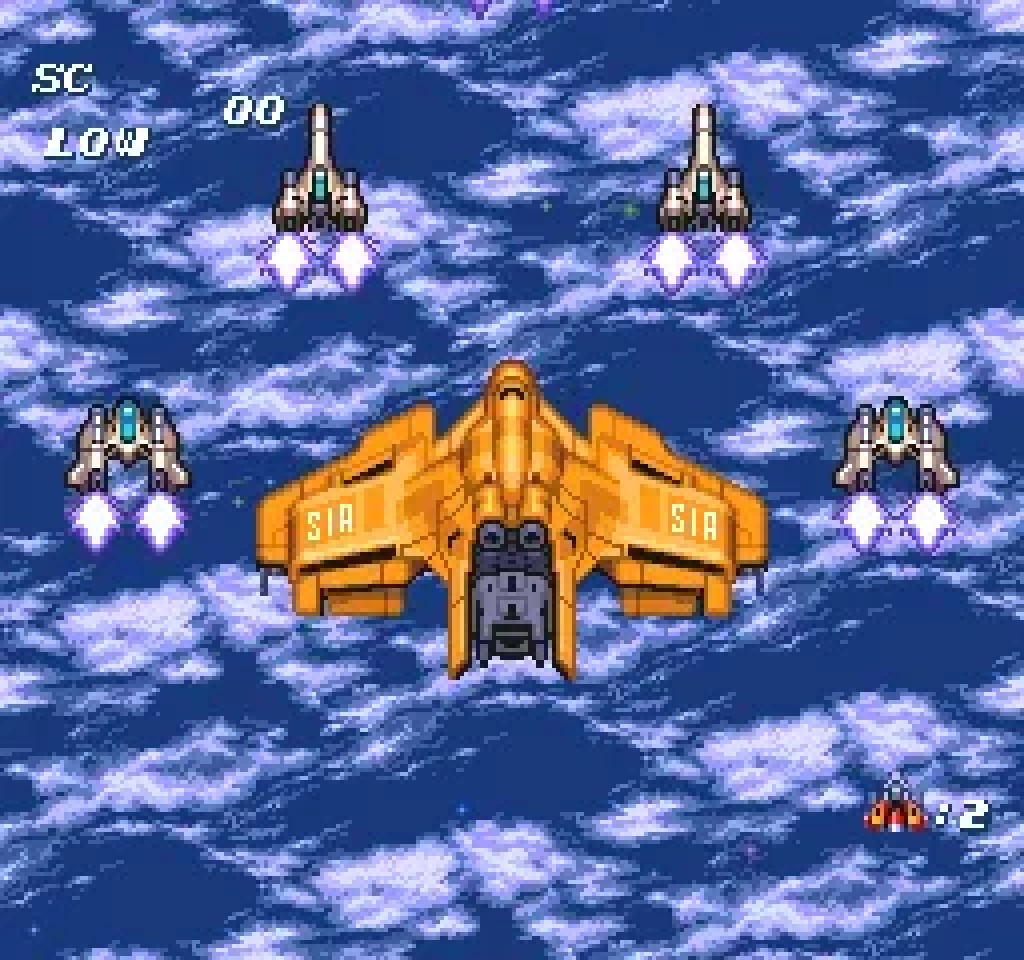
That decision elevates the whole design. Where Blazing Lazers punished a hit with a downgrade, Soldier Blade gives you agency over the punishment, and skilled players route entire stages around when to cash in a pod. It is also a game that wants to be replayed: hidden score items reward bombing specific ground targets, and the Caravan modes turn ten minutes of play into a complete competitive session — the format that made Hudson’s shooting festivals famous, preserved on the card.
Speed as a house style
Technically this is late-era HuCard craft. The scrolling is fast and layered, the sprites are large, and the game throws mid-bosses and set-pieces at you with an assurance earlier Soldier games only approached — collapsing structures, attack runs over installations, and bosses that fill the top of the screen while the bottom keeps spawning trouble. Slowdown is rare and usually arrives exactly when a screen is at maximum chaos, which is to say it reads as emphasis rather than failure. The soundtrack, by Keita Hoshi and Makiko Tanifuji, is driving chip rock with melodies that survive the sound effects layered over them — no small thing in a game this loud.
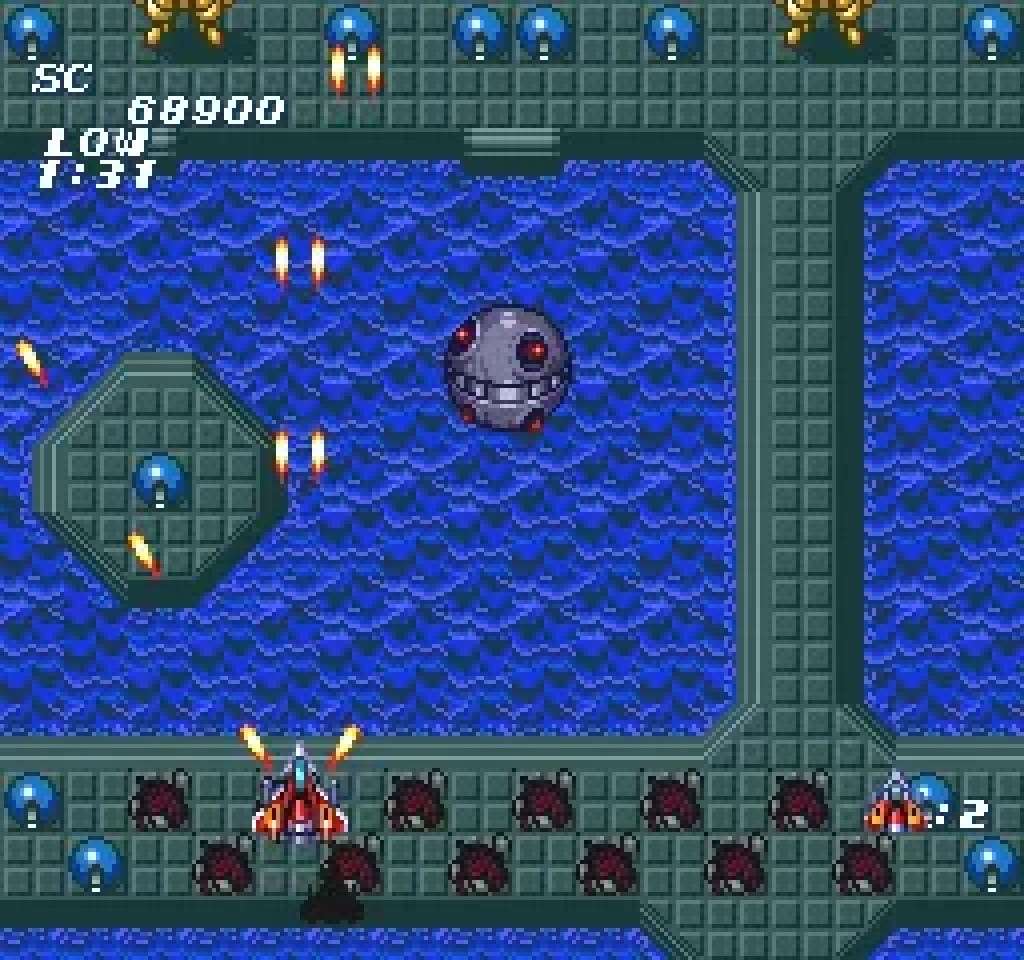
Honesty about difficulty: the main game is the most approachable of the Soldier trilogy. Continues and the pod-sacrifice mechanic mean a determined player will see the ending, and purists of the one-credit clear will find the real game in score attack, where it belongs. That accessibility is a feature. Soldier Blade wants an audience, not a priesthood.
Where it sits in the series
Comparisons are inevitable on a system this shooter-rich. Blazing Lazers has the broader weapon sandbox; Super Star Soldier the rawer early energy. Soldier Blade has the polish — the best pacing, the smartest risk mechanic, the strongest Caravan modes, and presentation that squeezes the HuCard format hardest. It was also among the last major HuCards of the North American TurboGrafx-16’s life, which made it scarce and storied for collectors, but the reputation rests on the game, not the rarity.
Operations and the Caravan mentality
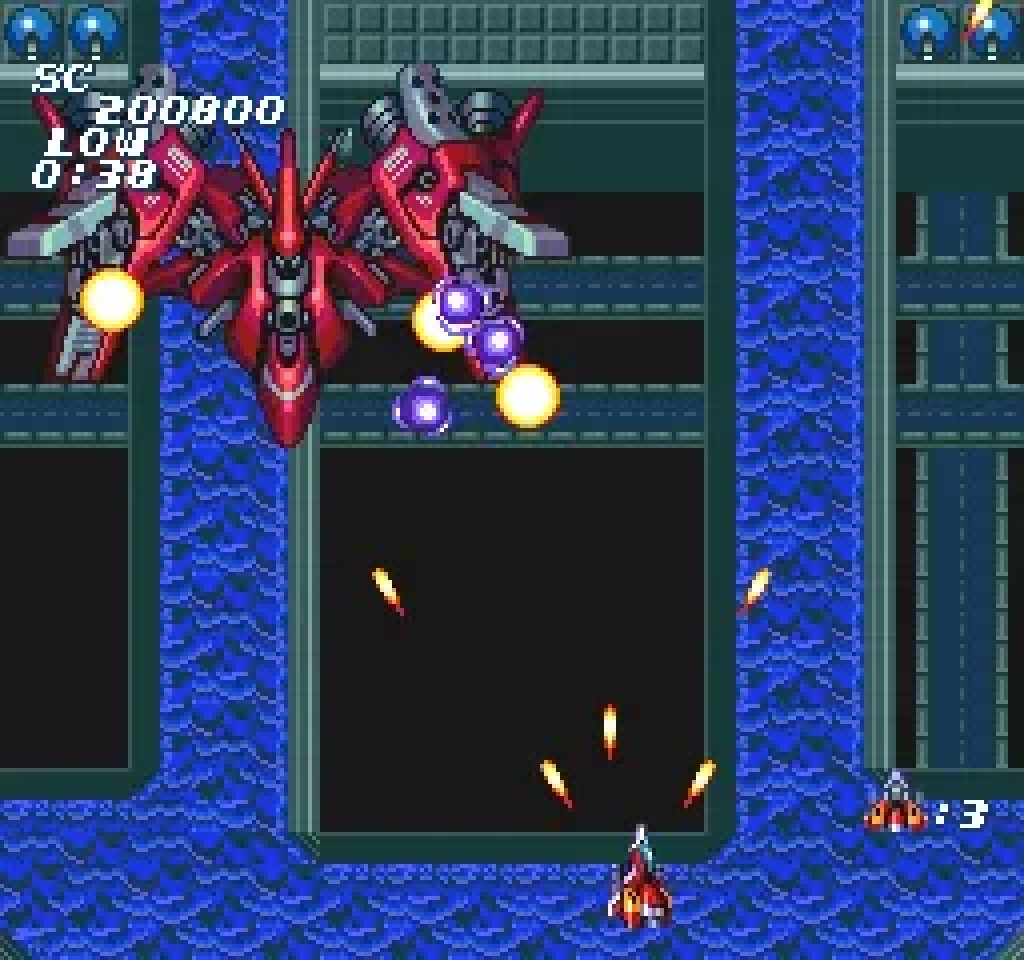
The seven operations deserve a closer map. The campaign opens in cloud and ocean — attack runs over carriers and island installations — before descending to surface bases, a night operation, and a final assault in which the series’ recurring mechanical fortresses arrive at full scale. What distinguishes the stage design from its predecessors is density of incident: destructible ground installations that are worth points and worth risk, bonus carriers on routes that pull you out of your safe lane, and mid-bosses that function as gear checks for your pod build. A player who arrives at a mid-boss with the wrong weapon mounted learns the game’s quiet thesis — that in Soldier Blade, preparation is a form of firepower.
The Caravan modes are not extras; they are the game’s cultural core. Hudson’s Caravan competitions turned Japanese players into score athletes across a summer tour, and the two-minute and five-minute modes here are that festival preserved: fixed stages tuned so that every second routes through a decision between safety and greed, with destructible score items hidden in the scenery for players who have memorised where the money sleeps. A two-minute run is a complete competitive experience — warm-up, route, execution, result — and it is the mode that keeps the HuCard in the machine decades later, because there is always a better route through those two minutes.
The pod system, examined
It is worth slowing down on the gunpods, because they solve the oldest problem in the genre: what a hit should cost. The classic answers are death (the arcade’s answer, tuned for coins) or a power downgrade (Compile’s answer, tuned for home). Soldier Blade invents a third: your firepower is a stock of pods, hits and deliberate detonations spend it, and the smart-bomb sacrifice means a skilled player converts a doomed position into a cleared screen at a price they chose to pay. Layered over the three weapon types — each with its own pod behaviour and combined patterns — the system supports genuine build variety across runs, and because pods are visibly orbiting your ship, the screen itself tells the story of how well you are playing. Few shooters since have made a player’s strength so legible at a glance.
Presentation keeps pace. The parallax is confident, the ocean stages have a brightness the series had not shown before, and the boss sprites — carriers, installations, the final fortress — are drawn at a scale that fills the vertical frame the genre usually wastes. Add the soundtrack’s drive and the result is a HuCard that feels like a system at its peak rather than its sunset, which, in the North American market of late 1992, is precisely the bittersweet note the game now carries.
For the score-chaser’s notebook
Two habits separate a good Soldier Blade run from a great one, and both are worth naming for new players. First, treat ground targets as a second game: the installations and scenery that most players fly past are where the Caravan-bred scoring lives, and routing a stage so your pod configuration can strip them efficiently is the difference between surviving a level and owning it. Second, rehearse the sacrifice. Deliberately detonating a pod in a safe place, to learn its blast radius and timing, converts the panic button into a planned weapon — and planned is where this game’s scores, like its reputation, were always made.
Verdict
Soldier Blade is the Soldier series fully matured: a vertical shooter of genuine speed and craft, built around one brilliant decision — your weapon is also your emergency exit — and finished with the score-attack modes that defined an era of Japanese shooter culture. An essential TurboGrafx-16 game.
Score: 9.0/10