
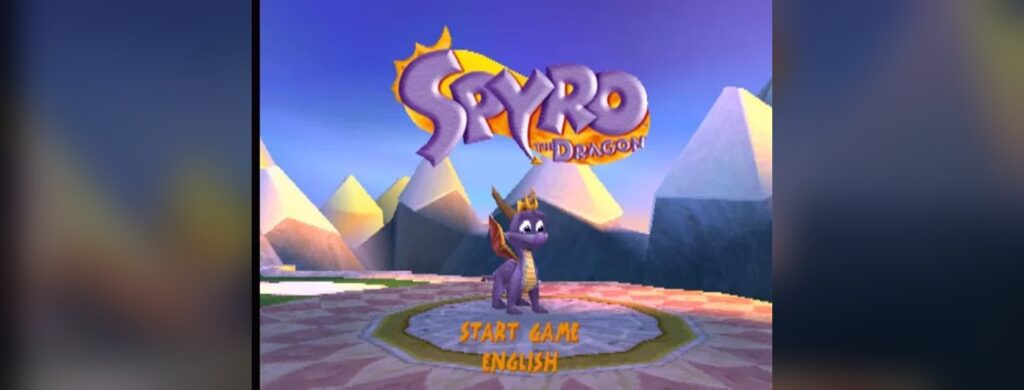
At a glance — Game: Spyro the Dragon · Developer: Insomniac Games · Publisher: Sony Computer Entertainment · Original release: September 9, 1998 (North America) · Original platforms: PlayStation · Genre: 3D platformer · Music: Stewart Copeland
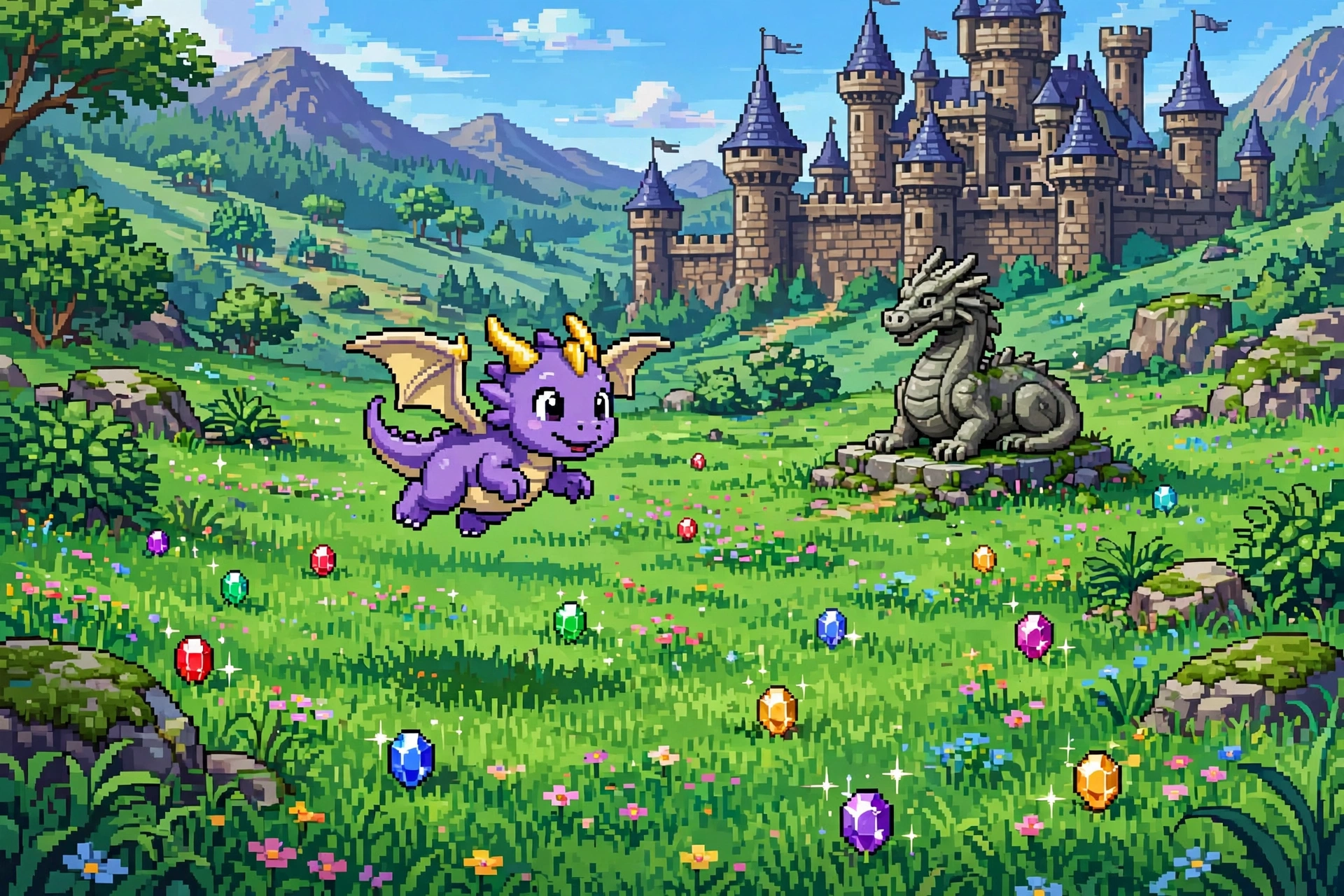
The purple dragon is coming back. This week Activision and Toys for Bob teased Spyro: A Realm Beyond — the first all-new Spyro adventure in nearly twenty years — with a fuller look promised at The Game Awards on December 10 and a launch set for spring 2027. Before that future arrives, it is worth going back to the flight that started it: the 1998 original, a PlayStation game so confident in open space and long horizons that it quietly rewrote what a 3D platformer on Sony’s machine could look like.
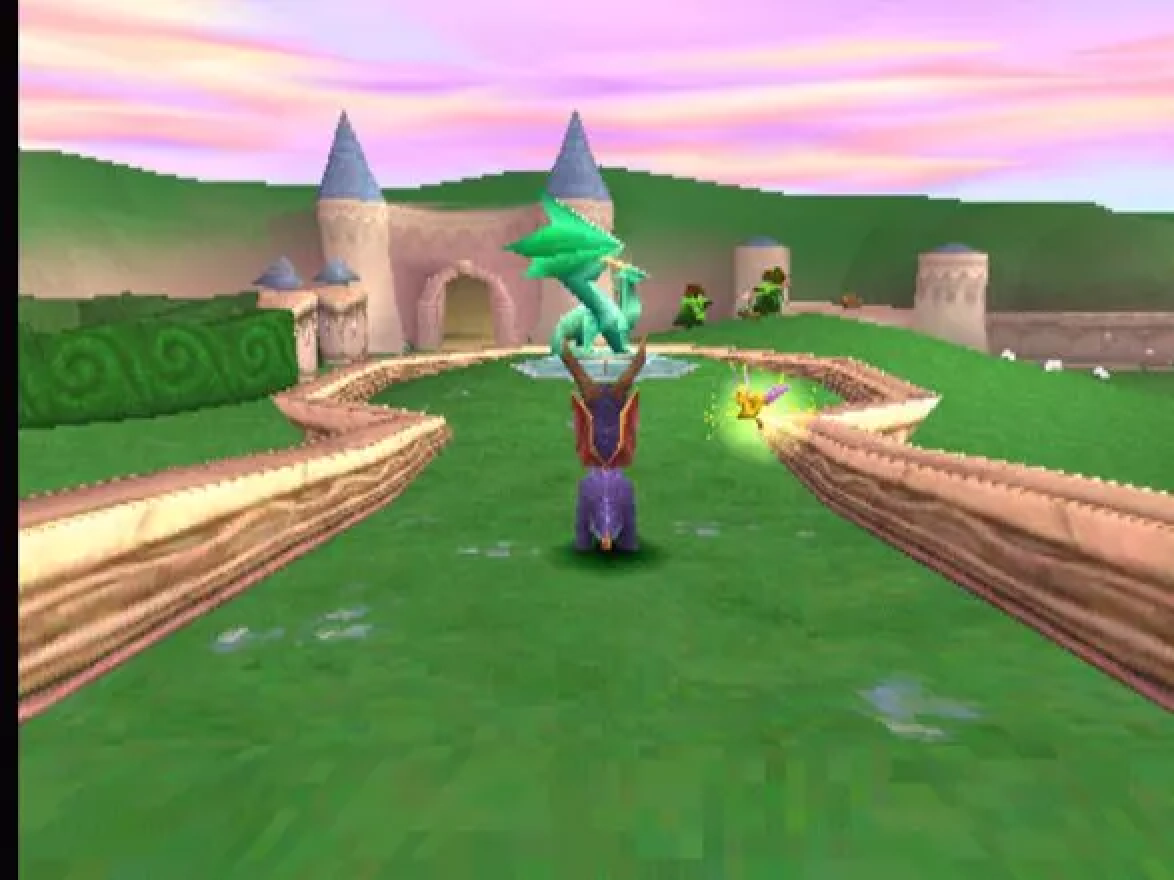
I still remember the first glide. You climb to the highest point in the Artisans homeworld, you look out at a level that seems to go on forever — no fog wall, no pop-in, just green hills and distant towers — and you jump. Spyro the Dragon was Insomniac Games’ second game ever. It plays like a studio’s tenth.
A dragon is born
Insomniac arrived at Spyro from an odd direction. Its first game, the 1996 shooter Disruptor, had reviewed well and sold poorly, but it impressed Universal Interactive Studios enough that the partnership continued. Artist Craig Stitt suggested a game about a dragon. The early concept was darker and more realistic, partly inspired by the film DragonHeart, under working titles like Lifespan and DragonSpan. It was Mark Cerny, Universal’s executive producer, who pushed the project toward the mass market: the PlayStation’s library for younger players was thin next to the Nintendo 64’s, and a dragon game for families was a gap Sony needed filled.
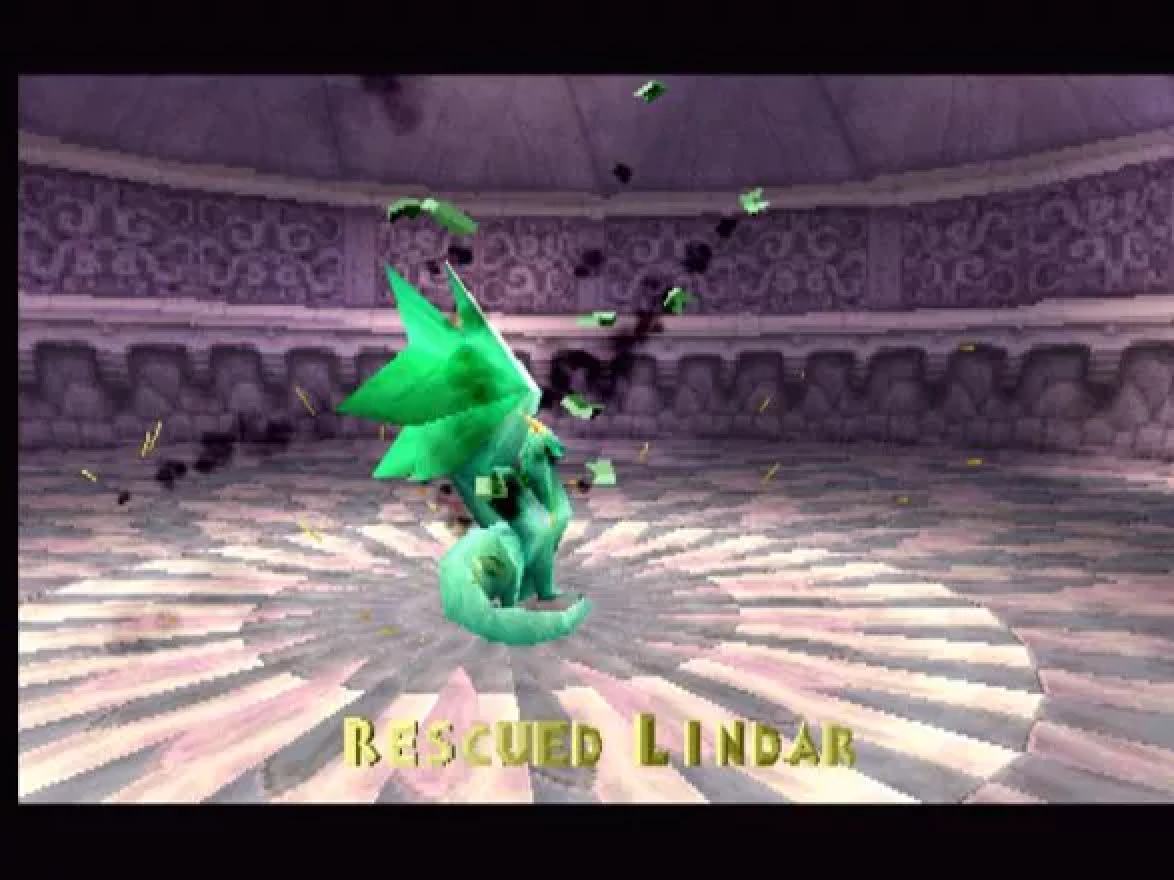
The dragon himself went through changes. He was nearly called Pete, until Disney’s Pete’s Dragon ended that; Pyro was considered and dropped as too mature. He was nearly green, too, until the team realised he would vanish into his own grass. Purple stuck. Character designer Charles Zembillas — who had done design work on Crash Bandicoot — gave him the oversized horns, the cocky grin and the proportions of a kid who has been told he is too small and has decided not to believe it. Gnasty Gnorc, the gnome-orc villain banished to a junkyard world, crystallises every dragon in the realms after a televised insult, and turns the dragons’ gem hoard into his army. Spyro, the smallest dragon, is the only one who dodges the spell. The whole game is in that setup: the little guy, the enormous world, the long list of elders to rescue.
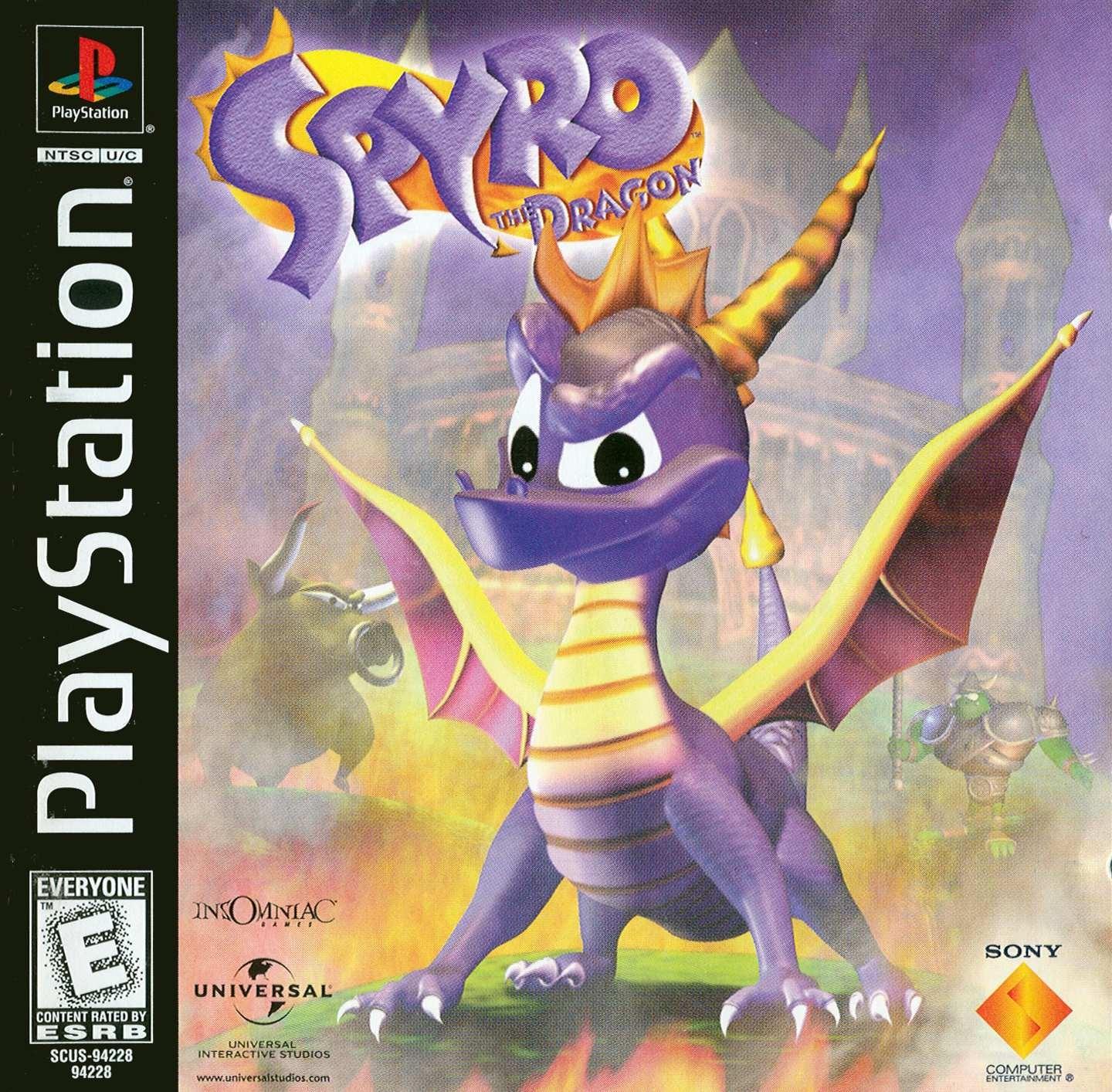
Spyro the Dragon 1998: six worlds, 80 dragons, 12,000 gems
The structure is the genre’s familiar hub-and-portal design, executed with unusual openness. Five dragon homeworlds — Artisans, Peace Keepers, Magic Crafters, Beast Makers and Dream Weavers — each hold a hub, three regular levels, a boss level and a hidden flight level, and Gnasty’s own world waits at the end. Balloonists ferry you onward once your collection totals satisfy them. The completion numbers are burned into a generation’s memory: 80 dragons to free, 12 dragon eggs to recover, 12,000 gems to gather — and then Gnasty’s Loot, the reward vault, holds 2,000 more for a 120% finish.
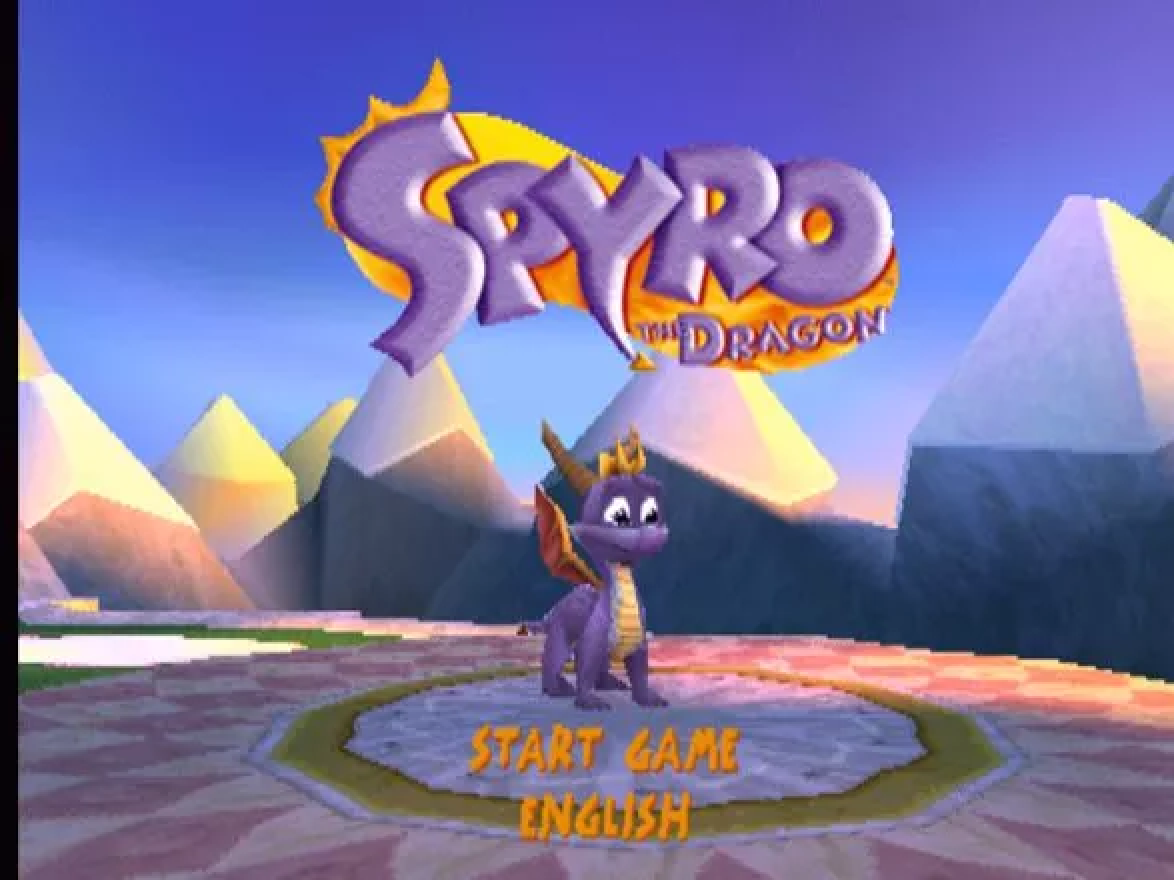
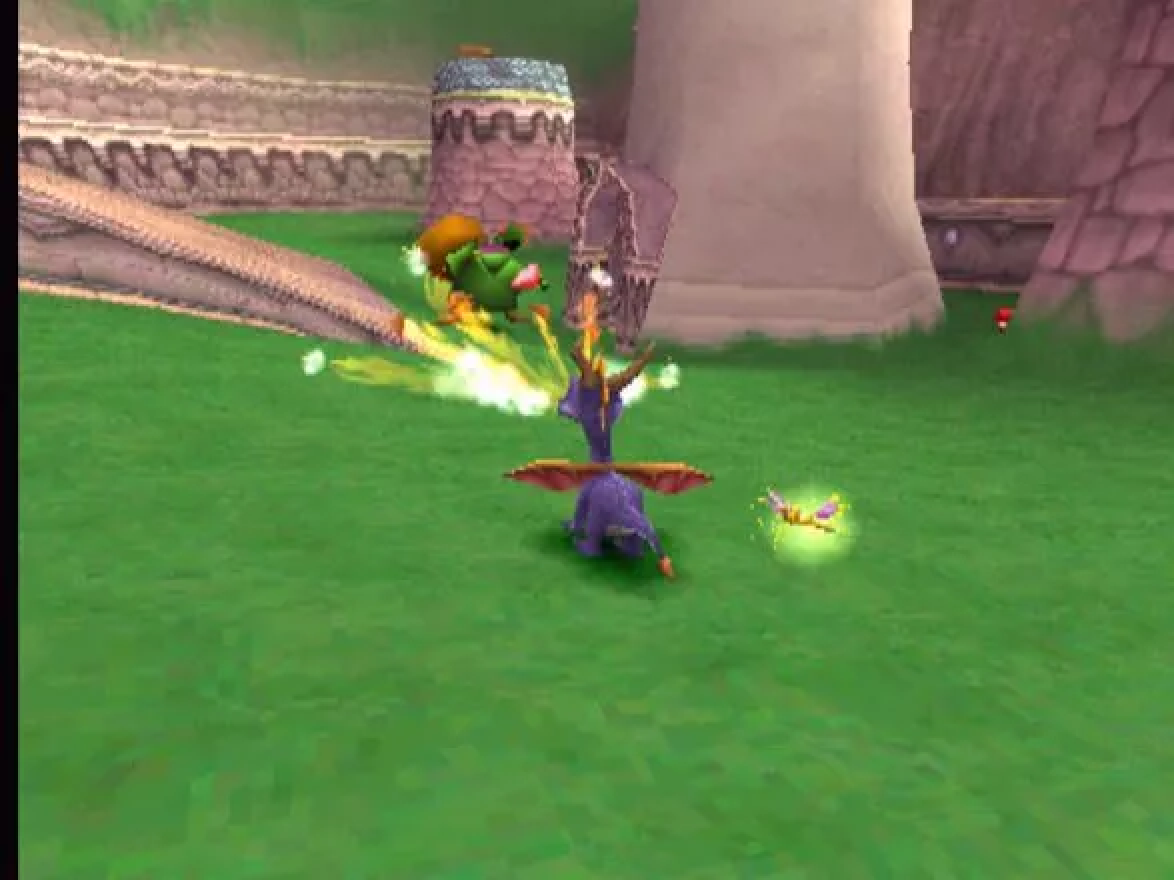
Spyro’s kit is three verbs — flame, charge, glide — and the game builds everything from them. Armoured enemies shrug off flame but fold to a charge; big enemies laugh at a charge and burn just fine. Sparx the dragonfly is your health bar, changing colour as he weakens and recovering on a diet of butterflies shaken out of the local sheep. And the glide is the masterstroke: from any high point, Spyro can cross almost an entire level on the wing, which forced Insomniac to design levels that were genuinely open rather than corridors wearing a skybox.
The engine that could see forever
Ask anyone who played it in 1998 what they remember first and half of them will describe the horizon. PlayStation games of the era hid their limits in fog. Spyro barely has any. The credit goes to programmer Alex Hastings and the game’s panoramic engine: every level was rendered twice, in effect — a detailed version for what is near and a simple, textureless version for what is far — with the level-of-detail shifting as you moved. Within the PlayStation’s memory limits, that trick bought a draw distance reviewers called groundbreaking, dressed in heavy vertex shading that gave the skies and hills their storybook gradients.
The feel had help, too. A NASA flight-controls engineer, Matt Whiting, assisted with camera and movement after early follow-cameras made players queasy; roughly 80% of the code was written in assembly to squeeze the hardware. The result is a game whose technology serves a single idea — flight — so completely that you stop noticing the technology at all.
Stewart Copeland and the sound of the Dragon Realms
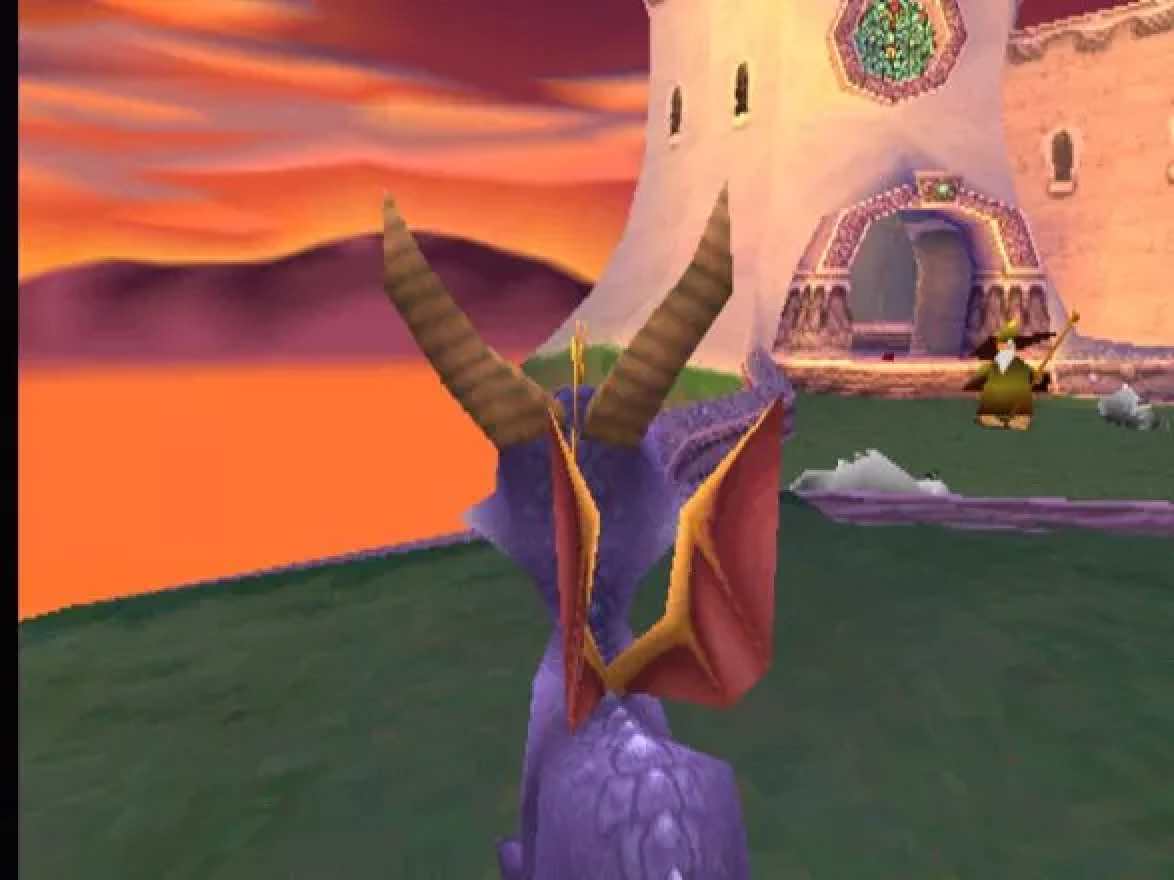
Then there is the music, which should not work and absolutely does. Stewart Copeland, drummer of The Police, composed the score by playing early builds of each level — with cheat codes, including invincibility, so he could wander — and writing to what he found, at a pace he has described as roughly three songs a day. The tracks are prog-rock miniatures full of odd meters and piano runs, closer to a Copeland solo record than to mascot-platformer wallpaper, and he has called the work some of his best. He is not wrong. Play the first minutes of the Artisans homeworld in your head and the theme is just there, 28 years later.
The voice deserves a footnote that becomes important later: in 1998, Spyro was voiced by Carlos Alazraqui, playing him as the likeable kid at camp. Tom Kenny took the role from Ripto’s Rage! onward and became the voice most players grew up with. Hold that thought.
The slow burn that sold five million
Sony’s own record gives the date this article files under: the PlayStation.Blog’s 25th-anniversary retrospective states that Spyro the Dragon made his debut on the original PlayStation on September 9, 1998. (Insomniac’s archived website once listed September 10 — the sources genuinely split, and where they split we go with the publisher.) Europe followed on October 23, 1998, and Japan on April 1, 1999.
Reviews were warm: 85% on GameRankings, 9/10 at IGN, 8.3/10 at GameSpot, with the graphics, draw distance and controls praised and the gentle difficulty noted. Sales started slowly, then the 1998 holidays took hold. The game passed one million copies in North America by December 1999 and went on to sell nearly five million worldwide — one of the best-selling PlayStation games ever, from a studio making its second title.
Twenty-eight years on, the glide still feels like freedom — and the horizon still holds.
The trilogy, the reignition, and the long quiet
Insomniac completed a trilogy in three years: Spyro 2: Ripto’s Rage! in November 1999 and Spyro: Year of the Dragon in 2000, and then the studio walked away to other things — Ratchet & Clank, eventually Spider-Man. Spyro himself passed through many hands and some lean years. The restoration, when it came, was thorough: Toys for Bob’s Spyro Reignited Trilogy rebuilt all three Insomniac games from the ground up for a November 13, 2018 launch on PlayStation 4 and Xbox One, reaching Switch and PC the following September. It sold ten million copies by September 2023. The audience had never left. It had just been waiting for someone to treat the dragon properly.
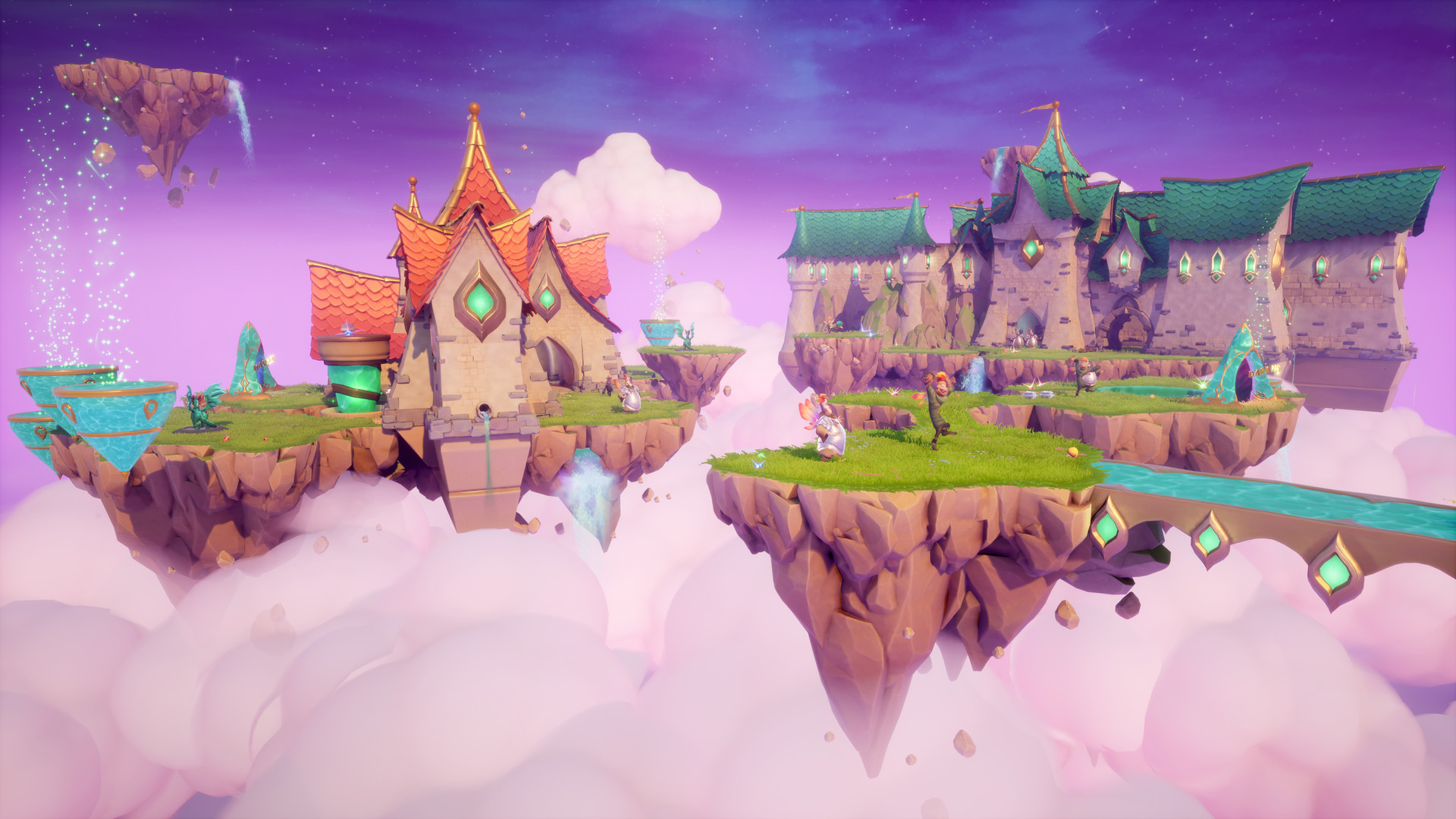
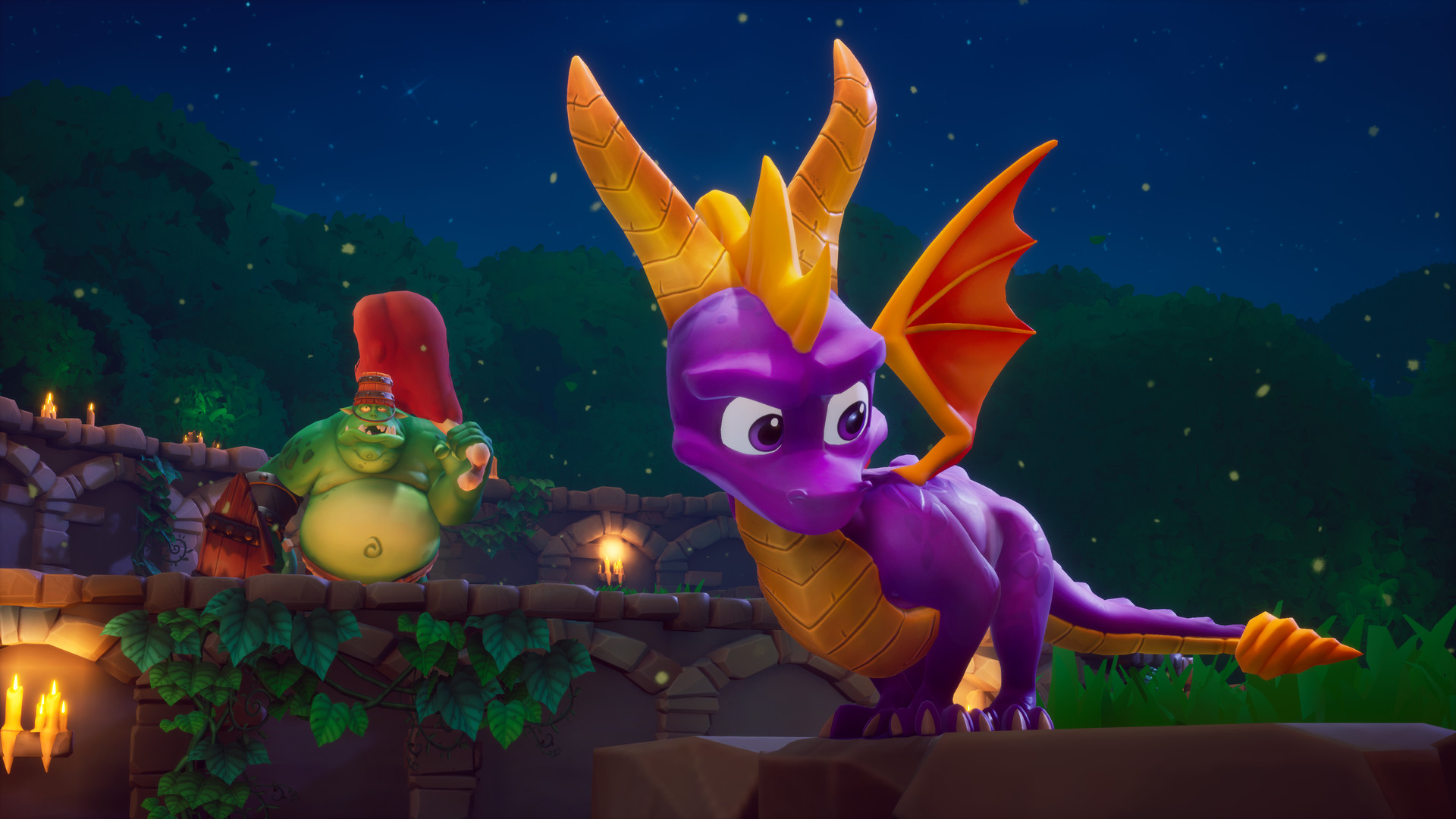
The dragon before the Realm Beyond
Which brings us to this week’s tease, and one honest clarification: A Realm Beyond is not brand-new news. Activision announced it at the Xbox Games Showcase in June, with Toys for Bob developing and a spring 2027 date. What landed this week, on November 17, was a fresh look — Activision sharing new assets of the Painted Plains, the game’s opening area, and pointing everyone to The Game Awards on December 10 for more. Painted Plains is designed around the new game’s headline promise: true dragon flight, not the original’s glide and not a set of flight levels. The studio’s Paul Yan says the area draws on the starting locations of the original games; creative director Lou Studdert calls it the team’s “Wright Brothers” area.
The announced shape of the thing: Spyro, stranded far from home, has his journey interrupted by an invading force called the Scavs, and must make new allies to protect a realm that is not his. It is coming to PlayStation 5, Xbox Series X|S, Switch 2 and PC. And the voice holding it together is Tom Kenny, returning to the role he took over in 1999.
That is why the 1998 original matters this week. Realm Beyond’s whole pitch — real flight, vast realms, a dragon equal to the sky — is a promise the first game made with a glide button and a draw-distance trick on hardware that had no business attempting either. Whatever December 10 shows us, it will be measured against a September morning in 1998, when the smallest dragon in the realms jumped off a hill in the Artisans homeworld and the horizon simply held. Start there. It is still the best seat in the house.
— Sal
For more launches from this date, see This Day in Gaming History: September 9.