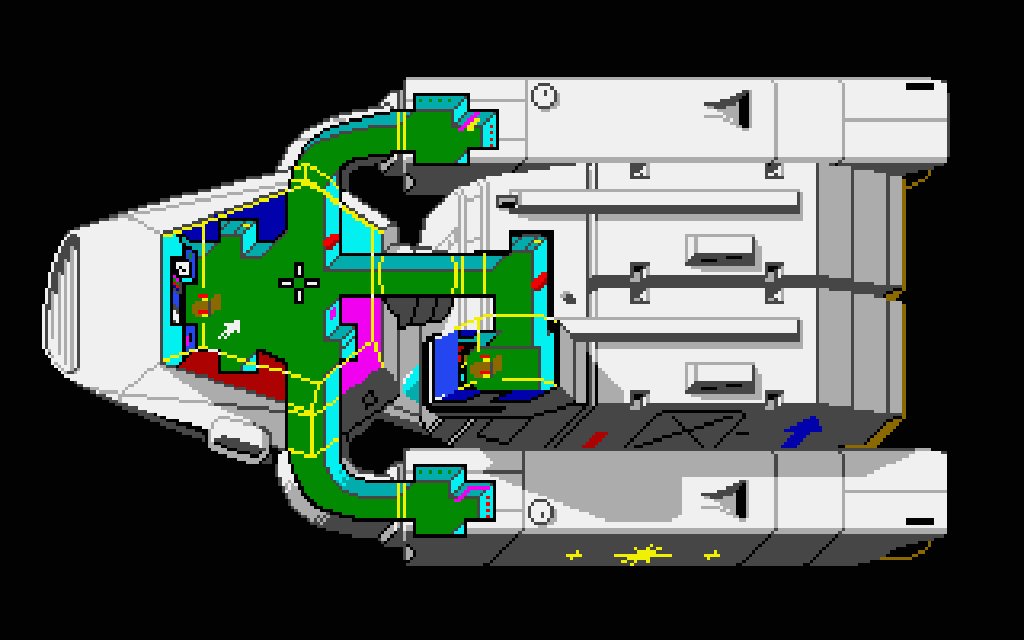
At a glance: Sundog: Frozen Legacy · Atari ST · FTL Games, 1985 · Space trading adventure · Score: 8.0/10
In 1985 the Atari ST was weeks old, its software library a rumour — and FTL Games, the studio that would later define its RPGs, gave the machine a space-trading epic built around a windowed interface borrowed from the future. Sundog: Frozen Legacy puts you in debt and in command of the Sundog, a tramp freighter inherited from an uncle, hauling cargo between the planets of the Jondd sector to fund a cryogenic colony’s survival. It is Elite’s merchant cousin wearing a Macintosh’s clothes: point, click, drag, trade, fly, and occasionally fight for your freight. For a launch-window game on brand-new hardware, its ambition is still faintly unbelievable.
The debt is the plot’s engine. A religious order, the Society of the New Faith, needs its frozen colonists delivered, and you — bound by your uncle’s contract — must earn the money to buy and ferry the pods planet by planet, in the right order, while the sector’s economy and its pirates do their worst. Trading is the core system: buy low on agricultural worlds, sell dear on industrial ones, watch the price boards, mind your cargo capacity and your fuel. Around that spine, Sundog grows limbs no contemporary matched: you leave the ship. Planetside, you walk your character through cities in an overhead view — into bars where deals and rumours circulate, banks, hotels, and the offices where the plot’s contracts are signed — then drive your pod vehicle across the surface between settlements.
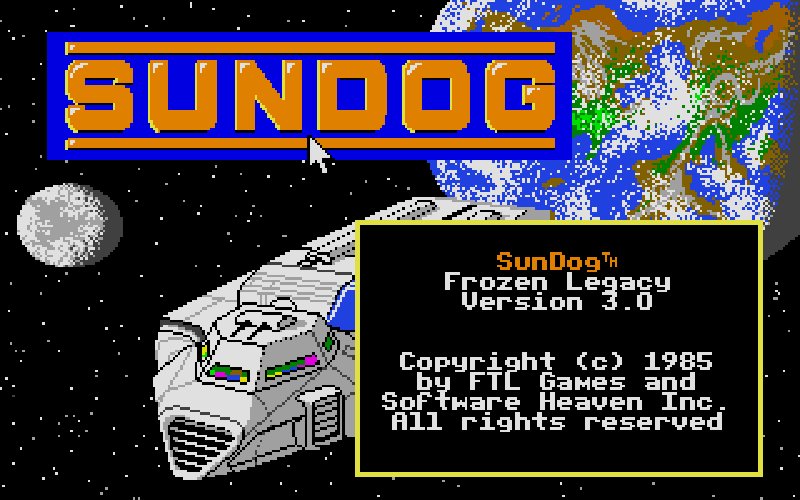
The interface was the future
What made Sundog famous at the ST’s birth is how it is operated. Designed by Bruce Webster and Wayne Holder with an interface philosophy imported from the Lisa and Macintosh world — draggable windows, icons, a consistent zooming view from sector map down to a character standing in a bar — it demonstrated, in the machine’s first season, exactly what a 68000 computer with a mouse was for. Click a planet to chart it, click a city district to walk it, drag cargo to the hold. Games would spend the next decade learning to be this usable. On the ST, with GEM’s crisp monochrome-or-colour display and the mouse under your hand, Sundog felt less like a game ported to a computer than like software from a more advanced civilisation that happened to include space piracy.
Sundog did in the ST’s first months what most launch games never attempt: it showed owners a whole new way of touching a game, then built a trading epic inside it.
The simulation has real texture. Ship systems — engines, shields, life support — take damage and are repaired component by component, cannibalising parts in emergencies; a crippled Sundog limping to a starport with the colonists’ money riding on the cargo is a story the systems write without a script. Space combat is simple by later standards, a matter of shields, lasers and nerve, but it punctuates the trading with the right frequency, and the ground game — haggle, haul, sleep, ship out — builds a rhythm of honest work in a sector that feels lived in. There is even character to meet: bartenders with information, officials with forms, the faithful waiting on their frozen kin. The Jondd sector is small by modern measures and dense by any.
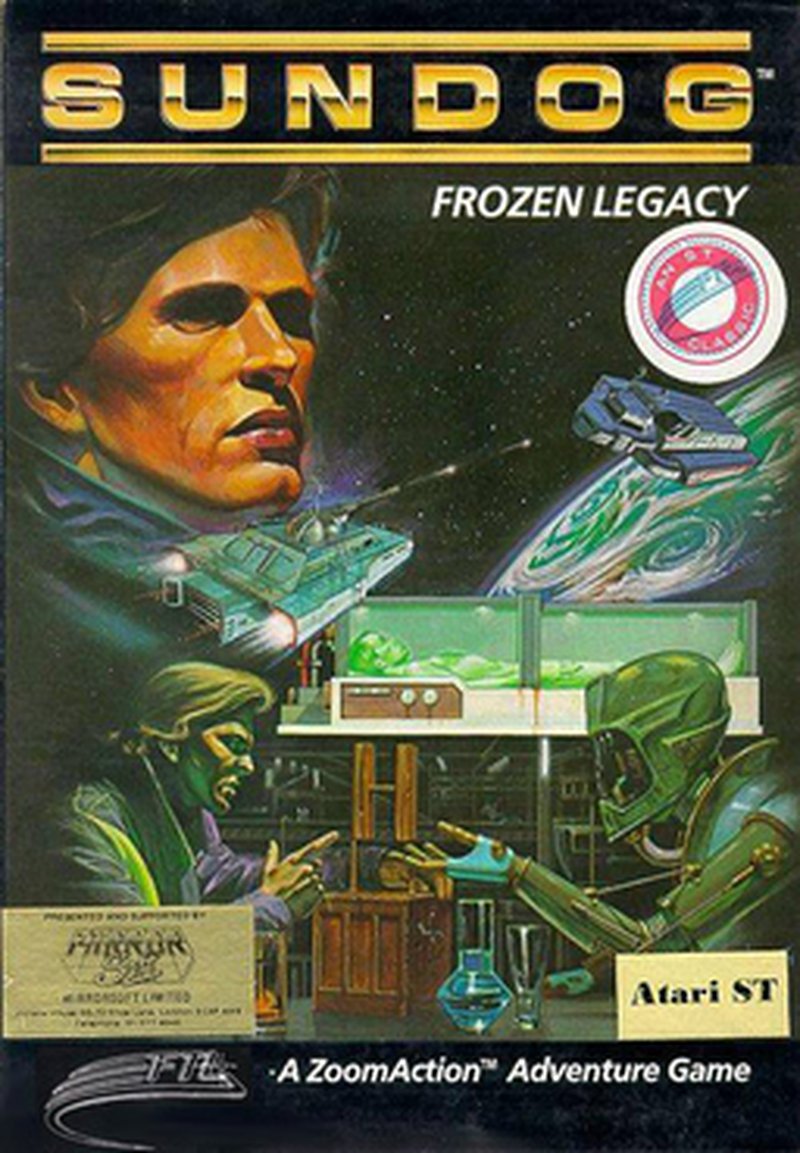
A pioneer, with a pioneer’s edges
Time has left marks the faithful should admit. The trading model, deep for 1985, is finite — routes optimise, prices settle into patterns, and the middle game can become a commute between known ports while the colony fund accumulates. Combat’s simplicity cuts both ways, and the ground sections, revolutionary in interface, are modest as places: a handful of building types wearing different signs. Version differences matter to collectors — the game was revised across its life, and the later ST releases are the polished text. And the whole production assumes the player will keep notes like a working trader: prices, pod requirements, names. Sundog respects your intelligence by taxing your paperwork, a very FTL philosophy that Dungeon Master would soon make famous.
Its historical standing is secure and specific: Sundog is one of the first great ST games, a top seller in the machine’s infancy, and a bridge between the text-and-vector space games of the 8-bit era and the graphical simulations to come. Elite’s shadow falls on any trading game, but Sundog’s answer — go planetside, walk around, be a person in the economy — was its own and, in 1985, nobody else’s.
Work, faithfully simulated
The quiet radicalism of Sundog is its subject: work. You are not saving the galaxy; you are servicing a contract, and the game’s pleasures are a working captain’s pleasures — a price remembered correctly, a hold packed to the profitable gram, a limping ship nursed home on cannibalised parts, a pod delivered to a colony that will remember the Society’s faith with interest. The cryogenic colonists give the ledger a soul: every credit is weighed against frozen lives waiting on your competence, and the debt structure means the early game is played under a creditor’s eye. Games would spend decades rediscovering the dignity of simulated labour as a design material. Sundog had it in 1985, on a computer that had been in the shops for a season, wearing an interface the rest of the industry needed years to copy.
That interface, finally, is why Sundog belongs in the first rank of ST history rather than its footnotes. The zoom from star chart to street, the drag-and-drop cargo handling, the consistent mouse grammar — these were not conveniences bolted onto a trading game; they were a demonstration, delivered in the machine’s launch window, of a wholly new relationship between player and computer. Apple understood the lesson’s value; the games industry took longer. Every modern strategy game that lets you fall from a galactic map into a single room owes Sundog a citation. That the citation comes wrapped in a genuinely good trading campaign — tense, characterful and completable in a satisfying arc — makes the artefact complete: a pioneer you can still play, not just applaud.
Collecting note, since this audience will ask: Sundog exists in several ST revisions, and the difference is not trivia. The game was updated across its commercial life — interface polish, balance, the small mercies of a team learning its own creation — and the later versions are the ones to play and to prize, with the big-box presentation of any edition worth keeping intact for the manual’s flavour. What no revision changed is the game’s posture toward the player: you are a working captain, the interface is your ship’s paperwork, and the sector will respect a trader who respects it back. That posture, in the ST’s first year, was a promise about what computer games were going to become. Sundog is the rare launch-window game that kept its own promise.
Verdict
Sundog: Frozen Legacy is a pioneering space-trading adventure whose interface, structure and sheer 1985 ambition still command respect: part merchant sim, part RPG, part graphic adventure, wholly ST. Its systems have been outscaled since, but never out-charmed in their original form, and the debt-and-colony campaign gives its trading a purpose most sandboxes lack. For collectors it is a foundational disc — the newborn ST showing off, and FTL announcing itself. Haul the pods, mind the prices, and pay the uncle’s debt in full.