At a glance — Game: Tamagotchi · Developer: Bandai · Publisher: Bandai · Original release: November 23, 1996 (Japan) · Original platforms: Tamagotchi (handheld electronic toy) · Genre: Virtual pet
Teachers confiscated them by the drawerful. That is where the Tamagotchi story has to start: with the beep. Anyone who was in school in 1997 remembers it — a tiny electronic chirp from backpacks, from pencil cases, from inside a fist under a desk, meaning somebody’s pet was hungry, or sick, or standing in its own mess waiting for a cleanup. Kids fed them at lunch like it was a job. Because it kind of was: this was a pet that could die on you between breakfast and home time, and thirty years later we are still not over it.
An egg, a watch, and a pet you could carry
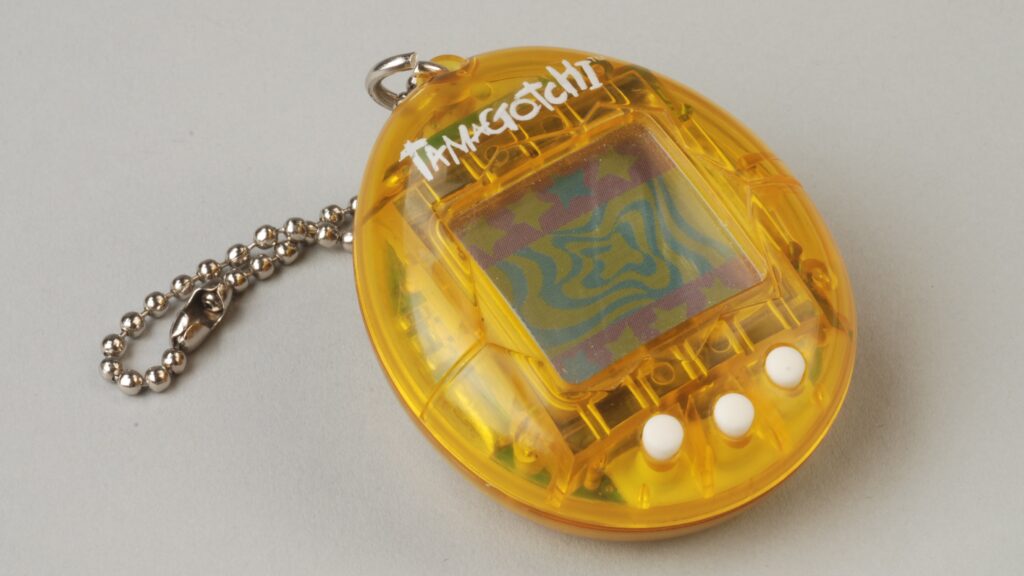
The idea came from outside Bandai. Akihiro Yokoi ran WiZ, a toy design studio, and he brought Bandai a proposal for a pet you could take anywhere. Aki Maita, a young Bandai staffer, picked it up and pushed it through. The name they landed on tells you the whole pitch: tamago, Japanese for egg, plus uotchi, watch — the first concepts were worn on the wrist like a watch, and the egg shape stuck, a little like a pocket watch you had to keep alive.
What hatched was beautifully simple. Pull the tab, set the clock, and an egg wiggled for about five minutes before a small creature appeared. From there it was on you: feed it meals or snacks, play the little guessing game, clean up after it, scold it when it called for attention it didn’t need. Care for it well and it grew up smart and easygoing. Slack off and you got a needier adult — or a grave. The characters were drawn in the loose heta-uma style of teen magazines and then squeezed down into pixels, which is how we got Mametchi and friends, blobs with more personality than most 32-bit heroes. Bandai aimed the launch squarely at teenage girls in Japan, and Yokoi and Maita were later named the father and mother of Tamagotchi when they won the 1997 Ig Nobel Prize for economics. A joke prize, sort of. The sales weren’t a joke at all.
The care loop was stricter than it looked. Your pet had hunger and happiness meters to keep filled and a discipline meter for the moments it beeped for attention it hadn’t earned. Leave its droppings on screen and it got sick — a little skull icon, a pet sitting very still — and sickness left untreated could finish it. Death even had regional manners: Japanese units showed a ghost and a headstone, while English-language versions softened it into an angel floating away. Then you pressed A and C together and started over with a fresh egg, which is either a lesson in resilience or your first experience of save-scumming, depending on how you look at it.
The Tamagotchi craze hit like a weather event
Bandai priced it at 1,980 yen and could not make them fast enough. The toy sold 400,000 units in Japan before 1996 was even out, then 10 million worldwide by July 1997. America got it on May 1, 1997, and the same madness crossed the Pacific — by spring 1998, nearly 40 million had sold around the world, about 12 million of those in the US and Canada. Demand got so feverish that Bandai employees were reportedly told not to carry bags with the company logo, in case somebody tried to steal what might be inside.
The catch was the care schedule. On those first models a neglected pet could die in less than half a day, so of course kids took them to school. Of course they beeped through maths. Schools across the world started banning them, which only made them more essential. Even Shigeru Miyamoto tipped his cap, admitting that watching a keychain of ten-or-twenty-dot pictures become a phenomenon made him feel that “Mario 64 had lost to Tamagotchi.” He was laughing when he said it. Probably.
Everyone wanted a piece of it. The Swedish Retail Institute named Tamagotchi its Christmas Gift of the Year in November 1997. Tiger’s Giga Pets led a small army of imitators onto the same keychains. Bandai and WiZ answered with a tougher, fighting-minded counterpart, the Digital Monster — which grew up to be Digimon. And the attachment was real enough that some owners whose pets died held little funerals and sent them off to graveyards, a detail that sounds like an urban legend until you remember how it felt to find that angel on the screen.
Then the fad died, and Bandai buried the stock
Fads that hot burn out fast. By 1998 the craze had faded, and Bandai was left holding mountains of unsold units — partly its own overproduction, partly shoppers who had reserved toys at several stores and bought from whichever got stock first. The write-off came to about 6 billion yen. The pet that taught a generation about mortality nearly took its maker down with it, and the Tamagotchi quietly slipped out of the spotlight it had owned eighteen months earlier.
The comebacks: infrared, colour, and the original shell again
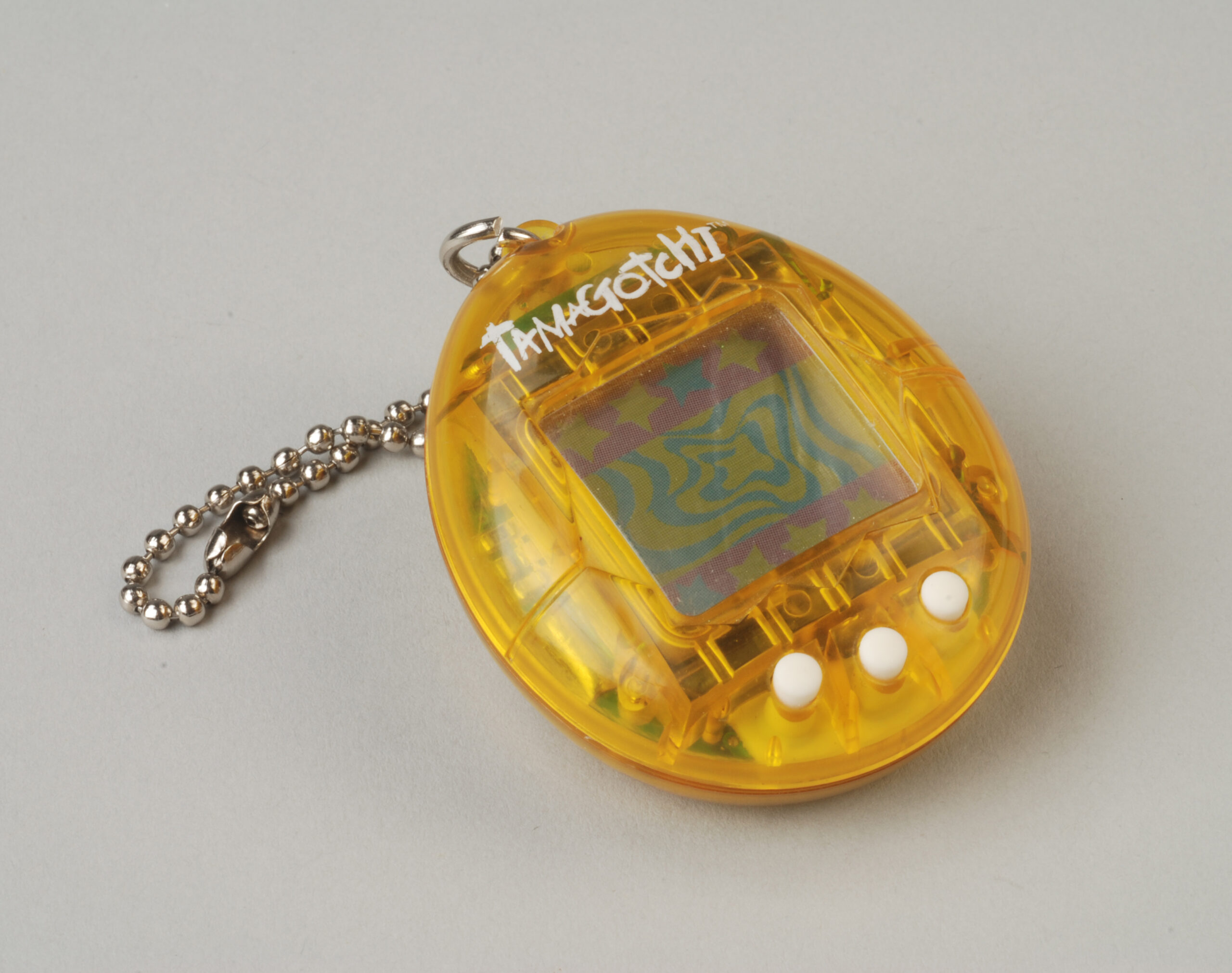
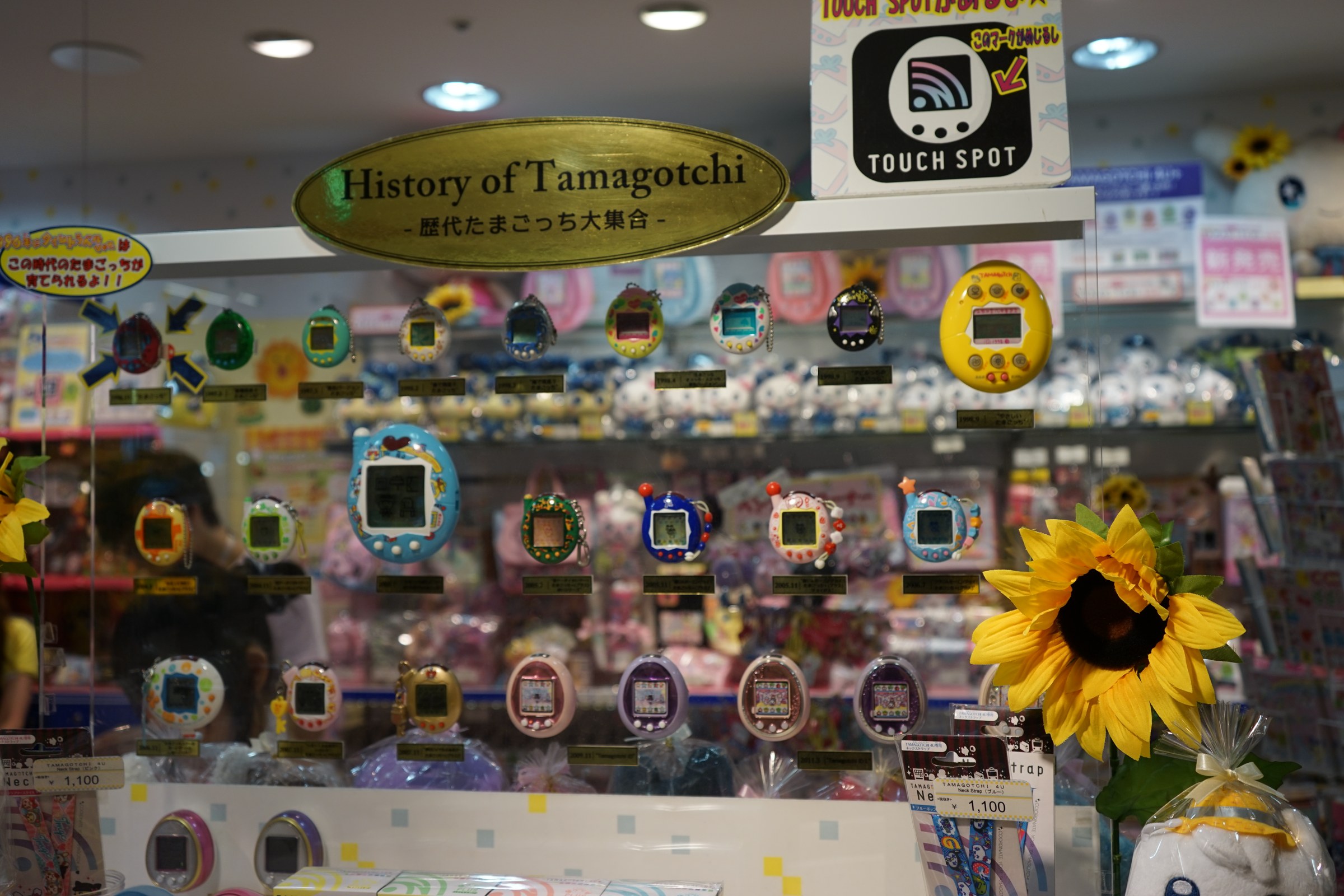
Bandai brought it back carefully in 2004. The Tamagotchi Connection could link two units by infrared, so pets could visit each other, play games and eventually marry and start a new generation — the needy egg had become a social life. This time the advertising stayed low-key, and it worked: the revival was a genuine hit, and its Nintendo DS spin-off, Tamagotchi Connection: Corner Shop, sold a million copies in Japan alone by January 2006. Colour screens arrived in Japan in 2008 with the Tamagotchi Plus Color. And in 2017, for the twentieth anniversary, Bandai did the most Tamagotchi thing possible: it re-released the original, same shell, same three buttons, in Japan on November 23 — the birthday itself.
Thirty years on, it never really left
The strangest part of the Tamagotchi story is the ending that isn’t one. Nostalgia brought the millennials back in the early 2020s, their kids came with them, and global sales doubled between 2022 and 2023. The line kept evolving — the Wi-Fi-connected Tamagotchi Uni in 2023, Tamagotchi Paradise in 2025 — while the original shells stayed in production alongside them, and dedicated Tamagotchi shops have been opening again from Tokyo to London. In 2025 The Strong National Museum of Play inducted Tamagotchi into its World Video Game Hall of Fame, and Bandai’s own history page now counts more than 100 million units shipped worldwide since 1996. Not bad for a pet made of twenty dots. If you had one, you already know the truth of it: nothing since has made a beep feel quite so urgent.
— Chip
For more launches from this date, see This Day in Gaming History: November 23.