
At a glance: The World Ends with You · Nintendo DS · Square Enix, 2007 · Action role-playing game · Score: 9.0/10
The World Ends with You, developed by Square Enix with Jupiter and released in 2007 (the West in 2008), is the most aggressively original RPG on the Nintendo DS — a game set entirely in modern Shibuya, scored like a J-pop riot, dressed by its own in-game fashion economy, and fought simultaneously on both screens with two different control schemes at once. Its hero, Neku Sakuraba, wakes in the Scramble Crossing with no memory, a countdown tattooed on his hand and a text message informing him he has seven days to complete the Reapers’ Game or be erased from existence. He hates everyone. The game is about why that is killing him — literally.
The Reapers’ Game pairs Neku with a partner — first the fashion-obsessed Shiki, then others as the weeks turn — bound by a pact without which the Noise, graffiti-born monsters prowling an unseen layer of Shibuya, will devour them both. The story, told in stylish comic panels, is a genuine cut above: a meditation on connection, self-erasure and the noise of other people, set in a city rendered as a collage of brand logos, slang and street art. Tetsuya Nomura’s character designs and Takeharu Ishimoto’s soundtrack — hip-hop, electronica, rock and pop colliding, with tracks shuffling as you cross districts — make Shibuya itself the game’s co-lead.
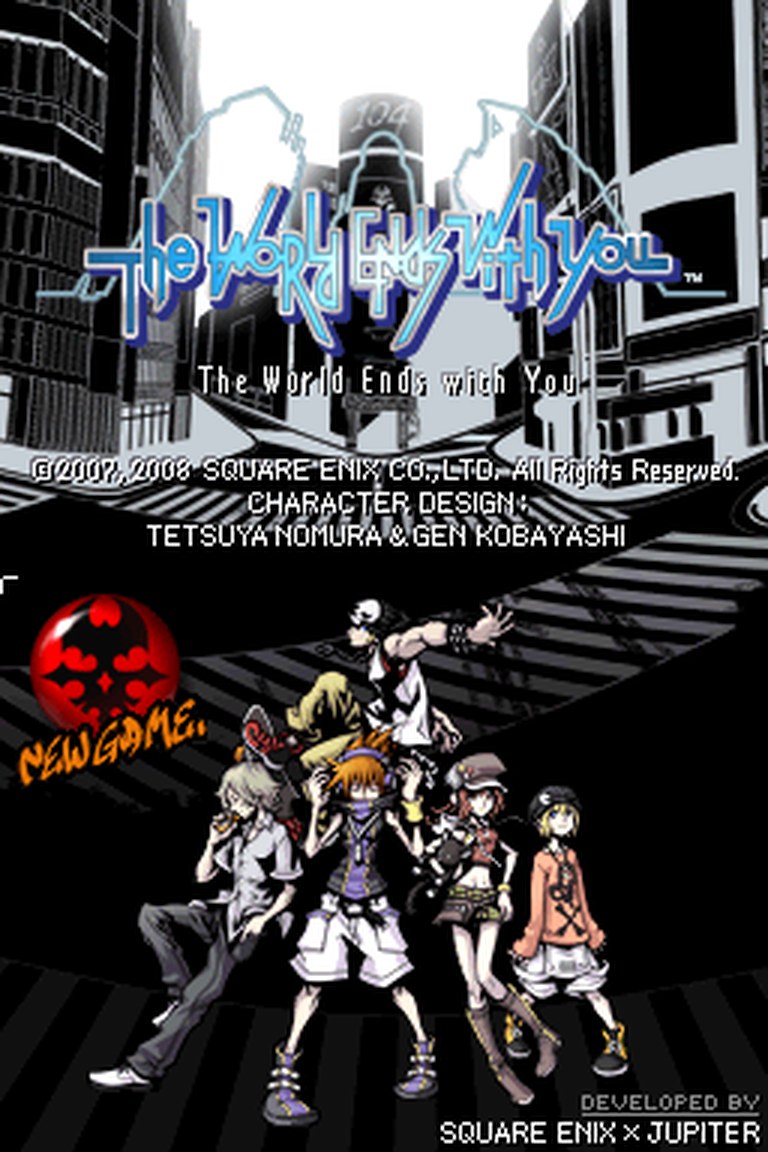
Two screens, two battles, one brain
Combat is the famous hurdle and the famous triumph. On the touch screen, Neku fights with pins — Psychs activated by gesture: slash through an enemy, draw a circle, tap rapidly, blow into the microphone — selected from a deck of hundreds, levelled up even while the DS sleeps. Simultaneously, on the top screen, his partner fights with a D-pad combo system, and a shared light puck multiplies damage as it volleys between the two. Managing both at once sounds like juggling chainsaws, and at first it is. Then the systems click — auto-pilot options for the partner ease the load — and TWEWY becomes the most kinetic, customisable battle system on the handheld, with difficulty you can lower on the fly (dropping your level for better drops) like a DJ riding a fader.
The fashion system deserves its legend: clothing and accessories carry stat effects that wax and wane with each district’s brand trends, so the optimal build in Udagawa is dead weight in Dogenzaka, and wearing brands to raise their popularity is itself a strategy. Pins evolve along branching paths, shops are run by personalities, food digests in real time across battles, and a full mini-game — Tin Pin Slammer, a Beyblade-like pin-battling duel — hides in the margins. Every system expresses the theme: the world is other people, their tastes, their noise, their help.

Erasure and connection
What keeps TWEWY in the masterpiece conversation is that its mechanics argue its thesis. Neku begins literally unable to fight alone; the puck mechanic rewards synchrony; the story’s three-week structure strips and rebuilds his worldview partner by partner. Its villains — the Reapers, with their lingo, wings and game-master theatrics — are stylish, but the game’s real antagonist is Neku’s own refusal to let the world in, and the script, localised with rare energy, gives that argument room to breathe between the boss fights.
You cannot fight alone in The World Ends with You — the battle system itself forbids it. That is not a limitation. That is the whole point.
Caveats, honestly filed: the dual-screen combat will defeat some players outright, the gesture recognition occasionally misreads in the heat of a boss fight, and pin evolution’s branching requirements practically mandate a guide for completionists. The soundtrack’s vocal tracks, beloved by most, will grate on a few. None of it dims the achievement: a wholly new RPG grammar, invented for one machine, in service of a story only that grammar could tell.
Shibuya as a system
The city’s simulation deserves its own salute. Shibuya’s districts are not backdrops but economies: brand popularity charts shift with your battles and purchases, shopkeepers level up their friendliness as you buy (unlocking item abilities and conversational lore), thoughts and memes can be planted in passers-by through the microphone-era social systems, and the Reapers’ walls gate progress with errands that make you read the city like a local. The pin economy is equally deep — hundreds of Psychs with evolution trees that branch by how you earn experience (battle, shutdown time, mingling with other players’ DS systems in the pre-streetpass era), a collector system so ahead of its time it anticipated the social features of the next decade of handhelds.
And the difficulty design remains a model for the genre: four independent levers — level, difficulty setting, drop rate and the chain-battle system that lets you stack up to sixteen encounters for escalating risk — mean the game is exactly as hard as your ambition on any given evening. Grinding is a choice, mastery is a dial, and the post-game’s Another Day chapter — a parallel-universe comedy campaign with the whole cast playing an extended in-joke — plus the chapter-select reports that complete the story’s last mysteries give the cartridge a completion arc of real generosity. Bold games usually date. This one was so far ahead that the future is still catching up.
A closing word on versions, because it matters here more than almost anywhere: later editions of The World Ends with You unified its combat onto one screen, and in doing so traded the game’s soul for accessibility. The DS original is not merely the first version but the thesis statement — two screens, two partners, one shared light — and it is the one preserved in this review’s score. If the dual-screen learning curve frightens you, persist through the first week of the Game. The moment it clicks is one of the great conversions in gaming.
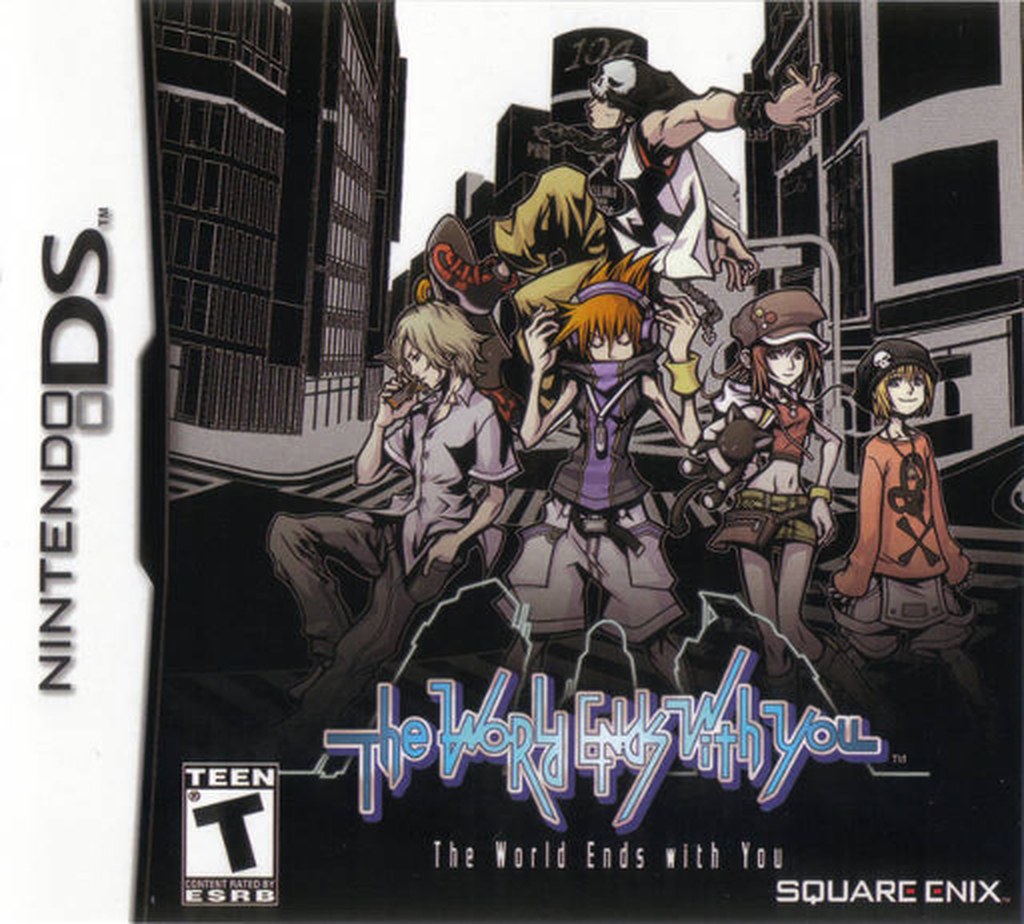
Playing it today
The DS cartridge has become a collector’s piece, priced accordingly, and every yen of it is defensible: this is the complete, dual-screen original of a game the industry has spent fifteen years failing to improve upon. New players with access to one should clear a week, charge the handheld, and let Shibuya have them. Its lesson is its mechanic, and its mechanic is its lesson, and when the final day of the Reapers’ Game arrives you will feel the rare thing only the very best games deliver — the suspicion that a piece of software understood you. Expand your world. The Game is waiting.
Verdict
The World Ends with You is the DS’s boldest RPG and one of its very best: stylish beyond reason, mechanically fearless, and emotionally sincere underneath the slang and the shopping. Its Switch and mobile remakes simplified the combat and lost something essential — the DS original, two screens and stylus and all, is the definitive edition of a genuine classic. Expand your world. Play it.