

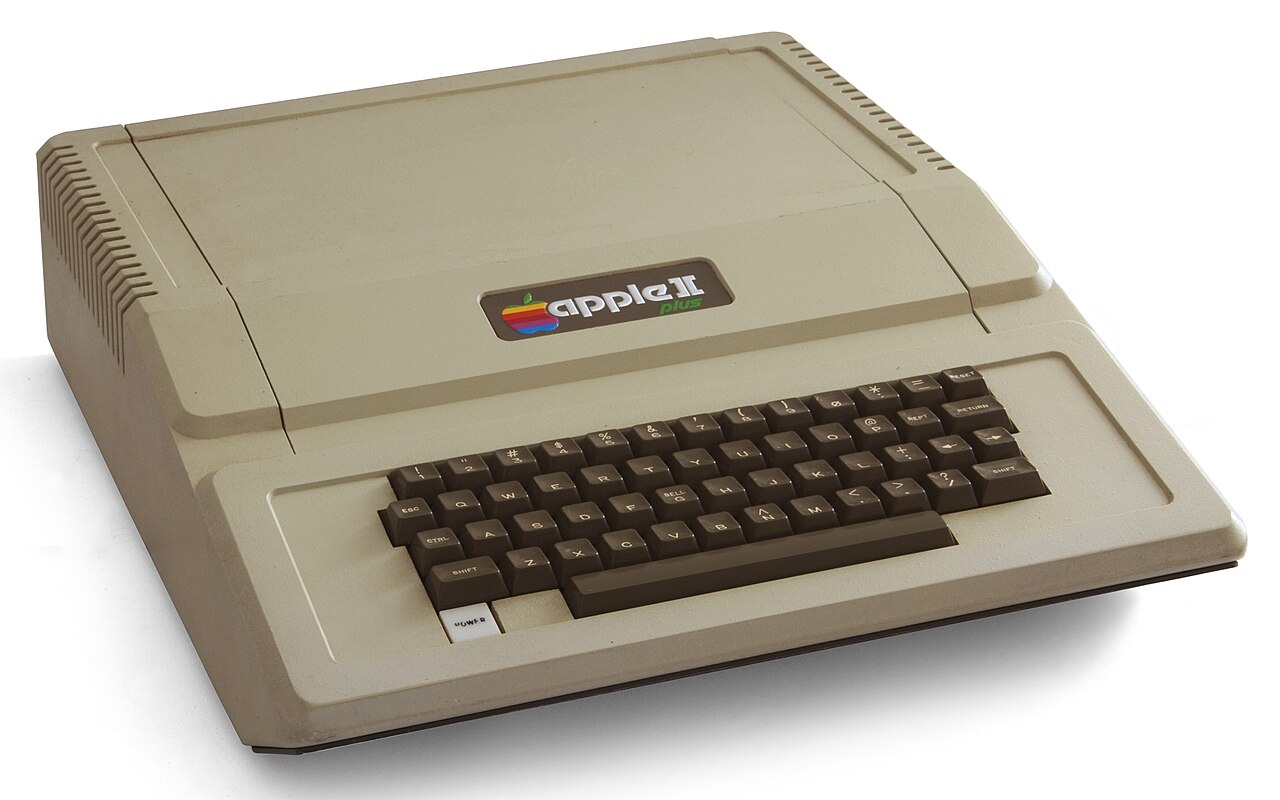
The Apple II was not designed as a games machine, which is exactly why it became one. From 1977 it sat in American homes, schools and offices with colour graphics, a speaker that went beep, and — crucially — an open architecture and a floppy drive that invited anyone to make software for it. A generation of designers took the invitation: Jordan Mechner, Richard Garriott, Dan Bunten’s contemporaries, Doug Smith, Bill Budge. Many of today’s prominent developers cut their teeth on this machine. These are the ten games that explain why it mattered — and most of them are still startlingly playable.
10. Taipan! (1982)
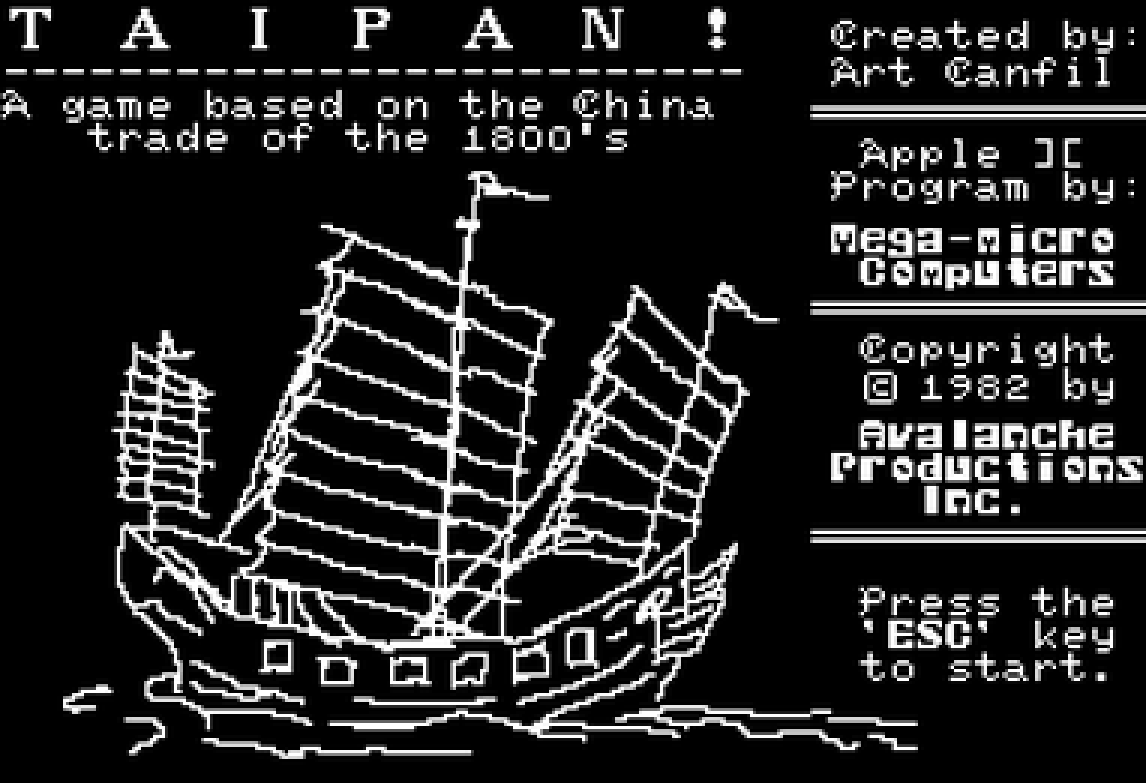
A trading game with a body count. Loosely adapted from James Clavell’s novel Tai-Pan, Art Canfil’s Taipan! puts you in command of a ship and a debt in 19th-century Hong Kong, buying low in one of seven ports and selling high in another, while pirates, storms and the extortionate Li Yuen test your nerve between them. Every decision is a number and every number is a story: take the loan shark’s money or don’t, fight the pirate fleet or run, cram the hold with opium and pray.
It is turn-based, text-driven and entirely merciless, and it remains the purest expression of the Apple II’s spreadsheet-era imagination — a game about arithmetic that produces more drama than most action titles. School computer labs across America were supposed to teach typing on these machines. A generation learned compound interest and smuggling instead.
9. Pinball Construction Set (1983)
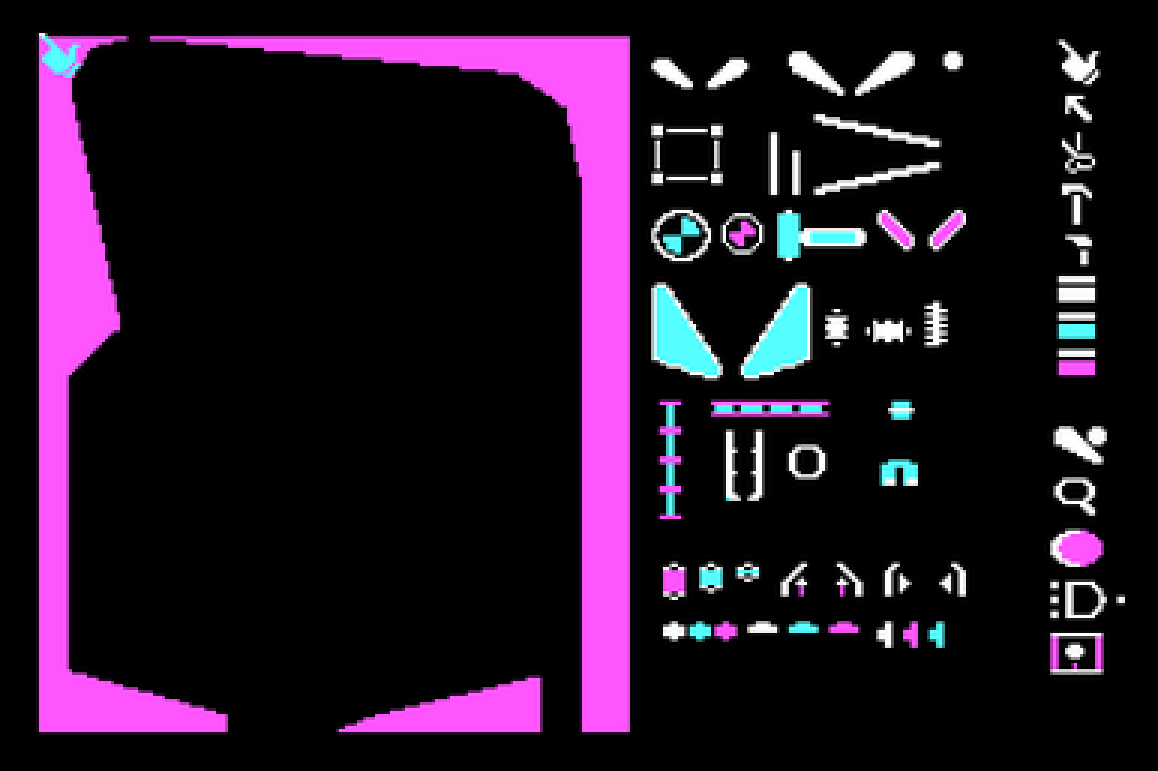
Before game makers were a genre, Bill Budge shipped one. Pinball Construction Set let anyone build a working pinball table by dragging bumpers, flippers and targets around the screen with a hand cursor, tweaking gravity and elasticity, painting the art, then saving the finished table to a floppy to trade with friends. In 1983, when most games were written in assembly by professionals and guarded like state secrets, handing the player the tools was a radical act.
It also played a genuinely fine game of pinball — Budge had form, having built the acclaimed Raster Blaster — and its influence echoes through every construction kit and create-mode since; the industry eventually said so, honouring it at the Technology & Engineering Emmy Awards in 2008. The Apple II didn’t just host games. With this disc, it hosted game design.
8. Beyond Castle Wolfenstein (1984)
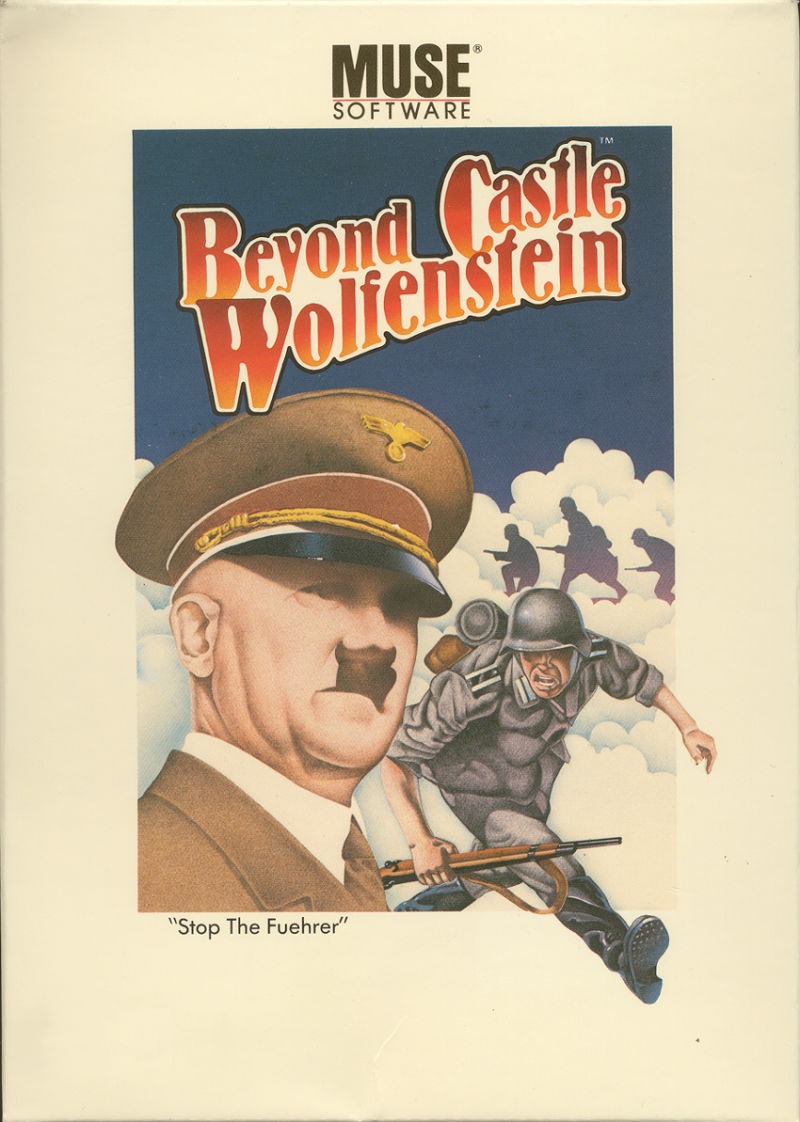
The stealth game was not invented in 1998. It was invented in Baltimore, by Silas Warner, years earlier — and its fullest early form is this sequel. Beyond Castle Wolfenstein sends you into a Berlin bunker to plant a bomb in Hitler’s meeting room, and everything modern stealth takes for granted is here in 1984: guards who must be avoided, bribed or quietly knifed; uniforms and passes that open doors your face can’t; alarms; bodies that matter.
Warner was a genuine pioneer — the original Castle Wolfenstein beat Metal Gear to the concept by six years, and his sampled speech (“The Voice”) made the Apple’s little speaker bark German orders. The sequel is the deeper game, tenser and more systemic, a top-down blueprint for a genre the industry wouldn’t name for another decade and a half. id Software later took the castle’s name to fame. Warner built the castle.
7. Lode Runner (1983)
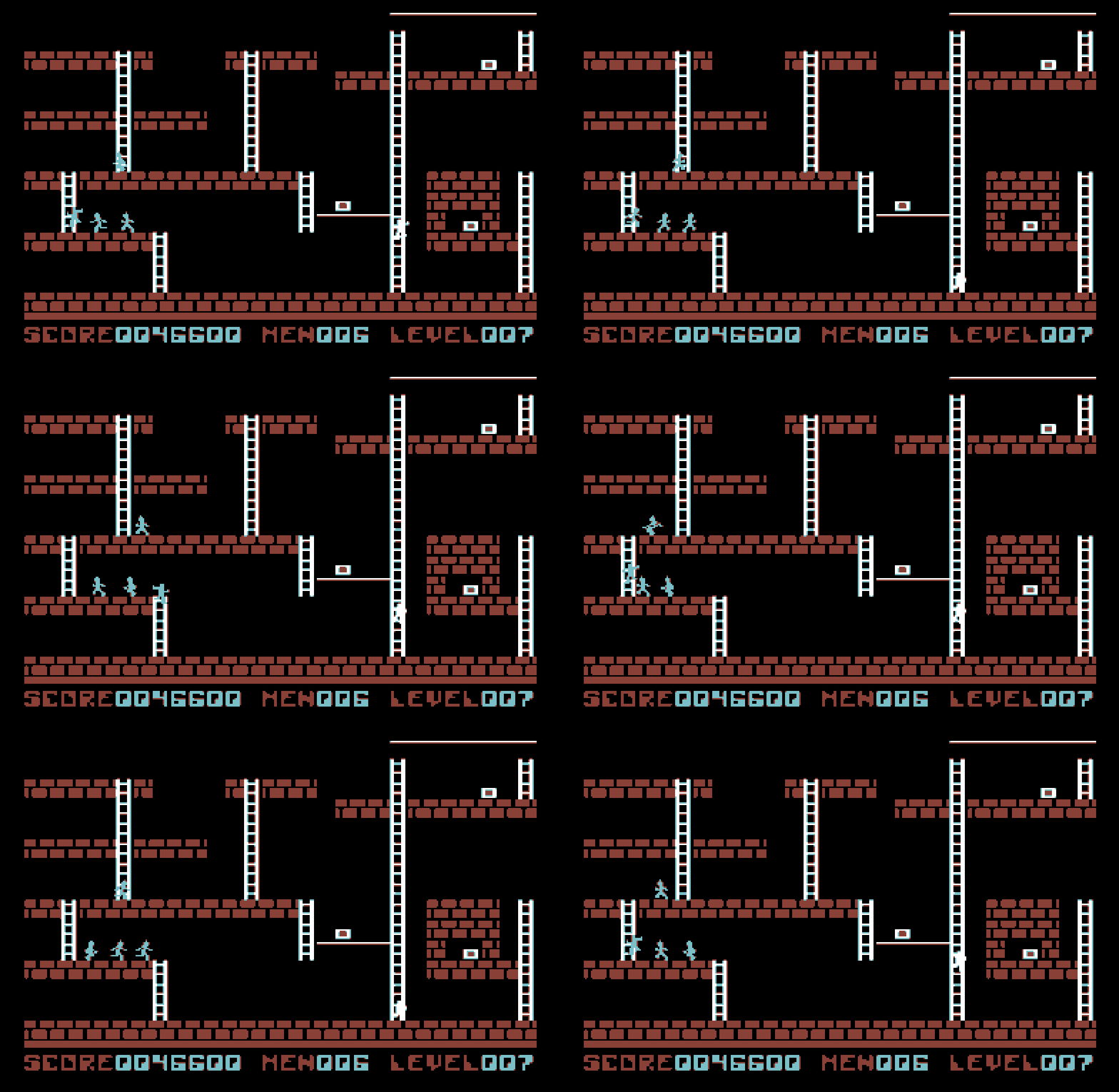
Doug Smith’s masterpiece of less-is-more. You are a small man in a large brick world: 150 levels of gold to gather, guards to evade, and one perfect mechanic to do it with — a ray gun that digs holes in brick, left or right, into which guards fall and gold runs become possible. No jumping. The holes refill. Everything else is choreography, and some of those 150 dances are symphonies.
Lode Runner felt, on its home machine, like the arcade had moved in: fast, polished, impossibly tight, and bundled with an editor that let players build their own levels — Smith received hundreds by post. It jumped to the arcades a year later, almost unheard of for a home-computer game, and the Apple II version remains the purest way to play it: the original stage, the original star.
6. Ultima I: The First Age of Darkness (1981)
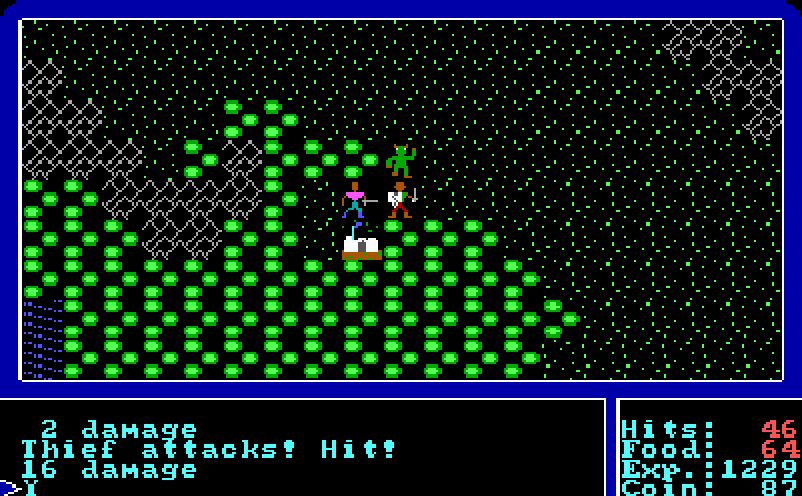
An evil wizard, four continents, one space shuttle. Richard Garriott’s first commercial RPG is cheerfully, gloriously unhinged: you will fight thieves in tile-based towns, crawl first-person wireframe dungeons, buy a hovercraft, and — because Mondain’s gem of immortality must be dealt with properly — fly into space to shoot down fighters and become a Space Ace before the endgame lets you proceed. Underneath the glorious sprawl sits the template the genre still uses: character stats, an explorable world, and a villain with a plan.
Garriott wrote it as a teenager, and the 1986 remake for the Apple II — redrawn, faster, kinder — is the version most players know. Either way, the importance is difficult to overstate: no Ultima, no Wizardry rivalry, no JRPG as we know it. Role-playing games have a patient zero, and it’s a kid in Texas with an Apple II.
5. Choplifter (1982)
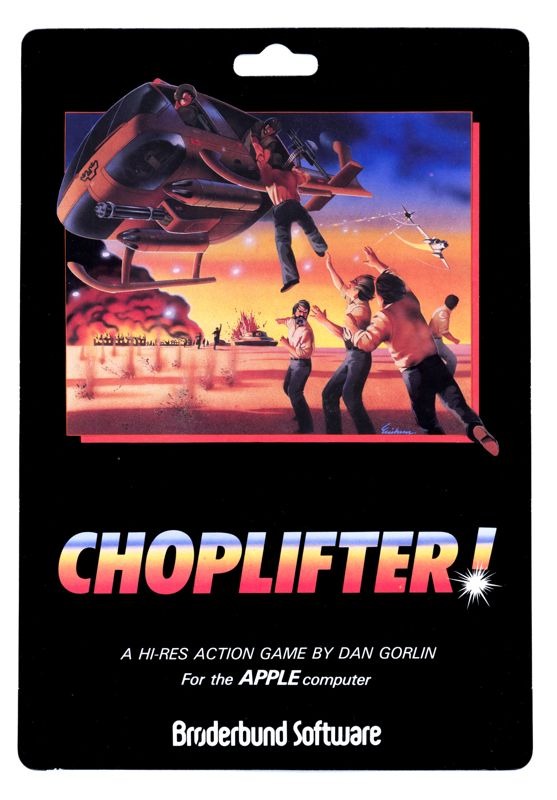
Dan Bunten’s rescue game is the Apple II showing off. A helicopter with real momentum ferries into enemy territory, lands — gently, always gently — beside barracks, loads up to sixteen hostages, and ferries them home through tank fire, jet attacks and drone mines, while the little figures on the ground wave, run, and sometimes don’t make it to the chopper. There is no scoreboard pushing you onward; the measure of a run is faces, saved or lost.
It is one of the most elegantly humane action games ever made — a shooter where the point is carrying people out — and one of the era’s great travellers: Sega admired it enough to rework it into an arcade game in 1985, reversing the usual direction of home-to-coin-op envy. On the Apple II, with a joystick and a Saturday afternoon, it remains almost perfect: immediate, demanding, and quietly moving in a way 1982 had no right to be.
4. Karateka (1984)
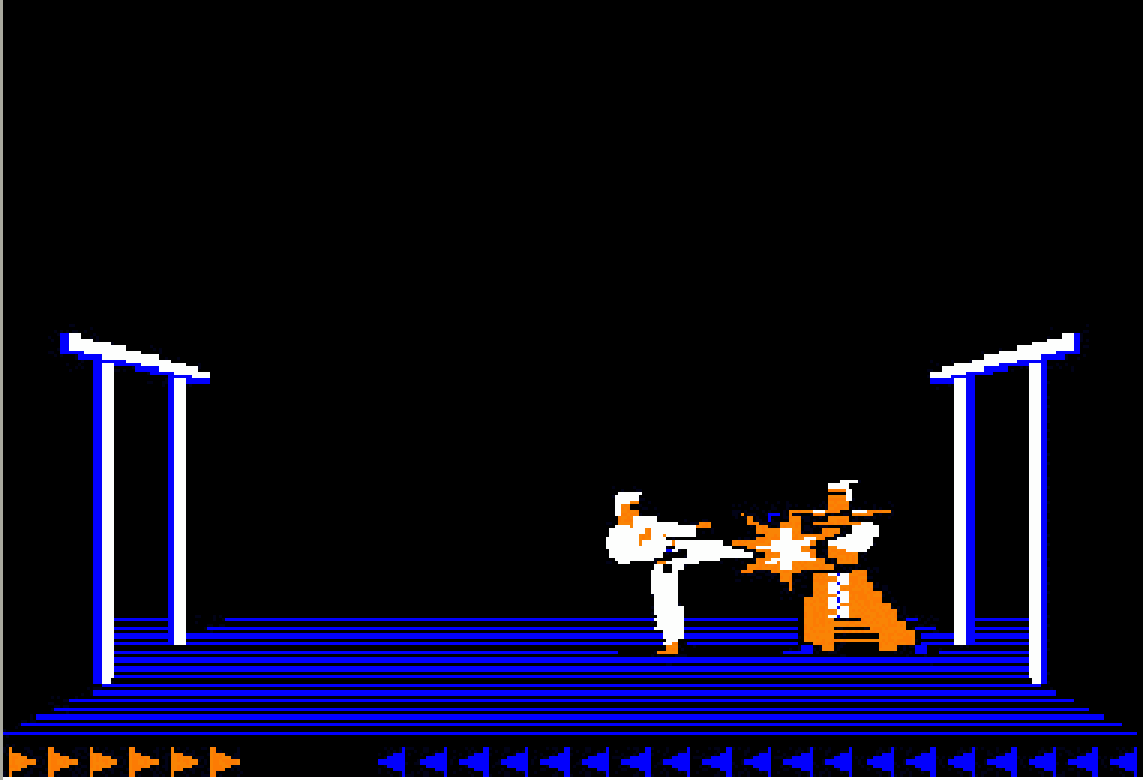
Jordan Mechner made Karateka while still at Yale, studying videotape of karate and his girlfriend’s movement to rotoscope a fighter onto the Apple II — and smuggled cinema into a computer game. A princess, a warlord, a mountainside fortress; a hero who advances one screen at a time through duels that are pure timing, fought from a fighting stance you must remember to enter, because approaching an enemy while jogging gets you killed in one hit. There are no points. There is a hawk that must be punched at exactly the right moment, which is to say there is a lesson every player learns exactly once.
And then the ending, in which the rescued princess — approached carelessly, still in your fighting stance — ends the hero’s story with a single kick. It is the most famous joke in early gaming, and the proof of Mechner’s thesis: a game could tell a story with bodies, timing and silence. Five years later he applied the same thesis to Persia.
3. The Oregon Trail (1985)
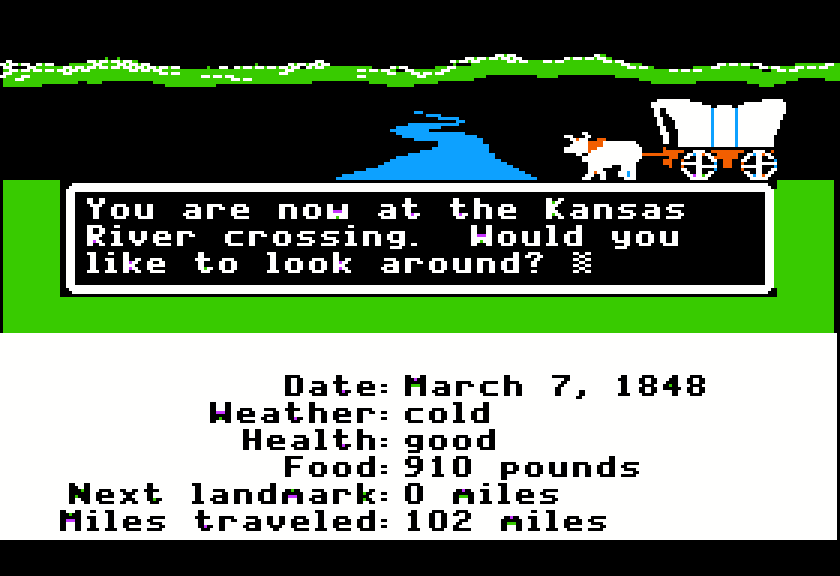
The most successful educational game ever made began in 1971 on a mainframe, but its defining form is the 1985 Apple II edition that MECC placed in what felt like every classroom in America. Lead a wagon party from Independence to Oregon: buy oxen and bullets, ration food, ford rivers or caulk the wagon and float, hunt with your typing speed in the original or a rifle in the remake, and endure the liturgy of dysentery, cholera, snakebite and broken axles that culled a generation’s virtual families.
Its genius was disguise. This was a resource-management strategy game wearing a school subject, teaching systems thinking to children who believed they were playing. “You have died of dysentery” became folk culture; the wagons roll on in remakes and memes to this day. On the Apple II it belongs near the top of any list not because it taught, but because it taught by being a great game first.
2. Prince of Persia (1989)
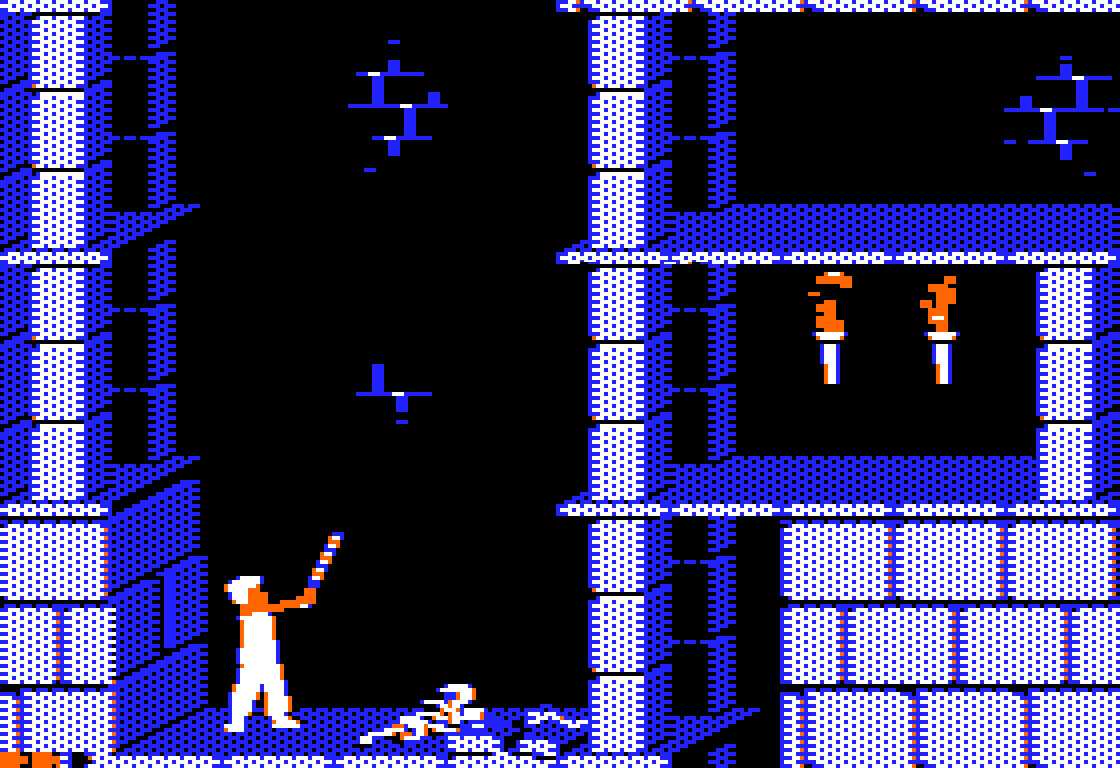
The last great Apple II game was also its most beautiful. Mechner spent four years on Prince of Persia, rotoscoping his brother’s runs, leaps and climbs into animation so fluid that the Prince moves like a dancer through a dungeon of blade traps, crumbling floors and duel-to-the-death sword fights — all of it governed by a sixty-minute clock and a save system that did not exist. You learned the palace the way you learned an instrument: by failing it, section by section, until the whole run sang.
Inspired by Raiders of the Lost Ark’s opening ten minutes, it fused platforming, exploration and fencing into something entirely new — the cinematic platformer, born on a machine launched in 1977, shipped in 1989 when the Apple II line was supposedly finished. The ports conquered the world; the sequels and Sands of Time reboots built an empire. But the original Apple II version, spare and perfect, is where the Prince first ran. Nothing else on the platform moves like it. Almost nothing anywhere did, for years.
1. The Bard’s Tale (1985)
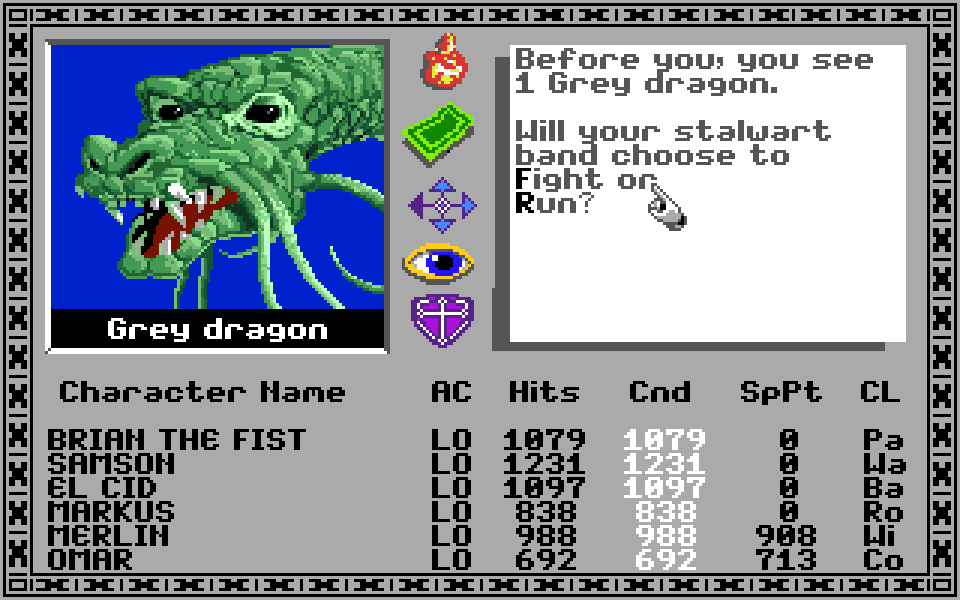
Michael Cranford’s dungeon crawler took the Wizardry formula — first-person wireframe mazes, a party of six, turn-based combat — and gave it colour, animated portraits, a living city, and a bard whose songs were actual gameplay buffs, strummed between battles. Skara Brae is sealed in the evil Mangar’s eternal winter, and your party maps its streets, taverns, temples and five dungeon complexes the honest way: on graph paper, by hand, at a table covered in dead characters.
It is the complete package as the template for the computer RPG’s golden age: ninety weapon types’ worth of loot hunger, spellcasters climbing from conjurer to archmage, and a difficulty curve that respects the player’s intelligence absolutely. Electronic Arts published it; the ports colonised every platform; three sequels and a construction set followed. The Apple II had the first Ultima, the first construction set and the first stealth game — but its definitive night in, its thirty-hour obsession, its reason to own a second disk drive, was The Bard’s Tale. Number one, by acclamation of every graph-paper notebook ever ruined.
The ones that got away: Wizardry: Proving Grounds of the Mad Overlord — the other half of the RPG founding myth, edged out only because this list rewards the revolution’s polish as well as its birth; Castle Wolfenstein, outranked by its own sequel; and SunDog, the space-trading epic that deserved a bigger galaxy. Arguing with this top three is a spectator sport, and the comments are open.
Keep reading: the Apple II system archive