
At a glance — Game: Trauma Center: Second Opinion · Developer: Atlus · Publisher: Atlus (North America) · Original release: November 19, 2006 (North America) · Original platforms: Wii · Genre: Simulation, visual novel · Director: Daisuke Kanada · Producer: Katsura Hashino
Launch line-ups are supposed to sell a console’s future with spectacle. Trauma Center: Second Opinion sold the Wii’s future with a scalpel. Atlus took its Nintendo DS cult hit about surgery, rebuilt it from nothing for a controller nobody had held, added a second surgeon with a darker story, and put it on the shelf the same morning as the console itself — a game about keeping a stranger’s heart beating, graded on your precision, timed to the second. Twenty years on, it remains the most unorthodox launch title any console has ever carried, and one of the best arguments the Wii ever made for itself.
From stylus to scalpel — a remake rebuilt from zero
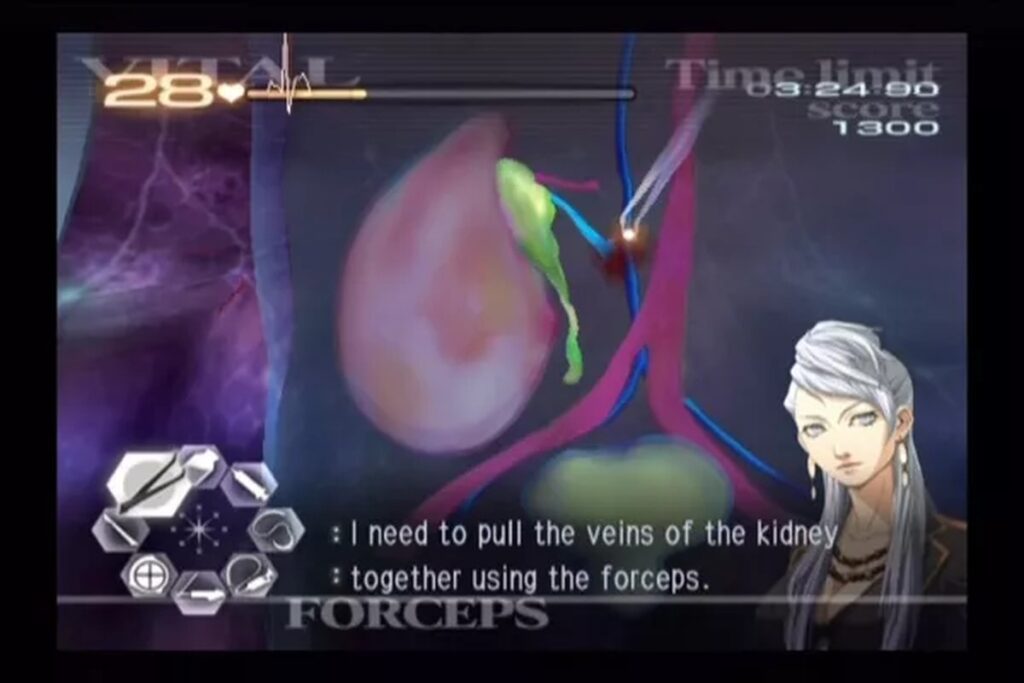
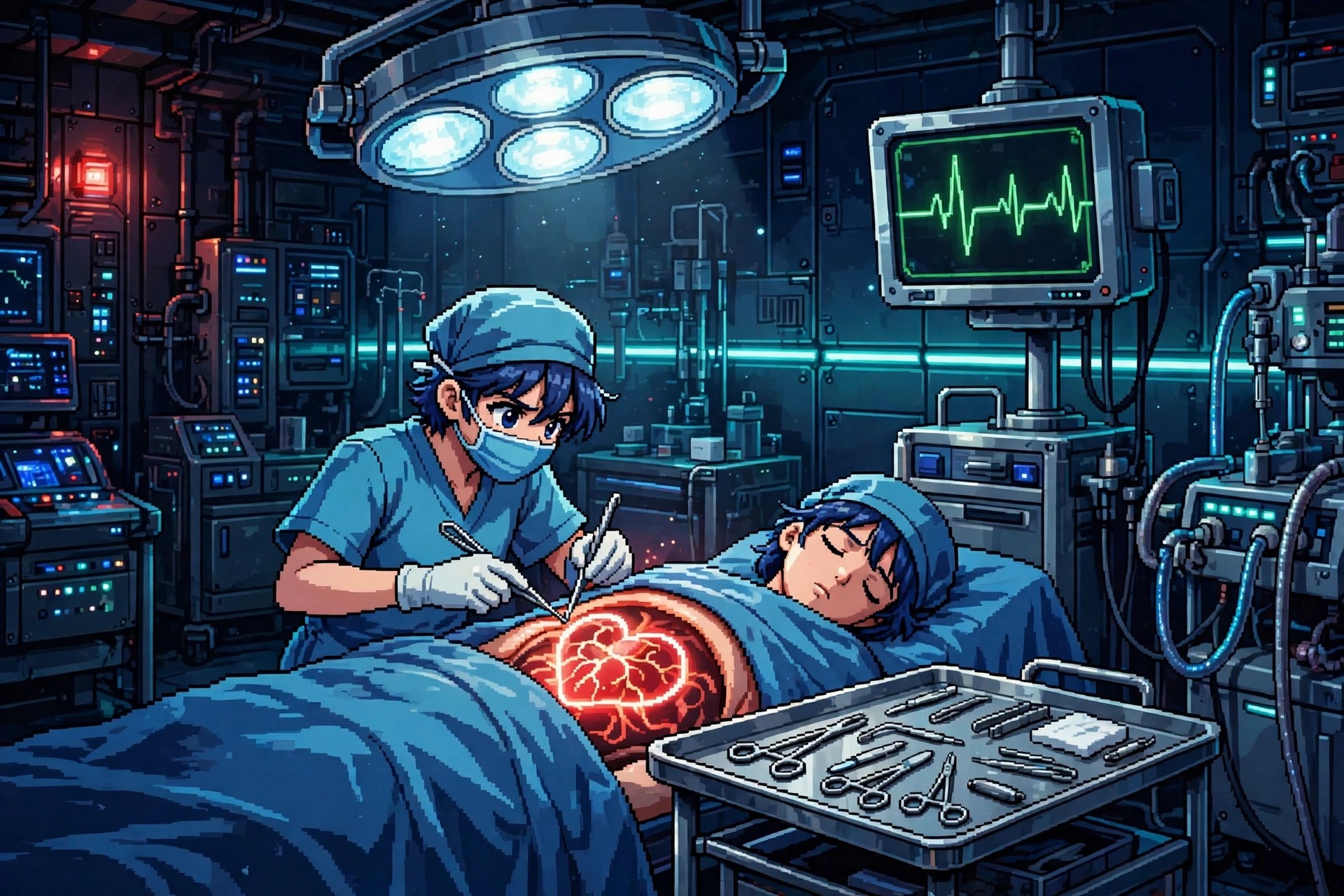
Second Opinion is a remake of Trauma Center: Under the Knife (2005), the DS game that turned the stylus into surgical instruments. Atlus did not port it. Planning began in January 2006 inside a small internal group nicknamed “CaduceTeam”; director Daisuke Kanada, making his directorial debut under producer Katsura Hashino, rebuilt the game from the ground up using none of the original source code. The character artwork was redrawn by Masayuki Doi to look more mature without losing the anime line; internal organs were given more realistic shapes while staying stylised, never gory; the operation screens were made “cooler” in appearance. The schedule was short and the team small, and the strain showed in the compromises — the game famously does not support a 16:9 screen, because the entire screen was the operating field and reprogramming it for widescreen was beyond the timetable. What the pressure produced instead was focus: everything in Second Opinion is about the operation in front of you. The small team still found room to grow the presentation — voice clips run to ten times the number in the DS original, and Stiles was given a voice for the first time — and to answer the original’s loudest criticism head-on, with adjustable difficulty levels built in from the start rather than patched in by apology.
Trauma Center: Second Opinion turns the Remote into a tool tray
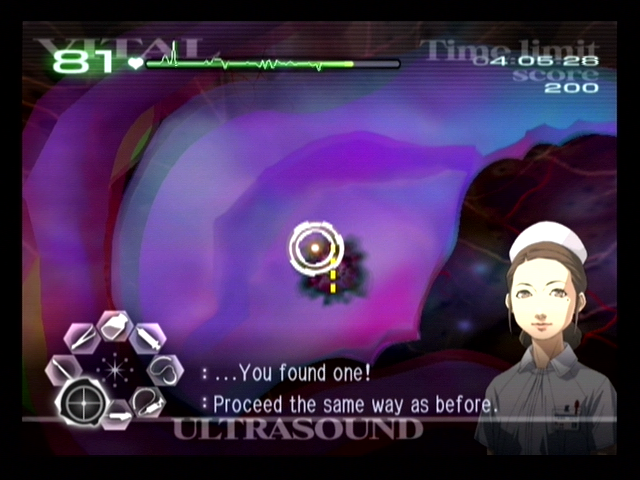
Surgery runs from a first-person view, against the clock and the patient’s vitals. The Wii Remote takes the stylus’s old role — scalpel, stitches, the surgical laser for small tumours, drainage for blood pools that obscure the field — while the Nunchuk’s stick spins a radial menu to select tools, and some instruments, the forceps and the defibrillator among them, demand both hands in tandem. Antibiotic gel is the quiet workhorse, treating minor injuries and holding infection back while you work. The operation list widens beyond the DS original: organ transplants and broken-bone repairs join the carried-over extractions and surface work, and one operation takes place on an aeroplane, turbulence shaking the field mid-procedure. Every operation ends graded on time and precision. And when a case turns impossible, each surgeon carries the series’ signature: the Healing Touch, activated by drawing a star on-screen with the Remote — Derek Stiles slows time itself, while Naomi Kimishima restores her patient’s health with every successful action.
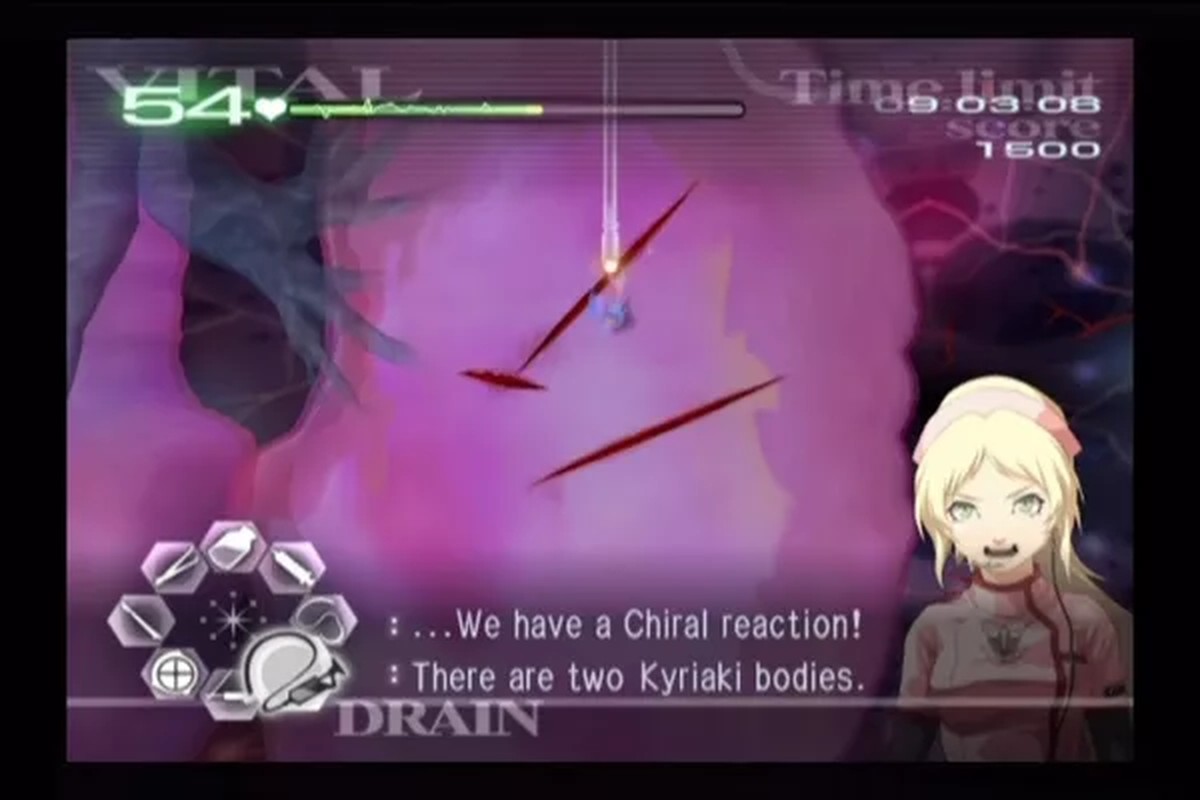
Two doctors, one Healing Touch
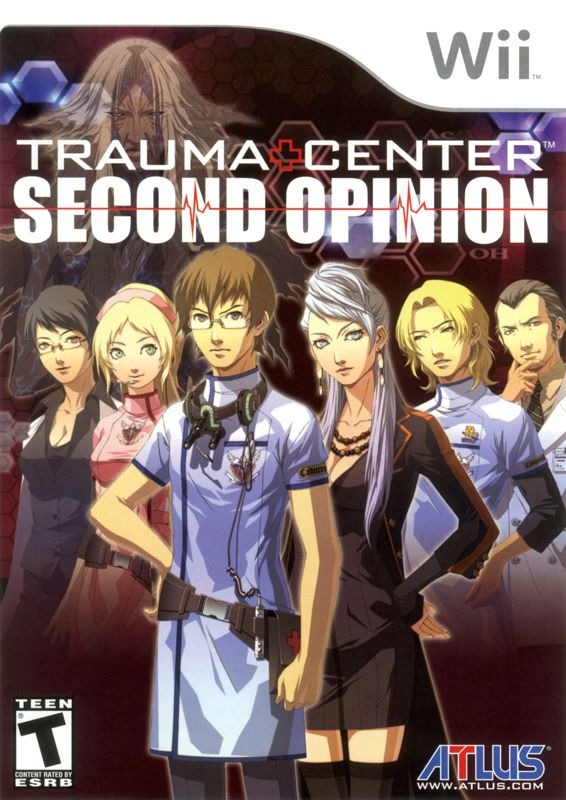
The story is set in 2018, a near future where AIDS and cancer are easily cured — and where a man-made parasitic disease called GUILT (Gangliated Utrophin Immuno Latency Toxin) is being spread as a biological weapon by the medical terrorist group Delphi. Derek Stiles, a young surgeon whose Healing Touch emerges under pressure, joins the medical conglomerate Caduceus to fight it, aided by his assistant Angie Thompson, in a campaign that ends with a raid on Delphi’s headquarters and the discovery of its founder, Adam, hosting every GUILT strain in a vegetative state. The remake’s reason to exist is its second thread: Naomi Kimishima, working under the alias “Nozomi Weaver” — Atlus USA’s pun on “Wii” — a surgeon exiled from the profession for her own Healing Touch and quietly working for Delphi itself. Her missions reframe the original plot from the other side of the law, and a new sixth chapter brings both doctors to Caduceus Europe, where a regenerative “Z-Cell” culture mutates into an airborne GUILT strain and Stiles himself ends up on Kimishima’s table. Kimishima very nearly did not exist in this form: the team first sketched the second doctor as a “dark” male counterpart to Stiles, found the idea collided with an existing supporting character, and rebuilt her through talks with scenario writer Shogo Isogai into something better — a surgeon driven by business rather than passion on the surface, exiled for the gift she shares with the hero, and played in Japan by Akeno Watanabe, whose performance Kanada credited for the character’s force. She went on to anchor later series entries in her own right, the remake’s addition outliving the remake. Atlus USA tightened the original script for the localisation and wove the new material through it; the subtitle itself — chosen over alternatives like “Relapsed” — flags both the second game and the second doctor.
The launch title the critics actually agreed on
The series it secured ran on for years: Trauma Center: New Blood followed on Wii in 2007, Under the Knife 2 returned to the DS, and the line closed with Trauma Team in 2010, which widened the operating theatre into a full hospital drama. None of them displaced Second Opinion as the series’ centre of gravity — it is the entry that carried a handheld experiment onto a console launch and proved the experiment was the point. GamePro would later place it among the best Wii games outright, a remarkable shelf for a visual novel about surgery that most launch buyers had walked past on their way to the Zelda display.
Where the Wii’s other launch experiments split reviewers, Second Opinion united them: 80 on Metacritic across 49 reviews, 80.64 per cent on GameRankings, Eurogamer at 9/10, GameSpot and IGN at 8/10, Nintendo World Report at 8.5. GameSpot’s Greg Kasavin called it “about as unorthodox of a launch title for a new game system as they come”; IGN’s Mark Bozon argued it did for the Wii what the original had done for the DS as a proof of a control scheme; Eurogamer‘s Keza MacDonald wrote that it would dispel scepticism about motion control altogether. The recurring complaints were real — no widescreen, difficulty spikes, a melodramatic story delivered in static portraits — and they did not dent the verdict. Sales followed the reviews rather than the genre: around 200,000 copies in North America by November 2007, a place in the region’s top ten Wii sellers into the following January, and roughly 400,000 copies across North America and Europe by October 2008 — against just over 23,400 in Japan by the end of 2006, where director Kanada noted the feedback was enthusiastic even when the numbers were not.
Why Trauma Center: Second Opinion at 20 still matters
Because it proved, on day one, that the Wii Remote was not a toy substitute for real controls but a tool for kinds of play no pad could offer. Atlus took the most intimate simulation on the DS — your hand, inside a stranger’s body, racing a failing heart — and rebuilt it for a living room without losing the intimacy, then used the remake to ask a harder question through Kimishima: what the Healing Touch costs the people who carry it. Difficulty options, added after the DS original’s punishing reputation, opened the theatre doors wider. Twenty years on, launch line-ups still chase spectacle. Second Opinion chased a heartbeat, and caught it.
— Chip
For more launches from this date, see This Day in Gaming History: November 19.