At a glance — Game: Ultima IX: Ascension · Developer: Origin Systems · Publisher: Electronic Arts · Original release: November 24, 1999 (North America) · Original platforms: PC (Windows) · Genre: Role-playing · Director: Richard Garriott · Music: George Oldziey
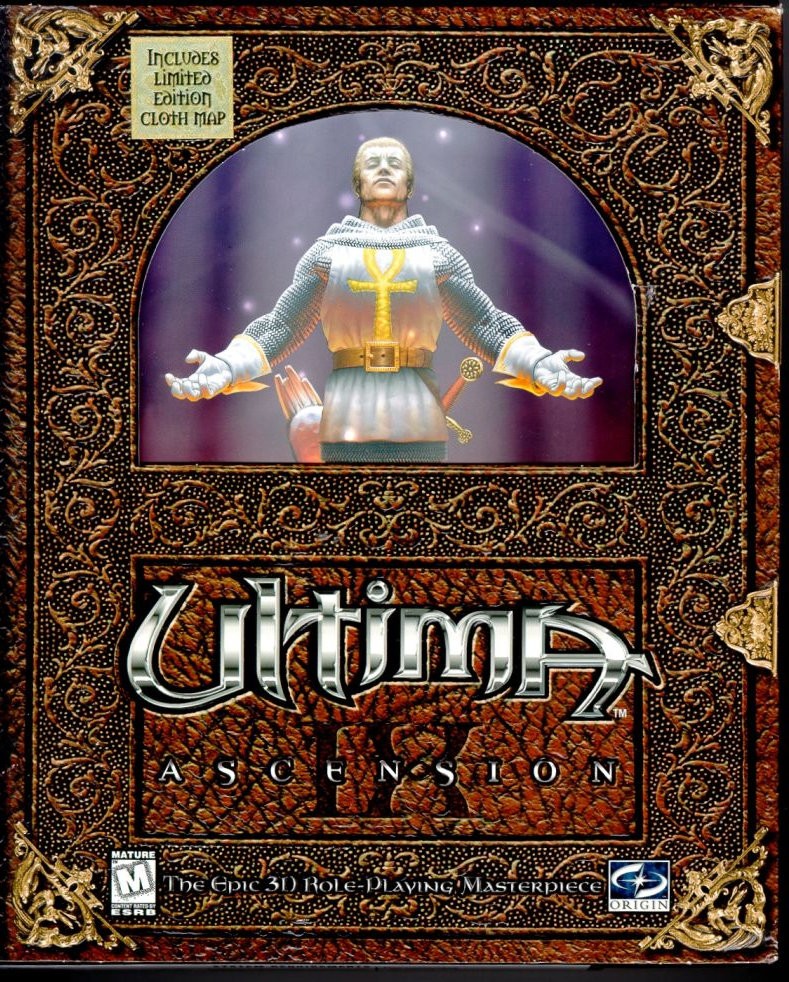
Nothing on the PC shelf in the autumn of 1999 looked like this box. Ultima IX: Ascension came dressed as a leather-bound tome. Gold corners. A sticker on the front promising a limited edition cloth map inside. It had been five years since Ultima VIII: Pagan. Eighteen years since the series began. And this was the finale. The ninth chapter. The Avatar’s last journey. The end of the Guardian trilogy, and of Britannia as players had known it since childhood. On November 24, 1999, North American players finally got to open the book.
What they found inside split the most loyal fanbase in PC gaming straight down the middle. Ultima IX: Ascension was the first fully 3D Ultima. One seamless world. You could walk it end to end. It was also one of the buggiest big launches of the decade. It crashed on machines that ran everything else fine. And its hero kept asking basic questions about a world he had saved eight times. Twenty-seven years on, the shouting has stopped. Something more interesting has replaced it. The flaws are still flaws. But the ambition underneath them is a lot easier to see now.
Four Different Games Called Ultima IX: Ascension
First thing to understand about Ascension: it was built at least four times. Development started on the Ultima VIII engine. The Avatar was headed for the Guardian’s homeworld. Then Pagan landed badly. Richard Garriott went to Computer Gaming World in August 1994 with a promise. The next game would go back to the Virtues. Back to Britannia. Back to what Ultima was. Warren Spector was put in charge of the early work. The second version, built through 1995 to 1997, kept that promise. Garriott’s own notes on it shipped inside the Ultima VIII 2.12 patch, in a file called fans.txt. And by early 1996 the press was being shown a software-rendered 3D engine, with an overhead camera you could rotate and zoom.
Then Ultima Online happened. Its beta caught fire in late 1996, and Origin pulled most of the Ascension team onto it. Work on the finale didn’t really resume until late 1997. By then the engine had aged. The schedule had not. Ed del Castillo, a Command & Conquer producer, was brought in. The third build went all-in on hardware-accelerated 3D, with an over-the-shoulder camera. The party of companions was cut. The Avatar would travel alone. The option to play a female Avatar was cut too, a casualty of the art and voice workload. In early 1998, lead designer Bob White and other designers left Origin. By mid-1998 del Castillo had resigned over what were called philosophical differences. Garriott had taken direct control. Seth Mendelsohn had become lead designer. And the story was rewritten around the Avatar’s final visit to Britannia, with expensive, already-finished cinematics repurposed into entirely new contexts to fit the new plot.
The Plot That Leaked
Two weeks after launch, the road not taken went public. On December 9, 1999, Bob White’s earlier synopsis was posted to the Ultima Horizons message board, with White’s permission. He had developed it with Garriott, John Watson and Brian Martin. In that version the Avatar never returns to Earth at all. Lord British, enfeebled, watches his kingdom fracture. The lords of Moonglow, Britain and Jhelom form a tribunal and slide toward civil war. Blackthorn is unmasked and executed. And the Guardian’s endgame is Armageddon itself. Britannia is destroyed while its people evacuate to Skara Brae, in scenes White compared to Roger Dean’s paintings for the Yessongs album.
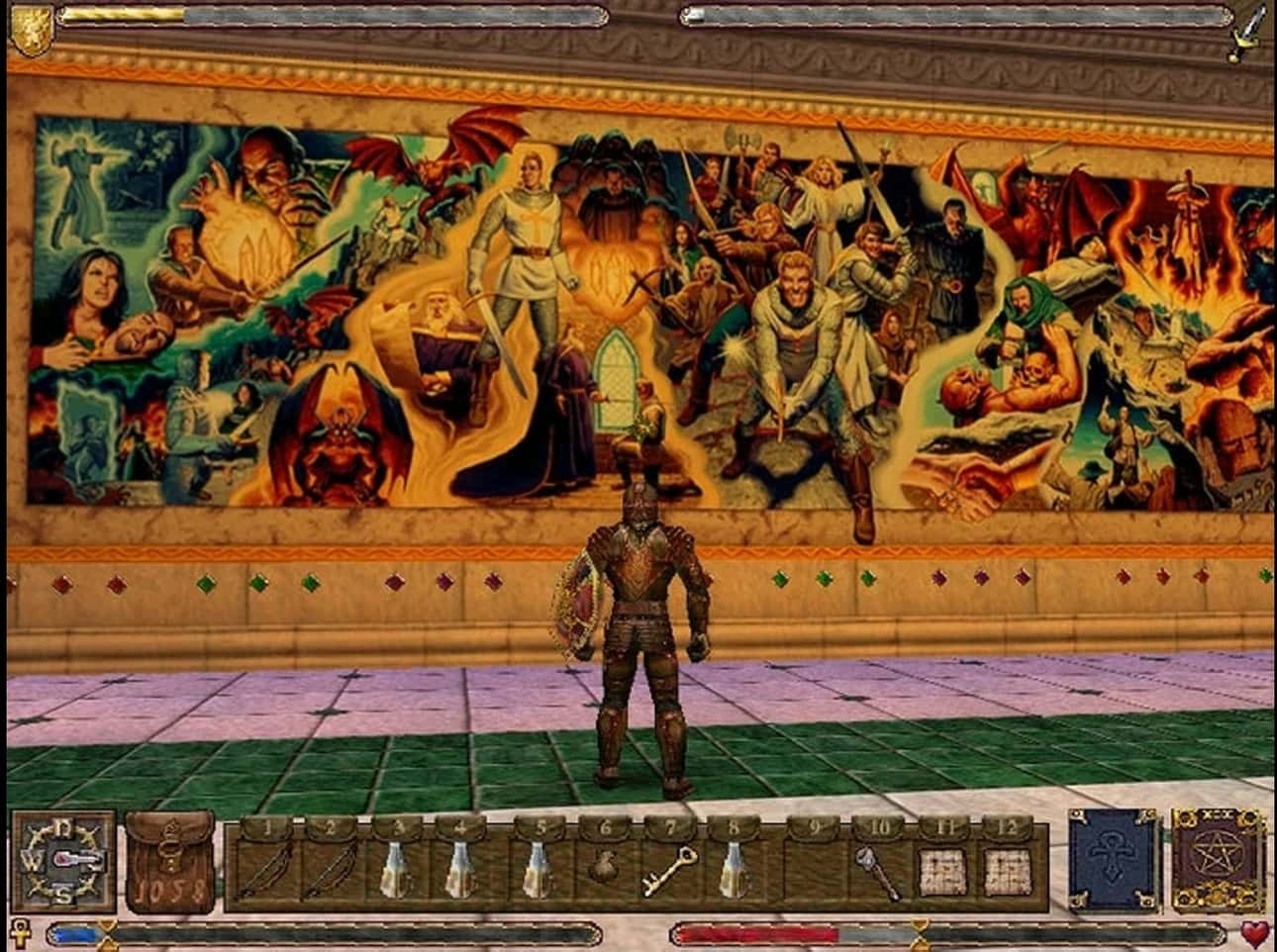
Fans have argued about that ending ever since. The shipped plot kept the broad shape. The Guardian raises eight columns across Britannia, each one twisting a Virtue into its opposite, town by town. But everything aims at a single revelation: the Guardian is the Avatar’s own dark half, split from him years before. It’s a good idea. It’s also an idea the shipped game has to explain to the Avatar himself. Repeatedly. Because the script was written for an audience that had never played an Ultima. Which brings us to the line.
A Britannia Built for a 3D Card
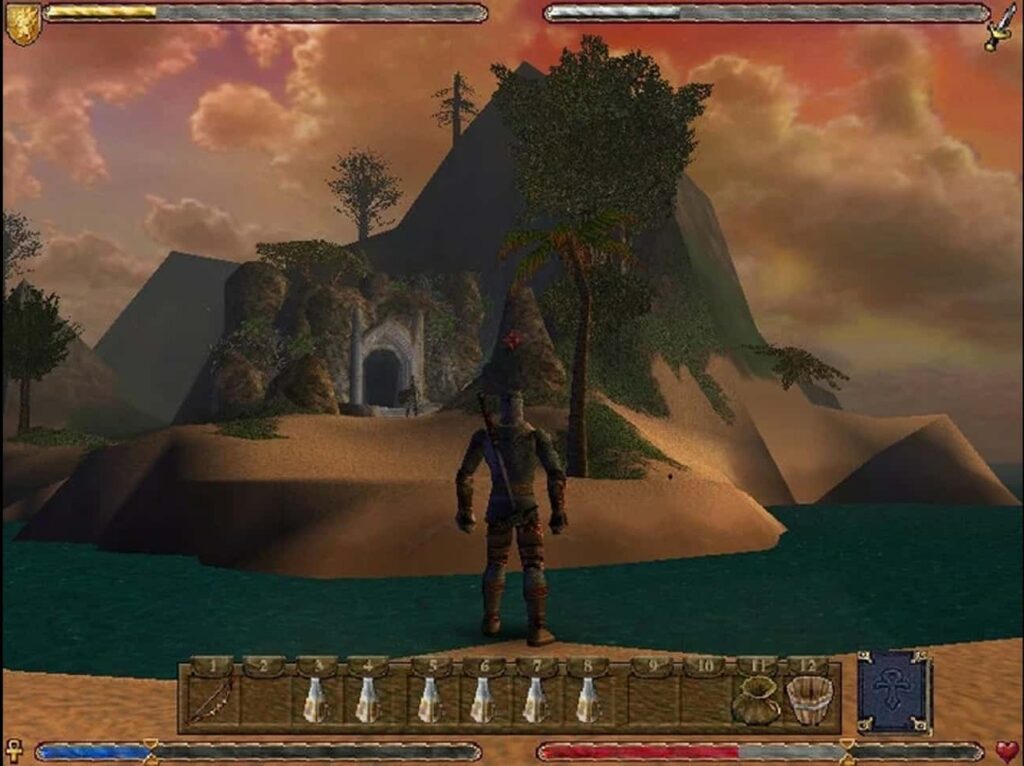
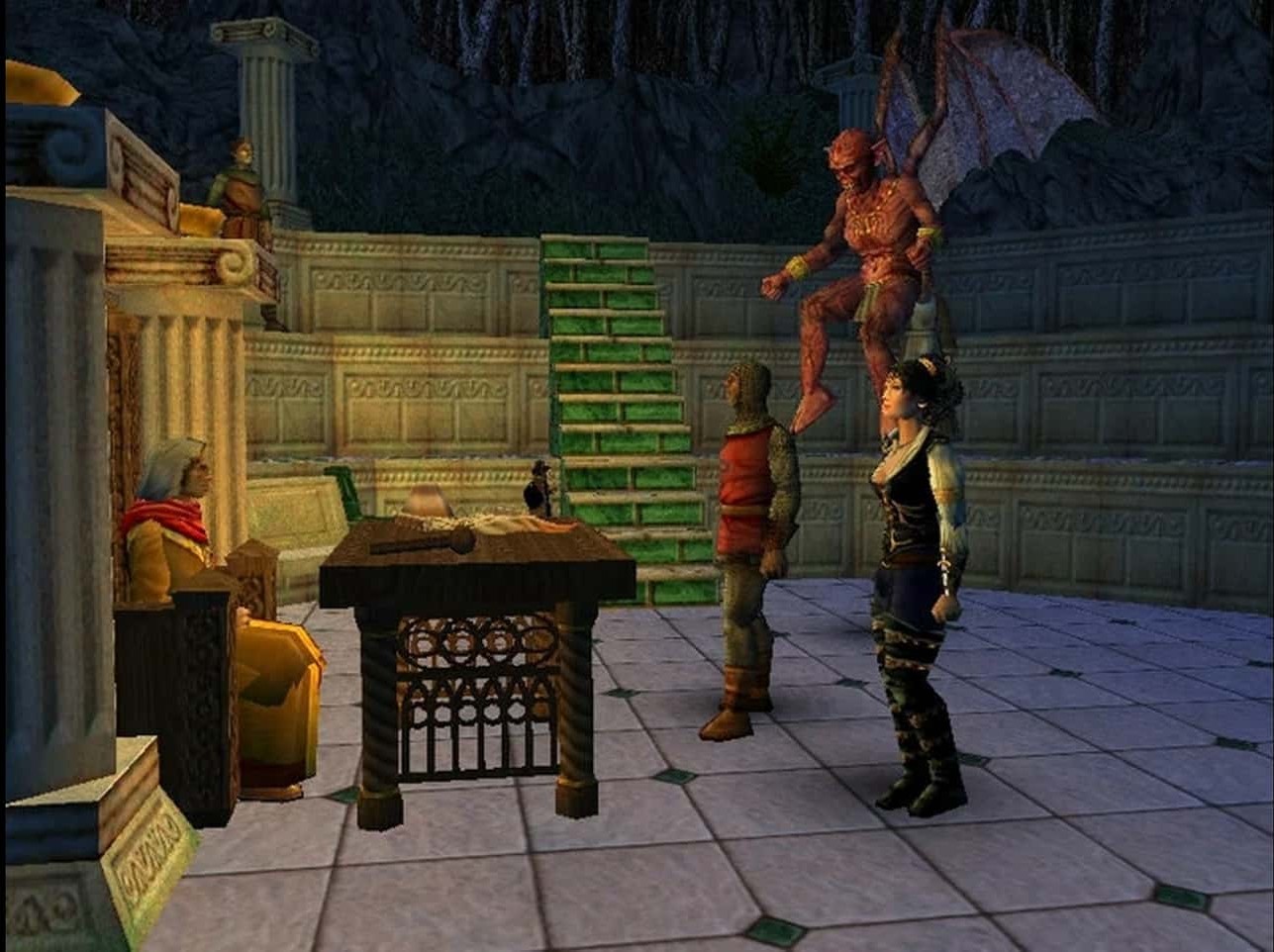
Give the shipped game its due first. Ultima IX: Ascension built Britannia as one continuous 3D world. No separate town screens. No loading seams between the road and the dungeon. Weather. A working day and night. Nothing in the series had attempted that. The cost was scale. This Britannia is a miniature, and Britain, the capital city of the realm, amounts to a handful of buildings. Long-time players felt the shrinkage right away. They weren’t wrong to.
It also asked more of your PC than almost anything else on the shelf. The install guide’s minimum is a Pentium II 266 with 64 MB of RAM and an 8 MB 3D accelerator. A 3D card wasn’t an upgrade. It was a requirement. The recommended machine is a Pentium II 400 with 128 MB of RAM and a 16 MB Voodoo3. The game was built around 3dfx’s Glide, and its Direct3D path was the troubled one. One contemporary reviewer flatly reported the game almost totally incompatible with Direct3D and played it in Glide mode instead. If your 1999 rig was a year old, Ascension did not run badly. It barely ran.
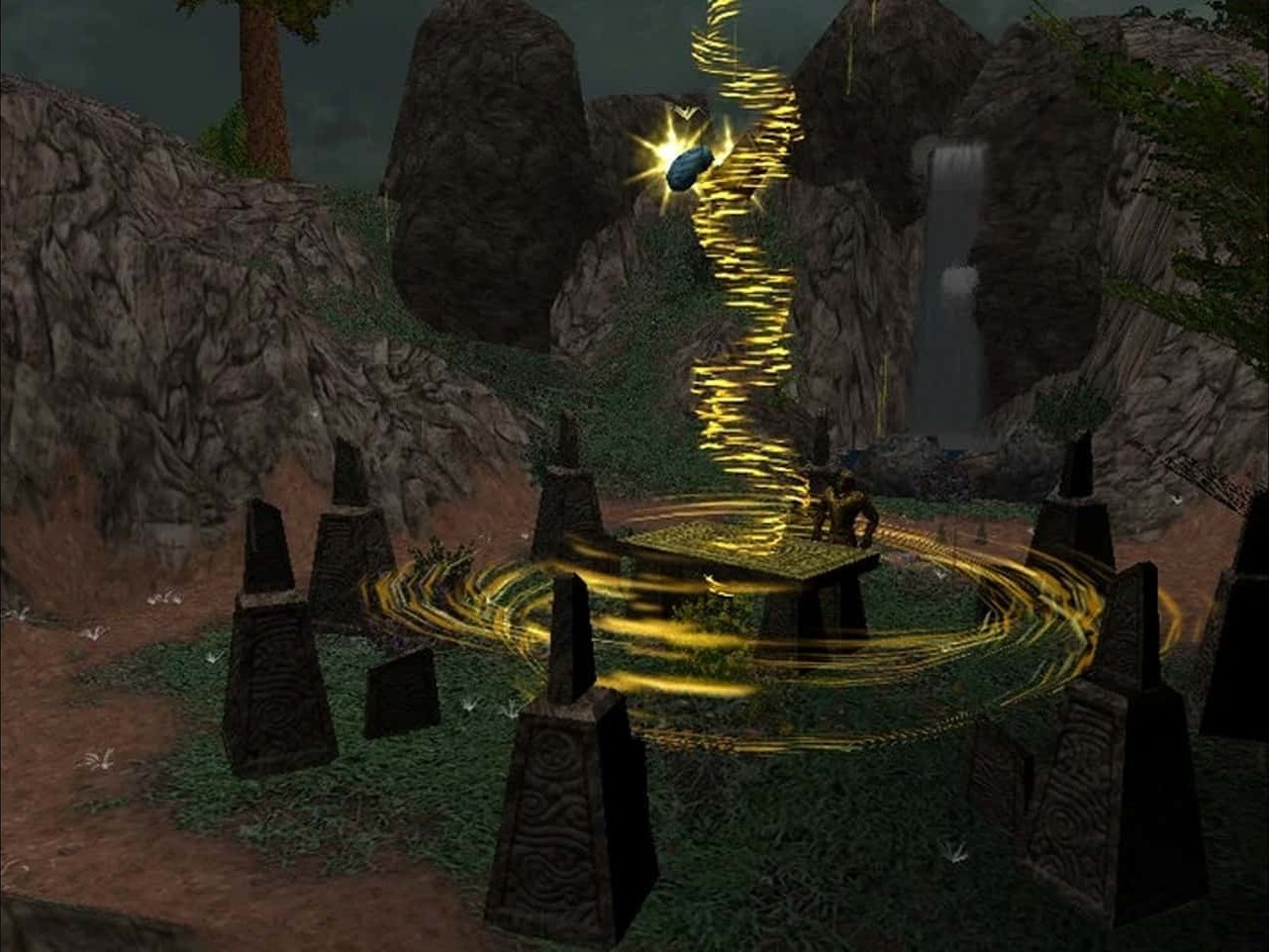
Two things from that winter have aged without a scratch. The first is George Oldziey’s score. It was the first Ultima soundtrack recorded with a live orchestra, forty pieces strong, carrying the old themes, “Stones” and “Rule Britannia” among them, inside the new material. The second is the box on your shelf. The Journal. The Spellbook. The cloth map. The eight Cards of Virtue. And if you were a Dragon, a member of the Ultima Dragons fan club, for whom the oversized Dragon Edition was named, there was more. The Ultima Collection on CD. The soundtrack. Tarot cards. An ankh pendant. Origin’s feelies were the best in the business, and they went out swinging.
“What’s a Paladin?”
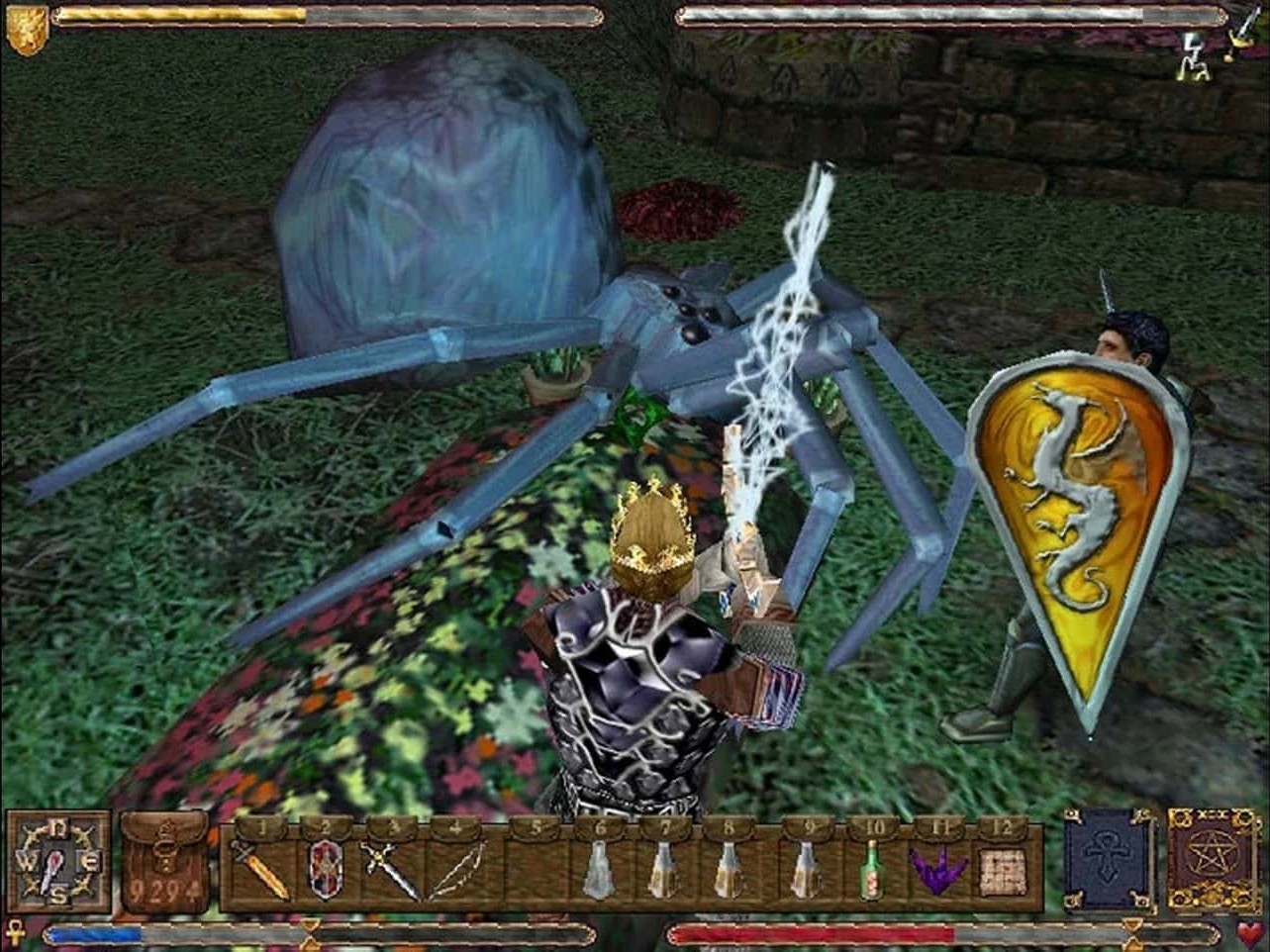
The launch was rough. Honestly hard to overstate how rough. The first pressing was crash-prone and slow. And the post-mortems agree on the ugliest detail: the design team objected strongly to releasing when they did, and EA management enforced the date anyway. Patches would fix a great deal of it. What no patch could fix was the writing’s reset button. To make the finale welcoming to newcomers, the script re-explains Britannia to the man who had saved it eight times. So the Avatar of legend turns to a companion and asks, in all sincerity, “What’s a paladin?” Twenty-seven years later it is still the fanbase’s shorthand for the whole heartbreak. A series famous for remembering everything, forgetting itself.
The reviews landed exactly as split as the players. PC Gamer US gave it 80% and a Best RPG of 1999 nomination. Game Informer scored it 8.75 out of 10. Computer Gaming World gave it two and a half stars under the headline “Premature Ascension.” GameSpot gave it a 6.4, and the magazine then named it the Most Disappointing Game of 1999. Sales told the same story. Around 75,000 copies in the United States by August 2000. A respectable number for some games. Nowhere near enough for the finale of Ultima.
“On a top system with bug patches applied, Ultima IX is one of the best roleplaying games of all time.” — PC Gamer US, nominating it for Best RPG of 1999
The Long Road Back
Origin kept working anyway. Official patches ran to version 1.18f. The final official patch, in February 2000, came with something unheard of: a CD exchange programme. Mail in your earlier disc and you would receive the updated version, bundled with Ultima Online: Renaissance. One more patch followed. Version 1.19f, unofficial, passed to fan sites by programmer Bill Randolph, who still had access to the source code. It even removed the SafeDisc copy protection. When a game’s own programmer is passing fixes to the fans a year after launch, the fans take the hint and get to work. The Ultima: The Reconstruction project rewrote the game’s dialogue and rebalanced its economy and monsters. The Forgotten World team kept building. GOG brought Ascension back on August 23, 2012. And in November 2014 the community at the Ultima Codex archived the game’s source code, obtained from a former developer, so it could never be lost.
The bill, though, had already come due. Ultima IX’s reception, stacked on top of Ultima VIII’s, effectively ended the franchise. The other Ultima projects in development were cancelled. Garriott left Origin shortly afterwards. EA closed the studio for good in 2004. No mainline Ultima has followed since. The series that taught PC gaming what a role-playing game could be ended not with a triumph but with a salvage operation. Carried out, fittingly, by the players.
So what is Ultima IX: Ascension at 27? Not the disaster of December 1999. Not a secret masterpiece either. It is an honest attempt to close an eighteen-year saga, made by a team that was pulled apart and rebuilt four times, and shipped before it was ready by a publisher that would not wait. Play the patched GOG build today and the bones show through. A real Britannia. A real ending. A score that still swells in the right places. Britannia deserved a better goodbye party. It got a flawed, heartfelt one instead. A lot of us are okay with that now.
How to play it today
Start with GOG. It is $4.99 (checked November 23, 2026) and it is the least-fuss copy there is. GOG’s build sits on the fan-made 1.19f patch. Glide emulation is built in. Compatibility is verified on Windows 10 and 11. It is DRM-free, too. No activation. No connection needed to play. The extras are worth having. The manual, the spellbook and the quick reference card are all included, along with design documents and the tarot cards.
There is a newer option as well. On November 5 of this year, EA brought the Ultima series to Steam, and Ascension came with it. Same $4.99 there. It is on the EA app too. The Steam listing asks for Windows 10 and 2 GB of space. If your library already lives in Steam, that copy is fine. The GOG build is still the one built on 1.19f.
Still got the 1999 discs? They can work, but they need help. The game shipped with SafeDisc copy protection. Microsoft dropped support for SafeDisc years ago, so a clean install will not even start on a modern PC. The fix is the unofficial 1.19f patch. It removes the SafeDisc check, improves Direct3D performance and fixes a pile of bugs. On top of that goes 1.19h, from the Forgotten World team. It repairs broken triggers. It fixes the town music in Minoc, Valoria and Skara Brae. It puts Mariah and Jaana back where they belong. The Ultima Codex wiki hosts both patches and explains them.
One last curiosity. Ultima IX: Redemption was the fan remake meant to give the saga a different ending. The original project was cancelled in 2016, after fifteen years of work. This month, Chlorthos Dragon, one of its original team, started posting progress videos of a new attempt built on the Ultima Online engine. There is no download yet. It is not Ascension, and it may never be finished. But the ending the fans would not let go of is still being worked on, twenty-seven years later.
— Chip
See everything else that landed on November 24 in This Day in Gaming History: November 24.