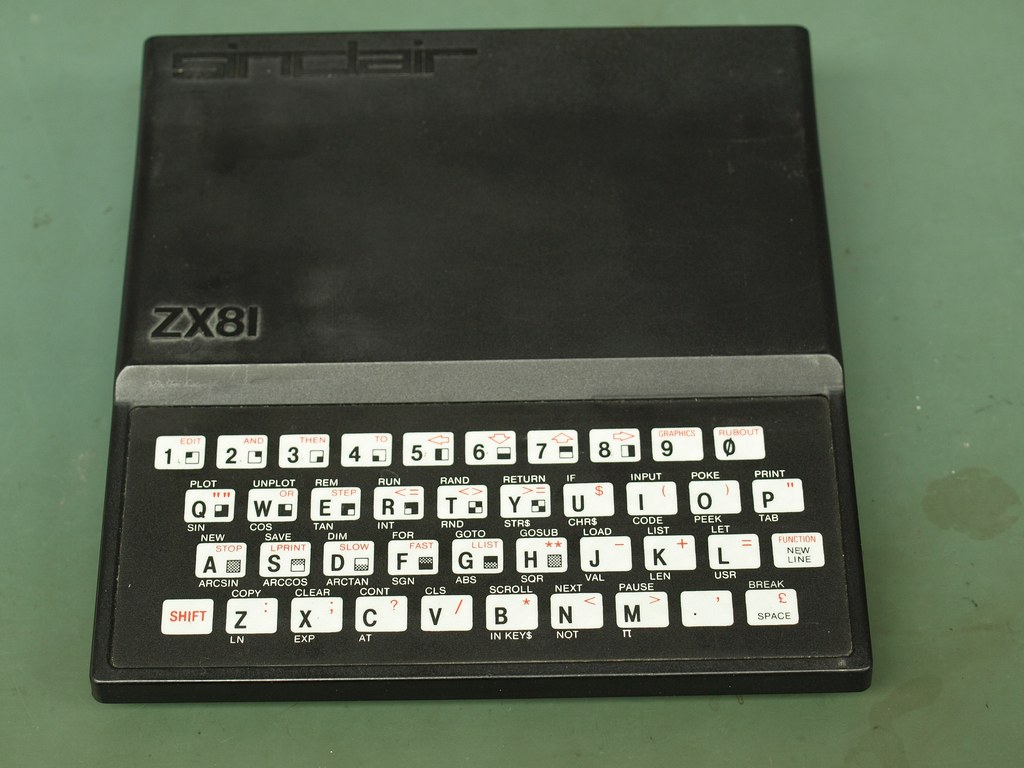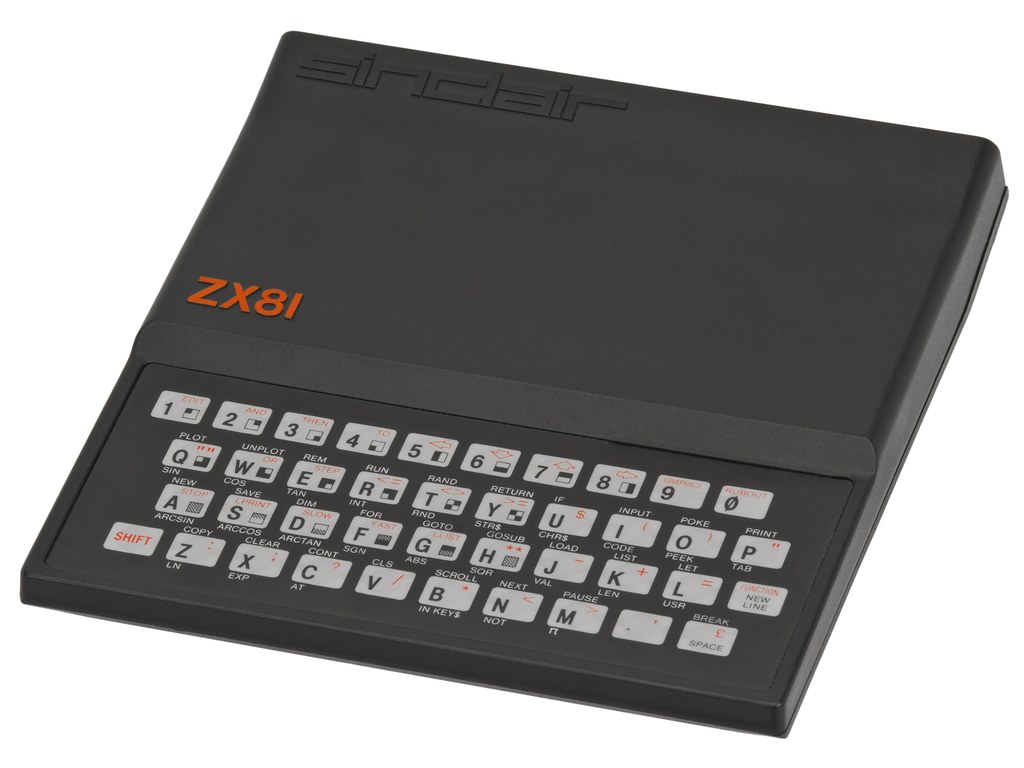
The most exclusive club in British computing had a membership requirement of one kilobyte. The ZX81 shipped with 1,024 bytes of RAM — and that kilobyte was not all program space, because the machine’s screen lived in RAM too, a display file that grew as the picture filled. To write a real program for the unexpanded machine was to accept a budget closer to seven hundred usable bytes and a set of contortions no other scene demanded: code stored inside BASIC REM statements, the display file coaxed into doubling as data, every byte argued over like water in a desert. The reward for accepting was membership of the 1K scene — the programmers who treated the smallest configuration of the cheapest computer as a proving ground, and produced, within it, some of the most admired code of the 8-bit age.
The scene’s monument stands at the front of this package: David Horne’s 1K ZX Chess, published by Artic Computing in 1982, which plays legal chess against a computer opponent in 672 bytes of code — the smallest chess implementation on any computer for thirty-three years, until BootChess undercut it in 2015 as an act of homage. Horne’s achievement was the scene’s philosophy in its purest form: not miniaturisation for its own sake, but the discovery that an apparently impossible program becomes possible when every feature is priced honestly. No castling, no promotion, no opening book — and in exchange, chess, on the television, on a machine the sceptics said could do nothing constructive. Horne then published the entire source code in Your Computer magazine across 1982 and 1983, turning his commercial cassette into the scene’s textbook. That publishing act matters: the 1K scene was never a trade-secret culture. It was a conversation, conducted in print, in hex, between people showing each other how the trick was done.

The economy of a kilobyte
To understand the scene, understand the arithmetic. A ZX81 program shares its kilobyte with the system variables, the variables of the program itself, and the display file — 24 lines of up to 33 bytes, expanding and contracting with the picture. In FAST mode the display could be abandoned to computation; in SLOW mode, the machine generated the picture and ran code in the gaps, the era’s characteristic flicker between thinking and showing. Every 1K programmer became an economist of this memory map: the REM statement at line 1 as a vault for machine code (its length itself a variable to be managed), RAMTOP lowered to fence off space, the display file collapsed to a skeleton when the screen was not needed. The techniques read, today, like a system of monastic rules — and like monastic rules, they existed to make a certain kind of attention possible. When everything costs, everything is chosen.
The scene’s output makes the case for the rules. Artic’s 1K Games Pack put a whole cassette of playable games inside the discipline. Chess, as noted, reached its world-record minimum. Type-in culture thrived at exactly this scale: magazine listings a page long, games a reader could key in an evening — a Meteors type-in in the American Timex literature walked readers through building an arcade game with warp drive on the unexpanded machine, teaching display-file techniques as it went, because in 1K the techniques were the curriculum. The constraint produced a literature: articles explaining byte-saving as an art, listings annotated like poems, rival programmers shaving each other’s routines in the letters pages.
Sixteen kilobytes made the ZX81 useful. One kilobyte made it interesting. The 1K scene treated memory the way poets treat the sonnet: the form is the cruelty, and the cruelty is the point.
Why small was beautiful
There is a temptation to file the 1K scene as nostalgia for poverty — the computing equivalent of admiring a famine. Resist it by noticing what the scene actually was: the first British demoscene in spirit. The values are identical across forty years — impossible effects on fixed hardware, size as a competitive category, code shared and dissected in public, prestige measured in bytes saved rather than features added. When BootChess’s author finally broke Horne’s record in 2015, the coverage in ChessBase and the sizecoding community treated the ZX81 program as the reigning champion of a living sport, and the new program — 487 bytes, on modern hardware — was framed by its own creator as homage. A record set on a £49.95 machine in 1982 remained the one to beat deep into the era of the smartphone. That is not nostalgia. That is a discipline’s founding result, holding.

The scene also had a democratic edge that its 16K mainstream lacked. A 1K program could be a type-in, and a type-in cost the price of a magazine; a schoolchild with the basic machine — the cheapest computer in the country in its cheapest form — could hold the scene’s entire canon in a folder of listings. The RAM pack divided ZX81 owners into classes of memory. The 1K scene was the leveller: the one arena where the unexpanded machine was not the poor relation but the whole point, and where the richest owner in Britain had exactly the same 1,024 bytes as the poorest.
Ink, paper and one kilobyte
The scene’s medium deserves its own paragraph, because the 1K culture was a print culture. The magazines — Sinclair User, ZX Computing, Your Computer and their rivals — were the scene’s servers: listings to type, routines to steal, letters arguing over a saved byte the way other magazines’ letters argued over football. Sinclair User’s very first issue, in April 1982, mixed its software reviews with the small change of the 1K world — chess programs assessed, readers’ games exchanged, a Leicester reader’s Chess II game promised a future airing — all of it conducted at a scale where a reader’s entire contribution could be thirty lines of BASIC and a PEEK. The type-in was the perfect 1K distribution format: no cassette to duplicate, no shop to stock it, the program travelling as ink and arriving as knowledge, because a reader who typed a 1K game had, by the last line, read it more closely than any manual could teach. The scene did not merely tolerate its constraint; it published in it, and the publishing is why the constraint’s canon survived to be argued over forty years later.
The kilobyte endures
Modern sizecoding — the demoscene’s tiny-intro competitions, the boot-sector games, the chess programs still chasing Horne’s ghost — descends from this room. So does something subtler in British software culture: the belief that constraints are a genre, that the interesting question is never what a machine can do but what it can be made to do. The ZX81’s kilobyte was the smallest room British computing ever worked in. The work done inside it — a chess world record, a literature of technique, a scene that shared everything — is out of all proportion to 1,024 bytes. Which was, of course, exactly the scene’s thesis.