
The ZX81 is the easiest classic computer in Britain to buy and one of the easiest to buy badly — not because fakes abound, but because 1.5 million were made, they are forty-five years old, and the difference between a joyful £50 wedge and a dead one is a handful of checks that take ten minutes. This guide covers what to buy (ZX81 or its American sibling), what to pay in hedged 2026 terms, the five checks that matter — picture, keyboard, RAM pack, power and board — and the modern quality-of-life upgrades that turn a museum piece into a machine you will actually use. Prices below are ranges, not listings: the ZX81 market is a car-boot and auction market, and any specific number ages in weeks.
Which machine: ZX81, kit or Timex?
The ready-built ZX81 is the default buy: manufactured by Timex in Dundee, sold from March 1981 at £69.95, and produced in such numbers that working examples remain common. Expect to pay, in 2026, roughly £40–£90 for an unboxed working machine, more — think £100–£160 — for a clean boxed example with manual and leads, and a premium beyond that for the earliest issues in exceptional condition. The kit version, sold at £49.95 for home assembly, is the collector’s variant: build quality varies with the original builder, so a kit machine is a small biography of a stranger’s soldering — charming, but test it twice as hard. The Timex Sinclair 1000 is the value route for experimenters: the same machine with 2K of RAM and an NTSC modulator, common in North America at roughly $30–$70, but remember its picture is tuned for American televisions — in the UK it needs a compatible display or a composite modification to make sense. A fourth option, the Timex Sinclair 1500 (16K built in, better case and keyboard), costs more — roughly $60–$120 — and solves two ZX81 problems at once, at the price of being a different, rarer object.
The five checks
1. The picture. The ZX81 talks to a television through an RF modulator, and period televisions are scarcer than ZX81s. Ask the seller for a photograph of the machine running — the inverse-video K cursor on screen is the ZX81’s hello — or budget for the standard fix: a composite video modification, a small, well-documented board-level change that most retro technicians will perform for roughly the price of a pub lunch, which makes the machine usable on any modern display. A machine sold as “untested, no TV to test with” should be priced as faulty, whatever the listing says.
2. The keyboard. The membrane keyboard is the machine’s wear item: forty printed keys on a flat sheet, connected by fragile ribbon tails that crack with age and heat. Test every key if you possibly can — a dead row or column is a membrane replacement, available from the retro trade as new-old-stock and modern reproductions at roughly £15–£30, plus the nerve to open the case. Cosmetically tired keyboards are normal. Electrically silent ones are a negotiation.
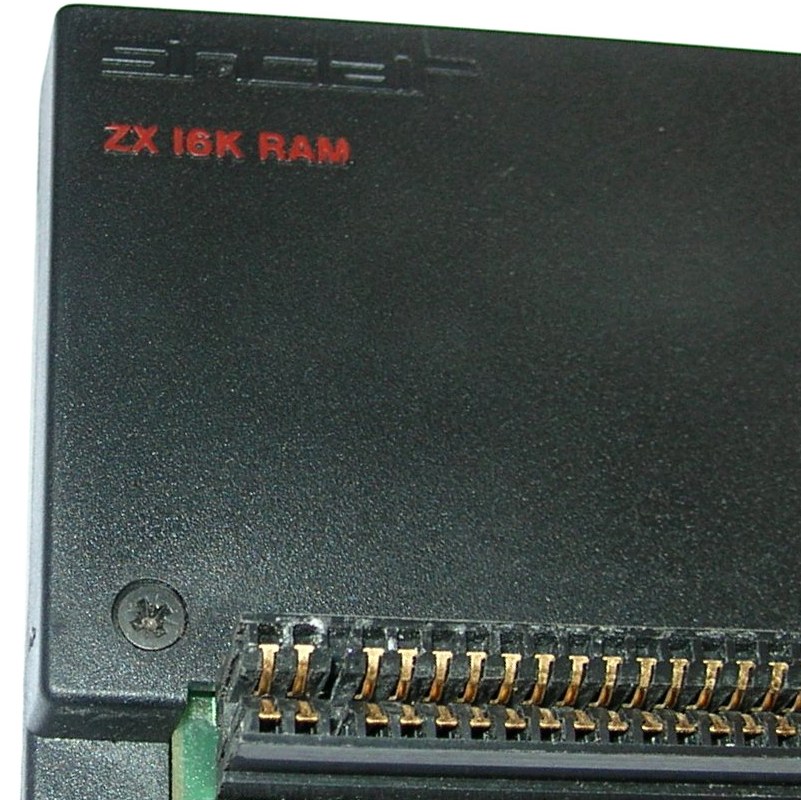
3. The RAM pack seating. If a 16K RAM pack is included — and you want one; nearly every classic game in this package needs it — inspect the edge connector and test the combination under a long program, not just at switch-on. The famous wobble is a contact problem: check for a pack that sits square and tight, ask about crashes, and consider the period-correct third-party packs (the wedge-shaped dK’Tronics style) or modern equivalents if you plan to type long listings. Packs alone change hands at roughly £20–£45; modern SD-card and memory devices that replace both pack and cassettes entirely, the ZXpand family and its successors, run higher — roughly £60–£110 — and are the single best usability upgrade the machine has.

4. Power. The ZX81 wants 9V DC from its original supply or a modern regulated equivalent, and it runs warm: the internal regulator and its heatsink are the machine’s hot spot and a common failure source. A seller’s photo of the machine running for half an hour is worth more than one of it booting. Unexplained resets under load are usually power or RAM-pack contact; both are fixable, neither should be paid for as “working.”
5. The board and case. Open it — five screws — and look. You want: no battery (there is none, a mercy), no corrosion, the ULA present and correct (it is the one chip that is genuinely hard to replace; ULA failures price a machine as spares), and no enthusiastic amateur modifications beyond the composite mod. Case-wise, the black wedge yellows less than most, but stress cracks around the rear edge — the expansion slot’s hard life — are common and cosmetic. A complete manual adds real value; the ZX81 manual is a superb BASIC course and collectors know it.
Software and first purchases
Cassettes remain the authentic route and the cheap one: common ZX81 tapes — the Psion range, Artic adventures, Bug-Byte classics — change hands at roughly £3–£10 each, with the famous names (a tidy 3D Monster Maze in either its J. K. Greye or New Generation inlay) commanding more, roughly £10–£25 depending on condition. Test any tape on your own deck and temper expectations: forty-year-old cassettes shed, stretch and occasionally simply decline. Most buyers end up hybrid — original tapes for the shelf and the ritual, an SD-based device or emulator for the daily driving — and that is not heresy, it is how the machines survive. Loading from a phone or computer audio file is the free middle path and works better than anyone in 1981 would believe.

Where to buy in 2026
The market has three tiers, and they price risk differently. Auction sites carry the volume: untested machines from house clearances at the bottom (roughly £25–£50, priced as the lottery tickets they are), seller-tested working machines in the middle, and boxed, documented examples at the top. Retro dealers and the specialist Sinclair trade charge more — typically a 20–40 percent premium over auction prices — and earn it: a dealer machine has usually been keyboard-tested, run-in, and guaranteed to arrive working, which on a forty-five-year-old computer is a service, not a markup. Computer fairs and car-boot sales remain the romance option and the source of the best stories; bring a mental checklist, a willingness to walk away, and the assumption that “it worked when I last used it, in 1987” is a statement about 1987. Whichever tier you choose, the seller’s photographs matter more than the seller’s adjectives: you want the machine powered, the K cursor showing, the keyboard close enough to read, and the RAM pack — if included — seated in its slot.
Accessories worth having
Three period accessories genuinely improve the machine rather than merely completing the shelf. The ZX Printer — Sinclair’s little thermal printer, printing on silvered paper with a spark — is the most characterful: roughly £30–£60 for a working unit, with the warning that its paper is a consumable the retro trade still supplies and its output fades exactly as it did in 1982, which collectors count as authenticity. A period joystick interface turns the arcade conversions from keyboard exercises into games, at roughly £15–£35, and is the correct second purchase after the RAM pack. Third, the humble cassette deck: the ZX81 loads from ordinary audio, and a clean, serviced mono deck with a volume control you trust will save more evenings than any other purchase in this guide. Beyond the period pieces, the modern essentials are a regulated 9V supply, a composite lead for a modified machine, and — the indulgence that stops being one — a keyboard overlay or modern replacement membrane on hand against the day a key row retires.
Emulation first?
A final, heretical paragraph for the undecided: emulate first. The ZX81’s canon — the three masterpieces in this package and the ten gems beside them — runs accurately in free emulators, and an evening with 3D Monster Maze on a laptop will tell you, at no cost and no risk, whether the wedge’s particular austere magic is for you. If it is, the hardware purchase becomes what it should be: not a gamble on nostalgia but the acquisition of the correct instrument for music you already love, membrane keyboard, wobbling pack and all. If it is not, you have lost an evening to one of the great games and gained a firm opinion, which in this hobby counts as a bargain.
A note on variants and fakes
Two reassurances and one warning. The reassurances: the ZX81 is too cheap, and was made in too great a quantity, to have attracted a forgery problem — a wedge that looks like a ZX81 is a ZX81 — and the machine’s simplicity means almost any fault short of a dead ULA is a documented, affordable repair in the hands of the retro trade. The variants you will meet are legitimate and worth knowing: early and late board revisions, machines built from kits by their first owners (inspect the soldering as a feature, not a flaw — a tidy kit build is a piece of social history), and the Timex-built examples that rolled off the same Dundee line in different dress. The warning concerns completeness claims: “full working order” from a seller who cannot show the machine running is a phrase, not a fact, and the ZX81’s two great wear items — membrane and modulator — are exactly the things a static photograph cannot prove. Buy the evidence, not the adjective, and the wedge will repay you.
One last budget line, because every ZX81 restoration grows one: cables and cleaning. A fresh cassette lead, contact cleaner for the edge connector, and a replacement for any perished modulator cable together run roughly £10–£20 and solve a surprising share of “faulty” machines before a soldering iron is even warm. Add them to the first order, whatever tier you buy from. The ZX81 rewards the owner who starts with the contacts.
The 2026 verdict
Buy the best working ready-built ZX81 you can find with a tested keyboard, budget for a composite modification if it has not been done, secure a 16K pack you trust — or go straight to a modern storage-and-memory device — and spend the change on tapes: Monster Maze, Mazogs and Flight Simulation are the holy trinity, and all three are reviewed in this package. Total realistic entry, machine to masterpieces: roughly £90–£180 in 2026 money, which is to say, in the only comparison that matters, about what the kit cost in 1981, adjusted. Sinclair’s promise holds. The cheapest serious computer in the country is still the ZX81 — you just have to check the keyboard first.
