
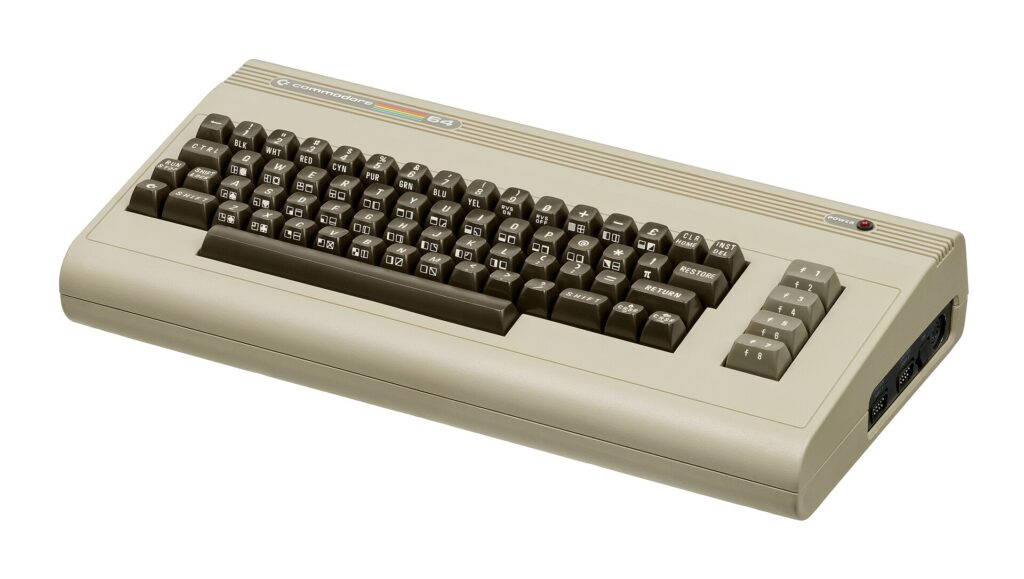
If you grew up in an NES house, I understand. I had friends like you, and I ate dinner at your kitchen tables, and I watched the grey box under your television swallow whole summers. But at my house the machine under the television was beige, it had a keyboard you could rest your forearms on, and it loaded its worlds off cassette tapes that hissed and chirped like a modem having a dream. That machine was the Commodore 64, and while the NES was building the canon everybody still argues about, the C64 was quietly building a second one — stranger, scruffier, and in places just as brilliant. These are the Commodore 64 hidden gems I wish someone had pressed into my hands back then, tape counter numbers and all.
A word about how this list was made. I left off the games even casual C64 folks can name in their sleep. What is left are eight titles that were reviewed like classics, sold like curiosities, and then spent thirty years being rediscovered one convert at a time. They run from 1985 to 1993 — nearly the whole commercial life of the machine — and every one of them still plays well tonight.
Why the Commodore 64 hidden gems stayed hidden
Part of it was geography. Most of these games were made in Britain, by small teams working out of spare rooms and tiny offices, and published by British labels like Hewson, Thalamus and Firebird. Some crossed the Atlantic under new names, some crossed late, and some barely crossed at all. Part of it was the medium: a C64 game might live and die on a cassette in a wire rack in a newsagent, with a hand-drawn cover and a loading screen you stared at for four full minutes. And part of it was timing. By the time the last two games on this list arrived, the magazines were already writing the C64’s obituary.
But there is a happier reason, too. The C64 asked more of its players and gave its programmers more rope — a real keyboard, a disk drive if you were lucky, and the glorious SID chip for sound. The Commodore 64 hidden gems are what talented people built with that rope: games with systems inside systems, games that trusted you to read a manual, draw a map, and meet them halfway. Meet them halfway now and they will still surprise you.
The eight finds
1. Paradroid (1985)
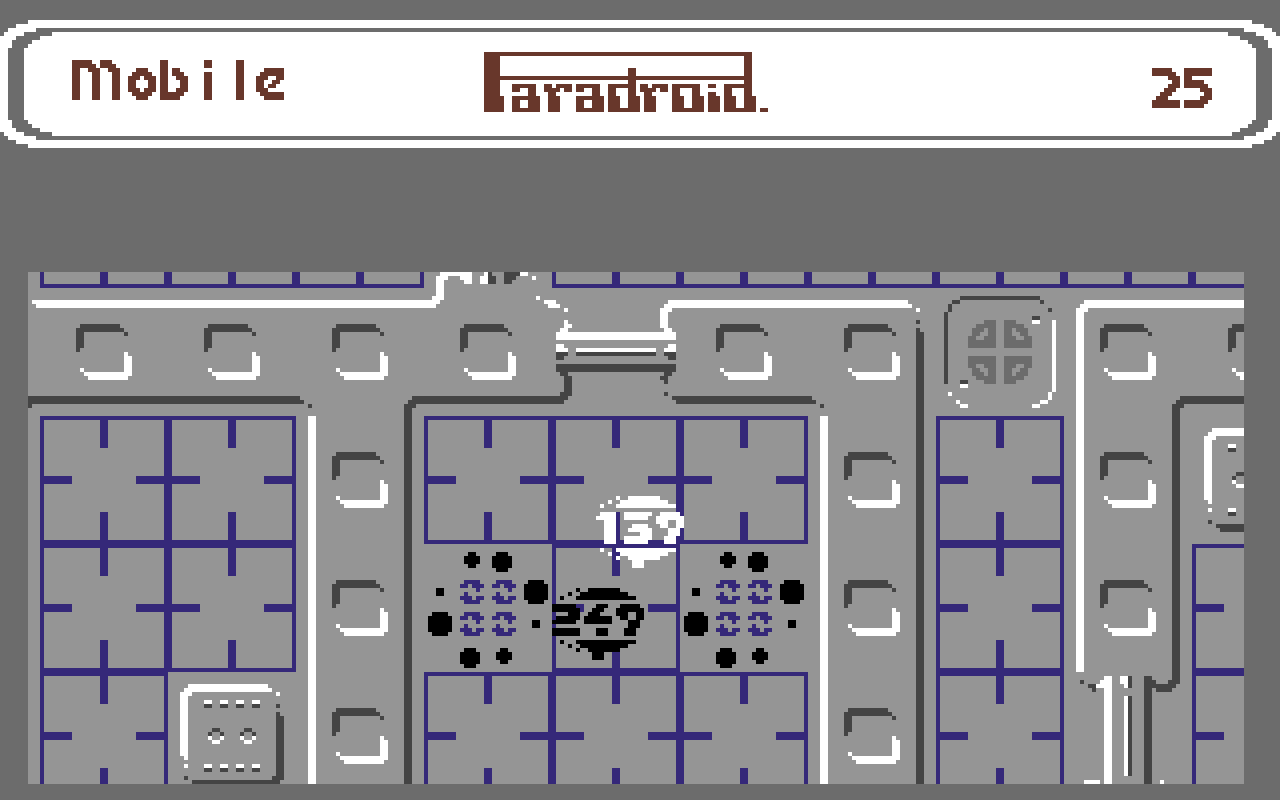
Graftgold · Hewson Consultants · designed by Andrew Braybrook · 1985
A fleet of robot-crewed freighters has gone rogue, and you are the 001 Influence Device — the weakest droid in space — sent in to clear twenty decks, ship after ship. You can shoot, but shooting is the loser’s game. The real game is the transfer: grapple a bigger droid, beat it in a frantic circuit-and-logic-gate duel, and wear its body, its armour and its guns until it burns out under you. There are 24 droid types in a strict hierarchy, and every takeover is a little act of ambition. Do you settle for a safe 400-series, or gamble everything on an 800 with a laser that could clear the deck?
Braybrook documented the making of the game in a diary for Zzap!64 magazine, and when it landed, the magazine gave it 97% and a Gold Medal. I still remember the hush of those decks — the doors sighing open on rooms you could not see into, because the game only shows you what your droid could actually see. In 1985, on a home computer, that line-of-sight trick felt like witchcraft. It still feels clever now.
2. Mercenary (1985)
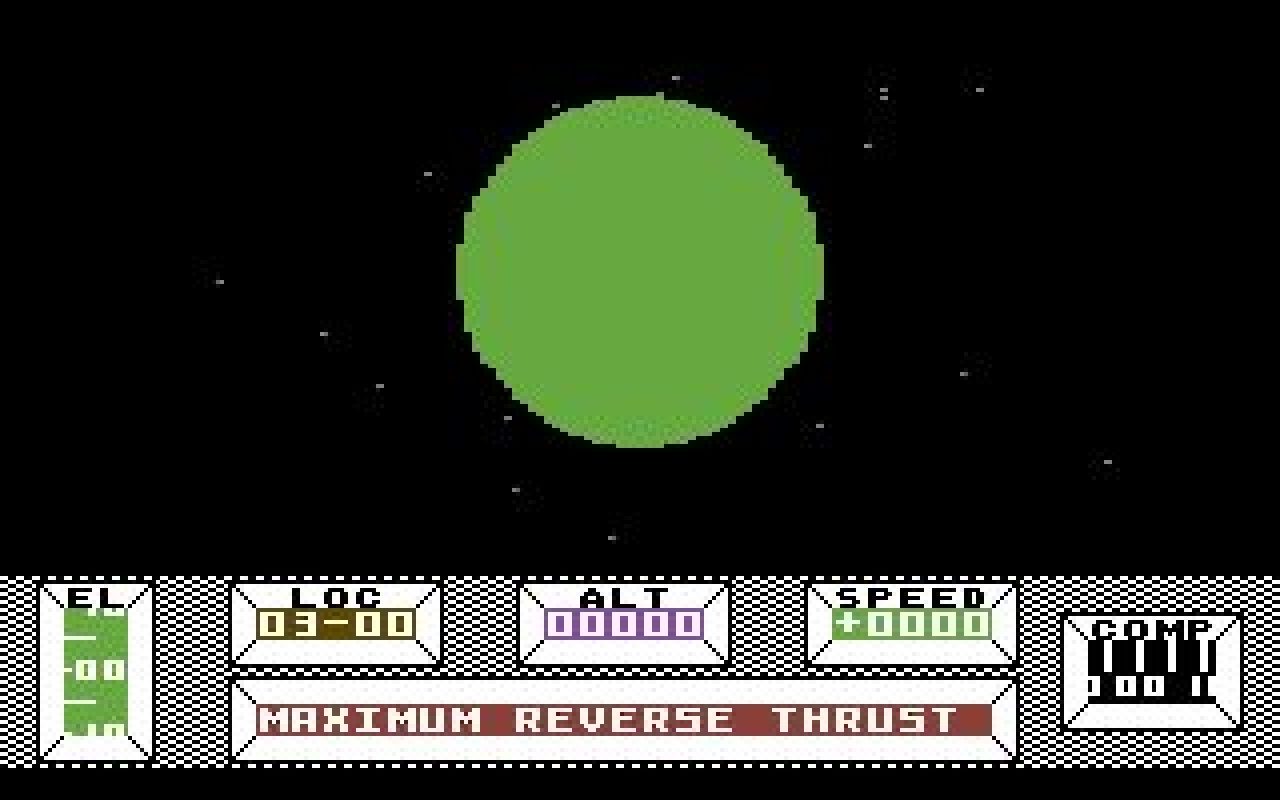
Novagen Software · designed by Paul Woakes · 1985 (US release by Datasoft as Mercenary: Escape from Targ)
You crash-land on the planet Targ, and that is nearly all the instruction Paul Woakes gives you. What follows is a wireframe world you are free to cross on foot, by stealing ground cars, or by getting airborne — a whole city and the underground complexes beneath it, drawn in fast 3D lines years before “open world” was a phrase anyone used. Two factions, the native Palyars and the invading Mechanoids, are at war, and both will pay you. Your only companion is Benson, the cheerful computer who narrates your altitude, your speed and your bad decisions along the bottom of the screen.
I played this one the way it begged to be played: with a notebook. Prices scribbled down, landmarks sketched, rumours underlined. Plenty of us met Mercenary through the Datasoft release in the States, and plenty more never met it at all, which is a shame, because standing on a Targ rooftop at dusk, deciding which faction to rob next, is one of the purest freedoms the 8-bit era ever offered.
3. The Sentinel (1986)
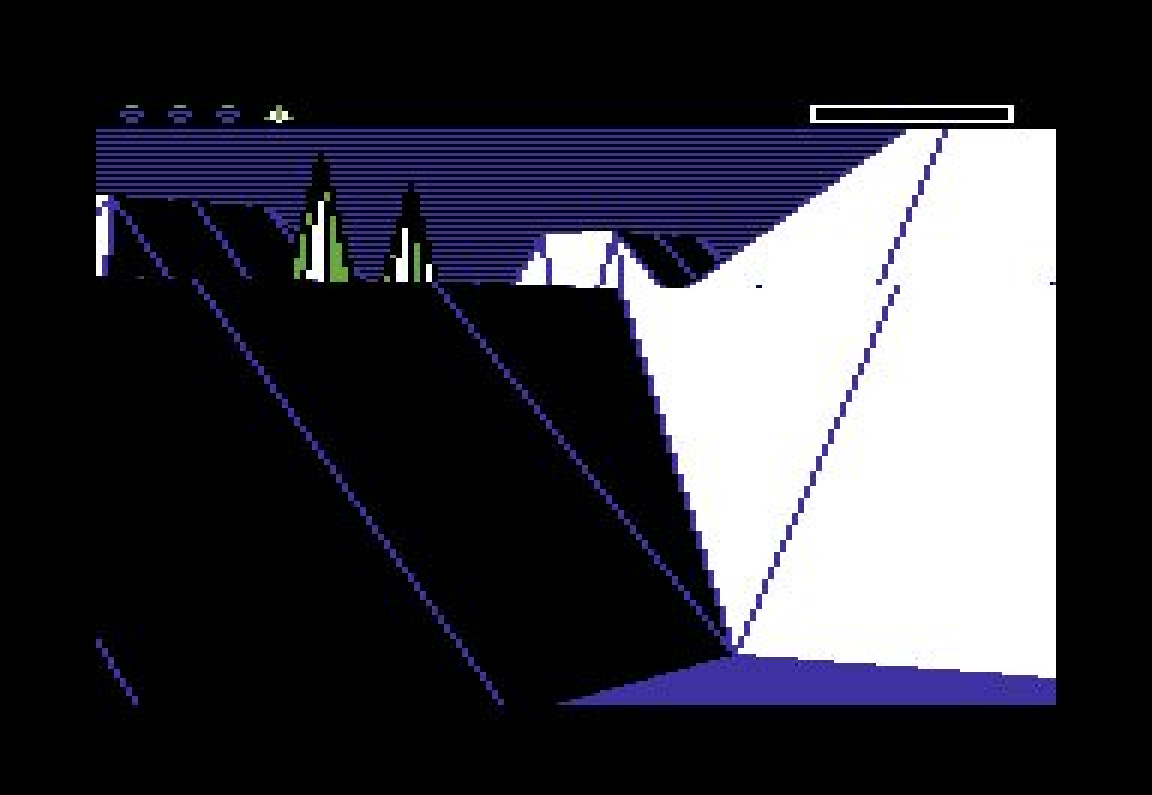
Geoff Crammond · Firebird · 1986 (released in the US as The Sentry)
Geoff Crammond, who would later define racing simulation, first built this: a chess nightmare in solid-filled 3D. You are a Synthoid standing on a chequered hillside. Above you, on a tower, the Sentinel slowly rotates, and if its gaze settles on you it drains your energy away. You cannot walk. You move by absorbing trees and boulders for energy, building new bodies on higher ground, and teleporting into them — climbing, one stolen vantage point at a time, until you are high enough to absorb the Sentinel itself. There are ten thousand landscapes, generated from the number you type in.
Zzap!64 refused to give it a percentage at all and handed it a Gold Medal instead, as if a number would have been an insult. They were right. I have never played anything else that generates dread this efficiently with this little: a turning shadow, a rising tone, and the knowledge that the hill is watching. Of all the Commodore 64 hidden gems on this list, this is the one that feels most like it arrived from the future.
4. Wizball (1987)
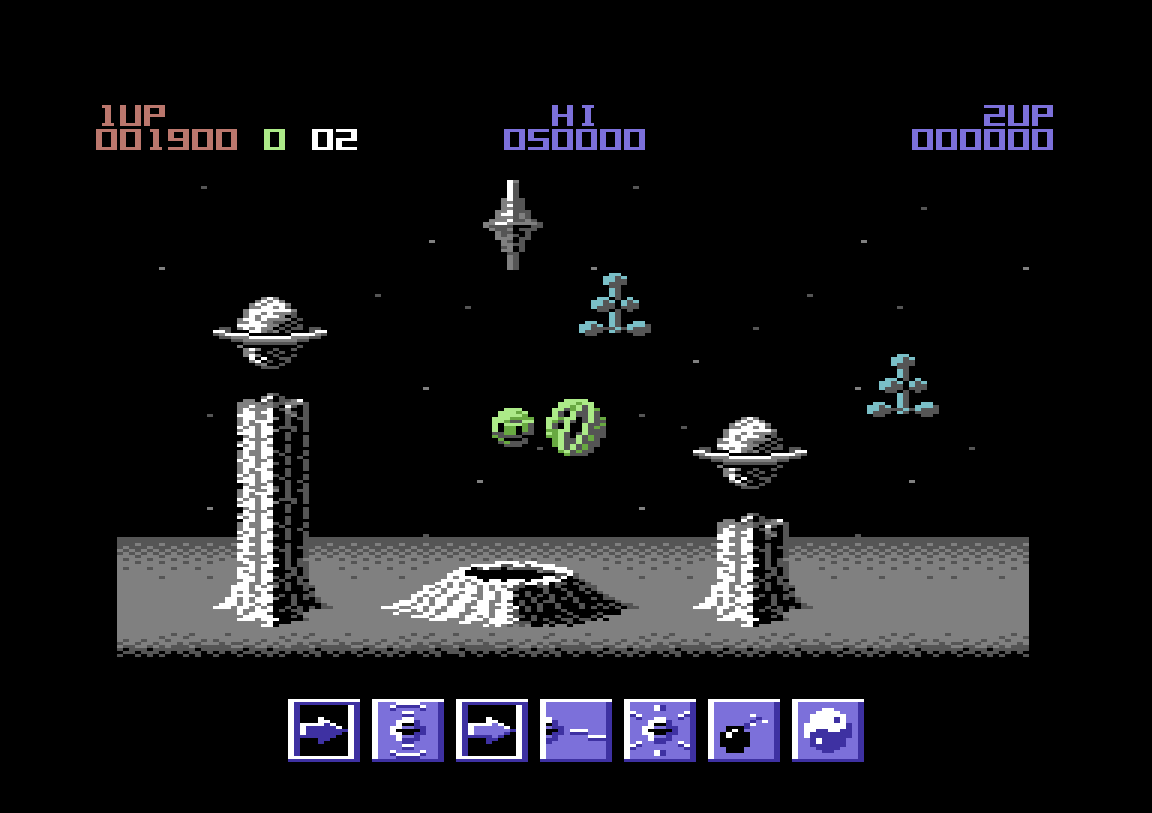
Sensible Software · Ocean Software · Jon Hare and Chris Yates, music by Martin Galway · 1987
The evil Zark has drained Wizworld of colour, and you — a wizard who has helpfully turned himself into a bouncing green ball — must shoot colour thieves, collect the red, green and blue drops they leave behind, and mix the shades that will repaint eight grey landscapes. For the first ten minutes, Wizball is nearly unplayable: the ball bounces with a will of its own and you can only nudge its spin. Then the upgrades arrive — control, thrust, a gun, and your cat, Catelite, flying in formation beside you, optionally steered by a second player — and the whole thing blooms into one of the most joyful shooters ever made.
Zzap!64 scored it 96%, and readers later voted it among the machine’s finest. The screenshot above is the honest starting point: monochrome and melancholy. Stick with it. There is no better feeling on the C64 than watching a world you have personally recoloured scroll past, with Galway’s music bubbling away like the machine is happy too.
5. Nebulus (1987)
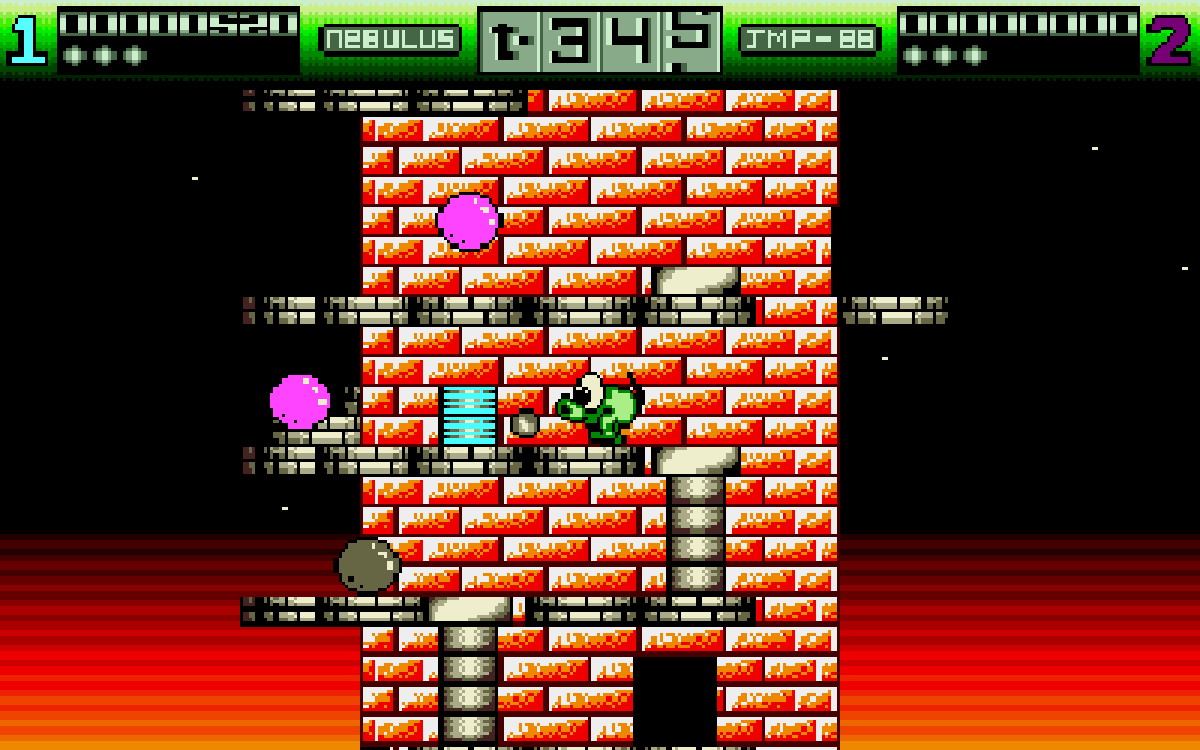
John M. Phillips · Hewson Consultants · 1987 (US release by U.S. Gold as Tower Toppler)
Eight towers have risen out of the sea, and Pogo — a small, round, green demolition expert — must climb each one and plant the charge at the top. The trick, the whole beautiful trick, is that the tower rotates: Pogo stays near the centre of the screen while the cylinder of brickwork, ledges, lifts and trap doors turns around him. On 1987 hardware this looked impossible, like the machine had learned a magic trick and was showing off. Doors take you through the tower to its far side, platforms crumble, and everything is timed to punish greed by exactly one jump.
American players met it as Tower Toppler, and the C64 version took another Zzap!64 Gold Medal. It is a hard game — honestly, sometimes a cruel one — but it is never a vague one. Every fall is your own fault, every summit is earned, and the little submarine ride between towers still makes me smile like a kid who has just been handed the joystick back.
6. Armalyte (1988)
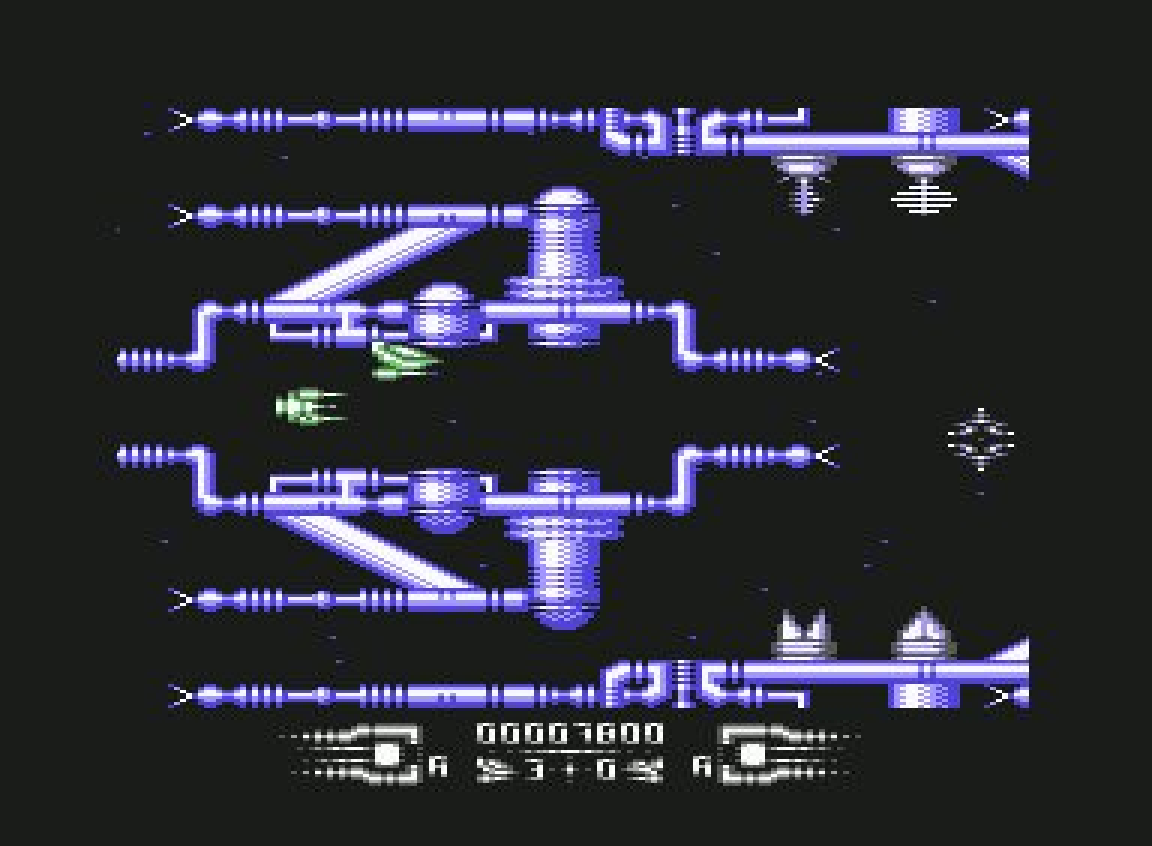
Cyberdyne Systems · Thalamus · Dan Phillips, Robin Levy and John Kemp · 1988
The Cyberdyne Systems team — Dan Phillips on code, Robin Levy on the gorgeous graphics and attack waves, John Kemp on systems programming — wanted to make the arcade experience live on a C64, and Armalyte is where they did it. It is a horizontally scrolling shooter in the Gradius mould: eight long stages, a chargeable super-weapon, batteries to collect and feed your arsenal, and end-of-level bosses the size of weather systems. Thalamus marketed it as the sequel to Delta, though a different team had made that game — a bit of cheek that nobody minded once the reviews landed, with Zzap!64 scoring it up in the high nineties.
What I remember most is the density of it. The C64 was supposed to wheeze at games like this; instead Armalyte loads each stage separately and spends every spare byte on detail — layered starfields, installations that scroll past like cathedrals. If the NES had Gradius, we had this, and on the playgrounds I knew, that trade was never once regretted.
7. Creatures (1990)
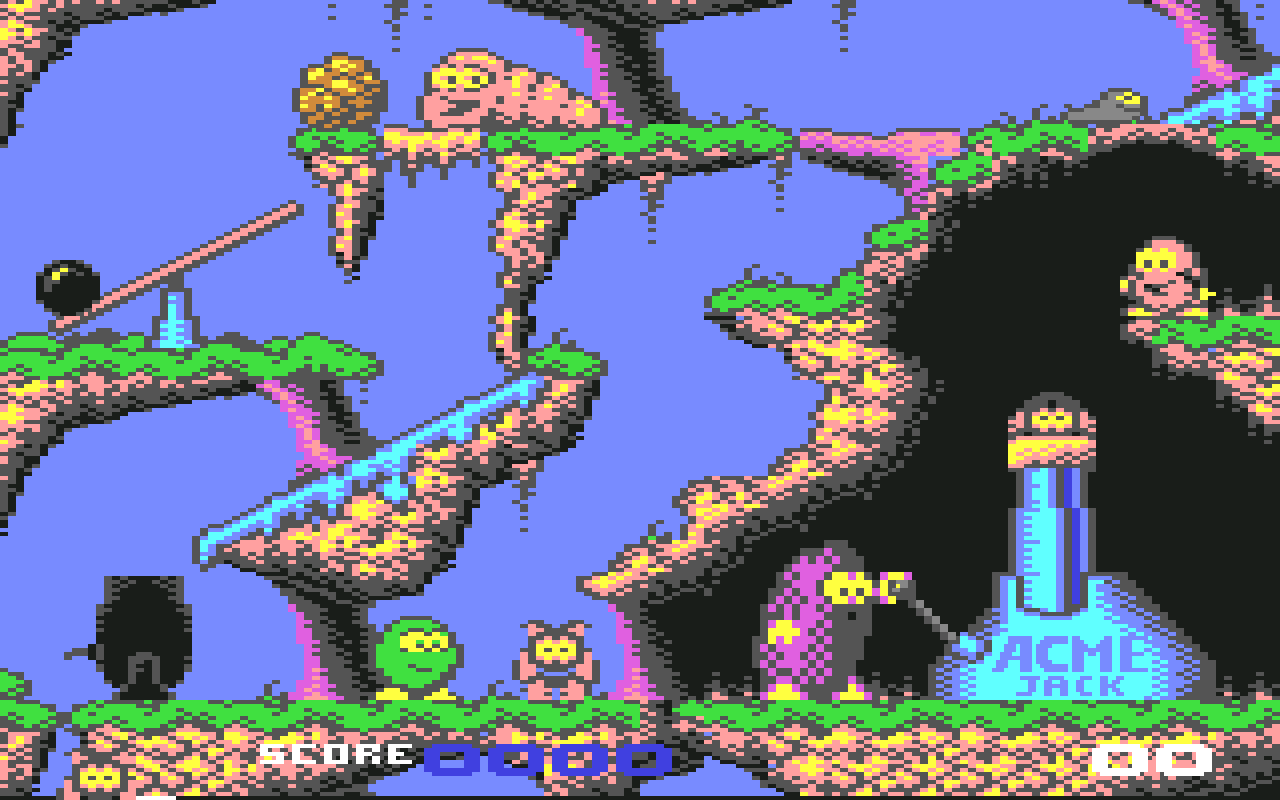
Apex Computer Productions · Thalamus · John and Steve Rowlands · 1990
The title is an acronym and a promise: Clyde Radcliffe Exterminates All The Unfriendly, Repulsive, Earth-ridden Slime. Clyde is a Fuzzy Wuzzy, his fellow Fuzzies have been captured by demons after their ship came down on the planet Blot, and rescuing them means platforming through some of the prettiest levels on the machine — then solving the famous torture screens, little Rube Goldberg execution machines you must sabotage before the timer and the machinery do their work. Two brothers made all of it: John Rowlands programmed it, Steve Rowlands drew it and wrote the music.
Do not let the cuteness file this one wrong. Creatures is exacting, occasionally wicked, and animated with a love you can see in every idle bounce. It arrived in 1990, when the C64 was supposed to be finished, and played like a rebuttal. This is the one I hand to people who think 8-bit games were all brown corridors and beeps. Nobody has ever stayed sceptical past the first torture screen.
8. Mayhem in Monsterland (1993)
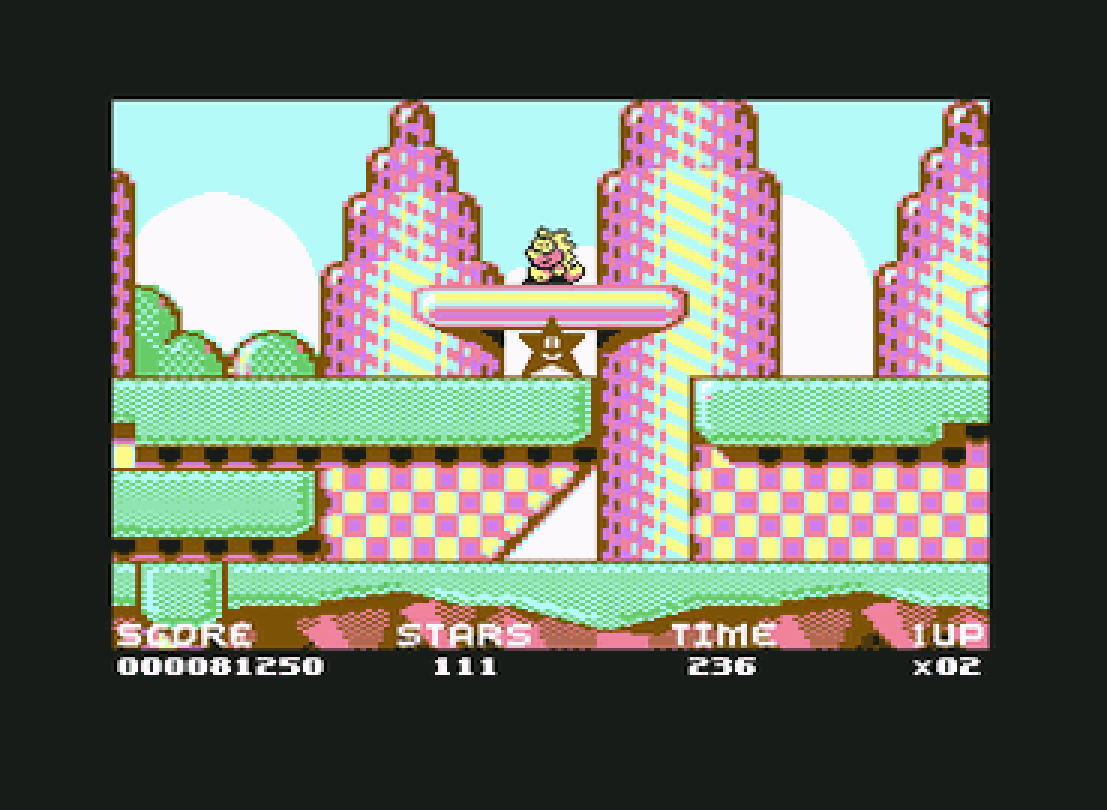
Apex Computer Productions · self-published by Apex · John and Steve Rowlands · 1993
And so the list ends where the C64 nearly did. The Rowlands brothers, shut out of a fair deal by their old publisher’s collapse, released Mayhem in Monsterland themselves in 1993 — a year before Commodore itself folded. An apprentice dinosaur, Theo Saurus, has practised his spells after too much cactus juice and drained Monsterland of its happiness; Mayhem, a baby triceratops with real speed in his legs, must collect the magic dust that puts each of the five lands — Jellyland, Pipeland, Spottyland, Cherryland, Rockland — back into colour. Every land exists twice: sad and grey first, then fast and glorious.
Commodore Format gave it 100% — the only 100% it ever awarded. Watch Mayhem at full tilt and you will understand: the scrolling, the colour, the sheer console-like confidence of it should not be possible on an eleven-year-old computer. It is the C64’s farewell letter, written in its own hand, saying look what we learned to do with the place.
How to hunt Commodore 64 hidden gems today
The good news is that none of these eight are lost. Paradroid and Mayhem in Monsterland have both had official re-releases on modern services, The Sentinel’s descendants and remakes keep its idea alive, and the rest are staples of the C64 Mini-era collections and the emulation scene. My honest advice is the advice I give about the NES library too: play one at a time, play it on a real joystick if you can borrow one, and give each game the evening it asks for. These were not made to be sampled. They were made to be learned.
The NES built the canon in the living room. The C64 built a second one in the bedroom, off cassettes, after bedtime — and it is still down there waiting for you, loading screen and all.
That is the thing I most want to leave you with. Commodore 64 hidden gems are not hidden because they were lesser. They are hidden because they lived in a different house, in a different country, on a different shelf. Go and visit. The kettle is on, the tape is rewound, and deck twenty of the Itsnotardenuff is not going to clear itself.