
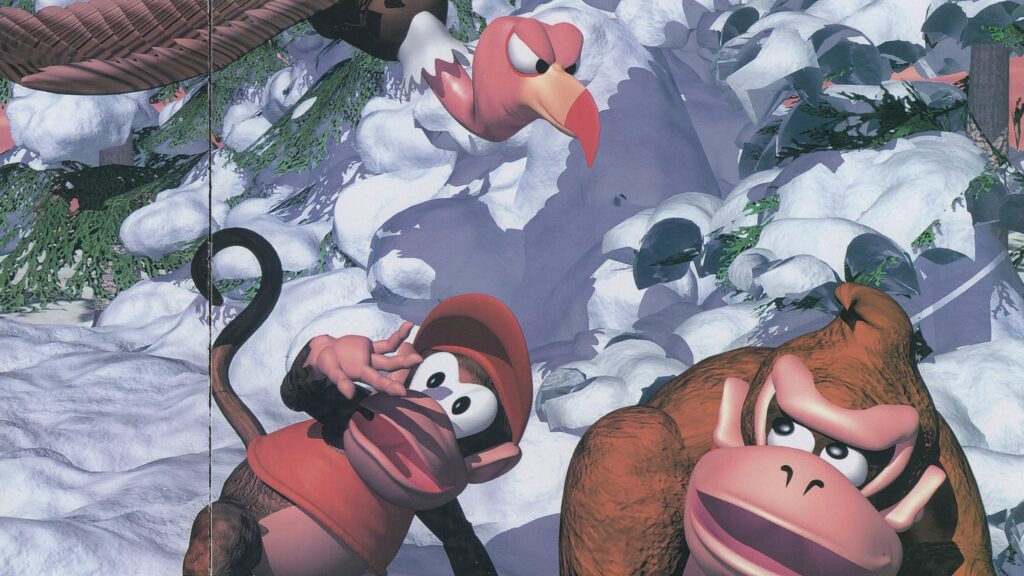
At a glance — Game: Donkey Kong Country · Developer: Rare · Publisher: Nintendo · Original release: November 18, 1994 (United Kingdom; North America November 21, 1994) · Original platforms: Super Nintendo Entertainment System · Genre: Platform · Music: David Wise, Eveline Novakovic, Robin Beanland
Every console war has a moment when the losing side stops looking like it is losing. For the Super Nintendo, that moment arrived in a Chicago convention hall in June 1994, when Nintendo closed its Consumer Electronics Show presentation with footage of a gorilla rendered in a detail no 16-bit machine was supposed to be capable of — and only at the very end let the audience learn the game was not for the upcoming Nintendo 64 at all. It was for the SNES they already owned. Thirty-two years on, Donkey Kong Country remains the most audacious bluff Nintendo ever pulled, except that it was not a bluff. The game was real, and it changed what everyone believed a cartridge could hold.
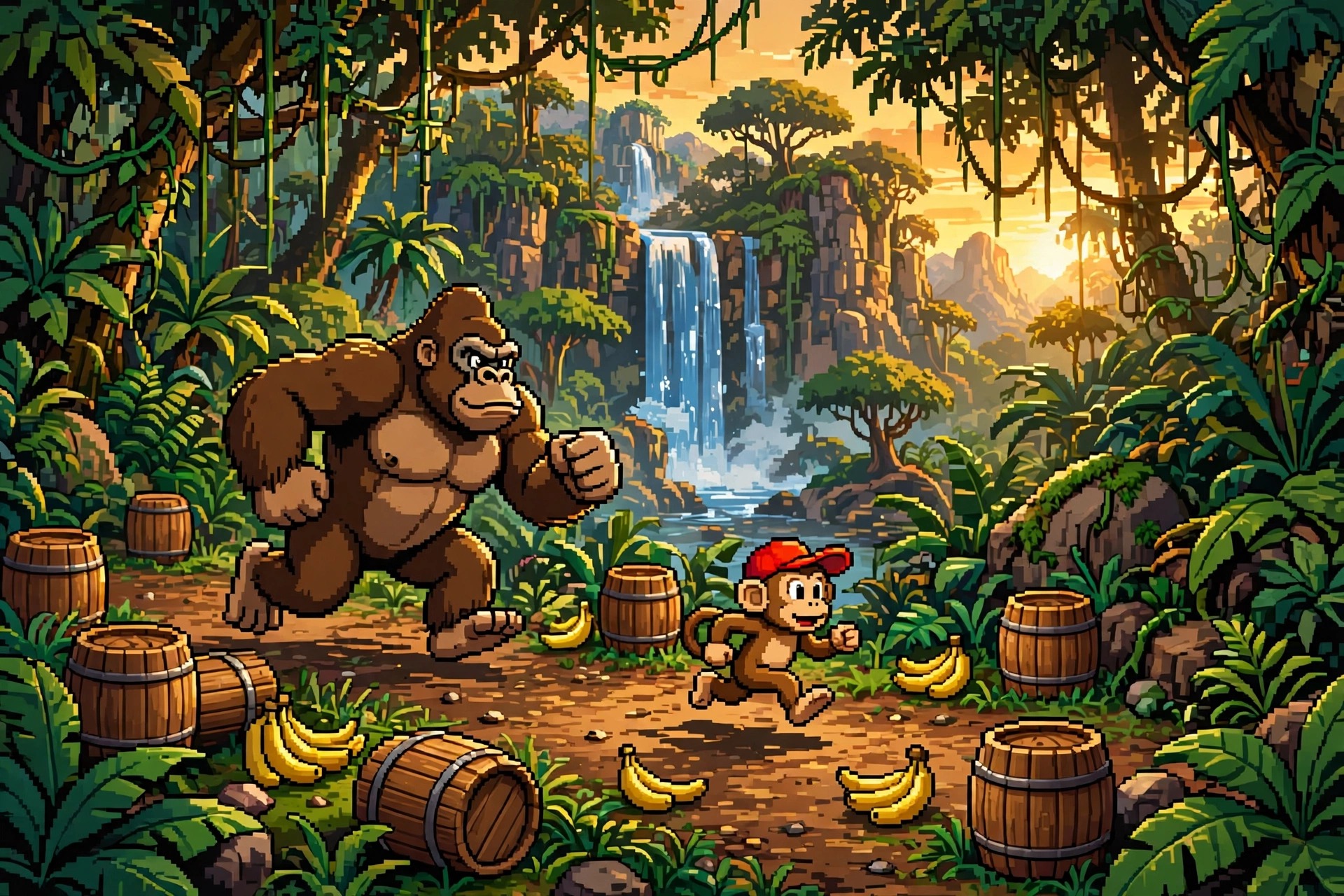
A screenshot that could not be real
The context matters. By 1994 the SNES was fighting Sega’s Mega Drive on one flank and the first wave of CD-ROM and 32-bit hardware on the other, and Nintendo needed an answer to Sega’s Disney-animated Aladdin. The answer came from Twycross, England, where Rare — a studio founded by Tim and Chris Stamper — had spent its NES profits on Silicon Graphics workstations costing £80,000 apiece, the same class of machine used to render the dinosaurs in Jurassic Park. Rare’s Advanced Computer Modelling technique built characters and worlds as true 3D models, rendered them frame by frame, and compressed the results into SNES sprites with a loss of detail so small that audiences at CES sat in stunned silence before bursting into applause. Lead designer Gregg Mayles recalled the room simply not believing what it was seeing.
Nintendo backed the illusion with force: a marketing campaign that cost $16 million in America alone, three times the typical budget of the day, and a promotional VHS, Donkey Kong Country: Exposed, mailed to Nintendo Power subscribers. The message was consistent and pointed — this was running on the hardware under your television, not on the Mega-CD, not on the 32X, and not on any machine you would have to buy next year.
How Rare built Donkey Kong Country in a farmhouse
The production behind the miracle was almost comically small. Twelve developers — the largest team in Rare’s history at that point — worked for 18 months in a converted farmhouse, the Killer Instinct team in the stables and the Donkey Kong Country team upstairs, pulling 12-to-16-hour days, seven days a week. A single rendered screen could consume more memory than an entire SNES cartridge; models took hours to render, so the workstations ran overnight under a massive air-conditioning unit while the team worked through the summer heat without any. Artists occasionally shut down each other’s machines mid-render to free capacity for their own models. Rare’s own estimate was 22 years of man-hours — at the time, the most ever invested in a video game.
The design brief came from Super Mario Bros. 3. Mayles wanted a game that flowed: stages arranged, set piece by Post-it Note, so that a skilled player who timed everything correctly could move continuously and impressively — a philosophy that anticipated speedrunning years before the word existed. Kevin Bayliss redesigned Donkey Kong himself, and when his reworked Donkey Kong Jr. strayed too far from the original for Nintendo’s comfort, the character became someone new instead: Diddy Kong, based on a spider monkey, named after one legal scare too many killed the original choice of “Dinky”. Shigeru Miyamoto, the franchise’s creator, directed nothing and produced nothing — the first Donkey Kong game made without him — but his fingerprints remain, down to Donkey Kong’s red tie and the ground-slap move he suggested at the eleventh hour.

Forty levels built for flow
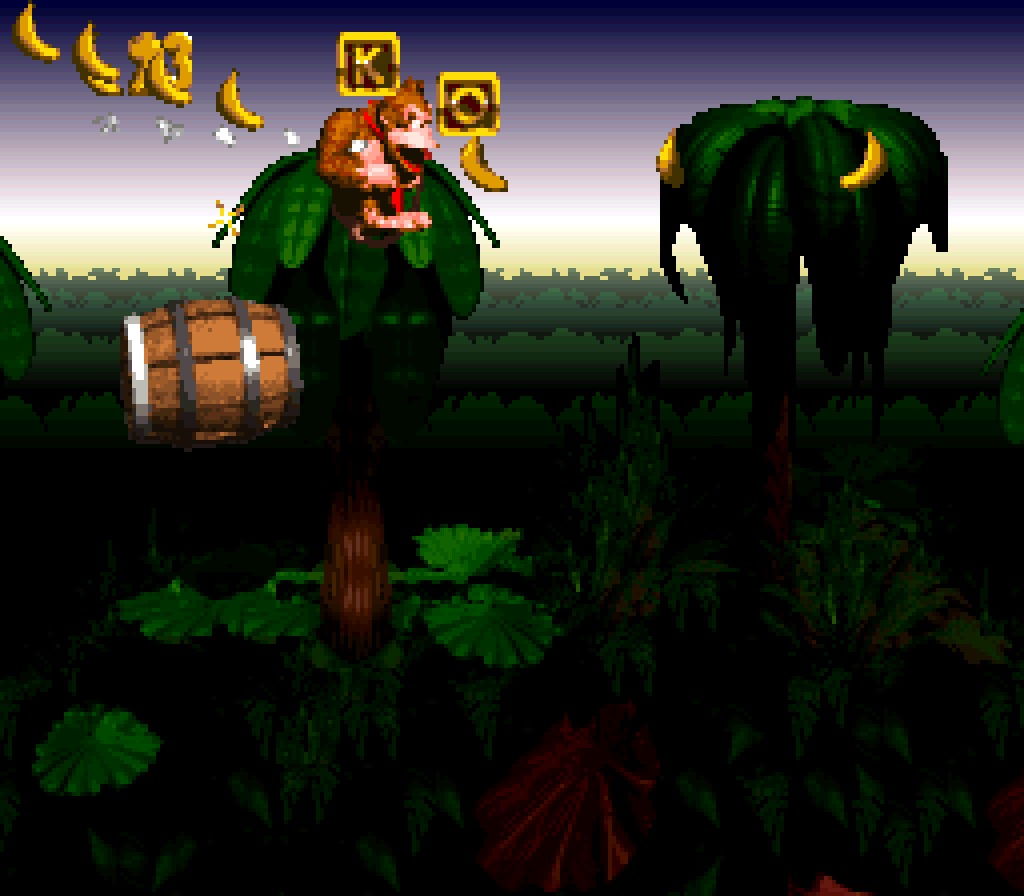
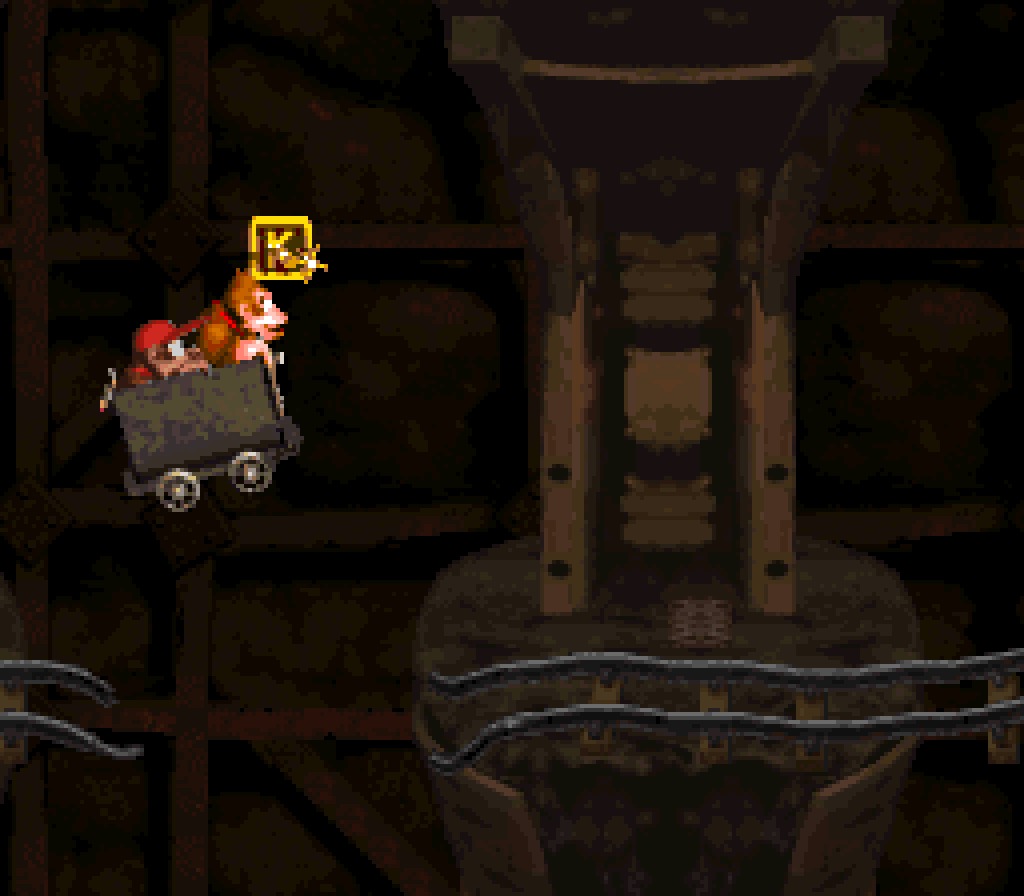
The game itself is a rescue mission stripped to essentials: King K. Rool and his Kremlings have stolen the Kongs’ banana hoard, and Donkey and Diddy cross 40 side-scrolling levels to take it back. The two-Kong system is the quiet genius — Donkey is stronger, Diddy is faster, and your partner is effectively your health, recoverable from a barrel when lost. Around that core Rare layered minecart rides, barrel cannons, swinging ropes and five animal buddies, from Rambi the rhino to Squawks the parrot with his lantern, plus a secret structure of bonus stages that pushes completionists toward the famous 101 per cent. Cranky Kong — the original arcade Donkey Kong, though Rare kept that quiet in the marketing — dispenses tips and fourth-wall complaints from his rocking chair, and David Wise’s soundtrack does the rest: the five weeks he spent on “Aquatic Ambience”, written in the aftermath of a breakup, produced one of the most beloved pieces of music on the system.
It was also, quietly, a social game. The world map is dotted with the rest of the Kong family: Funky Kong runs a flight service that ferries you between areas, Candy Kong keeps the save points, and Cranky holds court with advice wrapped in complaints about modern games. Two players could take the adventure together in the cooperative Team mode, tagging between Kongs, or race the clock against each other in Contest mode, alternating turns through the same stages. For a game sold on solitary spectacle, Donkey Kong Country was built to be passed around a living room — one more reason it landed so hard in the holiday season it was engineered to own.
The fastest-selling game in the world
The market’s verdict was immediate. Donkey Kong Country sold six million copies in its first holiday season, grossed $400 million, and set the record for the fastest-selling video game of its time; cumulative sales reached 9.3 million, making it the third-bestselling SNES game ever and the bestselling Donkey Kong game outright. Critics compared its quality and design favourably to the Super Mario series itself, and Nintendo responded by buying a large minority stake in Rare, binding the studio into the second-party partnership that would define the Nintendo 64 era. Ports followed to the Game Boy Color in 2000 and the Game Boy Advance in 2003, and the game has never really left Nintendo’s digital shelves since.
What it started mattered as much as what it sold. Rare returned the following year with Donkey Kong Country 2: Diddy’s Kong Quest and closed the trilogy in 1996, then carried the partnership onto the Nintendo 64 with Donkey Kong 64 — all of it downstream of a dozen people in a farmhouse proving that a 16-bit cartridge could wear a Silicon Graphics render and get away with it. Retrospectives have kept the game on greatest-of-all-time lists ever since, even as its pre-rendered visuals became the divisive part: what looked like the future in 1994 can look like a beautiful fossil now. But the design underneath the render — the flow, the secrets, the two-Kong tag system — has never dated at all, which is why the anniversary worth celebrating is not really about graphics. It is about the winter a screenshot nobody believed turned out to be a game everybody could play.
Why Donkey Kong Country at 32 still matters
Strip away the sales records and the technical folklore and what remains is a lesson the industry keeps relearning: presentation is a promise, and Donkey Kong Country kept its promise. The pre-rendered look that seemed like a shortcut around the SNES’s limits was in fact an enormous act of craft — thousands of rendered frames, a soundtrack squeezed through an eight-channel chip, levels assembled from sticky notes so a good run never has to stop. Later revivals, from Retro Studios’ Returns onward, inherited that standard. Donkey Kong Country did not just save the SNES a Christmas. At 32, it still looks like the future it pretended to be.
— Chip
For more launches from this date, see This Day in Gaming History: November 18. More from this system: our SNES hub.