
At a glance — Game: Pokémon Sun and Moon · Developer: Game Freak · Publisher: Nintendo / The Pokémon Company · Original release: November 18, 2016 (Japan and North America) · Original platforms: Nintendo 3DS · Genre: Role-playing
Ten years ago this week, Pokémon did something it had refused to do for two decades. It packed away the Gym badges. No eight Gym Leaders, no Victory Road in the old shape, no familiar march from small town to Elite Four. Instead, Pokémon Sun and Moon sent an eleven-year-old on a coming-of-age tour of a sunlit archipelago, where the tests were scavenger hunts, quizzes and boss fights against giant wild Pokémon, and the reward for finishing was not a badge but a stamp in a passport. It was the boldest structural change the main series had ever made — and it arrived in the year Pokémon turned twenty, when playing it safe would have been the easiest thing in the world.
A 20th-Birthday Party in Pokémon Sun and Moon
The timing was not an accident. Pokémon Sun and Moon were announced in a Pokémon Direct on February 26–27, 2016 — twenty years, almost to the day, after Pokémon Red and Green first went on sale in Japan. The Pokémon Company president Tsunekazu Ishihara presented them as the next generation for that anniversary year, and director Shigeru Ohmori, stepping up after Pokémon Omega Ruby and Alpha Sapphire, has said the team deliberately built this pair comparatively from scratch, with more radical changes than a normal sequel would risk.
You can feel that intent in the first hour. Your character has just moved from Kanto to Melemele Island, and the game opens with a video call from Professor Kukui rather than the traditional lab visit. The chibi-style characters of Pokémon X and Y are gone, replaced by trainers with realistic proportions who move freely in any direction instead of stepping along a grid. Cutscenes carry the story instead of text boxes alone. A girl named Lillie is fleeing with a strange, starry creature she calls Nebby hidden in her bag, and within minutes you are rescuing it on a collapsing bridge while a guardian deity watches. Sun and Moon wanted you to know, early, that this was a story-led Pokémon game.
The anniversary framing ran deeper than marketing — in the postgame Battle Tree you can even face Red and Blue themselves. The only older Pokémon given new Alolan forms were creatures from Red and Blue — a deliberate surprise for long-time players, Ohmori explained —. The twentieth birthday was not a museum exhibit. It was the new games shaking hands with the old ones.
Alola: Pokémon’s Hawaii, Taken Seriously
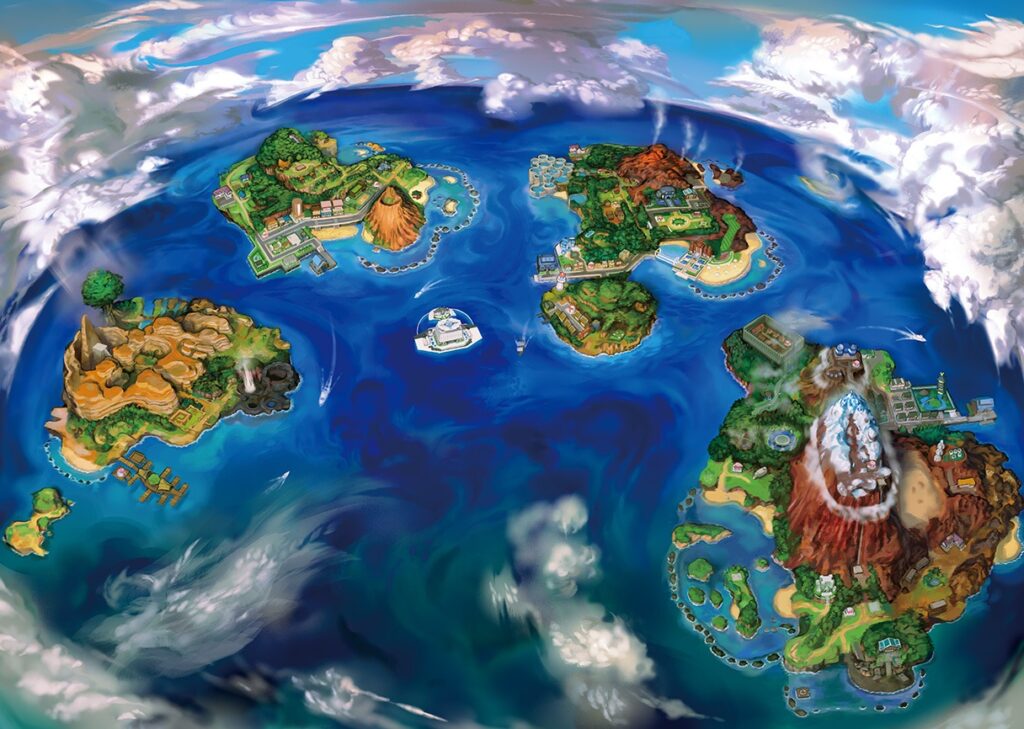
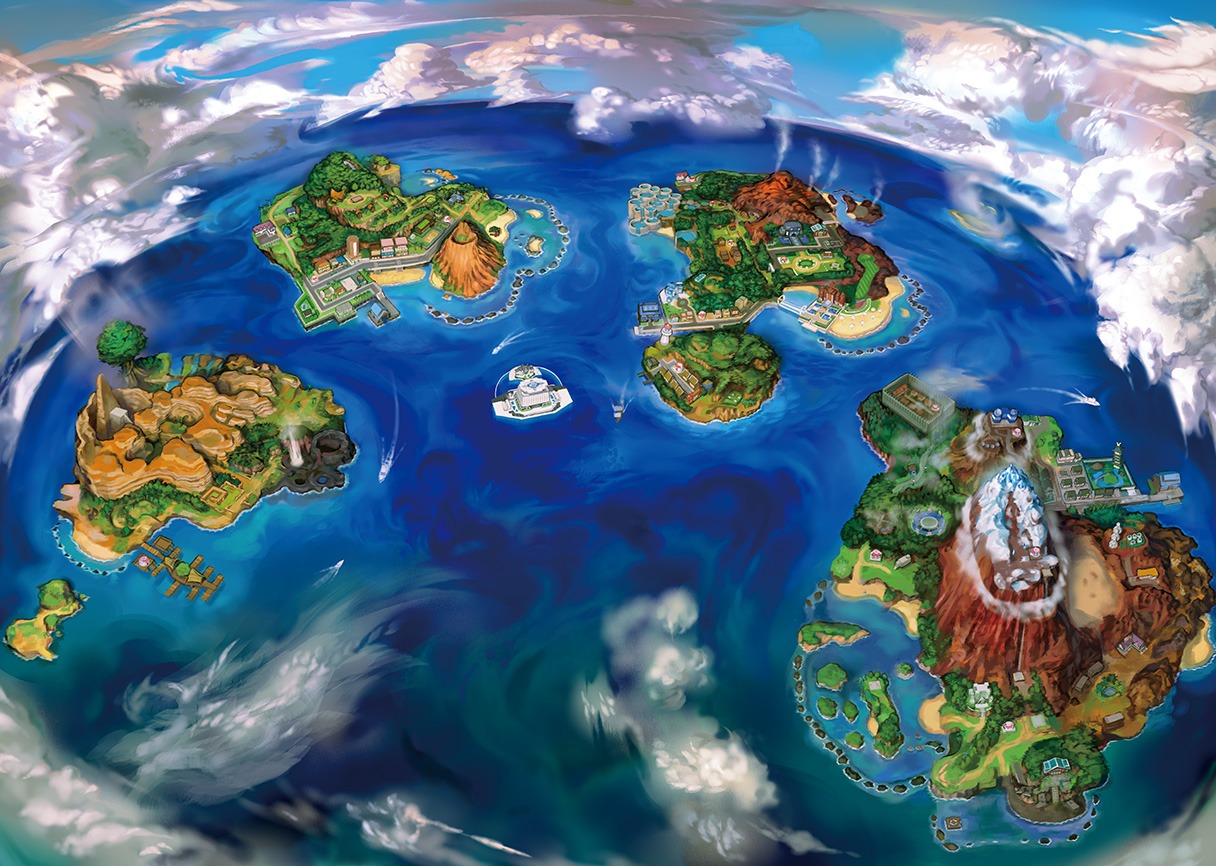
Every Pokémon region is a real place in disguise, but Alola is the most lovingly specific of them all. Game Freak staff travelled to Hawaii to research the games, and it shows in more than palm trees. Alola is four natural islands — Melemele, Akala, Ula’ula and Poni — plus one artificial one, Aether Paradise, floating in the middle of the map. Its professor, Kukui, is named for the kukui, the Hawaiian state tree, keeping the series tradition of tree-named professors.
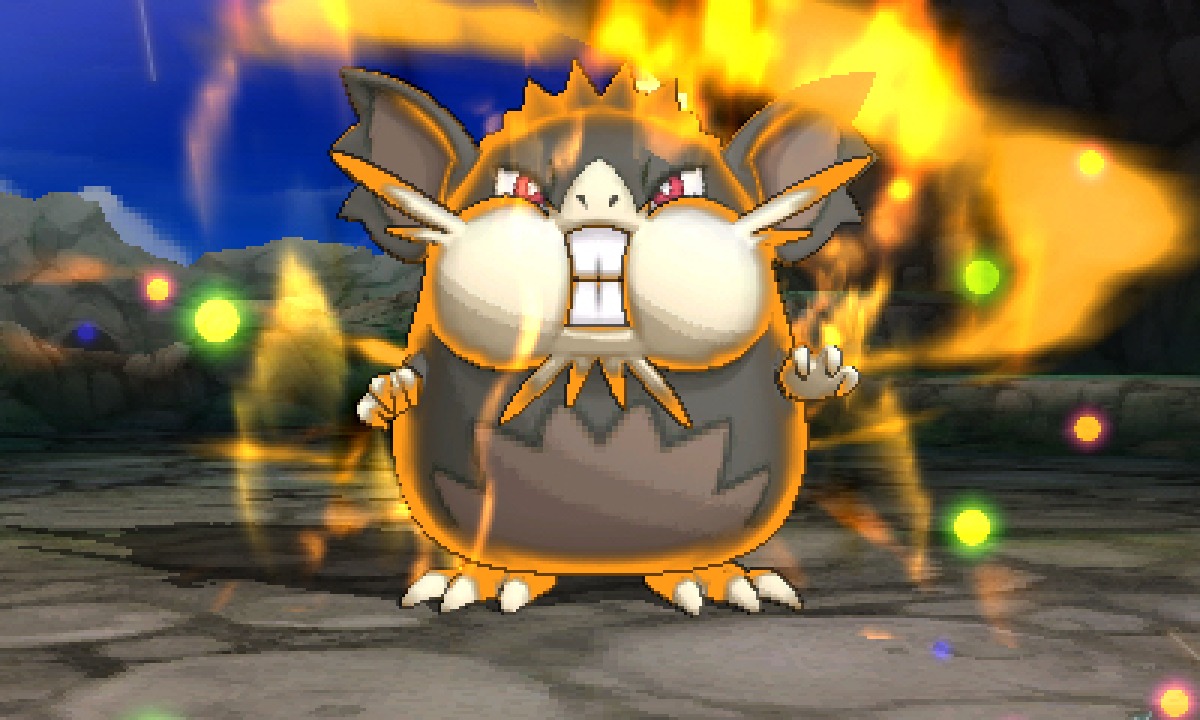
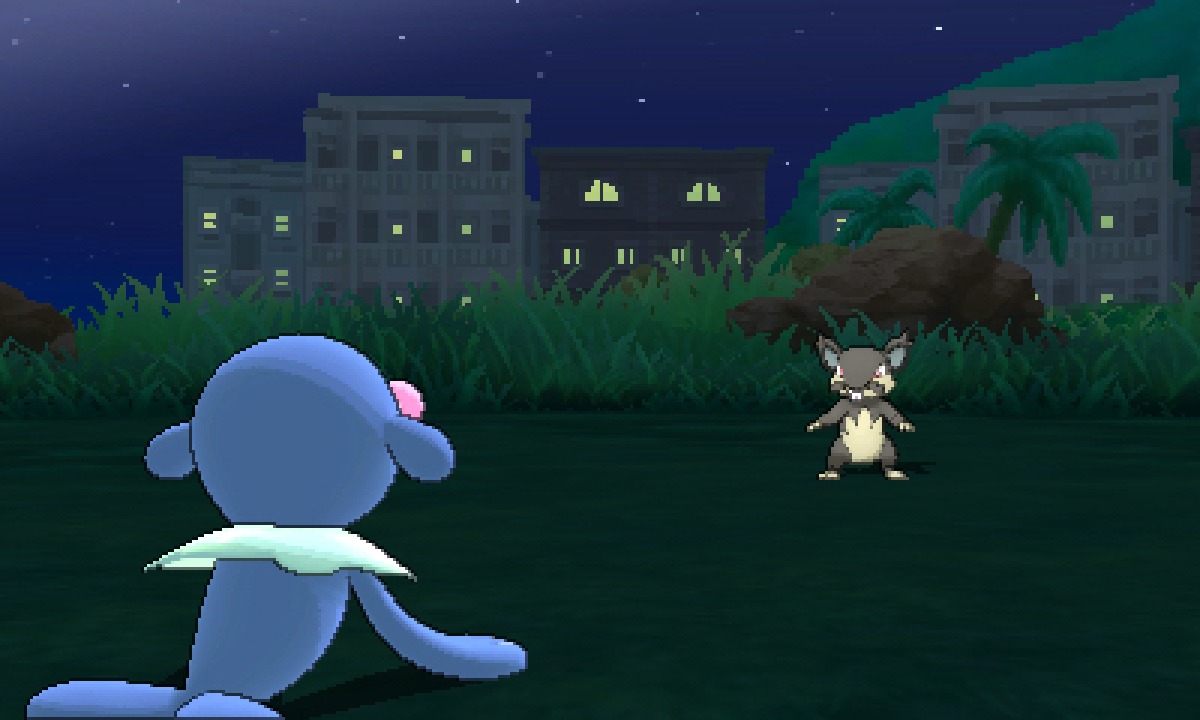
The Hawaii inspiration produced the generation’s most famous idea: Alolan forms. Pokémon that had migrated to Alola had adapted to its microclimates, so familiar faces turned up changed. Vulpix and Ninetales, Fire types everywhere else, became Ice and Ice/Fairy on Alola’s snowy mountain. Sandshrew and Sandslash became Ice/Steel. Raichu surfed in on its own tail as an Electric/Psychic type. Marowak became a Fire/Ghost fire-dancer. And Exeggutor — well, with year-round sunshine, Alolan Exeggutor simply never stopped growing, becoming a towering Grass/Dragon palm tree that the internet adopted on sight. It was a clever trick: eighty-one genuinely new species arrived in Generation VII, but the regional forms made the old Pokédex feel new again at almost no cost, and later generations have kept the idea ever since.
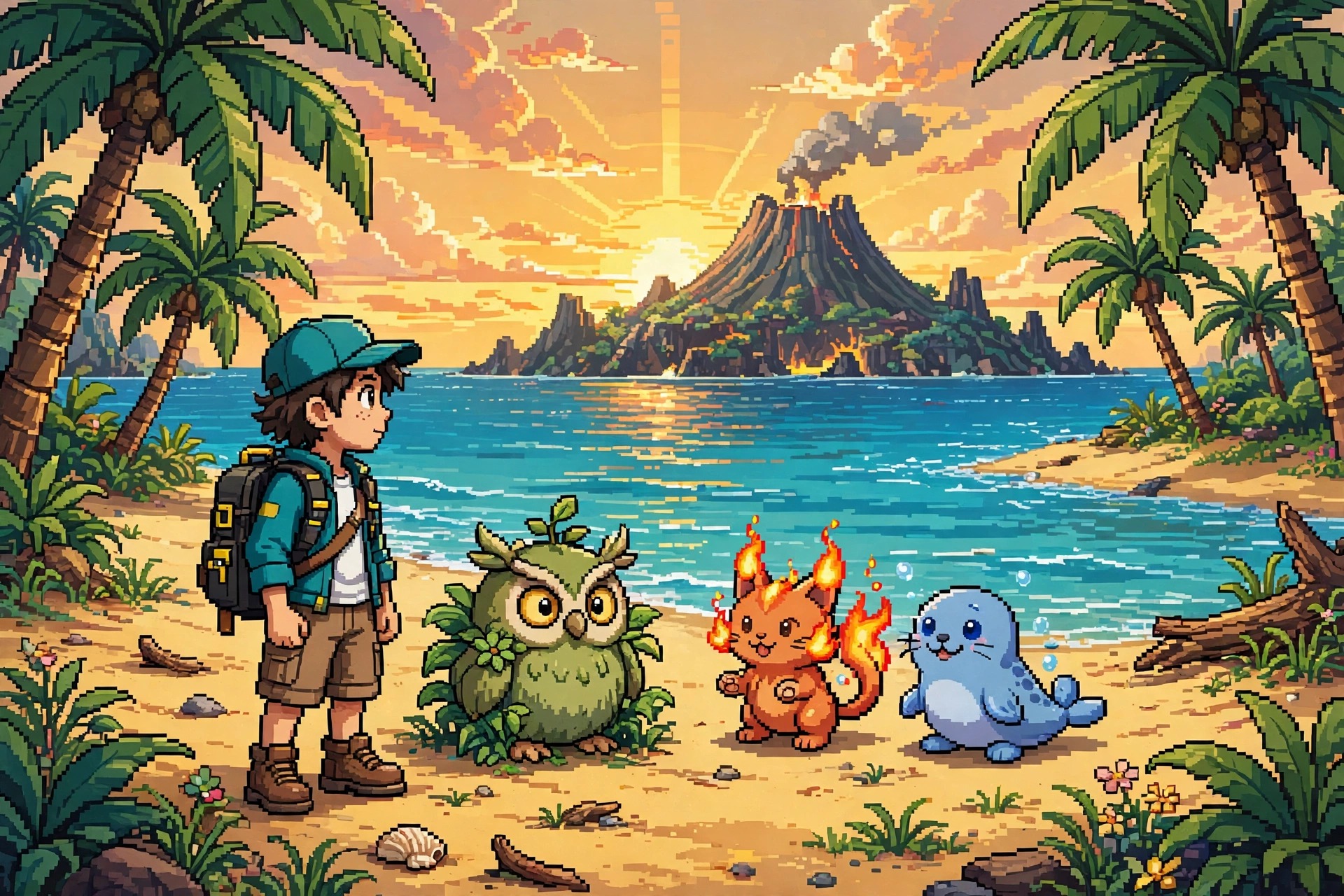
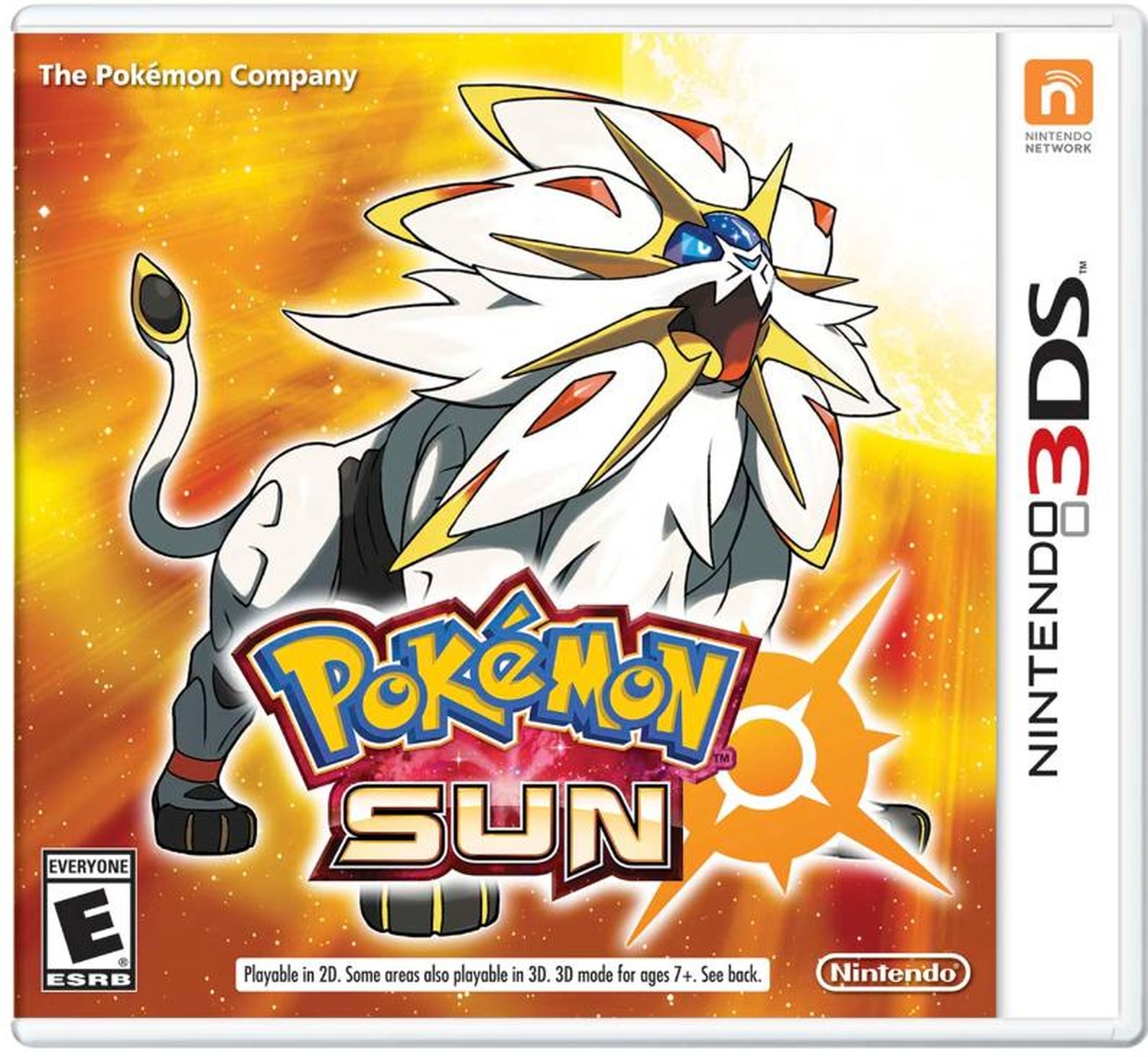
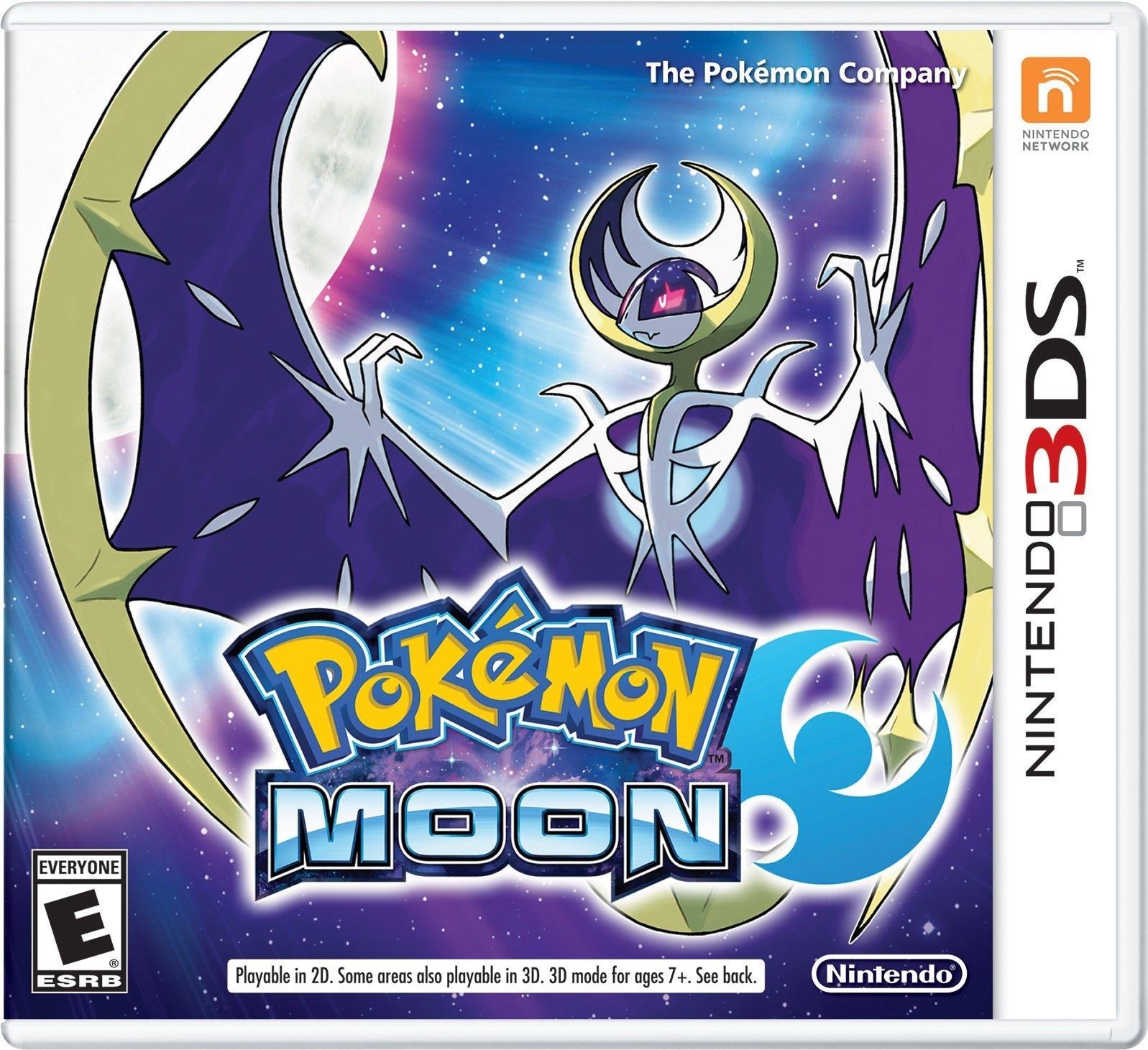
The new faces earned their place too. The three first partners — Rowlet, the Grass/Flying owl; Litten, the Fire cat; Popplio, the Water sea lion — remain among the most loved starter trios, and the cover legendaries set the tone for the whole adventure. Solgaleo, the Psychic/Steel “beast that devours the sun,” fronts Pokémon Sun; Lunala, the Psychic/Ghost “beast that calls the moon,” fronts Pokémon Moon.
No Gyms Here: The Island Challenge
Here is the change people still argue about. Alola has no Pokémon Gyms. In their place is the island challenge, described in-game as a rite of passage for young Alolans: travel each island, complete its trials, then face the island’s Kahuna in a grand trial. Trials are run by captains, and they are pointedly not just battles. One trial sends you gathering ingredients while wild Pokémon object. Another is a memory-and-dance test. Another is, essentially, a ghost hunt with a camera. Waiting at the end of most trials is a Totem Pokémon — an oversized, aura-wreathed boss that can call allies into battle, turning a single fight into a small war of attrition. Beat the trials, beat the Kahuna, get your passport stamped, sail to the next island.
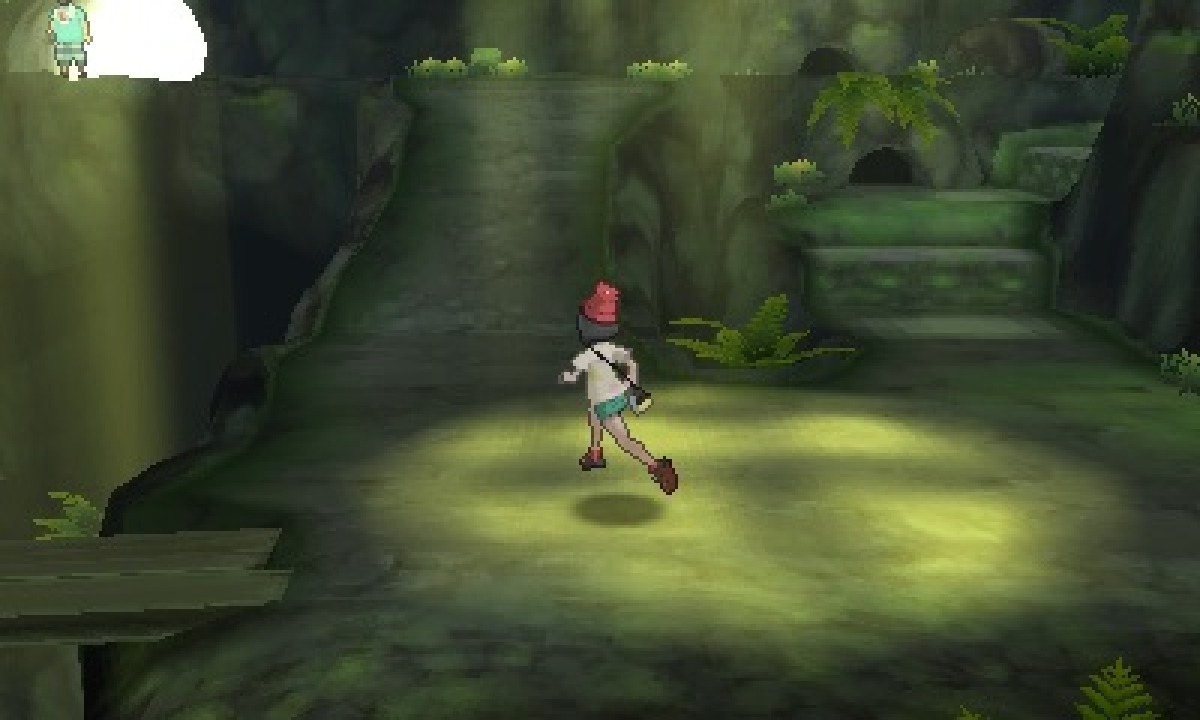
Why does it work? Because it changes what progress feels like. Gyms measured you as a battler. Trials measure you as a traveller — someone learning how this region actually lives. The structure also freed Game Freak to vary the pacing: a trial can be funny, eerie or peaceful in a way a Gym puzzle rarely managed, and the Totem fights gave the games genuine difficulty spikes built around wild Pokémon rather than another trainer’s team. Not everyone loved it. The opening hours are famously hand-holding, with tutorials that critics flagged even in glowing reviews, and the routes are more guided than the open wandering of older games. But the gamble landed. Reviewers singled out the death of the Gym formula for praise — IGN scored the games 9 out of 10 and Nintendo Life a perfect 10 — and the pair sit at 87 on Metacritic. For a series accused for years of never changing, Sun and Moon changed the load-bearing wall.
Z-Moves, Ultra Beasts and Stranger Things
Battles got their own headline act. Z-Moves are once-per-battle spectaculars: trainer and Pokémon strike a pose together — yes, your character does the dance, every time — and unleash a move powered by a Z-Crystal, with names like Gigavolt Havoc and Bloom Doom. Every Pokémon can use them, and specific pairings unlock signature Z-Moves, like the special Munchlax given to early buyers that could evolve into a Snorlax armed with Pulverizing Pancake. Critics were divided — some found the animations long and the power underwhelming — but as theatre, Z-Moves gave ordinary battles a finishing-move drama the series had never had, and the Z-Ring on your trainer’s wrist became the generation’s defining accessory.
Quieter quality-of-life changes mattered just as much in the long run. Pokémon Refresh let you groom and feed your team until they started dodging attacks out of sheer affection, and a Poké Finder camera revived the spirit of Pokémon Snap. Hidden Machines — the hated system that forced you to keep a Pokémon in your party purely to cut trees and surf — were abolished. In Alola you simply call a ride Pokémon: a Tauros to charge, a Lapras to swim, a Charizard to fly. After you have battled a Pokémon once, the battle menu tells you which of your moves will be effective against it, a mercy with more than 800 species in the wild.
Then there are the Ultra Beasts, the strangest idea in the games. Partway through the story, a creature that is plainly not a normal Pokémon tears through a wormhole at the Aether Foundation’s gleaming research base — and the respectable conservation charity of Alola turns out to have secrets. The Ultra Beasts that follow are deliberately alien: a jellyfish-like Nihilego, the cable-wisp Xurkitree, the paper-thin Kartana, designs that break the usual Pokémon rules because they are not from this world at all. They power a story about obsession, family and control — centred on Lillie, her mother Lusamine and her brother Gladion — that is darker and more personal than anything the series had attempted, and they return in a postgame hunt run by the International Police’s Looker and Anabel. Sun and Moon were also the first mainline games released in Simplified and Traditional Chinese, nine languages in all — a quiet milestone in Pokémon becoming truly worldwide.
Sun by Day, Moon by Night
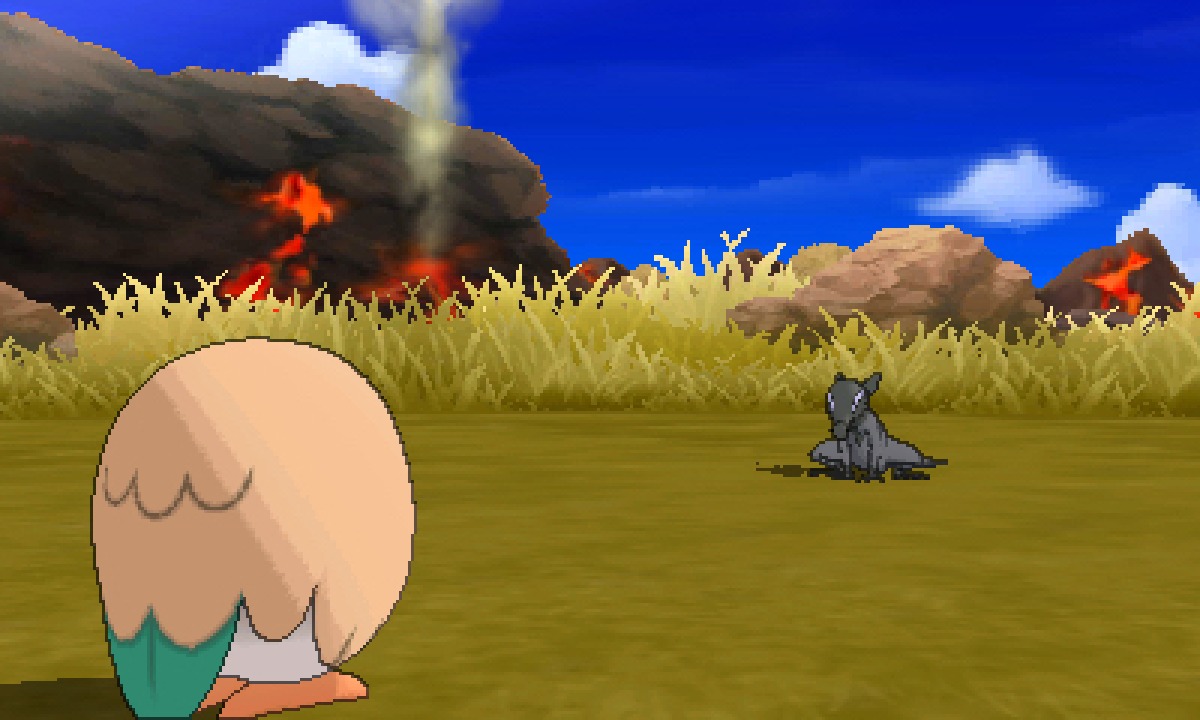
Paired versions had differed by catchable Pokémon since 1996, but Sun and Moon found a new axis: time itself. Pokémon Sun runs on your 3DS clock. Pokémon Moon runs twelve hours offset from it, so when it is morning in the real world, it is night in Alola. Totem Pokémon differ between versions, certain species only appear in one version’s day or night, and Rockruff evolves into the wolf-like Lycanroc’s Midday form in Sun and its Midnight form in Moon. Even the cover legendaries mirror the split — Nebby, the little nebula of a Pokémon at the heart of the story, evolves into Solgaleo at the Altar of the Sunne in Sun, and into Lunala at the Altar of the Moone in Moon.
The market noticed. Sun and Moon were the most pre-ordered games in Nintendo’s history to that point, and their free demo was downloaded more than 3.5 million times, a 3DS demo record. On launch day Nintendo shipped ten million copies worldwide. In the Americas they sold 3.7 million units in under two weeks, making them the fastest-selling games in Nintendo of America’s history at the time. Lifetime sales stand at 16.33 million, making Sun and Moon the third-best-selling Nintendo 3DS games ever, behind only Mario Kart 7 and their own predecessors, Pokémon X and Y. A year later, enhanced versions — Pokémon Ultra Sun and Ultra Moon — returned to Alola with an alternate storyline, which tells you how confident Nintendo was in this region.
Ten Years On
So where do Sun and Moon sit, a decade later? Not as a detour — as a hinge. Regional forms, born here as an anniversary treat, are now a permanent part of how new generations refresh old favourites. The story-first structure, the companion who talks back, the ride Pokémon that freed your party from HM duty, the boss fights against wild giants rather than badge number five: all of it fed into what Pokémon became on Switch. Even the things that did not survive intact — trials gave way to Gyms again, Z-Moves to later generations’ own spectacles — proved the series could retire sacred cows and be loved for it. The games hold up, too. Alola is still the warmest region Pokémon has built, the soundtrack still sounds like a holiday, and there is no other entry where the place itself feels this much like the point.
If you still have a 3DS, Sun and Moon are easy to recommend and easy to find, and the two versions genuinely reward a second run under opposite skies. If you played them in 2016, this anniversary is a good excuse to go back and notice how much they were quietly rearranging. Pokémon had spent twenty years perfecting a formula. In Alola, for one sunlit generation, it set the formula down, stamped a passport instead, and trusted us to enjoy the trip. Ten years on, that trust still looks like the smartest bet Game Freak ever made.
— Chip
For more launches from this date, see This Day in Gaming History: November 18.