
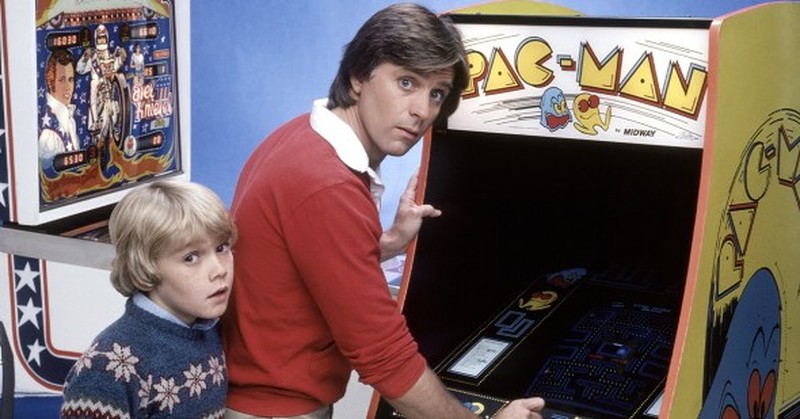
Before esports, before streaming, before anyone had thought to put video games on television at all, there was Starcade. Airing from 1982 to 1984, first in syndication and then on Ted Turner’s WTBS, the show invited contestants to compete on the newest arcade cabinets for prizes that escalated from home computers to a full-size arcade machine of their own — and, for grand champions, a holiday. It ran for 133 episodes. Then, like the arcade boom that created it, it vanished. Its second life may be more remarkable than its first: the show’s production company, JM Production Company, eventually made every single episode available to watch free online, turning a half-remembered slice of TV history into one of the richest primary sources we have on the golden age arcade.
A game show built out of the arcade boom
The format was elegant. Two players — often a parent and child, or paired contestants — answered video game trivia questions to earn the right to play, then faced off on three arcade games chosen from a rotating wall of five cabinets, accumulating scores under time pressure. The highest scorer advanced to a bonus round, racing the clock on a fourth game for the grand prize. Hosting duties began with Mark Richards and settled into the warm, avuncular Geoff Edwards, whose genuine enthusiasm for the games — still a novelty among TV presenters of the era — carried the show. Dragon’s Lair, famously, got an entire episode’s devotion when the laserdisc phenomenon was new, and watching contestants grapple with it in 1983 is watching a culture adjust to a new medium in real time.
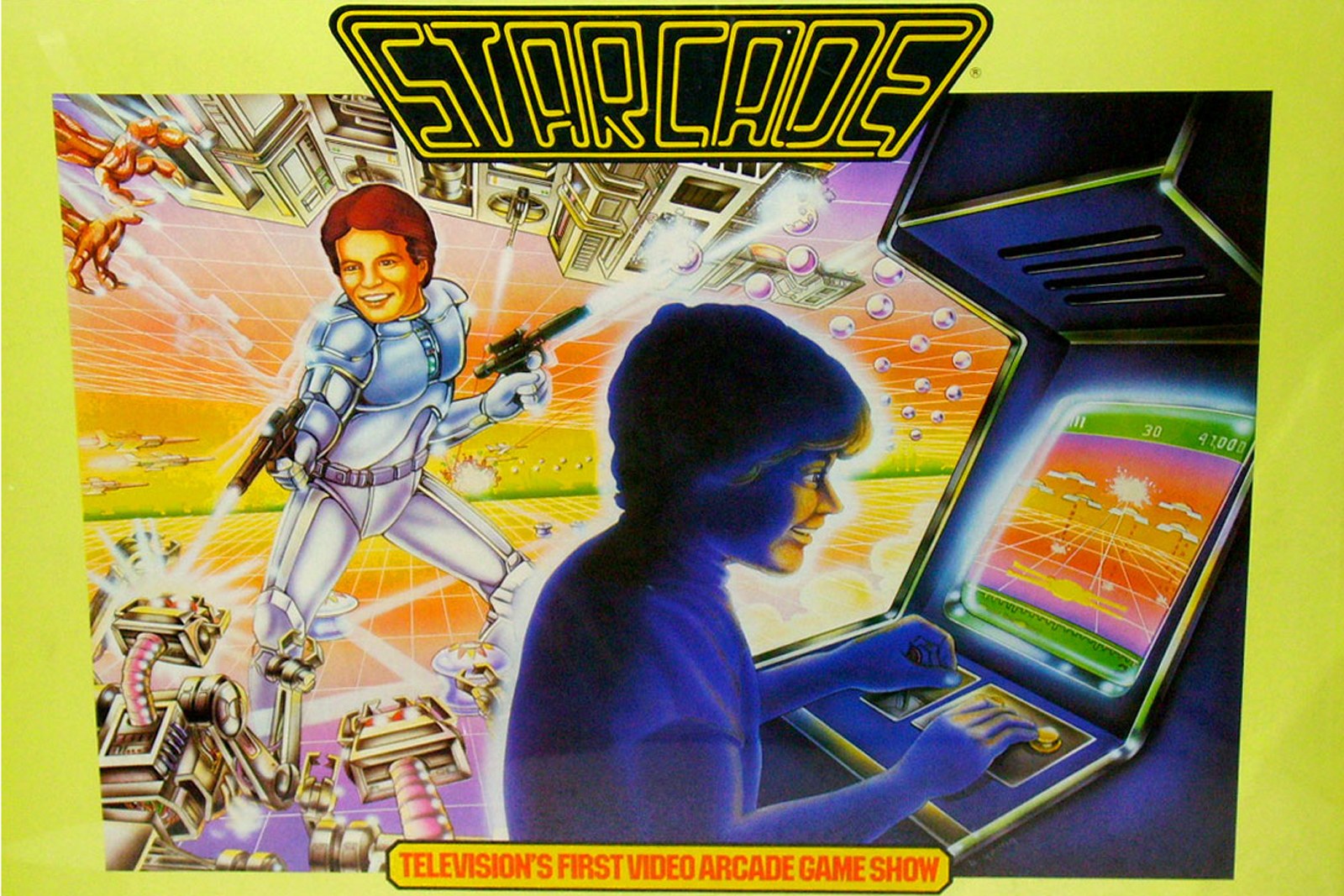
What Starcade understood, years before the industry standard existed, was that watching other people play games is entertainment. The show’s drama was real: scores ticking up against a clock, a parent handing over the controls to a kid who was plainly better, the visible difference between someone who had studied a cabinet and someone meeting it for the first time. The trivia rounds, meanwhile, are now a fossil record of what the early industry thought about itself — the questions name the companies, designers and games that 1982 believed mattered.
Why the archive matters
Complete runs of early eighties syndicated television are rare; complete runs of anything about video games from that era are rarer still. The Starcade archive preserves not just the broadcasts but, around them, a small trove of production material, contestant information and behind-the-scenes documentation that JM Production Company maintained with unusual care. For historians, the episodes are evidence: release timings, cabinet configurations, public reactions to games like Pole Position and Tron, captured as they happened rather than recalled decades later. For the rest of us, they are a time machine with unusually good lighting.
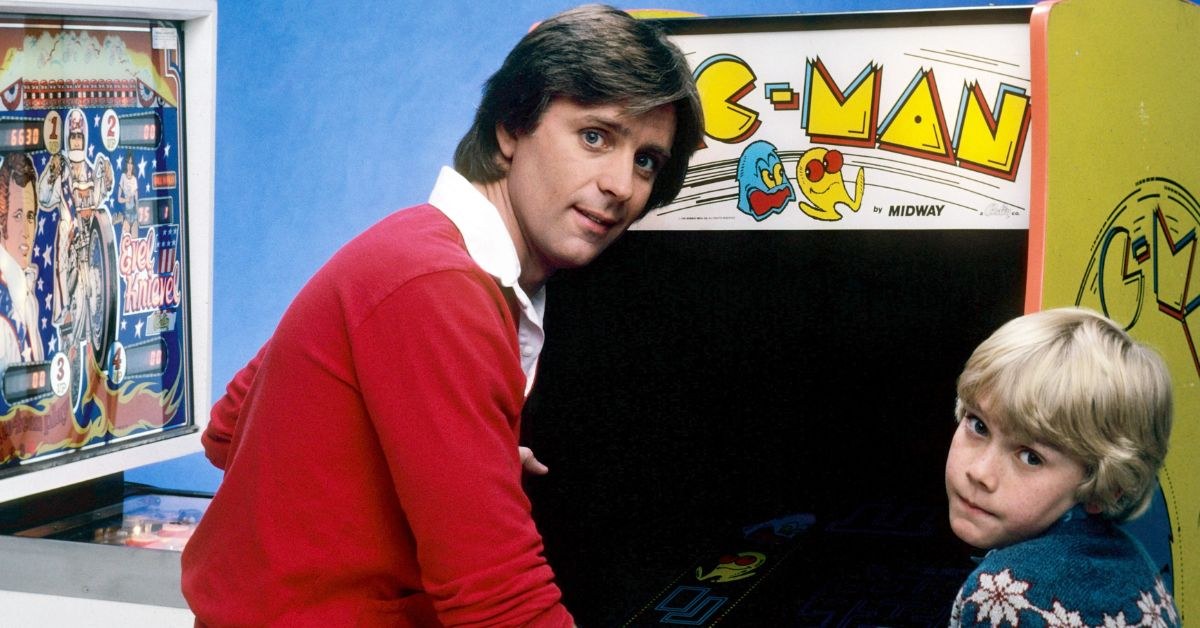
There is also the simple, accumulating pleasure of the games themselves. Nearly every significant cabinet of 1982 to 1984 passes across the Starcade stage, played by amateurs under pressure — which means the footage shows how these games actually felt to the public, not how experts demonstrate them now. The fashions, the prizes (a TRS-80! A home entertainment centre!), and the advertisements embedded in the era’s broadcasts complete a portrait no documentary could reconstruct as vividly.
The show that keeps returning
Starcade’s afterlife has had several chapters: reruns on nostalgia networks, a crowdfunded reboot attempt in the streaming era, and a permanent place in histories of games on television. But the free archive remains the essential version, because it is complete and because it belongs, in spirit, to the audience that grew up with it. JM Production Company could have locked the episodes behind a licensing deal or let the tapes degrade in a warehouse, as happened to so much early gaming television. Instead the company built a home for the show online and opened the doors. In an industry that routinely loses its own history, that choice deserves to be named as the act of preservation it is.
How to watch 133 episodes without losing a weekend
Nobody needs a viewing strategy for a game show, but a little curation repays the effort. Start with the Dragon’s Lair episode, the show’s most famous hour, to see a brand-new technology baffle an entire studio in real time. Move to any episode featuring the great all-rounders of the era — Ms. Pac-Man, Donkey Kong Jr., Pole Position — and watch how quickly contestants’ strategies diverge from modern received wisdom; the folk techniques on display are a record of how arcades taught their players before the internet existed to teach them faster. Save some of the final WTBS episodes for last, when the show’s format had fully settled and the game selection reached into 1984’s stranger catalogue. Along the way, keep an eye on the Starcade ‘wall’ of featured cabinets itself: it functions as a quarterly chart of the industry’s centre of gravity, quarter by quarter, hit by hit.
It is also worth watching at least one episode for the commercials and prize segments alone. The show sold the arcade dream back to its audience in consumer form — home versions, home computers, the promise that the magic could be owned — and those segments chart the exact moment the industry’s centre began drifting from the arcade floor toward the living room. Starcade did not know it was documenting a transition. That is what makes the documentation so good.
The verdict on a television landmark
One more thing: the contestants grew up
The archive’s loveliest recurring pleasure is biographical. Many Starcade contestants were children of ten or twelve, playing with a seriousness that television had never granted their hobby. Those children are now in their fifties, and the show’s online afterlife is full of their testimony — comments, interviews and reunions in which former contestants describe what the experience meant, what became of the prizes, and how it felt to be taken seriously as a player in 1983. A handful went on to lives in games and technology; many more simply kept the memory as proof that their childhood passion was real and witnessed. The show even generated its own folk heroes, the dominant champions whose multi-game mastery regular viewers learned to recognise. In preserving the episodes, JM Production preserved those people too, at the exact age when the culture was theirs. Few archives manage to be both industrial history and family album. This one does, 133 times over.
Starcade is not great television in the prestige sense, and it never tried to be. It is something rarer: a complete, freely available record of a culture at its peak, made by people who took games seriously years before taking games seriously was respectable. Every history of esports, streaming and games media eventually has to start somewhere, and the honest answer is that it starts here, in a Burbank studio, with Geoff Edwards cheering for a kid at a Centipede cabinet. That all 133 episodes survive — and cost nothing to watch — is one of preservation’s quiet victories. Queue up the first episode tonight. The hotline is open, the cabinets are warm, and the show holds up better than it has any right to.
Postscript: your first episode, chosen for you
If the archive’s completeness feels paralysing — 133 episodes is a commitment, however delightful — accept a shortcut from a fellow traveller. Watch one episode from the Mark Richards era to see the format finding its feet, one from the Geoff Edwards prime to see it flying, and the Dragon’s Lair special to see it meet the future. Three hours, three years of television history, and you will understand the show’s whole argument: that games deserved cameras, commentary and champions long before the rest of culture agreed. After that, browse by cabinet rather than by date. Pick the game you loved most in 1983 and find the episode where a twelve-year-old in a cable-knit sweater plays it for a home computer. That small act of time travel, repeated across the archive, is Starcade’s gift to its audience — and the reason a game show cancelled in 1984 still gains new fans every year. The tapes were kept. The door is open. Walk in.