
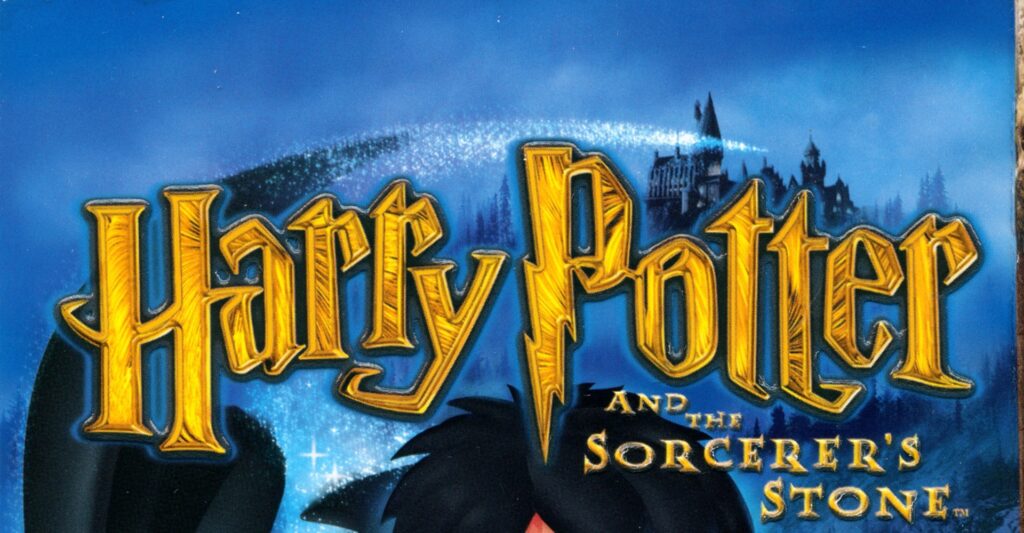
At a glance: Harry Potter and the Philosopher’s Stone — PlayStation (lead version), also on PC, Game Boy Color and Game Boy Advance · Developer: Argonaut Games (PS1) · Publisher: Electronic Arts · Original release: November 16, 2001 · Genre: Action-adventure · The score: 64 on Metacritic. The sales: eight million copies on the PS1 alone. Both numbers are true, and the gap between them is the story.
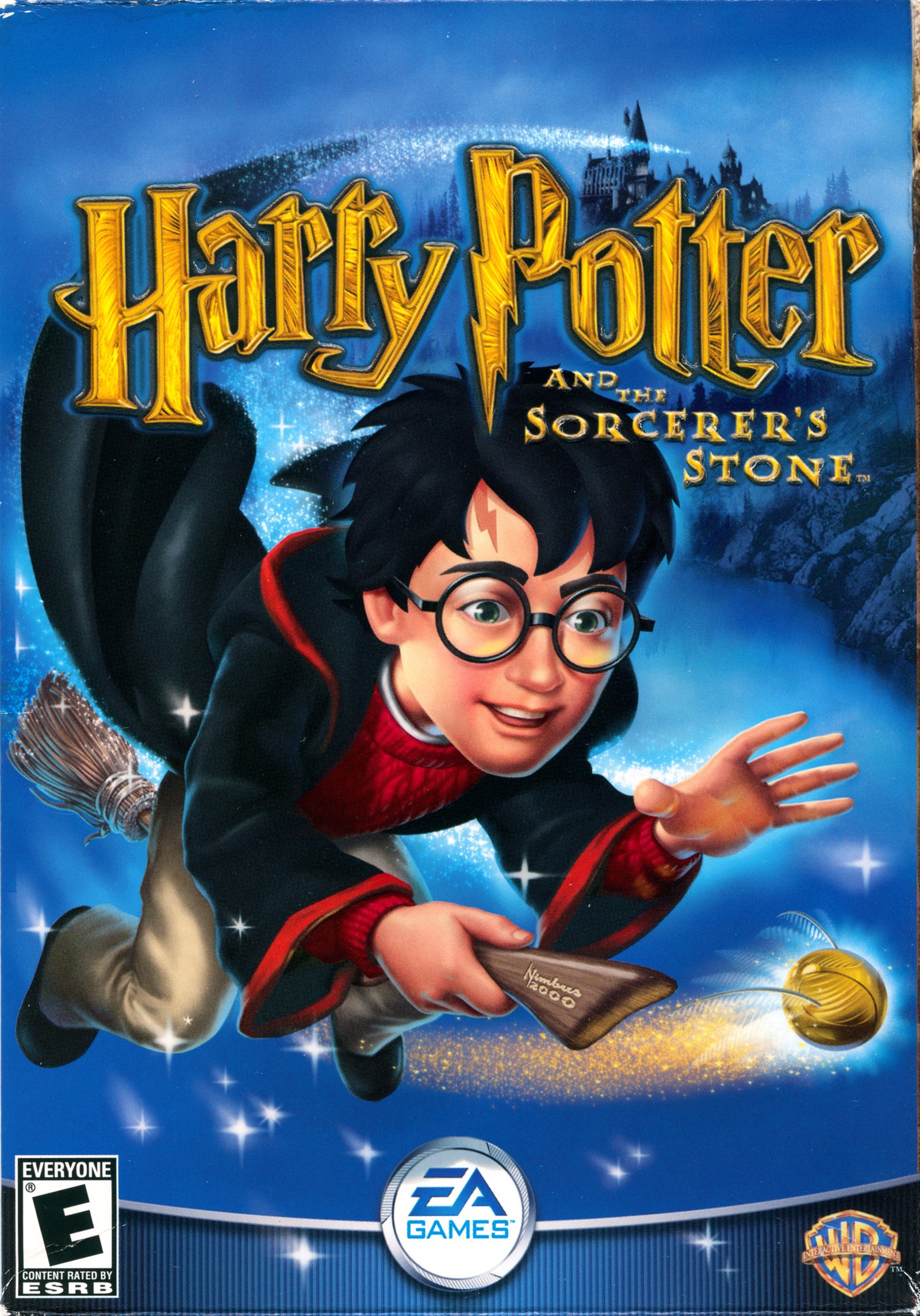
Twenty-five years ago today, Harry Potter arrived everywhere at once. The film opened that morning and proceeded to have the biggest opening weekend in box office history. The games landed the same day — and “the game” is doing a lot of work in that sentence, because there wasn’t one. Electronic Arts put out a shelf of them: a 3D adventure for the PlayStation, a separate PC game, a turn-based RPG for the Game Boy Color and a top-down adventure for the Game Boy Advance, all called Harry Potter and the Philosopher’s Stone — or Sorcerer’s Stone, if you were buying it in North America.
The PlayStation version, built by Argonaut Games, is the one this anniversary belongs to. It was reviewed like a pleasant diversion for kids and bought like a console-defining blockbuster. A quarter-century on, it might be the most interesting kind of hit there is: the kind the critics shrugged at and an entire generation never forgot.
One Date, Two Premieres
EA had moved early. On August 10, 2000, the publisher announced it had acquired the Harry Potter game rights from Warner Bros., and by E3 2001 the games were being shown for PC, PlayStation, Game Boy Color and Game Boy Advance, all aimed at November. An EA press release dated November 13, 2001 announced the ship plan, tying the finished games to the November 16 release.
The film’s opening was a record-breaking event in itself. After a London premiere on November 4, Harry Potter and the Philosopher’s Stone opened officially in the UK and the US on November 16, in what was then the widest release in history — 3,672 theatres in the US and Canada. It took $90.3 million in its first weekend, smashing the record The Lost World: Jurassic Park had held for four years, and went on to become the highest-grossing film of 2001. The games were not riding on a normal movie. They were riding on a phenomenon at full speed. One day earlier, Microsoft had launched a games console of its own in North America — a story we told in Original Xbox at 25 — which makes that week one of the most crowded in gaming history.
Argonaut Builds a Hogwarts
Argonaut Games was a British studio with real 3D pedigree — this was the team behind the Super FX work on Star Fox and, more recently, the Croc platformers. For Potter, they built the game as a 3D action-platformer on the engine they had developed for Croc: producer Jamie Walker, designer Stephen Jarrett and programmer Ben Wyatt led a team tasked with turning a school you could only imagine into a place you could walk around.
They didn’t work in a vacuum. The PlayStation game was designed concurrently with the Game Boy Color and Game Boy Advance versions, with input from J.K. Rowling herself and from the film’s producers, so that all three versions shared a consistent presentation. Jeremy Soule composed the score — a soundtrack album eventually followed digitally in 2006 — and the voice cast performed with British accents throughout, a detail reviewers singled out for praise, particularly the game’s Snape.
Spell Lessons and the Invention of Flipendo
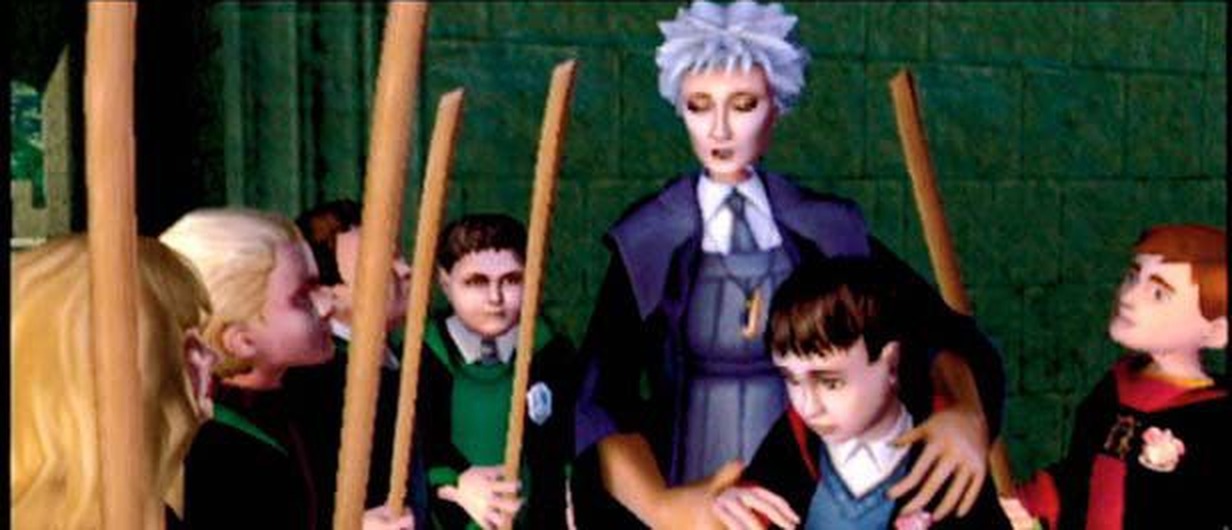
The structure is a school year. Harry explores a big, interconnected Hogwarts, attends classes, and learns spells through Simon-style button-sequence lessons — watch the pattern, repeat it, earn the spell. Out in the castle, coloured sparkles mark the objects a spell can work on, and the game picks the right one for the job. There is no jump button at all: walk Harry at a ledge and he leaps on his own, a decision some critics called a kindness and others called the whole problem.
The spell every player remembers is the first one. Flipendo, the Knockback Jinx, was invented for these games — it appears in none of the books and none of the films. It became the series’ workhorse spell anyway, turning up in game after game for two decades before making its nostalgic return in Hogwarts Legacy. Around the edges of the main quest sat the collecting: Bertie Bott’s Every Flavour Beans, traded to Fred and George Weasley for passwords that unlocked rewards like the Nimbus 2000, and Famous Witches and Wizards cards tucked into secret areas. And then there was Quidditch, played as a three-phase chase — fly the rings, race the rival Seeker, grab the Snitch. It was the feature everyone asked about and the one that divided reviewers most; more than one critic suggested the sport deserved a game of its own, and two years later EA agreed, releasing a standalone Quidditch World Cup.
The Critics Split Down the Middle
Read the reviews side by side and you would think they played different games. IGN’s Jeremy Conrad scored it 8/10, praising the large, explorable castle, the spell-casting and textures he called sharp for a PlayStation game. GameSpot’s Gerald Villoria scored it 4/10 and called it a children’s title with simplistic mechanics. Electronic Gaming Monthly‘s three reviewers landed at 4.5, 6.5 and 6, with the game clocking in at around seven hours. Game Informer gave it 5.5/10. Metacritic settled the argument at 64 out of 100 — “mixed or average.”
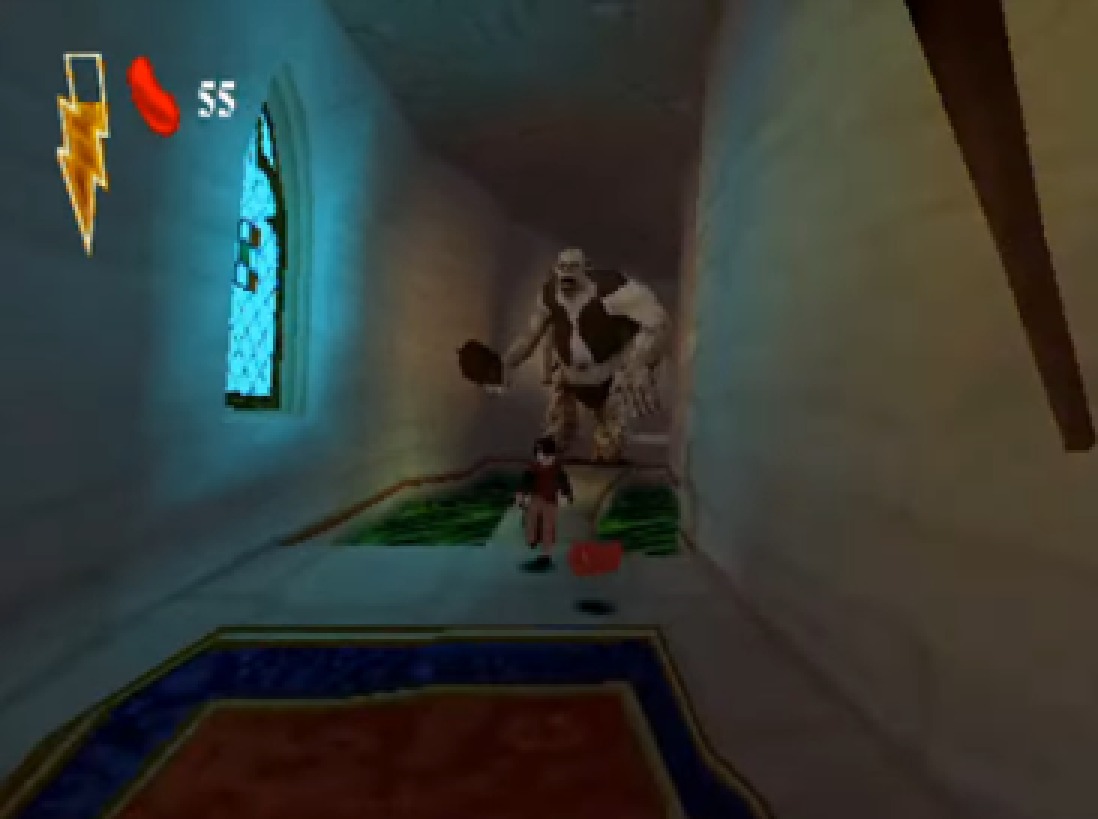
Where the critics agreed was Hogwarts itself. Conrad, Villoria, Official U.S. PlayStation Magazine‘s Joe Rybicki and GamePro all praised the castle’s scale and fidelity to the books’ spirit — the classes, the characters, the feeling of being let loose in the place. Where they pushed back was the machinery around it: blocky, jagged visuals, framerate trouble during Quidditch, puzzles and platforming aimed squarely at younger players. Sean Miller of The Electric Playground dissented from even the Hogwarts praise, finding the environments bland and lifeless. History has been kinder than the average of those scores — but the average is worth remembering, because of what happened next.
Eight Million Copies of a “Kids’ Game”
In its debut month, Philosopher’s Stone was the best-selling PlayStation game in the United States and the sixth best-selling console or handheld game overall. In December it was still the best-selling PlayStation game in the country. By the end of 2001 it had sold 761,263 copies in the US alone, making it the fourth best-selling PlayStation game of the year. The Game Boy versions topped their own charts the same month — the GBA game was the handheld’s best-seller, the Game Boy Color game likewise, in a clean sweep for the name.
By May 2003, the PlayStation version had sold eight million copies worldwide. That made it the sixth best-selling PlayStation game of all time — on a console whose library includes Gran Turismo, Final Fantasy VII and Metal Gear Solid. It earned a Platinum award from ELSPA for its UK sales and a nomination for Console Family Game of the Year at the Interactive Achievement Awards. Count every version together and the total runs to roughly 11.9 million copies. The PS2 had been on sale for a year when Argonaut’s game arrived; the humble PS1 disc outsold nearly everything on its own machine anyway. It may be the last true blockbuster the original PlayStation ever had.
Four Games Called Harry Potter and the Philosopher’s Stone
The strangest thing about the launch is that the name covers genuinely different games. The PC version, by KnowWonder, ran on Unreal Engine technology and taught spells by having you trace their shapes with the mouse; Soule composed its score too, reviewers admired how faithfully it recreated the film’s look, and it went on to rank among the best-selling computer games of its era in the United States. A Mac version from Westlake Interactive and Aspyr followed in February 2002.
Griptonite Games made both handheld versions, and made them differently from each other. The Game Boy Advance game is a top-down adventure with puzzle elements — the best-selling GBA game in America in its debut month, and good for 690,000 US sales by 2006. Reviewers there left us a gift: both IGN and GamePro noted that through the GBA’s speaker, Harry’s cry of “Flipendo!” sounded a great deal like “Nintendo!” The Game Boy Color version is the connoisseur’s pick — a full turn-based RPG, with spell effects built by combining the Famous Witches and Wizards cards you collected, trading via the Game Link Cable, and no Quidditch at all, because Griptonite decided the hardware couldn’t do it justice. EGM‘s Shane Bettenhausen called it one of the best RPGs on the Game Boy Color. It also had the longest development cycle of the lot. One name, four games, and at least two of them are still argued about.
Two Years Later, a Remake
The story doesn’t end in 2001. In December 2003, EA released Harry Potter and the Philosopher’s Stone again — a new version for PlayStation 2, GameCube and Xbox, developed by Warthog Games on the engine and assets of the previous year’s Chamber of Secrets. It followed the film more closely than Argonaut’s game had, and reviewers praised its voice acting and accessibility while marking down its camera, graphics and framerate: Metacritic scores of 62 on GameCube, 59 on Xbox and 56 on PlayStation 2. Same name, fifth game. If you grew up swearing the PS2 version was the one you played in 2001, now you know why you’re both right and wrong.
Twenty-Five Years On
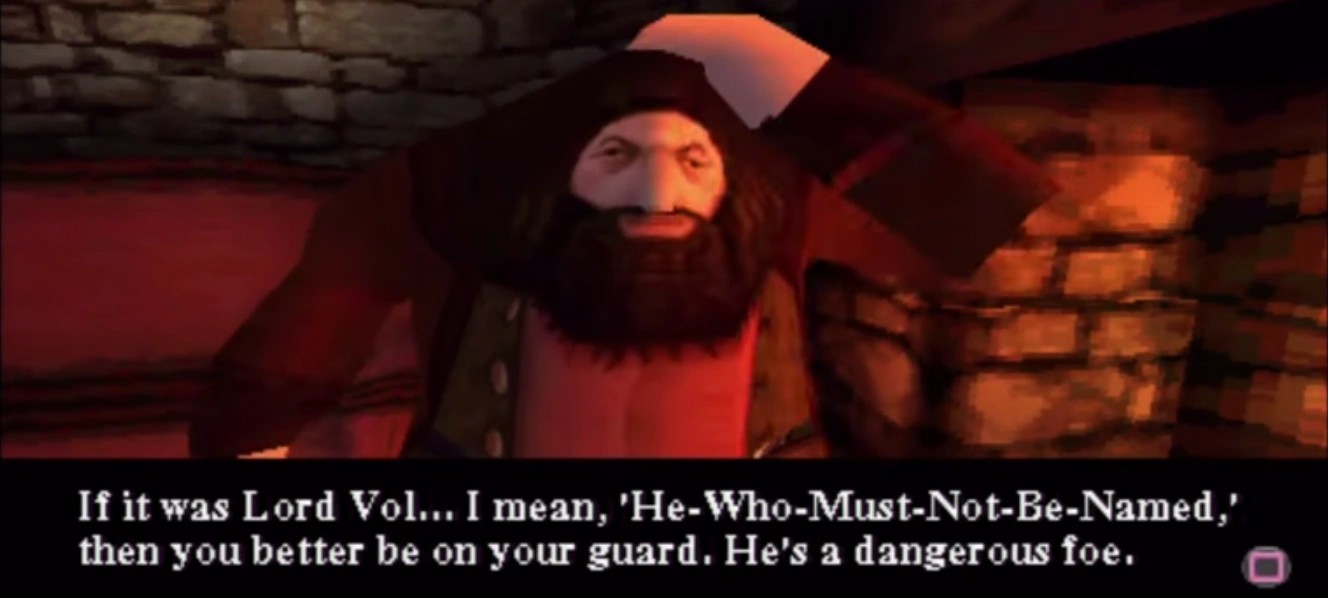
What survives of a 64-on-Metacritic licensed game, twenty-five years later? More than you’d think. Flipendo survives — a spell invented at a developer’s desk that outlived the film series it was never in. The castle survives, as the first 3D Hogwarts a generation of kids was allowed to wander unsupervised. And PS1 Hagrid survives, that magnificent low-poly giant, still turning up in screenshots and anniversary posts like this one, because for a lot of players his wonky, wonderful face is the game.
It shared its birthday with a film that broke every record going, on a console that was supposed to be finished, in a week that also launched the Xbox and — three years later, on this same date — Half-Life 2. It was never the critics’ game. It was everybody else’s. Happy 25th, Harry.
— Chip
More November 16 anniversaries live on This Day in Gaming History, our day-by-day calendar of gaming anniversaries.