
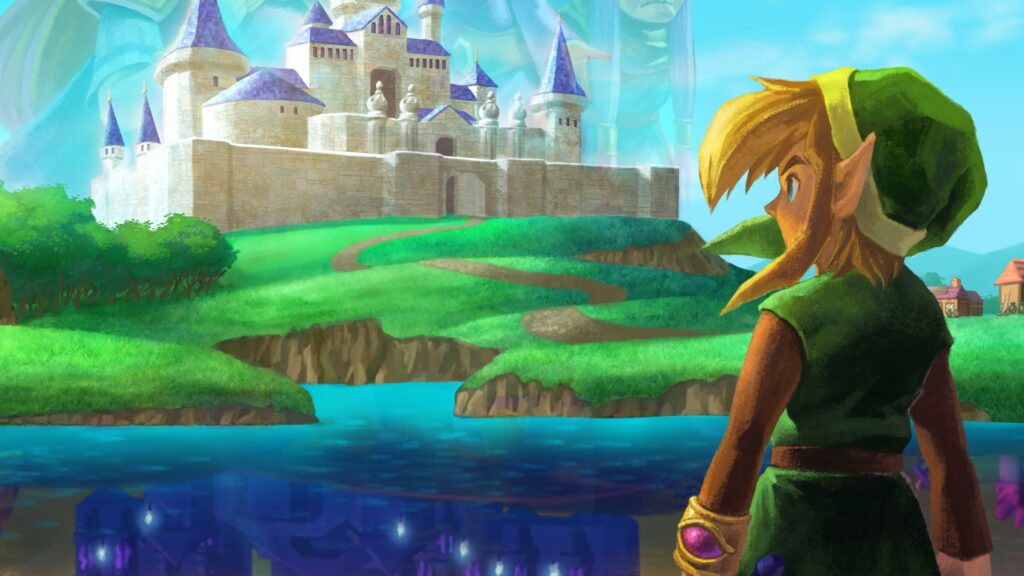
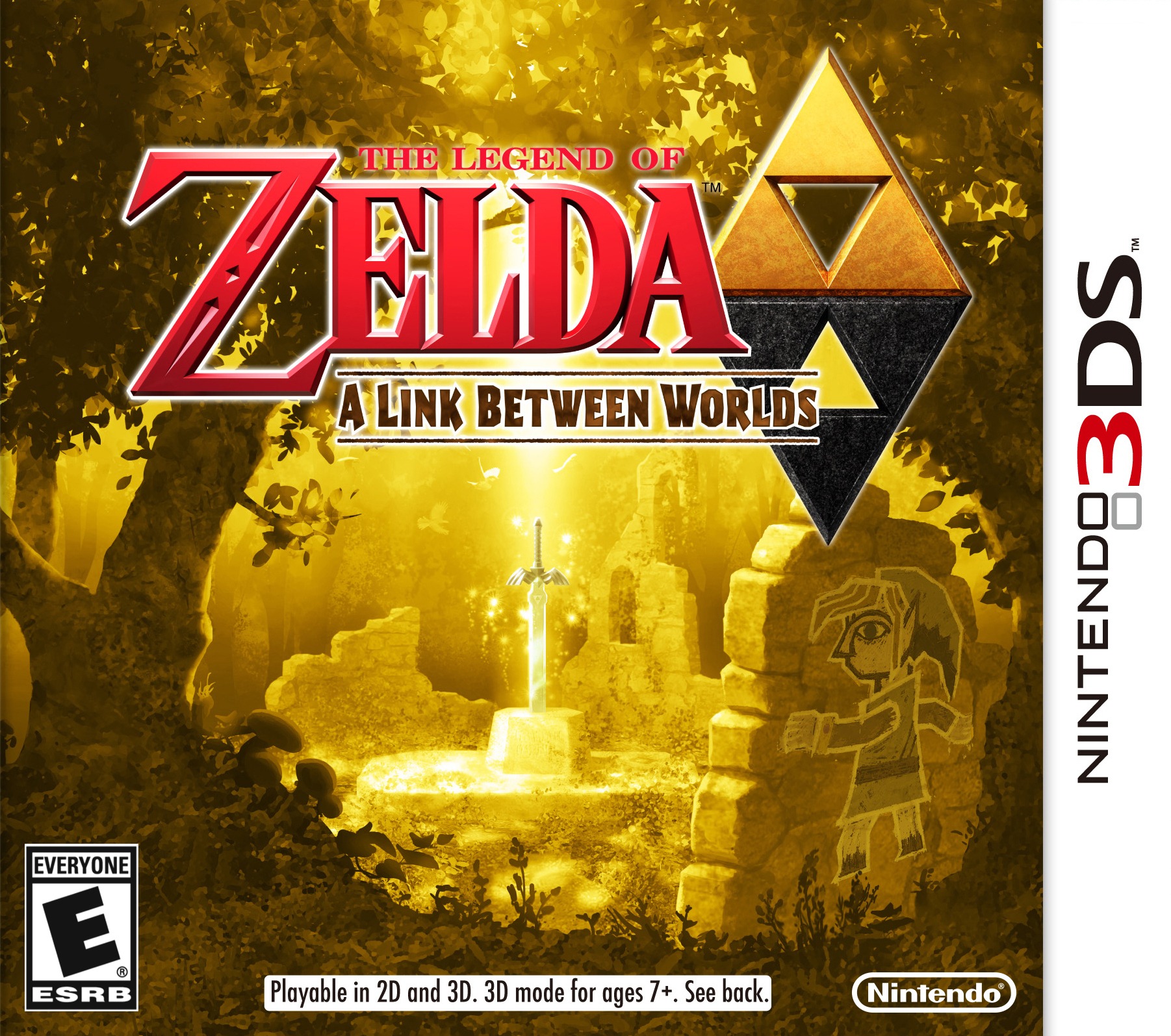
At a glance — Game: The Legend of Zelda: A Link Between Worlds · Developer: Nintendo EAD · Publisher: Nintendo · Original release: November 22, 2013 (North America / Europe) · Original platforms: Nintendo 3DS · Genre: Action-adventure · Director: Hiromasa Shikata · Producer: Eiji Aonuma · Music: Ryō Nagamatsu
It should not have worked. A sequel, two decades on, to A Link to the Past — for many players the sacred text of the series — built on the same map, the same structure, the same two-worlds trick. That is the bravest thing about A Link Between Worlds, and on November 22, 2013 it proceeded to out-argue the sceptics on every front: one of the most acclaimed games on the 3DS, a multi-million seller, and the release that broke Zelda’s dungeon order open for good. Thirteen years later it remains the model of how to honour a classic — by rebuilding it around one new idea strong enough to hold the weight.
A prototype in a day, a game in four years
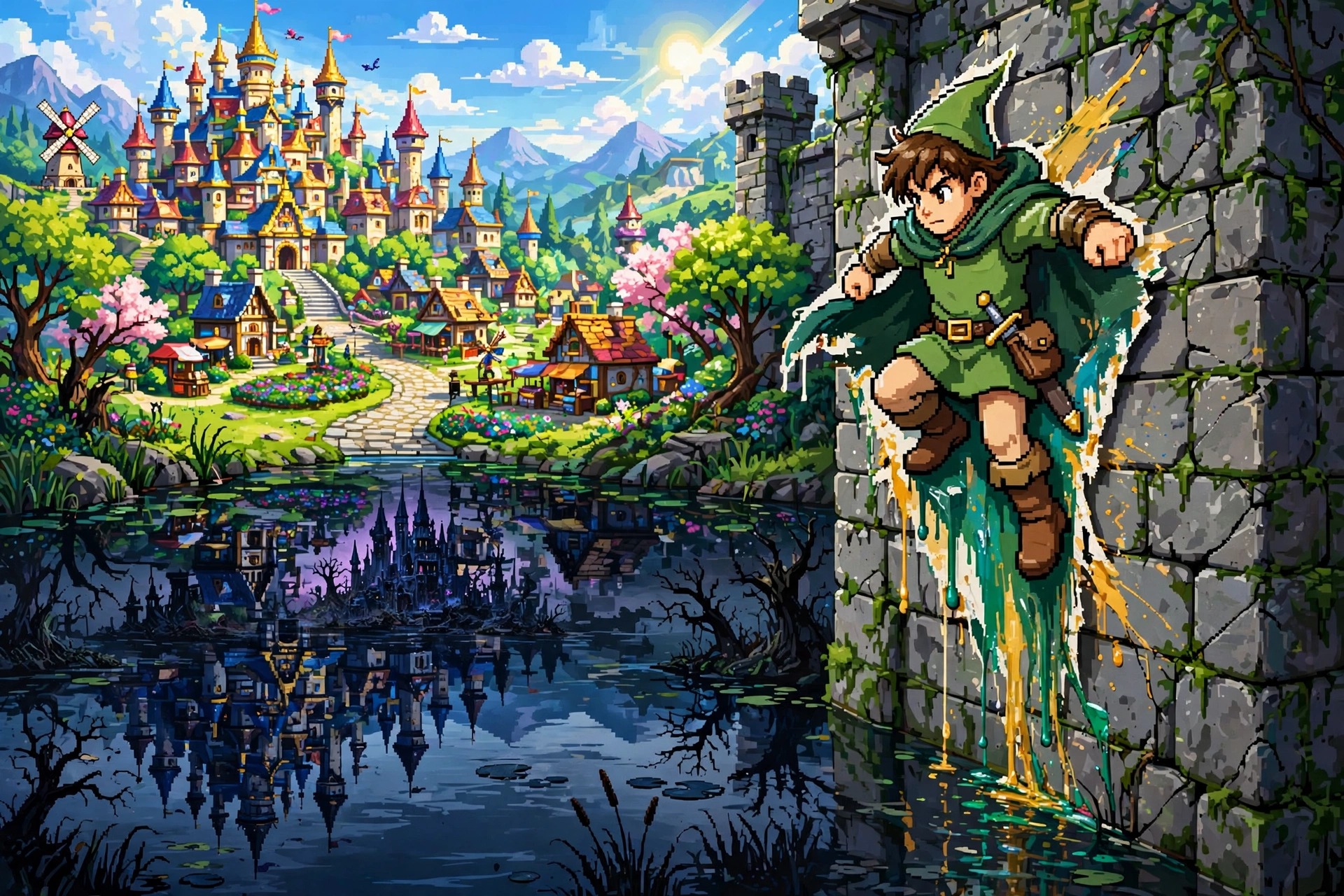
The wall-merging came first, and it came fast. In late 2009, three members of the Spirit Tracks team — among them Hiromasa Shikata and Shiro Mouri — began a new handheld Zelda around the theme of “communication.” Shigeru Miyamoto called that concept outdated. Shikata countered with a different idea: Link entering walls. Mouri had a working prototype within a day, and the sight of Link sliding around corners as a 2D mural unlocked a flood of designs. Miyamoto approved the new concept in October 2010 — and within two weeks the team was disbanded, its members reassigned to Wii U launch games. Development ceased entirely.
Producer Eiji Aonuma revived it in November 2011, thirteen months after it was shelved, initially without its core members. Designer Kentaro Tominaga refined the wall system and built small dungeons — planning fifty more — until Miyamoto criticised the approach and suggested the missing half of the equation: base the game on A Link to the Past. Aonuma saw the fit immediately — the top-down landforms converted to 3D space, the wall-shift playing against the 3DS’s stereoscopic depth. Shikata returned as director, Mouri as lead programmer, and the game was finished in October 2013. The sacred map, in other words, was not the starting point. It was the solution.
Ravio’s shop and the death of dungeon order
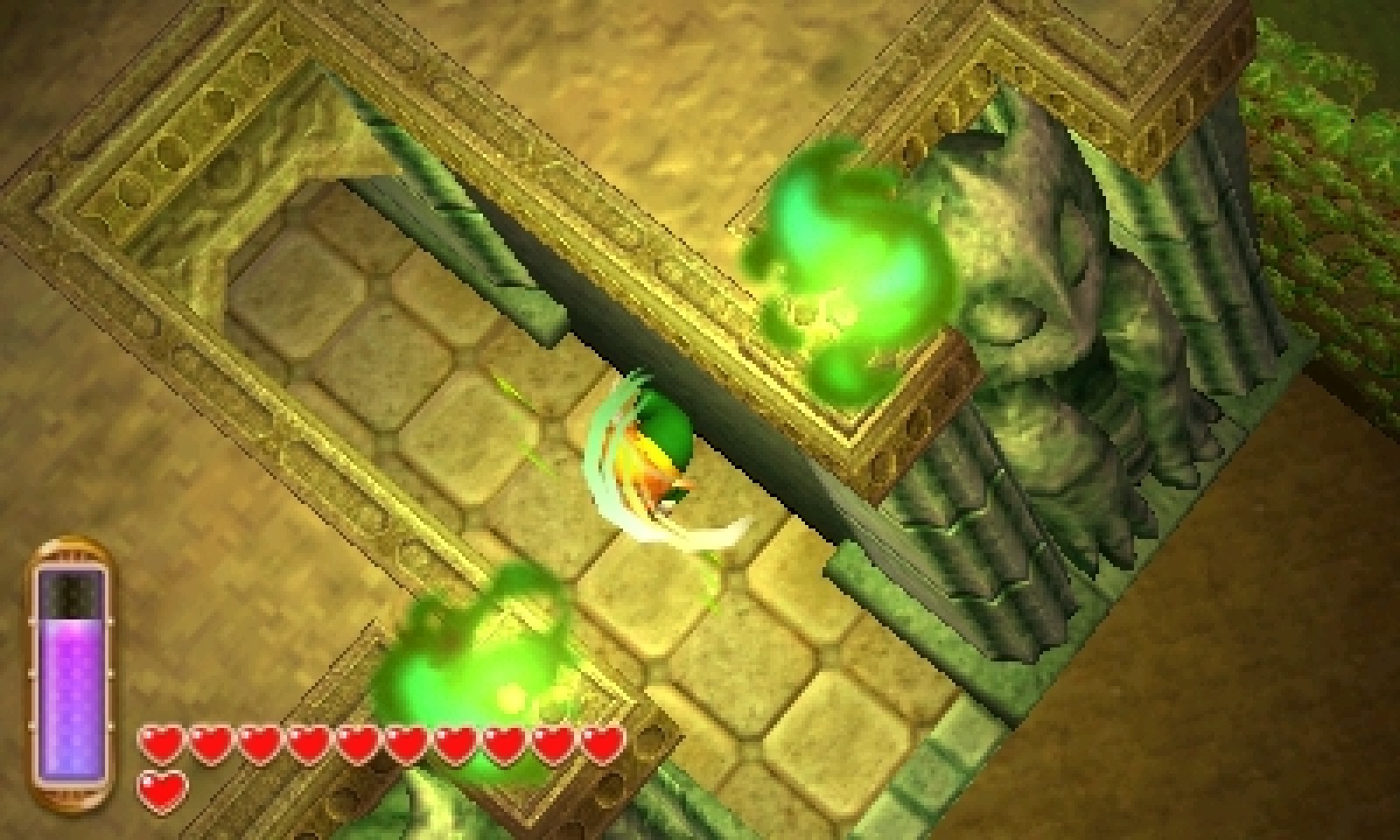
Two structural changes do the revolutionary work. First, the items: instead of finding the bow or the fire rod inside the dungeon that demands them, Link rents them from Ravio, the cowardly merchant squatting in his house — every major item available almost from the start, returned to the shop if Link falls, purchasable outright later. Second, the consequence: with the tools rented up front, the dungeons can be tackled in nearly any order, and Lorule — the decayed mirror kingdom ruled by Princess Hilda, whose own Triforce was destroyed by her ancestors to end a civil war — opens as a genuine second map rather than a scripted second act. The wall-merging ties it together: Link flattens into a mural to slip through fissures between the worlds, round corners, and across gaps, his energy gauge — which also replaces ammunition for every item — draining as he goes. Add StreetPass Shadow Link battles and a four-times-damage Hero Mode, and the most conservative-looking Zelda in years is quietly its most radical.
The craft underneath is easy to miss. A true top-down view hides characters’ faces, so the world’s objects were slanted at an angle to stay readable. Mouri pushed the game to run at 60 frames per second — double the norm — to stabilise the stereoscopic 3D and make stylus-driven inventory dragging feel right. And when the 2DS appeared mid-production, dungeons were revised so nothing required the 3D effect to solve. Even the mural form has a lineage: Aonuma has cited Phantom Ganon diving into paintings in Ocarina of Time as the spark. The rental system, too, was stress-tested against duller alternatives — timed rentals and late fees were considered and dropped in favour of the clean, cruel rule that death returns your gear.
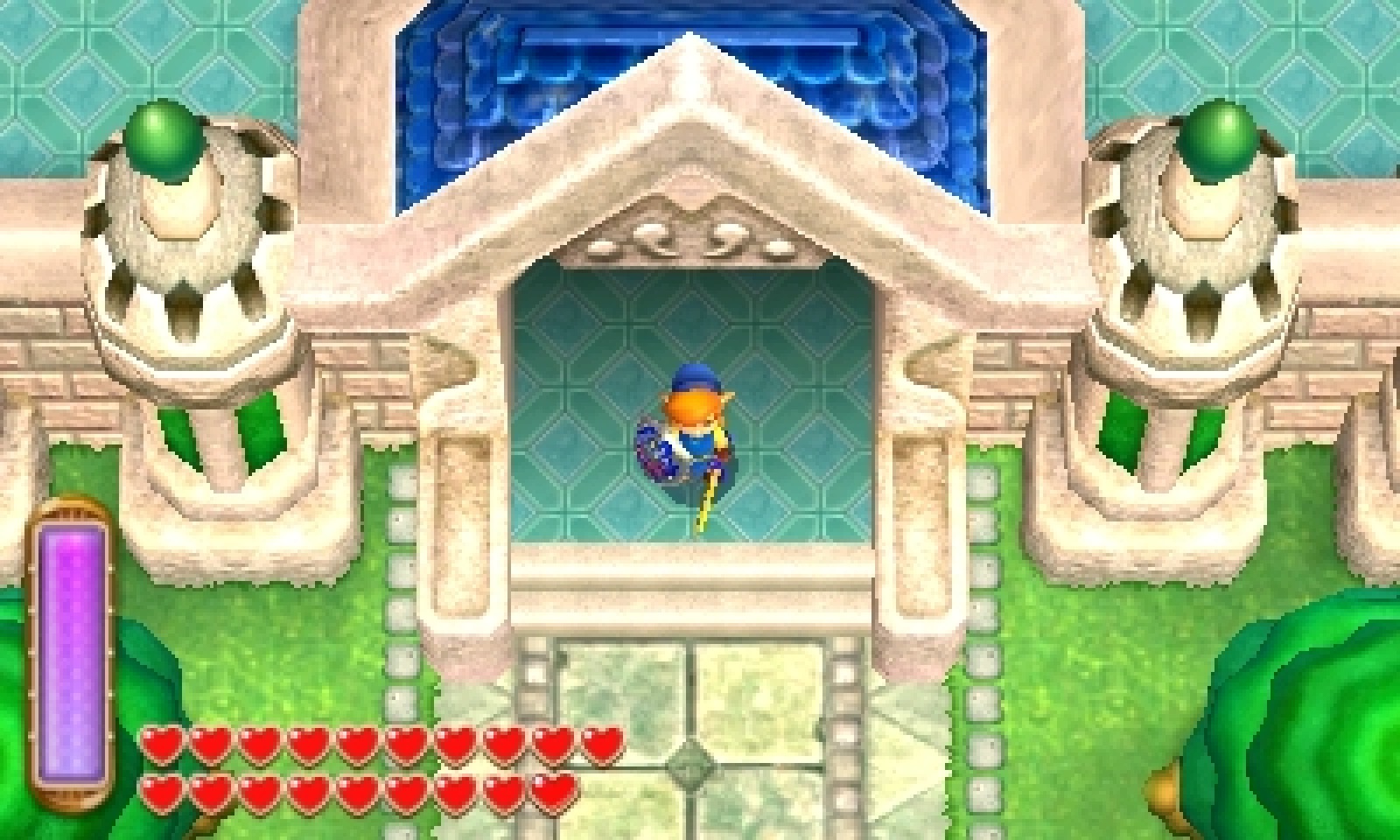
The story earns its mirror, too. Link, a blacksmith’s apprentice, watches the sorcerer Yuga turn a descendant of the Seven Sages into a painting, takes a beating, and wakes to find the merchant Ravio moved into his house — shop, bracelet and all. The bracelet is what saves him when Yuga’s painting curse hits: trapped inside it, the curse becomes the wall-merging gift. Across the fissures sits Lorule, a kingdom that destroyed its own Triforce to end a civil war and has been decaying ever since, ruled by a princess, Hilda, whose desperation curdles into the plot’s real engine — she means to steal Hyrule’s Triforce to save her world, and has been using Link as her unwitting instrument. The final turns — Yuga’s betrayal of Hilda, and Ravio unmasking as Link’s own Lorule counterpart, talking his princess down — give the mirror-world device an emotional symmetry the Dark World never attempted. In the series chronology the game sits in the “Defeated Hero” timeline, after A Link to the Past and the Oracle games, and it wears that lineage openly: the pendants, the Master Sword’s pedestal, the sages — all present, all re-examined.
Acclaim, and 4.26 million copies
The reception matched the ambition. A Link Between Worlds holds a 91 on Metacritic — “universal acclaim,” the fourth-highest score of any 3DS game — and Polygon called it the best Zelda in 20 years. GameSpot went further and named it its overall Game of the Year for 2013, ahead of every home-console release. The praise centred on Ryō Nagamatsu’s soundtrack (Game Informer called it one of the best in gaming), the wall mechanic’s integration into every dungeon, and the open structure — GameSpot again, calling the looseness “a revelatory change” — with only the art style drawing mixed notices. It sold over 2.5 million copies in its first five months and more than 4.26 million by 2022, numbers that made it one of the 3DS’s defining releases, and it received a direct follow-up in Tri Force Heroes (2015). Its deeper legacy is structural: the any-order dungeon design and rental economy were the series’ first real steps away from the locked, linear progression that had governed Zelda since the 1990s — the bridge, in hindsight, between A Link to the Past and the open-air reinvention that followed on the Switch.
Why A Link Between Worlds at 13 still holds
Because it understood the assignment better than any nostalgia act before or since. The map is the same because the map was never the point — the point was what a hero could do inside it, and flattening that hero into a painting changed every room he entered. At 13, A Link Between Worlds is the rare sequel that argues with its original and wins the argument respectfully: same Hyrule, new physics, open doors. The wall was always there. It just took Nintendo twenty-two years to walk through it.
— Chip
For more launches from this date, see This Day in Gaming History: November 22.