
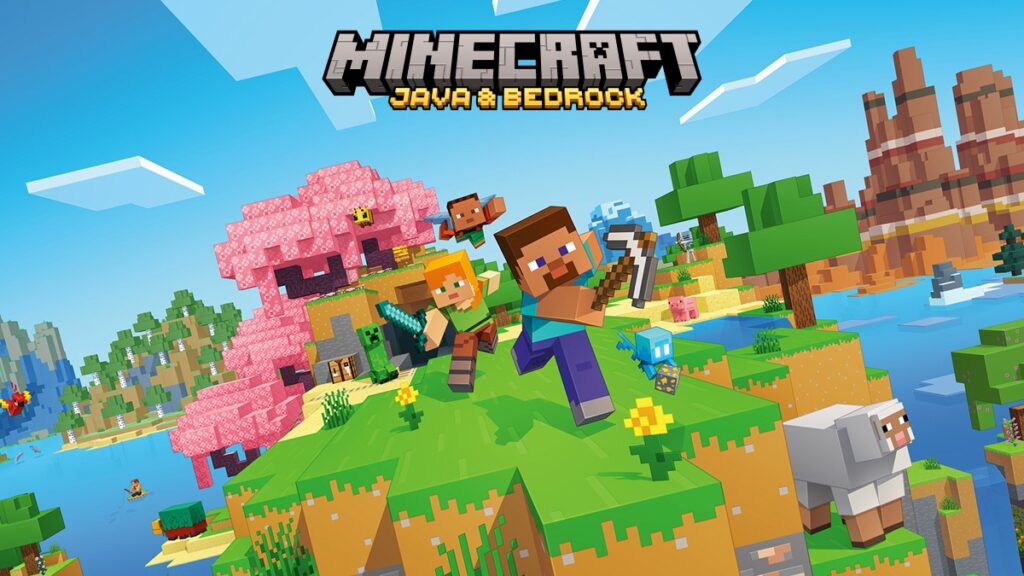
At a glance — Game: Minecraft · Developer: Mojang · Publisher: Mojang · Original release: November 18, 2011 · Original platforms: Windows, macOS, Linux (Java Edition) · Genre: Sandbox, survival
Fifteen years ago today, at a fan convention in Las Vegas, a game that millions of people had already bought finally came out. That is not a typo, and it is the first thing worth understanding about Minecraft: by the time Mojang stood on stage at the Mandalay Bay on November 18, 2011 and declared version 1.0 finished, the game had been on sale for two and a half years, had passed four million paying players, and had already changed what a small team — at first, one person — could expect a game to do. Mojang itself counts a different birthday, the first public build of May 2009, and celebrated fifteen years back in 2024. Fair enough. But the finished game, the one with an ending, a dragon and a version number with no caveats attached, turns fifteen today — and it is still, by an enormous margin, the best-selling video game ever made.
A Weekend Project Called Cave Game
Minecraft began in May 2009 as an experiment by Swedish programmer Markus Persson, known online as Notch. He completed the base programming over a single weekend, ran private tests with a small circle of testers on May 16, and posted the first public version on the TIGSource forums the next day, May 17. That earliest build — later grouped under the name Classic, and remembered by its working title, Cave Game — was barely a game at all: a world of grass and cobblestone blocks you could place and remove, with no monsters, no crafting and no point beyond the placing itself.
What it had, immediately, was an audience. Persson updated the build in public, in the open, responding to forum feedback in something close to real time. Multiplayer arrived during the Classic phase. So did a survival mode with hostile monsters, and ambient music by German composer Daniel Rosenfeld, known as C418, whose quiet piano pieces would become as much a part of the game’s identity as its blocks. The development phases that followed now read like geological layers: Indev from December 2009, Infdev from February 2010 — the version that made worlds effectively infinite — and then the two phases that turned an experiment into a phenomenon.
Minecraft in the Open: Alpha, Beta and Four Million Sales
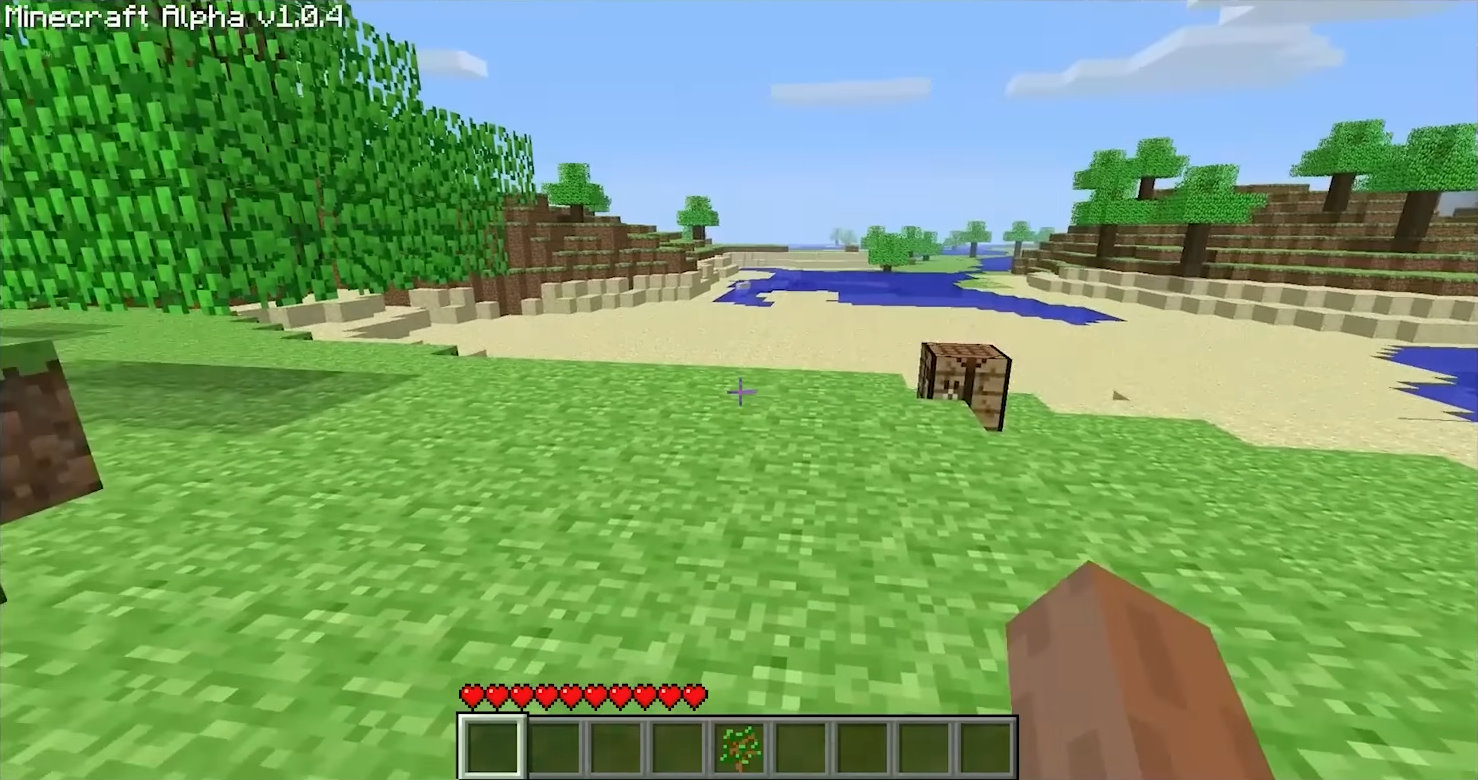
The Alpha phase began on June 30, 2010, and it is where Minecraft became recognisably Minecraft. Updates landed frequently and sometimes chaotically. Alpha introduced redstone, the dust-like material that carries signals between blocks and lets players build working circuits, logic gates and, eventually, functioning computers inside the game. Alpha 1.2.0, released that October, added biomes — distinct regions with their own terrain and weather — and the Nether, a lava-lit underworld reached through a portal of obsidian. By January 2011, still in Alpha and then Beta, the game had sold over a million copies with no publisher, no advertising and no shop shelf: word of mouth did all of it.
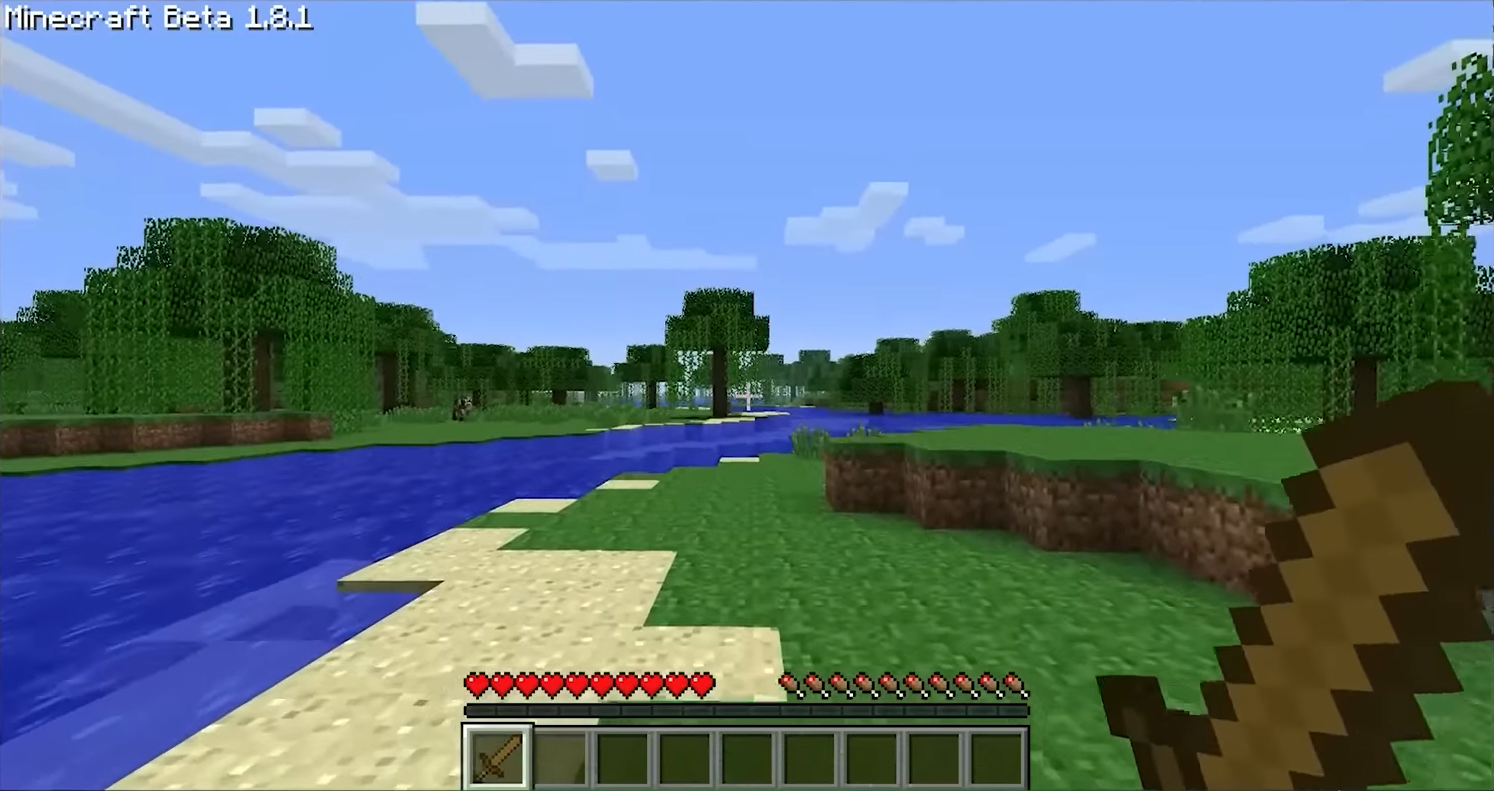
Beta began on December 20, 2010, and the numbers stopped behaving like indie-game numbers. The beta passed sixteen million registered users and four million purchases before the game was even finished. Its last major step, Beta 1.8 — the Adventure Update, released September 14, 2011 — reworked world generation with ravines and new biomes, added sprinting and critical hits, replaced eating-to-heal with a hunger bar, and introduced Creative mode, where players could fly and build with unlimited blocks. In hindsight, Beta 1.8 is the moment the two halves of Minecraft — survival game and building toy — were both fully present. All that was missing was an ending.
November 18, 2011: Version 1.0 Gets an Ending
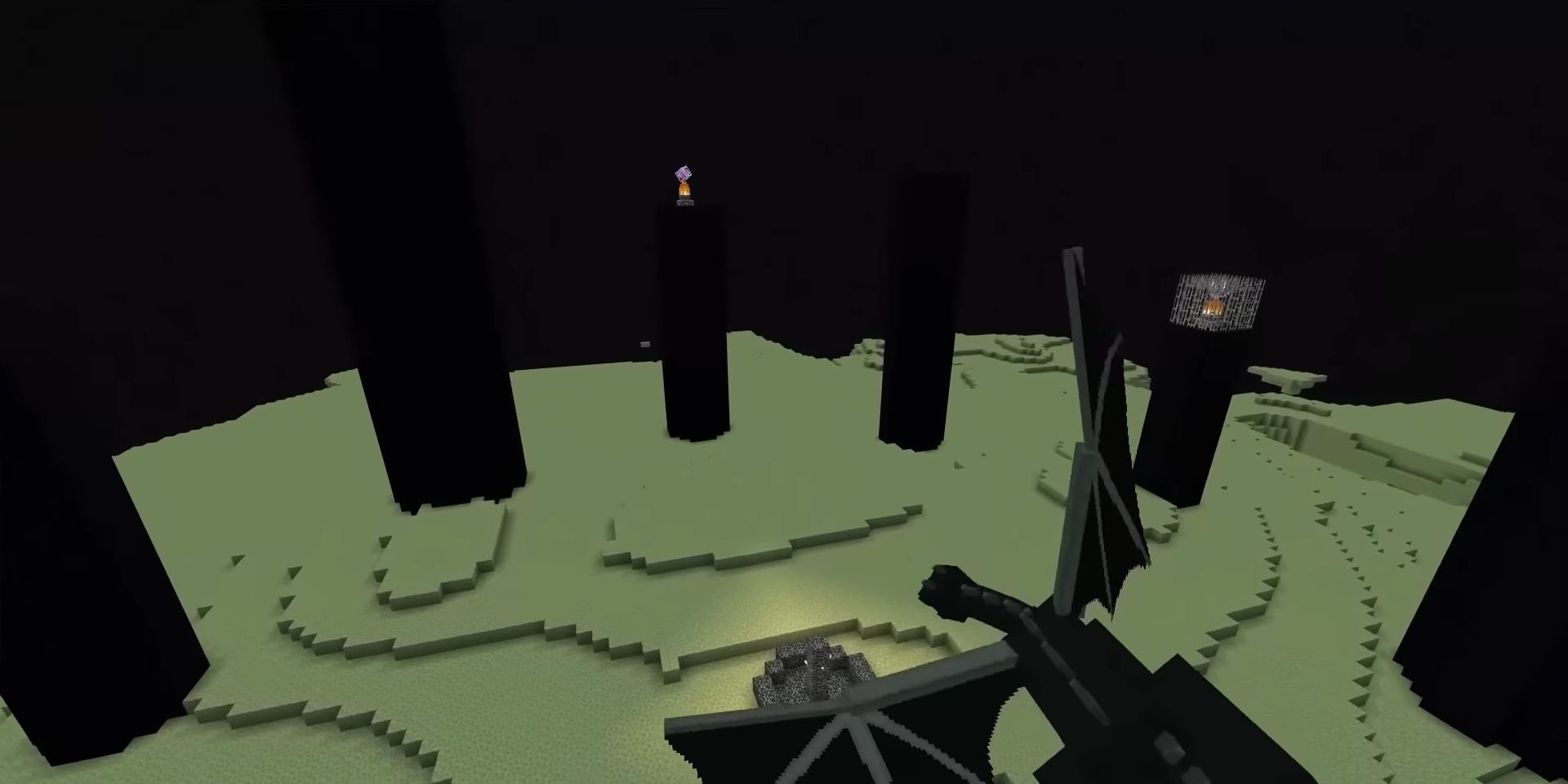
Mojang launched the full game the way it had built it: in front of its players. MineCon, the first full convention dedicated to the game, filled the Mandalay Bay Hotel and Casino in Las Vegas on November 18–19, 2011 — all 4,500 tickets had sold out by the end of October — and during a presentation on the first day, Minecraft 1.0.0 was formally released. The headline addition was the End: a dimension of floating islands in a dark void, guarded by the Ender Dragon, the game’s first true boss. Reaching it meant finding a stronghold, activating an End portal, and fighting your way to the one place in Minecraft where the game, having never told you what to do, finally told you that you had done it.
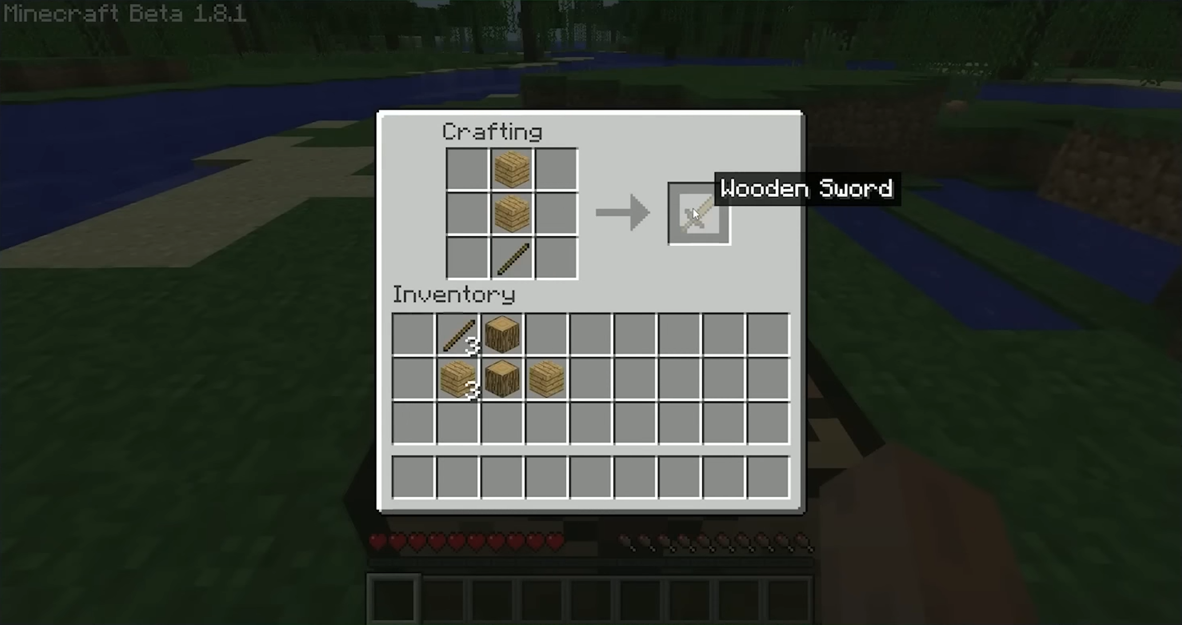
Killing the dragon rolled the End Poem, a roughly 1,500-word text by Irish novelist Julian Gough that remains the game’s only significant piece of writing directed at the player — and then, pointedly, the game put you back in your world and let you keep playing. Version 1.0 also rounded out the RPG-flavoured systems Beta had been assembling, including enchanting. Critics at the time were politely divided on those additions; several reviewers found the dragon fight and experience systems undercooked next to the simple pleasures of digging and building. History has sided with the digging. What 1.0 really certified was not the dragon. It was the loop that was already there: punch a tree, craft a sword, fear the dark, build a house, dig deeper.
The First Night, and Why It Worked
Ask anyone who played in 2011 about their first night. The game’s day lasts twenty real-time minutes, and when the sun goes down, the monsters come out: zombies, skeletons, spiders, and the creeper, the silently approaching green invention of a programming accident that became the game’s mascot. New players dug a hole, sealed themselves in, and listened. That rhythm — build by day, survive by night — gave Minecraft a structure without giving it orders. There are no required goals. There is a world, procedurally generated from a seed, effectively endless in every direction (the famous glitched Far Lands, where terrain dissolved into fissured walls some twelve million blocks out, were the closest thing it had to an edge), and everything in it can be broken down and rebuilt.
The critics understood quickly. The PC version holds a 93 on Metacritic. Eurogamer scored it 10/10 and called it unmissable — the defining game of its decade. PC Gamer gave it 96/100; IGN, 9.0. It won the Seumas McNally Grand Prize and the Audience Award at the 2011 Independent Games Festival, swept its three nominations at the Game Developers Choice Awards, and in May 2011 was selected for the Smithsonian American Art Museum’s Art of Video Games exhibition. Reviewers kept circling the same observation: the game handed you ownership. Building your first wooden door, as IGN’s reviewer put it, felt different from being handed a finished house — because it was yours, block by block, in a way no scripted game could match.
From Indie Curiosity to a $2.5 Billion Bet
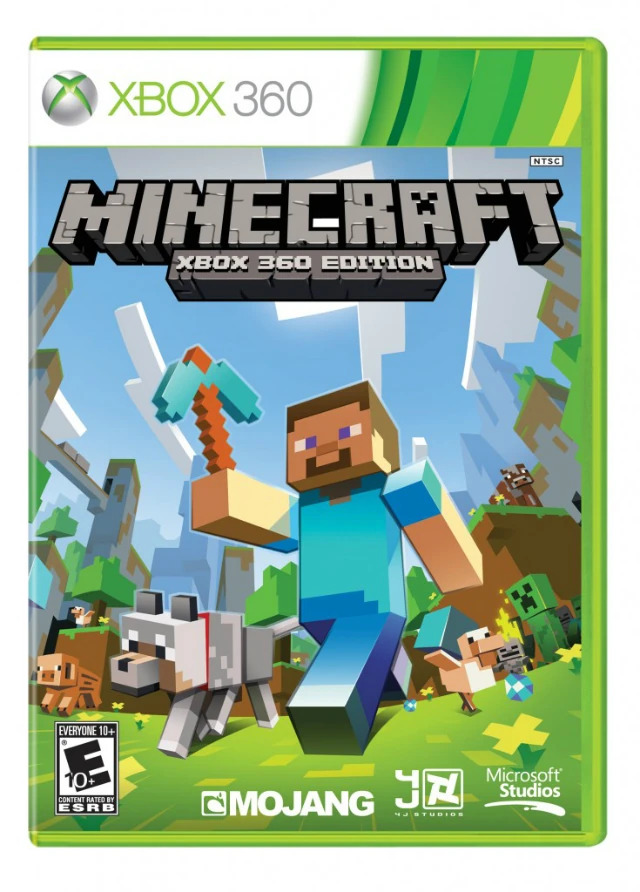
Weeks after the launch, Persson handed lead development to Jens Bergensten — Jeb — who had joined Mojang in December 2010 and has steered the game ever since. The ports followed. The Xbox 360 edition, developed by 4J Studios and released on May 9, 2012, was profitable on its first day and sold a million copies within a week, introducing the game to a living-room audience that had never touched a PC beta. PlayStation, Wii U, Switch, handhelds and phones all followed; the pocket-sized versions, first released as an alpha in 2011, grew into the Bedrock Edition that unified consoles, mobile and Windows in 2017, at which point the original PC game took the name Java Edition.
Then came the deal that redefined what a game could be worth. In November 2014, Microsoft bought Mojang and the Minecraft intellectual property for US$2.5 billion. Persson left the company he had founded. It is worth pausing on how strange that sentence would have sounded in 2009: a two-and-a-half-billion-dollar acquisition for a game one man had prototyped over a weekend, sold from a website, and finished at a fan convention in Las Vegas. Microsoft was not buying a back catalogue. It was buying the place where a generation had learned to build.
The Best-Selling Game of All Time, Still Growing
The sales records fell in sequence and then stopped being interesting, because there was no one left to chase. Best-selling PC game of all time by 2014. Two hundred million copies, then, in October 2023, Mojang announced the total had passed 300 million; by 2025 it had passed 350 million, with monthly active players last officially reported at 140 million back in 2021. No other video game is close. Minecraft is used in classrooms through its Education Edition, launched in 2016, and is routinely credited with introducing millions of children to the logic of computing — its basic mechanics, as more than one educator has noted, are computer commands wearing a friendlier face. In 2025, A Minecraft Movie carried the blocks into cinemas and became, at the time of its release, the second highest-grossing video game film ever made.
Just as unusually, the game itself never froze at 1.0. The version that launched in Las Vegas has been rebuilt around its own foundations for fifteen years: the Update Aquatic reworked the oceans in 2018, Caves & Cliffs raised the world’s height and deepened its caves in 2021, and Mojang has since moved from annual mega-updates to smaller, more frequent game drops. The Java Edition that Persson shipped in 2011 and the game a new player downloads today are the same game the way a city is the same city: same streets, endlessly rebuilt.
Fifteen Years On: What Minecraft Actually Changed
Minecraft’s legacy is usually stated as a sales figure, but the sales figure is the least interesting part. It normalised buying a game before it was finished — the alpha-funding model that became early access — and proved a community would not just tolerate that arrangement but evangelise it. It showed that a game’s community content — mods, servers, skins, maps, an entire video culture that grew up around watching other people play — could be the product, with the game as the platform underneath. And it made procedural generation, survival crafting and the humble voxel into the default grammar of a thousand games that followed.
Fifteen years after Las Vegas, the strangest thing about Minecraft is how little nostalgia it needs. Tetris and Mario are monuments; Minecraft is still a place people live. Somewhere tonight, a player will punch their first tree, craft a wooden sword, and dig a hole in the dirt to wait out their first night — the same first night players feared in 2011, in a game that has never once told them what to do next. The blocks held. Happy birthday to the finished version.
— Chip
For more launches from this date, see This Day in Gaming History: November 18.