

At a glance — Game: Donkey Kong Country 3: Dixie Kong’s Double Trouble · Developer: Rare · Publisher: Nintendo · Original release: November 18, 1996 (North America) · Original platforms: Super Nintendo Entertainment System · Genre: Platformer
Thirty years ago this week, the biggest name in platform games released its third Super Nintendo chapter to a room that had mostly stopped listening. The Nintendo 64 had been on shelves for two months, Mario had learned to run in every direction at once, and the 16-bit era was supposed to be over. And yet here came Dixie Kong, beret on, ponytail spinning, carrying a toddler cousin and the whole weight of a trilogy on her back. Donkey Kong Country 3 did not get the send-off it deserved in 1996. At 30, it is time to give it one.
A sequel that arrived after the party had moved on
Timing is the first thing to understand about Donkey Kong Country 3, because timing explains almost everything about its reputation. The original Donkey Kong Country had been a phenomenon in 1994, the game that dragged the Super Nintendo back into a fight with Sega it was supposed to be losing, and Donkey Kong Country 2: Diddy’s Kong Quest repeated the trick a year later to even better reviews. A third game a year after that was not greed. It was a schedule, and Rare kept it: development began shortly after Diddy’s Kong Quest shipped, with studio founder Tim Stamper returning as director and Andrew Collard and Paul Weaver designing.
What nobody at Rare could schedule around was September 29, 1996 — the North American launch of the Nintendo 64. When Donkey Kong Country 3 reached North American shelves on November 18, 1996, the industry press had one story, and it was polygons. A pre-rendered 2D platformer, however beautiful, read as yesterday’s news. The game still sold more than 3.5 million copies worldwide, including around 1.7 million in Japan and 1.12 million in the United States, but the conversation had moved on. Retrospective accounts have suggested ever since that the November slot, in the N64’s long shadow, cost the game the audience its predecessors had commanded.
There is a second, quieter timing problem. Donkey Kong and Diddy Kong — the two faces of the series — are not playable here at all. The story opens with both of them vanished somewhere in the Northern Kremisphere, and the rescue falls to Dixie and her baby cousin Kiddy. For a lot of players in 1996, that felt like a B-team. It took years, and a few re-releases, for the consensus to catch up with what the cartridge actually contains: the biggest, strangest and most exploratory game in the trilogy.

Dixie takes the lead in Donkey Kong Country 3
Dixie Kong had already stolen Diddy’s Kong Quest in 1995 — her helicopter spin, twirling her ponytail to glide across gaps, was the best new mechanic in that game — and Double Trouble simply makes it official. She is the lead, the name in the subtitle, the Kong on the box. Kiddy, her toddler cousin, is the muscle: strong enough to crack floors with a throw, heavy enough to bounce across open water, and slow enough that the game keeps asking you to think about which of the two a given stretch really wants. You can swap between them at any moment, pick each other up and throw each other into secrets, and the level design is built around that partnership from the first world onward.
The structure around them is the series’ most ambitious. Eight worlds and 48 levels sit inside an overworld you genuinely explore rather than march along, travelling between areas by speedboat, hovercraft and eventually a gyrocopter, all supplied by Funky Kong. Every level hides a Koin holding that stage’s DK Coin as a shield, always facing you, so each coin becomes a small physics puzzle: bounce a steel barrel off a wall behind him. Bonus coins, Bear Coins and a whole economy of tradeable trinkets feed into the Brothers Bear, thirteen bears in cabins across the map who sell, swap, hint and occasionally gate your progress behind a favour.
Then there is the endgame, which 1996 players raised on simpler sequels were not expecting. Behind the robot KAOS stands Baron K. Roolenstein, King K. Rool in a lab coat. Behind him sits Krematoa, a lost volcanic world raised by feeding bonus coins to an exiled bear with explosives. Behind that, the Banana Bird Queen, freed only when every one of her crystal-trapped children is rescued through a musical memory game and a long chain of trades between the bears. Donkey Kong Country 3 is not a short game wearing a long game’s clothes. It is a long game, full stop, and it respects the player enough to hide some of its best material where only completionists will find it.

The Northern Kremisphere changed how the map worked
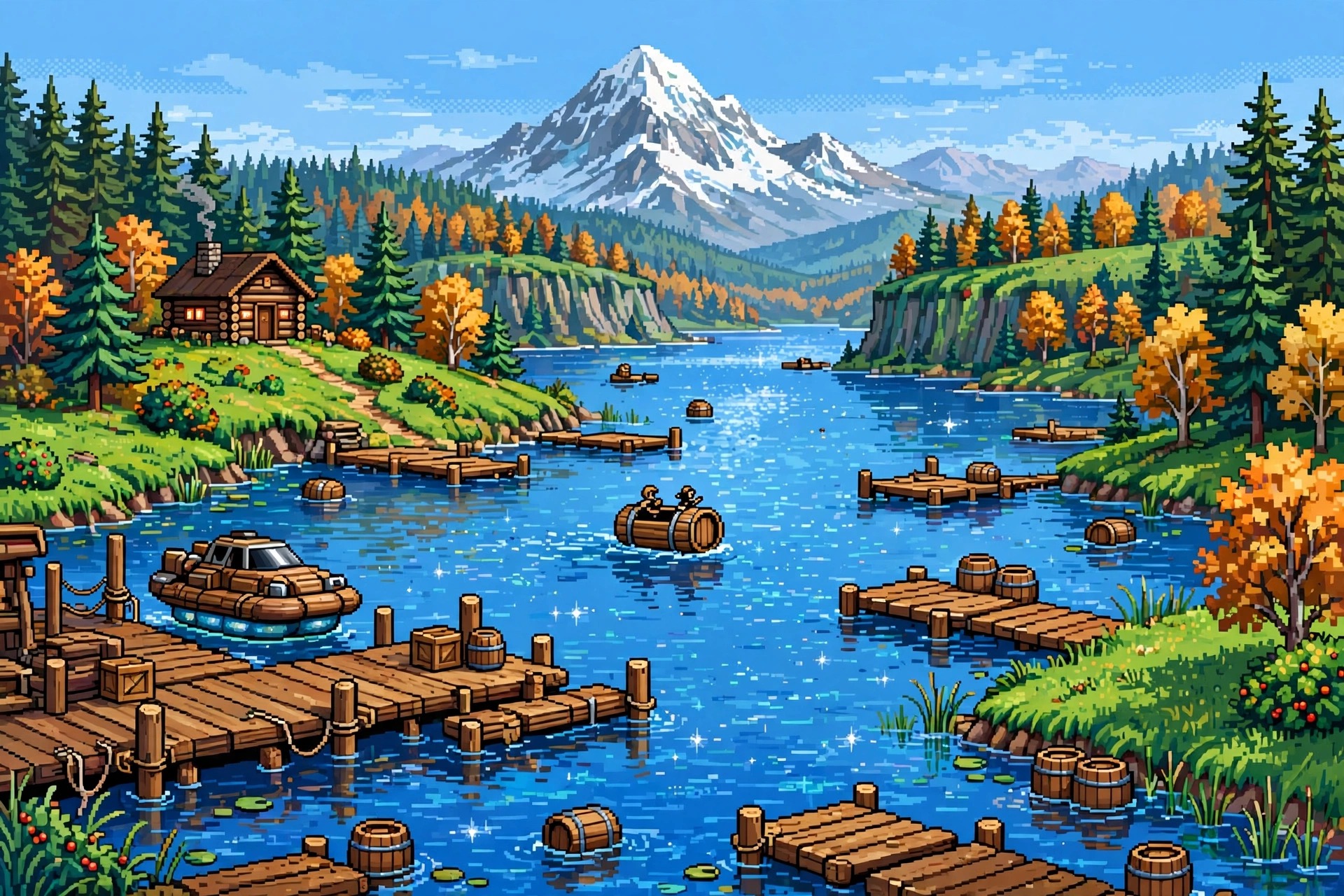
Earlier Country games were set on islands that read as levels on a line. The Northern Kremisphere — Rare’s cheerful remix of northern Europe and Canada — is a place: lakes and rivers you cross by boat, lakeside mills, cotton-top coves, pine forests, razor-edged mountains and factories that feel built into the landscape rather than dropped onto it. The animal friends deepen the toolbox, too. Enguarde the swordfish, Squitter the spider and Squawks the parrot return, joined by Ellie the elephant, who draws water up through her trunk and fires it back, is terrified of mice, and turns several stages into gentle puzzle boxes, and Parry the parallel bird, who flies directly overhead mirroring your movement to fetch what you cannot reach.
The vehicles deserve their own sentence, because they change the player’s relationship with the map. Funky Kong’s rentals are not decoration: the motor boat opens the first lakes, the hovercraft crosses the reefs that block the boat, and each upgrade redraws which parts of the Kremisphere are reachable, in a rhythm modern players will recognise from a dozen later adventure games. Exploration here is not a break from the platforming. It is the connective tissue that makes 48 separate stages feel like one continuous journey north.
It is also, quietly, the funniest game in the trilogy. Wrinkly Kong has retired to her save caves and taken up aerobics and the Nintendo 64. Swanky Kong runs a sideshow where you throw balls at Cranky. The bears bicker, barter and send you across the map on errands. Type “MERRY” on the file select screen and the bonus rooms turn festive, stars and bananas swapped for bells and presents over Christmas music — a cheat code as a stocking stuffer, hidden in a game released five weeks before the holiday.

Eveline Fischer’s quiet, strange soundtrack
If one element of Donkey Kong Country 3 has been revalued more than any other, it is the music. Series composer David Wise contributed additional tracks, but the score belongs to Eveline Fischer, and it is a different animal from Wise’s jungle percussion and pirate shanties: slower, moodier, more ambient, built from watery synths, muted brass and long, lonely melodies. “Water World,” the theme for the swimming stages, has become the poster child — a track so patient and melancholy that it has been covered, remixed and written about for decades, and so unlike anything else on the Super Nintendo that first-time listeners regularly refuse to believe the hardware produced it.
Contemporary reviewers noticed the sound even when they were lukewarm on the rest, praising the atmospheric score and the distinct themes attached to each bear’s cabin. Later critics have been cooler on the soundtrack as a whole than on Diddy’s Kong Quest’s celebrated score, and that comparison is fair as far as it goes. But Fischer was not trying to write that score again. She wrote the sound of a colder, quieter, more northern world — and on the game’s own terms, it fits perfectly.
Judged as “more of the same” — then, and now
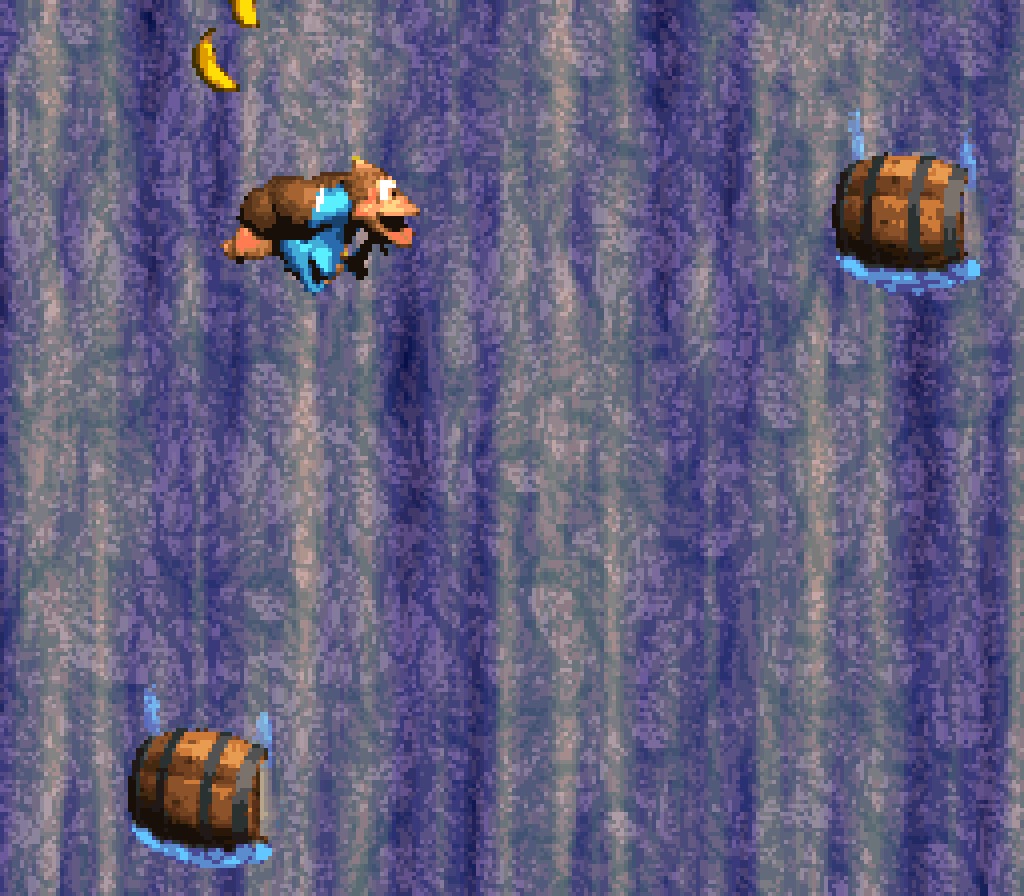
The reviews in 1996 were good. They were just good in a particular, damaging way. The game holds an aggregate score of 83% on the old GameRankings, Nintendo Magazine System called it “king of the Kongs” and scored it 98 out of 100, GamePro’s Doctor Devon called it one of the best 16-bit games and a worthy swan song for the system, and Electronic Gaming Monthly named it a runner-up for both Super NES Game of the Year and Side-Scrolling Game of the Year. Computer and Video Games called it the pinnacle of achievement for the Super NES. Read those notices again and the praise is real — for the graphics above all, which reviewers described as sharper and more detailed than the second game’s, with Famitsu’s panel judging the visuals on par with PlayStation and Saturn software.
But nearly every review carried the same reservation: familiar. More of the same. An extension rather than a true sequel. In the winter of the Nintendo 64, refinement was the one thing the market would not reward, and Donkey Kong Country 3 has carried that asterisk ever since. The re-releases told a kinder story. The 2005 Game Boy Advance version, with an entirely new David Wise soundtrack, reviewed respectably; the Virtual Console editions on Wii in 2007 and Wii U in 2014 put the original back in front of critics, with Nintendo Life scoring it 9 out of 10 and IGN 8.5; and the game joined the Nintendo Switch’s SNES library on December 18, 2020, where a new generation could meet it without the N64 standing in the light. IGN later placed it 58th in its Top 100 SNES Games of All Time, calling it a satisfying conclusion to Rare’s 16-bit platform cycle. Satisfying conclusion. It took twenty years for the description to catch up.
Why Donkey Kong Country 3 at 30 deserves a replay
So here is the case, thirty years on. Donkey Kong Country 3 is the trilogy’s most complete game: the best overworld Rare ever built for the series, a lead character who earned her top billing, a supporting cast of bears and birds and one very nervous elephant, an endgame that keeps unfolding long after the credits feel due, and a soundtrack brave enough to be sad in a game sold on joy. Its flaws are the flaws of its moment — it refined a formula in a year that only wanted revolutions — and time has a way of reversing those verdicts. Revolutions date. Refinements keep.
If you have not played it since 1996, the Switch version is sitting there, and the gyrocopter is still worth earning. If you have never played it at all, you are in the best position of anyone: you get to discover the “minor” Donkey Kong Country game and find out, somewhere around the Banana Bird Queen, that nobody told the game it was minor. Happy 30th, Dixie. The lead was always yours.
— Chip
For more launches from this date, see This Day in Gaming History: November 18. More from this system: our SNES hub.