
There are two ways to bring the arcade home. You can clear a wall, spend serious money and install a full-size cabinet — or you can go the other direction entirely and build a shelf of arcades in miniature, each one a working, playable scale model of a machine you once needed a step-stool and a pocket of quarters to enjoy. Two companies defined that second path. New Wave Toys, under its Replicade banner, pursued museum-grade replicas at one-sixth scale. Numskull, with its Quarter Arcades line, built sturdier one-quarter scale machines designed to be played as much as admired. Between Street Fighter II and Galaga, their miniature cabinets became some of the most charming hardware in retro gaming.
Replicade: the replica as an artefact
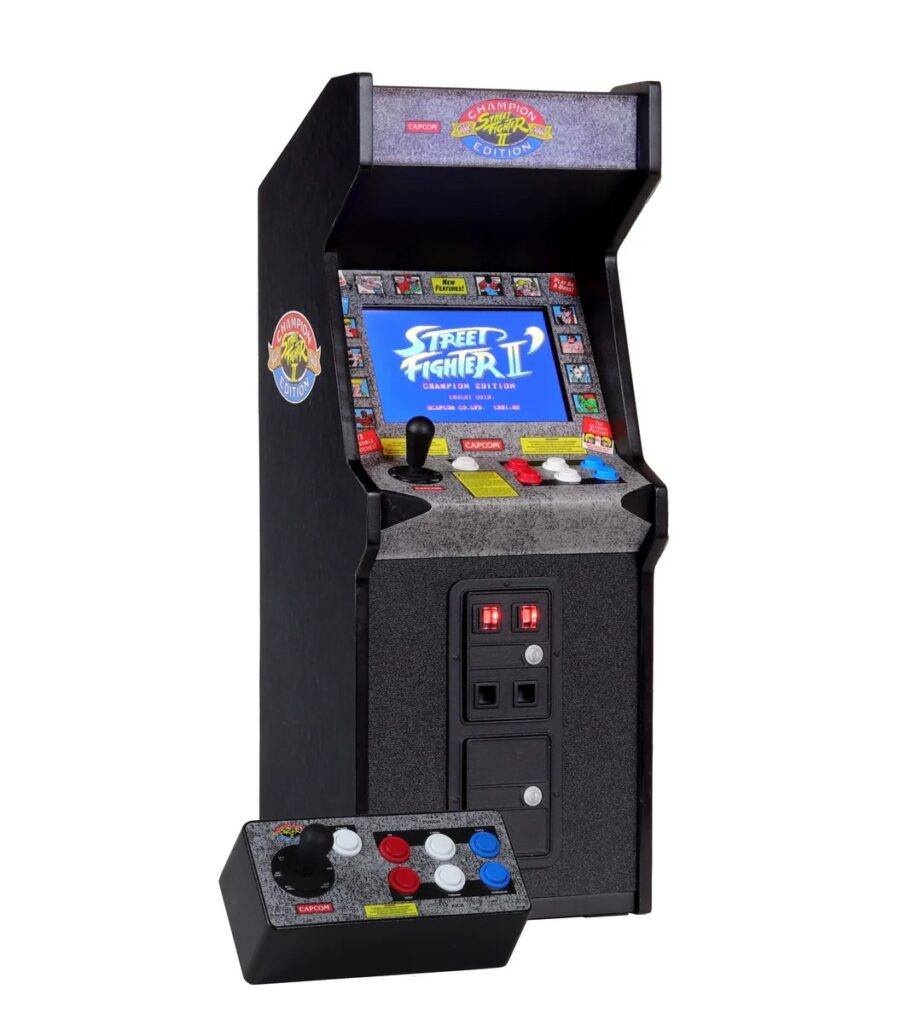
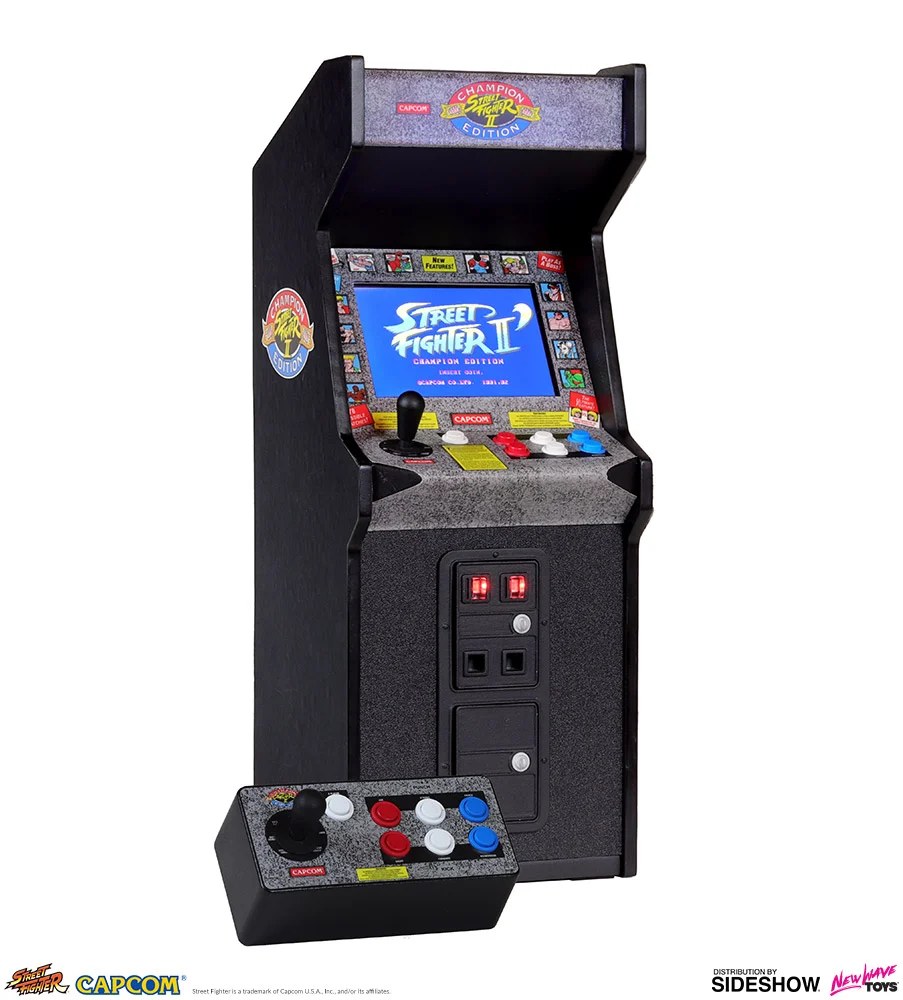
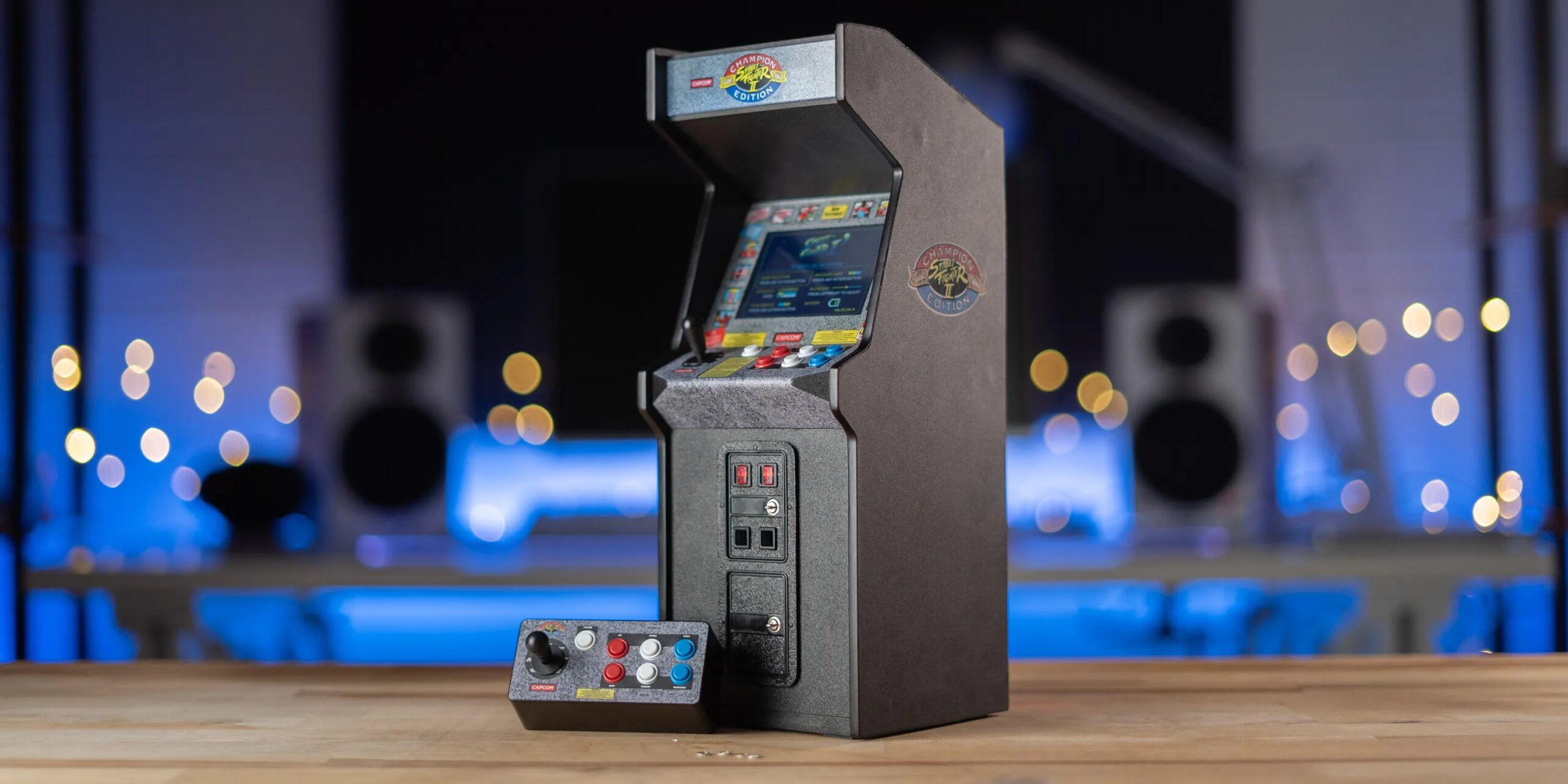
Replicade cabinets stand about twelve inches tall and reproduce their subjects with an obsessive eye: authentic cabinet shapes, original side art, illuminated marquees, and controls scaled down yet genuinely usable, including miniature joysticks and, on some models, tiny trackballs. The Street Fighter II releases — including the Champion Edition cabinet — capture the early-nineties Capcom big-blue era in a form you can hold in two hands. Period details abound, from the coin-door styling to bundled miniature accessories that lean happily into the collectible side of the hobby. These are limited, premium objects and priced like it; the audience is the collector who wants the artefact, with playability as a delightful bonus rather than the entire point.
Quarter Arcades: built to be played
Numskull’s Quarter Arcades take a slightly different philosophy at a slightly larger scale. At roughly seventeen inches tall — a quarter of a full cabinet — machines like Galaga are big enough for adult hands to play in genuine comfort, with proper sticks, buttons and screens, rechargeable batteries, and cabinet art reproduced under licence from Bandai Namco and other rights holders. The Galaga cabinet is a particular joy: the artwork, the marquee, the vertical screen orientation all faithfully echoed, and the game itself as immediate and compulsive as it was in 1981. The line grew to include Ms. Pac-Man, Dig Dug, Track & Field and many more, each numbered and presented with a consistency that invites — dangerously — completing a set.
Head to head: which tiny arcade belongs on your shelf?
The choice between the two lines is really a choice of temperament. Replicade wins on fidelity and rarity: the smaller scale allows finer period detail, the releases are limited, and as display objects they are unmatched. Quarter Arcades win on playability and value: the larger controls, the battery-powered freedom to play anywhere in the house, and the broader, more affordable catalogue make them the machines you will actually use weekly rather than dust monthly. Sound quality and screen quality are respectable on both, with Quarter Arcades’ bigger cabinets naturally offering the fuller experience. Neither line replaces a full-size setup; both deliver something a full-size setup cannot, which is an entire arcade’s worth of variety in the space of a bookshelf.
Practical notes matter at these prices. Check whether a given release includes the extras you care about, since accessories and bundled mini items vary by model and production run. Expect limited stock and aftermarket markups on the most desirable Replicade editions in particular. Batteries, where fitted, are rechargeable over USB; screens are LCD rather than CRT, with all the brightness and none of the curvature — a fair trade at this scale. And measure your shelf: a row of Quarter Arcades needs roughly the depth of a hardback novel per machine, which is precisely the appeal.
Collecting notes: runs, variants and the aftermarket
Both lines reward informed buying. Replicade releases are produced in limited runs with occasional variant editions — alternate artwork, bundled accessories, retailer exclusives — and sell through production batches that do not always return. If a particular cabinet matters to you, pre-ordering or buying at release is reliably cheaper than the aftermarket, where popular editions trade at multiples. Quarter Arcades follow a gentler curve: wider availability, numbered editions, and a back catalogue that mostly stays findable, though early releases in the range have begun their own climb. Condition language matters at these sizes — screens, marquees and mini controls are the wear points, and a display-only unit should be priced like one.
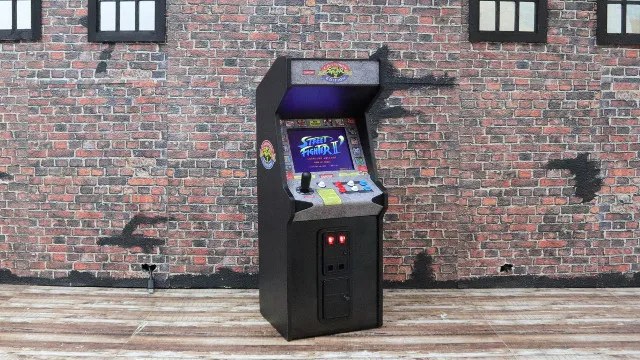
There is also a community dimension worth knowing about. Miniature arcade collecting overlaps with dollhouse-grade model-making, and owners build dioramas, arcades-in-miniature and custom shelving that turn a row of cabinets into a room. Manufacturers have leaned into this with accessories and scene pieces. It is, quietly, one of the healthiest corners of retro collecting: the objects are new, licensed and supported, the community is craft-oriented, and the barrier to entry is a single cabinet rather than a van and a strong friend.
Looking ahead, the format’s future seems secure precisely because it serves two masters at once. As games hardware, minis answer the space problem that limits full-size collecting to the fortunate. As objects, they satisfy the same instinct that fills shelves with model trains and replica props — the desire to hold a piece of a world at a scale a home can contain. Expect the licences to keep deepening and the engineering, particularly in controls, to keep improving. The tiny arcade is not a fad. It is a format.
Displaying them well
A closing word on presentation, because half the product is how it lives in your home. Miniature cabinets reward being treated as a scene rather than a row of boxes: a single shelf, a strip of warm LED light behind the marquees, and a little negative space between machines will do more for a collection than any individual rarity. Group by era or by manufacturer and the shelf starts telling the arcade’s story in miniature — the woodgrain dawn, the black-and-neon eighties, the big-blue nineties. Owners with the craft bug go further, building scale flooring, tiny stools and wall art that turn a bookcase into the arcade that never was. Photograph your arrangement when you are happy with it; the mini-arcade community trades in shelf portraits the way the full-size community trades in game-room tours, and for the same reason. These objects were made to be gathered. Gather them beautifully.
The verdict
Score: 8.0/10. Tiny arcade replicas could have been a gimmick. In the hands of New Wave Toys and Numskull they became a legitimate branch of retro hardware — faithful, playable and quietly joyful. Start with one Quarter Arcade of a game you love, or one Replicade of the cabinet you grew up feeding. Just do not pretend, as so many collectors have before you, that you will stop at one.
Postscript: one cabinet is a collection
A reassurance, to finish, for the reader who suspects this hobby is a slope with no bottom. It is — but the first step is also a complete experience in itself. A single miniature cabinet, chosen for love rather than speculation, delivers the format’s entire argument: the faithful artwork, the working game, the small ceremony of switching on a marquee at your desk. Collections in this field have a way of beginning as accidents and becoming autobiographies, each machine a souvenir of the year you discovered it and the game you could not leave behind in the past. Replicade and Numskull built the two roads into that autobiography — the jeweller’s road and the player’s road — and part of the hobby’s pleasure is watching your own shelf decide which one you are travelling. Start where your heart points. Galaga is never the wrong answer. Neither is the cabinet you fed your first allowance into, whatever it was. The tiny arcade will take it from there.