
At a glance: Tomb Raider: Legacy of Atlantis — Crystal Dynamics and Flying Wild Hog for Amazon Game Studios · Ground-up remake of Tomb Raider (1996) · Launches February 12, 2027 · PS5, Xbox Series X|S, Nintendo Switch 2, PC · Single-player · Around 14–16 hours · $59.99 Standard edition · $69.99 Deluxe edition (PlayStation.Blog).
Lara Croft has a date. Again. Tomb Raider Legacy of Atlantis, the ground-up remake of the 1996 original, launches on February 12, 2027, on PlayStation 5, Xbox Series X|S, Nintendo Switch 2 and PC. That is the news, and it is real news: this game was announced for the series’ 30th-anniversary year, and it will now arrive just after it. Delays are rarely a celebration. This one at least comes with a mission statement attached, and the mission statement is the more interesting half of the story.
In an interview published November 6 by MP1st, experience director Jeff Adams set out what Crystal Dynamics and co-developer Flying Wild Hog think they are building. Not a tidy-up. Not a nostalgia lap. A reimagining of Lara’s first adventure designed to unify the Survivor timeline and the classic timeline — the two halves of a 30-year argument about who Lara Croft is — and, in the team’s own framing, “the first step in the next major phase of Tomb Raider gaming.” Adams was also blunt about the category: this is explicitly “not a remaster.” Good. We have remasters. You can buy the 1996 game, lightly polished, right now. A remake has to justify itself differently, and justification is what this week’s coverage has actually been about.
What Tomb Raider Legacy of Atlantis actually is
Start with the bones, because the bones are familiar on purpose. You are Lara Croft, hired — as in 1996 — into a hunt for the Scion, a powerful artefact tied to lost Atlantis, scattered in pieces across Peru, Greece, Egypt and a mysterious Mediterranean island. The route is the original route. What has changed is everything built on top of it: the game is rebuilt from scratch in Unreal Engine 5, with modern traversal and combat, expanded storytelling, and — per Adams — a running time of roughly 14 to 16 hours depending on how you play. That is a full-sized adventure, not an anniversary curio, and it is roughly double the commitment of a straight replay of the original.
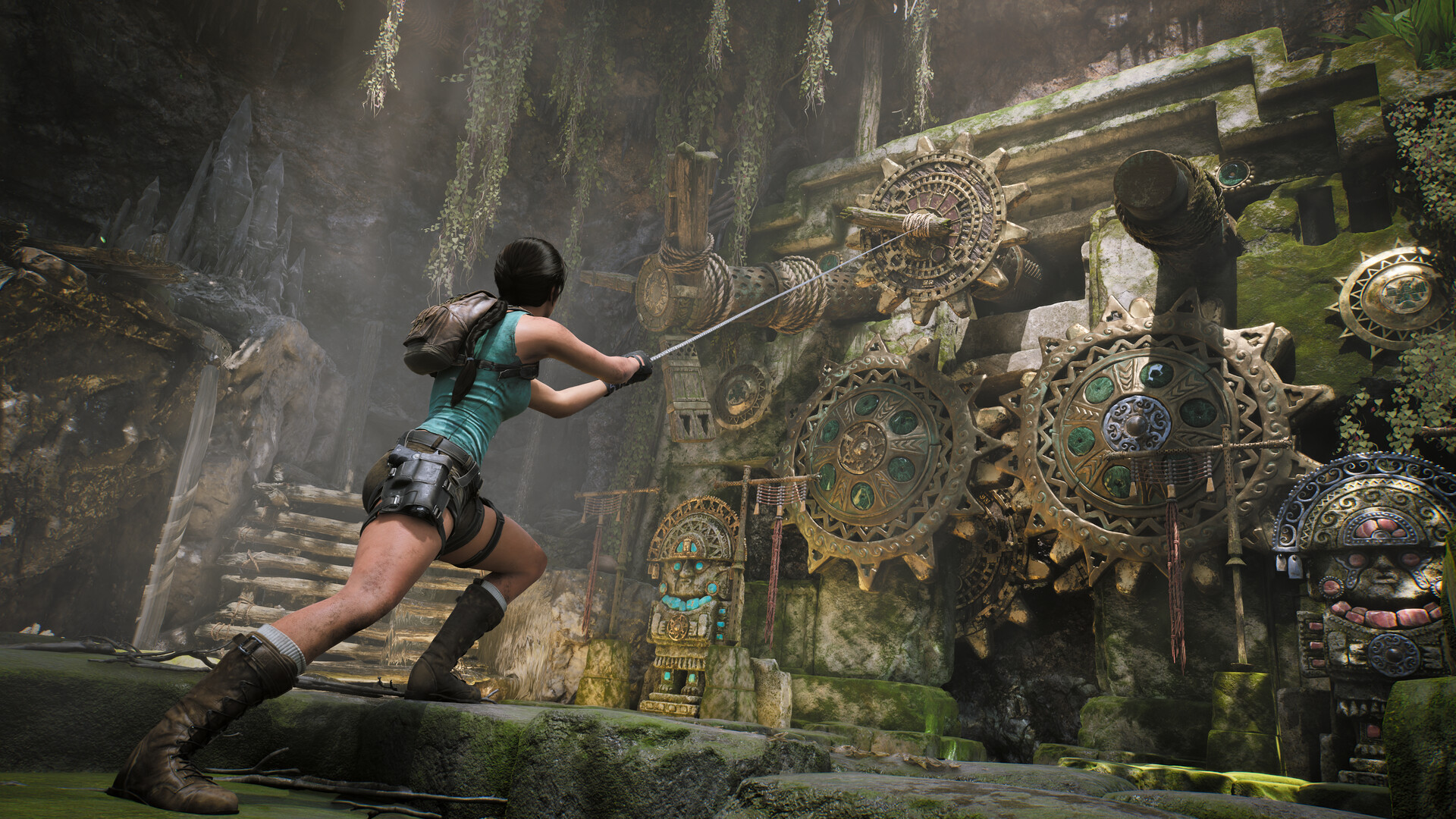
Two promises in the Adams interview will matter more to long-time players than any screenshot. First, the classic outfits are back — heritage here, not embarrassment, after a decade of designs that seemed to apologise for the teal top. Second, the tombs are meant to be apex-predator tombs again — Adams’ phrase for spaces that are the main event, built to be read, solved and survived, rather than scenic corridors between firefights. Anyone who missed being locked in a room with a mechanism and their own poor decisions will know what is being promised. Whether the game keeps that promise is a February question. That it is being made is a November fact.
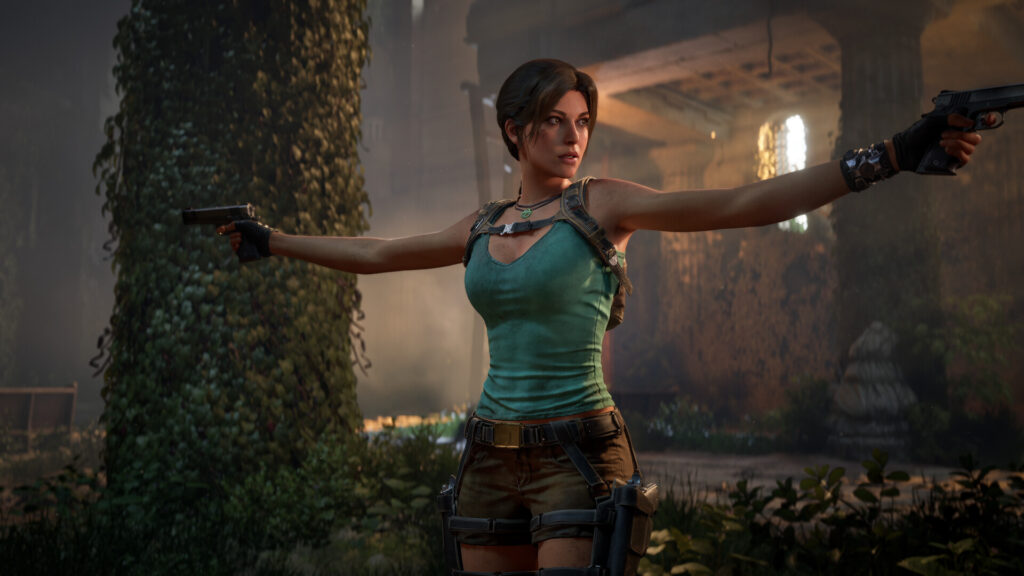
There is also a new Lara holding it together. Alix Wilton Regan portrays Croft in Legacy of Atlantis, and the design — teal top, braid, twin pistols, with Survivor-era detail layered over the classic silhouette — is the timeline argument made visual. Classic Lara on the poster, modern Lara in the performance. You can call that marketing. It is also, honestly, the only sensible answer to thirty years of redesigns: stop picking one.
The Greece section, the cover story, and the seeds of Catalyst
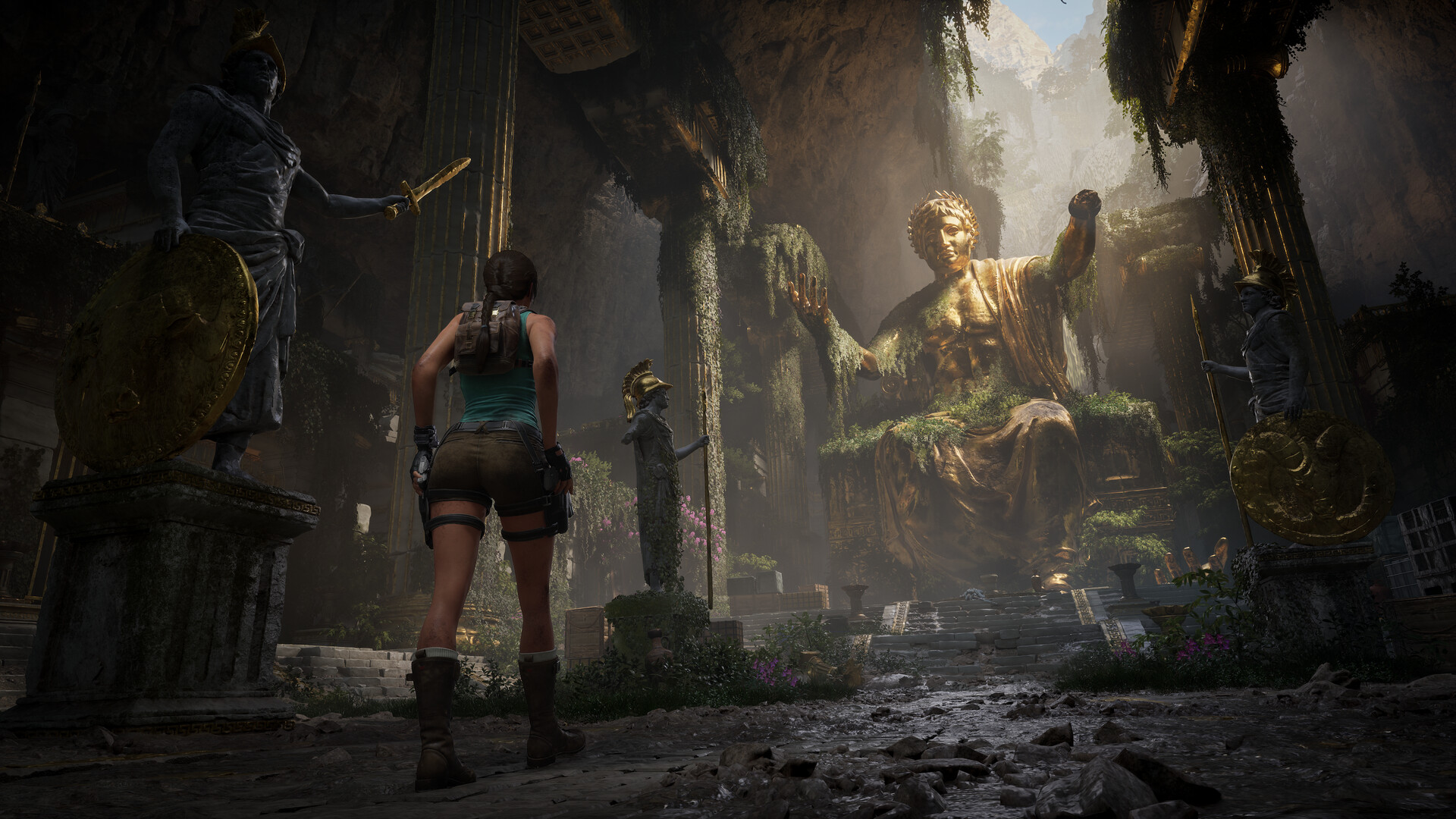
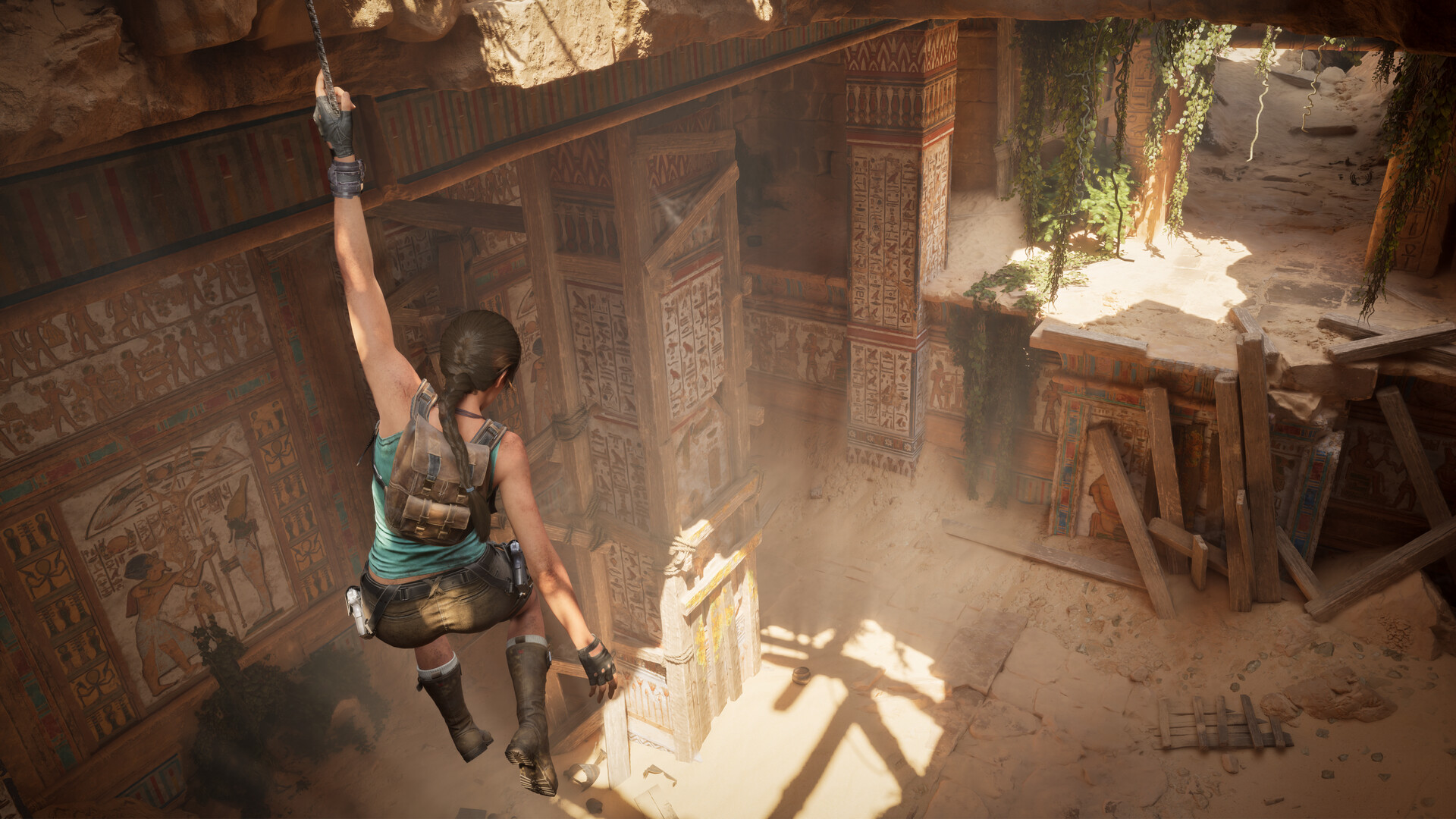
The date news landed in the same week the game took over a magazine cover, which is how you know a marketing cycle has properly started. Game Informer’s December cover story, revealed November 3–4, is built around a visit to Crystal Dynamics and several hours of hands-on time, including an exclusive tour of the Greece section. Greece is a smart place to show a remake. In the 1996 game it is where the adventure stops being an introduction and starts being a labyrinth — St. Francis’ Folly and the tomb of Tihocan, vertical rooms, keys within keys. If the remake’s Greece still feels like a place designed to test you rather than guide you, the apex-predator talk is more than talk.
The cover story also confirms the strategic bit, and it is worth stating plainly because it changes how you should read this release. Legacy of Atlantis plants seeds for Tomb Raider: Catalyst, the next all-new mainline entry. So this is not a one-off anniversary project with a sequel-shaped shrug at the end. It is, as Adams put it, step one of a phase — the remake re-establishes a unified Lara, and Catalyst is meant to carry her forward. That gives February’s game an unusual double job: it has to work as a faithful return to 1996 and as a foundation stone. Foundations are judged later, by what stands on them. For now, file it as intent, clearly stated, on the record.
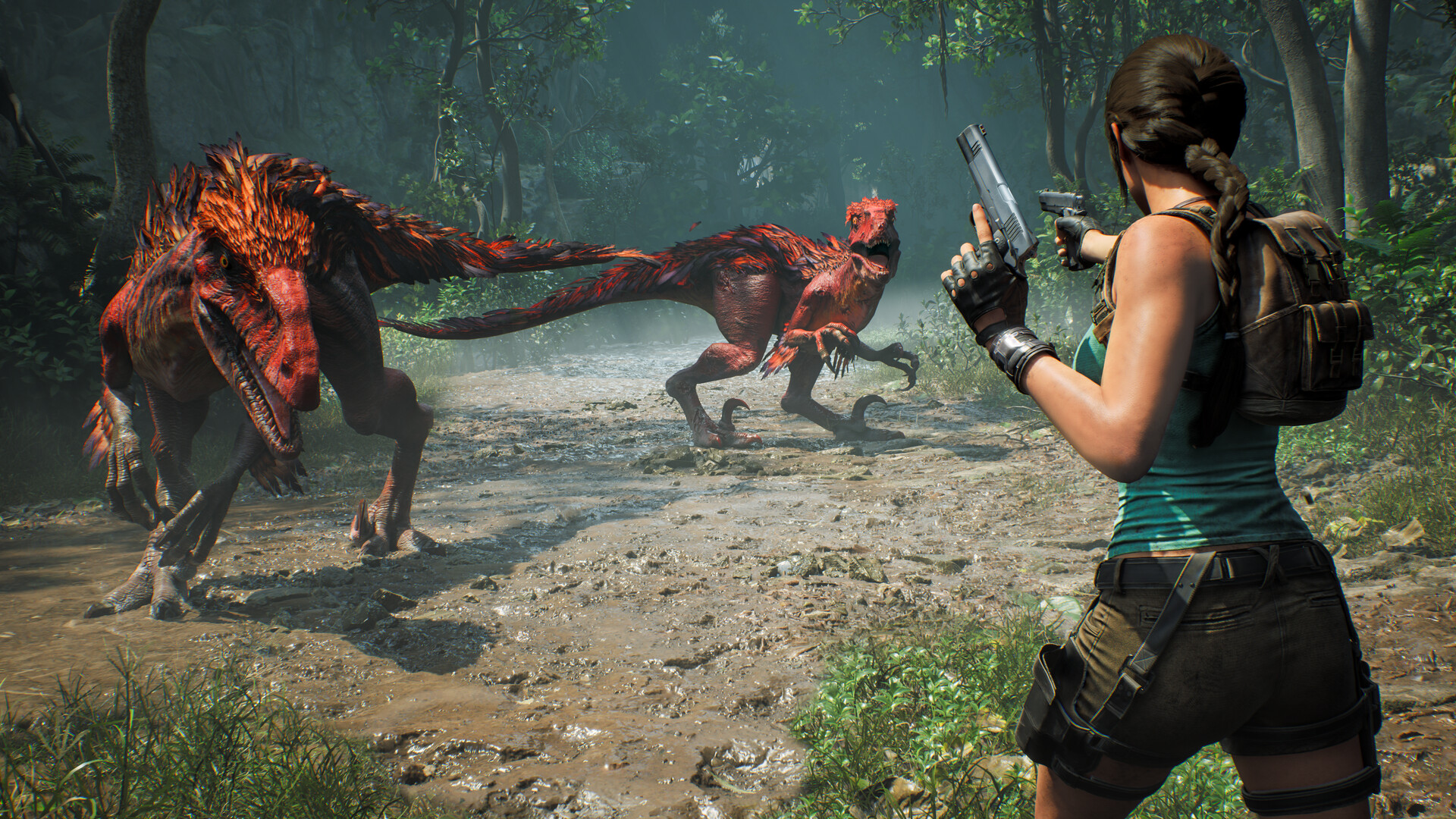
And yes, the predators are present and correct. The screenshots show Lara doing the most 1996 thing imaginable — pistols up, facing creatures that have no business being alive — in jungles a Saturn could never have dreamed of. Nostalgia is doing some work there, and it is allowed to. The test will be whether the levels underneath are as stubborn as the originals, not whether the foliage is pretty.
1996: the game being remade, briefly and honestly
A word on the original, because “remake of a classic” gets thrown around loosely and this one has earned the word. Tomb Raider was developed by Core Design in Derby and published by Eidos Interactive, first released on Sega Saturn in Europe on October 24, 1996, with the Saturn, PlayStation and MS-DOS versions reaching North America on November 14, 1996. It was Lara Croft’s debut — Toby Gard’s creation — and it more or less invented the modern third-person adventure template as it went: huge, quiet, grid-built tombs; a camera that treated exploration as the game, not the gap between combat; and a lead character who became a cultural phenomenon faster than her own studio could keep up with.
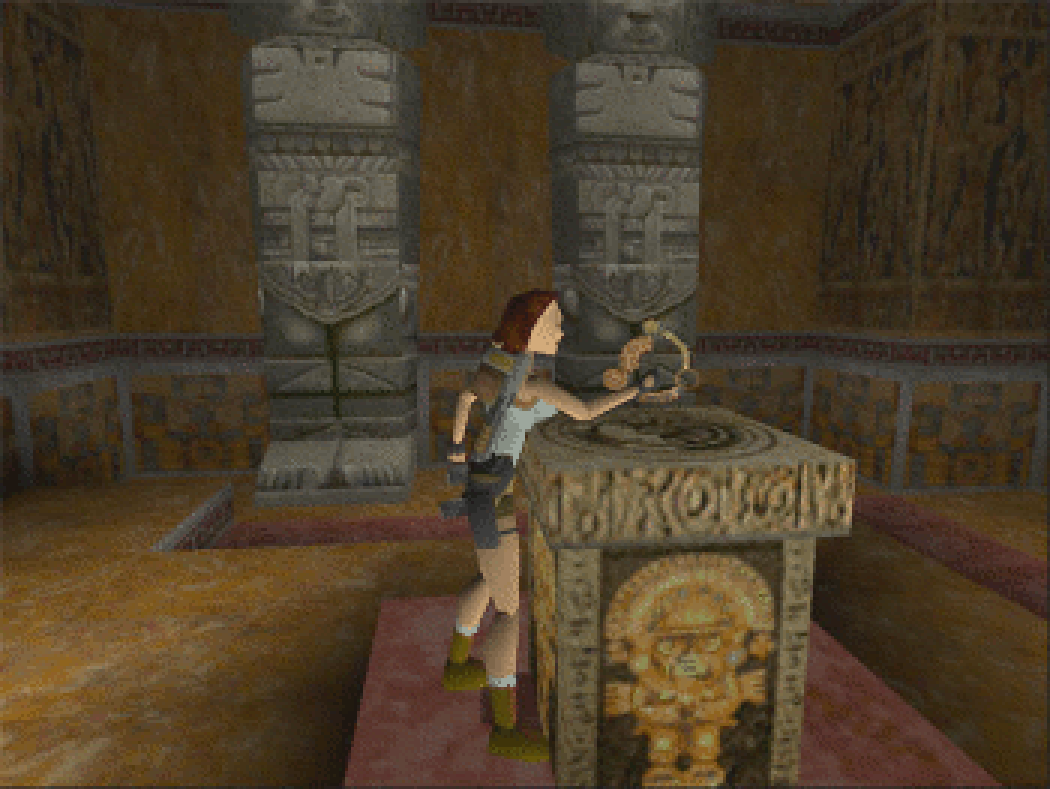
It is also worth remembering that this is the second remake, not the first. Crystal Dynamics already revisited this adventure once, with Tomb Raider: Anniversary in 2007 — a good game that now sits in the odd position of being a remake old enough to have its own nostalgia. Legacy of Atlantis is not competing with a museum piece; it is competing with two versions of the same adventure that players love for different reasons. That is a harder brief than most remakes get, and it explains the unify-the-timelines pitch. They are not just updating graphics. They are trying to settle which Lara the series goes forward with, using the one story every era shares.
Our own coverage has been living in that anniversary all autumn — see our Tomb Raider at 30 piece on the Saturn original for why that first version still matters on this site. Thirty years on, the Saturn’s finest hour is getting rebuilt by the studio that inherited it. There are worse full circles.
The AI question, without the fog
Game Informer’s cover story also discusses the team’s use of AI development tools, and we are not going to launder that into a footnote, because readers keep asking and vague answers help nobody. Here is what is actually on the record. The game’s Steam listing carries the platform’s AI disclosure, in which the developers say AI-assisted tools were used during development to support some early exploration and temporary development content, and that any AI-assisted assets were either replaced or refined by humans to maintain the team’s creative and artistic vision. Adams has made the same point in interviews in plainer language: the tools were used to get to an answer fast, and Lara herself, he says, is human-crafted.
Our position is June-simple: disclosure is the minimum, and this game discloses. “Used in early exploration, replaced or refined by humans” is a specific, checkable claim — not the same as shipping generated art, and not the same as using no tools at all. If the finished game contradicts it, that will be a story in February and we will write it then. What we will not do is pretend the question doesn’t exist, or inflate a disclosed prototyping workflow into a scandal it hasn’t been shown to be. Both are just hype in different coats.
“The first step in the next major phase of Tomb Raider gaming” — and explicitly “not a remaster.” That is the promise. February is when we find out if it’s also the description.
What it costs, what we don’t know, and when to care
What you need, in one place. Tomb Raider Legacy of Atlantis launches February 12, 2027, on PS5, Xbox Series X|S, Switch 2 and PC, from Crystal Dynamics and Flying Wild Hog, published by Amazon Game Studios. Expect a single-player adventure of about 14 to 16 hours that retells the hunt for the Scion through Peru, Greece, Egypt and Atlantis, restores the classic outfits, rebuilds the tombs as the main event, and sets up Tomb Raider: Catalyst. Pre-orders are live in the usual places — $59.99 for the Standard edition, $69.99 for the Deluxe.
Those are Sony’s PlayStation.Blog prices; listings and editions can still vary by store and region, so check your own store, in your own region, before you budget. The same goes for performance, Switch 2 specifics and PC requirements beyond what the store pages state: not confirmed, not guessed at here.
So, the short version. A remake with an actual thesis — one Lara, both timelines, tombs first — now has a firm date, a cover story, and a Greece section previewers have actually played. That is more substance than most anniversary projects produce. Circle February 12, keep your scepticism on the finished game rather than the announcement, and we will see you in the tomb.