
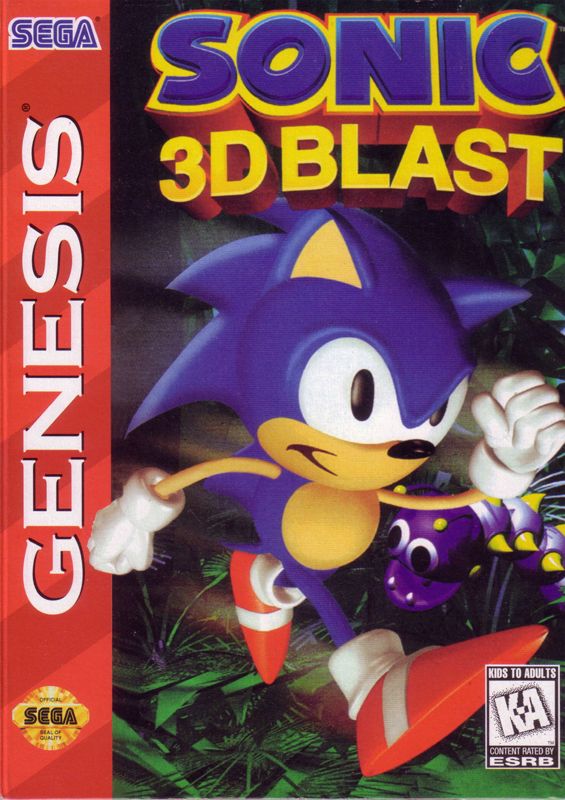
Sonic the Hedgehog · Developer: Traveller’s Tales and Sonic Team · Publisher: Sega · Released: November 8, 1996 (Genesis) · Genre: Isometric platformer · Platforms: Genesis, Saturn, PC
There are games you remember playing, and games you remember arguing about. Sonic 3D Blast was the second kind in my house. It arrived in the autumn of 1996 wearing the most confident box on the Genesis shelf — that big rendered Sonic, grinning out from the jungle, promising the future — at the exact moment the future had already moved in down the street, in genuine polygons, on a Nintendo 64. Thirty years later, the argument is still going. It just has better evidence on both sides now.
Because here is the thing the playground verdict always skipped: Sonic 3D Blast should not have worked at all. It was a 3D-looking Sonic, built for a 16-bit machine that could not do 3D, by an outside studio in England, in about eight months, while Sonic Team was busy elsewhere and the Saturn’s great hope was quietly dying on a desk in California. That it plays at all is a magic trick. That it still gets re-released, argued over and — once, memorably — patched by its own lead programmer two decades later, makes it one of the strangest success stories in the Sonic catalogue.

A Swan Song for the Genesis
By 1996 the Genesis was a king in exile. Sega’s attention, and its money, had moved to the Saturn, and Sonic Team — the only people who had ever made a mainline Sonic game — were finishing NiGHTS into Dreams, the Saturn’s dreamy summer flagship. Meanwhile Sonic X-treme, the true 3D Sonic meant to sell the Saturn that Christmas, was collapsing under its own ambition and would be cancelled before the year was out. Sega needed a Sonic game for the 1996 holidays. What it had was a faithful old console with an enormous installed base, and a telephone number in Knutsford, England.
The number belonged to Traveller’s Tales, Jon Burton’s studio, fresh off the Genesis version of Toy Story and itching to work on 32-bit hardware. Sega’s offer was the opposite of that itch: one more Genesis game, the last big Sonic the machine would ever get, built fast. The basic idea had been kicking around Sonic Team since Sonic the Hedgehog 3 — take Sonic off the flat plane and view him from a raised, isometric angle — and the collection hook reached even further back, to Flicky, Sega’s 1984 arcade game about a bird herding chicks to safety. The project began life as Sonic Spindrift. It shipped, on November 8, 1996 in North America at $59.99, as Sonic 3D Blast — Sonic 3D: Flickies’ Island everywhere else on Earth.
Eight Months, Borrowed Time
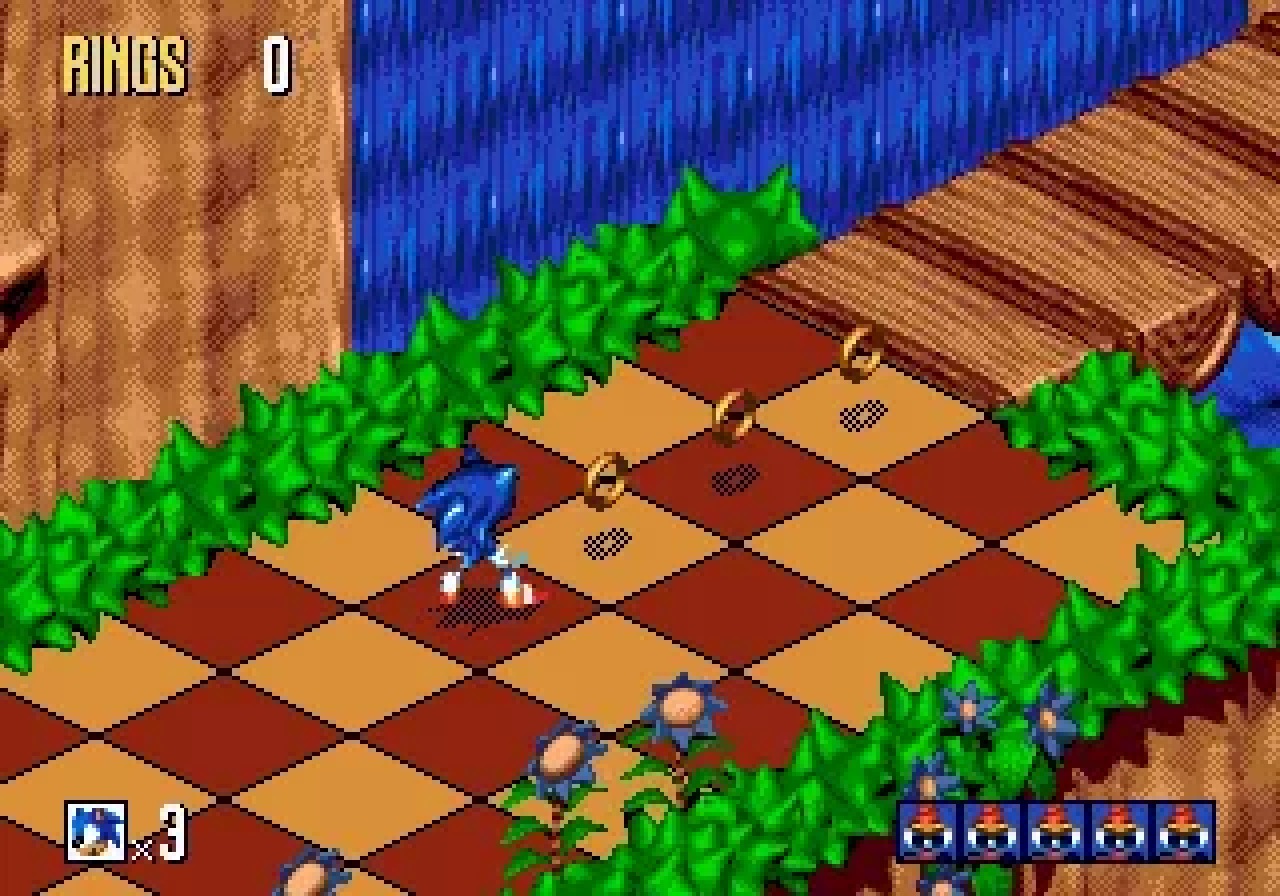
Burton, who served as lead programmer on the Genesis version, has spent years cheerfully dismantling his own game’s mysteries on his GameHut channel, and the development story he tells is one of cheerful larceny. The look came from Donkey Kong Country: if Rare could render 3D models down into sprites and make a 16-bit machine look next-generation, so could Traveller’s Tales. Sonic, his enemies and Flickies’ Island itself were modelled in 3D, rendered from an isometric camera, and flattened into sprites the Genesis could actually push around. The game even opens with a rendered video sequence — a party trick that had no business existing on a cartridge — squeezed onto a 32-megabit cart, among the biggest the Genesis ever carried.
Burton’s favourite war story is the crash handler. Rather than let a software error kill the game, he wired the exception routine to drop the player into a secret level-select screen — which is why, as a generation of kids discovered, knocking or jolting the cartridge mid-game could dump you at that same level select. It was not a cheat code. It was the game catching itself falling down the stairs and politely pretending it meant to do that. Twenty-one years later, a video of Burton explaining the trick racked up hundreds of thousands of views, and the complaints in the comments — the slippery controls, the Flicky hunts — talked him into the strangest encore in Sega history. Hold that thought.
Save the Flickies
The structure is pure Flicky in Sonic clothing. Dr. Robotnik has found Flickies’ Island, whose little birds are the key to the Chaos Emeralds, and has stuffed them inside his Badniks. Sonic’s job, across seven zones, is to crack the robots open, gather the five Flickies wandering each section of an act, and deliver the chirping conga line to a giant ring before it will open. Get hit and your flock scatters — every bird for itself, and you, with no rings left between you and a game over, doing the shepherding all over again. It is a scavenger hunt where the treasure keeps wandering off, and it remains the most divisive design decision in any Sonic game: half the audience finds the herding charming, half finds it a betrayal of everything the words “gotta go fast” ever promised.
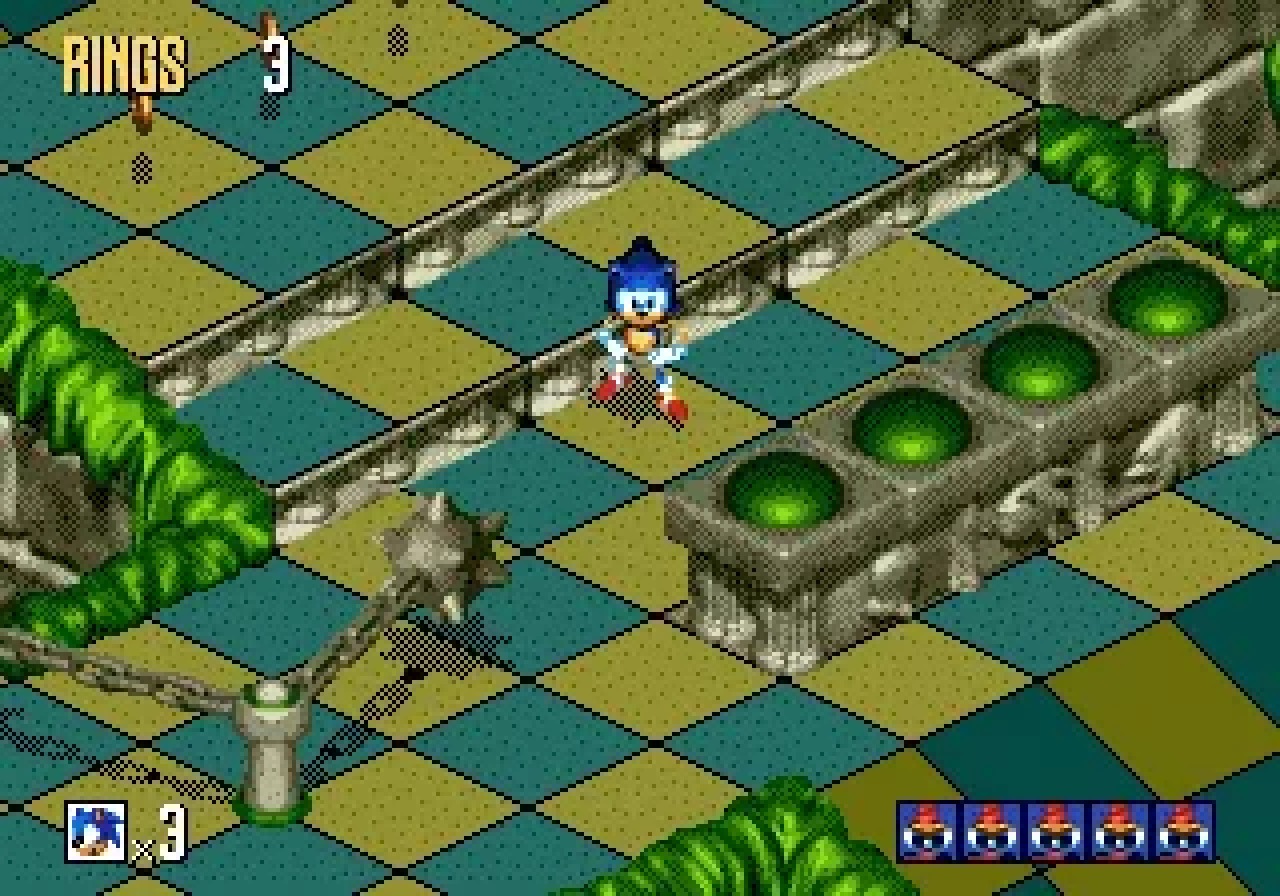
The speed is still in there if you go looking. The zones are dense with springs, dash pads, cannons and secret walls, and the emeralds hide the traditional way: find Tails or Knuckles, hand over fifty rings, and take the special stage. On Genesis that means a breakneck run along a bridge, hoovering up rings and dodging mines; collect all seven emeralds and the ending, and the final confrontation, change. The isometric view fights you the whole way — judging a landing on a floating platform at 45 degrees is a skill no other Sonic game ever asked for, and the digital pad was never quite the tool for it. That friction is the game. Whether it reads as character or as a flaw is the thirty-year argument.
Seven Zones of Checkerboard
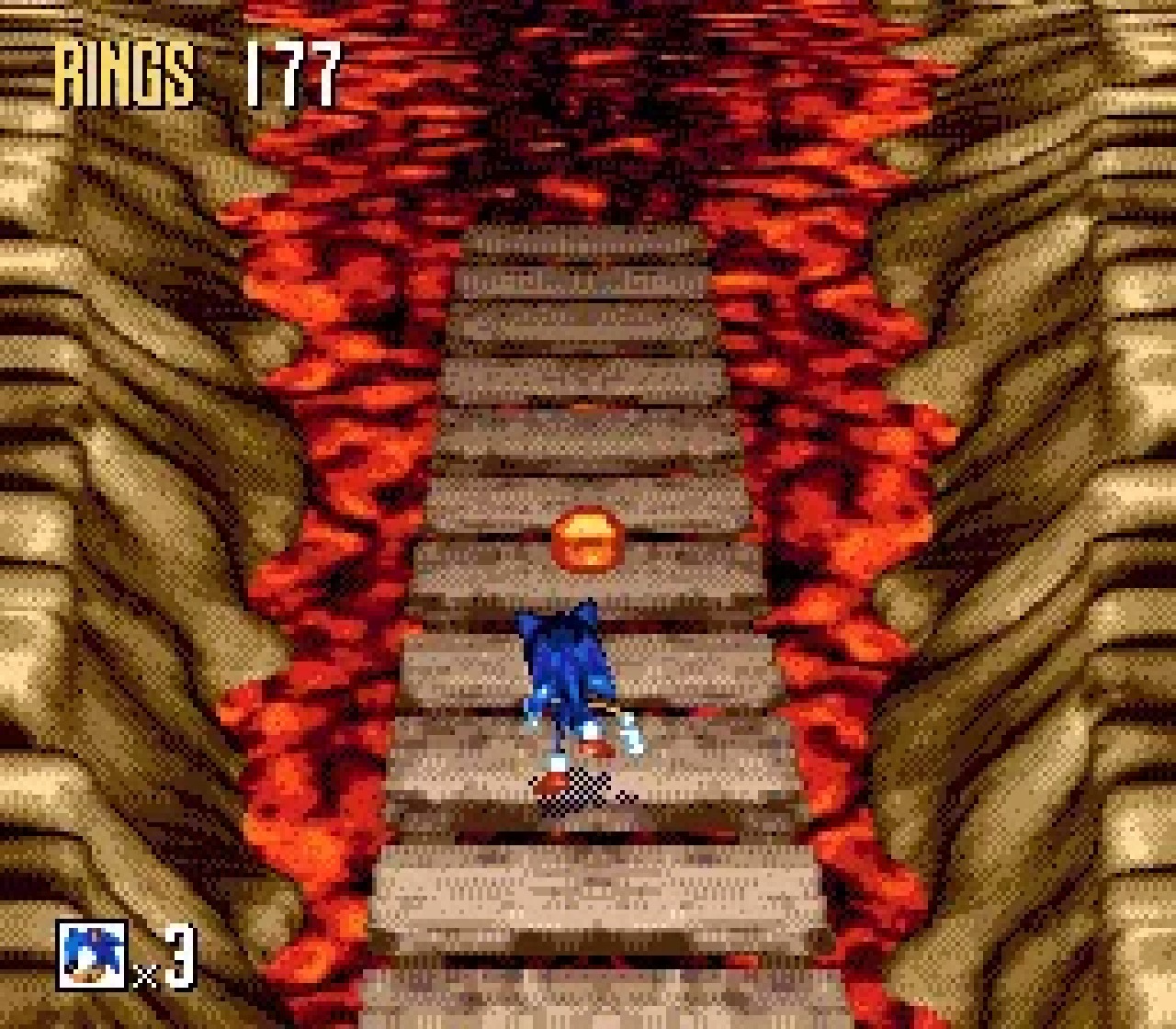
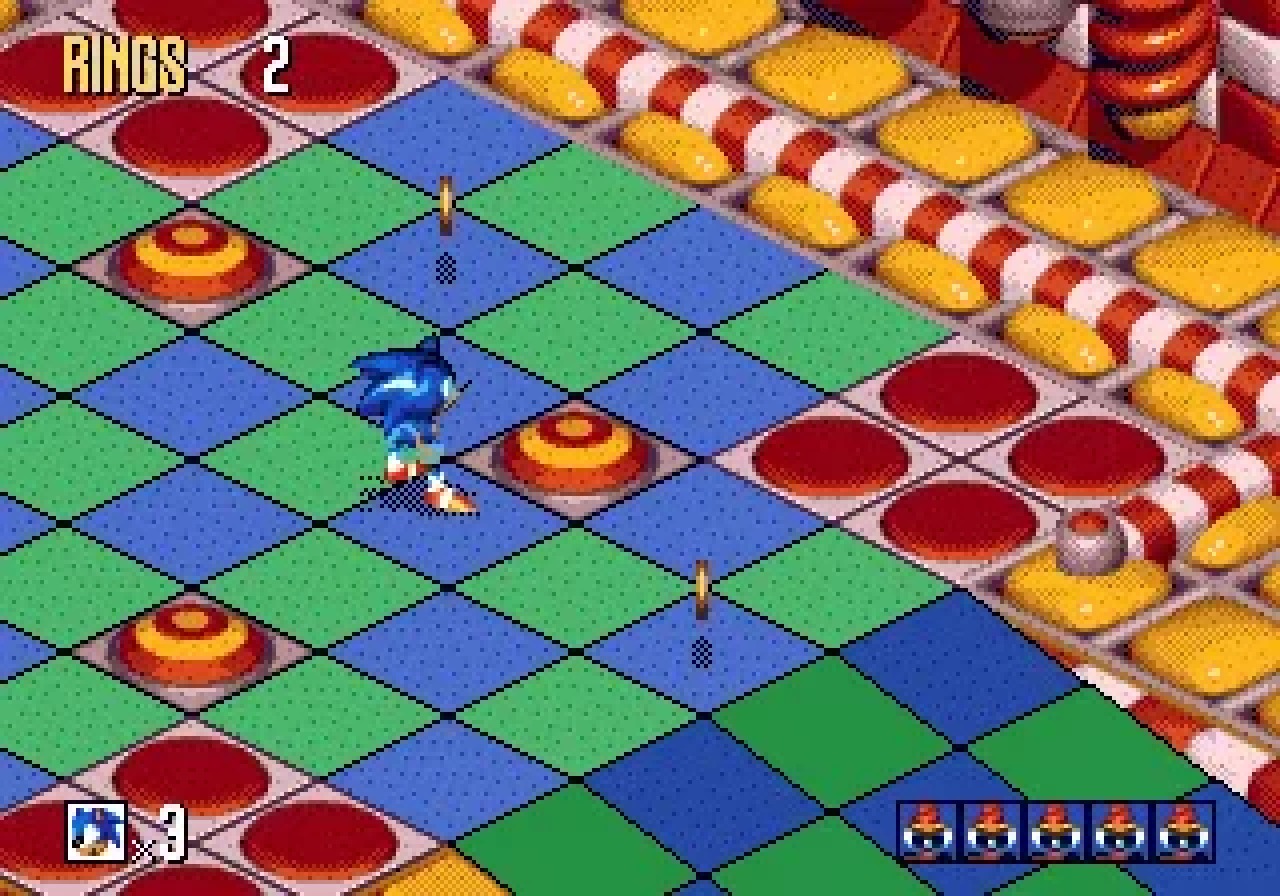
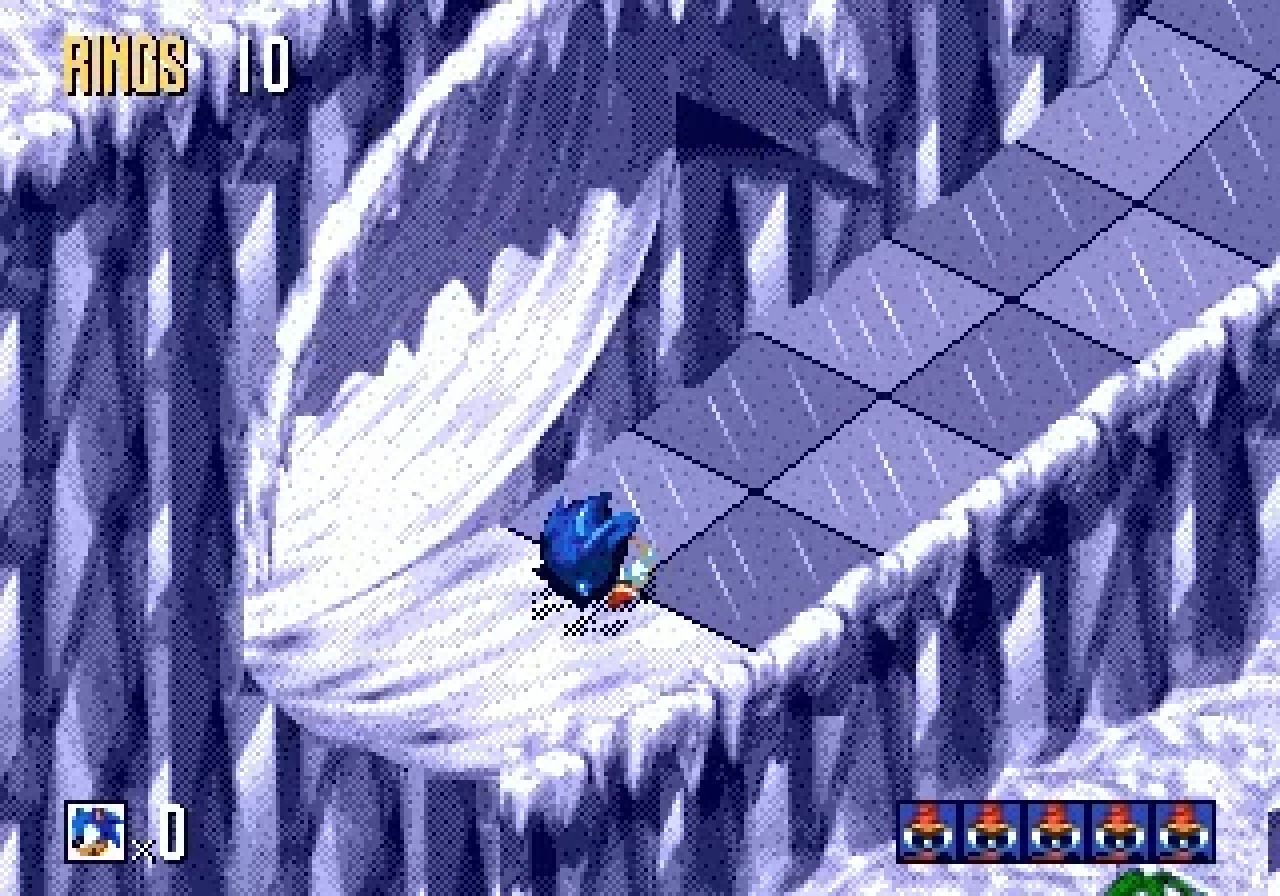
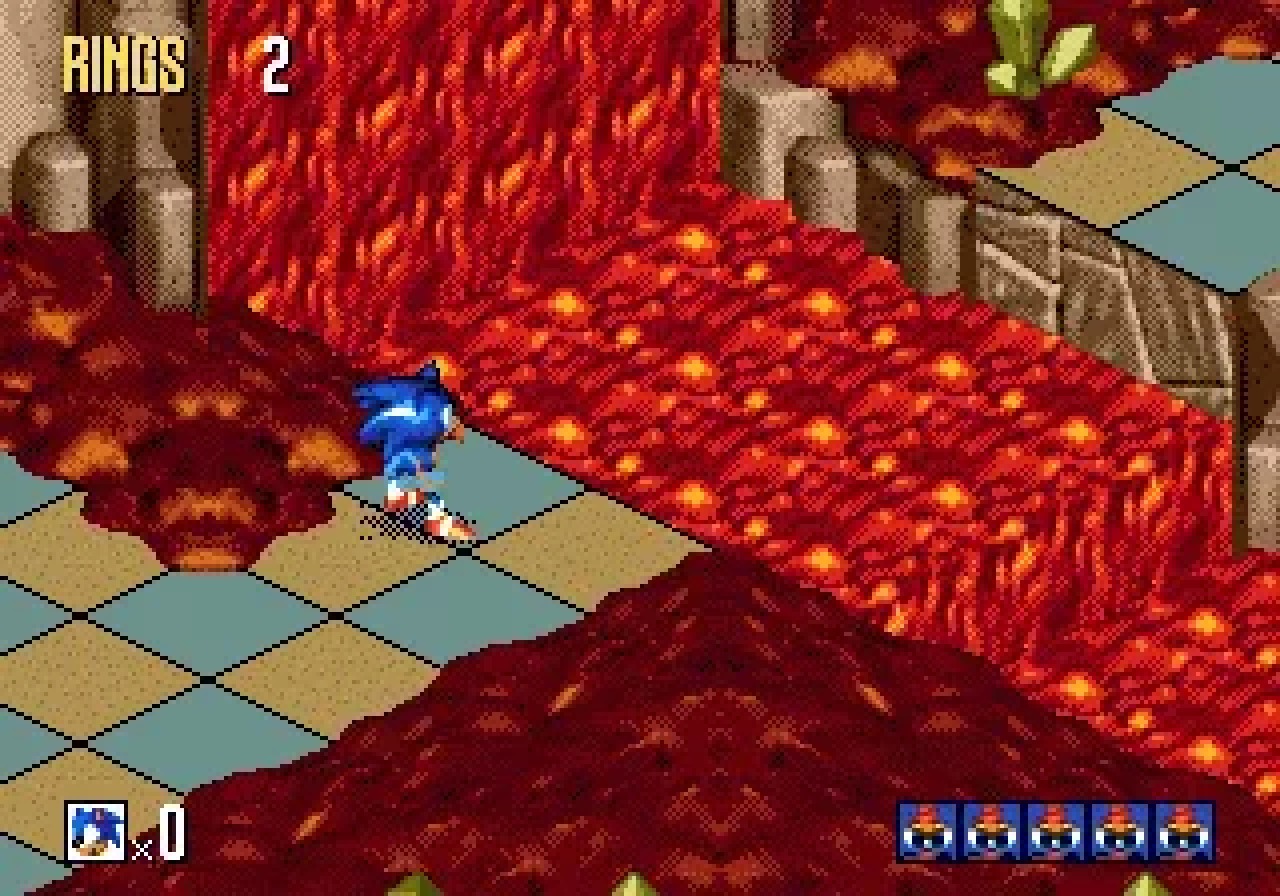
Whatever you think of the herding, the island itself is a beauty. Green Grove’s checkerboard soil and waterfalls set the template, and the tour that follows is a greatest-hits of Sonic scenery given the isometric twist: the flooded columns of Rusty Ruin, the pinball bumpers of Spring Stadium, Diamond Dust’s frozen slopes where Sonic carves up the ice, Volcano Valley’s lava channels, the gadget-stuffed Gene Gadget, and the Robotnik-doll horror of Panic Puppet before the Final Fight. The Genesis soundtrack, from a young Jun Senoue, is the game’s most unimpeachable asset — his Green Grove theme lodged itself so firmly in his own head that he carried its bones forward into Sonic Adventure two years later.
The Saturn Version: Same Game, Shinier Coat
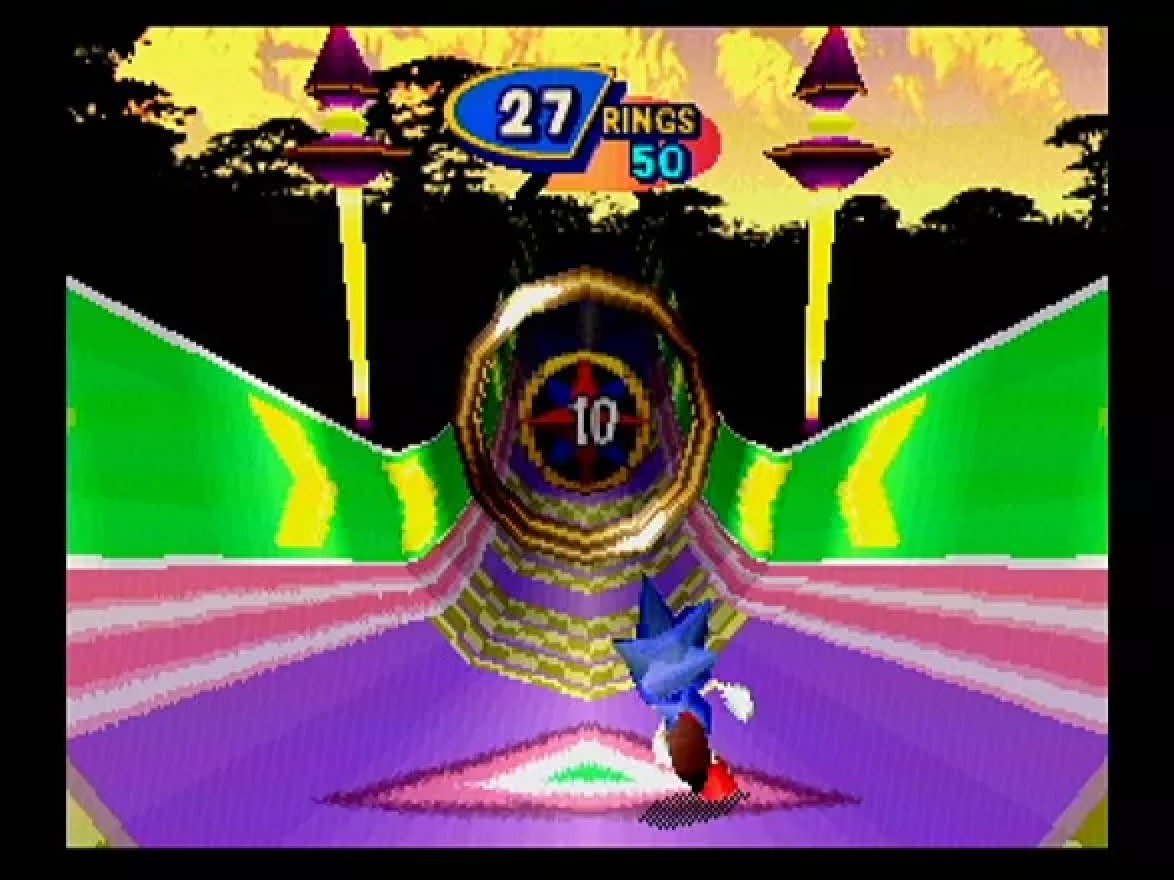
Two weeks later, on November 20, the Saturn got its version — and “version” is the honest word. Under the bonnet it is the same game, built on the same code, with the same zones, the same Flickies and the same isometric shuffle. What the extra hardware bought was polish: cleaner graphics, weather and transparency effects the Genesis could not manage, a brand-new CD soundtrack from Richard Jacques, and the crown jewels — entirely new polygonal special stages, built with Sonic Team’s involvement, that reimagine the Sonic 2 half-pipe in real 3D. They are, minute for minute, the most “next-gen” thing in either box.
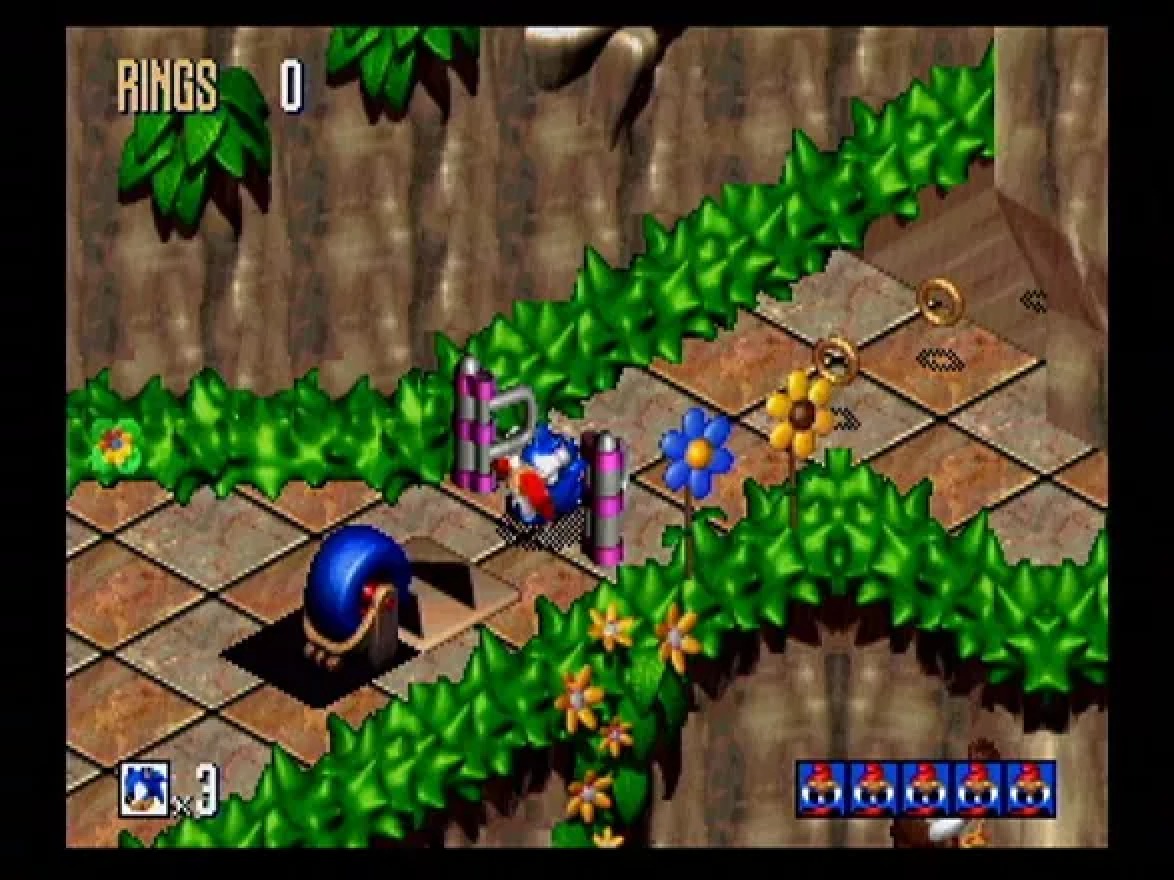
That sameness was the problem at the time. Saturn owners who had watched Sonic X-treme die wanted a flagship, and were handed a port of a Genesis game they could already buy for the machine in the spare room. A PC version followed in 1997, built on the Saturn edition, and then the game settled into its long second life: compilation discs, a Wii Virtual Console release, Steam, and the permanent residency in Sega collections that turns a curiosity into a fixture.
What the Critics Said, Then and Now
The strangest part of the 3D Blast story, from this distance, is that the Genesis original was liked. Britain’s Computer and Video Games called it the first essential Mega Drive game in years; Mean Machines Sega, sceptical going in, concluded it was a legitimate addition to the series and a smart game in its own right. Game Informer’s reviewers were the notable cool heads, finding it enjoyable but not outstanding. The Saturn version got the chillier notices — a good game, reviewers shrugged, that most of its audience had effectively already played — and neither version could escape the comparison that arrived six weeks before them: Super Mario 64 had shown the world what 3D platforming actually was, and next to it, an isometric hedgehog playing sheepdog looked like a beautiful anachronism. It sold well anyway. Swan songs usually do.
The retrospective verdict hardened over the years into something close to a ritual insult — the slippery one, the scavenger-hunt one, the “worst Sonic” on listicles that always seem to forget the series’ genuine catastrophes. Play it today and the truth is more ordinary and more interesting: the controls really are loose, the herding really does pad the clock, and the craft really is extraordinary. Every sprite on screen is a little rendered film prop, the soundtrack is top-tier Sonic, and the whole enterprise moves with a confidence its hardware had no right to support.
The Encore Nobody Expected
And then there is 2017. Burton, by now a YouTube folk hero for his GameHut post-mortems (we covered the announcement back when it happened), released Sonic 3D Blast: Director’s Cut — an unofficial patch for the Genesis original, built by the man who led its programming twenty-one years earlier, fixing the game he had shipped. Tighter controls. A level editor. Password saves and time-attack modes. Super Sonic, playable at last. A Flicky-handling mercy rule — lose one bird when hit, not the whole flock — that reads like a direct apology for 1996’s harshest habit, plus a crab enemy cut from the original release, restored. Developers almost never get to do this. Burton simply did it, in his spare time, because the comments asked.
Thirty years on, Sonic 3D Blast is the beautiful cheat at the end of the Genesis story: a 3D game that isn’t, a swan song sung by a stand-in band, and a scavenger hunt that half of us are still defending at full volume. On this site’s shelf it earns its 7.0 — docked for the controls it always had, kept for the craft it always deserved.
The Genesis did not go out with its mascot’s fastest game, or his best. It went out with the one that tried to be from the future anyway — rendered, flattened, and stuffed onto a cartridge with a video for an opening and birds for a conscience. Happy 30th, Flickies’ Island. Some of us never stopped rounding up your birds.