
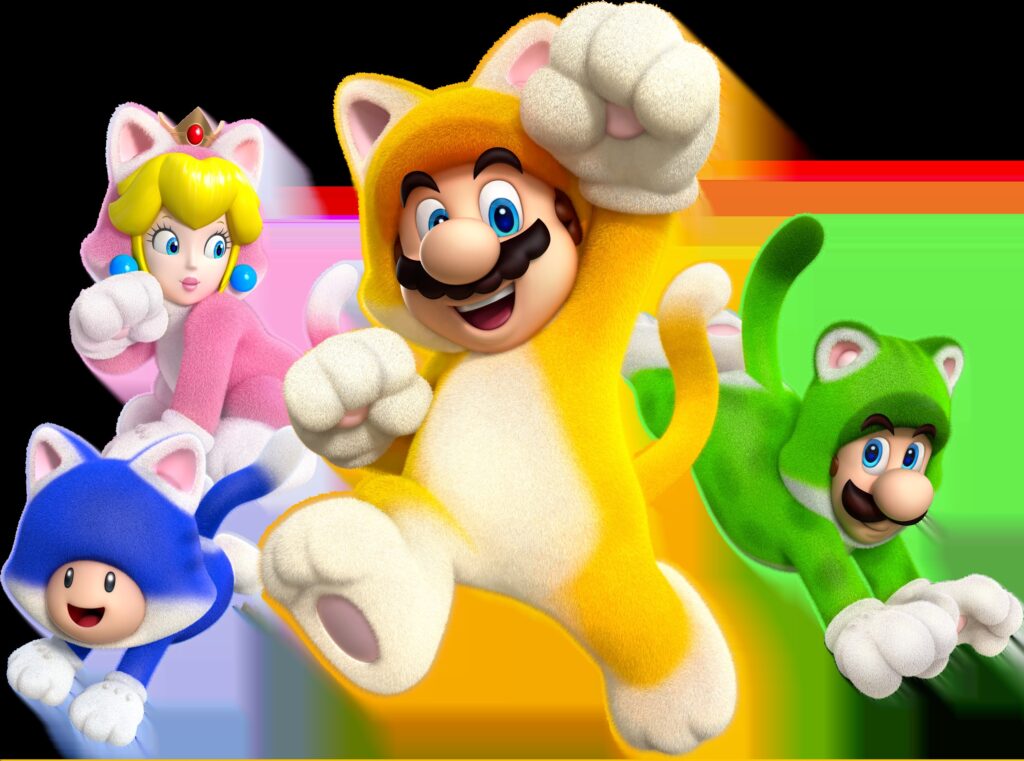
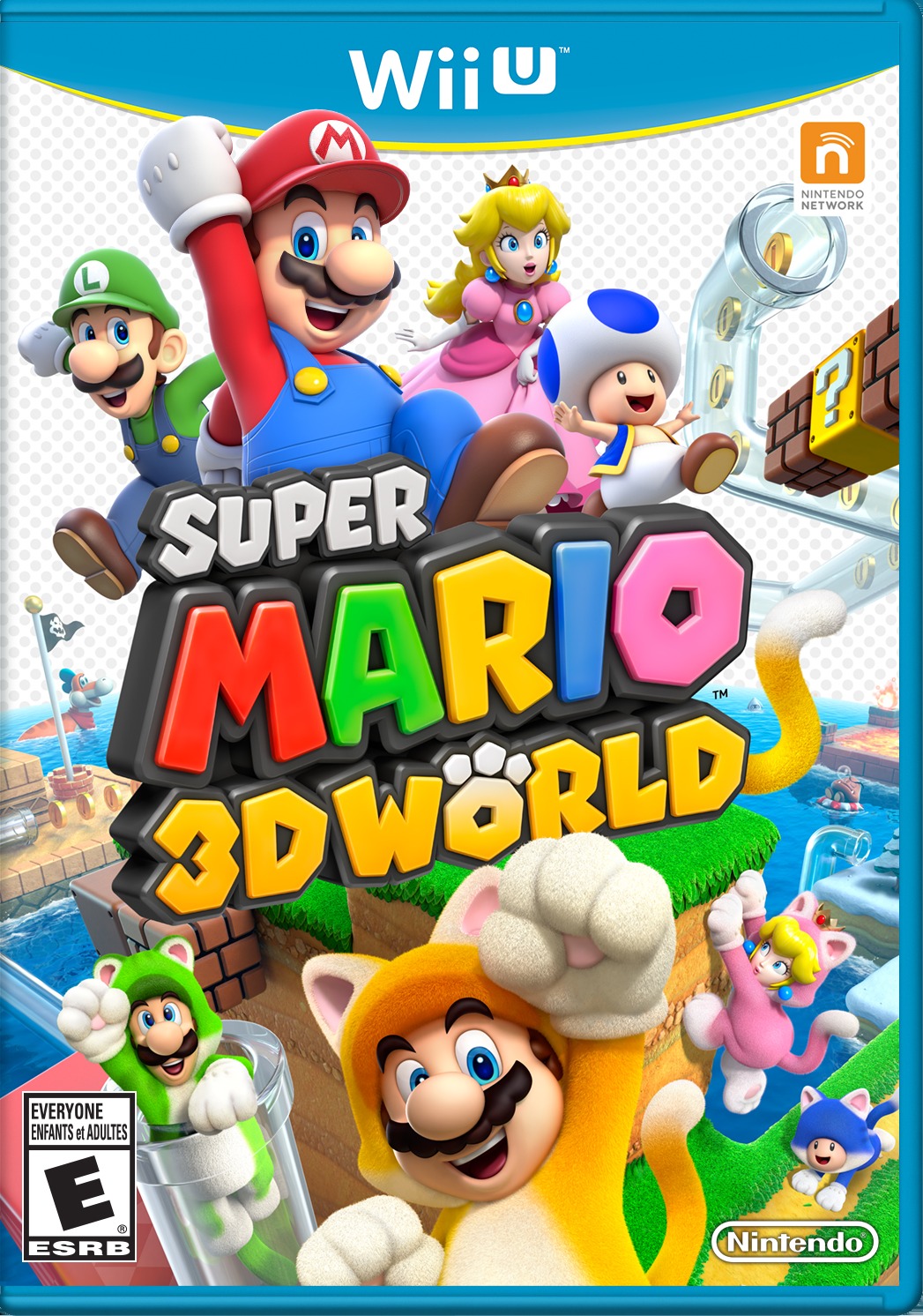
At a glance — Game: Super Mario 3D World · Developer: Nintendo EAD Tokyo · Publisher: Nintendo · Original release: November 21, 2013 (Japan; North America November 22, 2013) · Original platforms: Wii U · Genre: Platform · Music: Mahito Yokota, Toru Minegishi, Koji Kondo, Yasuaki Iwata
It turned Mario into a cat. That was the headline act of the Wii U’s big 3D Mario — a console that by the autumn of 2013 was struggling, a flagship that turned out to be a sequel to a 3DS game, and sceptics with their obituaries already drafted. Then Super Mario 3D World arrived, in Japan on November 21, 2013, and played like an argument nobody could answer. Four players at once in a 3D Mario. Levels that reinvented themselves every ninety seconds. And a small golden bell that turned the most famous character in games into a cat. Thirteen years on, it is not the Wii U’s consolation prize. It is one of the best games Nintendo has ever made, and its second life on Switch has finally given it the audience it always deserved.
A sequel to 3D Land, built on sticky notes
Development began shortly after Super Mario 3D Land shipped, at Nintendo EAD Tokyo with 1-Up Studio assisting. Around a hundred staff — producer Yoshiaki Koizumi among them — wrote mechanic ideas on sticky notes and collected them on the studio walls. Anything approved was built and tested in-game, because, as co-director Kenta Motokura put it, you often cannot tell whether an idea is good until you play it. Co-director Koichi Hayashida framed the game as a Wii U title for the New Super Mario Bros. audience, and a de facto continuation of 3D Land: the free-roaming of the 3D games folded into the timer, flagpole and readable structure of the 2D ones. Nintendo teased the project in a January 2013 Direct, revealed it properly at E3 that June, and promised a November release. It kept the promise.
The hardest problem was the camera. Simultaneous multiplayer in a 3D Mario had never been done, and the team was determined that four players sharing one screen would never feel left out of the frame. The result is a game designed, in Motokura’s words, to be highly intuitive and readily accessible — something players could sink into and clear without reading lots of text or fighting difficult controls, alone or together.
Super Mario 3D World puts four players in the same level
For the first time in a 3D Mario, you choose your character — and the choice is borrowed from Super Mario Bros. 2. Mario is balanced. Luigi jumps higher and falls slower, with slightly treacherous traction. Peach runs slowly but can float. Toad is the fastest and falls like a stone. Up to four players explore the same level at once, sharing a pool of lives, picking each other up, carrying and throwing each other — co-operation and sabotage running on the same buttons. Peach was not in the original plan. Koizumi proposed her to strengthen the game’s female representation, and she stayed. A fifth character, Rosalina, waits as an unlockable, spinning through levels with her Galaxy attack. Yoshi, considered along the way, was cut: his abilities overlapped with Peach’s float, the Piranha Plant’s chomp and the rideable Plessie.
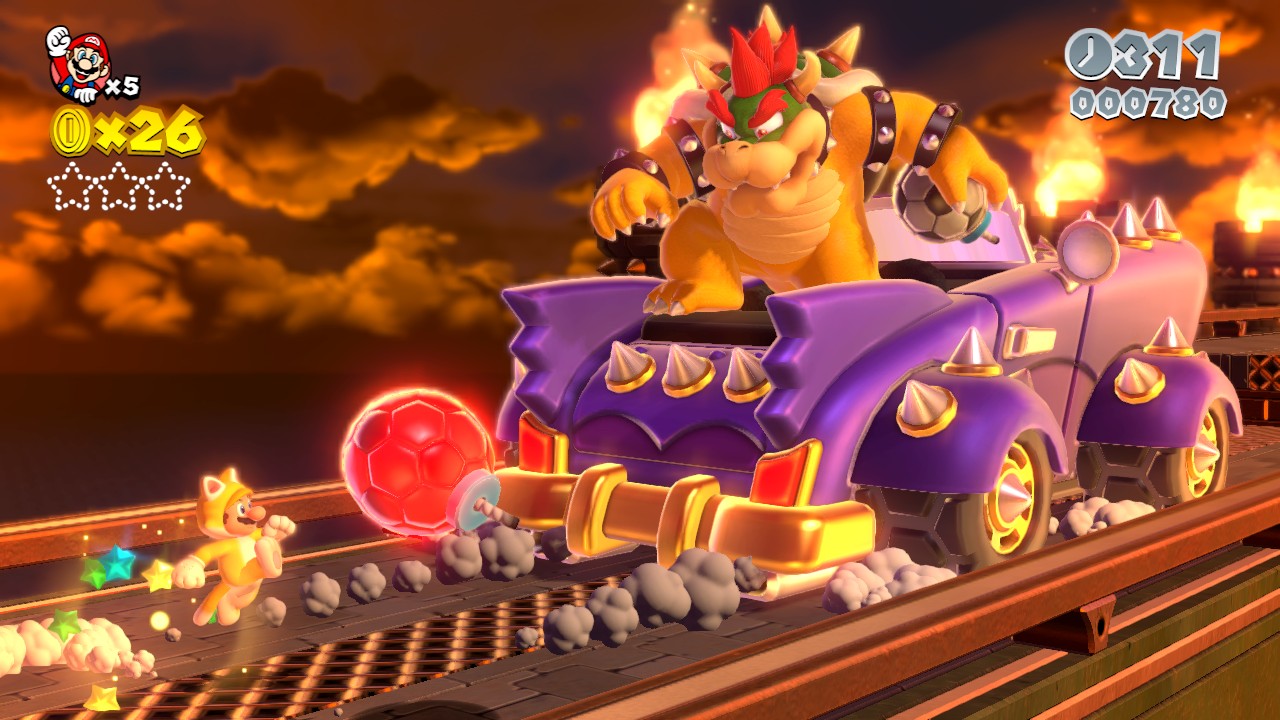
The quest itself is a rescue with a twist of casting. Bowser has bottled the seven Sprixie princesses and taken over their kingdom, and the heroes chase him through a free-roaming world map dotted with secrets: three Green Stars hidden in every level, a Stamp to find, Captain Toad puzzle stages, Mystery Houses, and races against ghost data downloaded from other players.
The Super Bell and the accident that cloned Mario
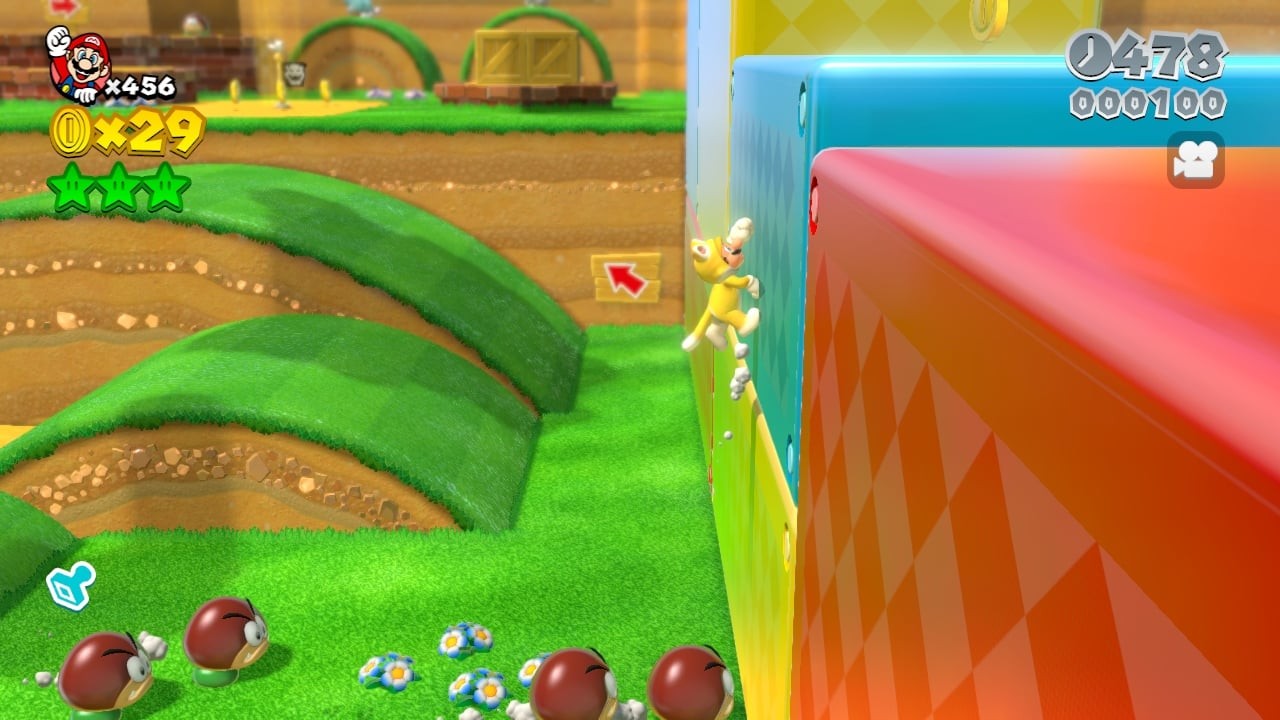
The signature power-up came early, and from a practical question: what new actions could Mario do? An attack. A way to climb walls. A way to help novices past obstacles. As Motokura told it, a cat turned out to be the perfect animal everybody knows. The Super Bell’s Cat Suit lets players scratch, pounce and, above all, climb — turning every wall into a route and every flagpole into a scramble. Its golden Lucky Bell variant even turns the player into a coin-generating lucky cat statue.
The game’s other famous trick was a genuine accident. Late in development, a level designer accidentally inserted a second Mario model into a level. The game did not crash. Both Marios answered the same controls. The team — relieved, then delighted — scrambled to build the Double Cherry around the bug, cloning the player again and again until a small army is solving the level in unison. Around those two inventions the designers packed Cannon Boxes that fire on their own, Goomba masks for sneaking, light blocks for ghosts, baseballs and Piranha Plants to carry, a skating shoe, and clear pipes that finally let players see Mario travelling the plumbing from the inside.
Captain Toad, stamps and a big-band soundtrack
Two of the game’s side ideas outgrew it. The Captain Toad levels — small, rotating dioramas where the jump button does nothing and the puzzle is the camera — were expanded a year later into Captain Toad: Treasure Tracker, a full game of their own. The collectible Stamps were built for Miiverse posts. The service closed in 2017, but the stamps survived into the Switch version as decorations for its snapshot mode.
The music made the same leap in ambition. Mahito Yokota, who had scored the Galaxy games, formed the Mario 3D World Big Band with Toru Minegishi, Koji Kondo and Yasuaki Iwata, recording with a full horn section. Because this Mario lives on terra firma rather than in orbit, Yokota aimed away from the majestic and floaty, toward rhythm — music you want to dance to, with electric guitar and trombone lines imitating a cat’s meow worked into the arrangements. The soundtrack’s reputation has only grown. A 77-track, two-CD release followed for Club Nintendo members in Japan, Australia and Europe.
The Wii U GamePad, so often a burden in 2013, is used with a light touch here. Rub the touchscreen or blow into the microphone to reveal hidden blocks or nudge mechanisms — or simply play the whole game on the pad. There is even a joke buried in the package: clear the game, or hold save data from New Super Luigi U, and an unlockable Luigi-themed version of the arcade Mario Bros., called Luigi Bros., opens up. A stereoscopic 3D mode, carried over from 3D Land‘s thinking, was considered and dropped over multiplayer concerns about 3D glasses. Nothing about the finished game misses it.
Why Super Mario 3D World at 13 keeps growing
The reviews at launch were close to a coronation. IGN scored it 9.6 and revelled in how much energy and mileage Nintendo had packed into every world. Eurogamer gave it 10 and called it an endless freewheeling treat. Destructoid gave it 10 and judged its platforming design close to perfection. Edge gave it 9 and called it the Wii U’s best game and the most next-gen title of 2013. The one recurring complaint — a camera that could become an obstacle in four-player chaos — was real. It was not enough. The game took Game of the Year honours from Eurogamer, Digital Spy and MSN UK, among a long list of awards.
The console beneath it could not match it. The Wii U version sold respectably — 99,588 copies in its first three days in Japan, 215,000 in eight days in the United States, 5.89 million in the end, the system’s second-best seller — but the audience the game deserved arrived later. Super Mario 3D World + Bowser’s Fury reached the Nintendo Switch on February 12, 2021, adding online multiplayer, faster characters and an entire open-world companion adventure, and sold 13.47 million copies by March 2024. Between the two versions the total stands at 19.36 million. Its ideas keep circulating, too: the whole game became a style in Super Mario Maker 2. Thirteen years after a struggling console’s Christmas, Super Mario 3D World is no longer the great game few people played. It is simply a great game, full stop — and it is still gaining players.
— Chip
For more launches from this date, see This Day in Gaming History: November 21.