
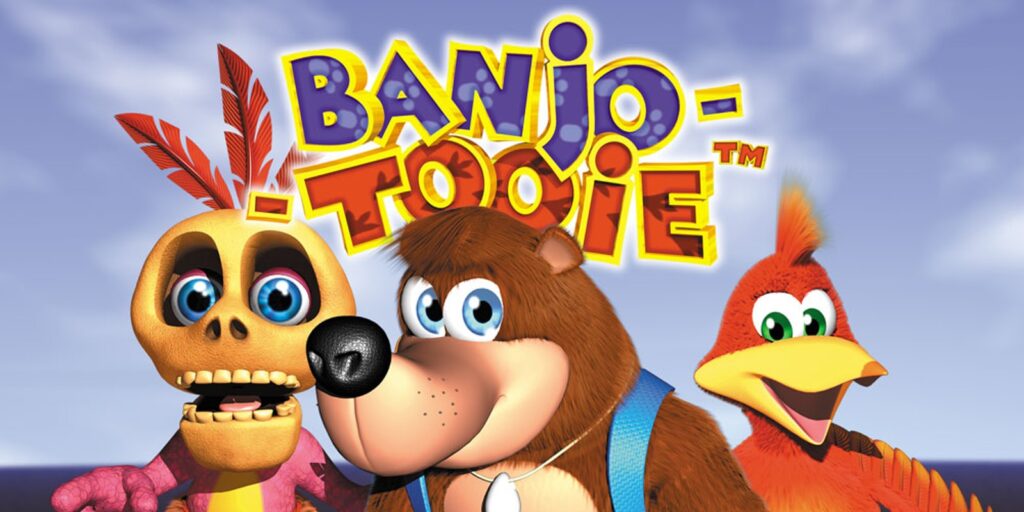
At a glance — Game: Banjo-Tooie · Developer: Rare · Publisher: Nintendo · Original release: November 20, 2000 · Original platforms: Nintendo 64 · Genre: Platformer
Gruntilda spent two years under that boulder. Banjo-Kazooie left her there in 1998, and Banjo-Tooie opens with her sisters arriving in a digging machine to haul her out — what climbs from the hole is a skeleton with a grudge. Rare could have made a tidy sequel. Same size, same shape, fresh coat of paint. Instead, on November 20, 2000, it shipped the biggest game it had ever made for the Nintendo 64: nine worlds that lean on each other, every old move handed back on the title screen, and a multiplayer mode built out of the single-player game’s spare parts. Twenty-six years on, Banjo-Tooie is still the high-water mark of the collectathon. It is also the clearest warning about where that genre was heading.
Japan followed a week later, on November 27, 2000. Europe waited until April 12, 2001. The wait tells its own story: a late-cycle Nintendo 64 game, from a studio at the peak of its powers, arriving months before the GameCube changed the conversation. Rare built it like a studio that knew the hardware’s days were numbered and intended to use every one of them.
Banjo-Tooie Refused to Stay in Its Worlds
The first game’s structure was neat. Gruntilda’s Lair was a hub, the worlds sat behind doors, and each one existed in its own sealed bubble. Banjo-Tooie throws that away. The Isle O’ Hags, its overworld, is a place in its own right, and the worlds are physically connected. Open a route in one and you may find yourself standing in another. A puzzle started in Mayahem Temple might only be finished somewhere else entirely — and the game expects you to remember that. To carry a half-solved problem around in your head while you go and find the tool for it in a different world, in a different mood, possibly as a different character.
Chuffy the train is the symbol of the whole design. Worlds with stations can be linked by rail, and Banjo, Kazooie and various passengers ride between them. It sounds like a gimmick. It isn’t. It is the game telling you, in steel and steam, that its map is one continuous place. Nintendo’s own description calls the adventure one that “sprawls across nine vast and endlessly surprising worlds,” and for once the box copy undersells it. The sprawl is the point.
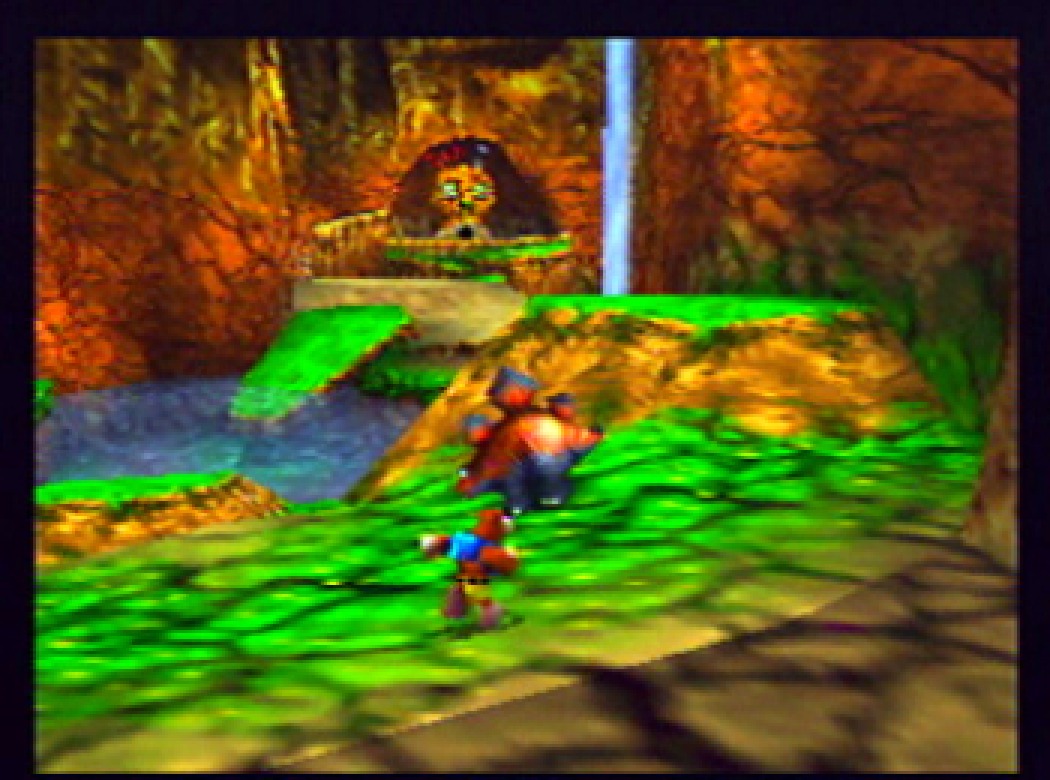
Then there are the moves. Every ability from Banjo-Kazooie is yours from the start. No re-earning the Talon Trot, no tutorial amnesia. Teaching duties pass from the late Bottles to his brother Jamjars, a drill sergeant who lives in silos and shouts the syllabus at you. On top of the old kit come first-person aiming, new egg types including grenade and Clockwork Kazooie eggs, and the move that changes everything: the split. Banjo and Kazooie can separate, each with abilities the other cannot use. Kazooie runs faster and hatches things. Banjo swings his backpack, and naps in it to recover health. Whole puzzle chains exist only to be solved apart, in sequence, by two halves of one character.
Mumbo Jumbo, meanwhile, gets off his stool. In Tooie he is playable, wandering each world to cast the spell that world needs, while his rival Humba Wumba takes over transformation duties — turning the duo into everything from a snowball to a Tyrannosaurus rex. Add a multiplayer suite for up to four players, repurposing the campaign’s challenges into first-person shooters, kickball and bumper cars, and you have a sequel that did not add a mode so much as a second game’s worth of systems. We have covered on this site how Rare’s lunchtime GoldenEye 007 deathmatches fed directly into Banjo-Tooie’s shooter sections — the studio’s habits became the game’s features.
None of it was easy to build. Development began in June 1998, straight off the back of the first game, under designer Gregg Mayles, and the team spent the production folding in ideas the first game had no room for. Worlds and a multiplayer mode cut from Kazooie both found their home here. A whole extra world, a castle, was planned and then scrapped for time; its remains were rebuilt as Cauldron Keep. Grant Kirkhope returned to compose, with twice the cartridge memory he had first time around, and used it to layer the score so themes crossfade as you move through a world. The music is interconnected too. The team aimed for the end of 1999 and missed, presenting the game at E3 2000 instead. Even then, something was left on the floor: Bottles’ Revenge, a mode in which a second player would possess enemies and hunt the first. It was cut for debugging time, and its idea resurfaced instead as Counter-Operative mode in Perfect Dark.
Gruntilda Came Back as a Skeleton
Most sequels resurrect their villain quietly. Banjo-Tooie makes a meal of it. Mingella and Blobbelda arrive in the HAG 1, blast the boulder apart, and find their sister rotted down to bone after two years underground. Grunty’s first act is to destroy Banjo’s house — and kill Bottles, who does not get out in time. It is a genuinely startling opening for a game with this box art. The comic relief mole spends the rest of the story as a ghost, waiting by his burrow for a resurrection the plot actually has to earn.
The sisters’ plan gives the adventure its shape. Their Big-O-Blaster can drain the life force out of anything, and Gruntilda means to charge it long enough to blast the whole island and rebuild her body from what it steals. King Jingaling, zombified in the demonstration, is both a joke and a promise: this is what failure looks like, rendered in grey. The tone stays funny — the final confrontation still begins with a quiz show, the Tower of Tragedy, in which Grunty’s own sisters are flattened under one-ton weights for losing. But underneath the gags, Tooie is a darker, meaner story than its predecessor’s fairy tale. It wears that well.
Stop ’n’ Swop: The Tease That Took Nine Years to Pay Off
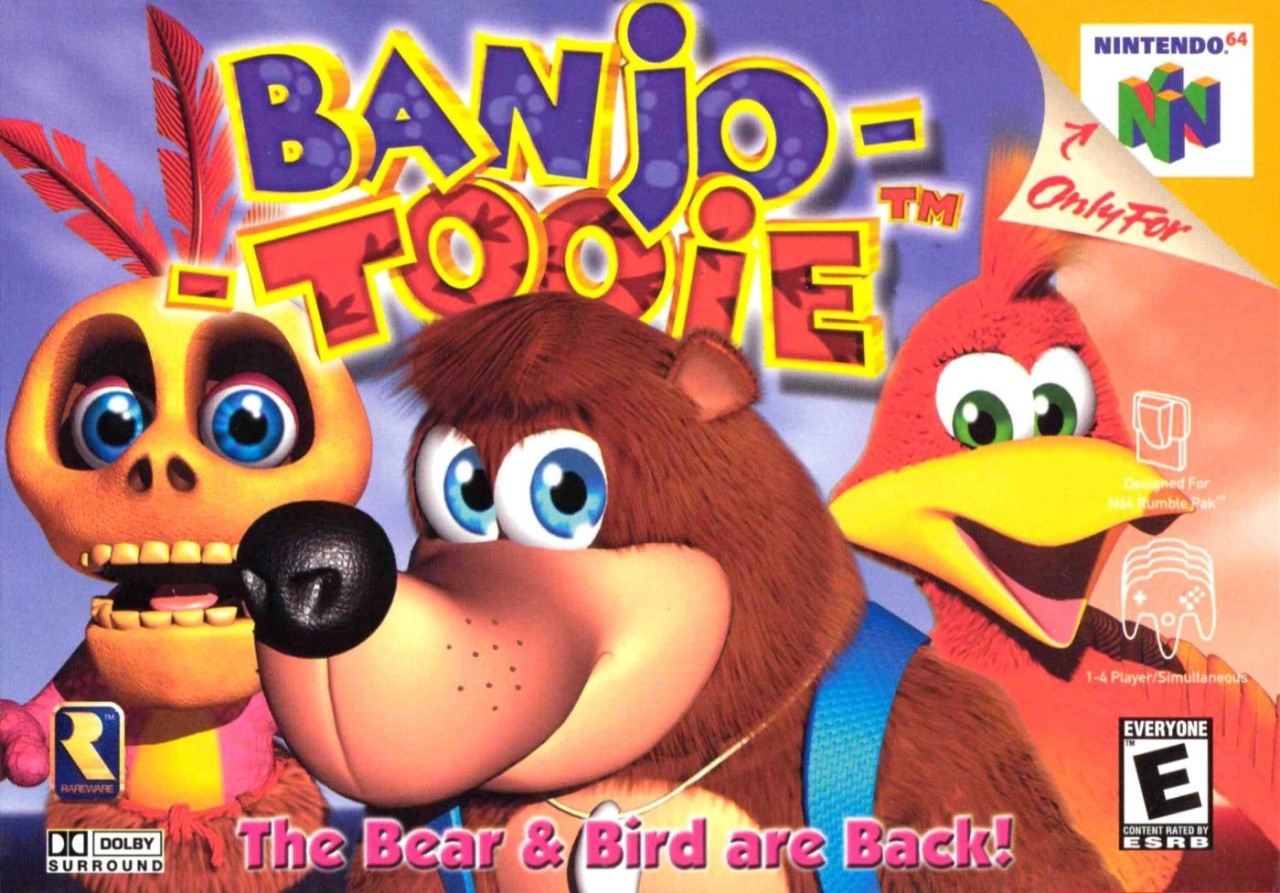
No retrospective of this game escapes Stop ’n’ Swop, because no player of the first game escaped it either. Banjo-Kazooie ended by showing off secrets — a key of ice, eggs of improbable colours — that players were plainly meant to carry into a sequel by swapping cartridges at speed. Rare planned exactly that. The Nintendo 64’s hardware had other ideas. The feature was dropped, and Tooie shipped with the planned bonuses buried inside its own cartridge instead, reachable by ordinary play rather than sleight of hand.
Contemporary reviewers noticed, and not kindly. Nintendo Power counted the resolution of Stop ’n’ Swop among the game’s few disappointments. The strange part is how the story ends. When 4J Studios brought Banjo-Tooie to Xbox Live Arcade in 2009, the connectivity finally worked as originally drawn: items collected in the Arcade version of Banjo-Kazooie appeared in Tooie, and using them unlocked further bonuses in Banjo-Kazooie: Nuts & Bolts. A feature killed by 1990s memory hardware was delivered, intact, by a download service. Few games get to keep a promise nine years late. This one did.
The Frame Rate Paid for All of It
Honesty requires the other half of the ledger. Banjo-Tooie‘s worlds are enormous, its draw distances long, its textures rich — contemporary reviews praised the graphics as among the best on the Nintendo 64 — and the machine could not always keep up. The frame rate is inconsistent, dipping in the busy areas the design loves most. Critics flagged it in 2000. Players have flagged it since. It does not ruin the game; several reviewers said so at the time, and the 90 it holds on Metacritic suggests the trade was understood. But it is the tax on everything described above. Interconnection, scale and spectacle were bought with smoothness.
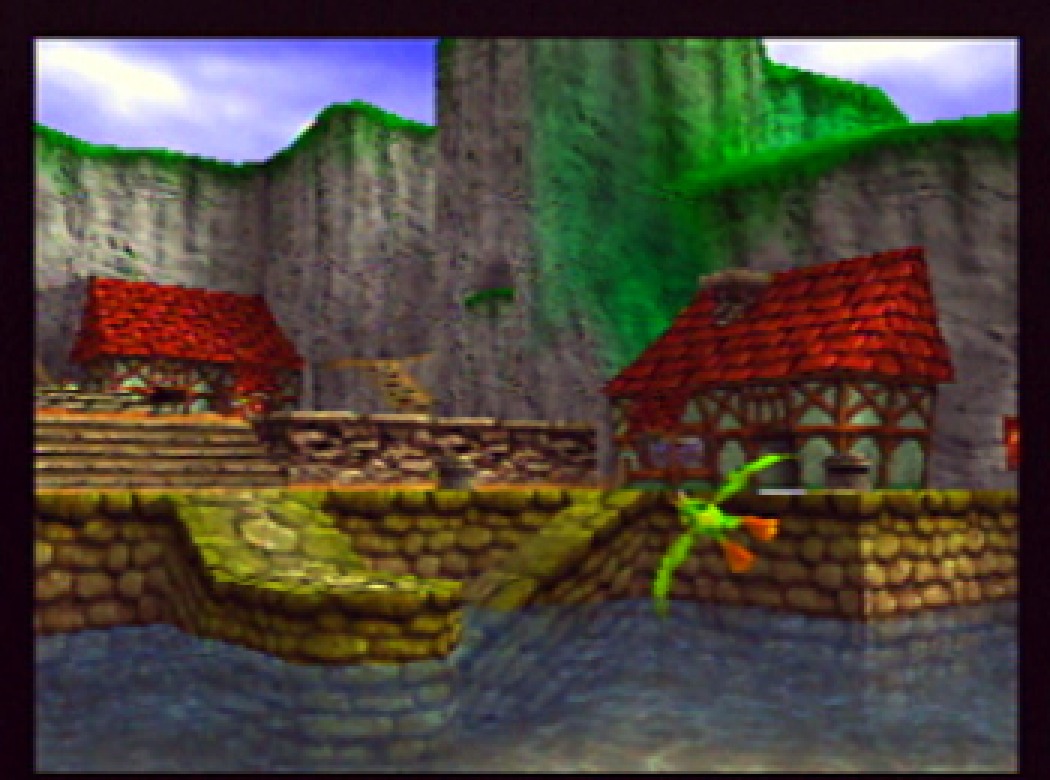
For all that, the verdict at the time was emphatic. IGN scored it 9.4 and GameSpot 9.6. GameSpot named it Best Platform Game of 2000, and it went on to sell 1.49 million copies worldwide by 2008. This was not a misunderstood experiment. It was a hit that happened to carry its compromises in plain sight.
The size drew a second, quieter criticism, one that has grown louder with time. GamesRadar warned that keeping track of what to revisit, and where, demanded “either a photographic memory or copious note-taking,” and GamePro reckoned players might simply lose their way. Both were right. Both were also describing the collectathon’s endgame: a genre built on more — more worlds, more moves, more things — discovering that more has a ceiling. Rare’s own Donkey Kong 64 had pushed the same direction a year earlier. Tooie is the better game, but it stands on the same cliff edge.
What Banjo-Tooie Left Behind
The afterlife has been kind. The Xbox 360 version arrived on April 29, 2009, with a smoother frame rate and high-definition graphics — the ambition, finally, on hardware that could hold it steady. In 2015 that version joined Rare Replay on Xbox One, and in 2019 it was enhanced for native 4K on Xbox One X. Then, on October 25, 2024, the original Nintendo 64 version came home, added to the Nintendo Classics service — its first re-release on a Nintendo console since Microsoft bought Rare in 2002. A whole generation of players met the game there, widescreen and all, twenty-four years after the cartridge.
What lasts is not the size, exactly. It is the confidence. Banjo-Tooie trusts the player with a map that does not sit still, a move list that starts complete and still doubles, and jokes that land because the game takes its own world seriously enough to kill Bottles in the first five minutes. The series has been quiet for years — we asked who needs Banjo-Kazooie in the age of its spiritual successors, and the answers keep circling back here. Play Tooie again and the answer is obvious. Nobody else ever built one quite this big, this connected, or this cheerfully unwilling to stop.
— Chip
Banjo-Tooie launched on November 20 — see what else happened on this day in gaming history.