
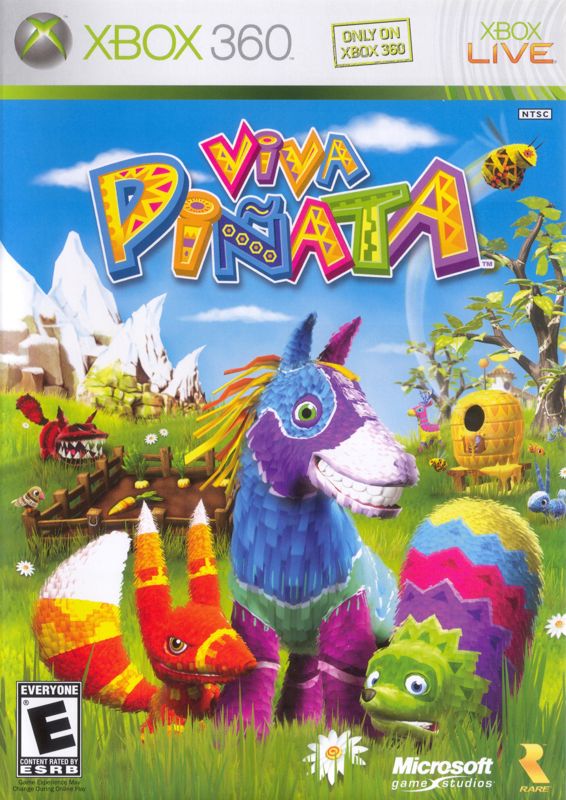
XBOX 360 · GARDEN SIMULATION · RETROSPECTIVE REVIEW
Developer: Rare · Publisher: Microsoft Game Studios · Released: November 9, 2006 · Genre: Garden simulation
Twenty years ago, Rare wrapped one of the deepest, most demanding simulation games ever made inside a packet of candy — and most of the Xbox 360’s audience never looked past the wrapper. Their loss. Viva Piñata at 20 remains a masterpiece hiding in plain sight.
Consider the company it kept. Viva Piñata launched on November 9, 2006, two days after Gears of War chainsawed its way into the Xbox 360’s second holiday, into a console culture busy defining itself around grey, gravel-voiced shooters. Microsoft marketed Rare’s new game as the platform’s big play for children and families: bright colours, a Saturday-morning cartoon, smiling candy animals. The box practically rattled with sugar. What almost nobody said at the time — because almost nobody at Microsoft seemed to realise — is that the “kids’ game” was the hardest-core simulation on the console, a systems-heavy life sim with a body count, built by the studio behind GoldenEye and staffed like it was still trying to prove something.
It had unlikely beginnings. The concept traces back to a pocket gardening idea from Rare co-founder Tim Stamper — a game you could tend on the move — and under designer Gregg Mayles it grew, and grew, until it was a full console production with more interlocking systems than most strategy games. Viva Piñata didn’t review like a children’s toy, either: critics landed at a Metacritic average of 84, praising exactly the depth the marketing had hidden. Twenty years on, it’s time the game was filed where it belongs: not under “family,” but under “all-timers that misdirection buried.”
Welcome to Piñata Island
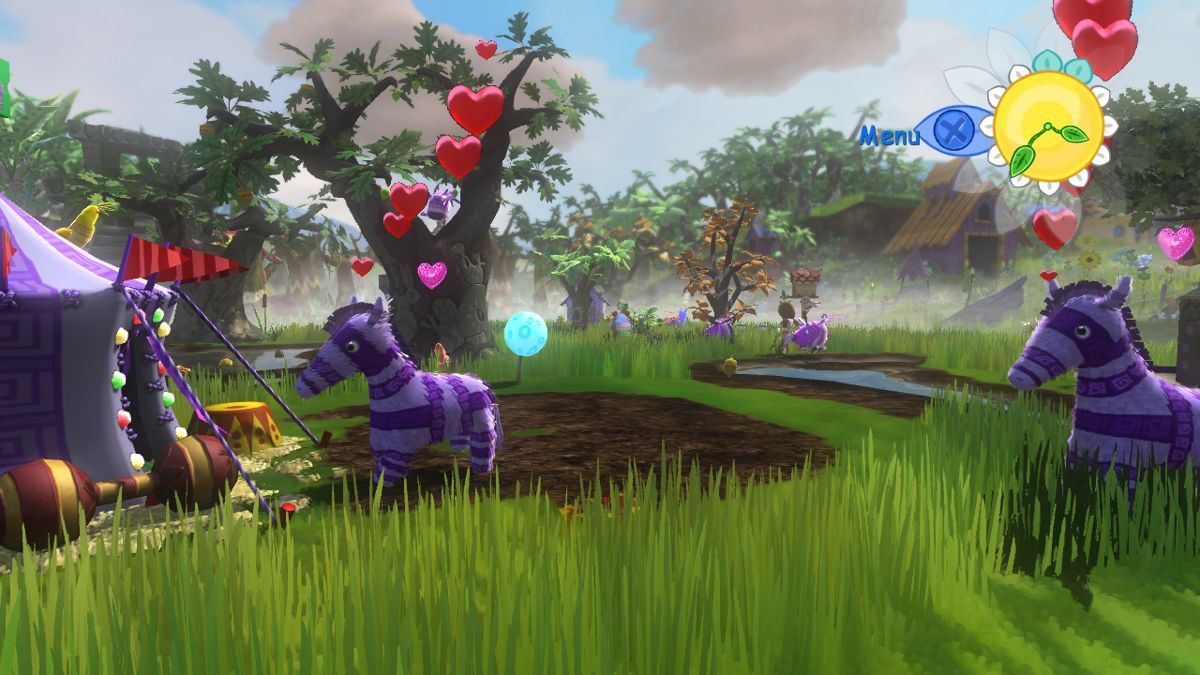
You start with nothing: a patch of beaten, sour earth, the wreckage of the great gardener Jardiniero’s ruined garden, and his daughter Leafos handing you a shovel and a watering can while her brother Seedos tosses seeds over the fence. The island’s premise is gloriously strange and quietly dark. Piñata Island breeds living, candy-filled papier-mâché animals for one purpose: to be shipped off to parties around the world and beaten open by children. Your job is to raise them for it, and the game never once blinks about where your beautiful Horstachio is eventually going.
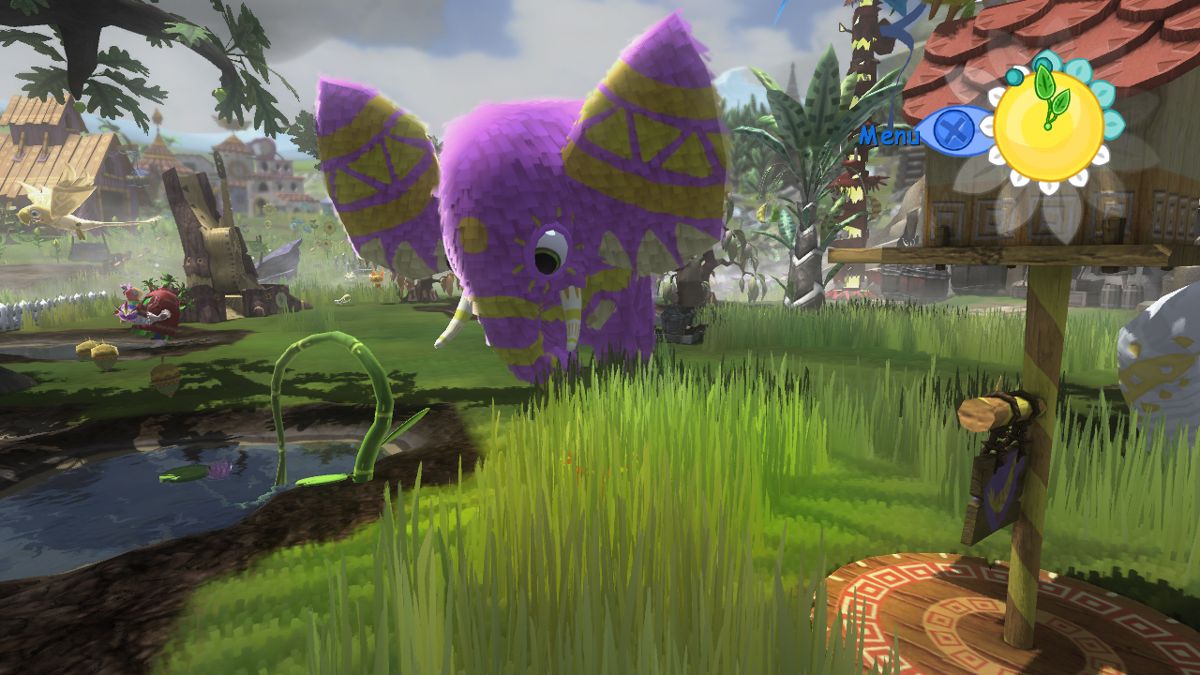
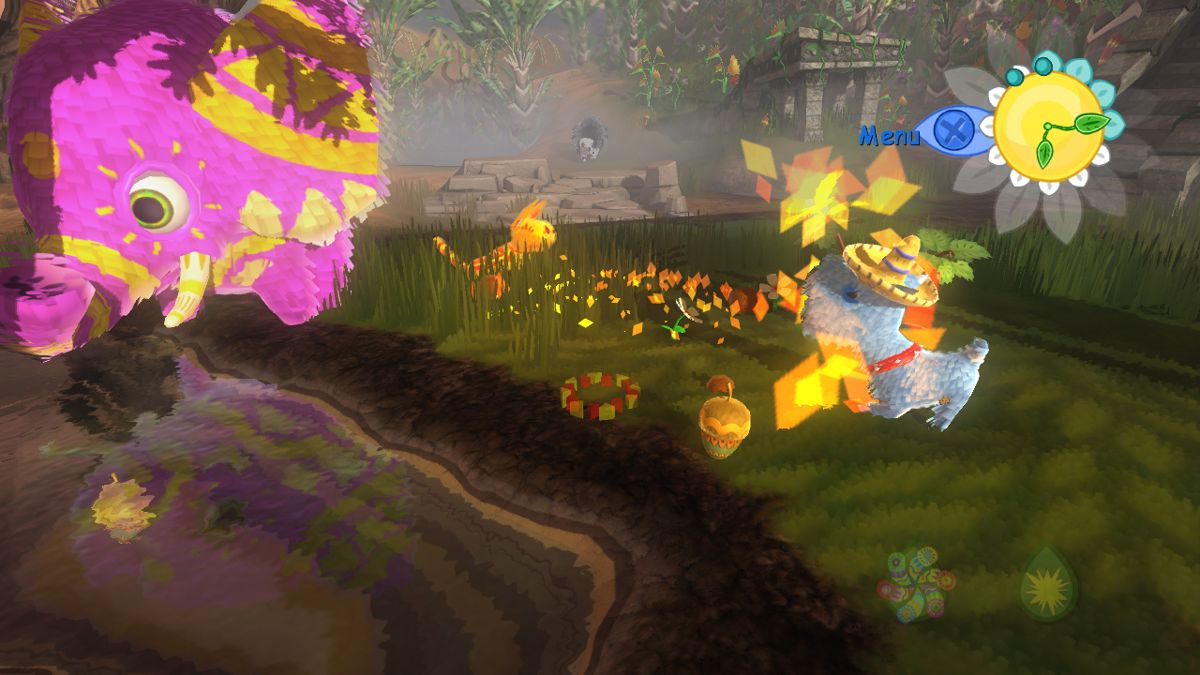
First, though, the garden itself — still one of the most seductive spaces in games. The papier-mâché art direction means every creature looks handmade, fringed with torn-paper fur that ripples as they waddle, hop, and preen. Butterflies drift. Rain polishes everything. Grant Kirkhope’s score drifts between pastoral strings and playful marimba, and the whole island glows with the confidence of a studio that knew exactly how different it wanted to look from everything else on the shelf. Whack the hard earth soft, plant your first grass seed, and within minutes a Whirlm — the humble worm, first of more than sixty species — will wander in off the wild to see what you’ve made. That’s the whole game, and it’s everything: make a place worth living in, and life arrives to judge it.
Easy to Learn, Impossible to Master
The depth announces itself slowly, then all at once. Every species has three sets of requirements — to appear at the garden’s edge, to visit, and to stay as a resident — and most of them are puzzles wearing feathers. A Mousemallow needs turnips and a little house. A Syrupent needs more. Then come the romance requirements, the variant colours unlocked by feeding a creature the right — or gloriously wrong — thing, the wildcard twins born one romance in a blue moon, and the Master Romancer awards that ask you to do it seven times over. The journal fills. The awards stack up. Hours evaporate in four-minute increments of just one more seed, just one more egg.
And underneath the sweetness, the island runs on teeth. This is a working food chain: Syrupents eat Mousemallows, Pretztails slip in at night for your Bunnycombs, and a resident is never a trophy — it’s a tenant in an ecology that can always turn. The rarest wonders sit at the top of chains several species deep: the Chewnicorn, the unicorn that heals your sick, or the Dragonache, a dragon hatched from an egg dug out of the earth and raised on the right diet into something enormous. Viva Piñata’s sim was so rich it needed its own fan wikis, its own spreadsheets, its own folklore. It got all three.
You’re not alone in any of it, either. The garden runs on hired hands: Gatherlings to harvest, Sprinklings to water, Watchlings to guard the fence-line at night, Diggerlings to mine for the treasures — a certain dragon’s egg among them — that the island keeps buried. Chocolate coins, earned from sold piñatas and produce, pay their wages and stock the shelves at Costalot’s store and Ivor Bargain’s stranger back-room deals. Underneath the tissue paper, this is a little economy with payroll and supply lines — which is why losing your best resident to a Ruffian’s boot stings in the wallet as well as the heart.
“Viva Piñata is not a kids’ game that adults can enjoy. It is a hardcore simulation that children were somehow expected to survive.”
Trouble in the Garden
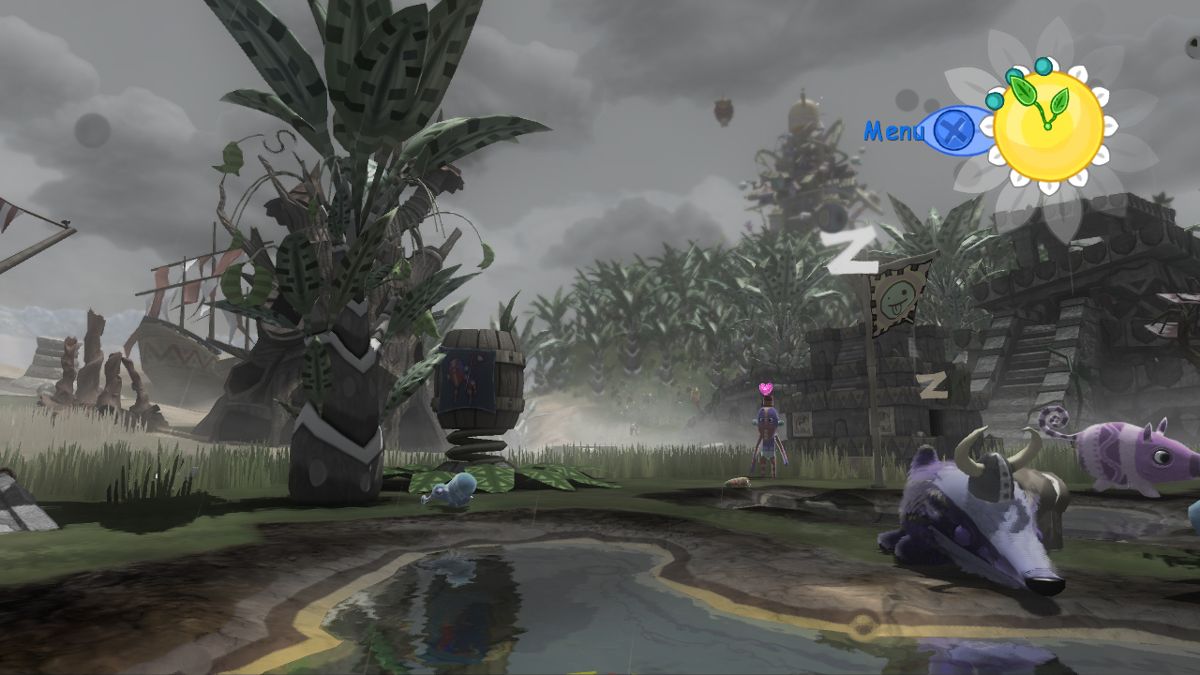
Here’s the part the box art left out: the garden wants to hurt you. Sour piñatas — feral, red-and-black versions of the residents, each a little saboteur with its own grudge — wander in to eat your seeds, start fights, and drop sour candy that poisons whoever’s foolish enough to eat it. Professor Pester, the island’s masked tormentor, sends his Ruffians to smash your property and, given the chance, will personally cave in the skull of your most valuable piñata — your most valuable piñata, specifically, because Pester can read a spreadsheet too. And when a piñata falls sick, Dastardos comes floating through the fence-line, chanting, mallet raised, to put it out of its misery unless you can get the doctor there in time.
Failure in Viva Piñata is physical. A piñata that loses a fight or eats the wrong thing can break — crack open, spill its candy, lose its value and its name, gone from the garden forever. The game’s cheerfulness and its cruelty aren’t in tension; they’re the same design. The sugar is the simulation. You’re not decorating. You’re running a small, bright, mortal world, and it will test exactly how attached you’re prepared to get to a purple horse made of sweets.
The sours, at least, can be saved. Every sour species has a condition — a food, a resident, a small act of garden design — that burns the sourness out of it, and a tamed sour doesn’t just behave: it helps, each one turning its old menace into a useful habit around the garden. It’s the game’s whole worldview in miniature. Nothing on Piñata Island is only a pest. It’s a system you haven’t understood yet.
The Show, the Sequels, and the Long Quiet
For a while, Microsoft pushed hard. The animated series premiered on television in September 2006 — before the game itself — with Hudson Horstachio as its preening star, and Viva Piñata was meant to be a franchise, not a curiosity. A Windows port followed in 2007. Krome Studios made the party spin-off Party Animals that same year, and in 2008 Rare delivered a full sequel, Trouble in Paradise — bigger, cleverer, with co-op gardening and new desert and arctic species to trap — alongside a genuinely lovely Nintendo DS version, Pocket Paradise. And then, as Rare was steered toward Kinect and the industry’s tastes moved on, the garden went quiet. Sales had always been slower than the reviews: the wrapper kept doing its job, and its job was keeping the wrong audience away and the right one from ever hearing about it.
The rescue, when it came, was archival: Rare Replay in 2015 bundled both garden games for Xbox One, and backward compatibility carries them still, so the garden is tendable today on modern hardware almost exactly as it was. It holds up embarrassingly well — the art direction barely aged, and the sim underneath it has never really been matched in its own genre, a genre of essentially one.
What’s kept it tended since is devotion. The fan wikis read like naturalists’ field guides — appearance conditions logged to the in-game hour, variant recipes, wildcard odds — and a completionist community still works its gardens twenty years on, chasing the last Master Romancer award with the seriousness of a ranked ladder. Rare Replay put Viva Piñata one menu away from Battletoads and Banjo-Kazooie, and it doesn’t look out of place in that company. It looks like the one that got away.
The Verdict
Viva Piñata at 20 is the answer to a trivia question nobody asks: what was the deepest game on the Xbox 360 that wasn’t an RPG? It’s a life sim about death, a children’s game about predation, and the most British thing Microsoft ever published — dry, unsentimental, and smuggling real feeling inside a joke. If you bounced off it in 2006, you probably weren’t too old for it. You were, like the rest of us, not yet taking it seriously enough.
Score: 8.5/10. A masterpiece in a candy wrapper — the deepest garden sim ever made, hidden inside the Xbox 360’s most misleading box.
For more launches from this date, see This Day in Gaming History: November 9. More from this system: our Xbox 360 hub.