
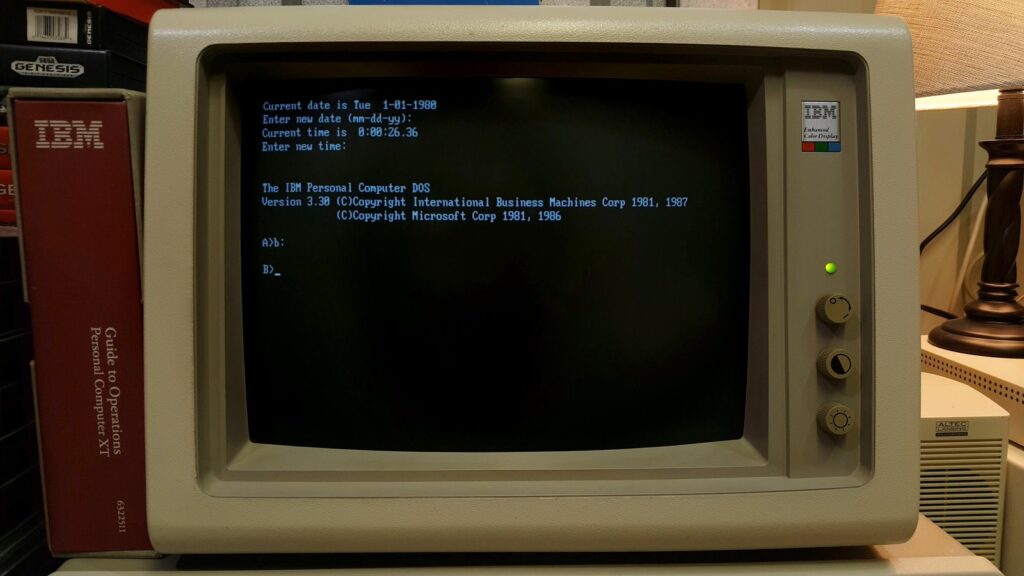
I still have a shoebox in my closet with hand-labelled floppy disks in it. Magic marker on a white label, my teenage handwriting getting less careful as the box filled up: DOOM — EP 1, KEEN, JAZZ, TYRIAN (FULL!!). Half of what is in that box, I never paid a cent for — and for once in a retro gamer’s life, that is not a confession. It is exactly what the people who made those games wanted. They gave the first chunk away, on purpose, and trusted the game itself to do the selling.
That trust is why, thirty years later, there is a shelf of genuine classics you can download tonight without a credit card or a grey-market site. These are DOS games you can play free because the folks who own them said so, in writing, in some cases decades ago — and never took it back. I checked every one twice, against publishers’ pages, storefront listings and the projects hosting the official free releases, because “somebody on the internet said it was free” is not good enough for this page.
So here is the honest shelf: eight games, every one a real piece of DOS history, every one free on purpose. Pour something warm, fire up DOSBox, and let’s go digging.
Why there are so many DOS games you can play free
You have to understand how strange software selling was before the web. In 1990 there was no store page, no trailer. There were bulletin board systems you dialled into at 2,400 baud, watching a download bar crawl while your mother picked up the kitchen phone and killed the connection. Into that world, Scott Miller at Apogee perfected a beautiful idea: give the first episode away. Not a timed demo — a real, complete first chapter, yours to copy for anybody. If players loved it, they mailed a cheque — an actual paper cheque, in an envelope — for the rest. Keen, Wolfenstein 3D and DOOM all spread that way, disk to disk, BBS to BBS. The copying was not piracy. The copying was the marketing department.
The second wave came later, and it is the one I love more. As the DOS era ended, a surprising number of creators looked at games they could no longer sell and simply set them free — declared freeware, handed to a fan project, or posted as an anniversary present. Bethesda gave away an entire Elder Scrolls game for the series’ tenth birthday. Revolution Software handed Beneath a Steel Sky to the ScummVM team. Diversions declared One Must Fall: 2097 freeware in February 1999. That is why bona fide DOS games you can play free exist in such numbers: shareware made the first episode free by design, then a generation of decent developers made whole games free by choice.
Now the honest paragraph, because this page does not fudge. Free means what is listed under each game below, no more. DOOM’s shareware episode is free; episodes two and three are still sold, and downloading the registered version from a random site is not legal just because the game is old. “Abandonware” is not a legal category anywhere — a company going quiet does not put a game in the public domain. Everything below is free because a licence, a freeware declaration, or a zero-price listing from the rights holder says it is. That distinction is the whole point of this list.
The eight finds
1. DOOM (1993)
id Software · id Software · 1993 · First-person shooter
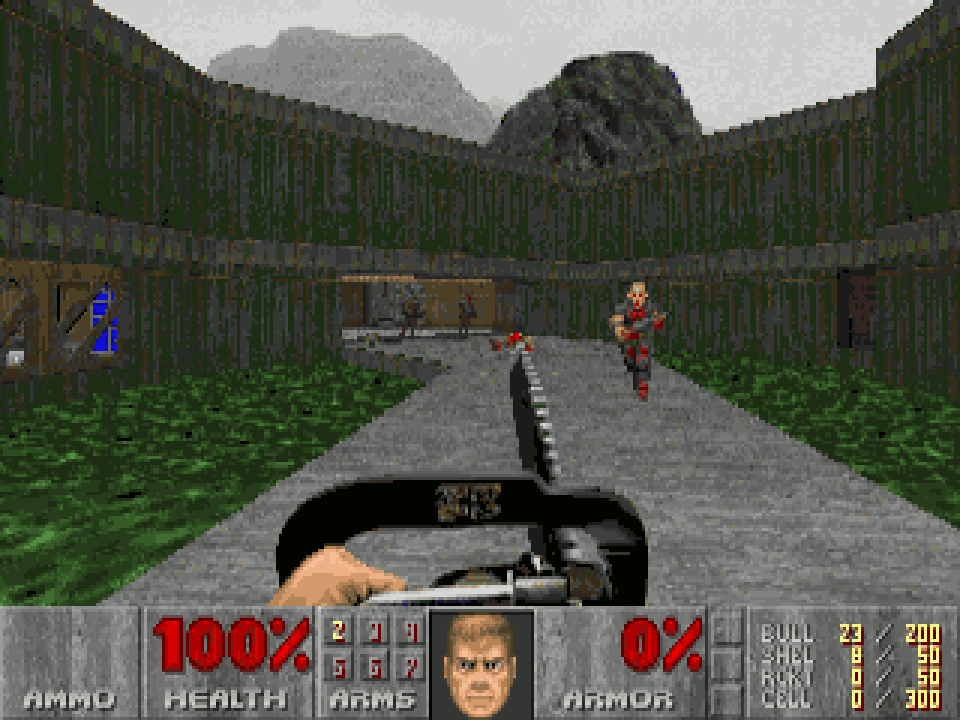
I remember the night this one arrived: a friend, a borrowed disk, and a 486 that took so long to draw the first corridor that we sat in the dark listening to the hard drive think. Then the door hissed open and PC gaming was never quite the same. DOOM’s first episode, Knee-Deep in the Dead, is nine levels of Phobos moonbase, shotguns and imps — a complete, satisfying game by itself, and the greatest free chapter anyone ever gave away.
How it is free: id Software released episode one as shareware on December 10, 1993, freely redistributable then and now — you will find the unmodified shareware package preserved in the Internet Archive’s DOS library, and our own legal library at Play the Classics carries it the same way. Episodes two and three remain commercial, and honestly, if the free episode hooks you the way it hooked a generation, the full game is a few dollars well spent. But the episode itself? Yours. It always was.
Shareware was not a demo and it was not a favour. It was a handshake: here is the good stuff, free — trust us, you will be back for the rest.
2. Commander Keen in Invasion of the Vorticons (1990)
Ideas from the Deep (id Software) · Apogee Software · 1990 · Side-scrolling platformer
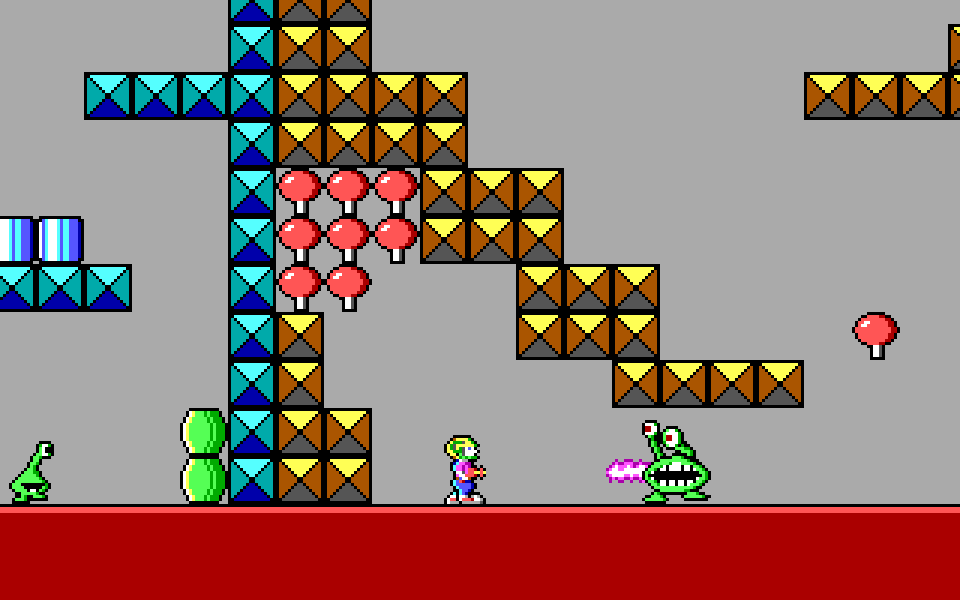
Before DOOM, there was a kid in a football helmet. Commander Keen is eight-year-old Billy Blaze, who built a spaceship out of soup cans and rubber cement, flew to Mars while his parents were out, and came home to find the Vorticons had stolen his ship in pieces. Keen matters for a technical reason — John Carmack’s smooth-scrolling trick proved a humble PC could move like a Nintendo — but I loved it for a simpler one: it was funny, it was kind, and its lollipops and rayguns felt made for kids who read too much science fiction. Which was me.
How it is free: episode one, Marooned on Mars, was the shareware episode, uploaded to BBSes on December 14, 1990 and freely redistributable ever since — the official 3D Realms (the old Apogee) site still offers the shareware download. Episodes two and three were the paid mail-order chapters and are still sold today in the Commander Keen packs, so Mars is free and the rest is a purchase, exactly as Scott Miller planned it.
3. Jazz Jackrabbit (1994)
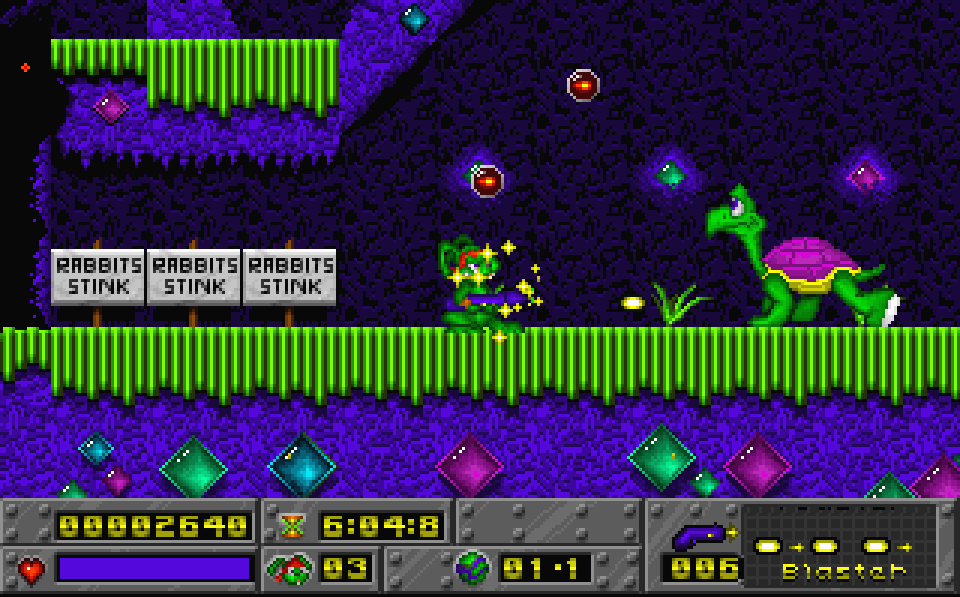
Epic MegaGames · Epic MegaGames · 1994 · Run-and-gun platformer
Every console had a mascot with attitude; the PC got a green rabbit with a bandana and a blaster. Jazz Jackrabbit was Epic MegaGames’ answer to Sonic — built for sheer speed, designed by a young Cliff Bleszinski and programmed by Arjan Brussee, with Alexander Brandon’s soundtrack thumping away in tracker style. The first episode sends Jazz chasing his nemesis Devan Shell, and it moves like nothing else on DOS: you hold right, the world blurs, and somehow the game keeps up.
How it is free: episode one was Epic’s shareware release, distributed free through BBSes and cover disks in 1994 — and Epic later gave away two whole extra Christmas episodes, Holiday Hare and Holiday Hare 1995, as free standalone releases, a generosity PC Gaming Wiki and the game’s own history both record. The complete collection is a paid GOG release today, and worth it, but the shareware episode and those Holiday Hare episodes were gifts from the start.
4. Tyrian (1995)
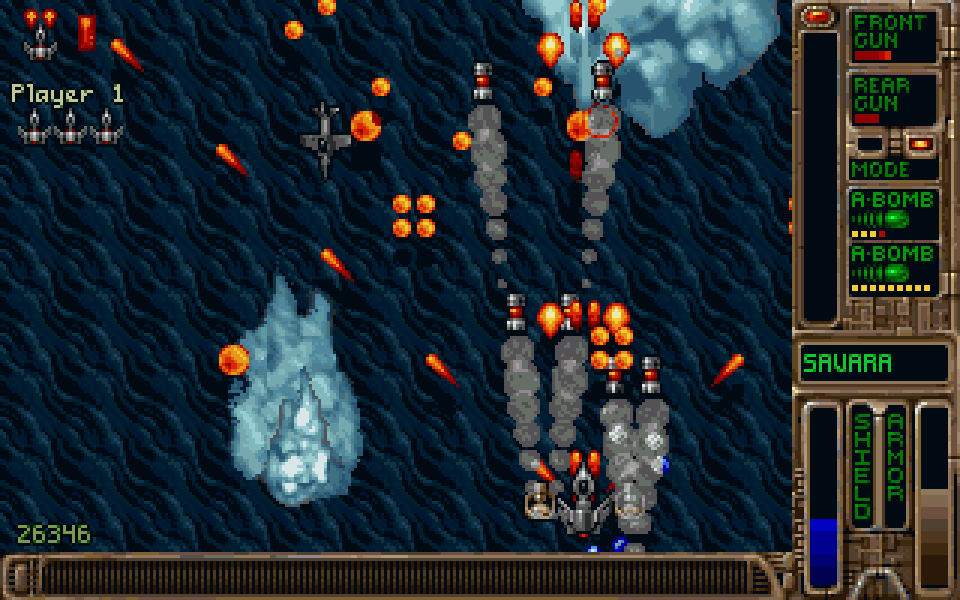
Eclipse Software · Epic MegaGames · 1995 · Vertical scrolling shooter
If I could keep only one shooter from the shoebox, it would be this one. Tyrian is a vertical scroller with a soul: a proper story mode about pilot Trent Hawkins and the MicroSol corporation, a shop between levels where salvaged credits buy front guns, rear guns, generators and sidekick pods, and secret levels tucked everywhere. Jason Emery programmed it, Daniel Cook painted it, Alexander Brandon scored it — the kind of game you do not finish once; you live in it for a summer.
How it is free: this is the best story on the list. Tyrian began as shareware like everything else here, but in 2004 Jason Emery re-released the whole game as freeware — the complete game, not an episode — and in 2007 the artwork followed under an open licence, which is how the OpenTyrian port exists. The expanded Tyrian 2000, with its fifth episode, sits in GOG’s catalogue at a price of exactly zero. Full game, full blessing, no asterisks.
5. One Must Fall: 2097 (1994)
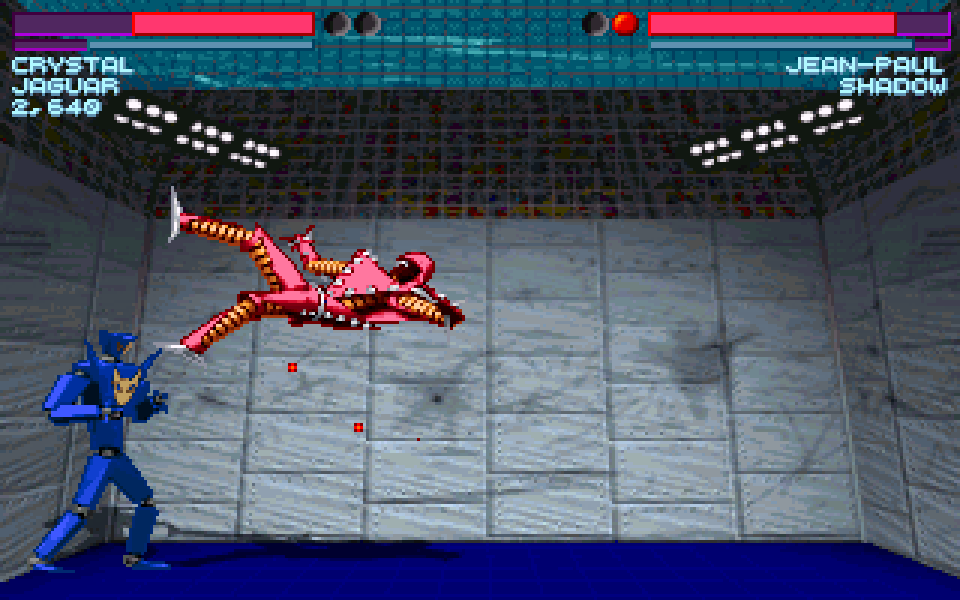
Diversions Entertainment · Epic MegaGames · 1994 · Robot fighting game
Console kids had Street Fighter; we had giant robots and a keyboard. One Must Fall: 2097 is a one-on-one fighter where the pilots matter as much as the machines — you pick a human, whose speed and power shape the fight, and a HAR, a Human Assisted Robot, from the scrappy Jaguar to the shadow-stepping Shadow, then brawl through a tournament run by the WAR corporation. Brothers Rob and Ryan Elam built it in Florida, Kenny Chou wrote a soundtrack people still hum, and it remains the best fighting game DOS ever produced.
How it is free: in February 1999 Diversions Entertainment declared the complete game freeware, with free non-commercial redistribution and even modification allowed — a status recorded by Wikipedia, the game’s own fan documentation, and every DOS archive that hosts it with a clear conscience. The whole registered game, tournament mode and all, is the free one here. Its 3D sequel, Battlegrounds, is a separate commercial release and is not part of the gift.
6. Flight of the Amazon Queen (1995)
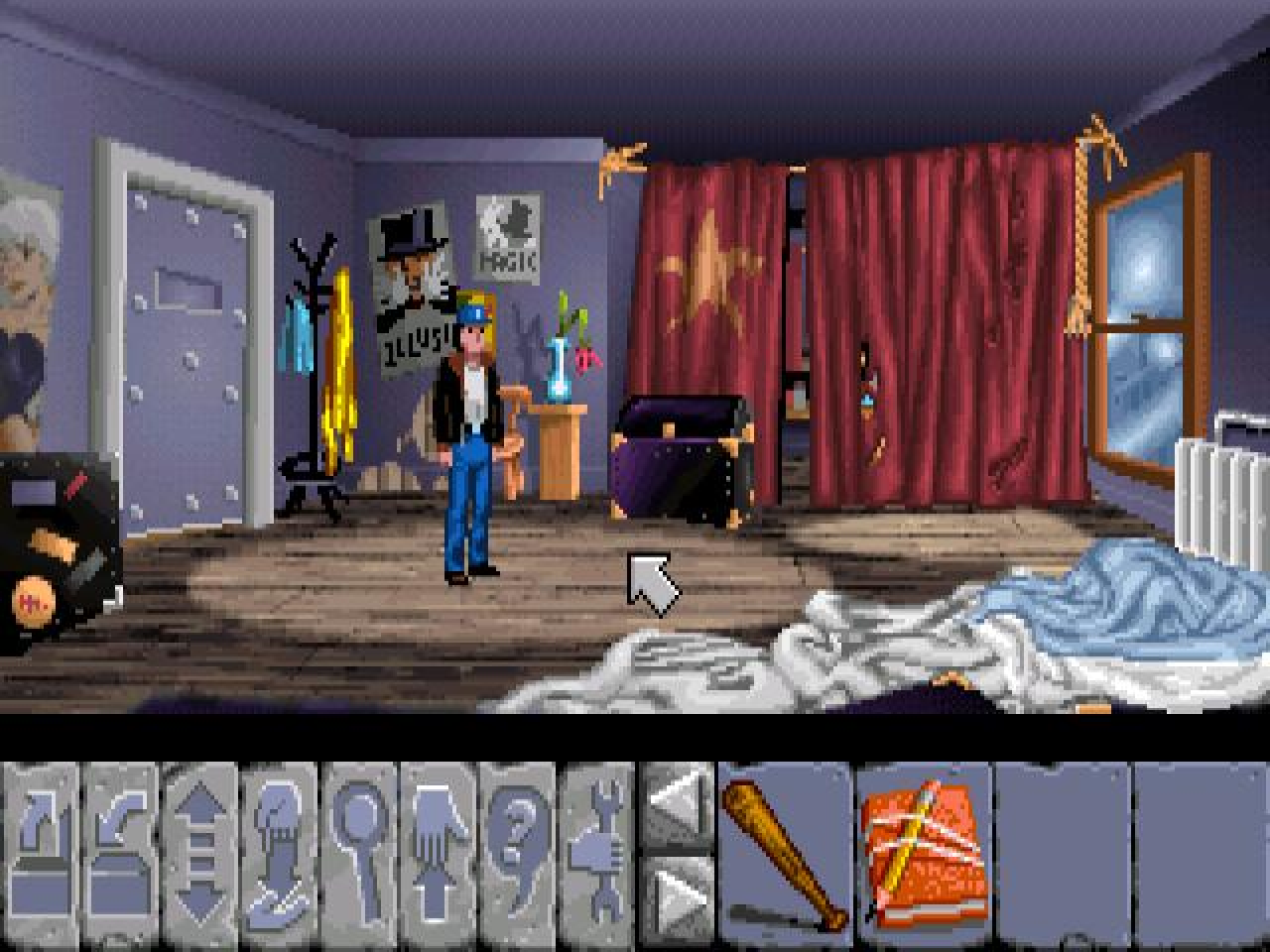
Interactive Binary Illusions · Renegade Software / Warner Interactive · 1995 · Point-and-click adventure
Some games you remember for a puzzle; this one I remember for a tone. Flight of the Amazon Queen is a 1949 B-movie serial you can play: Joe King, pilot for hire, is flying a film star into the Amazon when rivals, a crash landing, a mad scientist and some very determined Amazons turn a day’s work into a world-saving expedition. It wears its Indiana Jones and Monkey Island influences cheerfully, the jokes land more often than they have any right to, and the icon interface — Joe is controlled by picture buttons along the bottom — never gets between you and the story.
How it is free: in March 2004 its creators, John Passfield and Steve Stamatiadis, released the complete game as freeware through the ScummVM project, and the data files for both the floppy and the CD talkie versions are still offered on ScummVM’s own downloads and games pages today. GOG also lists the game free. The full adventure, start to finish, given away by the two men who made it — download it from ScummVM and you are playing the exact release they authorised.
7. Beneath a Steel Sky (1994)
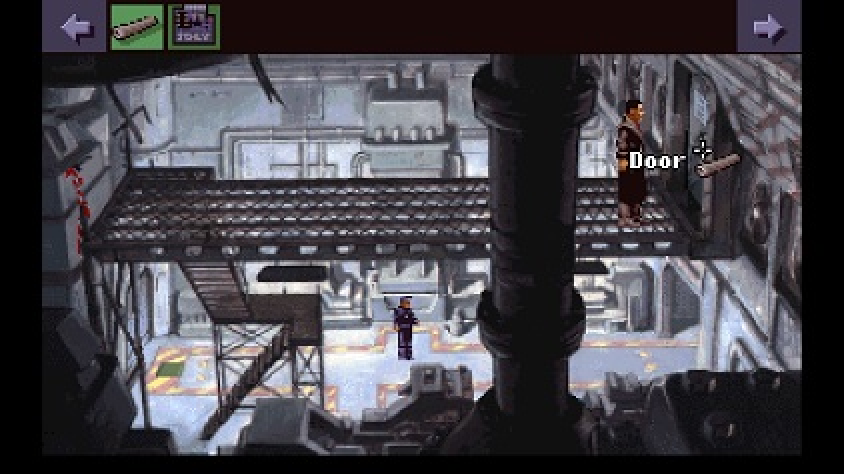
Revolution Software · Virgin Interactive · 1994 · Point-and-click adventure
The funniest dystopia ever made. Beneath a Steel Sky drops Robert Foster — raised in the outback wasteland called the Gap, kidnapped back to a sealed corporate city ruled by a computer named LINC — into a mystery about his own past, with robot sidekick Joey riding along in a vacuum-cleaner shell and complaining beautifully. Revolution’s Charles Cecil built it with Watchmen artist Dave Gibbons, and you can feel Gibbons on every screen: a comic book you walk around in, bleak and witty at once.
How it is free: in August 2003 Revolution Software released the game as freeware and shared its source code with the ScummVM team, which is why ScummVM distributes it from its official games page and why GOG’s listing for Beneath a Steel Sky (1994) carries a price of $0 to this day. The complete game is the free one — just keep it separate in your mind from its paid 2020 sequel, Beyond a Steel Sky, which is a different, commercial game.
8. The Elder Scrolls: Arena (1994)
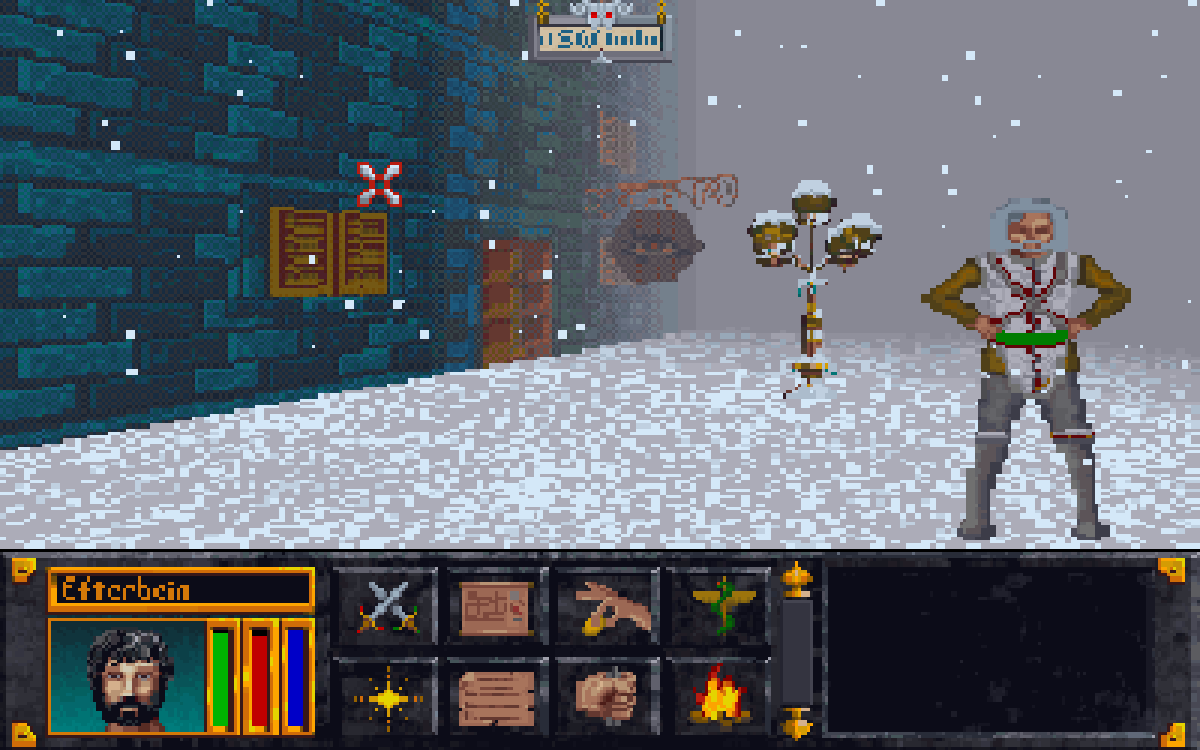
Bethesda Softworks · Bethesda Softworks · 1994 · First-person action RPG
We end with the biggest gift on the list. Arena is where The Elder Scrolls began: all of Tamriel, procedurally stretched across a continent no 1994 hard drive should have held, seen in first person as you hunt the pieces of the Staff of Chaos to free an emperor from another dimension. It is rough, enormous, occasionally bewildering and utterly fearless — the seed of Skyrim, in chunky VGA.
How it is free: in 2004, for the series’ tenth anniversary, Bethesda released the full floppy-disk version of Arena as a free download from the official Elder Scrolls site — the whole game, not a demo — and the Unofficial Elder Scrolls Pages record that it is available free on Steam and GOG today as well. You will want DOSBox for the original download, which Bethesda itself cheerfully tells you. A major publisher gave away the first chapter of its biggest franchise, on the record, and it is still free. That is how this is supposed to work.
Where to go digging next
Start where the paperwork is cleanest. ScummVM’s own games page is the gold standard for freed adventures — both adventures on this list live there, authorised by their makers. GOG’s free catalogue holds several of these titles at $0, already configured to run. The Internet Archive’s shareware library preserves the original packages exactly as uploaded in the nineties, DOOM’s first episode included. And our sister library, Play the Classics, exists for precisely this shelf of history — legally free and properly presented DOS games you can play free, in the browser, without a download hunt. If a title you love is not on a list like this one, that is not an invitation to go find a shadow copy; it usually just means nobody has freed it yet. Buy it cheap, or wait — the shoebox taught me patience, too.
That is the deal the shareware era offered, and it still holds: the first taste was free because the makers believed in the work. Believe them back. Play the free ones tonight, and when one grabs you the way they grabbed me in 1993, go pay for the rest. The handshake is the same.