
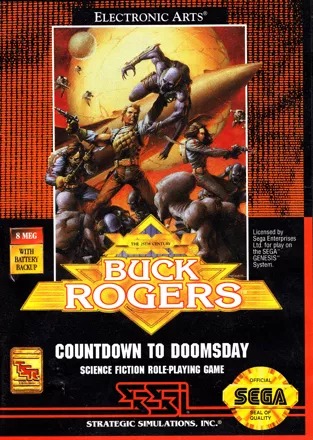
At a glance: Buck Rogers: Countdown to Doomsday · Genesis · developed by SSI · published by Electronic Arts · 1991 · science-fiction role-playing game · created six-character party · single player
First, an absence: Buck Rogers is not in this game. SSI’s Countdown to Doomsday draws not on the newspaper strip or the film serials but on TSR’s XXVC tabletop setting, a 25th century in which the New Earth Organization resists the Russo-American Mercantile — RAM — across a colonised solar system. You are not the hero of the franchise. You are six raw NEO recruits of your own manufacture, and the countdown of the title belongs to a Doomsday Device RAM intends to switch on. SSI built the game first as a flagship of its Gold Box line on home computers; the Genesis version, published by Electronic Arts in 1991, is a considered rebuild rather than a squeezed port, and it may quietly be the finest traditional RPG on the console.
Build Six People, Then Trust Them
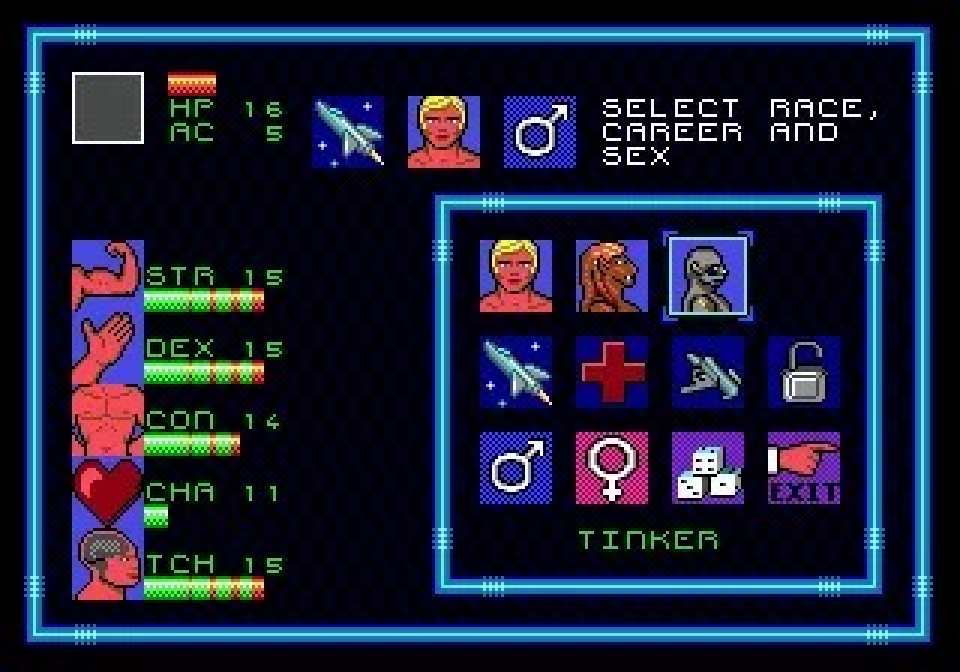
Everything begins at the creation screens, which are half the game in miniature. Four careers are on offer — Warrior, Rogue, Medic and Rocket Jock — each with an exclusive talent: only Rogues slip security, only Medics patch the party up after a fight, only Warriors keep sharpening their weapon skills, while Rocket Jocks keep the ship flying. Three peoples populate the roster: adaptable Humans, Desert Runners and Tinkers, the latter two offering raised ceilings in particular statistics at the cost of narrower career choices, so a Tinker Medic becomes a small optimisation puzzle in himself. Six attributes are diced for each recruit, and the game permits unlimited re-rolling, an invitation to spend twenty minutes manufacturing supermen that most players will accept exactly once. A ready-made default party waits for the impatient — balanced, unglamorous, perfectly serviceable.
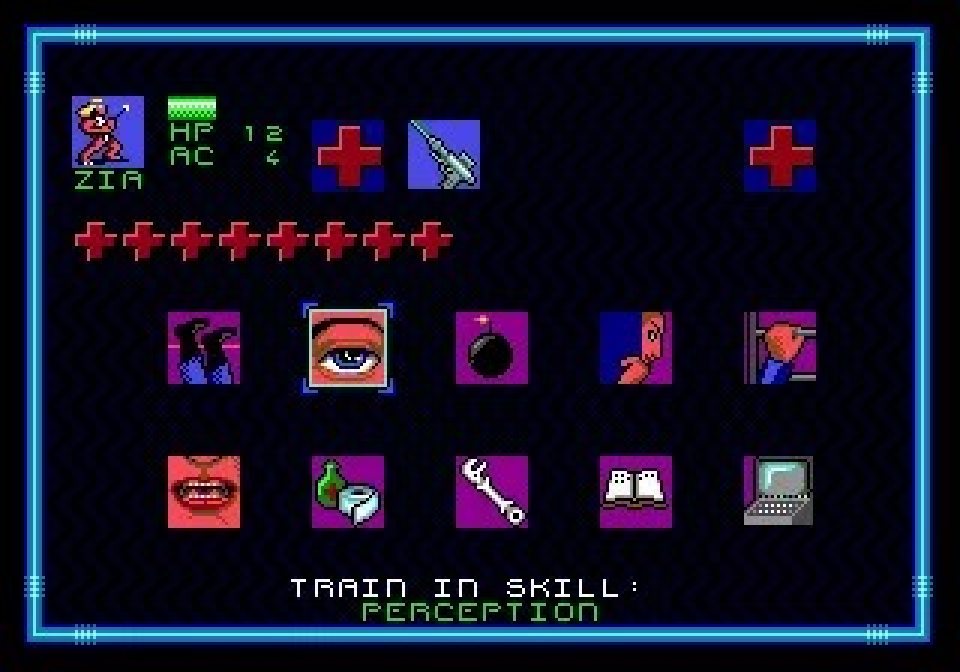
The computer original offered six races and five classes, and the Genesis trims skills and equipment lists alongside them, folding fiddly specialisations into broader abilities — one Rocket Repair skill instead of a panel of subsystem proficiencies. Purists lose granularity. Players lose very little: the shared skill pool still lets two Warriors diverge into a sniper and a brawler, or one Rocket Jock into an engineer and another into the smooth talker who negotiates what the engineer cannot fix.
Salvation III and the Inner System
The campaign opens mid-crisis, with RAM attacking the moon base where your recruits happen to be standing — a tutorial conducted at gunpoint. Survive it and NEO posts you to Salvation III, an orbital headquarters that dispenses missions across the inner planets: a drifting freighter gone silent, Venusian Lowlanders to liberate, children to extract from an overrun research station, and RAM’s genetically engineered soldiers — gennies — turning up wherever the plot needs teeth. Between assignments your ship is yours: ports stock different gear, bars dispense rumours and the occasional brawl, side missions hide in conversations, and pirates or RAM patrols can force a decision in open space — run silent on your party’s stealth, or fight.
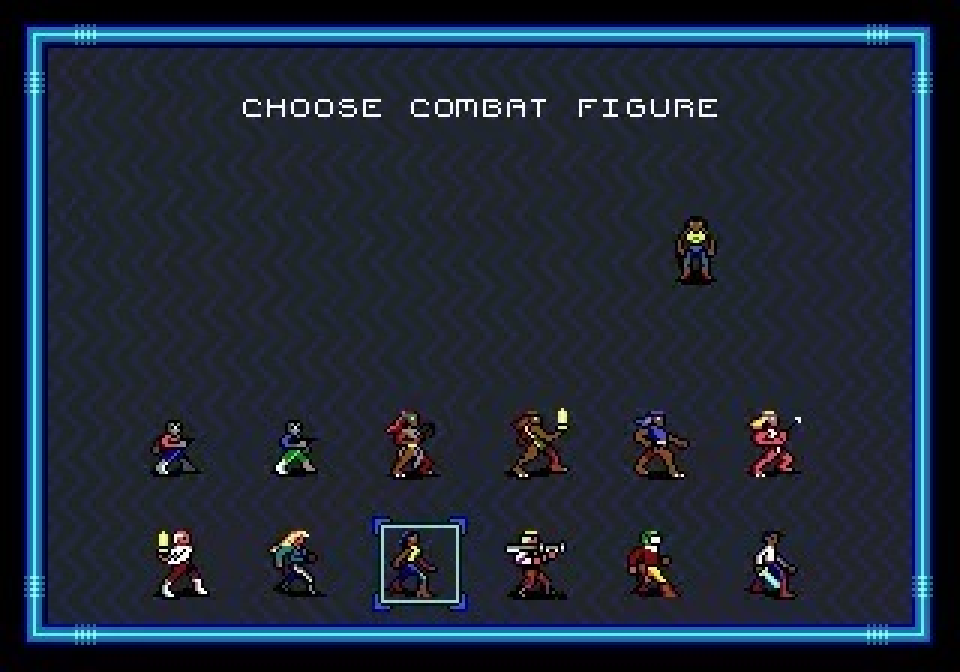
Ship combat is a small tactics game of its own. Range is a dial you and the enemy both turn, weapons carry minimum distances, and fire can be concentrated on components — knock out their engines or guns rather than chewing through hull. Your Rocket Jock’s Jury Rig talent patches wrecked systems between volleys, and boarding remains the gambler’s option: capture the bridge and the salvage is rich, but their crew outnumbers yours and ground rules apply. Ground combat runs on an isometric grid with action points, a heavy emphasis on ranged fire, and one flourish the computer games would envy — zero-gravity engagements quietly fold each fighter’s zero-g skill into movement and accuracy, so the specialist you trained for ship work earns his pay in a spinning corridor. A quick-combat toggle hands any character to a competent AI that grenades, heals and advances sensibly, though it defends like a romantic and will charge your swordsman into whatever is shooting.
Plain Rooms, Rich Writing, Real Teeth
The Genesis rebuild made one structural change that defines it: where the computer versions explored in first person, here navigation uses the same isometric view as combat. The cost is scenery — rooms are bare tiled boxes, identical corridors blur together in the larger complexes, and nothing story-relevant is ever drawn. The compensation is the text window along the screen’s foot, which describes everything the graphics decline to show and does it with pulp confidence. You will open every door in every complex because the prose, not the pixels, tells you what was inside.
That prose supports a campaign unusually willing to hurt you for your choices. Spare the gennies or trust your instincts about their word? Divert to save a family mid-mission? One early derelict leaves party members collapsing from an unseen sickness while you race an unexplored ship for the cure, and failure is genuinely available. Most notorious is the encounter where surrendering to a pirate is the correct move and fighting means expert troops in waves — a lesson administered exactly once, permanently. Death here is not a nap: a character left unconscious too long dies outright, with no resurrection queue, which makes the three save slots less a convenience than a discipline. A handful of looping musical themes is the one element that never rises to the material; the mute button and your own records are a legitimate strategy.
Scale is the last thing to convey. The box advertises its eight-megabit cartridge and battery backup like credentials, and the game behind them runs long — dozens of hours for a first party, across a map that reaches out to Mars before the trail of the Doomsday Device runs cold. The computer original ranged further, out past Jupiter, and its sequel Matrix Cubed continued the story; neither fact diminishes what the Genesis edition accomplishes, because the trimming was done by people who clearly understood which parts of the design were load-bearing. The missions keep rotating their demands — a boarding action here, a zero-gravity firefight there, an interrogation of your own loyalties in the bars between — so the length never feels like padding. Few console RPGs of the period trusted a player with this much campaign. Fewer still punished them this fairly for enjoying it. It is worth saying plainly that the gennies thread — an engineered slave class, built to be disposable and quietly furious about it, sitting inside a pulp space opera like a splinter — was unusually direct material for a console cartridge of 1991, and the writing trusts the player to sit with it rather than be lectured by it.
“A computer RPG rebuilt with respect: smaller on paper, roomier in the playing, and willing to kill your favourite recruit for one proud decision.”
The Verdict
What survives the trimming is the substance — a hand-built party, two interlocking combat systems, missions with moral weight and consequences that stick, all inside one of the meatiest cartridges the Genesis ever carried. The barren rooms and thin music date it; the design does not. RPG players who skipped it because the box says Buck Rogers missed one of the console’s most grown-up games.
Verdict: a slow-burning, choice-driven space opera that respects your intelligence and punishes your pride — 7.5.
Keep reading: the Genesis system archive