
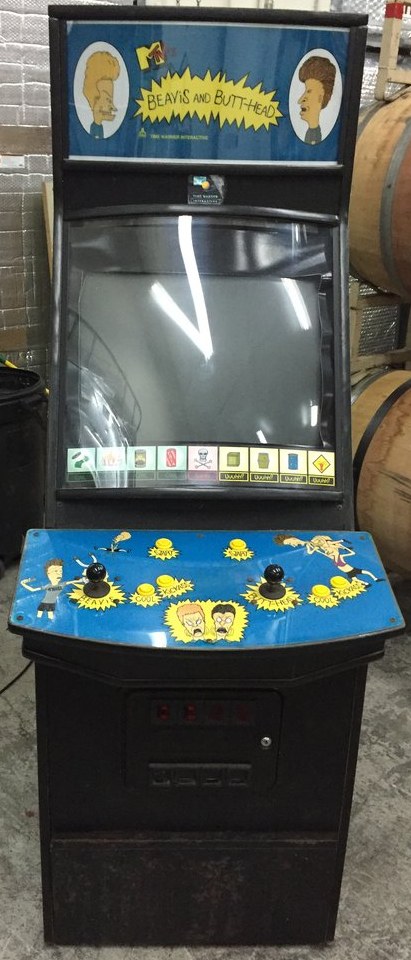
The mid-nineties arcade had a licensing problem and a licensing opportunity in the same place: anything with a recognisable face was a candidate for a cabinet. Atari Games, hunting for the next hit, looked at MTV’s favourite animated delinquents and saw a coin-op future. Beavis and Butt-Head, developed in 1996 on Atari’s Cojag hardware — the platform behind Area 51 — was to be a fighting-flavoured action game built around the duo’s eternal quests for nachos, television and anything else their channel-surfing id demanded. It was shown, tested, and then cancelled so completely that for two decades its existence was a footnote. Then a prototype board surfaced, and the lost Butt-Head game became playable.
What the prototype contains
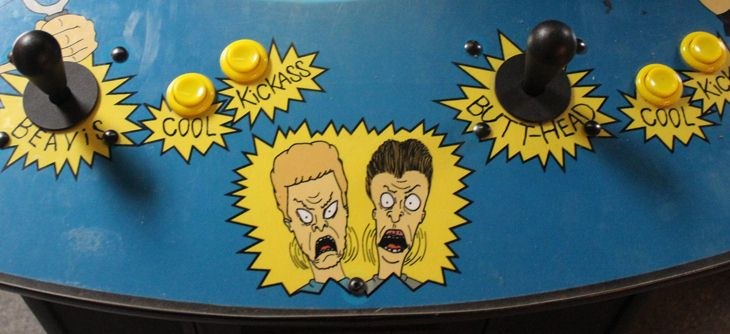
The surviving version is unmistakably a work in progress, which is precisely what makes it fascinating. Built around digitised and hand-drawn cartoon styling true to the show, the game sends Beavis and Butt-Head through stages themed on their world — Highland, its burger joint, its streets of tormentors and teachers — battling enemies with the junk-drawer arsenal the characters would plausibly use. Voice samples from the show pepper the action. Structurally it gestures toward the versus and brawling hybrids Atari knew how to build, with the humour doing the heavy lifting that polish never got the chance to do. Moves are unfinished, balance is theoretical, and some content clearly awaits assets that were never made. It is, in other words, an honest prototype: the scaffolding of a commercial game, preserved mid-thought.
Why it was cancelled
The cancellation was less a judgement on this specific game than on the market beneath it. By 1996 the American arcade was contracting hard; home consoles had absorbed the casual audience, and the cabinets still earning were fighters, racers and light-gun games with guaranteed throughput. A comedy licence, however strong on television, was a risk operators increasingly declined — location tests reportedly gave Atari little encouragement, and the company, itself under the financial pressures that would soon end the original Atari Games, cut the project. The boards went back on shelves. The licence went to consoles and PCs instead, where Beavis and Butt-Head games of variable quality duly appeared, none of them this one.
How a cancelled game came back
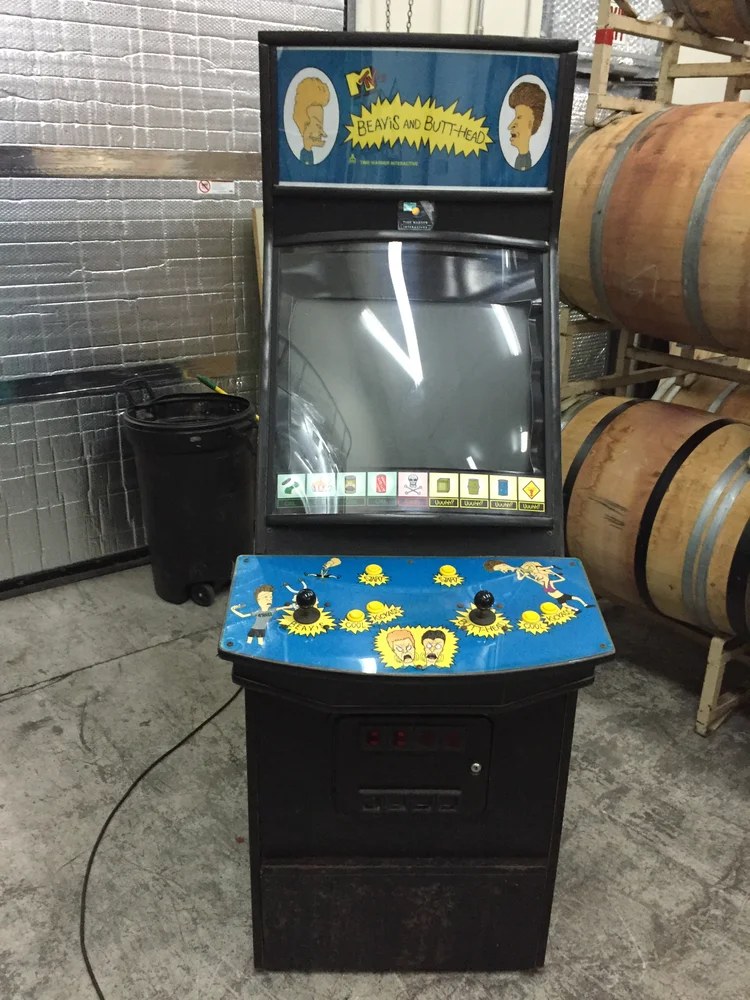
The resurrection followed the pattern that has saved so many lost games: a prototype board survived in private hands, passed through the collector community, and eventually reached people equipped to dump, document and share it. The arcade venue Galloping Ghost, famous for housing rare and prototype cabinets, played a celebrated role in making the game publicly playable on real hardware, while emulation preserved the code for everyone else. Each route matters. The cabinet gives you the game as its makers imagined it being encountered — standing up, in a loud room, for two minutes at a time. The dump gives historians the artefact itself, safe from the day the last prototype board fails.
Prototype culture and the games that almost were
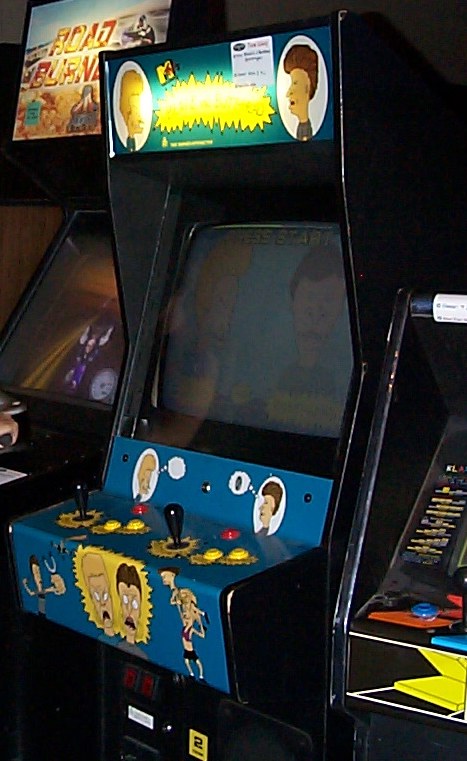
The Beavis and Butt-Head coin-op belongs to a fascinating category that preservation has only recently learned to handle well: the cancelled commercial game, developed by a major studio, shown in public, and then withdrawn so completely that its survival depended on individual employees and collectors keeping hardware the company itself had written off. The last decade has been generous to this category — prototypes of everything from unreleased fighters to lost Nintendo collaborations have surfaced, been dumped, and entered the playable record — and each recovery rewrites a small piece of industry history. Atari’s mid-nineties story, in particular, is usually told through its famous successes and its corporate collapse. The Butt-Head prototype adds the missing middle chapter: a company still commissioning ambitious, fashionable work, in a market that had quietly stopped being able to support it.
For players, the etiquette of prototypes is worth observing. A prototype is evidence, not a product: frame rates, difficulty and content reflect a moment in development, not a verdict on the team’s ability. The community that preserves these games asks only that they be approached with that curiosity — and, where possible, supported, since the venues and archivists who keep prototype hardware running do so at real cost. Galloping Ghost’s role in this game’s public life is the model: a working cabinet, maintained and exhibited, generating the awareness that funds the next rescue. Every cancelled game that comes back this way makes the next one likelier to survive. The archive grows because people show up to play it.
The licence that time forgot, in context
Step back and the story sharpens into something almost poignant. In 1996, Beavis and Butt-Head were not a nostalgia property or a cult revival; they were the defining cartoon of the moment, Mike Judge’s duo having gone from MTV short to feature film in the space of the game’s development. Atari’s instinct was commercially sound — the licence was hot, the audience overlapped the arcade’s remaining demographic almost exactly, and the characters’ world of junk food, television and low-stakes delinquency translated naturally into stages and enemies. The cancellation therefore reads less like a bullet dodged than like a door closing on an entire strategy: within a few years, the licensed cartoon coin-op — a genre that had given the arcade some of its most beloved cabinets, from The Simpsons to the Turtles games — effectively ceased to exist, as home consoles absorbed both the licences and the children. The Butt-Head prototype is the genre’s last unfinished sentence. That it can now be played at all, however roughly, is a gift the nineties left in a drawer for us.
Is it actually any good?
The fair answer is: it is a promising rough draft, and judging it as a finished release misses the point of its survival. The humour lands where the show’s landed, the presentation is authentically scruffy in the way the series demanded, and the core action is competent Atari mid-nineties work. What it lacks — balance, variety, endings, polish — is the list of everything cancellation took. Its value now is documentary and experiential: a playable answer to a trivia question, a snapshot of an industry moment when MTV could plausibly anchor an arcade strategy, and a reminder that the archive of games we can play is a fraction of the games that were made. Heh heh. Cool.
Postscript: how to experience it
For readers whose curiosity is now properly lit, the routes to this strange artefact are the two this article has described: in person, where prototype cabinets are exhibited by the venues that maintain them, and in emulation, where the dumped code allows the game to be studied on modern hardware. Either way, approach it as you would a demo tape from a beloved band — not for the polish that never arrived, but for the energy of a thing caught mid-becoming. Notice the jokes that land, the stages that were clearly loved by their artists, and the exact places where 1996 simply runs out. Then spare a thought for the unknown number of its siblings — the cancelled games of every studio, in every genre, whose boards were not kept, whose code was not dumped, whose stories end at the rumour. Beavis and Butt-Head’s coin-op is the lucky one. Playing it, however briefly, is how the luck gets shared.