At a glance — Game: Kendo Rage (Makeruna! Makendō) · Developer: Affect · Publisher: Datam Polystar (Japan); SETA (North America) · Original release: January 22, 1993 (Japan); October 1993 (North America) · Original platforms: Super Famicom, Super NES · Genre: Action, platformer
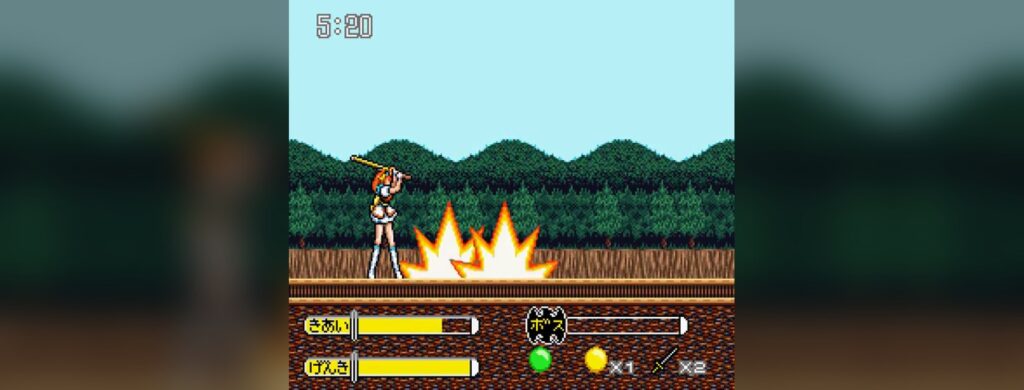
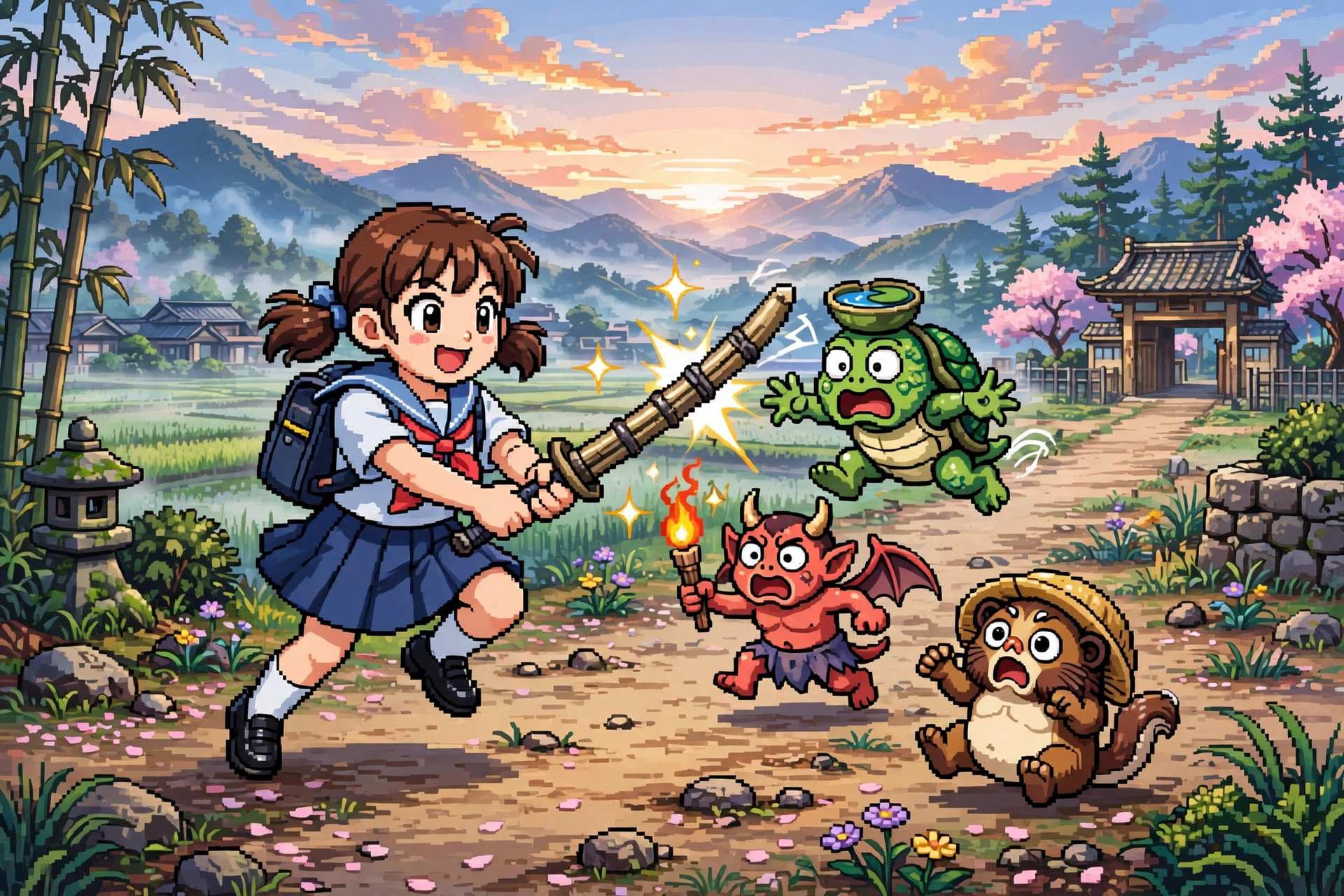
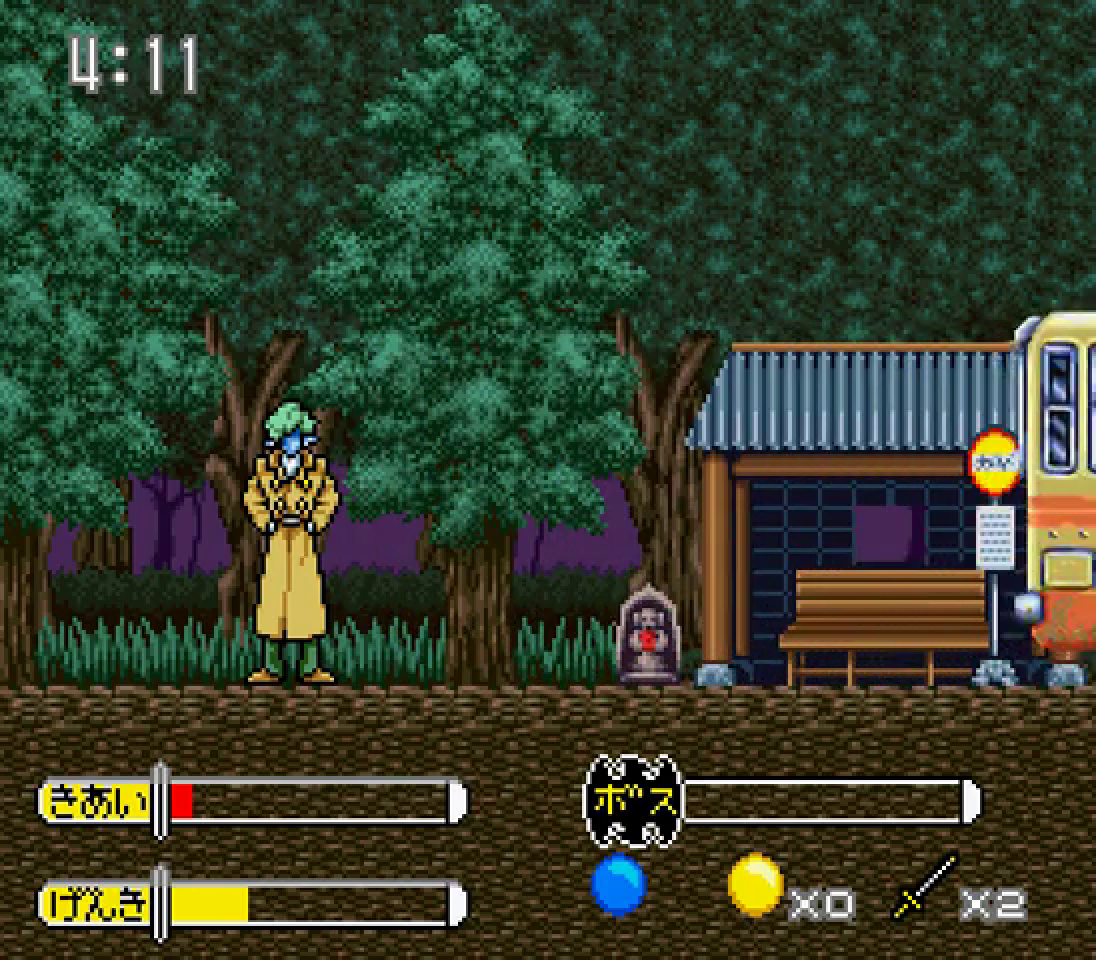
Most games hand you a quest. This one hands you a commute. The clock in the corner starts at 4:00 in the morning, your heroine has to get to school, and everything standing between her and the school gates — ghosts, yokai, a boss at the end of every stage — has to be dealt with using a bamboo practice sword and whatever psychic energy she can build up along the way. I did not rent this one as a kid. Almost nobody I knew did. It turned up in my life the way it turned up in most people’s: a strange box in a bargain bin, a name that sounded like a martial-arts movie, and a screenshot on the back that made no sense at all. That is still the right way to meet it.
A school run, with monsters
In Japan, where Datam Polystar released the game as Makeruna! Makendō on January 22, 1993, the heroine is Mai Tsurugino. A spirit detective named Doro recruits her to fight monsters, and off she goes. The North American version, published by SETA that October, rewrote her completely: now she is Josephine — Jo — an American girl spending a summer at a kendo school in Japan, asked by her trainer, Osaki “Bob” Yoritomo, to fight monsters on the way to class. Same game, same stages, two different girls. Wholesale rewrites like that were normal in 1993. Kendo Rage just wears its one openly. The Japanese version is a magical-girl comedy. The American version is a fish-out-of-water comedy. The shinai does not care either way.
How Kendo Rage actually plays
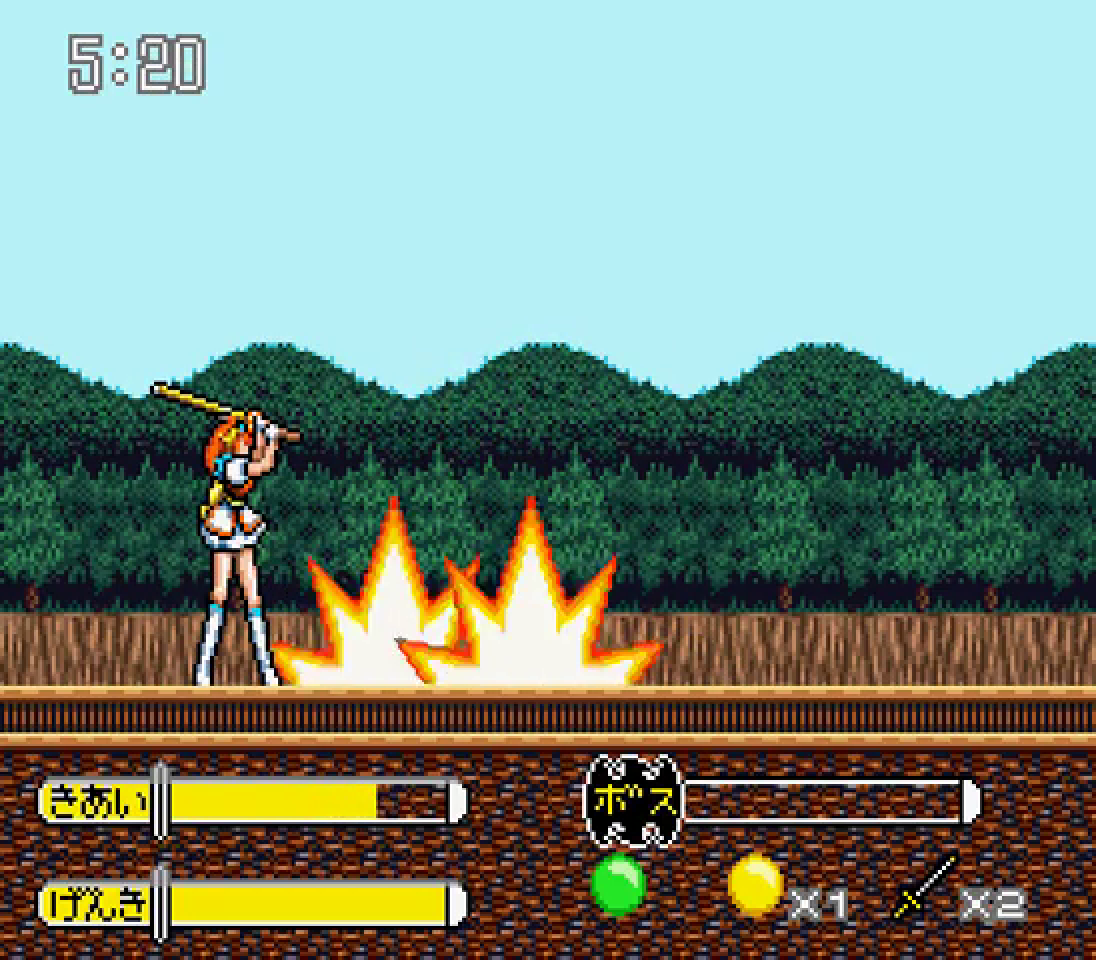
Strip away the jokes and this is a tidy little action platformer. Seven stages. A boss at the end of each one. Your basic attack is the bamboo sword — short range, honest work — and layered over it is the Psy meter, the bar that charges as you fight and changes what your attacks do depending on how full it is. Let it build and your swings start throwing out projectiles and flame. Spend it early and you are back to doing things the hard way, one smack at a time. It is a simple system, but it gives every stage a rhythm: push forward, charge up, cash in on the crowd, save something for the boss.
The clock is the other idea I keep coming back to. There is no score chase in the usual sense. The game starts you at 4:00 AM and measures you by the time on that clock — how fast you clear each stage is the record you are setting. For a game about a girl trying not to be late, that is not a gimmick. That is the whole design pointing the same direction. Hurry. The monsters are why you are late, and the clock knows it.
The reviews were lukewarm. The shelf life was not.
Nobody should pretend this was a classic in its day. Famitsu’s reviewers scored it 5, 7, 6 and 6. Super Play gave the import 55 percent. GameFan’s four scores landed in the 60s. The kindest thing the contemporary press found to say was that it was charming and a bit thin, and honestly, that is fair. Seven stages is not a lot of game, and the SNES shelf in 1993 was not short of action platformers asking for your money.
But here is what thirty years does. The polished, better-reviewed games of 1993 blur together. Kendo Rage does not blur. There is exactly one SNES game where a kendo student fights yokai against a 4 AM clock on the way to school, where the American publisher renamed the heroine Josephine and her trainer Bob, where a sequel turned the whole thing into a fighting game about electing a yokai prime minister. Weird ages well. Competent ages into the pile, and stays there. The cartridge became a collector’s piece not because it was the best game of 1993, but because it was the only one of its kind — and because so few copies moved in North America that finding one now is its own small quest.
The sequel the West never got
Japan got more. An OVA followed the games’ story, and in 1995 Datam Polystar released Makeruna! Makendō 2: Kimero Youkai Souri for the Super Famicom — March 17, 1995 — with a PlayStation version that November. The sequel changed genres entirely: a one-on-one fighting game starring Mai’s younger sister Hikari, fighting a tournament to decide the next yokai prime minister. It never received an English release in its day. A third entry, Makendō Z, turned up on the PC-FX in 1998 as a role-playing game, which tells you everything about how freely this little series changed shape. North America got the first game, renamed and rewritten, and then silence. For over thirty years, that was the whole story here.
The people behind the strange little game
Part of why the game looks the way it does — bright, loose, more like a comedy manga than a typical 1993 action title — is who made it. The characters were designed by Ano Shimizu, and the game design came from Momii Kusakabe, who went on to work on the Roommate series on the Sega Saturn. Takahiro Wakuta composed the music, and Tom Shizuma produced. None of them were making a blockbuster. They were making a small, funny, very personal-feeling game at a moment when the Super Famicom could absorb experiments like that — a licensed-feeling anime comedy that was not actually licensed from anything, built out of yokai folklore, magical-girl tropes and a schoolgirl’s morning routine.
That is also why the game survives in memory differently from its contemporaries. Play it today and the first thing you notice is not the action, which is solid but simple. It is the tone. Enemies bounce. Bosses wait for you at bus stops. The whole adventure is framed as an errand that got out of hand. Plenty of 16-bit games were harder, longer and better reviewed. Very few were this cheerful about their own nonsense, and cheer, it turns out, is a preservative.
How to play it today
Right now, the honest answer is the original cartridge. There is no current official digital release of Kendo Rage on modern storefronts, so the legal routes today are the ones collectors already know: an original Super NES cartridge of the SETA release, or the Super Famicom original, Makeruna! Makendō, on original hardware or a compatible cartridge system you own. That changes soon, and it is the reason this piece exists tonight: Edia has announced Kendo Rage 1&2, a collection of this game and its Japan-only sequel, for March 18, 2027 on PlayStation 5, Nintendo Switch and PC via Steam — the first time the sequel has had a path West in any official form. When that collection lands, it becomes the easy route. Until then, the cartridge is the game.
— Sal
More from this system: our SNES hub.