At a glance — Game: Killer Instinct Gold · Developer: Rare · Publisher: Nintendo · Original release: November 25, 1996 · Original platforms: Nintendo 64 · Genre: Fighting
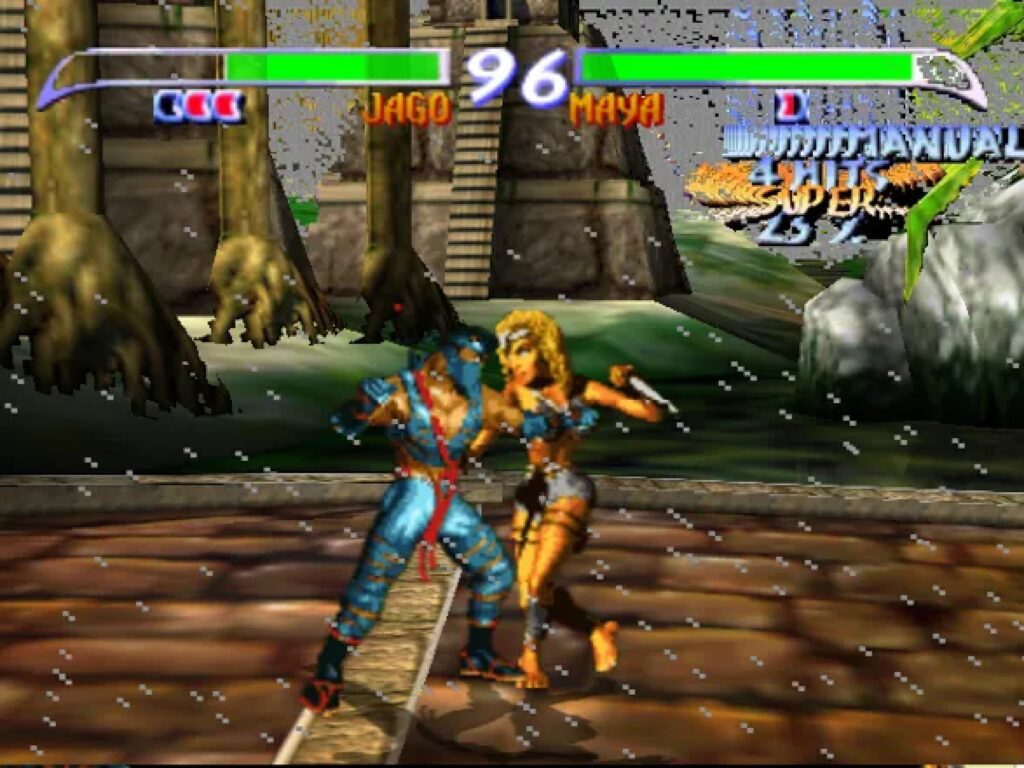
The announcer shouts. The combo counter scrolls numbers across the screen. And underneath the noise sits the problem no amount of polish could hide: everything players loved about the arcade version had to fit inside a cartridge. Thirty years ago, the Nintendo 64’s early owners had a short shopping list and a long wait between games, and into that gap stepped Killer Instinct Gold — a fighting game built to be loud, asked to be small.
A launch title that missed the launch
Killer Instinct Gold is the Nintendo 64 version of Rare’s arcade sequel Killer Instinct 2. The series had started in arcades in 1994 and become, in effect, Nintendo’s answer to Mortal Kombat — fast, loud and built around long chains of hits rather than patient footsies. The Super NES port of the first game sold over three million copies, so a sequel was never in doubt. Rare began it for the Super NES, then moved development to the Nintendo 64 as soon as the new console was announced.
The plan was bigger than a late port. Gold was scheduled to be one of the Nintendo 64’s initial two launch titles. The small team — seven people, splitting their time between the arcade game and the home version — started on the console edition as soon as Rare received its development kit, with Kevin Bayliss designing the characters and Chris Tilston building the engine. The launch date slipped anyway. Gold reached North America on November 25, 1996, in time for the Christmas season rather than the September debut, and other regions followed in May 1997.
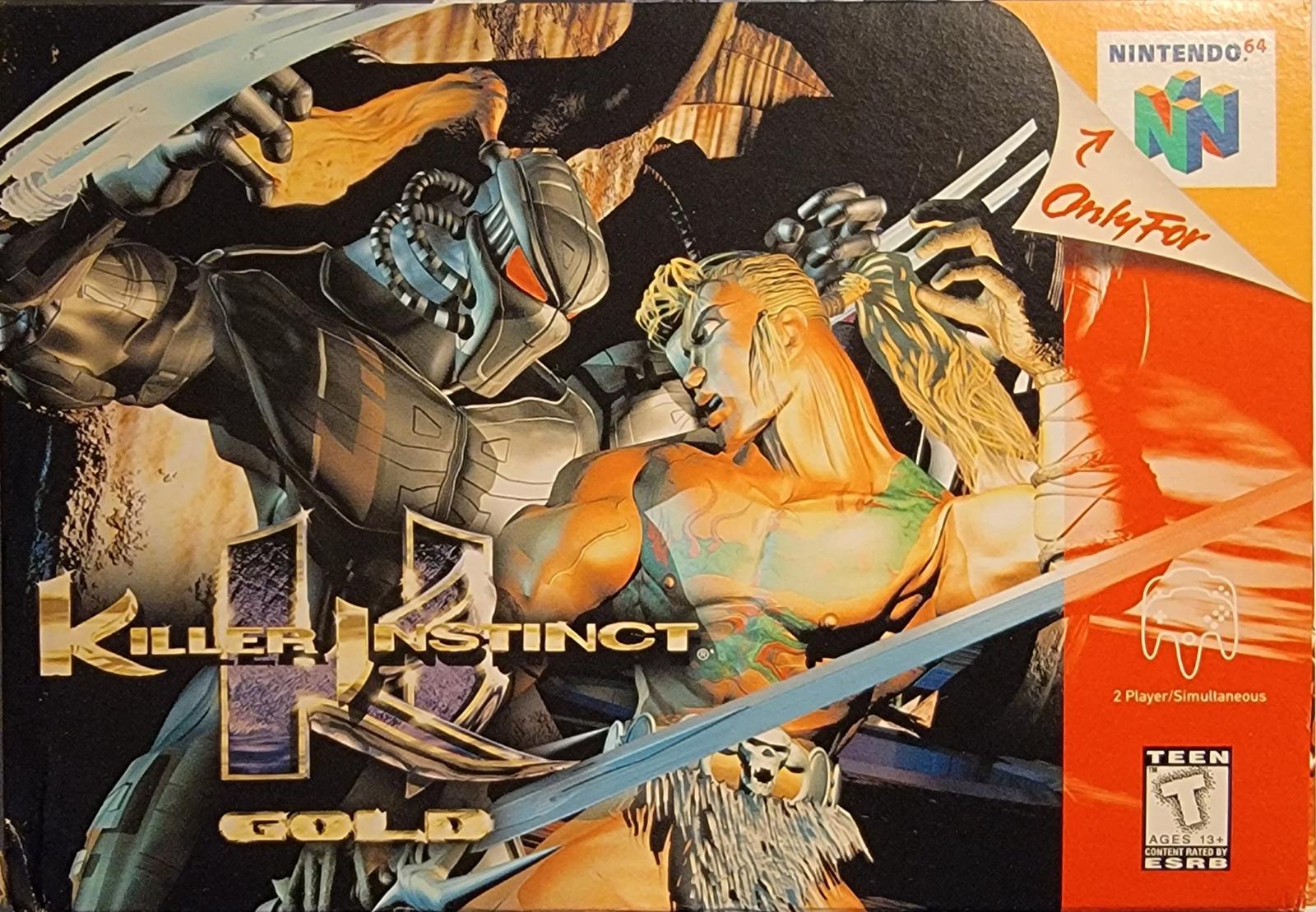
Killer Instinct Gold, squeezed onto a cartridge
The arcade game ran on hardware built for it, with room for full-motion video and lavish animation. A Nintendo 64 cartridge had a fraction of that space, so Rare used compression technology to fit the game in — and made choices about what survived. The full-motion video sequences went. Some voice-overs went. The character animation lost frames compared with the arcade, even though the backgrounds themselves run fluidly at 60 frames per second. Each character’s multiple arcade endings were reduced to a single ending, and where the arcade faked a panning camera with animation, the console version used static images with less detail.
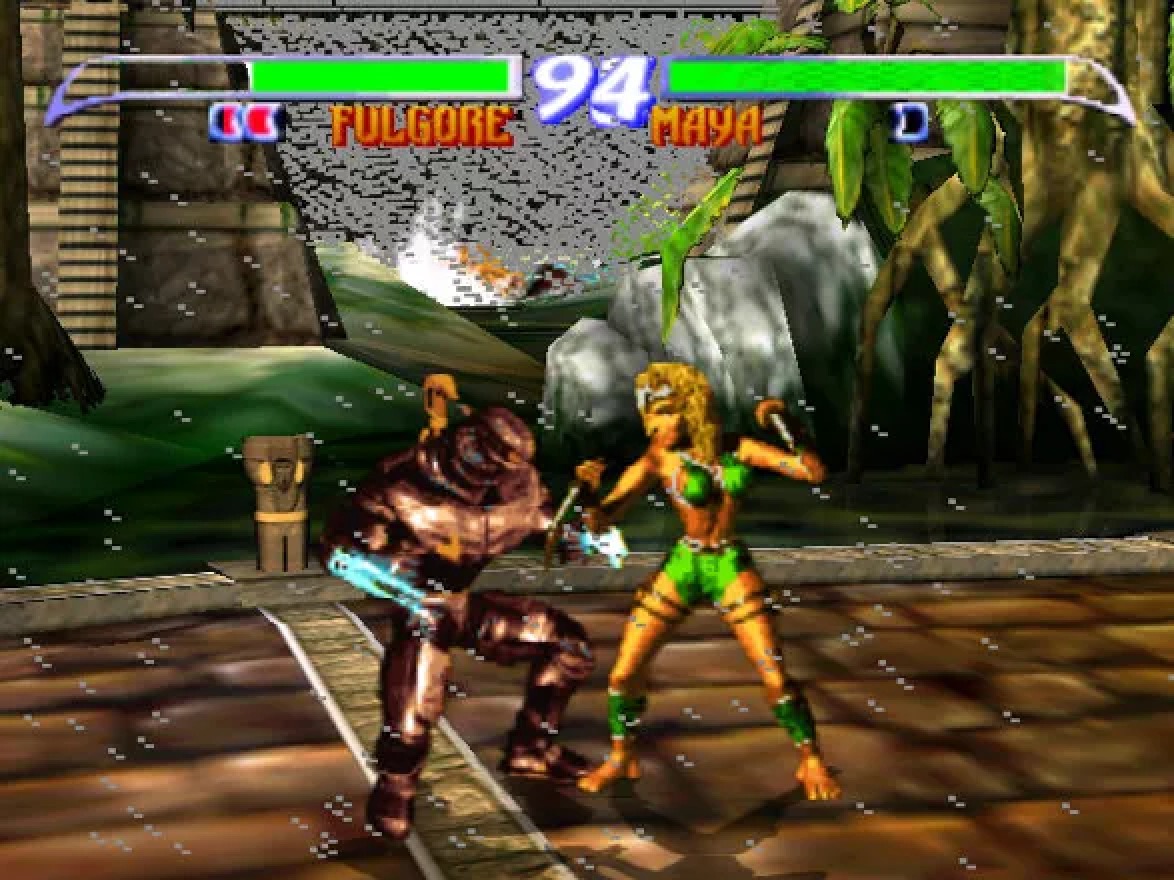
What Gold kept matters more. The roster is the arcade game’s eleven fighters — seven returning, four new, among them the gargoyle Gargos, the ninja Jago and the warrior Maya. The six-button layout, three punches and three kicks, will feel familiar to anyone raised on Street Fighter II. So will the system’s heart: chain hits into combos, watch the announcer — Rare’s Chris Sutherland — bellow encouragement, and finish a beaten opponent with a stylised finisher. Those finishers borrow Mortal Kombat‘s theatre but stop short of its dismemberment and decapitations. A defender is never helpless, either, because a well-timed combo breaker can interrupt the whole sequence.
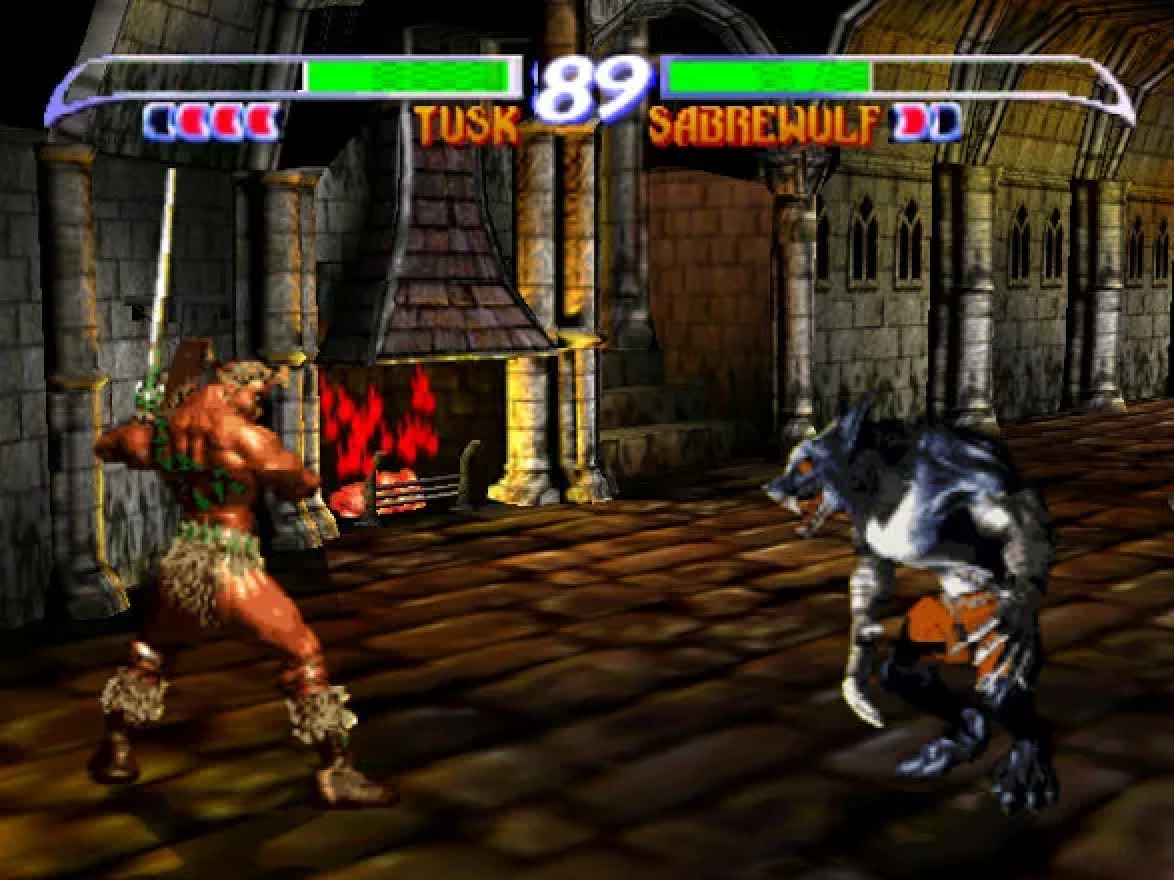
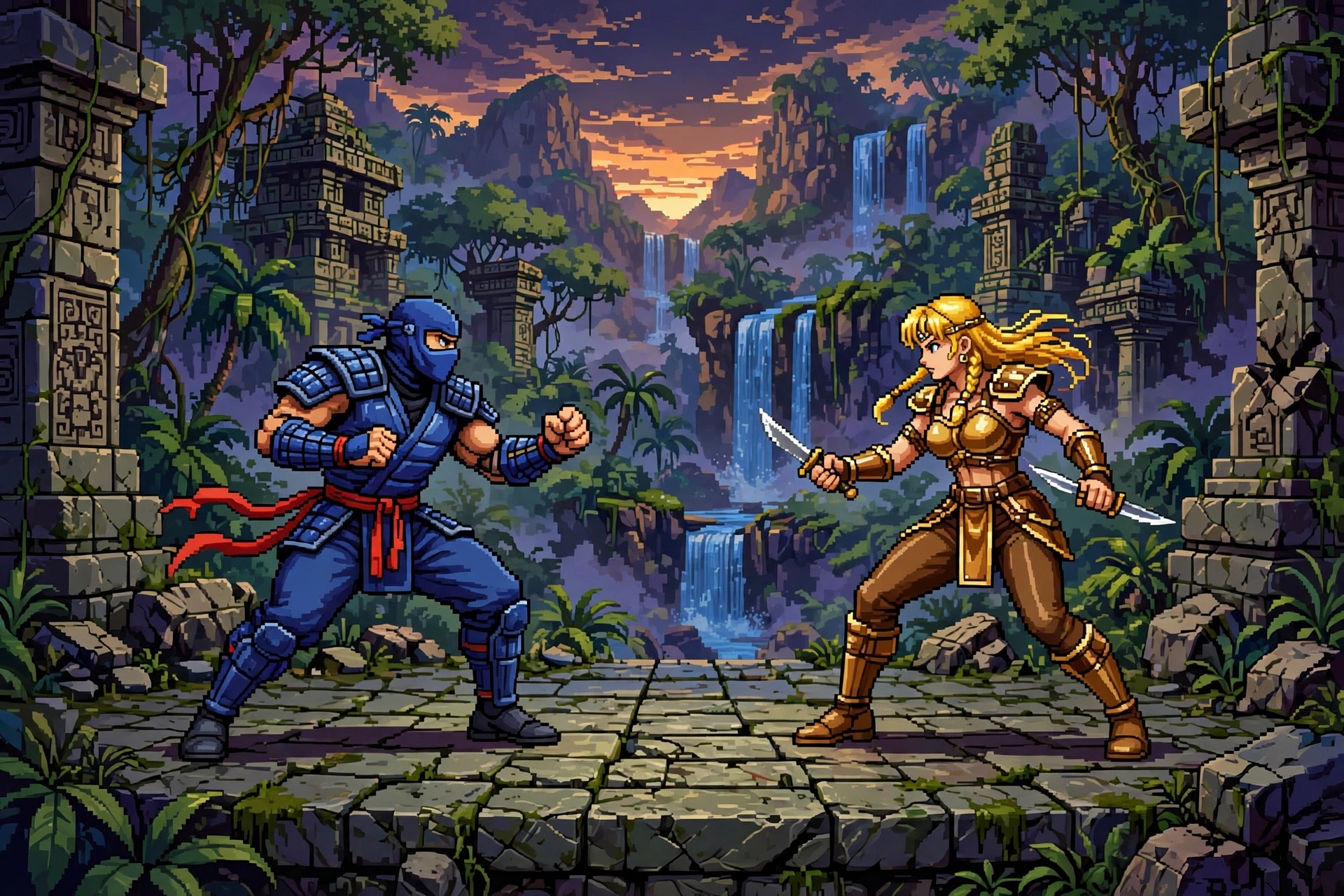
The setting helps explain the ambition. Rare was becoming Nintendo’s most prominent second-party developer, and Killer Instinct had been created as an exclusive partnership — a deliberate attempt to give Nintendo a harder-edged fighter of its own. The fights play out on a 2D plane in front of pre-rendered 3D scenery: a spaceship, a jungle, a castle dungeon and more, some of them interactive. That look was the series’ signature, borrowed from the same pre-rendering pipeline that had made Donkey Kong Country famous, and on a television in 1996 it still turned heads — even if the characters themselves moved with fewer frames of animation than their arcade counterparts.
What Gold added of its own
This was not a bare port. Gold adds team and knockout tournament modes alongside the arcade ladder — in the tournament, you cycle through a preselected team as each fighter falls. It adds new camera functions that zoom automatically to frame the fight, enhancements to the 3D backgrounds, and an upgraded soundtrack by Robin Beanland. That music was taken seriously enough to get its own compact disc release, Killer Instinct Gold Cuts, which was rare for a Western game in the 1990s. There are unlockables, too: new character appearances, extra difficulty levels and an additional playable character.
There is a footnote that says a lot about the era: Rare, under contract, actually finished a Super NES port of Killer Instinct 2 as well. Nintendo chose not to release it. The future was 64-bit or nothing, even when the older machine’s audience was the one that had bought three million copies of the original. Gold was the bet — the sequel existed to sell a new console, not to serve the crowd that had made the series a hit.
The training mode was the real headline
The addition reviewers kept singling out sounds unglamorous: a practice mode. But Killer Instinct‘s combo system runs on memorised sequences, and several critics complained that matches rewarded whoever had memorised the longest strings rather than whoever improvised best. If the game demanded homework, Gold at least supplied a teacher. Its training mode walks you through moves and combo theory with tutorials — openers, doubles, linkers and the rest — and multiple reviewers praised it. For a 1996 console fighter, a proper tutorial was genuinely forward-thinking, and it is the feature that has aged best.
Reviewers liked it, then looked sideways
The first verdicts were warmer than the game’s later reputation suggests. Reviewers generally preferred Gold to the arcade release and praised its sound and backdrops. GameSpot scored it 7.4 out of 10 and called it the best entry in the series at the time, judging the graphics near perfect apart from some blur. Game Informer gave it 8.5 out of 10. IGN was cooler at 6.5, noting the fewer animation frames, calling the look dated, and wishing for more characters and more distance from the arcade game. Next Generation went in hardest at two stars out of five, and N64 Magazine‘s 62% review predicted a lifespan of weeks rather than months.
The comparison that hurt was the calendar. Tekken 2 and Virtua Fighter 2 had moved 3D fighting forward, and against them a pre-rendered 2D fighter — however fast, however loud — looked like the previous era. Gold still sold respectably in the short term: it was the fifth best-selling game of the 1996 Christmas shopping season. It never matched the Super NES original, though, and IGN later reported that even series fans were annoyed by the changed combo move sets and the missing favourites from the first game.
Thirty years on
After Gold, the series went quiet. Microsoft bought Rare in 2002, the Nintendo partnership ended, and Killer Instinct stayed dormant until the 2013 Xbox One reboot. Gold itself returned inside Rare Replay in 2015, where retrospective critics were unkind — one singled it out as the compilation’s weakest title — and it joined Nintendo’s Nintendo Classics service in May 2025, back on a Nintendo machine at last. GamesRadar had earlier ranked it the 35th best Nintendo 64 game, which feels about right: not a classic that defined its console, but a loud, strange, very 1996 artefact of the moment fighting games changed shape — and of a talented team learning, in public, what a cartridge could and couldn’t hold.
— Chip
For more launches from this date, see This Day in Gaming History: November 25.