At a glance — Game: Pokémon Black and White · Developer: Game Freak · Publisher: Nintendo / The Pokémon Company · Original release: September 18, 2010 (Japan) · Original platforms: Nintendo DS · Genre: Role-playing
Spring 2011. Tax refund in my pocket, guilty conscience riding shotgun. The Nintendo 3DS had just launched, and every sensible voice I knew — including the one in my own head — said the DS era was over and the money belonged to the shiny new machine. I walked out of the store with a game for the old one instead. Pokémon White. I have thought about that decision more than most console launches since, because Black and White were no farewell lap for the DS. They were the moment the series grew up, moved to the city, and politely showed every familiar face the door.
Fifteen years on, the fan scene still treats these games as a starting line — the new FullDex fan project spotlights Black and White first, ahead of every other generation — and I understand why. This was Game Freak at its most confident, building a Pokémon game that trusted you to fall in love with a whole new world without a single Pikachu sighting to sweeten the deal.
A Pokédex with no safety net
The decision still astonishes me. Pokémon Black and White introduced 156 new Pokémon — more than even Red and Blue managed back in 1996 — and for the whole main adventure, those 156 are all you get. No Pikachu in the tall grass. No Zubat in the caves. No Geodude rolling out of the rocks like it has a contractual obligation. Until you finish the story and earn the National Pokédex, every rustle of grass in Unova holds something you have never seen before.
The Unova Pokédex even opens with a wink: Victini, a Mythical Pokémon, sits at number 000, before your starter. It was the game’s way of telling you the old numbering, like the old roster, did not run this place.
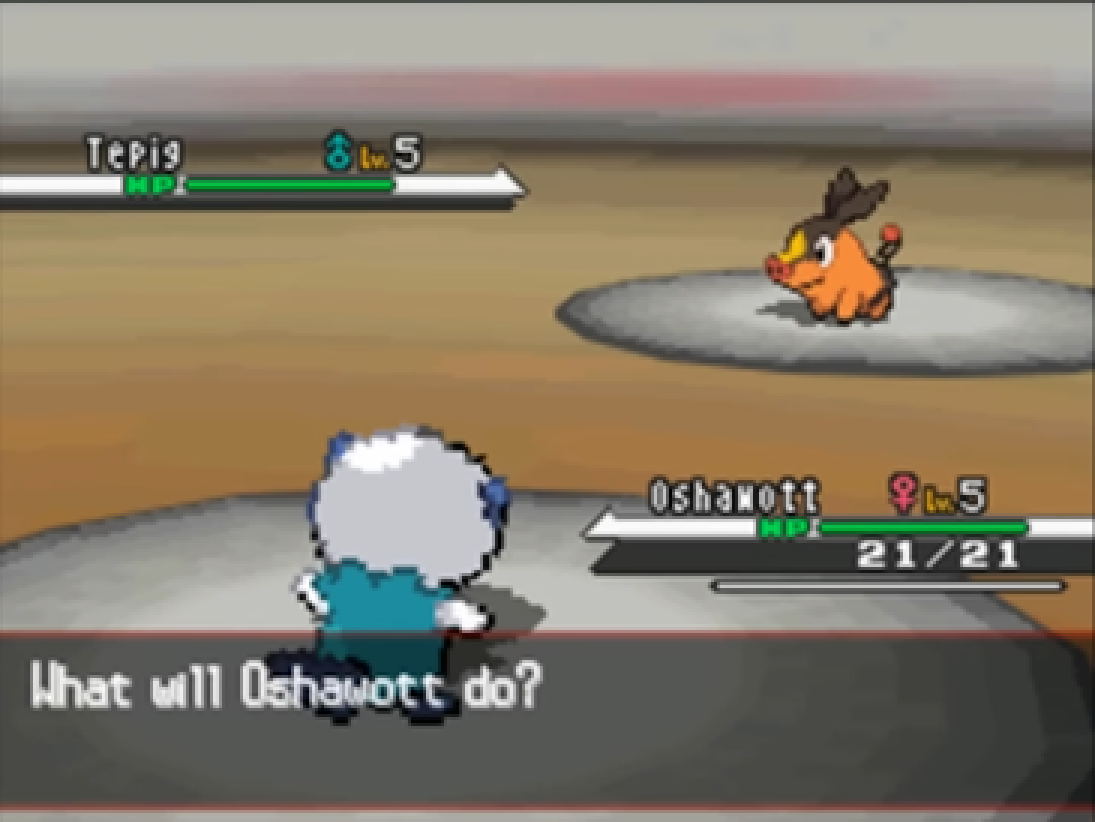
I did not appreciate how brave that was in 2011. I do now. Every other generation, before and since, cushions its new designs with old favorites. Old favorites sell. Black and White looked at that safety net and cut it. Your starter choice — Snivy, Tepig or Oshawott — was a genuine leap, and so was every team you built after. Some of the new designs were instant classics. Some of them were, let us be honest, an ice cream cone and a bag of garbage. But they were all new, and the game made you live with them, learn them, and love the region on its own terms. By the time the credits rolled and the old Pokémon finally flooded in, it felt like a homecoming I had actually earned.
Pokémon Black and White went to New York
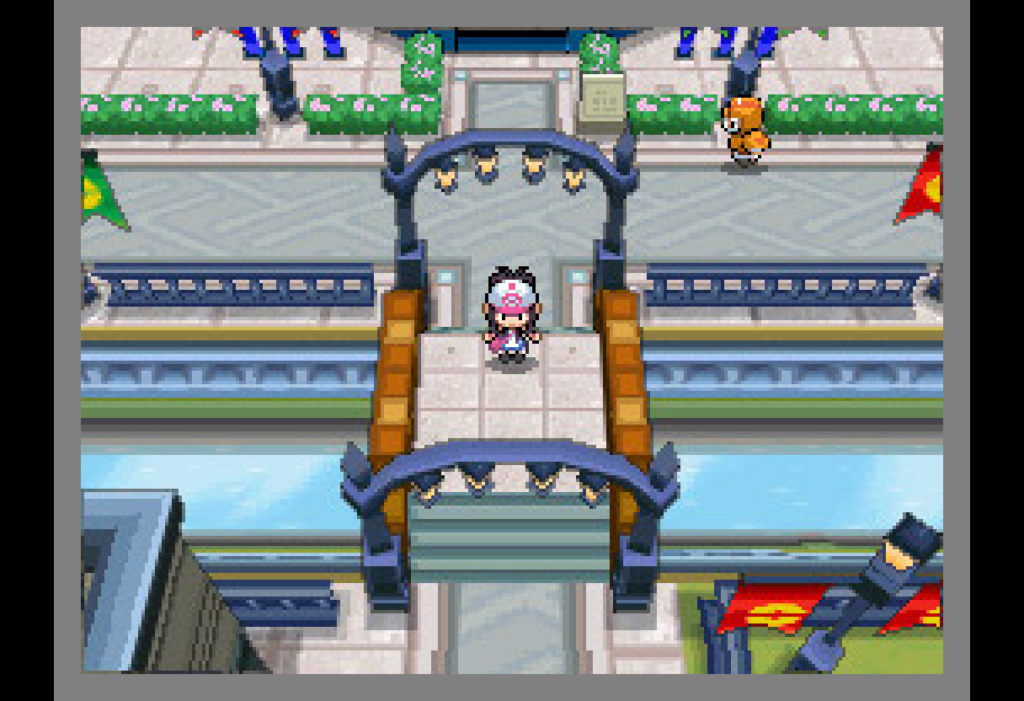
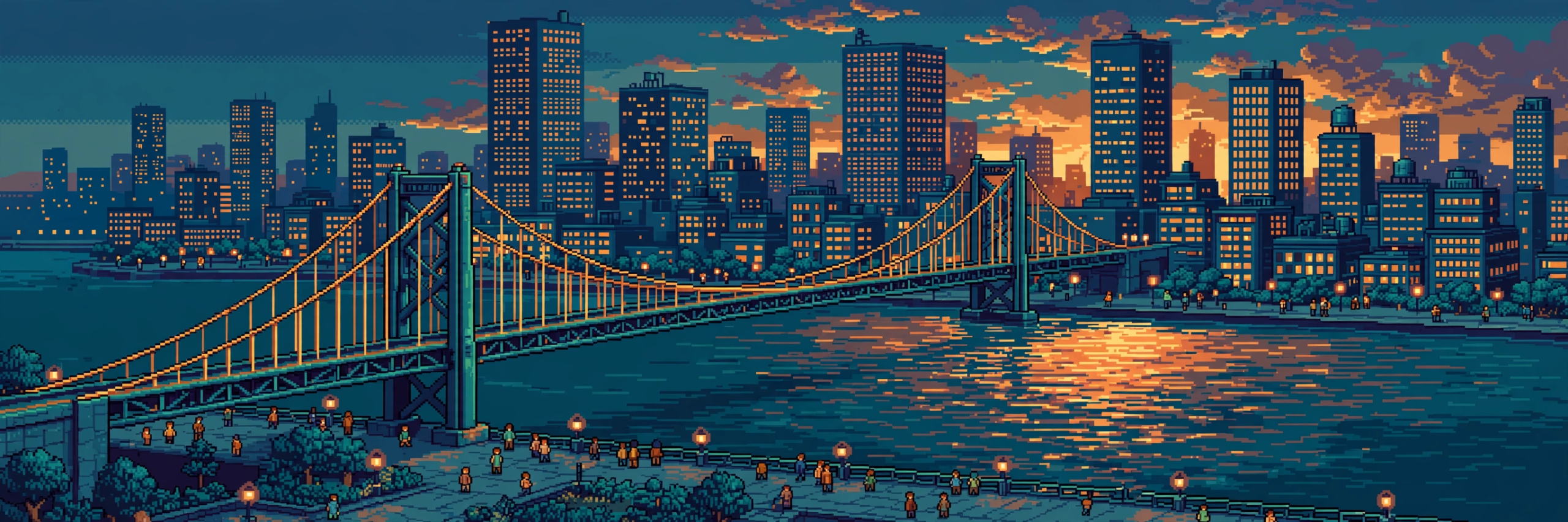
Every Pokémon region before Unova was drawn from Japan. Unova — Isshu in the Japanese version, a name built on the idea of many kinds of people and Pokémon looking like one kind of life from far away — was modeled on New York City, an idea director Junichi Masuda took home from visiting the city for the Diamond and Pearl launch. You feel it the moment you cross the Skyarrow Bridge, a great suspension span plainly modeled on the Brooklyn Bridge, and walk into Castelia City.
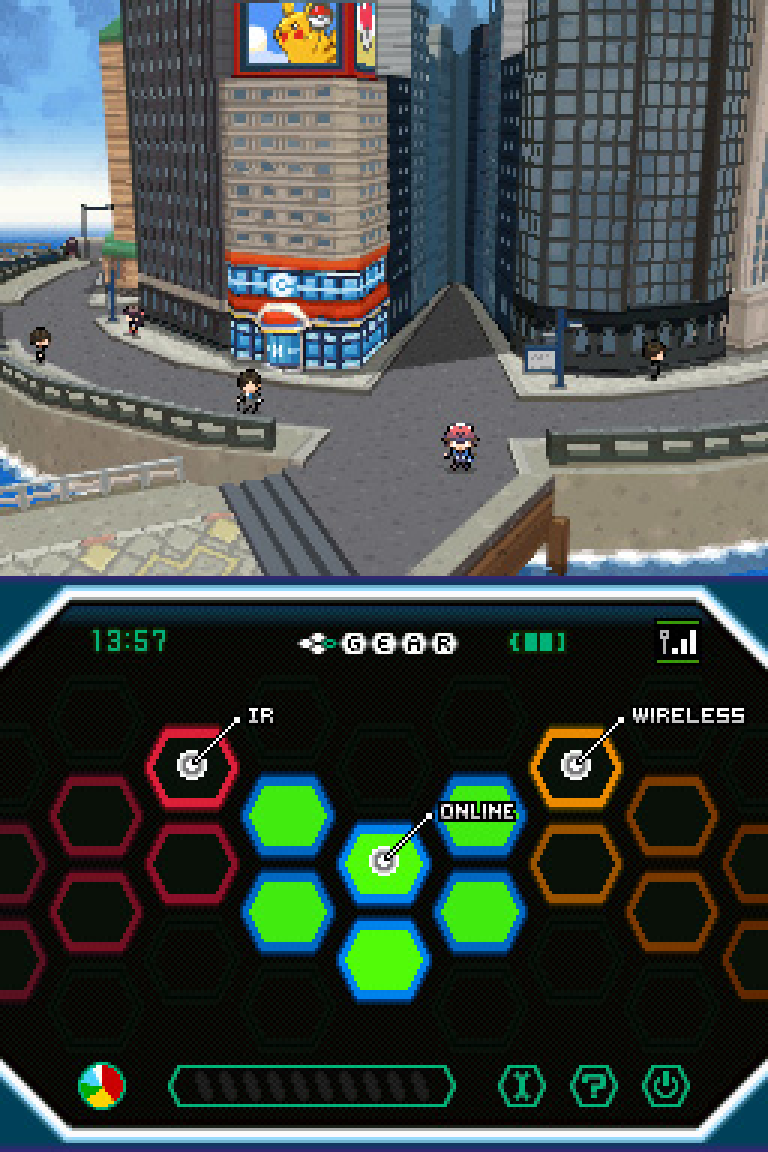
I remember the walk across that bridge taking longer than it needed to, because I kept stopping. The camera pulls back, the city fills the horizon, and for a few seconds a DS game makes you feel small in the way a real skyline does. I had crossed the actual Brooklyn Bridge exactly once, years before, and the game reached straight for that memory and squeezed.
Then Castelia hit, and it was a shock to the system in the best way. Pokémon towns had been getting bigger for years. This was a metropolis — skyscrapers, office workers pouring out of buildings, a harbor, streets that curved with the camera as you walked them. It is still the series’ best city, and it set the tone for a region that felt wider and more lived-in than anything before it: a harbor town, an amusement-park city with a Ferris wheel, desert ruins, and version-exclusive landmarks, with Black City’s dark towers in Black and the green White Forest in White. Unova felt like a place people actually lived, and fifteen years later the series is still chasing that feeling.
Seasons, living sprites and a second screen full of ideas
The DS hardware was five years old when Black and White arrived. Game Freak squeezed it like a lemon anyway. Battles stopped being two still pictures sliding at each other. Every Pokémon sprite is fully animated now, bouncing, swaying and lunging for the whole fight, while the camera pans and zooms to sell the drama. It sounds like a small thing. In motion, it changed everything — battles finally had a pulse.
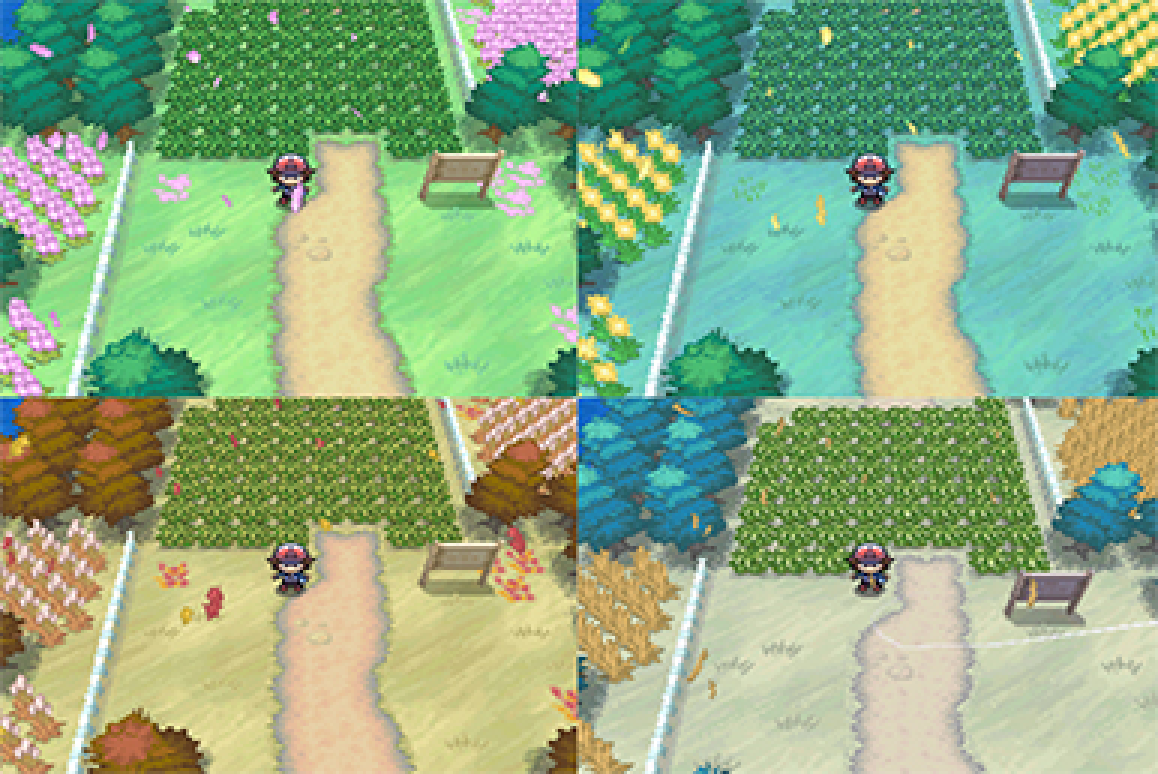
Then there were the seasons. Unova cycles through spring, summer, autumn and winter, each lasting a month, recoloring the whole region — leaves turn, snow settles, some paths open only in the right season, and Deerling and Sawsbuck change their coats to match. Add triple battles and rotation battles, hidden abilities to hunt down, and the C-Gear, the always-on bottom-screen hub that handled infrared and online play and fed the dreamy, half-forgotten Pokémon Dream World, and you had the most feature-rich Pokémon the DS ever hosted. The online pieces are gone now — the Global Link services shut down back in January 2014 — but the cartridge itself never needed them to feel complete.
The story that asked a harder question
Every Pokémon villain before Team Plasma wanted power. Or money. Or a bigger ocean. Team Plasma marched through Unova in knight’s robes asking a genuinely uncomfortable question instead: is it right to keep Pokémon at all? Their young figurehead, N, could hear Pokémon speak, and he believed — sincerely, which is what made him dangerous — that trainers were the problem. For a series sold to children, Black and White let that argument breathe for a remarkably long time before pulling back the curtain on N’s father Ghetsis and his rather less sincere motives.
I still think about the end of that story more than any other in the series. The Pokémon League sequence stops being a victory lap and becomes an argument about what trainers and Pokémon owe each other, staged like a coronation gone wrong. Plenty of RPGs twice the length never land a final act that cleanly.
It worked. Black and White sold 15.64 million copies between them, among the best-selling games the DS ever had, and then Game Freak did something it had never done before: instead of a single enhanced third version, it made Pokémon Black 2 and White 2 in 2012 — true sequels, set in the same Unova two years later, the first direct sequels in the series’ history. You do not take swings like that with a game you think is ordinary.
How to play it today
Plain truth first: there is no official digital re-release of Pokémon Black and White. They have never been remade, never ported, and they are not sold on any modern storefront — the official Pokémon Black Version and Pokémon White Version page at Pokémon.com remains a lovely museum piece, but the buy button era for these games ended with the DS itself.
So the legal route is the original cartridge. Good news: it is an easy one to walk. DS cartridges are region-free and play on any Nintendo DS, DSi or 3DS-family system, so a copy from any territory works in the machine you already own. Pre-owned copies are stocked by retro retailers — GameStop’s pre-owned listing for Pokémon Black had the cartridge at $94.99 when checked November 23, 2026, which tells you both that copies are out there and that Gen V prices have climbed well past bargain-bin territory. Do check a cartridge carefully before you pay collector money, though: Pokémon DS games are among the most counterfeited cartridges ever made, and a genuine copy carries the right label, shell and board markings.
One time-sensitive note for collectors. If you already have Pokémon Bank and Poké Transporter downloaded on a 3DS from before the eShop closed in March 2023, that bridge still works today — it is how a Pokémon caught in Unova reaches Pokémon HOME — but it cannot be downloaded new anymore, and the service is scheduled to end for good on February 26, 2027. If moving an old team forward matters to you, that is a deadline worth circling. After it passes, a Black or White cartridge becomes what it was in 2011: a complete world, sealed in plastic, asking nothing of the internet at all. Honestly? It wears that well.
— Sal